Beginner Tips for Saltwater Fishing in Florida
Stepping into the world of saltwater fishing in Florida can feel a bit overwhelming, especially when you're faced with endless gear options, confusing regulations, and vast stretches of water. It's easy to get discouraged before you even make your first cast, wondering where to begin and what you're doing wrong. This comprehensive guide is designed specifically for beginners, breaking down the essentials of getting started with saltwater fishing in the Sunshine State, so you can spend less time scratching your head and more time reeling in your first catch.
Laying the Groundwork: Licenses, Gear, and Local Knowledge
Before you even think about putting a line in the water, there are a few foundational steps you absolutely need to cover. Skipping these can lead to frustration, or worse, legal trouble. Trust me, nobody wants a fishing trip to end with a fine!
Navigating Florida's Fishing Licenses
The first, and arguably most important, thing you need to understand is the Florida fishing license system. It's a common misconception that if you're just dipping your toes in, you don't need one, but that's rarely the case. Florida takes its conservation efforts seriously, and those license fees are a vital part of funding them. Generally, if you're 16 years or older and fishing in saltwater, you'll need a license. There are specific rules for residents versus non-residents, and even different types of licenses depending on how long you plan to fish.
It can feel a bit like navigating a maze, but don't worry. The Florida Fish and Wildlife Conservation Commission (FWC) makes it fairly straightforward to purchase one online, by phone, or in person at various retailers. Before you head out, make sure to check the specific requirements, as there are some Florida Fishing License Exemptions for certain groups or situations, and understanding Who Needs a Fishing License in Florida is crucial. For most beginners, an annual saltwater license is a solid choice if you plan on fishing more than a couple of times a year. Make sure you understand the Florida Saltwater Fishing License Rules before your first outing.
Beyond the general license, some species like snook and lobster require additional permits. You won't typically be targeting these as a complete beginner, but it's good to be aware that special stamps or permits might be needed down the line as you gain experience and set your sights on more specific catches. Always double-check current regulations before you go, because nothing spoils a great day on the water like unknowingly breaking a rule.
Essential Gear for Your First Saltwater Trip
When you first walk into a tackle shop, it's easy to feel overwhelmed by the sheer volume of rods, reels, lures, and gadgets. For a beginner, simplicity is key. You don't need the most expensive, high-tech setup to catch fish. A reliable spinning rod and reel combo is perfect for getting started with saltwater fishing in Florida. Look for a medium-action rod, roughly 7 feet long, paired with a 3000-4000 series spinning reel. This versatile setup will allow you to cast a variety of baits and lures, and it's robust enough to handle many of the common inshore species you'll encounter. You can often find decent beginner combos on platforms like Amazon that offer good value without breaking the bank.
Beyond the rod and reel, you'll need monofilament or braided line (10-20 lb test is a good starting point), a few basic hooks (like J-hooks or circle hooks in sizes 1/0 to 3/0), some lead weights (sinkers) in various sizes, and a handful of swivels. A small tackle box to keep everything organized is a lifesaver. Don't forget a pair of pliers for removing hooks and cutting line, and a small net or lip gripper for safely landing fish. A cooler with ice is also essential for keeping any keeper fish fresh or for storing your drinks and snacks.
For bait, keep it simple initially. Live shrimp, available at most bait shops, are a universal candy for nearly every inshore species in Florida. Alternatively, a bag of frozen squid or some cut bait can also be effective. As you progress, you might experiment with artificial lures, but for now, focus on mastering the basics with natural bait. Buying a starter kit on Amazon can often provide a good foundation of terminal tackle without the guesswork.
The Importance of Local Knowledge and Resources
One of the biggest advantages you can give yourself as a beginner is tapping into local knowledge. Florida's waters are incredibly diverse, and what works in the Panhandle might not work in the Keys. Don't be shy about asking questions! Bait shop owners are often a treasure trove of information about current bite patterns, the best baits to use, and where the fish are biting in their specific area. They’re usually happy to share tips, especially if you’re buying bait or tackle from them.
Online fishing forums and local social media groups are also fantastic resources. You can learn about specific Florida Inshore Fishing Techniques that are effective nearby, or get recommendations for productive spots. Many seasoned anglers are eager to share their passion and advice, and seeing what others are catching can inspire your next trip. However, be wary of "secret spots" being shared too widely; some anglers prefer to keep those under wraps.
Consider starting your fishing adventures at easily accessible public spots. Piers and bridges are excellent for beginners because they often concentrate fish, provide structure, and usually have other anglers you can observe and learn from. Many of these locations, especially state parks, might even have staff or volunteers who can offer guidance. Look up Best Shore Fishing Spots in Florida or Best Piers for Fishing Without a Boat to find some beginner-friendly locations.
Understanding the Environment: Tides, Weather, and Spots
Florida's saltwater environment is dynamic, constantly changing with the forces of nature. Understanding these changes will dramatically improve your success rate and overall enjoyment.
Decoding Tides and Currents
Tides are the heartbeat of saltwater fishing. The movement of water, driven by the moon's gravitational pull, dictates when and where many fish feed. Inshore, fish often use tidal currents to ambush baitfish, making moving water a prime fishing time. A general rule of thumb for many Florida inshore species is that the "moving tide" – whether it's incoming or outgoing – is usually better than slack tide (when the water is still). During incoming tides, baitfish are pushed closer to shorelines and structures, and predatory fish follow. Outgoing tides can pull bait out of mangrove roots or shallow flats, creating feeding lanes for larger fish.
You can find tide charts online or through various fishing apps. Learning How to Read a Tide Chart for Fishing is a valuable skill that will pay dividends. Pay attention to the "tidal swing" – the difference between high and low tide. A larger swing usually means stronger currents, which can be great for fishing but also make it challenging to keep your bait in place. Conversely, areas with very little tidal movement might require different strategies. Knowing the predicted tides for your chosen fishing location will help you plan your outing to coincide with the best feeding windows.
Wind can also create "wind tides," which act similarly to lunar tides by moving water and bait, even if the actual tide chart shows minimal movement. Combining your understanding of both lunar tides and wind direction will make you a much more effective angler. Understanding Best Tides for Inshore Fishing in Florida is a game-changer.
Weather Wisdom for Anglers
Florida's weather is famously unpredictable, especially during the summer. Bright, sunny days can quickly turn into torrential downpours or intense thunderstorms. It's not just about comfort; it's about safety. Always check the weather forecast before you go, and be prepared for changes. A pop-up rain shower can cool the water and sometimes even trigger a bite, but a lightning storm is a serious hazard that demands you get off the water immediately. Don't take chances with lightning; it can strike miles away from the storm's center.
Temperature also plays a significant role. Fish are cold-blooded creatures, and their activity levels are directly affected by water temperature. During cooler months, many species seek deeper, more stable water, while in the scorching summer, they might feed more actively during cooler parts of the day, like early morning or late evening. Overcast days can sometimes extend the bite, as fish feel less exposed to predators from above.
Keep an eye out for signs of red tide or other environmental alerts. How Red Tide Affects Fishing in Florida is an important topic, as these events can impact fish health, make fishing unproductive, and even cause respiratory irritation for humans. Local news, FWC websites, and even bait shop reports are excellent sources for current environmental conditions. Understanding the Best Time of Day to Fish in Florida based on weather patterns will improve your chances.
Finding Your First Fishing Hotspots
As a beginner, you don't need a fancy boat to find great fishing. Florida offers an abundance of shore, pier, bridge, and kayak fishing opportunities. Start with publicly accessible spots that offer some kind of structure. Structures like docks, pilings, submerged rocks, oyster bars, and mangrove shorelines provide shelter and ambush points for fish. Look for areas where the bottom changes, such as a drop-off from a shallow flat to a deeper channel. These transitions are often highways for baitfish and predators.
When you arrive at a spot, take a moment to observe. Are there birds diving? Are baitfish jumping? These are tell-tale signs of feeding activity. Watch what other anglers are doing, especially if they're having success. What kind of bait are they using? How are they rigging it? Don't be afraid to politely ask for advice; most anglers are happy to share.
Remember that fish move. If a spot isn't producing, don't be afraid to move down the beach, along the pier, or to a different canal system. Persistence and adaptability are key. Sometimes, the most unassuming stretch of water can hold a real gem. The Indian River Lagoon Fishing Guide in Florida or Biscayne Bay Fishing Guide in South Florida could be good starting points for learning about specific locations and what makes them productive.
Basic Techniques and Target Species for Beginners
Now that you've got your license and a basic understanding of the environment, let's talk about getting that first fish on the line.
Simple Rigs and Baits to Start With
For saltwater beginners in Florida, two basic rigs will cover most situations: the knocker rig and the popping cork rig.
- Knocker Rig: This is incredibly simple and effective, especially for bottom-dwelling species or when fishing in areas with current. You simply slide an egg sinker (or bullet weight) directly onto your main line, then tie on a swivel, followed by a fluorocarbon leader (12-20 lb test, 18-24 inches long), and finally, your hook. The weight sits directly on the eye of the hook, which allows it to "knock" against the bait as it moves, making noise and attracting attention. This rig is great for fishing live or cut bait on the bottom.
- Popping Cork Rig: This rig is fantastic for suspending live bait (like a shrimp) or a small artificial lure a few feet under the surface, making it easily visible to predatory fish. A popping cork is a buoyant float with a concave top that, when retrieved with a sharp jerk, creates a "chugging" or "popping" sound, mimicking a feeding fish or a shrimp flicking its tail. Tie your main line to the top of the cork, and then a leader (2-4 feet) from the bottom of the cork to your hook. This is especially effective when fish are feeding near the surface over grass flats or along mangrove edges.
When it comes to bait, live shrimp are king for beginners. They're readily available, relatively inexpensive, and almost everything eats them. If you're on a budget or can't find live bait, cut pieces of fresh mullet, ladyfish, or squid also work well. For artificials, a simple jig head with a soft plastic tail (like a grub or a scented shrimp imitation) is a great starting point for casting and retrieving. Platforms like Amazon offer a huge variety of soft plastics, allowing you to experiment with colors and shapes as you get more comfortable. For more details on what works, check out Best Live Bait for Florida Inshore Fishing.
Easy-to-Catch Fish for First-Timers
Florida boasts an incredible diversity of fish, but as a beginner, focusing on readily available and relatively easy-to-catch species will build your confidence and teach you the ropes.
- Pinfish and Grunts: These smaller, feisty fish are abundant in Florida's inshore waters, especially around grass flats, docks, and rock piles. They'll readily take small pieces of shrimp or squid on a simple bottom rig. While not typically prized for eating (though grunts are actually quite tasty!), they offer plenty of action and teach you how to feel bites, set the hook, and reel in a fish. Plus, a live pinfish can be excellent bait for larger species once you get the hang of catching them.
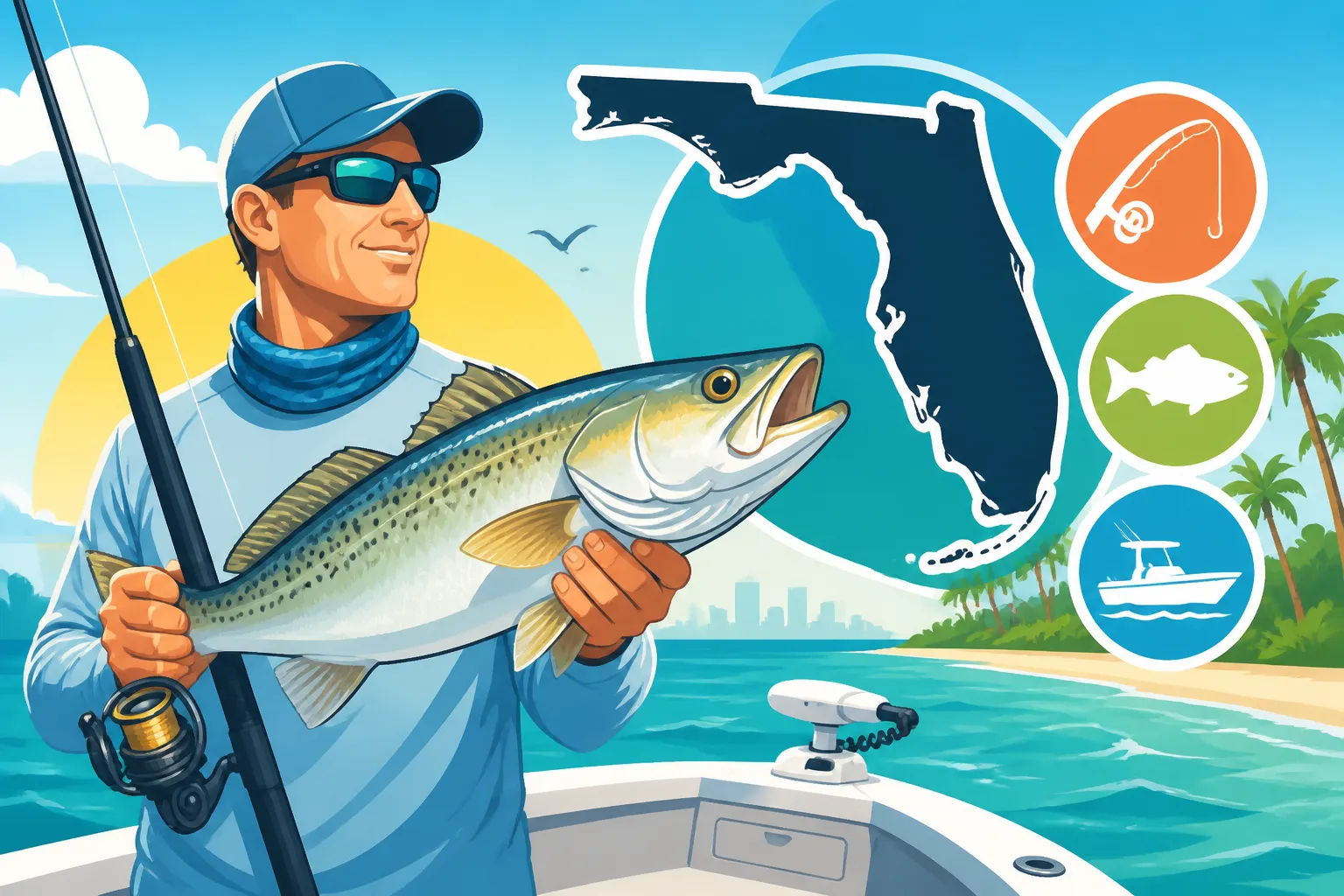
- Spotted Seatrout: Often called "specks," these are a favorite among inshore anglers. They love grass flats and sandy bottoms, particularly in areas with good tidal flow. They respond well to live shrimp under a popping cork, or soft plastic jigs retrieved slowly. Seatrout offer a respectable fight and are delicious to eat. Their mild temperament makes them a great target for beginners.
- Mangrove Snapper: Found around structure like docks, bridges, and oyster bars, mangrove snapper are aggressive feeders and put up a surprisingly strong fight for their size. Small pieces of shrimp or cut bait fished on a knocker rig or a small jig head are very effective. They are also excellent table fare. These are usually present year-round, making them a reliable target.
Learning to identify these fish, understanding their size and bag limits, and knowing how to handle them properly for release are all crucial steps. You can start by targeting Easiest Fish to Catch in Florida for Beginners to get some immediate gratification.
| Species | Common Habitat | Preferred Bait/Lure | Beginner Rig Recommendation | Size Limit Example (Check FWC for current) |
|---|---|---|---|---|
| Spotted Seatrout | Grass flats, sandy bottoms, channels | Live shrimp, soft plastic jigs | Popping Cork | Varies by region, often slot limit |
| Mangrove Snapper | Docks, pilings, oyster bars, rocky areas | Live shrimp, cut bait, small jigs | Knocker Rig | Often 10 inches total length |
| Pinfish / Grunts | Grass flats, docks, shallow structures | Small pieces of shrimp | Small bottom rig (split shot, hook) | No common size limit (often baitfish) |
| Ladyfish | Open water, near inlets, grass flats | Small spoons, soft plastic jigs, live shrimp | Popping Cork, basic retrieve | No common size limit |
Note: Always check current FWC regulations for up-to-date size and bag limits before fishing.
Catch and Release Best Practices
As you begin fishing, it’s important to practice responsible angling, which includes proper catch and release techniques. Many fish in Florida, especially popular sportfish like snook and redfish, have strict slot limits or are often targeted for catch-and-release only. Even if a fish is within the legal slot to keep, many anglers choose to release them to support conservation.
When handling a fish you intend to release, minimize its time out of the water. Use wet hands to avoid removing their protective slime layer. Avoid touching their gills or eyes. If using a net, opt for a rubberized net which is gentler on scales and fins than knotted nylon. For toothy fish, use a lip gripper to safely control them. When de-hooking, use pliers or a de-hooking tool. If the hook is deep, consider cutting the line as close to the hook as possible, as many hooks will eventually rust out.
For larger fish, or those that have put up a long fight, proper revival is essential. Hold the fish gently in the water, facing into the current, allowing water to flow over its gills. Don't move it back and forth, as this can force water in the wrong direction. Only release the fish when it shows signs of being able to swim off strongly on its own. These practices ensure the fish has the best chance of survival, contributing to healthy fish populations for future generations. Check out Catch and Release Best Practices for Snook for more in-depth advice on responsible handling.
Safety, Etiquette, and Enjoying the Experience
Fishing is meant to be a relaxing and enjoyable pastime. By keeping safety and good manners in mind, you ensure a positive experience for yourself and everyone else on the water.
Prioritizing Safety on the Water
Safety should always be your top priority, whether you’re fishing from shore, a pier, or a small boat. First, protect yourself from the Florida sun. Sunscreen (SPF 30+), a wide-brimmed hat, sunglasses (polarized ones will also help you spot fish!), and long-sleeved, breathable clothing are non-negotiable. The sun here is no joke, and a bad sunburn can ruin your trip. Think about investing in quality sun protection, which you can easily find on Amazon.
Secondly, stay hydrated. Always bring plenty of water, especially during the warmer months. Dehydration can creep up on you quickly. If you're fishing from a boat or kayak, always wear a life jacket, even if you're a strong swimmer. Accidents can happen swiftly and unexpectedly. Let someone know where you're going and when you expect to return, especially if you're venturing out alone.
Be aware of your surroundings. If fishing from shore, be mindful of waves, tides, and any potential hazards like slippery rocks or submerged debris. If fishing near roads or bridges, watch for traffic. Keep a first-aid kit handy for minor cuts or hook punctures. Remember, it's always better to be overprepared than underprepared when it comes to safety on the water. What you pack for safety can often be found in camping or outdoor sections on Amazon, making it easy to assemble a basic kit. For general guidance on what to bring, consider reading What to Wear on a Florida Fishing Charter, as much of the advice applies to all types of fishing outings.
Angler Etiquette: Respecting Others and the Environment
Part of enjoying the fishing experience is sharing the water respectfully with others. When fishing from a pier or crowded shoreline, be mindful of other anglers' space. Don't cast over their lines, and avoid making excessive noise that might disturb their fishing or their enjoyment. If you're on a boat, be respectful of other vessels, especially those fishing shallow flats where noise can spook fish.
Always clean up after yourself. Leave no trace behind. This means taking all your trash, including discarded fishing line, bait containers, and food wrappers, with you. Fishing line, in particular, can be incredibly harmful to wildlife. Many tackle shops and public access points have recycling bins specifically for monofilament line. By keeping our waterways clean, we ensure they remain beautiful and productive for everyone.
Finally, respect wildlife. Florida is home to an incredible array of birds, marine mammals, and other creatures. Observe them from a distance, and never harass or feed them. Follow all regulations regarding protected species, and if you accidentally catch one, release it as quickly and gently as possible. Responsible angling is about more than just catching fish; it's about being a good steward of Florida's precious natural resources.
Disclaimer
This article is for general informational purposes only and does not constitute professional advice. Laws, prices and regulations vary by location and change over time. Consult a qualified professional for guidance on your specific situation.