How to Anchor a Boat on a Flat Without Spooking Fish
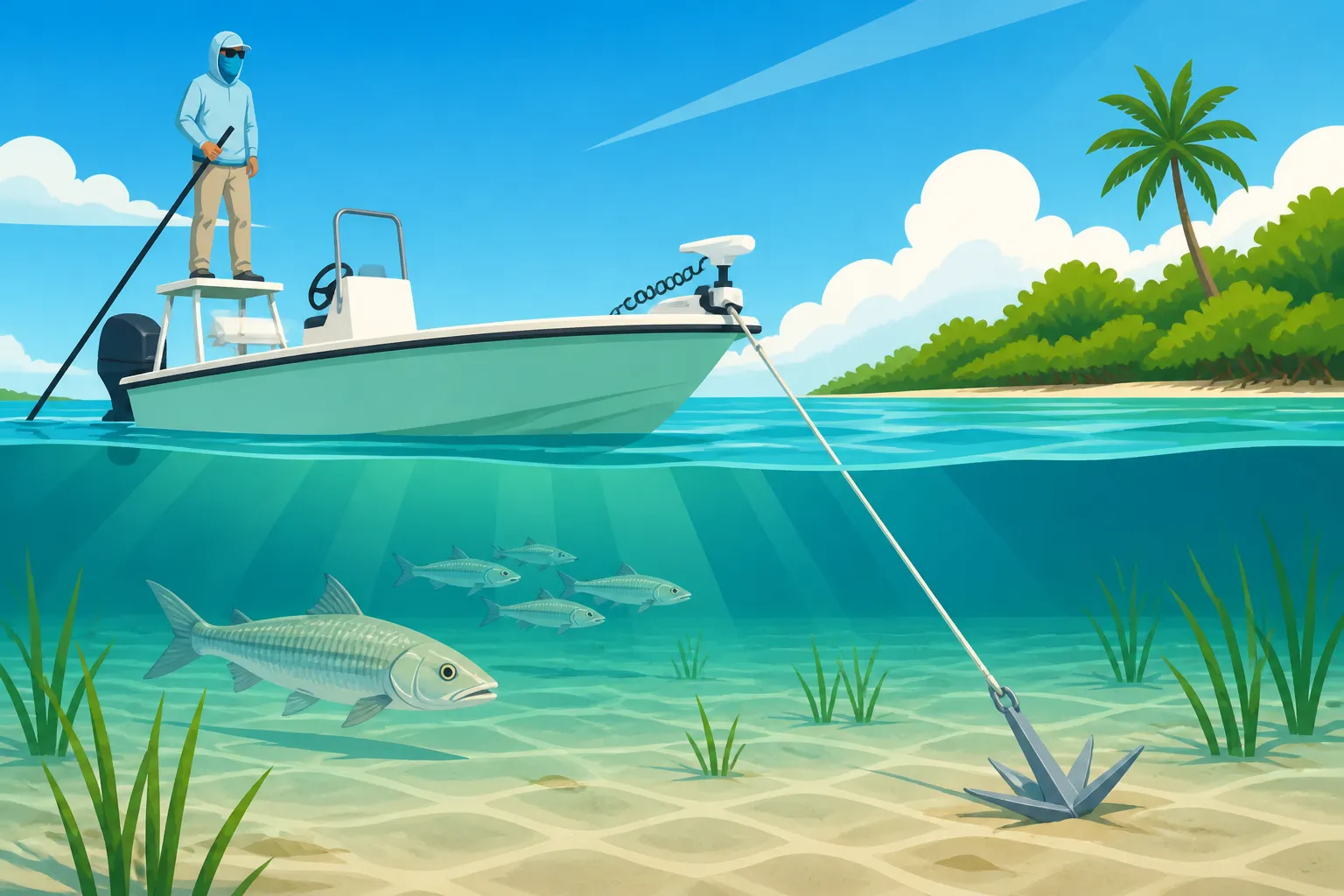
There’s nothing quite as frustrating as slowly approaching a beautiful, clear Florida flat, spotting a tailing redfish or a cruising snook, getting ready to make your cast, and then bam! — the thud of your anchor hitting the bottom sends a shockwave through the water, and those fish vanish in a blur. We’ve all been there, and it’s a soul-crushing moment that can ruin an otherwise perfect fishing opportunity. This guide is all about helping you avoid that disheartening scenario, providing you with the knowledge and techniques to anchor your boat quietly and effectively, ensuring your presence doesn't send your target species packing.
Why Stealth is Paramount on Florida's Shallow Flats
Fishing Florida's flats isn't like dropping anchor in deep water. The crystal-clear shallows are an unforgiving environment where every sound and movement carries, making fish incredibly wary. Understanding why fish spook is the first step to mastering stealthy anchoring.
The Sensitivity of Shallow Water Fish
Fish that inhabit the shallow flats, like redfish, snook, and spotted seatrout, are survival machines. They've evolved to detect the slightest disturbance in their environment, as it often signals the presence of predators. This heightened awareness means they can feel vibrations, sense sudden pressure changes in the water, and even see shadows from above with surprising clarity.
Imagine being a redfish, subtly rooting around in the grass for a shrimp, when suddenly a loud clang or a boat shadow appears overhead. Your instinct isn't to investigate; it's to flee to safety. The sound of a heavy anchor chain scraping a fiberglass hull or the splash of an anchor plummeting to the bottom creates a massive disturbance in their world. These vibrations travel far through the water, acting like a giant "danger!" signal to every fish within a wide radius. In the gin-clear waters of the Indian River Lagoon or the skinny water of the Florida Keys, there's nowhere for them to hide from these sensory assaults, so they simply disappear. This is why techniques like How to Approach Fish Without Spooking Them are so vital in these fragile ecosystems.
The Unique Challenges of Florida Flats
Florida's flats are diverse, from the expansive grass flats of Tampa Bay to the marl bottoms of the Everglades. Each type of flat presents its own set of anchoring challenges. Grassy bottoms can foul traditional anchors, making retrieval noisy. Sandy patches offer less holding power, potentially leading to drag. And the ultra-shallow nature means there's less water to muffle sound.
Furthermore, Florida's game fish in these environments are often pressured. They've seen boats and felt anchors before, making them even more skittish. A clumsy anchoring job not only spooks the fish you're targeting but can also put down an entire school, making fishing unproductive for a good while. Successful flats fishing demands a delicate touch, and that starts before your line even hits the water. It’s a dance between angler and environment, where silent moves are rewarded with bent rods and screaming reels.
Mastering Low-Impact Anchoring Techniques
Avoiding the "fish alarm" requires specific techniques and, often, specialized gear. Forget blindly tossing a heavy anchor; it's all about precision, gentleness, and understanding the environment.
The Gentle Drop: Traditional Anchors with a Twist
If you're using a traditional anchor, like a grapnel or fluke anchor, the key is not how you drop it, but how you control its descent. Simply heaving it overboard is a guaranteed fish-spooker. Instead, you need to "power pole it down" manually, even without an actual power pole.
First, position your boat upstream or upwind from where you want to fish, allowing for drift. Carefully lower the anchor by hand, feeding out the line slowly and maintaining tension. Do not let it freefall. Guide it down, trying to make minimal splash when it first enters the water. As it approaches the bottom, continue to control its descent until it gently touches down. Avoid letting the chain pile up or clang against the boat or the anchor itself. Once it hits, slowly let out more rope to allow the anchor to dig in, rather than just dragging it. This requires patience, but the payoff is worth it. Many anglers even add rubber coatings or chain protectors to their anchor chains to further muffle any accidental sounds. It's a method that works particularly well when Kayaking Fishing Technique for Inshore Species or from smaller skiffs.
Stakeout Poles: The Ultimate in Manual Stealth
For truly shallow water, typically less than 8 feet deep, a stakeout pole is a flats angler's best friend. These poles are designed to be quietly inserted into the bottom, securing your boat without any chains, noisy drops, or moving parts. They are, in essence, a manual version of a shallow water anchor.
To use a stakeout pole, simply paddle or pole your boat to your desired position. Once there, take the pole and, using slow, deliberate movements, push it straight down through the water column until it penetrates the bottom. Twist it gently to help it dig in. Secure the top of the pole to a cleat on your boat. If your boat is longer or you're in a current, two poles might be necessary, one off the bow and one off the stern, creating a stable platform. The beauty of a stakeout pole is its simplicity and near-silent operation. They're lightweight, easy to deploy, and perfect for stalking wary fish. You can find excellent carbon fiber or fiberglass stakeout poles on Amazon, often with pointed tips for better penetration and comfortable grips.
Shallow Water Anchors: Push-Button Silence
For anglers looking for the ultimate in convenience and stealth, powered shallow water anchors are a game-changer. Brands like Power-Pole and Minn Kota's Talon are popular choices among serious flats fishermen in Florida. These systems mount to the transom of your boat and can deploy an anchoring spike with the push of a button, sinking it silently into the bottom.
The primary advantage is speed and quietness. When you spot fish, you can quickly hit a button, and the spike deploys with minimal noise, often without disturbing even the most sensitive species. They are especially useful for quick stops, drift control, or holding your boat precisely over a productive piece of structure on a flat. While they represent a significant investment, the ability to instantly and silently anchor can dramatically increase your success rate, particularly when targeting schooling fish that are constantly on the move. They are invaluable tools when you need to quickly stop and present a lure to a school of Florida Redfish Fishing Guide that just popped up.
Essential Gear for Stealthy Flat Anchoring
Having the right equipment is just as important as knowing the right techniques. Investing in appropriate gear designed for shallow water and quiet operation will make a world of difference.
Anchor Types for Flats Fishing
Not all anchors are created equal, especially when it comes to shallow, sensitive environments.
- Fluke (Danforth) Anchors: These are common choices for lighter boats in sandy or muddy bottoms. Their wide flukes dig in effectively. However, they can be noisy if dropped carelessly and tend to collect grass if not retrieved properly. Consider a lighter model, sized appropriately for your boat, to make manual deployment easier.
- Grapnel Anchors: Often preferred for smaller boats, kayaks, and canoes, grapnel anchors have multiple prongs that are great for grabbing onto rocky or grassy bottoms. They fold up compactly but can be prone to snagging. Again, a controlled, gentle deployment is key.
- Box Anchors: Some anglers use small box anchors, especially in very soft mud, as they offer good holding power without needing to dig deep. They tend to settle softly.
Regardless of type, ensure your anchor line is sufficient (usually 3-5 times the depth of the water you'll be anchoring in) and consider adding a short section of rubberized chain or a chain sock to minimize metal-on-metal noise. High-quality anchor rope, which you can find readily on Amazon, is also crucial for smooth deployment and retrieval.
Stakeout Poles: Simple, Effective, Silent
As mentioned, stakeout poles are fantastic. When choosing one, consider:
- Material: Carbon fiber poles are lightweight and strong but can be more expensive. Fiberglass poles offer a good balance of durability and cost.
- Length: Choose a pole that's long enough to secure your boat in the deepest water you anticipate fishing, usually 8-10 feet.
- Tip Design: A sharp, pointed tip will penetrate soft bottoms more easily, while a mushroom-shaped tip might be better for harder, rocky bottoms to prevent splintering.
Many stakeout poles come with lanyards or clips to attach them to your boat, preventing accidental loss. They are an indispensable tool for chasing Florida Snook Fishing Guide in super shallow water.
Shallow Water Anchoring Systems
For the ultimate in convenience and technological advantage, a power-actuated shallow water anchor system is hard to beat.
- Power-Pole: These systems are renowned for their hydraulic operation, offering smooth, quiet deployment and retraction. They come in various sizes to match different boat lengths and anchoring depths. They are a staple on many Florida flats boats.
- Minn Kota Talon: This system utilizes an electro-mechanical design. Talons are also known for their quiet operation and can offer features like wave absorption modes to keep your boat stable in choppy water.
Both systems offer remote control options, allowing you to deploy your anchor from anywhere on the boat, which is incredibly useful when actively sight fishing. Before investing, consider the depth you typically fish, your boat's size, and your budget. You can research different models and read reviews for both Power-Pole and Minn Kota Talon on sites like Amazon to help make an informed decision.
Beyond Anchoring: Maintaining Stealth on the Flats
Anchoring is just one piece of the stealth puzzle. To truly maximize your chances on the flats, you need to think about your entire approach and behavior on the water.
The Approach: Poling, Trolling Motors, and Currents
How you get to your desired anchoring spot is just as important as the anchoring itself.
- Poling: Using a push pole to silently propel your boat across the flats is arguably the most effective and quietest method. It allows you to slowly scan the water, react to fish sightings, and gently position your boat without any mechanical noise. It takes practice but is an art form mastered by many Florida Flats Fishing Guide Rates captains.
- Electric Trolling Motors: A quiet electric trolling motor, especially those with GPS Spot-Lock features, can be incredibly valuable. Use it on a low setting for a slow, controlled approach, cutting it off well before you reach your target area. The Spot-Lock feature can even act as a "virtual anchor" in some situations, holding your boat in place without any physical anchor at all, which is particularly useful on very soft bottoms or when you want to quickly move a short distance.
- Using the Current and Wind: Learn to read the current and wind, and use them to your advantage. Approach your spot from downwind or upstream, allowing the natural forces to gently push you into position. This reduces the need for constant motor adjustments and allows for a more natural, less intrusive arrival. Drifting quietly into a spot before deploying your silent anchor is a technique that puts many trophy fish in the boat.
On-Board Etiquette: Sound and Shadow Management
Even after you're anchored, your actions on the boat can spook fish.
- Foot Noise: Avoid stomping or shuffling your feet heavily on the deck. Sound travels easily through the hull and into the water. Wear soft-soled shoes and try to move deliberately and quietly.
- Dropping Gear: Be mindful of dropping tackle boxes, pliers, or other hard objects onto the boat deck. The impact can send vibrations through the hull. Use soft-sided bags for gear and place items down gently.
- Voices: Keep conversations at a low volume. While fish generally don't "hear" airborne sounds in the same way we do, loud noises can still contribute to a less stealthy atmosphere.
- Shadows: Pay attention to your shadow and the boat's shadow. On clear days, a large, moving shadow cast over a flat can send fish scurrying. Position your boat to minimize shadows over prime fishing areas, especially during midday. Anglers often position themselves with the sun at their back to better see into the water, but this also casts a shadow. Balance visibility with minimizing your footprint.
- Deck Organization: Keep your deck clear of clutter. Tripping over gear or fumbling for a rod at a critical moment can lead to unnecessary noise and missed opportunities.
| Anchoring Method | Stealth Level | Depth Range | Effort | Initial Cost | Ideal Scenarios |
|---|---|---|---|---|---|
| Traditional Anchor | Moderate | All Depths (with care) | High | Low to Moderate | Occasional use, deeper flats, non-wary fish. |
| Stakeout Pole | High | < 8 ft | Moderate | Moderate | Ultra-shallow flats, sight fishing, single angler. |
| Shallow Water Anchor System | Very High | < 12 ft (model dependent) | Low | High | Frequent use, quick stops, multiple anglers, windy conditions. |
| Electric Trolling Motor (Spot-Lock) | Very High | All Depths (power dependent) | Low | Moderate to High | Drift control, dynamic positioning, no bottom contact. |
By combining thoughtful approaches with specialized equipment and careful on-board behavior, you can transform your anchoring technique from a fish-spooking catastrophe into a silent, strategic maneuver that leads to more successful casts and, ultimately, more fish in the net. Remember, the goal is to become part of the environment, not a disturbance within it. Practice these methods, and you'll soon be fishing the skinny waters of Florida like a seasoned pro. Just make sure you understand the Florida Fishing Regulations and Bag Limits for what you intend to catch.
Disclaimer
This article is for general informational purposes only and does not constitute professional advice. Laws, prices and regulations vary by location and change over time. Consult a qualified professional for guidance on your specific situation.