Florida Shark Fishing Guide
Anglers often dream of the thrill of battling a powerful shark, but the reality of shark fishing in Florida can be daunting. From knowing which species you can target to having the right gear and understanding complex regulations, it's a world apart from casting for trout or bass. This comprehensive guide will equip you with the knowledge, techniques, and safety protocols necessary to pursue sharks responsibly and successfully in Florida's abundant waters.
Understanding Florida's Shark Species
Florida's waters are teeming with a variety of shark species, each offering a unique challenge and requiring different approaches. It's crucial for any angler to be able to identify these magnificent creatures, not just for the sake of bragging rights, but primarily for conservation and legal compliance. Misidentifying a shark can lead to fines or, worse, harm to a protected species.
Commonly Targeted Species
When you think of shark fishing in Florida, a few species often come to mind that are regularly and legally targeted by recreational anglers. These are the sharks that provide exhilarating fights and are often found closer to shore or in shallower waters, making them accessible to a wider range of anglers.
Blacktip sharks are incredibly popular, especially along the state's coastlines. They're known for their acrobatic jumps when hooked and are a blast to catch on medium-heavy tackle. These sharks are often found in nearshore waters, bays, and around passes, especially during their migrations. You'll often hear about them cruising the beaches, making them a prime target for surf anglers. Many experienced anglers target blacktips during their springtime migration, when large schools move up the coast, often chasing baitfish.
Another common species is the Hammerhead shark, specifically the smaller Bonnethead shark. These smaller hammerheads are abundant in seagrass flats and estuaries, making them a fantastic target for lighter tackle and even fly fishing enthusiasts. They're not as intimidating as their larger cousins, but they still put up a respectable fight. For those seeking a true giant, the Great Hammerhead is a highly sought-after trophy, though these larger specimens require specialized heavy tackle and are often found further offshore or in deeper nearshore channels. Then there are the Lemon sharks, robust and powerful fighters that are a favorite in the Florida Keys and along the Gulf Coast, often found in shallow, warm waters and around mangroves. Bulls sharks are another aggressive species found in both fresh and saltwater, known for their brute strength and willingness to bite almost anything.
Protected Species and Identification
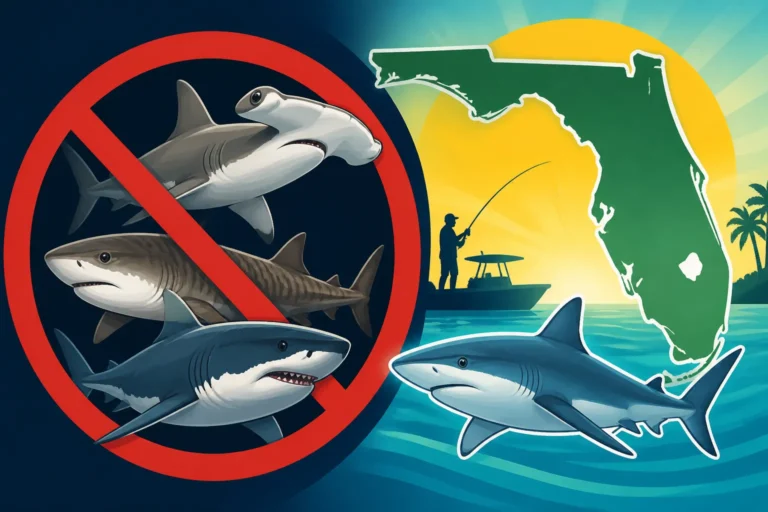
It's absolutely vital to know which sharks are off-limits. Florida, like many places, has strict regulations designed to protect vulnerable shark populations. Anglers have a responsibility to know these rules inside and out. For instance, species like the Goliath Grouper, sawfish, and manta rays are federally protected and cannot be harvested or intentionally harmed. While these aren't sharks, they often share similar habitats and can be encountered. When it comes to sharks themselves, Sand Tiger sharks, Whale sharks, and White sharks are among those that are federally protected. If you accidentally hook one, the goal is always to release it with as little harm as possible.
Identification can be tricky, especially with similar-looking species. The Florida Fish and Wildlife Conservation Commission (FWC) provides excellent resources, including identification charts and online guides. Familiarize yourself with key characteristics such as fin shape, color patterns, and snout length. For example, a Sandbar shark might look similar to a Blacktip at a glance, but subtle differences in fin size and placement can distinguish them. It’s always best to err on the side of caution. If you're not 100% sure what you've caught, assume it's protected and release it immediately and carefully. Carrying a laminated shark identification guide from the FWC or a detailed marine species book is always a smart move.
Seasonal Patterns and Migration
Sharks in Florida are highly migratory, and their presence in certain areas often depends on water temperature, food availability, and spawning cycles. Understanding these patterns is key to successful shark fishing. For example, the spring months often bring a spectacular blacktip migration along Florida's Atlantic coast, as these sharks move north following baitfish schools. This is a prime time for land-based anglers to target them from beaches and piers. You might see hundreds of sharks jumping out of the water, a truly incredible sight!
During the warmer summer months, many shark species will spread out, with some moving into deeper offshore waters, while others, like juvenile Lemon sharks and Bonnetheads, can be found in shallow estuaries and bays. The fall often brings another push of migratory sharks as water temperatures begin to cool, making them active feeders. Winter fishing can still be productive in warmer southern areas like the Florida Keys, where species like Lemon sharks and Bull sharks might congregate in specific channels or deeper flats. Florida Fishing Seasons Explained provides a broader look at seasonal trends for various species, but for sharks, it's often about following the bait and understanding water temperatures. Always check local fishing reports and consult with bait shops or local guides for the most current information on shark movements in your desired fishing area.
Essential Gear for Shark Fishing
Shark fishing isn't like casting for panfish; it requires specialized, heavy-duty gear that can withstand the incredible power and size of these apex predators. Skimping on tackle can lead to broken lines, lost fish, and potentially dangerous situations. Investing in quality equipment is not just about catching more fish, but also about ensuring the safety of yourself, your fellow anglers, and the sharks you encounter.
Heavy-Duty Rods and Reels
When you're targeting sharks, especially the larger ones, your rod and reel setup becomes your main weapon. You need gear that can handle intense prolonged battles. For rod selection, look for heavy-action rods, typically 7 to 9 feet in length, with strong backbones and durable guides. Fiberglass or composite rods are often preferred for their strength and ability to absorb punishing runs. A bent-butt rod might be beneficial for stand-up fighting if you're targeting truly enormous sharks from a boat, giving you better leverage.
Reels are arguably even more critical. Conventional reels are generally favored over spinning reels for shark fishing due to their superior drag systems, line capacity, and cranking power. Look for reels with a high line capacity (at least 300-500 yards of heavy braided line) and a smooth, powerful drag system that can withstand continuous pressure. Brands like Penn, Shimano, and Daiwa offer excellent options in their larger conventional reel lineups. Many anglers find good deals on reliable shark fishing gear, including these robust reels, on platforms like Amazon, allowing them to build a formidable setup without breaking the bank. For example, a Penn Senator 12/0 or a Shimano Tyrnos are classic choices for serious shark anglers. Best Rod and Reel Setup for Florida Offshore Fishing can offer some insight into heavy tackle selections that are also applicable to shark fishing.
Lines, Leaders, and Hooks
Your line, leader, and hook system is the direct connection to the shark, and any weak link can spell disaster. For your main line, braided line is the go-to choice for shark fishing. It offers incredible strength-to-diameter ratio, minimal stretch for solid hooksets, and excellent abrasion resistance. You'll want to spool up with at least 80-pound test braid, and for bigger sharks, 100 to 200-pound test is not uncommon. What Pound Test Line for Tarpon Fishing? offers some perspective on heavy-duty line choices, which can be extrapolated for shark fishing.
Next comes the leader, which is critical for preventing bite-offs from sharp teeth and abrasive skin. A monofilament top shot of 100-200 pound test, several feet long, is often used as a shock absorber. This is then connected to a heavy-duty wire leader, either single-strand stainless steel or multi-strand cable, with a breaking strength of 200 to 400 pounds. The wire leader needs to be long enough to prevent the shark from biting through your mainline – think at least 3 to 6 feet, often longer for bigger sharks. The hook choice is also vital: use large, strong, non-offset circle hooks, typically sized 16/0 to 20/0, made from heavy-gauge wire. Circle hooks are mandatory for shark fishing in Florida because they dramatically reduce gut hooking, promoting better survival rates for released sharks.
Bait and Chum Strategies
Sharks are primarily drawn by scent, so your bait and chum strategy is paramount. Fresh, oily fish are king when it comes to shark bait. Common choices include Bonita, Spanish mackerel, Barracuda, Mullet, Ladyfish, and Jack Crevalle. Cut these baits into large chunks or use them whole, depending on the size of the shark you're targeting and the hook you're using. The fresher the bait, the better, as the scent trail will be stronger.
Chumming is an incredibly effective way to attract sharks to your fishing area. A steady, consistent chum slick will draw sharks from a distance. You can buy pre-made chum blocks or make your own by grinding up oily fish. Deploy your chum in a mesh bag suspended from the boat or from shore, allowing the scent to slowly disperse with the current. The goal is to create a long, consistent scent trail that leads the sharks directly to your baits. Be patient; it can take time for the chum to work its magic. When fishing from shore, a weighted chum bag can be cast out with a separate rod or deployed from a kayak. Best Live Bait for Florida Inshore Fishing provides details on finding and preparing fresh bait, which can be easily adapted for shark fishing, even if you’re using dead baits.
Best Techniques for Catching Sharks
Florida offers a unique diversity in its shark fishing opportunities, ranging from casting off a sandy beach to venturing miles offshore. Each environment and target species dictates a different set of techniques, gear, and safety protocols. Understanding these nuances will significantly increase your chances of success and ensure a more responsible fishing experience.
Shore-Based Shark Fishing
Shore-based shark fishing, often called "land-based shark fishing" (LBSF), is a popular and accessible way to target sharks, particularly Blacktips, Bulls, and Lemon sharks, especially during their migrations. This usually involves fishing from beaches, piers, or jetties. The challenge here is getting your bait far enough out to where the sharks are. Many LBSF anglers use specialized "kayak deployment" methods where a robust leader and bait are paddled out several hundred yards and then dropped. This allows you to present large baits in prime shark territory that's out of casting range.
When fishing from shore, heavy-duty surf rods (10-14 feet) are common, paired with large conventional reels spooled with heavy braid. A sturdy rod holder, often a piece of PVC pipe driven deep into the sand, is essential to keep your rod secure against powerful runs. Safety is paramount; keep a sharp knife handy to cut the line in an emergency and always be aware of your surroundings, especially if other swimmers or beachgoers are nearby. Always carry a long dehooker or bolt cutters to ensure a quick and safe release without bringing the shark completely out of the water, and remember that dragging large sharks onto the beach is discouraged for their health.
Boat-Based Shark Fishing
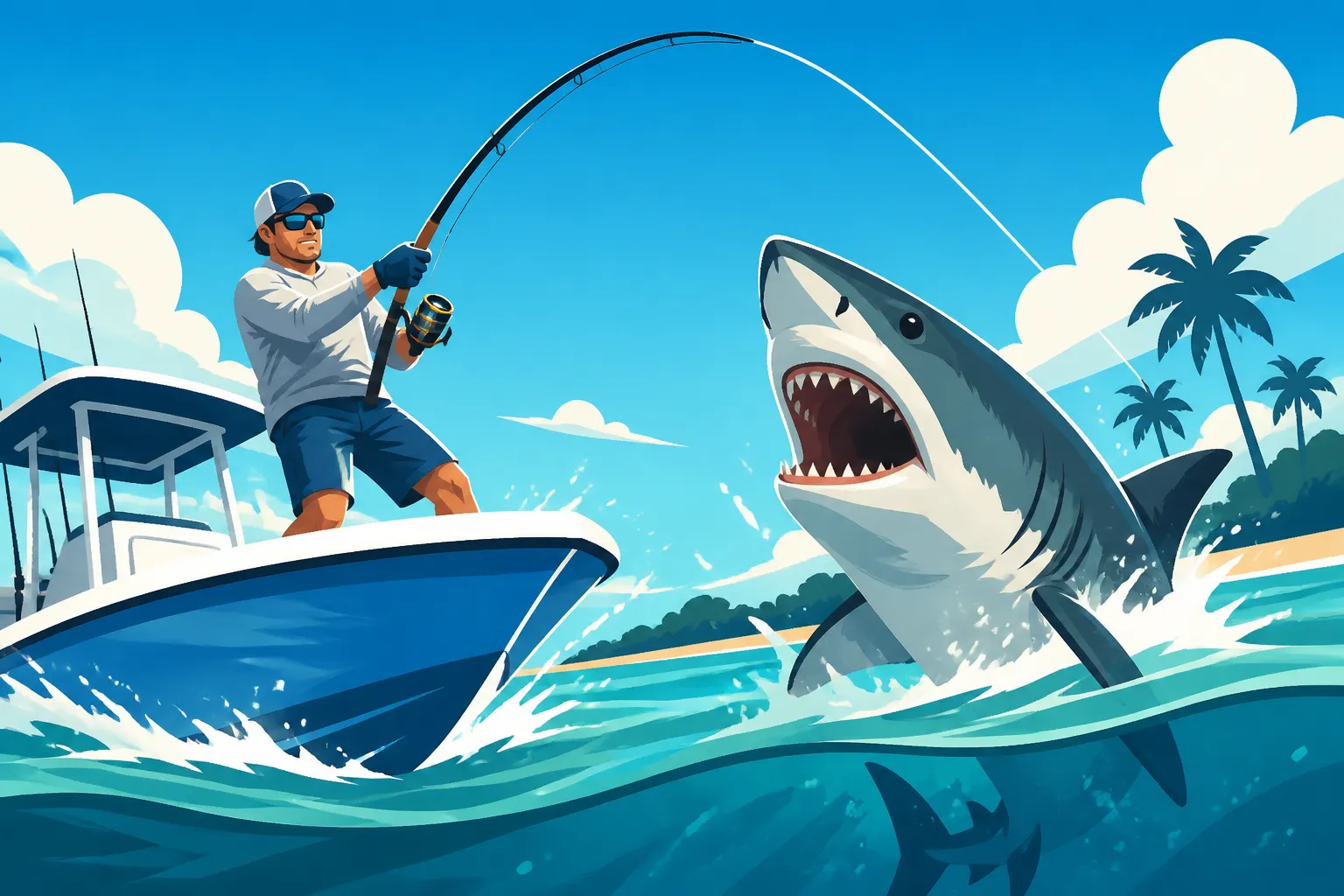
Boat-based shark fishing opens up a whole new world of possibilities, allowing you to access deeper waters and target larger, more diverse species. Whether you're in a small center console nearshore or a large sportfisher offshore, the principles remain similar: find suitable structure or current lines, establish a good chum slick, and deploy your baits. Florida Offshore Fishing Techniques provides an excellent foundation for understanding how to approach fishing from a boat in Florida's open waters.
For nearshore boat fishing, targeting species like Blacktips, Spinner sharks, and smaller Hammerheads, look for areas with baitfish activity, ledges, or channels. Anchoring up-current from a promising spot and deploying a heavy chum slick is a common tactic. For offshore species like larger Hammerheads, Tiger sharks, or Mako sharks, you might be fishing over deep wrecks, reefs, or along the edge of the continental shelf. Here, drift fishing with a steady chum slick can be very effective, allowing you to cover more ground. Always have all your necessary gear—gaffs, dehookers, tail ropes, and bolt cutters—easily accessible and be ready for a powerful fight that could last hours.
Kayak-Based Shark Fishing
Kayak-based shark fishing has grown immensely in popularity, offering an incredibly intimate and thrilling experience. While it's generally not recommended for targeting the largest offshore sharks, it's fantastic for species like Bonnetheads, juvenile Blacktips, and even smaller Lemon or Bull sharks in nearshore waters, bays, and estuaries. The stealth of a kayak allows you to get into shallow areas where larger boats can't go, often finding unpressured fish.
For kayak shark fishing, a stable, purpose-built fishing kayak is essential. You'll want to use slightly lighter, but still robust, tackle than you would for boat-based fishing, typically 50-80 pound braided line with heavy wire leaders. Safety is even more critical on a kayak. Always wear a PFD, carry a VHF radio or satellite messenger, and inform someone of your float plan. When hooked up to a shark, the "sleigh ride" can be exhilarating as the shark pulls you along. Be prepared to cut the line if the situation becomes unsafe, and always prioritize your own safety over landing the fish. A long dehooker and sturdy pliers are indispensable for a quick, safe release from the kayak.
Prime Locations for Shark Fishing in Florida
Florida truly lives up to its "Fishing Capital of the World" title, and that includes incredible opportunities for shark fishing. From the northern Panhandle down to the southernmost Keys, different regions offer distinct advantages for targeting various shark species. Understanding these regional hotspots can dramatically improve your chances of a successful outing.
Atlantic Coast Hotspots
Florida's Atlantic coast is world-renowned for its phenomenal shark fishing, largely due to the annual migrations of baitfish that draw in large numbers of predatory sharks. The stretch from Jacksonville down to Palm Beach is particularly famous for its Blacktip and Spinner shark runs, especially in late winter and early spring. During this time, beaches around areas like Fort Pierce, Jensen Beach, and Daytona Beach can be alive with schooling baitfish and the sharks that pursue them. You might see large schools of Blacktips literally jumping out of the water as they feed, a phenomenon that draws anglers from all over.
Further south, around the Miami and Fort Lauderdale areas, the deeper waters offshore hold a variety of larger sharks year-round. Here, anglers often target Bull sharks, Hammerheads, and even occasional Tiger sharks over reefs, wrecks, and along the Gulf Stream edge. Piers like the Anglins Pier in Lauderdale-by-the-Sea or the Dania Beach Pier can also be excellent vantage points for catching Blacktips and other smaller sharks, though specific regulations apply to pier fishing for sharks. Always check local ordinances for any restrictions on shark fishing from specific structures. Best Piers for Fishing Without a Boat might give you ideas for accessible locations, but always verify shark fishing rules there.
Gulf Coast Hotspots
The Gulf Coast of Florida offers a different, yet equally rewarding, shark fishing experience. The shallower, warmer waters of the Gulf are home to abundant baitfish populations, supporting a healthy shark presence. Areas like Tampa Bay and Charlotte Harbor are prime locations for targeting Bull sharks and juvenile Lemon sharks, which thrive in brackish estuaries and shallow flats. These waters are particularly good for smaller boats and even kayak anglers. Many anglers explore the deeper channels and mouths of rivers feeding into these bays for larger specimens.
Moving further offshore in the Gulf, anglers can find a wider array of species, including larger Hammerheads, Nurse sharks, and even the occasional Mako or Tiger shark over deeper reefs and wrecks. The waters off Destin and Panama City Beach in the Panhandle are excellent for offshore shark fishing, with numerous charter operations catering to this pursuit. Coastal towns like Sarasota and Naples also provide access to productive nearshore and offshore shark grounds. When fishing the Gulf, pay close attention to currents and water clarity, as these can heavily influence shark activity.
Florida Keys and South Florida
The Florida Keys and the southernmost tip of mainland Florida, particularly the Everglades, are truly special places for shark fishing. The unique blend of shallow flats, deep channels, and proximity to the open ocean creates a diverse ecosystem supporting many shark species. In the Keys, species like Lemon sharks, Blacktip sharks, Bull sharks, and even nurse sharks are abundant on the flats, around mangrove islands, and in the backcountry. This is a popular area for sight fishing for sharks, especially with fly gear or light tackle.
Areas around Marathon, Islamorada, and Key West offer excellent opportunities for both inshore and offshore shark encounters. The bridges throughout the Keys, like the Seven Mile Bridge, can also be hotspots, attracting sharks that feed on baitfish congregating around the pilings. In the Everglades National Park and Ten Thousand Islands region, you'll find a healthy population of Bull sharks and Lemon sharks in the brackish rivers and estuaries. While these areas are stunning, they require careful navigation due to shallow waters and intricate mangrove systems. For anglers seeking a diverse shark experience, the Keys and South Florida truly deliver. Best Saltwater Fishing Spots in Florida highlights many of these regions as prime fishing destinations across the board.
Safety and Ethical Considerations
Shark fishing is an exhilarating sport, but it comes with significant responsibilities. The power of these animals demands respect, and engaging with them requires careful planning, adherence to safety protocols, and a strong commitment to ethical angling practices. It’s not just about protecting yourself; it’s about protecting the sharks and the environment they call home.
Handling Sharks Safely
When you hook into a shark, the first thing to remember is that it's a wild, powerful animal with sharp teeth. Never attempt to grab a shark by hand near its mouth. Always use proper tools for handling and releasing. A stout dehooker, with a long handle, is indispensable for removing hooks, minimizing contact with the shark. Bolt cutters are also a critical tool; if a hook is deeply set or difficult to remove, cutting the leader as close to the hook as possible is often the safest and quickest option for both you and the shark.
If you must bring the shark alongside the boat or onto the shore, use a tail rope or a specialized shark landing tool to control its powerful tail. For smaller sharks, you might use a lip gripper, but only if it's designed for heavy-duty use and provides adequate leverage to avoid contact with the mouth. For land-based fishing, avoid dragging large sharks completely out of the water onto dry sand, as this can severely injure their internal organs. Keep them in the water as much as possible, supported, for photos and release. Always have another person with you who understands the safety protocols and can assist when needed. Never turn your back on a shark, even if it appears subdued.
Responsible Catch and Release Practices
The vast majority of recreational shark fishing in Florida is catch and release, and practicing responsible techniques is paramount for the survival of the fish. As mentioned, non-offset circle hooks are mandatory for shark fishing, as they greatly reduce the incidence of gut hooking, which is often fatal. When a shark is hooked, fight it efficiently to minimize stress. Prolonged fights can exhaust a shark, making it more vulnerable to predators or unable to recover post-release.
Once the shark is boatside or shore-side, work quickly. Use your dehooker to remove the hook. If the hook cannot be removed without causing excessive harm or delay, cut the leader as close to the hook as possible. Avoid lifting large sharks by their tails or gills, as this can cause internal damage. Support the shark horizontally, especially if it's a larger specimen. For boatside releases, gently guide the shark back into the current, facing it into the flow to help oxygenate its gills if it seems sluggish. Keep the shark in the water as much as possible throughout the entire process. Catch and Release Best Practices for Snook offers general principles that apply to many other species, including sharks, emphasizing minimal stress and quick release.
Minimizing Impact on Other Wildlife
Shark fishing, especially when using chum, can sometimes attract unintended guests. While chumming is effective for sharks, it can also draw in other species, including marine mammals, sea turtles, or even other protected fish. It's crucial to be aware of your surroundings and take steps to avoid incidental interactions with these animals. If you notice a protected species approaching your chum slick or baits, temporarily cease chumming and retrieve your lines until the animal has moved on.
Dispose of all fishing line, hooks, and bait packaging properly. Marine debris is a huge threat to marine life, and discarded tackle can entangle or injure animals. Also, be mindful of where you're setting up your fishing operation. Avoid areas with high concentrations of other marine life or busy swimming zones. While it's exciting to target sharks, it's also important to be a good steward of the ocean and ensure your passion doesn't negatively impact the delicate ecosystem.
Regulations and Permitting for Shark Fishing
Florida's waters are managed under a complex system of state and federal regulations, and shark fishing is no exception. These rules are put in place to ensure sustainable populations and protect vulnerable species. Ignorance of the law is never an excuse, and violating regulations can result in hefty fines, confiscation of gear, or even criminal charges. Always do your homework before you hit the water.
General Shark Fishing Regulations
To start, anyone fishing for sharks in Florida's state waters (up to 9 nautical miles on the Gulf coast, 3 nautical miles on the Atlantic coast) must possess a valid Florida saltwater fishing license. This is non-negotiable. Florida Saltwater Fishing License Rules outlines the requirements for obtaining one. Beyond the general license, anglers targeting sharks from shore, a vessel, or other land-based structures (like piers or bridges) also need a specific Shore-Based Shark Fishing Permit. This permit is free but mandatory and must be obtained online through the FWC website. This permit helps the FWC gather data on shark fishing effort and ensures anglers are aware of the specific regulations.
There are also specific rules regarding species, size, and bag limits. For example, recreational anglers are generally allowed to harvest only one shark per person per day, or two sharks per vessel per day, whichever is less. There are minimum size limits for certain species; for instance, many species have a 54-inch fork length minimum. Prohibited species cannot be harvested at all, regardless of size. The use of non-offset circle hooks is mandatory when fishing for sharks with natural bait, as discussed earlier. It is also illegal to land a shark by removing its head, tail, or fins before it has been landed and measured, and it is illegal to "fin" a shark and discard its body.
Specific Prohibitions and Protected Areas
Beyond general regulations, certain shark species are completely prohibited from harvest in Florida waters. These include, but are not limited to, Atlantic Angel, Basking, Bigeye Sand Tiger, Bigeye Sixgill, Bigeye Thresher, Dusky, Galapagos, Great Hammerhead (over 98 inches fork length), Gulfstream, Longfin Mako, Narrowtooth, Sand Tiger, Sandbar, Scalloped Hammerhead (over 98 inches fork length), Sevengill, Sixgill, Smalltail, Smooth Hammerhead (over 98 inches fork length), Tiger (over 107 inches fork length), Whale, and White sharks. This list is subject to change, so always check the latest FWC guidelines.
There are also specific areas where shark fishing might be prohibited or restricted. Some state parks, national parks (like Everglades National Park), or wildlife refuges might have their own rules. Always check with the local managing authority for any additional restrictions before you cast a line in these sensitive habitats. It's also illegal to feed or intentionally attract sharks (except for fishing purposes using legal bait and chum) in Florida state waters. This is to prevent habituation and ensure public safety. Florida Fishing Regulations and Bag Limits provides a comprehensive overview that includes shark specifics, but the FWC website is always the most up-to-date source.
Required Permits and Endorsements
As mentioned, the core permit for recreational shark fishing is the Florida saltwater fishing license, coupled with the free Shore-Based Shark Fishing Permit if you're fishing from land or an anchored vessel. These permits are crucial for compliance. The Shore-Based Shark Fishing Permit is directly aimed at ensuring anglers understand and adhere to the specific requirements for shark fishing, including the mandatory use of non-offset circle hooks and the proper handling and release techniques.
| Permit/License Type | Requirement | Applies To | Key Consideration |
|---|---|---|---|
| Florida Saltwater Fishing License | Mandatory for all recreational saltwater fishing | Anyone 16 years or older, unless exempt | Required regardless of whether fishing from shore, boat, or pier. |
| Shore-Based Shark Fishing Permit | Mandatory for anyone fishing for sharks from shore or vessel | All recreational anglers, even those otherwise exempt from a fishing license | Must be obtained online, free of charge. Educates anglers on specific rules. |
| Federal HMS Permit (Highly Migratory Species) | Required for certain large sharks (e.g., pelagic species like Mako) | Anglers targeting sharks in federal waters (beyond state waters) | Not always needed for typical recreational state water shark fishing. |
If you plan to venture into federal waters (beyond 3 or 9 nautical miles, depending on the coast) and target highly migratory species like certain Mako sharks or larger pelagic species, you might also need a Federal Highly Migratory Species (HMS) permit from NOAA Fisheries. This is typically more relevant for offshore big-game fishing charters, but it's something to be aware of if your aspirations take you far from shore. Always check the current regulations before each trip, as they can change seasonally or annually to adapt to fish stock assessments.
Disclaimer
This article is for general informational purposes only and does not constitute professional advice. Laws, prices and regulations vary by location and change over time. Consult a qualified professional for guidance on your specific situation.