Florida Bonito Fishing Guide
Many anglers coming to Florida dream of catching huge snook, powerful tarpon, or a monster redfish. But sometimes, in the pursuit of those legendary catches, we overlook some of the smaller, incredibly fun-to-fight species that swarm our waters. This guide is all about one such underdog: the feisty bonito. We'll dive deep into everything you need to know to find, catch, and understand these spirited fish, turning an often-ignored species into a fantastic target for a thrilling day on the water.
Understanding the Florida Bonito: What Exactly Are They?
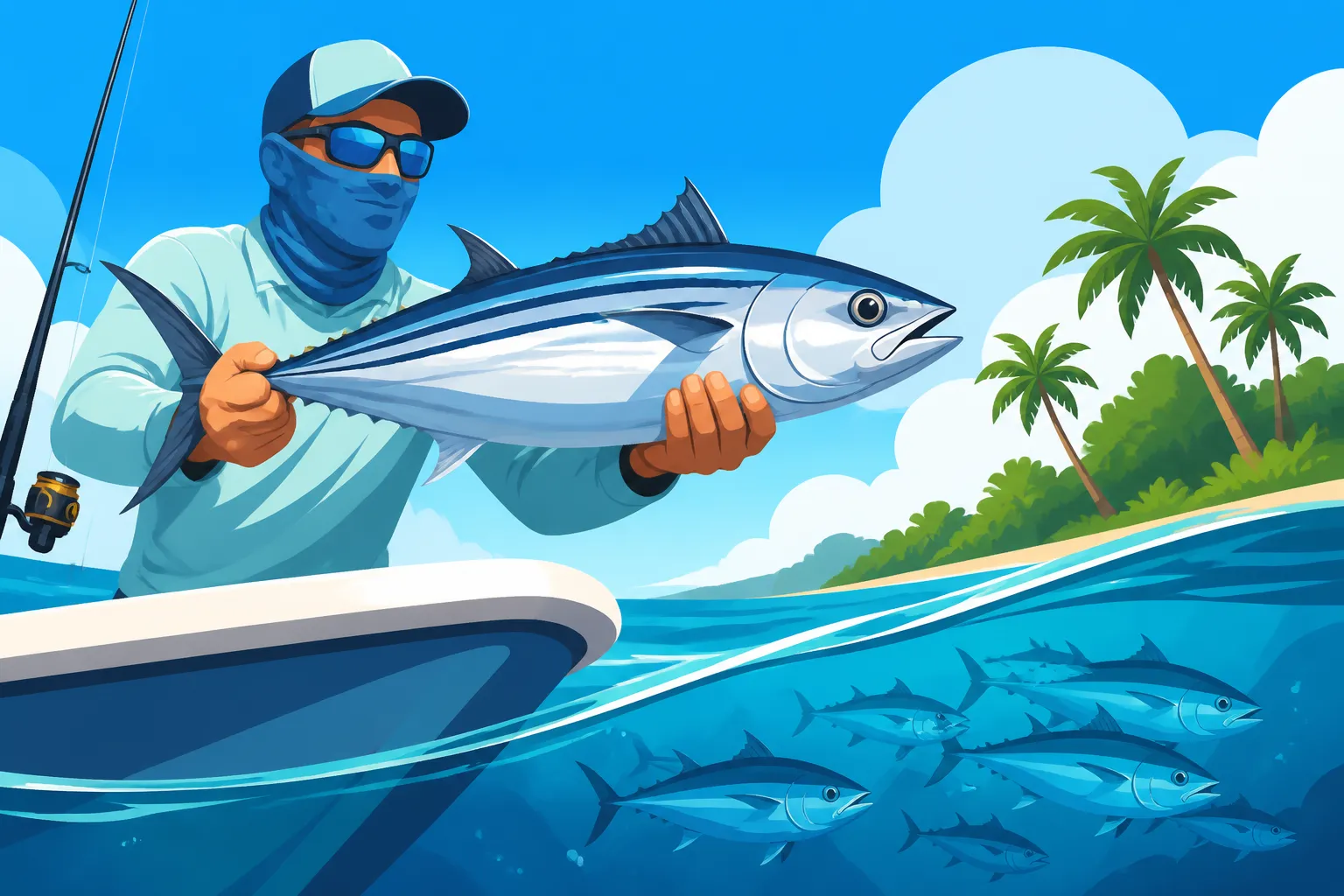
The Atlantic bonito is a powerful, torpedo-shaped member of the mackerel family, often mistaken for other fast-swimming pelagics. They might not get the same Instagram fame as a sailfish, but what they lack in size, they more than make up for in sheer fighting spirit. They are a true schooling fish, moving in large packs and creating a frenzy when they hit baitfish. If you've ever seen a patch of water erupt with splashing and birds diving, chances are, bonito are in the mix.
Identifying the Atlantic Bonito
One of the first things to get right when targeting bonito is knowing exactly what you've caught. They have a sleek, metallic blue-green back that fades to silver on their sides and belly. What truly sets them apart are the distinctive dark, oblique (slanted) stripes running along their back, which don't extend below the lateral line. Their bodies are streamlined, built for speed, with a small, pointed head and a row of small, sharp teeth. They typically range from 2 to 8 pounds, though bigger ones are certainly out there, offering an even more impressive tug-of-war.
It's easy to confuse them with their close cousins, especially the little tunny (also known as false albacore or "fat albert"). While both are fast and fun, the little tunny has wavy, dark lines on its back and distinctive black spots near its pectoral fins, neither of which the bonito possesses. Pay close attention to these markings to ensure you know your catch, especially since regulations can sometimes differ slightly between similar species, though often they fall under general marine species rules.
Bonito Habits and Behavior
Bonito are pelagic, meaning they live in the open ocean, but they frequently come close to shore in Florida, especially when baitfish are abundant. They are opportunistic predators, feasting on small schooling fish like pilchards, threadfin herring, sardines, and even squid. You'll often find them chasing bait at the surface, creating those tell-tale boils and splashes that get any angler's heart pumping. These feeding frenzies are truly exciting to witness and even more exciting to cast into.
They are incredibly fast swimmers, built for short, explosive bursts of speed. This means when you hook one, be prepared for a blistering first run that can strip a surprising amount of line from your reel. Their schooling nature means if you find one, you're likely to find many. This makes them a fantastic target for anglers looking for consistent action, as you can often hook up fish after fish when the bite is on. They’re also migratory, moving up and down the coast with the seasons and baitfish movements, so understanding those patterns is key to consistent success.
Bonito vs. Tuna vs. Little Tunny: A Common Confusion
It's a common scenario: you hook into something fast and strong, and the immediate thought is "tuna!" But often, especially in Florida's nearshore waters, it's either a bonito or a little tunny. Both are fantastic fighters, but they are distinct species with different characteristics, even if they share some family traits. Knowing the difference isn't just about bragging rights; it's about understanding the fishery.
Let's break down the key differences. Bonito, as mentioned, have those clean, oblique stripes above the lateral line. Little tunny, or false albacore, have wavy, worm-like markings on their backs and distinct spots below their pectoral fins. True tunas, like blackfin or skipjack, generally have more uniform bodies, often with less pronounced stripes or different coloration. Skipjack tuna, for instance, have strong, dark longitudinal stripes on their belly, a feature absent on bonito. While all are powerful, the bonito tends to be a bit smaller and more consistently found closer to shore, making them highly accessible for many anglers.
| Feature | Atlantic Bonito | Little Tunny (False Albacore) | Skipjack Tuna |
|---|---|---|---|
| Back Markings | Dark, oblique (slanted) stripes above lateral line, no spots below pectoral fins. | Wavy, "worm-like" dark markings on back, 4-5 distinct dark spots below pectoral fins. | Usually solid dark blue/black back, 4-6 prominent dark longitudinal stripes on belly. |
| Body Shape | Sleek, torpedo-like | Stocky, robust, more football-shaped | Streamlined, but generally thicker than bonito/little tunny. |
| Size (Avg.) | 2-8 lbs (can reach 15+ lbs) | 5-15 lbs (can reach 30+ lbs) | 10-25 lbs (can reach 50+ lbs) |
| Taste | Strong, oily, often used for bait/smoked | Similar to bonito, strong, oily | Milder, widely consumed, popular for sushi/canning. |
| Nearshore Access | Very common nearshore | Common nearshore | Less common directly nearshore, more pelagic/offshore. |
Finding Bonito: Prime Locations and Conditions
One of the great things about bonito fishing in Florida is their accessibility. You don't always need to run miles offshore to find them. They're often within sight of land, especially around structures and where bait congregates. Understanding their preferred habitats and environmental cues will significantly increase your chances of a successful outing. This species can provide incredible action when you locate them, making your Florida Fishing Seasons Explained efforts truly pay off.
Nearshore and Offshore Hotspots
Bonito are true opportunists and will follow the food. This means you can often find them just a few miles offshore, especially over artificial reefs, ledges, and wrecks. These structures attract baitfish, which in turn attract predators like bonito. Look for them around channel markers, buoys, and even along the beaches where schools of bait are running. The outgoing tide through inlets can also be a prime time, as baitfish are flushed out, creating an easy meal for hungry bonito.
Further offshore, bonito can be found around sargassum weed lines or any floating debris that offers cover for baitfish. They’ll also congregate around offshore humps and drop-offs. If you’re targeting larger pelagics like mahi-mahi or king mackerel, you'll often encounter bonito in the same areas, as they share similar feeding grounds and prey. Their willingness to chase anything shiny and fast makes them a fun bycatch when you're trolling for bigger game, but they are a worthy target in their own right, especially if you're looking for non-stop action close to home.
Reading the Water: Signs of Bonito Activity
One of the most exciting aspects of targeting bonito is that they often announce their presence. Keep a sharp eye on the water's surface for any signs of feeding activity. Birds diving and circling are a huge clue – especially terns and gulls. If you see birds actively hitting the water, there’s almost certainly a school of baitfish below, and likely predators chasing them. Watch for splashing, boils, or even streaks of white water as bonito slash through bait schools.
Another key indicator is baitfish jumping out of the water. If you see hundreds of small fish leaping in unison, something big is chasing them from below. Cast your lure into these frenzies, and you're almost guaranteed a strike. Pay attention to changes in water color and temperature breaks, too. These can indicate convergence zones where plankton and baitfish gather, making them prime hunting grounds for bonito. Using a fish finder can also help you spot bait balls or schools of bonito just below the surface, even if they aren't actively busting bait.
Seasonal Patterns and Best Times to Target
While bonito can be caught year-round in various parts of Florida, their presence is often dictated by water temperature and baitfish migrations. Generally, they are more prevalent during the warmer months, from late spring through early fall, when baitfish schools are abundant along the coast. However, they can be found throughout the winter in southern Florida, especially around the Keys and South Florida, where water temperatures remain more consistent.
The best time of day to target bonito typically aligns with prime feeding windows: early morning and late afternoon. These are often periods of lower light, which can make baitfish more vulnerable and predators more active. However, if you find a strong current or a major bait ball, bonito can feed aggressively throughout the day. Tides also play a role, particularly around inlets and passes. An outgoing tide can be excellent as it flushes bait out to sea, concentrating bonito in ambush points. Always check local fishing reports and consult resources like Best Time of Year to Fish in Florida to get the most up-to-date seasonal intel for your specific area.
Tackle and Techniques for Florida Bonito
Bonito are powerful fish, capable of incredibly fast runs and a strong, sustained fight. While they aren't massive, their speed and stamina mean you can't just throw out any old gear. Selecting the right tackle is crucial for both enjoying the fight and successfully landing these speedsters. The good news is that you don't need super heavy-duty offshore gear; rather, a good medium-light to medium setup will serve you well. For more general advice, you might want to look at Best Rod and Reel Setup for Florida Inshore Fishing or Best Rod and Reel Setup for Florida Offshore Fishing.
Recommended Rods, Reels, and Line
For bonito, a fast-action spinning rod between 7 to 8 feet long is ideal. This length provides good casting distance to reach busting schools and offers enough leverage to fight a fast fish. A medium-light to medium power rod with a sensitive tip but a strong backbone is perfect. Pair this with a 3000-5000 series spinning reel, known for its smooth drag system. A smooth drag is paramount because bonito will make those blistering runs, and a sticky drag can lead to snapped lines or pulled hooks.
When it comes to line, 10-20 lb braided line is an excellent choice. Braid offers superior casting distance, sensitivity, and strength-to-diameter ratio. Crucially, its lack of stretch allows you to feel even the most subtle taps and provides solid hooksets. Because bonito have keen eyesight and can be leadershy, especially in clear Florida waters, you'll want to add a fluorocarbon leader. A 20-30 lb fluorocarbon leader, about 2-3 feet long, should be tied to your main line using a strong knot like an FG knot or an Albright knot. Make sure your knots are solid, as these fish will test them. You can find reliable braid and fluorocarbon leader material on platforms like Amazon.
Effective Lures and Baits
Bonito are incredibly aggressive and will readily strike a variety of lures, especially those that mimic small baitfish. Metal spoons, particularly those with a flashy chrome or silver finish, are perennial favorites. Brands like Clarkspoon or Kastmaster are highly effective. Cast them out, let them sink a bit, and retrieve them quickly with a twitching motion to simulate a fleeing baitfish. Weight-forward jigs, ranging from 1/2 oz to 1 oz, are also excellent, especially when bonito are holding a bit deeper. Think about lures that imitate glass minnows, sardines, or pilchards – anything small and shiny that can be retrieved quickly.
Soft plastics rigged on a jig head can also be deadly, especially paddle tails or skinny jerk baits that you can work erratically. The key is speed and action; bonito love a fast retrieve. While artificial lures are often the most productive, live bait can also be effective, especially if the fish are finicky. Small pilchards, threadfin herring, or greenbacks free-lined into a busting school can produce explosive strikes. However, given their aggressive nature, most anglers opt for artificials for the sheer fun of casting and retrieving rapidly into a feeding frenzy.
Casting, Trolling, and Jigging Strategies
There are several effective ways to target bonito, depending on where and how you find them.
Casting to Breaking Fish: This is arguably the most exciting method. When you see bonito busting bait on the surface, approach slowly and cast your lure just beyond the commotion. Start a fast retrieve immediately. Often, the strike will come almost as soon as the lure hits the water or during that first rapid retrieval. Don't be afraid to experiment with retrieve speeds and short pauses. Sometimes, a quick jig or twitch during the retrieve can trigger a strike from a hesitant fish. Using a metal spoon or a small topwater plug in these situations is incredibly effective.
Trolling: If you're covering a lot of water or can't locate active feeding schools, trolling can be very productive. Use small, flashy spoons, lipped plugs that dive a few feet, or even small skirted ballyhoo behind a planer or weight. Troll at a relatively fast speed, typically between 5-8 knots, to imitate fleeing baitfish. This method is great for locating schools, and once you get a strike, you can often slow down or stop to cast to the remaining fish. Trolling around known structures, channel edges, or weed lines is a great way to encounter bonito. Consider checking out Florida Offshore Fishing Techniques for broader trolling strategies.
Jigging: When bonito are holding deeper, perhaps around an offshore wreck or reef, vertical jigging can be the ticket. Drop a diamond jig or a butterfly jig down to the desired depth and work it with a series of sharp lifts and drops. This mimics an injured or darting baitfish, often irresistible to bonito. This technique requires a bit more effort but can be incredibly rewarding, especially if the fish aren't coming to the surface. It's also a great way to target them if you're marking them on your fishfinder but don't see any surface activity. Remember to keep your jigs sharp and be ready for a strike on the fall or the retrieve.
The Thrill of the Fight: Landing and Handling Bonito
Hooking a bonito is an exhilarating experience. They are renowned for their blistering runs and relentless pulling power, especially for their size. Getting them to the boat and handling them safely is an art, ensuring both a successful catch and the well-being of the fish, whether you plan to keep it or release it.
Fighting Techniques for a Fast Fish
When a bonito strikes, the first thing you'll notice is the incredible speed of its initial run. Your drag will sing! It's crucial to let the fish run, keeping steady pressure and trusting your drag setting. Do not try to muscle the fish, especially during that first burst, as you're likely to pull the hook or break your line. Keep your rod tip up, maintaining a good bend in the rod to absorb the shock of their powerful movements.
Once the initial run is over, the bonito will often circle and make shorter, powerful bursts. Use a "pump and reel" technique: lift the rod tip to gain line, then quickly drop it while reeling down to recover slack. Repeat this motion, steadily gaining ground. Bonito will fight hard all the way to the boat, so don't let your guard down until it's safely alongside. They often make one last desperate dash right near the boat, so be prepared for it. Patience and a smooth, consistent retrieve will win the battle.
Safe Handling and Release Tips
If you plan to release a bonito, safe handling is paramount to ensure its survival. Ideally, minimize the time the fish is out of the water. If possible, remove the hook while the fish is still in the water, using a de-hooking tool. If you must bring it aboard, handle it with wet hands to protect its slime coat, or use a wet towel. Avoid touching its gills or eyes. Bonito don't have many sharp spines, but those small teeth can still nick you, so handle with care or use gloves.
For photographs, get your shot quickly and then gently return the fish to the water, supporting its belly and head until it swims away under its own power. Sometimes, a little "reviving" is needed, gently moving the fish forward in the water to get oxygen flowing over its gills, especially if it's been a long fight. Learning proper catch and release practices is vital for all species, and you can get more detailed information in resources like Catch and Release Best Practices for Snook.
Bringing Bonito Aboard
For those times when you intend to keep your bonito, bringing it aboard requires a bit of planning. Because of their continuous fight, they will often come to the boat still full of energy. A sturdy net with a rubberized mesh is excellent, as it prevents hooks from tangling and is gentler on the fish. Once netted, a quick, humane dispatch is best, especially if you plan to bleed the fish for better meat quality.
Have a designated cooler with ice ready. Bonito are oily fish, and chilling them quickly is essential if you intend to eat them or use them for bait. If you're going to bleed them, a quick cut to the gills immediately after dispatching will help improve the quality of the flesh. While not everyone considers bonito top-tier table fare, proper handling right after the catch can make a significant difference in how you utilize your catch.
Regulations and What to Do with Your Catch
Understanding the rules and knowing what you can (and cannot) do with your catch is a crucial part of responsible angling in Florida. Bonito are generally not heavily regulated compared to some other popular species, but it's always wise to be informed. Always make sure you have the proper Florida Fishing License Guide before you even cast a line.
Florida Bonito Regulations and Limits
Fortunately, bonito are not typically subject to complex slot limits or restrictive bag limits like many of Florida's prized game fish. As a general rule, there are usually no size limits and generous bag limits for bonito in Florida waters. However, fisheries regulations can and do change, and it's your responsibility as an angler to stay current. Always consult the latest Florida Fish and Wildlife Conservation Commission (FWC) regulations before heading out. This information is typically available on their website or in their annual printed guides.
Even when specific regulations are light, it's a good practice to only take what you will use. Overfishing any species, even abundant ones, isn't good for the ecosystem. Remember that the FWC is responsible for managing both state and federal waters, but sometimes specific rules might apply differently depending on how far offshore you venture. It's worth reviewing guides like Florida Fishing Regulations and Bag Limits and State Waters vs Federal Waters Fishing Rules in Florida to understand these distinctions.
Bonito as Table Fare (or not!)
This is where bonito get a bit of a bad rap. While edible, their flesh is dark, oily, and has a very strong, distinctive flavor that many find unappealing for direct consumption, especially when compared to snapper, grouper, or mahi-mahi. Because of this, they are often used more for purposes other than a fresh dinner.
One of the most popular uses for bonito is cut bait. Their oily flesh and strong scent make them excellent bait for a variety of larger predators, including king mackerel, sharks, and even bottom fish like grouper. Many offshore anglers specifically target bonito to stock up on bait for their next big trip. Additionally, smoked bonito can be surprisingly delicious! The smoking process mellows out some of the stronger flavors and creates a rich, savory product that can be enjoyed in dips or on crackers. So, while you might not be pan-frying them, there's definitely value in bringing bonito home.
Conservation and Sustainable Practices
Even for a plentiful species like bonito, adhering to conservation principles is essential for the health of our marine environment. Fishing responsibly ensures that future generations can enjoy the same thrilling experiences we do today. This includes knowing and following all regulations, but also adopting a mindset of stewardship.
When you're fishing for bonito, practice good angling ethics. Avoid leaving trash or discarded fishing line in the water, as these can harm marine life. Be mindful of your boat's impact on sensitive habitats. If you're chumming to attract fish, be judicious and use natural, biodegradable materials – and you can read up on techniques in How to Chum for Fish From a Boat. If you're not planning to eat or use a fish, practice careful catch and release. Every angler plays a role in protecting Florida's incredible fishing resources.
Disclaimer
This article is for general informational purposes only and does not constitute professional advice. Laws, prices and regulations vary by location and change over time. Consult a qualified professional for guidance on your specific situation.