Are Bonefish and Tarpon Catch and Release Only?
Many anglers, especially those new to Florida's incredible waters or visiting from out of state, often wonder about the specific rules for some of our most iconic sportfish. It can be incredibly confusing navigating the ins and outs of fishing regulations, and a common question I hear is whether prized species like bonefish and tarpon are strictly catch and release. This guide will dive deep into the regulations, the conservation efforts, and why these majestic fish are managed the way they are, giving you a clear picture of what's expected on the water.
The Conservation Ethos: Understanding Catch and Release in Florida
Florida is a unique fishing paradise, teeming with diverse species across its freshwater and saltwater environments. But with such bounty comes great responsibility, and the state's fishing regulations are designed to ensure these resources remain healthy for future generations. For certain species, like the incredible tarpon and the elusive bonefish, this means a strong emphasis on catch and release. It's not just about rules; it's about protecting the very heart of what makes Florida fishing so special.
Why Catch and Release is Paramount for Certain Species
Think about the sheer joy of hooking into a powerful tarpon as it leaps and dances across the water, or the delicate thrill of spotting a bonefish "tailing" on a shallow flat. These experiences are priceless, and they depend entirely on healthy, thriving fish populations. Many of Florida's most popular sportfish, particularly those that are slow-growing, long-lived, or have specific habitat requirements, are particularly vulnerable to overfishing. When too many of these fish are removed from the ecosystem, it can take decades for their populations to recover, impacting not just the fishing but the entire food web. Catch and release becomes a powerful conservation tool, allowing anglers to enjoy the sport without depleting the stock. It's a way for us, as anglers, to actively participate in safeguarding the future of our passion.
General Florida Regulations for Sensitive Species
The Florida Fish and Wildlife Conservation Commission (FWC) is the governing body responsible for setting and enforcing these regulations. They use scientific data, habitat assessments, and public input to create rules that balance fishing opportunities with conservation needs. This often includes things like minimum and maximum size limits (slot limits), daily bag limits, and closed seasons. For some highly sensitive species, the regulations go even further, mandating catch and release to provide the highest level of protection. This is often the case for species that are primarily valued for their sporting qualities rather than their table fare, or those facing particular ecological pressures. It’s a dynamic system, so it’s always wise to double-check the latest FWC regulations before heading out, as they can change. Understanding the broader Florida Fishing Regulations and Bag Limits helps put these species-specific rules into context.
Tarpon: The Silver King's Strict Rules
Ah, the tarpon, often hailed as the "Silver King" of Florida's waters! This magnificent game fish is legendary for its acrobatic leaps, incredible fighting power, and sheer size. Pursuing tarpon is an obsession for many anglers, and it's a fishery that Florida protects with great care. The rules around tarpon are designed to keep these awe-inspiring creatures in our waters for generations to come.
Are Tarpon Strictly Catch and Release in Florida?
For the vast majority of recreational anglers, the answer is a resounding yes, tarpon fishing is strictly catch and release in Florida. This means if you're out enjoying a day on the water and hook into one of these incredible fish, you are expected to release it unharmed back into its environment. The exhilaration of the fight and the sight of its majestic leap are the true trophies.
However, there is one very specific and limited exception to this rule: the Tarpon Tag. This tag is essentially a special permit that allows an angler to keep one tarpon per year. But let me tell you, it's not something you just pick up casually. These tags are expensive and are generally purchased by anglers who are specifically targeting a state record or a truly exceptional, once-in-a-lifetime trophy fish. If you plan to harvest a tarpon, you must have this tag in your possession before you hook the fish. The FWC makes it very clear that harvesting a tarpon without a valid tag, or buying a tag after the fact, is a serious violation. Even with a tag, many dedicated tarpon anglers still choose to release their catch, understanding the immense value of these fish to the ecosystem and the sport. For more on the season, you might check out Florida Tarpon Fishing Season Guide.
The Philosophy Behind Tarpon Protection
Why such strict rules for the Silver King? It boils down to their biology and their immense value as a sportfish. Tarpon are incredibly long-lived, sometimes reaching ages of 50 years or more, but they are also slow to mature and reproduce. This means that if too many are harvested, their populations struggle to rebound quickly. They are also highly migratory, traveling vast distances along the coast, which means their conservation is a regional effort.
Beyond their biological vulnerabilities, tarpon are an economic powerhouse for Florida. The sport of tarpon fishing draws anglers from all over the world, supporting guides, tackle shops, hotels, and restaurants. This "tourism dollar" is primarily generated by catch-and-release fishing, where the value of the fish is in the experience, not in a single meal. Protecting tarpon ensures that this economic engine continues to thrive. It's a testament to the fact that sometimes, the greatest value of a fish isn't on a dinner plate, but in the memory of a spectacular fight and a successful release.
Best Practices for Handling and Releasing Tarpon
Since virtually all tarpon encounters end in release, knowing how to properly handle and release them is crucial for their survival. These are powerful fish, and they can be easily injured if not handled with care.
Here are some key best practices:
- Keep them in the water as much as possible: The absolute best practice is to never remove a tarpon from the water, especially if it's over 40 inches. Removing them can damage their internal organs and remove their protective slime layer.
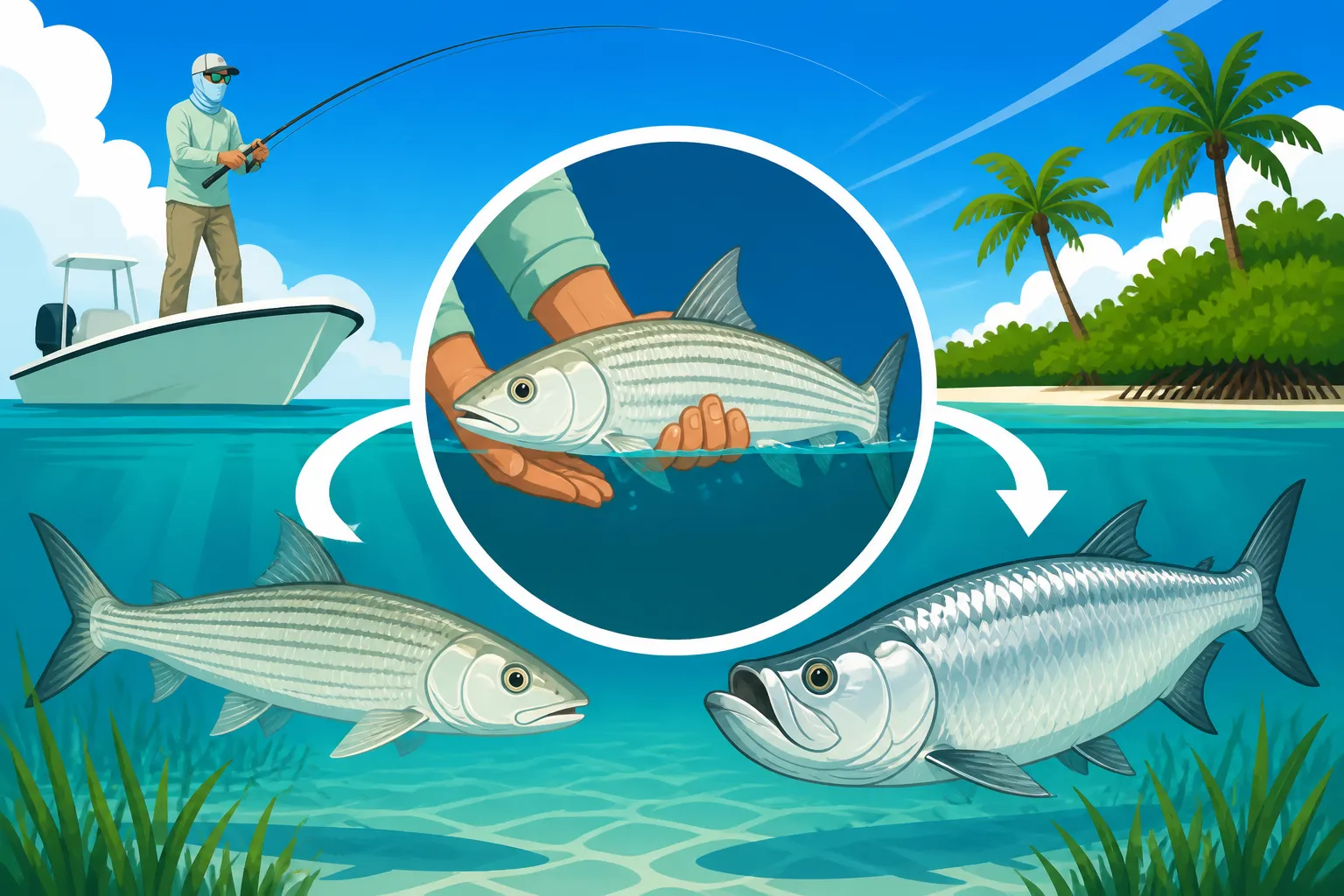
- Support their weight: If you must temporarily hold a tarpon for a quick photo (and remember, brief is key!), support its full weight horizontally, ideally with one hand under its belly and another gripping the lower jaw. Never hold a large tarpon vertically by the jaw alone.
- Use proper tools: A specialized tarpon dehooker can make quick work of removing hooks, minimizing handling time. You can find excellent dehookers and other release tools readily available on Amazon. A good pair of long-nosed pliers is also essential.
- Revive them: After a long fight, a tarpon might be exhausted. Hold the fish by its lower jaw in the water, facing into a gentle current, until it regains its strength and can swim away under its own power. Don't just toss it back; make sure it's strong enough to survive.
Practicing good release techniques ensures that the "Silver King" can swim away healthy and be caught again, perhaps by you or another angler, another day.
Bonefish: The Ghost of the Flats and Its Protection
Bonefish, often called "the ghosts of the flats," are one of the most sought-after shallow-water game fish in Florida, particularly in the Keys and South Florida. Their incredible speed, uncanny camouflage, and challenging nature make them a true prize for sight-fishing enthusiasts, especially fly anglers. Like tarpon, their existence relies heavily on careful conservation.
Are Bonefish Strictly Catch and Release in Florida?
Yes, absolutely. Bonefish are strictly catch and release in Florida. There are no exceptions, no special tags, no season where you can keep them. If you hook a bonefish, whether you're fly fishing, spin fishing, or using bait, the expectation and legal requirement is that you release it unharmed. This regulation is firmly in place because bonefish populations are particularly vulnerable, and their unique characteristics make them ill-suited for harvest. It's truly a species where the thrill is entirely in the chase and the successful release. If you're looking for more detailed information on targeting this incredible fish, a Florida Bonefish Fishing Guide would be a great resource.
The Fragility of Bonefish and Their Habitat
Bonefish are incredibly fragile creatures, and their survival is intrinsically linked to the health of the shallow flats ecosystems they inhabit. Here’s why their catch-and-release status is so critical:
- Shallow Water Stress: Bonefish live in very shallow water, which means they are susceptible to stress from extreme temperatures, low oxygen, and predation. A prolonged fight, especially in warm water, can be fatal.
- Slow Growth and Reproduction: Similar to tarpon, bonefish grow relatively slowly and don't mature until they are a few years old. This means it takes time for populations to replace themselves, making them highly sensitive to overfishing.
- Habitat Dependence: Their survival depends on pristine seagrass beds and sandy flats, which are constantly under threat from human development, boating traffic, and pollution. Catch and release protects the fish themselves, while ongoing habitat conservation protects their home.
The FWC recognizes that the aesthetic and recreational value of bonefish far outweighs any commercial or culinary value. The entire fishery is built around the experience of sight fishing for them, a quiet pursuit that demands respect for the fish and its delicate environment.
Essential Techniques for Bonefish Release Success
Because bonefish are so fragile and easily stressed, mastering proper release techniques is arguably even more critical than with heartier species. A tired bonefish left floundering on a hot flat is a prime target for predators or simply won't recover.
- Minimize Fight Time: Use appropriate tackle that allows you to land the fish as quickly as possible without over-stressing it. Lighter leaders can be part of the challenge, but don't go so light that the fight is excessively long.
- Keep Hands Wet: Always wet your hands before touching a bonefish to protect its delicate slime coat, which acts as its natural defense against infection.
- Gentle Handling: Support the fish horizontally, never holding it vertically by its tail or mouth. Use a soft, knotless landing net (many great options are available on Amazon) to cradle the fish if needed, rather than dragging it onto a boat deck or shore.
- Quick Dehooking: Use pliers or a dehooker to quickly remove the hook. If the hook is deeply swallowed, cut the line as close to the hook as possible.
- Thorough Revival: After the fight, hold the bonefish gently by the tail and jaw, facing it into a current or moving it back and forth gently (but don't force water through its gills if it's struggling). Wait until the fish firmly kicks away from your hand before letting it go. It's better for it to swim off strongly than to float away weakly.
By following these practices, you give that "ghost of the flats" the best possible chance of survival, ensuring that the magic of bonefishing continues for all.
Permits and Proper Practices Beyond the License
Understanding that certain species are catch-and-release only is just one piece of the puzzle. Angling in Florida is a privilege that comes with responsibilities, and part of that involves understanding all the various permits, licenses, and ethical practices that contribute to a healthy fishery. It's about being a good steward of our natural resources.
Understanding Special Permits and Tags
While the regular Florida fishing license covers most recreational fishing, some species or specific activities require additional permits or "tags." We've already discussed the very rare and specific Tarpon Tag, which is the singular exception to the catch-and-release rule for tarpon. For bonefish, as reiterated, no such tag exists; they are strictly catch and release.
Other special permits might apply to different species or activities, such as:
- Snook Permit: While snook have specific slot limits and seasons where they can be harvested, you generally need an additional Snook Permit if you intend to keep them. This is separate from your general fishing license.
- Lobster Permit: If you're planning to go recreational lobstering, whether during the mini-season or regular season, you'll need a spiny lobster permit in addition to your saltwater fishing license.
These additional permits serve a dual purpose: they help fund crucial conservation efforts specifically for those species, and they allow the FWC to better monitor and manage harvest rates. It's a way to ensure that even when a species can be harvested, it's done so responsibly and sustainably. Always remember that your Florida Fishing License Guide is the starting point, but always check for these additional requirements.
The Role of Anglers in Conservation
Every angler holds a piece of the conservation puzzle. When you respect catch-and-release rules for species like tarpon and bonefish, you're not just following a law; you're actively contributing to the long-term health of the fishery. It's about a mindset that values the existence of these magnificent creatures in their natural habitat over a momentary desire to keep them.
Beyond just following the rules, responsible angling means:
- Being informed: Staying up-to-date on regulations, which are easily found on the FWC website or through their FWC Fish Rules app.
- Minimizing impact: Being mindful of your boat's impact on sensitive habitats like seagrass beds, using proper sunscreens to protect water quality, and properly disposing of trash.
- Educating others: Gently informing fellow anglers who might not be aware of the rules or best practices.
- Reporting violations: Noticing and reporting any suspicious or illegal fishing activity to the FWC.
This collective responsibility ensures that the incredible experiences of fishing for tarpon and bonefish remain vibrant for generations to come.
Gear Considerations for Responsible Angling
The gear you choose plays a significant role in ethical and responsible angling, especially when targeting catch-and-release species. Using the right tools can greatly increase a fish's survival chances.
- Circle Hooks: For bait fishing, circle hooks are a game-changer. They are designed to hook fish in the corner of the mouth, rather than deep in the gullet, making dehooking much easier and reducing mortality. You can find a wide selection of high-quality circle hooks for various applications on Amazon.
- Dehooking Tools: As mentioned earlier, having a good dehooker, long-nosed pliers, or even bolt cutters (for cutting deeply swallowed hooks when removal isn't possible) is non-negotiable for quick and clean releases.
- Appropriate Tackle: Using a rod and reel setup that is appropriately sized for the fish you're targeting allows you to land the fish efficiently, minimizing fight time and exhaustion. For instance, knowing What Pound Test Line for Tarpon Fishing? is important. While light tackle can be fun, overly light tackle for a large, powerful fish can lead to an extended fight that leaves the fish too exhausted to recover.
- Knotless Landing Nets: If you use a net, opt for a rubber-coated, knotless net. These are much gentler on a fish's scales and slime coat than traditional knotted nylon nets.
Investing in and using the right gear is part of being a responsible angler. It’s a small effort that makes a huge difference in the survival rate of the fish you encounter.
Florida's Catch and Release Snapshot: Tarpon vs. Bonefish
To help clarify the differences and similarities, here's a quick overview of the catch and release rules for these two iconic Florida species:
| Feature | Tarpon (Megalops atlanticus) | Bonefish (Albula vulpes) |
|---|---|---|
| Primary Status | Catch and Release Only | Strictly Catch and Release Only |
| Harvest Exception | One per year with a valid Tarpon Tag | No harvest exceptions |
| Conservation Reason | Slow growth, long-lived, high sport value, migratory, economic impact | Fragile, shallow water habitat, slow reproduction, high sport value, ecosystem indicator |
| Handling Importance | Critical; keep in water, support weight, revive | Extremely critical; minimize handling, wet hands, quick release, revive |
| Recommended Gear | Circle hooks, dehookers, appropriate heavy tackle | Circle hooks, dehookers, light tackle, knotless nets |
| Economic Value Driver | Sportfishing tourism, guides, tackle | Sportfishing tourism (especially fly fishing), guides |
| Regulatory Body | FWC (Florida Fish and Wildlife Conservation Commission) | FWC (Florida Fish and Wildlife Conservation Commission) |
In essence, while there's that tiny, rare window for tarpon with a specific tag, both species are fundamentally managed as catch-and-release fisheries. The overarching goal is the same: to protect these incredible fish for the enjoyment and ecological health of Florida's waters, ensuring that their mystique and challenge endure for all of us.
Disclaimer
This article is for general informational purposes only and does not constitute professional advice. Laws, prices and regulations vary by location and change over time. Consult a qualified professional for guidance on your specific situation.