Florida Bag Limit for King Mackerel
It’s an age-old angler’s dilemma: you’re out on the beautiful Florida waters, the King Mackerel are biting, and you’re having the time of your life. But then that little voice in your head pipes up, "How many can I actually keep? What's the size limit? Am I in state or federal waters right now?" The last thing anyone wants is to unknowingly violate a regulation and face a hefty fine or lose their hard-earned catch. This comprehensive guide is here to demystify Florida’s King Mackerel bag limits and related rules, ensuring you can fish confidently and responsibly.
Understanding King Mackerel Bag Limits in Florida
King Mackerel, often called "Kings," are a prized catch in Florida's saltwater scene. They're fast, powerful, and absolutely delicious. Because they're so popular, and vital to the ecosystem, their populations are carefully managed through regulations that include bag limits, minimum sizes, and sometimes even seasonal closures, although King Mackerel are often open year-round in Florida. The key to successful and legal King Mackerel fishing is knowing these rules before your line even hits the water.
These regulations aren't just arbitrary rules; they are carefully crafted by the Florida Fish and Wildlife Conservation Commission (FWC) and federal agencies to ensure sustainable fishing for generations to come. Without these limits, unchecked harvesting could quickly deplete King Mackerel stocks, harming both the environment and the sport we all love. It's a balance of allowing anglers to enjoy their sport while safeguarding the future of the fishery. Understanding this philosophy helps to appreciate why these rules are so important. Always remember that these regulations are subject to change, sometimes even on short notice, based on scientific assessments of fish populations. So, what's legal today might have a slight tweak tomorrow, making regular checks of the official FWC website or the Florida Fishing Regulations and Bag Limits a crucial part of your fishing routine.
State vs. Federal Waters: A Crucial Distinction
One of the biggest sources of confusion for many anglers, especially those venturing out a bit further, is the difference between state and federal waters. This distinction is critical because regulations, including bag limits for King Mackerel, can sometimes vary depending on whether you're in Florida state waters or beyond in federal jurisdiction.
Florida's state waters typically extend out to 9 nautical miles in the Gulf of Mexico and 3 nautical miles in the Atlantic Ocean. Anything beyond these boundaries is considered federal waters. Imagine you're just off the coast, perhaps three miles out in the Atlantic, enjoying a beautiful morning fishing trip. You might think you're safely within state waters, but a slight drift, or a misjudgment of distance, could put you just a mile or two further out, slipping you into federal territory. Suddenly, the rules might be different! This is where having a reliable GPS on your boat, or a marine navigation app on your phone, becomes incredibly valuable. It’s not just for finding good spots, but also for knowing exactly where you stand, literally, in relation to fishing regulations. Don't assume; always verify your location if there's any doubt, especially when targeting species like King Mackerel that range widely.
Individual vs. Vessel Limits
When discussing bag limits, it's vital to clarify whether the limit applies per person (individual bag limit) or per vessel (boat limit). For King Mackerel in Florida, the regulations generally apply per person. This means each licensed angler on board your vessel can possess their individual bag limit of King Mackerel. There isn't typically a collective vessel limit that overrides the individual limits, which is great for group trips!
Let's run through a common scenario: you and three friends are out on a charter boat, all properly licensed with a Florida Saltwater Fishing License Rules if you’re fishing without a captain’s vessel license covering you. Each of you reels in a King Mackerel. As long as each of you has only caught your individual bag limit (which is often two King Mackerel per person, but you must check current FWC regulations), you're all within the legal limits. The boat's total could be, for example, eight King Mackerel if there are four anglers and the limit is two per person. It’s important that each fish is attributable to a specific angler if enforcement asks, although usually, all fish on board are counted, and if the total exceeds the sum of individual limits for all licensed anglers, then there's an issue. Communication among your fishing party is key to avoiding overages, especially if you have a hot bite!
Why These Limits Matter: Conservation and Sustainable Fishing
It's easy to see bag limits as just another rule to follow, but they're much more than that. These regulations are the cornerstone of conservation efforts, designed to ensure that species like the King Mackerel thrive for years to come. Think about it: if every angler kept every fish they caught, regardless of size or quantity, populations would quickly plummet. The long-term consequences would be devastating, not just for the fish but for the entire marine ecosystem and the fishing industry that depends on it.
Conservation isn't just about saving fish; it's about preserving a way of life, a passion, and an economic engine for coastal communities. When you adhere to bag limits, you're not just avoiding a fine; you're actively participating in the stewardship of Florida's natural resources. This collective effort is what ensures our kids, and their kids, can experience the thrill of a King Mackerel screaming drag off the back of a boat. The fees from fishing licenses, for instance, play a huge role in funding these conservation programs, as detailed in How Florida Fishing License Fees Fund Conservation. It's a direct investment in the future of Florida fishing.
Protecting the Resource for Future Generations
King Mackerel are migratory fish, traveling vast distances along the coast. They grow relatively fast but also face significant natural predation and fishing pressure. The bag and size limits are primarily set to allow enough fish to reach reproductive maturity and to ensure a healthy breeding stock remains in the water. For instance, a minimum size limit means that younger, smaller fish have a chance to grow, spawn, and contribute to the next generation of Kings.
Imagine if there were no size limits. Everyone would keep the smallest, easiest-to-catch fish, depleting the younger age classes before they even have a chance to reproduce. This would lead to a "recruitment failure," where not enough new fish are entering the population. Bag limits, on the other hand, prevent excessive harvesting of even mature fish, ensuring that a sufficient number of adults are left to spawn season after season. It’s a delicate balance, and every angler plays a part in maintaining it. Catching and releasing any fish that are undersized or that put you over your bag limit is not just good practice, it’s crucial for the long-term health of the fishery.
The Role of Science in Setting Regulations
You might wonder how these specific numbers—two fish, 24 inches, etc.—are determined. It’s not a guessing game! The FWC and federal fishery management councils rely heavily on scientific data, research, and stock assessments. Marine biologists conduct extensive studies to estimate fish populations, track their reproductive success, analyze catch rates, and model the impact of various fishing pressures.
This scientific rigor helps policymakers make informed decisions. They look at factors like the age structure of the population, mortality rates, and environmental conditions that might affect spawning success. When you hear about changes in regulations, it’s often because new scientific data has indicated a need for adjustment—perhaps a particular stock is recovering well and limits can be slightly relaxed, or perhaps there's a decline, and stricter measures are needed. It’s a dynamic process, highlighting why staying updated with the latest FWC information, perhaps through their website or the FWC’s GoOutdoorsFlorida app, is always your best bet.
Practical Tips for Adhering to King Mackerel Limits
Being a responsible angler means more than just knowing the rules; it means being prepared to follow them. When you're out on the water, excited with a fish on the line, things can get a little chaotic. Having the right tools and a plan in place will make adherence to King Mackerel limits second nature, allowing you to focus on the joy of fishing.
First and foremost, you need a reliable way to measure your catch. A simple, sturdy measuring board or tape measure is indispensable. You can find excellent, durable options on Amazon that are designed specifically for marine environments, often marked clearly and resistant to saltwater corrosion. A common requirement for King Mackerel is a "fork length" measurement, which means measuring from the tip of the jaw to the center of the tail's fork. It’s not always obvious, so practice makes perfect. Keep your measuring device easily accessible on your boat so you can quickly and accurately measure any potential keeper. If a fish is even slightly shy of the minimum length, it goes back into the water, no questions asked. Failing to do so can result in significant penalties, as highlighted in topics like What Happens If You Keep an Undersized Fish in Florida?.
Essential Gear for Responsible Anglers
Beyond a measuring device, having the right gear on board will make respecting bag limits much easier and more humane for the fish you release.
- Dehooking Tools: Sometimes you catch a fish that’s too small, or you’ve already filled your bag limit. A long-nosed pliers or a specialized dehooking tool allows you to quickly and safely remove the hook without excessive handling of the fish, increasing its chances of survival upon release. This is especially important for species like King Mackerel, which can be quite vigorous on the line.
- Net or Lip Grippers: While you want to minimize handling of fish you intend to release, a good net or a set of lip grippers can help you control a lively King Mackerel long enough to quickly measure it. Just remember to handle the fish as little as possible, supporting its body properly, before release. You can find various sizes of nets and grippers on Amazon, suitable for different species and fishing styles.
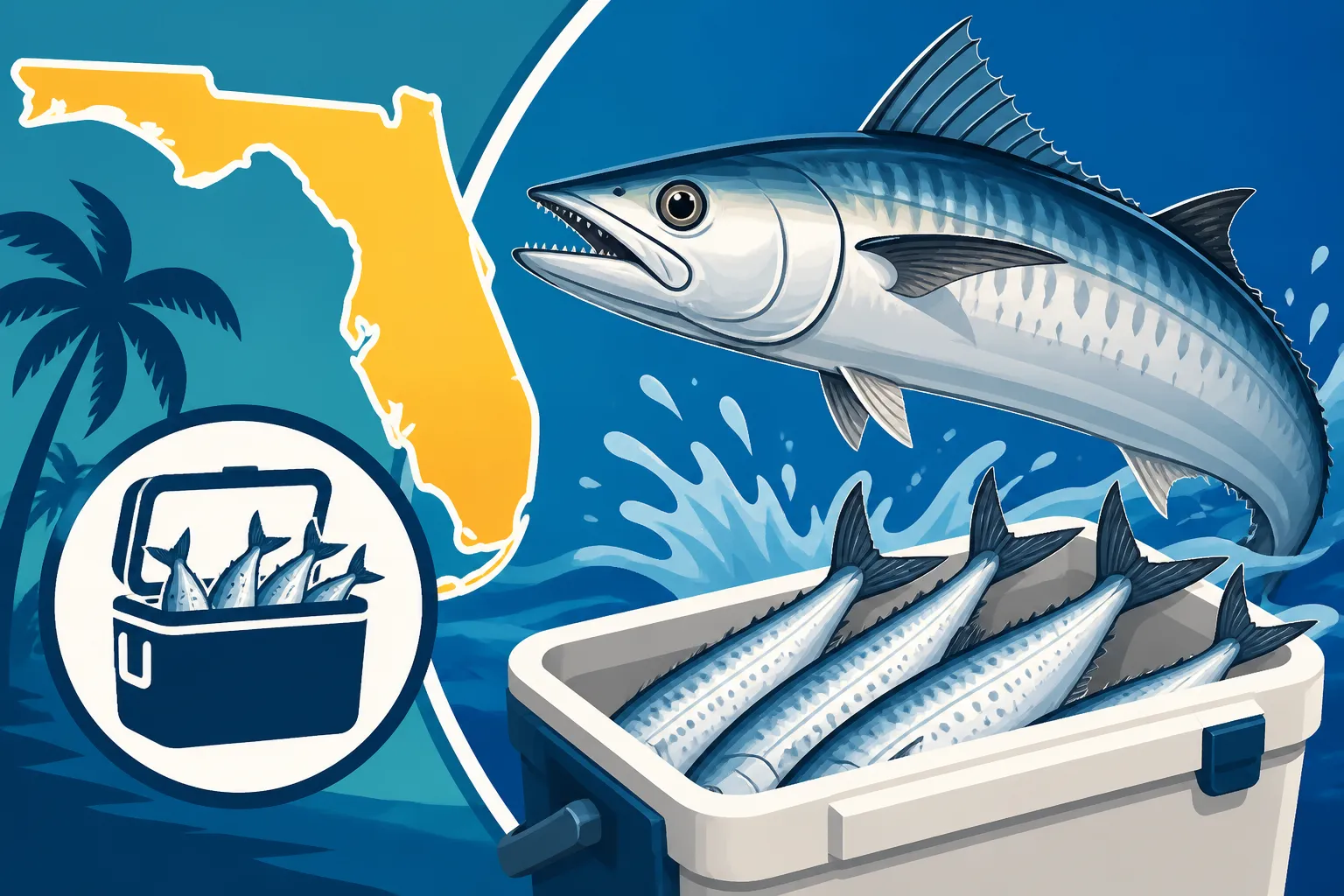
- Cooler and Ice: For the King Mackerel you legally keep, having a well-iced cooler on board is crucial for preserving the quality of your catch. Immediately placing your fish on ice helps to maintain its freshness, which is especially important in Florida’s warm climate.
- Camera: For those "over-the-limit" or undersized fish that you release, a quick photo before you let them go is a fantastic way to capture the memory without breaking the rules. After all, the thrill of the catch isn't just about what you take home, but the experience itself! Catch and Release Best Practices for Snook provides excellent tips that can be applied to King Mackerel too, ensuring the fish you release swim away strong.
Staying Informed on Regulation Changes
Florida’s fishing regulations are dynamic, adapting to scientific findings, environmental changes, and population health. What was true last year, or even last month, might have subtle but significant changes today. Relying on outdated information is a common pitfall that can lead to unintentional violations.
The absolute best resource for current and accurate information is the official Florida Fish and Wildlife Conservation Commission (FWC) website. They provide regularly updated recreational fishing regulations for both state and federal waters. Additionally, the FWC's GoOutdoorsFlorida mobile app is an invaluable tool for any angler. It allows you to quickly check regulations on the go, even offline, for various species. Many local bait and tackle shops are also great resources, as they often have the most up-to-date printed regulations or knowledgeable staff who can answer your questions. Before every trip, especially if it's been a while since you last fished for King Mackerel, take a few minutes to double-check the FWC website or app. It’s a small investment of time that can save you a lot of hassle and potential fines.
Common Misconceptions and FAQs about King Mackerel Fishing
Fishing regulations can sometimes feel like a maze, and with King Mackerel, a popular offshore species, there are definitely some common misunderstandings that can trip up even experienced anglers. Let's tackle a few of these head-on, so you can fish with complete peace of mind.
One frequent question revolves around charter trips. Many people wonder, "If I'm on a charter boat, do I still need to worry about the bag limit? Doesn't the captain's license cover everything?" This is a crucial point: generally, individual recreational bag limits still apply to each angler on a charter boat. While the charter vessel itself typically operates under a commercial license that covers the act of fishing for all passengers, it doesn't mean you get an unlimited pass on individual bag limits. The captain will guide you, and usually ensures everyone adheres to the rules, but ultimately, it's your responsibility as an angler to know and follow your individual limits. If you're unsure about the specific rules when booking, always ask the charter captain. For more details on charter rules, you can check out Do You Need a License to Fish From a Charter Boat in Florida?.
Another common query pertains to tournaments. "Do fishing tournaments have different rules for King Mackerel?" Often, yes, tournaments may have specific rules, including different minimum sizes or trophy categories. However, these tournament rules usually operate within or alongside the state and federal recreational bag limits. So, while a tournament might encourage catching larger fish for prizes, you still must adhere to the underlying FWC regulations regarding possession limits. Always review both the tournament rules and the FWC regulations when participating in competitive fishing. Some competitive anglers invest in specific tournament-grade measuring devices or catch-and-release tools, often found readily on Amazon.
"Just One More Won't Hurt" Mentality
It's a familiar whisper in every angler's ear: "It's just one fish, nobody will notice." This "just one more" mentality is a dangerous path. First, it directly undermines the conservation efforts that keep our fisheries healthy. Every single fish over the limit contributes to potential overfishing. Second, it's illegal. Florida Fish and Wildlife Conservation Commission (FWC) officers are regularly patrolling waters, both nearshore and offshore. They are trained to identify violations, and they take these rules seriously.
The consequences for exceeding bag limits can range from fines to confiscation of your catch and gear, and even more severe penalties depending on the egregiousness of the violation. It's simply not worth the risk. Imagine having a fantastic day on the water, only to have it soured by a stop from law enforcement because you decided to push the envelope. The integrity of our fishing environment depends on every angler making the right choice, every time. If you’re ever tempted, just remember that the thrill of a legal catch is far more rewarding than the anxiety of breaking the rules. Topics like Penalty for Fishing Without a License in Florida illustrate the seriousness of fishing violations in Florida, and bag limit infractions are no exception.
What to Do with Excess Catch
So, you’ve had an incredible day, and you've already filled your individual bag limit for King Mackerel. What do you do if another one bites? The answer is simple and non-negotiable: release it immediately and safely. You cannot keep it, and you cannot transfer it to another angler who hasn't filled their limit if that angler is no longer actively fishing or if it appears to be an attempt to circumvent the rules. The idea is that each angler catches their own limit.
When releasing an excess catch, do so with care to maximize its chances of survival. Minimize handling, use a dehooking tool if the fish is deeply hooked, and support the fish's weight properly if you must lift it. Release it quickly, preferably at the side of the boat, ensuring it swims away strongly. Never try to hide fish, or quickly clean them at sea to avoid detection; these actions are also violations and carry their own set of penalties. The rules are designed to be clear and straightforward, so let's keep it that way for the benefit of everyone and the King Mackerel themselves!
Here's a quick reference table outlining the typical regulatory aspects for King Mackerel in Florida. Please remember to consult the FWC for the most current information, as rules can and do change!
| Regulation Aspect | Florida State & Federal Waters (General Guidance) |
|---|---|
| Bag Limit | Typically a per-person limit, often two fish |
| Minimum Size | A minimum fork length is usually required |
| Vessel Limit | Generally, individual limits apply, no boat limit |
| Open Season | Often open year-round, but check for changes |
| Enforcement | FWC enforces these rules across state waters |
Disclaimer
This article is for general informational purposes only and does not constitute professional advice. Laws, prices and regulations vary by location and change over time. Consult a qualified professional for guidance on your specific situation.