Best Bait for Trout Fishing in Florida
One of the most common frustrations for any angler hitting the beautiful waters of Florida is standing there, rod in hand, wondering what bait will actually tempt a stubborn spotted seatrout. It's not just about throwing anything in; these fish can be surprisingly picky, and what works wonders one day might get you nothing but a sun tan the next. This comprehensive guide is here to cut through the confusion, helping you understand the best baits and techniques to consistently hook into Florida's beloved speckled beauties.
Understanding Florida Trout: A Finicky Feast
Before we even dive into specific baits, it's crucial to understand the fish we're targeting. Spotted seatrout, often affectionately called "specks" or "gator trout" when they get big, aren't mindless eaters. They're ambush predators, perfectly adapted to their estuarine environments, and their feeding habits are heavily influenced by what's readily available and how easy it is to catch. Knowing this helps us choose our baits wisely, mimicking what they naturally consume.
Spotted Seatrout Behavior and Diet
Florida's spotted seatrout primarily inhabit shallow, grassy flats, oyster bars, and sandy potholes within bays, estuaries, and even nearshore coastal waters. These environments are teeming with their natural prey. Their diet largely consists of live shrimp, small baitfish like pilchards, pinfish, and mullet, and sometimes even small crabs or worms. They use their keen eyesight and lateral line system to detect vibrations in the water, often ambushing unsuspecting prey from beneath a patch of seagrass or alongside an oyster rake.
Imagine a large gator trout lurking patiently at the edge of a deep grass flat. A school of small pilchards swims by, unaware of the danger. The trout will explode from its cover, engulfing one or two of the stragglers before retreating back to its ambush point. This predatory behavior means that baits that mimic the appearance, movement, and scent of these natural food sources are almost always going to be more effective. If your bait looks, smells, or acts like a struggling shrimp or a panicked baitfish, you're well on your way to success.
Seasonal and Environmental Influences on Bait Preference
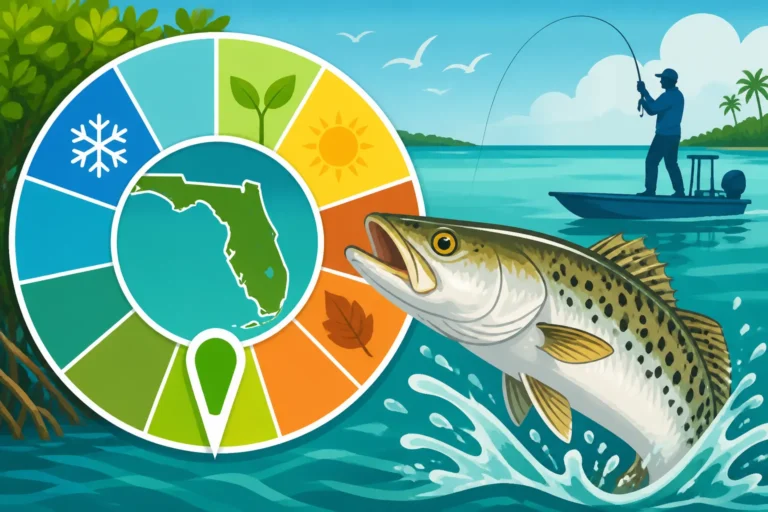
Trout aren't static in their preferences; they change with the seasons and environmental conditions. What works in the balmy summer might not cut it in the cooler winter months. For instance, during the warmer parts of the year, when baitfish are abundant and active, trout might be more inclined to chase down fast-moving artificial lures or lively baitfish. They're often more aggressive and willing to expend energy.
Conversely, as the water temperature drops in late fall and winter, trout tend to become more lethargic. They'll often move to deeper holes, canals, and darker-bottomed areas that absorb more heat. During these times, a slowly presented live shrimp or a soft plastic lure fished with a methodical, almost "dead-stick" retrieve can be far more effective than something erratic. Understanding these shifts is key to adapting your approach. You can delve deeper into these patterns by reading our guide on the Best Time of Year to Catch Spotted Seatrout in Florida. Factors like tide and water clarity also play a massive role; a strong outgoing tide might mean fish are concentrated in certain areas waiting for bait to be flushed out, while clear water often calls for more subtle, natural presentations.
The Top Live Baits for Florida Trout: Nature's Best Lures
There's an old saying in fishing: "match the hatch." When it comes to Florida trout, sometimes the easiest way to do that is to simply use what they're already eating. Live baits bring irresistible natural scent, movement, and vibration to the equation, often triggering strikes when artificials fall short.
Live Shrimp: The Unbeatable All-Rounder
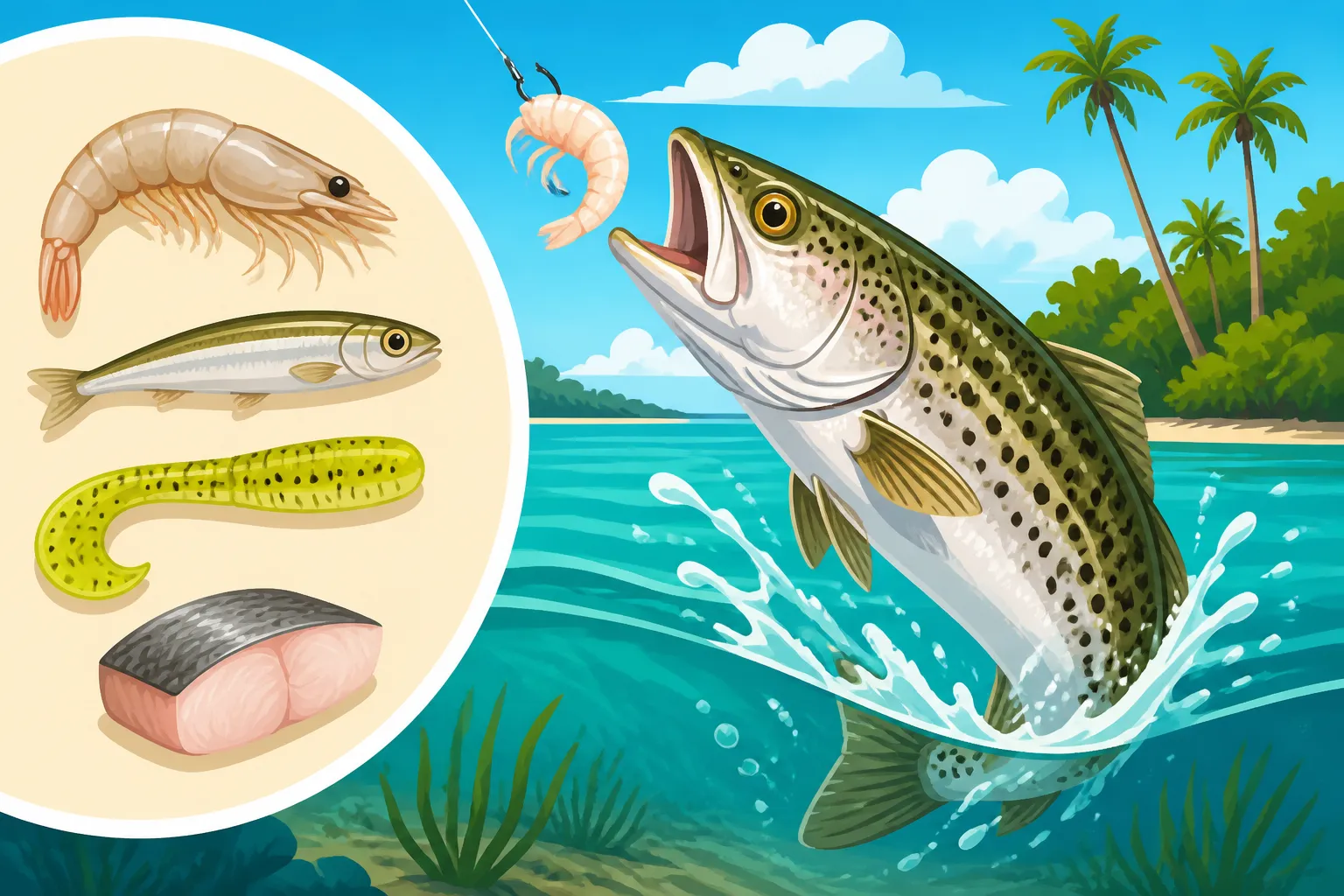
If there's one bait you absolutely must have for trout fishing in Florida, it's live shrimp. These crustaceans are a staple in a trout's diet, and few fish can resist the natural wiggling and scent a live shrimp provides. They're effective year-round, in almost any condition, and appeal to trout of all sizes.
You can rig a live shrimp in several ways. One of the most popular is under a popping cork. The cork creates a "chugging" sound that mimics feeding fish, drawing attention to your shrimp below. Another highly effective method is free-lining the shrimp with just a small split shot, letting it drift naturally with the current. This is fantastic over grass flats. For deeper water or when you want more control, rigging a live shrimp on a light jig head allows you to bounce it along the bottom or work it through potholes. For a complete breakdown, check out our guide on How to Rig a Live Shrimp for Trout. The key is to keep the shrimp alive and lively; a sluggish shrimp is much less enticing.
Live Baitfish: Pinfish, Pilchards, and Mojarra
While shrimp might be the king, various live baitfish are incredibly effective, especially when targeting larger "gator trout." Pinfish, pilchards (also known as whitebait or scaled sardines), and mojarra are among the top choices. These baits represent a more substantial meal for a trout, often attracting the bigger, more aggressive fish.
Pinfish are hardy and can be kept alive easily, making them excellent choices when you might be fishing for a while. Pilchards are absolute trout candy, but they can be a bit more delicate to keep alive. Mojarra are often found in sandy areas and are another great natural offering. You can procure these baitfish by cast netting them yourself, which can be an adventure in itself. Learn the ropes with our article on How to Cast Net for Live Bait. Once you have them, rigging is typically straightforward: free-line them with a small hook through the nose or back, or use a slip sinker rig to get them down closer to the bottom, especially when fishing channels or deeper grass. The vibrant, erratic swimming of a live baitfish is often all it takes to provoke a strike from a hungry trout.
Mastering Artificial Lures for Florida Trout: The Angler's Art
For many anglers, the challenge and reward of fooling a fish with an artificial lure are what make fishing truly exciting. Artificial baits allow for endless experimentation with presentation, color, and action, and they can be incredibly effective for Florida trout, often enabling you to cover more water and search for active fish more efficiently than with live bait.
Soft Plastic Baits: Versatility and Effectiveness
Soft plastic lures are incredibly versatile and have become a staple for trout anglers across Florida. They come in a dizzying array of shapes, sizes, and colors, allowing you to mimic almost any baitfish or crustacean in a trout's diet. Popular choices include paddle tails, which create a thumping vibration as they move through the water, and soft plastic jerkbaits, which can be twitched and paused to imitate an injured baitfish. Many anglers also swear by scented soft plastics, like those from Berkley Gulp!, which add an extra layer of attraction. You can find a huge selection of these baits, including various brands and colors, readily available on platforms like Amazon.
Rigging soft plastics is usually done on a jig head. The weight of the jig head depends on the depth of the water, the current, and how fast you want the lure to sink. Lighter jig heads (1/8 oz to 1/4 oz) are ideal for shallow grass flats, allowing the lure to swim just above the seagrass without snagging. As for colors, natural baitfish patterns (silver, white, greenback) are always a good bet. However, don't be afraid to experiment with brighter colors like chartreuse or pink, especially in stained or murky water. If you're struggling to get bites in less-than-clear conditions, our guide on Best Lure Color for Murky Water in Florida might offer some valuable insights. The retrieve should typically be slow and methodical, with occasional twitches or pauses to make the lure appear more lifelike.
Hard Baits: Topwaters, Suspending Plugs, and Dangle Lures
Hard baits offer another exciting dimension to trout fishing, particularly when you're looking for an explosive strike. Topwater lures, such as "walk-the-dog" style baits or poppers, are incredibly thrilling to use, especially during low-light conditions like dawn and dusk, or on calm mornings. The commotion they create on the surface can draw trout from a surprising distance, resulting in aggressive, heart-stopping blow-ups. Brands like MirrOlure and Heddon offer classic topwater options that have been catching fish for decades, and you can easily explore their ranges on Amazon.
Suspending twitchbaits are another excellent choice, designed to hang in the water column when paused, perfectly mimicking a vulnerable baitfish. These are particularly effective when trout are holding in slightly deeper water or when they're less willing to chase a fast-moving lure. Just a few twitches, then a pause, can often be enough to trigger a strike. Spoon lures, while less commonly associated with trout, can also be effective for covering a lot of water quickly, especially in open areas. Their flash and wobble can attract attention and provoke a reaction strike.
Jigs: Simple Yet Deadly
The humble jig, in its many forms, is arguably one of the most effective and versatile artificial lures for trout fishing. Whether it's a traditional bucktail jig or a jig head paired with a soft plastic, the jig's ability to imitate a wide range of prey while being incredibly customizable makes it a must-have in any Florida angler's tackle box.
Bucktail jigs, with their pulsating hair and distinct profile, are fantastic for mimicking shrimp or small baitfish. They can be worked with a simple lift-and-drop retrieve, or jigged aggressively to cover deeper water. When paired with soft plastics, jig heads become even more adaptable. You can use different jig head weights and hook sizes to match the size of your soft plastic and the conditions you're fishing. For example, a 1/8 oz jig head might be perfect for shallow grass, while a 1/4 oz or 3/8 oz might be necessary for stronger currents or deeper channels. Many anglers find their preferred jig heads and bulk packs of soft plastics on Amazon for convenience and selection. The key to jig fishing for trout is often a slow, sensitive retrieve, allowing the jig to just kiss the bottom or swim just above the grass.
Strategic Bait Selection: Matching the Hatch and Conditions
Choosing the "best" bait isn't a static decision; it's a dynamic process that involves reading the environment, understanding trout behavior, and adapting your approach. A truly successful trout angler is one who can quickly assess the conditions and make an educated guess about what the fish are most likely to bite.
Reading the Water and Adjusting Your Approach
Observing your surroundings is paramount in fishing. Are there schools of baitfish visibly fleeing across the flats? Are birds diving into the water, indicating a baitfish presence? Is the water clear or murky? All these clues should inform your bait choice. If you see abundant schools of pilchards, then a live pilchard or a soft plastic mimicking one makes perfect sense. If you're seeing shrimp "skipping" across the surface, a live shrimp under a popping cork could be dynamite.
Tides are another huge factor. During an incoming tide, baitfish and shrimp are often pushed onto the flats, so trout will spread out and actively feed. During an outgoing tide, bait is flushed off the flats and through choke points like channel edges or creek mouths, concentrating trout in ambush positions. Knowing when to focus on specific areas based on tidal flow is crucial. You can find detailed information on how these dynamics affect your fishing by checking out our guide on the Best Tides for Inshore Fishing in Florida. Always be prepared to change your bait or technique if what you're doing isn't producing bites. Sometimes, a subtle change in color, a different retrieve speed, or switching from live bait to artificial can make all the difference.
Essential Gear for Bait Presentation
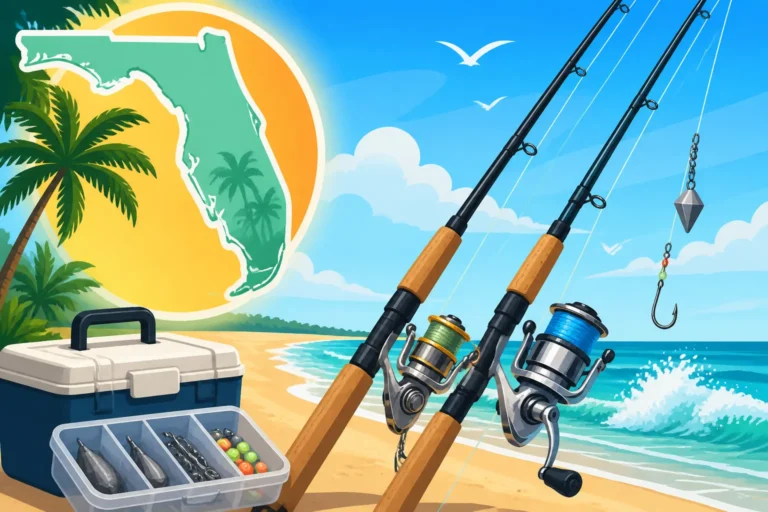
Having the right bait is only half the battle; presenting it effectively requires the right gear. For Florida trout, a light to medium-light spinning rod, typically 7 to 7.5 feet in length, paired with a 2500 or 3000 series spinning reel, is ideal. This setup provides enough backbone to cast lighter baits accurately and fight a decent-sized trout, while still being sensitive enough to detect subtle bites. For more detailed recommendations, our article on the Best Rod for Inshore Fishing in Florida is a fantastic resource.
Line choice is also important. Many anglers prefer braided line (10-15 lb test) for its sensitivity and casting distance, paired with a fluorocarbon leader (15-20 lb test) for abrasion resistance and invisibility in clear water. Hooks should always be sharp; dull hooks lead to missed opportunities. When using live bait, circle hooks are often preferred as they reduce gut-hooking and are better for catch and release. For artificials, ensure your jig heads have quality, sharp hooks. Don't forget a small tackle bag or box with extra hooks, weights, leaders, and a variety of lures to adapt to changing conditions. Many of these essential gear items, from leader material to tackle organizers, are conveniently available for purchase on Amazon.
| Bait Type | Pros | Cons | Best Use Cases |
|---|---|---|---|
| Live Shrimp | Natural scent, movement, universally effective | Can be delicate, easily stolen by small fish | All conditions, especially cooler water or slow bite |
| Live Baitfish | Attracts larger trout, lively action | Requires cast netting or purchase, delicate | Targeting "gator" trout, active feeding periods, strong currents |
| Soft Plastics | Versatile, durable, wide color range | Lacks natural scent (unless scented), can be tedious to rig | Covering water, imitating various prey, subtle presentations |
| Topwater Lures | Exciting strikes, draws fish from afar | Best in calm conditions, specific times of day | Low light (dawn/dusk), calm mornings, active fish |
| Suspending Plugs | Mimics injured baitfish, pauses effectively | Can be expensive, may require specific retrieve | Finicky fish, slightly deeper water, matching specific bait |
| Jigs (Bucktail/Soft Plastic) | Very versatile, simple, effective in various depths | Can get snagged on bottom, requires consistent retrieve | Bottom fishing, probing structure, imitating shrimp/baitfish |
Disclaimer
Fishing involves inherent risks. Always prioritize safety, understand and follow all local and state regulations, including Florida fishing license rules and bag limits. Be aware of your surroundings and weather conditions. This guide is for informational purposes only and does not guarantee fishing success.