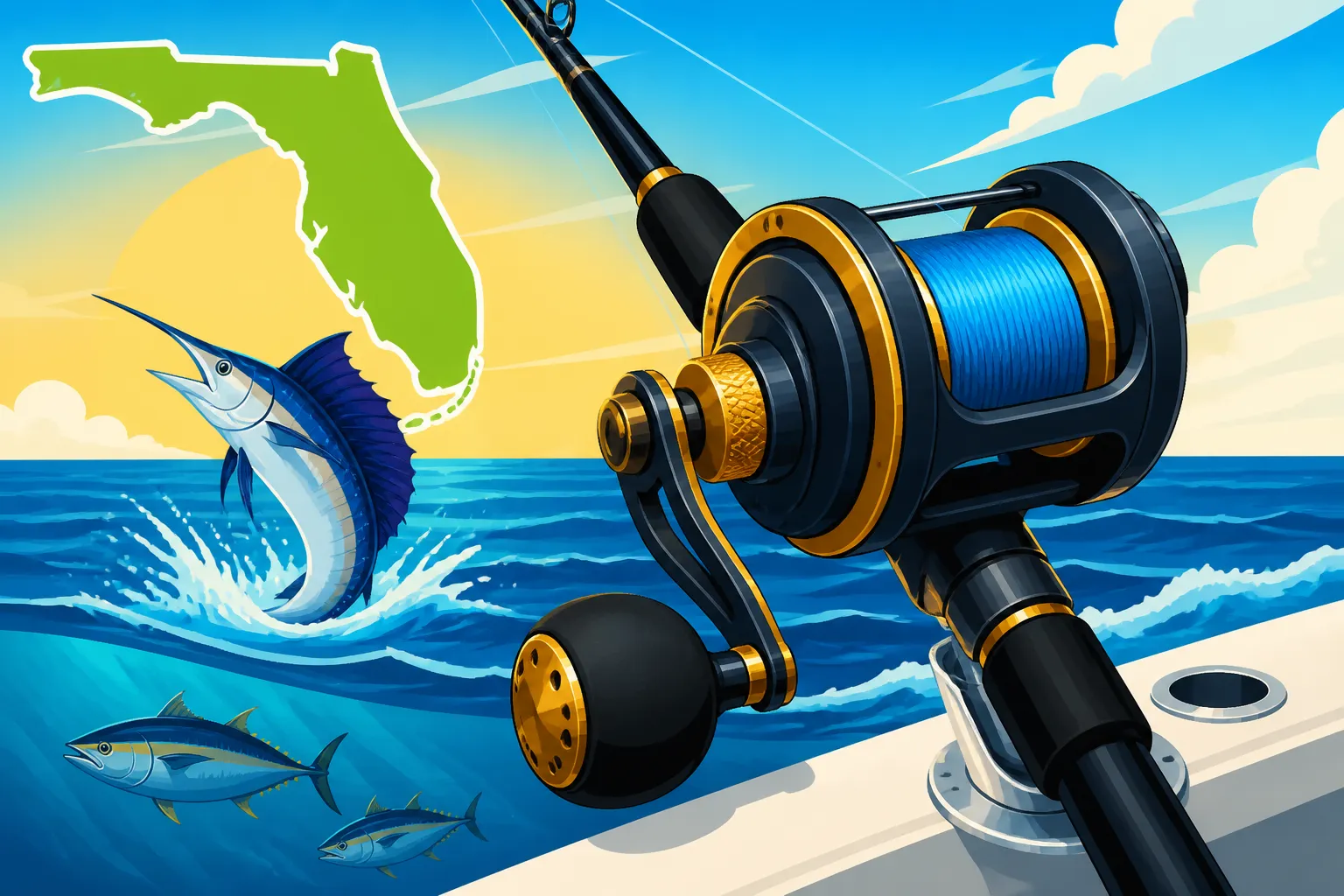
Best Reel for Offshore Fishing in Florida
Oh, the quest for the perfect offshore reel in Florida! It’s a journey many of us have embarked on, often starting with a mix of excitement and utter confusion. You stand in the tackle shop, or scroll endless pages online, staring at dozens of options, each promising power and performance, and wondering which one truly has your back when you hook into a monster fish miles from shore. Rest assured, you're not alone in feeling overwhelmed. This comprehensive guide is here to cut through the noise, helping you understand precisely what makes a reel ideal for the demanding, exhilarating world of offshore fishing in the Sunshine State.
The Unforgiving Demands of Florida Offshore Fishing
Let's be real: offshore fishing in Florida isn't for the faint of heart, and it's certainly not for flimsy gear. We're talking about tackling some of the ocean's most powerful, fastest, and biggest inhabitants, often in incredibly challenging conditions. The open ocean throws everything at you – strong currents, unpredictable weather, and fish that can pull with the force of a small truck. Your reel isn't just a tool; it's your lifeline to that fish, and it needs to be built like a tank, yet operate with the precision of a Swiss watch.
Battling Big Game and Deep Dwellers
Whether you're trolling for a lightning-fast sailfish offshore or dropping baits hundreds of feet down for a stubborn gag grouper, the stresses on your reel are immense. A pelagic species like a wahoo can peel off line at incredible speeds, testing your drag system to its absolute limits. Meanwhile, a snapper or grouper dug into a rock pile will demand incredible cranking power and a rock-solid retrieve to winch it out. You need a reel that can withstand sudden, violent runs, sustained battles, and the sheer brute force required to bring these fish to the boat. This isn't your freshwater bass reel; this is heavy-duty combat.
The Corrosive Gauntlet of Saltwater
Beyond the powerful fish, there’s the relentless enemy: saltwater. Florida’s offshore environment is beautiful, but it's also incredibly harsh on fishing gear. Saltwater is highly corrosive, and even the smallest breach in a reel's seals can lead to internal damage, rust, and ultimately, failure. Anglers who don't prioritize marine-grade materials and sealed designs often learn this lesson the hard way, watching their prized reel seize up after just a few seasons. A good offshore reel needs to be built with corrosion resistance as a top priority, protecting its internal components from the salty embrace of the ocean.
Essential Features of a Top Offshore Fishing Reel
When you're looking for an offshore reel, you're not just looking for something that spins. You're looking for a finely tuned machine with specific features designed for power, durability, and reliability. Skimping on these aspects can lead to heartbreak on the water when that fish of a lifetime decides to make a run.
The Heart of the Beast: Drag System
This is arguably the single most important feature for any offshore reel. The drag system is what applies resistance to the line, allowing line to pay out under pressure without breaking, and ultimately tiring out the fish. For offshore fishing, you need a smooth, consistent, and powerful drag.
- Smoothness: A jerky or sticky drag creates sudden shock on your line, increasing the chance of a break-off, especially with powerful, fast-running fish. You want a drag that engages smoothly and applies consistent pressure throughout the fight, even when a fish is making blistering runs.
- Power: Offshore fish are strong, and you need a drag system that can exert significant stopping power. Look for reels with large, well-stacked drag washers made from durable materials like carbon fiber. The maximum drag rating will give you an idea of its raw power, but consistency and smoothness are just as crucial.
- Sealing: Since you're in saltwater, a sealed drag system is a massive plus. It prevents saltwater, sand, and other debris from entering the drag stack, which can cause corrosion and lead to an inconsistent drag.
Cranking Power and Speed: Gear Ratio and Gearing
The gear ratio tells you how many times the spool turns for every single crank of the handle. This directly impacts your retrieve speed and cranking power.
- High Gear Ratios (e.g., 6.0:1 and up): These reels retrieve line quickly. They're excellent for rapidly picking up slack, getting lures back to the boat quickly for another cast, or targeting fast-moving species like mahi-mahi or kingfish where a rapid retrieve can entice a bite. They're also great for Florida Mahi Mahi Fishing Guide type scenarios.
- Low Gear Ratios (e.g., 4.0:1 or lower): These reels prioritize cranking power. While slower, they excel at winching heavy fish from the depths or pulling stubborn bottom dwellers away from structure. If you're dropping heavy weights for snapper or grouper, a low gear ratio will make your life much easier, saving your arms and back. Many conventional reels offer multiple gear ratios, which can be incredibly versatile for different techniques.
Line Capacity and Spool Design
Offshore fish often make long, powerful runs. Having ample line capacity is non-negotiable. Running out of line when you're hooked into a trophy is a nightmare scenario.
- Plenty of Line: Look for reels that can hold a significant amount of monofilament or braided line. Braided line, with its thinner diameter for a given breaking strength, allows you to spool much more line onto a reel, which is why it's so popular for offshore applications.
- Spool Material: Spools should be made from strong, corrosion-resistant materials like anodized aluminum. They need to withstand the immense pressure of tightly wound line and the forces exerted during a powerful run.
Construction Materials and Durability
The entire reel needs to be built to withstand the rigors of offshore life.
- Frame and Side Plates: Look for reels constructed from robust materials like aluminum, graphite composites, or a combination. Aluminum frames offer superior strength and rigidity, preventing flex under heavy loads, which is crucial when fighting a large fish.
- Internal Components: Gears, shafts, and other critical internal parts should be made from marine-grade stainless steel or other corrosion-resistant alloys. Precision-cut gears ensure smooth operation and longevity.
- Bearings: While the number of bearings often gets hyped, quality trumps quantity. High-quality, sealed stainless steel ball bearings reduce friction and provide smooth operation. Crucially, they should be sealed to protect against saltwater intrusion.
Ergonomics and Comfort
Even the most powerful reel is useless if it's uncomfortable to use during a long fight.
- Handle Design: A comfortable, oversized handle knob provides better grip and leverage, especially when your hands are wet or tired. Power handles are a common upgrade for conventional reels.
- Weight: While offshore reels are inherently heavier, an overly heavy reel can contribute to fatigue, especially when jigging or casting for extended periods. There's a balance to strike between robust construction and manageable weight.
Spinning vs. Conventional: Choosing Your Offshore Weapon
This is often the first big decision you'll face when gearing up for offshore. Both spinning and conventional reels have their dedicated fan bases and excel in different situations. Understanding their strengths and weaknesses is key to choosing the Best Rod and Reel Setup for Florida Offshore Fishing.
Offshore Spinning Reels: Versatility and Ease of Use
Spinning reels have come a long way and are now incredibly capable in offshore environments. They're often favored for their ease of casting and generally simpler operation, making them a great choice for many anglers, including those newer to offshore techniques.
- Pros:
- Ease of Casting: Spinning reels are much easier to cast, especially for beginners or when casting lighter baits and lures. There's less chance of a backlash, which is a major bonus when the bite is hot.
- Versatility: A good offshore spinning reel can handle a wide range of applications, from casting artificial lures to pitching live baits to cruising pelagics. They are fantastic for sight fishing and situations where quick, accurate casts are needed.
- Drag Access: The drag knob is usually on the top of the spool, making it easy to adjust during a fight.
- Jigging: Many anglers prefer spinning reels for vertical jigging due to their quick retrieve and ability to pick up slack line rapidly.
- Cons:
- Raw Power Limitations: While powerful, spinning reels typically don't offer the same sheer winching power or maximum drag capabilities as high-end conventional reels of comparable size. The drag washers are often smaller.
- Torque: When fighting large, stubborn fish, the retrieve can feel less direct, and you might experience more flex in the reel stem or handle.
- Line Twist: If not spooled correctly or if a fish runs excessively with no drag, line twist can be an issue over time.
You'll find many excellent offshore spinning reels on retailers like Amazon, from brands known for their heavy-duty saltwater gear. They are great for targeting species like smaller tuna, dolphin (mahi-mahi), kingfish, and even sailfish when paired with the right rod and line.
Offshore Conventional Reels: Unmatched Power and Control
Conventional reels are the workhorses of offshore fishing. They are designed for raw power, heavy drag, and incredible leverage, making them indispensable for specific techniques and larger, more powerful species.
- Pros:
- Superior Power: Conventional reels are engineered for maximum cranking power and higher drag capabilities. Their inline spool design and robust gearing transmit power more directly to the line.
- Heavy Drag Systems: Often featuring larger, multi-plate drag systems, they can apply immense, consistent pressure to big fish.
- Lever Drag Advantage: Many conventional reels use a lever drag system, allowing for incredibly precise and rapid adjustments to drag pressure during a fight. This is a huge advantage when fighting a strong fish or a billfish that makes multiple runs.
- Trolling and Deep Dropping: They are the undisputed kings of trolling and deep dropping, where heavy weights and powerful fish are the norm.
- No Line Twist: Due to their spool design, line twist is virtually nonexistent.
- Cons:
- Casting Learning Curve: Conventional reels, especially star drag models, are prone to backlashing (a "bird's nest") if not cast with proper technique. This requires a bit of practice.
- Less Versatile for Casting: While some are designed for casting, they are generally less efficient for casting light lures or baits than spinning reels.
- Price: High-quality offshore conventional reels, particularly those with lever drags, can be a significant investment.
Within conventional reels, you'll generally find star drag models (where drag is adjusted via a star-shaped knob near the handle) and lever drag models (with a lever on the side to quickly adjust drag from free spool to strike to full). Lever drags are often preferred for their precise control, especially for bigger game like marlin and tuna.
Here’s a quick comparison to help you visualize the differences:
| Feature | Offshore Spinning Reel | Offshore Conventional Reel |
|---|---|---|
| Casting Ease | Very easy, minimal backlashing | Steep learning curve, prone to backlashing |
| Power/Torque | Good, but generally less than conventional | Superior power and torque, direct retrieve |
| Drag System | Usually on top of spool, effective | Lever drag (precise) or star drag (powerful) |
| Line Capacity | Excellent with braid, good for long runs | Excellent for heavy line, often more capacity |
| Best For | Casting, jigging, live baiting, lighter pelagics | Trolling, deep dropping, heavy bottom fishing, big game |
| Skill Level | Beginner-friendly | Requires more practice and skill |
Matching Your Reel to Target Species and Techniques
Now that we've covered the basics, let's talk about how to select the right reel for specific Florida offshore scenarios. The "Best Reel for Offshore Fishing in Florida" isn't a single reel; it's the right reel for the job at hand!
Pelagic Pursuits: Dolphin, Kingfish, Tuna, and Sailfish
When you're chasing the speedsters of the open ocean, whether it's the acrobatic mahi-mahi (dolphin), the sizzling runs of a king mackerel, or the raw power of a tuna, your reel needs a fast retrieve and a silky-smooth drag.
- Dolphin/Mahi-Mahi: These fish are incredibly fun to catch and can make blistering runs. A high-speed offshore spinning reel or a smaller conventional lever drag reel (like a 20-30 class) spooled with 30-50 lb braided line is ideal. You'll often be casting at weed lines or floating debris, making the casting ease of a spinning reel very appealing.
- King Mackerel: Known for their screaming first run, kingfish demand a fast retrieve to keep up with them, and a smooth drag. Medium-heavy spinning reels or conventional reels (20-30 class) with 30-50 lb braid are excellent. Trolling is a common method, making conventional reels a strong contender.
- Tuna (Blackfin, Yellowfin): Blackfin tuna are often targeted with spinning gear for casting jigs or live baits, or with conventional gear for trolling. For larger yellowfin offshore, heavy conventional gear (50-80 class) is essential due to their incredible pulling power and sustained fights. Speed is important for retrieve, but power and drag capacity are paramount.
- Sailfish: Florida is famous for its sailfish. When live baiting or kite fishing, many anglers prefer conventional reels (30-50 class) with a smooth lever drag for precise control. Their fast runs require a reel with good line capacity and a drag that won't stick.
Deep Dropping and Bottom Fishing: Grouper and Snapper
When you're dropping baits hundreds of feet to the bottom for grouper and snapper, you're looking for different characteristics: brute strength, high line capacity, and a powerful retrieve. This is where conventional reels truly shine. For more detailed information, check out our Florida Grouper Fishing Guide and Florida Red Snapper Season Guide.
- Grouper: These powerful fish live near structure and will try to get back into it the moment they're hooked. You need a reel with immense cranking power and a powerful, consistent drag to pull them away. Heavy conventional reels (50-80 class) loaded with 60-100 lb braided line are the standard. The braided line allows for thinner diameter and less water resistance when deep dropping.
- Snapper (Red, Mangrove, Mutton): While some snapper can be caught on spinning gear, larger snapper in deeper water require the backbone of a conventional reel. A 30-50 class conventional reel is usually sufficient, again paired with heavy braided line for sensitivity and strength.
Trolling Techniques
For covering water and targeting migratory species, trolling is a highly effective method. This almost exclusively calls for conventional reels.
- Trolling for Kingfish, Tuna, Wahoo: Conventional reels in the 30-50 class are standard for general offshore trolling. They handle the sustained pressure of pulling lures or rigged baits, and their robust drag systems are perfect for absorbing the shock of a strike. Look for reels with a clicker (bait alarm) to alert you to a bite.
- Heavy Tackle Trolling for Marlin/Swordfish: For true big game, you step up to 80-130 class conventional reels. These are massive, incredibly powerful machines designed to fight fish that can weigh hundreds of pounds for hours on end.
Keeping Your Offshore Reel in Peak Condition
Even the best reel for offshore fishing in Florida won't last if it's not properly cared for. Saltwater is a relentless adversary, and diligent maintenance is key to extending the life and performance of your gear. After all, you've made an investment, and you want it to pay off for many seasons of fishing!
The Post-Trip Ritual: Rinse, Rinse, Rinse!
This is non-negotiable. As soon as you get off the water, give your reel a thorough rinse with fresh, cool water.
- Gentle Shower: Do not blast it with high-pressure water, which can force saltwater into seals. Instead, use a gentle stream from a hose or showerhead.
- Focus Areas: Pay special attention to the drag system (if it's not fully sealed), the handle, and any crevices where salt crystals might accumulate.
- Engage Drag: Lightly tighten your drag before rinsing, then loosen it after drying to prevent the drag washers from sticking together.
- Air Dry: Allow the reel to air dry completely in a shaded, well-ventilated area. Avoid direct sunlight, which can evaporate water too quickly and leave salt residue.
Lubrication and Protection
After rinsing and drying, a little lubrication goes a long way.
- Light Oil: Apply a very light coat of reel oil to moving parts like the handle shaft, line roller (on spinning reels), and any exposed bearings. A drop or two is usually sufficient. Avoid over-oiling.
- Corrosion Protection: For an extra layer of defense, you can use a marine-grade corrosion inhibitor spray on the exterior of the reel. Wipe off any excess to prevent it from attracting dirt.
- Line Maintenance: While not directly reel maintenance, regularly checking your fishing line for nicks, abrasions, or sun damage is crucial, especially after a tough fight. Consider replacing your line annually, or more frequently if you fish often. You can find quality braided lines on Amazon that offer excellent abrasion resistance for Florida's waters.
Annual Servicing: A Smart Investment
Even with the best at-home care, your offshore reels will benefit from professional servicing. Consider sending your primary offshore reels for a tune-up once a year, especially if you fish frequently.
- Expert Hands: A qualified reel technician will disassemble the reel, clean all internal components, replace worn parts, re-grease gears, and re-lubricate bearings.
- Preventative Measure: This proactive approach can identify potential issues before they lead to a complete breakdown on the water. It ensures your drag system is performing optimally and all moving parts are functioning smoothly.
- Longevity: Annual servicing is the best way to ensure your expensive offshore reel performs reliably for many years, standing up to the demanding conditions and powerful fish you'll encounter on the Best Fishing Spots in Florida.
By understanding the unique challenges of Florida offshore fishing, knowing what features truly matter in a reel, choosing the right type for your target species and techniques, and committing to regular maintenance, you'll be well-equipped to tackle whatever the rich waters off Florida's coast throw your way. So go ahead, gear up, and get ready for some unforgettable battles!
Disclaimer
This article is for general informational purposes only and does not constitute professional advice. Laws, prices and regulations vary by location and change over time. Consult a qualified professional for guidance on your specific situation.