Spinning Reel vs Baitcaster for Bass Fishing
For many Florida bass anglers, standing in front of a wall of fishing reels can feel like facing a monumental decision. It's not just about picking a reel; it's about choosing a partner for countless hours on the water, whether you're targeting giant largemouth in Lake Okeechobee or finesse fishing in a quiet canal. The age-old debate of spinning reel versus baitcaster isn't just a matter of preference, but often boils down to technique, target, and comfort. This comprehensive guide will break down the strengths and weaknesses of each, helping you decide which reel will best serve your bass fishing adventures across the Sunshine State.
Understanding the Core Differences: Spinning vs. Baitcasting Reels
Before we dive into specific applications for Florida bass fishing, it's crucial to grasp the fundamental mechanics that set spinning reels and baitcasting reels apart. They might both be designed to cast lines and retrieve fish, but they go about it in very different ways, which directly impacts their performance and suitability for various situations.
How They Operate and Their Learning Curve
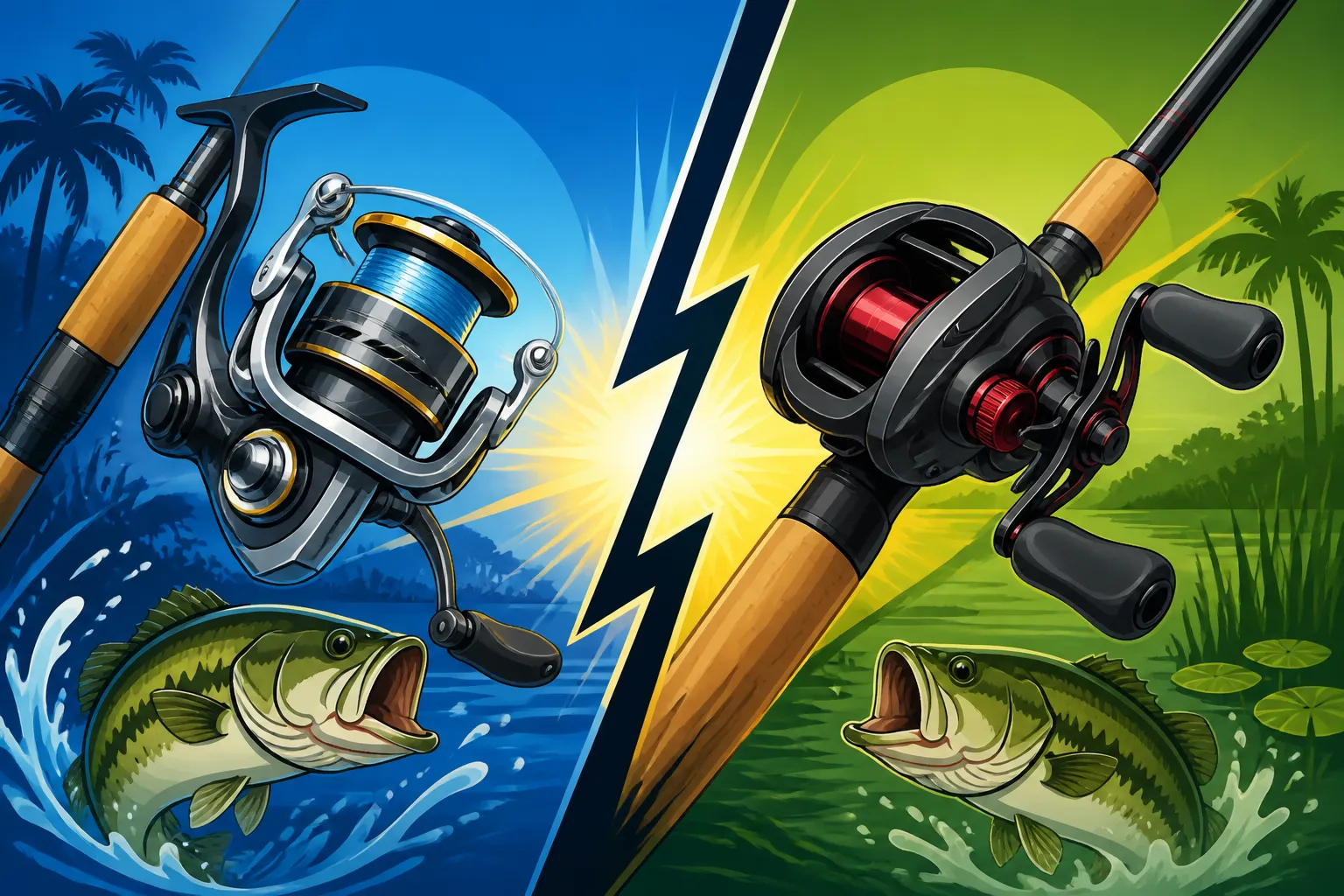
A spinning reel, often called an open-faced reel, operates with a fixed spool. When you cast, the line peels off the end of the spool. This design minimizes friction, making it incredibly user-friendly, especially for beginners or those struggling with casting. The bail arm is manually flipped open before a cast, and it automatically (or manually) closes to begin retrieval. The drag system is typically located at the front of the spool, or sometimes at the rear.
Baitcasting reels, on the other hand, feature a revolving spool that spins along with the line as it's cast out. This direct drive system means the line comes straight off the top of the spool, allowing for greater control and power, but it comes with a steep learning curve. The biggest challenge for newcomers is mastering "thumb control" to prevent the spool from overrunning the line, leading to dreaded backlashes or "bird's nests." This initial frustration is a rite of passage for many anglers, but once overcome, it unlocks a new level of precision.
Line Management and Backlash Prevention
With a spinning reel, backlashes are a rare occurrence. Because the line simply uncoils from the stationary spool, the chances of it tangling up on itself are minimal, especially with proper line loading and tension. This makes spinning gear highly forgiving, allowing anglers to focus more on presentation and less on preventing gear malfunctions. It's an excellent choice for those moments when you just want to fish without the added stress of constantly untangling your line.
Baitcasting reels are notorious for backlashes, particularly when learning or when using improper technique. A backlash occurs when the spool continues to spin faster than the line is going out, causing a tangled mess. Modern baitcasters come equipped with various braking systems (centrifugal, magnetic, or a combination) and a tension knob to help manage spool speed. However, no braking system completely replaces a skilled thumb. The ability to feather the spool with your thumb during the cast is what truly masters a baitcaster, allowing for smooth, long, and accurate casts, even into a stiff breeze. Many anglers start with inexpensive baitcasting setups from brands found on Amazon to practice before investing in higher-end gear.
The Spinning Reel Advantage for Florida Bass
When it comes to certain types of bass fishing in Florida, a spinning reel isn't just an option; it's often the superior choice. Its design lends itself perfectly to finesse techniques, lighter presentations, and situations where pinpoint accuracy might not be the absolute priority over a smooth, trouble-free cast.
When to Reach for a Spinning Reel
Spinning reels truly shine when you're working with lighter lures and need to make a subtle presentation. Think about those days when the bass are finicky, pressured, or simply not reacting to aggressive power fishing tactics. If you're using small jigs, weightless worms, tiny crankbaits, or light jerkbaits, a spinning reel allows for effortless casting without the worry of your lure not having enough weight to pull line off a baitcaster spool efficiently. It's also the go-to for situations where distance isn't paramount, but stealth and a delicate splash are.
Consider fishing clearer waters, perhaps in a smaller retention pond or a less developed canal where the fish are easily spooked. A soft landing of a tiny lure can be the difference between a bite and an empty retrieve. Spinning reels are also incredibly forgiving in windy conditions. While a baitcaster can be a nightmare to cast accurately into a strong headwind or crosswind, a spinning reel typically handles these situations with far fewer tangles, allowing you to maintain your focus on detecting subtle bites.
Best Applications for Florida Bass
In Florida's diverse bass habitats, spinning gear finds its niche in many popular techniques. For instance, if you're drop-shotting for bass holding tight to submerged structure in a deep lake, the sensitivity and precise line control of a spinning rod paired with a light fluorocarbon leader is invaluable. Similarly, when twitching a weightless wacky-rigged Senko under a dock or along a sparse weed line, the gentle cast and slow fall achieved with spinning gear often triggers strikes.
Fishing a shaky head or a Neko rig around bridge pilings or rocky bottom requires a feel that spinning gear can easily transmit. It allows you to feel those subtle "ticks" or "mushy" bites that indicate a bass has picked up your offering. Moreover, for novice anglers just getting into bass fishing, starting with a spinning combo is often recommended. It builds confidence without the initial frustration of bird's nests, letting them experience the joy of catching fish sooner. This foundational understanding is key before progressing to more specialized gear. If you're keen on exploring various methods, our guide on Florida Bass Fishing Techniques offers even more insights.
Pairing with Rods and Lines
A spinning reel works best when matched with a spinning rod, characterized by its larger guide rings and the reel seat positioned beneath the rod. Typically, you'll want a rod in the 6'6" to 7'6" range with a medium-light to medium power and a fast action for most Florida bass finesse applications. This setup provides the sensitivity needed for light bites and enough backbone to handle a good-sized largemouth.
Line choice is also critical. For clear water and finicky bass, a lighter fluorocarbon line (6-10 lb test) is often preferred for its low visibility and good abrasion resistance. However, many anglers spool their spinning reels with braided line (10-20 lb test) for its incredible strength and sensitivity, then add a fluorocarbon or monofilament leader (4-8 feet) for stealth. This combination offers the best of both worlds: casting distance and strength of braid, with the near-invisibility and shock absorption of a leader. Don't forget to check out Best Lures for Florida Bass Fishing for ideas on what to tie onto your spinning setup.
Dominating with a Baitcaster for Florida Bass
While spinning reels have their place, the baitcaster is often considered the workhorse for many serious bass anglers, especially when targeting bigger fish in heavy cover or employing more aggressive tactics. It's where power, precision, and efficiency truly come into their own.
When a Baitcaster Shines
A baitcasting reel is the ultimate tool for "power fishing." This includes throwing heavier lures like large crankbaits, spinnerbaits, chatterbaits, and big swimbaits. These lures create significant drag in the water, and the robust gearing and direct line path of a baitcaster handle the stress much better than a spinning reel. When you need to quickly retrieve a big lure or muscle a fish out of heavy vegetation, the cranking power of a baitcaster is unmatched.
Accuracy is another major advantage. Once mastered, a baitcaster allows for incredibly precise casts, often referred to as "pitching" and "flipping." These techniques involve short, underhand casts to drop a lure into tight spots, like under docks, into small pockets in lily pads, or precisely against fallen timber. The ability to stop the lure's flight mid-air with your thumb for a soft, accurate entry into the water is a game-changer for targeting elusive bass. For those looking to upgrade their gear or explore new options, a vast selection of baitcasting reels and rods can be found on Amazon.
Ideal Scenarios for Florida Bass
Florida's bass fishing often involves dense vegetation – hydrilla, lily pads, cattails, and thick mats of aquatic weeds. This is where a baitcaster truly comes alive. When you're flipping a heavy jig or a creature bait into a dense hydrilla mat, you need a strong line and a powerful reel to penetrate the cover and then, crucially, to extract a big bass from it. Similarly, frog fishing over thick lily pads or matted grass is almost exclusively done with a baitcaster. The heavier braided line used on these setups cuts through vegetation, allowing you to land fish that would otherwise be lost.
Consider fishing larger impoundments like Lake Okeechobee or Lake Kissimmee, where you might be throwing big swimbaits or heavy spinnerbaits to cover vast amounts of water quickly. The casting distance and rapid retrieve of a baitcaster are essential here. When a trophy bass hits in these scenarios, the control and torque offered by a baitcaster give you the leverage needed to turn its head and steer it away from snags. If you're dreaming of fishing these iconic waters, our guide on Best Bass Fishing Hot Spots on Lake Okeechobee, Florida can point you in the right direction.
Mastering the Learning Curve
Let's be honest: the learning curve for a baitcaster can be frustrating. Everyone gets a backlash, especially early on. The key is patience and practice. Start with heavier lures (like a half-ounce jig or spinnerbait) and gradually decrease the weight as you get more comfortable. Begin by setting both the centrifugal/magnetic brakes and the spool tension knob fairly tight. The spool tension knob should be set so that when you drop your lure, it falls slowly to the ground without the spool continuing to spin once the lure hits.
Practice casting in an open area, focusing on a smooth, controlled motion. As you gain confidence, gradually loosen the brakes and spool tension. The goal is to achieve minimal braking while maintaining control with your thumb. Your thumb is your ultimate brake, Feathering it during the cast and pressing down firmly as the lure touches the water will prevent overruns. It's a skill that develops with time on the water, but the reward of precise, powerful casting is well worth the effort. For more advanced tips on landing big fish, check out what pound test line is usually used in What Pound Test Line for Snook Fishing to get a sense of heavy-duty setups.
Making Your Choice: Which Reel is Right for You?
Ultimately, the choice between a spinning reel and a baitcaster isn't about one being inherently better than the other. It's about suitability for specific techniques, conditions, and your personal fishing style. Many experienced anglers find themselves owning and using both, often on the same outing, to maximize their versatility.
Consider Your Fishing Style and Target
Are you primarily a finesse angler who enjoys working subtle baits, or do you prefer to "power fish" with big lures, ripping them through heavy cover? If your passion lies in gentle presentations, soft plastic worms, and light jigs, a spinning reel should be your primary tool. It's also ideal for beginners or those who prefer a more relaxed fishing experience without the constant vigilance required by a baitcaster.
However, if you're chasing trophy bass in thick vegetation, planning to flip and pitch into tight spaces, or enjoy the thrill of battling a big fish with heavy tackle, a baitcaster is indispensable. It provides the muscle and precision needed for these demanding situations. Think about where you typically fish in Florida – open clear lakes, dense hydrilla swamps, or narrow canals – and let that guide your decision. Our comprehensive Florida Largemouth Bass Fishing Guide delves deeper into specific environments.
| Feature | Spinning Reel | Baitcasting Reel |
|---|---|---|
| Ease of Use | Very easy, great for beginners | Steep learning curve, requires practice |
| Backlash Risk | Very low | High initially, manageable with skill |
| Lure Weight | Excellent for light lures, finesse baits | Best for medium to heavy lures, power fishing |
| Casting Accuracy | Good for general casting | Superior for pinpoint casting, pitching, flipping |
| Power/Torque | Moderate, can struggle with heavy resistance | High, excellent for heavy cover and big fish |
| Line Type | Versatile (mono, fluoro, braid with leader) | Best with fluorocarbon or braided lines |
| Cost | Wide range, good entry-level options | Wide range, often higher for good performance |
| Best For | Finesse fishing, open water, windy conditions | Heavy cover, large lures, aggressive techniques |
Budget and Versatility
Your budget will naturally play a role in your decision. There are excellent entry-level spinning combos available at very affordable prices, making them accessible for anyone wanting to get into bass fishing. For a good quality baitcaster that performs well, you might need to invest a bit more, especially if you want features that minimize backlashes and offer smooth casting. However, it's worth noting that both types of reels have a wide range of price points. You can find reliable options on Amazon for almost any budget.
Consider the versatility you need. If you can only afford one setup, a versatile medium-heavy spinning combo with a braided mainline and a fluorocarbon leader might serve you well for a broad range of Florida bass fishing situations. But as you progress and specialize, you'll likely find the need for both. Having dedicated setups allows you to quickly switch between finesse and power techniques without re-tying lines or re-spooling.
The Hybrid Approach: Why Not Both?
Many seasoned Florida bass anglers don't choose between a spinning reel and a baitcaster; they employ both. This "hybrid approach" allows them to adapt to changing conditions, fish different cover types, and present a wider array of baits effectively. You might have a spinning rod rigged for shaky heads and a baitcaster ready for frog fishing, or another baitcaster set up for punching heavy jigs through matted vegetation.
For instance, you could start your morning on Lake Okeechobee using a baitcaster to throw a topwater frog over thick grass mats, hoping for an explosive strike. Later, as the sun gets higher and the bite slows, you might switch to a spinning rod with a weightless worm to target bass holding tight to deeper edges of the grass. This versatility ensures you're always equipped with the right tool for the job, increasing your chances of success. Learning to master both types of reels is a continuous journey that adds immense value to your angling skills and experience. To really get those big ones, knowing the Best Time of Year to Catch a Trophy Bass in Florida can make all the difference, no matter your reel choice.
Disclaimer
This article is for general informational purposes only and does not constitute professional advice. Laws, prices and regulations vary by location and change over time. Consult a qualified professional for guidance on your specific situation.