Florida Lobster Permit Cost and Requirements
Trying to navigate the ins and outs of Florida's fishing regulations can feel like trying to untangle a stubbornly knotted fishing line, especially when you're dreaming of a delicious fresh lobster dinner. Many anglers and divers get frustrated figuring out exactly what permits they need and how much they'll cost before they can legally pursue these tasty crustaceans. This guide is here to untangle those knots, breaking down everything you need to know about the Florida lobster permit costs and requirements to get you out on the water, prepared and confident.
Understanding Florida Lobster Season and Permits
The allure of Florida spiny lobster is undeniable, whether you're a seasoned diver or a curious newcomer. However, before you even think about tickling a bug out from under a ledge, it's absolutely crucial to understand the distinct seasons and the permits required to participate. Skipping these steps isn't just a minor oversight; it can lead to hefty fines and a disappointing end to your adventure.
The Two Lobster Seasons in Florida
Florida actually has two separate seasons for harvesting spiny lobster, and each one comes with its own unique set of rules and an entirely different atmosphere out on the water. Knowing the difference is your first step to a successful and legal hunt.
The first, and by far the most famous, is the Lobster Mini-Season. This frantic, two-day event typically falls on the last Wednesday and Thursday of July each year. It's a high-energy, high-traffic affair, especially in popular spots like the Florida Keys. People come from all over the world specifically for these two days. While it's incredibly exciting and often yields great catches, the sheer number of boats and divers means you need to be extra vigilant about safety and highly aware of your surroundings. It's an intense but rewarding experience, often kicking off the lobster year with a bang. Make sure to check the specific dates, as they are announced well in advance by the Florida Fish and Wildlife Conservation Commission (FWC), and you can often find resources like the "Florida Lobster Mini-Season Dates" to stay updated.
Then there's the Regular Spiny Lobster Season, which runs from August 6th all the way through March 31st of the following year. This season is much longer and generally less crowded than the mini-season. It offers a more relaxed pace for divers and allows for more consistent trips throughout the cooler months. While the daily bag limit is more restrictive during the regular season, the extended timeframe provides ample opportunity to harvest. Regardless of which season you participate in, understanding and adhering to the "Florida Fishing Regulations and Bag Limits" for lobster is paramount to avoid any issues with law enforcement.
Who Needs a Lobster Permit?
This is where some folks get tripped up. It’s not enough to just have a general fishing license; if you’re planning on harvesting spiny lobster recreationally, you almost certainly need a specific lobster permit, often called a Spiny Lobster Permit or Spiny Lobster Stamp. This permit is an add-on to your regular Florida saltwater fishing license.
Essentially, if you are recreationally harvesting spiny lobster, you need this permit. This applies whether you're a Florida resident or an out-of-state visitor. For residents, it's an add-on to your resident saltwater fishing license. For non-residents, it's an addition to your non-resident saltwater fishing license, which you can learn more about in the "Florida Nonresident Fishing License Rules". There are very few exemptions for the lobster permit itself, even if you are exempt from needing a general fishing license (for example, some disabled residents might be exempt from a fishing license but still require the lobster permit). It's always best to assume you need it and then double-check if you think you might fall into an exemption category. This ensures you're fully compliant and can enjoy your lobster hunt without worry.
Florida Lobster Permit Costs and How to Obtain Them
Once you understand why you need a lobster permit, the next logical step is to figure out how much it costs and where to get it. The process is straightforward, but it's important to remember that the lobster permit isn't a standalone item; it's an endorsement that needs to be paired with an existing saltwater fishing license.
Breakdown of Permit Costs
The Spiny Lobster Permit itself is quite affordable, but its cost is always considered in addition to your base Florida saltwater fishing license. The price is consistent whether you're participating in the mini-season or the regular season. As of my last check, the recreational Spiny Lobster Permit costs $5.00.
However, you must have a valid Florida saltwater fishing license to add this endorsement to. These licenses vary in cost depending on your residency and the duration you choose. For instance, a Florida resident might get an annual saltwater fishing license for around $17.00, and then add the $5.00 lobster permit for a total of $22.00. Non-residents will find their saltwater license costs are higher, such as a 7-day non-resident license for about $30.00, to which the $5.00 lobster permit would be added. You can get more details on the varying costs in guides like "Florida Resident Fishing License Costs and Fees" or "Florida Nonresident Fishing License Types and Costs".
Here's a quick overview of how the costs typically combine:
| License Type | Base Saltwater License (approx.) | Spiny Lobster Permit | Total (approx.) |
|---|---|---|---|
| Florida Resident Annual | $17.00 | $5.00 | $22.00 |
| Florida Resident 5-Year | $79.00 | $5.00 | $84.00 |
| Non-Resident Annual | $47.00 | $5.00 | $52.00 |
| Non-Resident 7-Day | $30.00 | $5.00 | $35.00 |
| Non-Resident 3-Day | $17.00 | $5.00 | $22.00 |
| Resident Military (Annual) | $17.00 | $5.00 | $22.00 |
Note: Prices are subject to change by FWC. Always verify current costs.
It's important to remember that these are separate from other specific permits you might need for other species, like the "Florida Snook Permit Requirements", which also requires its own add-on.
Step-by-Step Guide to Purchasing Your Permit
Getting your Florida Spiny Lobster Permit is quite convenient these days, with several options available to suit your preference. The most popular method, by far, is purchasing it online.
You can easily buy your permit, along with your saltwater fishing license, through the FWC's GoOutdoorsFlorida website. This is the official portal for all Florida hunting and fishing licenses. The site is user-friendly, allowing you to select your desired licenses and add the spiny lobster permit with just a few clicks. Once purchased, you can often print a temporary license immediately, and your official license card will be mailed to you. This digital convenience means you can get your permit anytime, anywhere, even last minute if you suddenly decide to join a lobster trip. Many anglers also use the "Florida GoOutdoors App Fishing License" on their phones, which makes displaying your license to law enforcement incredibly easy.
If you prefer a more traditional route, or just happen to be out and about, you can also purchase your permit in person. Many local bait and tackle shops throughout Florida are licensed vendors for FWC. This option is great because the staff are often local experts who can answer additional questions about current fishing conditions or hot spots. Additionally, most county tax collector offices also sell fishing licenses and permits. You can find out "Where to Buy a Florida Fishing License Near You" by checking the FWC website or simply asking around at local businesses. After you've secured your permit and license, you might even head over to a retailer like Amazon to pick up essential lobster gear, like a measuring gauge or a tickle stick, if you don't already have them.
Regardless of how you buy it, always make sure your name and other details are correct on your permit. And, before you even think about hopping in the water, double-check that your lobster permit is linked to a valid and unexpired Florida saltwater fishing license.
Essential Requirements Beyond Just the Permit
Having your permit in hand is a fantastic start, but it's just one piece of the puzzle. Florida has specific rules not just about who can harvest lobster, but also how they can do it and what equipment they must have. Adhering to these extra requirements is just as important as having the permit itself.
Required Gear and How to Use It Legally
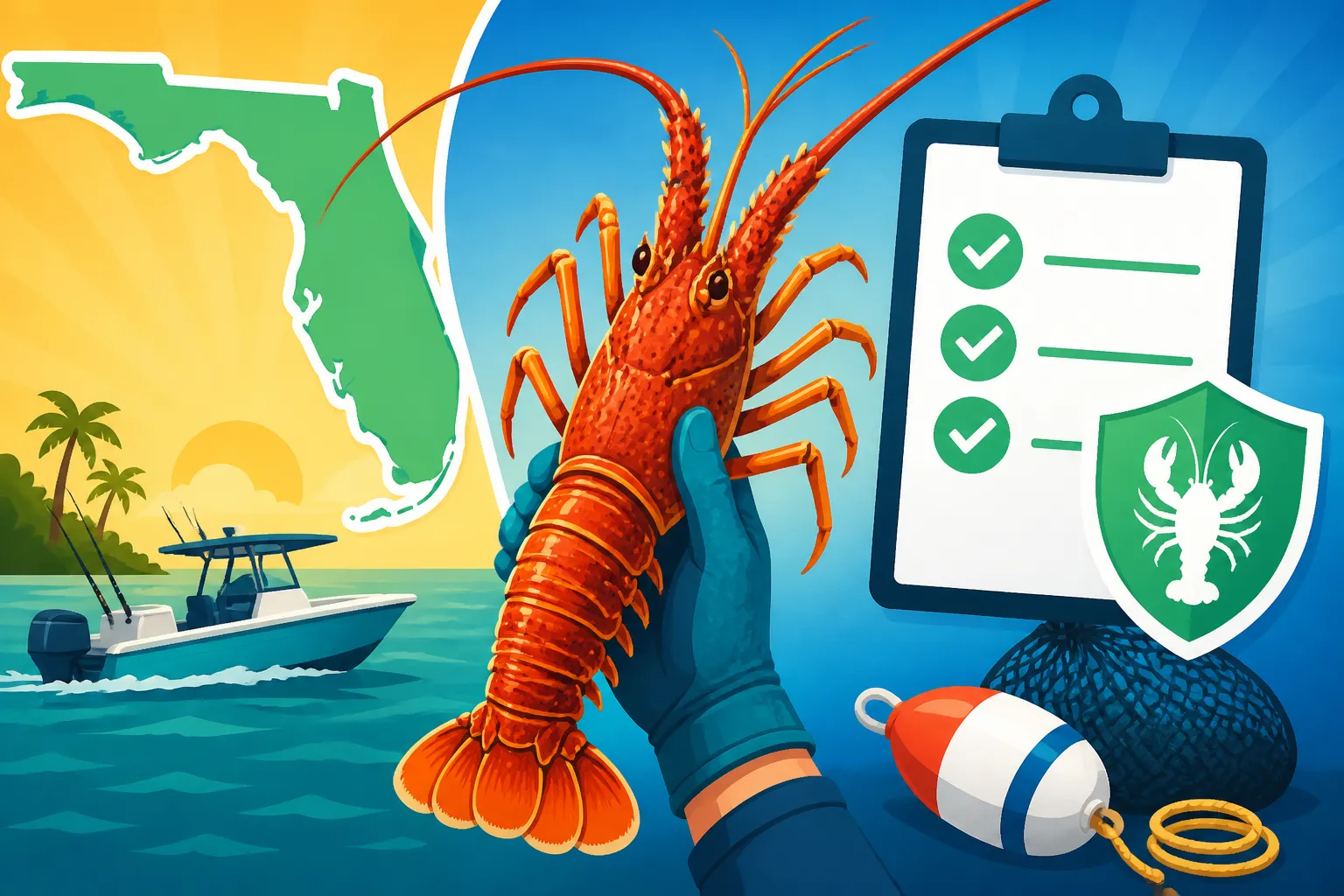
When you’re out hunting for spiny lobster, certain gear isn’t just helpful—it’s legally mandated. The most crucial piece of equipment is a lobster measuring device, or gauge. Florida law requires that any spiny lobster you possess must have a carapace length greater than 3 inches, measured from the area between the rostral horns to the rear edge of the carapace. An accurate, rigid gauge is essential to ensure you are only keeping legal-sized lobsters. These handy tools are relatively inexpensive and can easily be found at most dive shops, fishing tackle stores, or even online on Amazon, where you can browse various styles to find one that suits you. Using an undersized lobster gauge is a quick way to land yourself in trouble, so ensure yours is correct and in good working order.
Another important piece of equipment is a tickle stick and a net. These are the standard tools for recreational lobster harvesting. The tickle stick is used to gently coax lobsters out from their hiding spots (usually under ledges or in crevices), and the net is then used to quickly scoop them up. Remember, you can't use spears, hooks, or any device that might puncture or harm the lobster. Handling them carefully is not just good practice; it's a legal requirement to ensure the lobster is not damaged if you have to release it.
Beyond the lobster-specific gear, if you're diving or snorkeling, you'll need standard safety gear. This includes a properly displayed dive flag (either boat-mounted or diver-mounted) to alert boaters to your presence, as well as a whistle or other signaling device. Wearing protective gloves is also highly recommended, as lobsters have sharp spines, and you might encounter other thorny marine life. This helps protect both you and the lobster.
Understanding Bag and Size Limits
The bag and size limits are non-negotiable rules designed to ensure the sustainability of the spiny lobster population. Getting this wrong is one of the quickest ways to face significant penalties.
For the Lobster Mini-Season, the daily bag limit is 6 lobsters per person per day in Florida state waters (excluding Everglades National Park, Biscayne National Park, and John Pennekamp Coral Reef State Park, where limits are tighter). However, if you are diving in Monroe County (the Florida Keys) or the Biscayne National Park, the limit is 12 lobsters per person per day during the mini-season only. This is a common point of confusion, so be absolutely clear on where you are harvesting. During the Regular Spiny Lobster Season, the daily bag limit is consistently 6 lobsters per person per day throughout all Florida waters where lobster harvesting is allowed. It's easy to get excited and overharvest, but exceeding these limits carries stiff fines.
The size limit is equally important: the lobster's carapace must be larger than 3 inches. You measure this from the front edge between the rostral horns (the two forward-pointing spines on the head) to the rear edge of the carapace (the main body shell). It's not the tail, not the antennae, but the carapace. Any lobster with a carapace shorter than 3 inches must be immediately released unharmed. Furthermore, it is illegal to harvest egg-bearing (berried) females, which typically have visible eggs on their undersides. If you catch one, it must also be released immediately. These rules are part of the broader "Florida Fishing Regulations and Bag Limits" that protect the state's marine resources.
Legal Harvest Methods
Florida is quite specific about how you can harvest spiny lobster recreationally. The vast majority of recreational lobstering is done by snorkeling or scuba diving using a tickle stick and net. As mentioned, the tickle stick is used to gently encourage the lobster out of its hiding spot, and then a net is used to scoop it up. This method allows for careful selection of legal-sized lobsters and minimizes harm.
It is absolutely crucial to understand what methods are not allowed. Recreational harvesters cannot use:
- Spears or hooks: Any device that punctures the lobster is illegal. This is to ensure the lobster is in good condition if it needs to be released.
- Traps: Recreational lobster traps are not allowed. Traps are reserved for commercial fishermen who have specific licenses and permits.
- Any method that damages the lobster or its habitat: This includes breaking off pieces of coral or rock to get to a lobster. The emphasis is always on minimal impact.
Adhering to these methods not only keeps you on the right side of the law but also promotes sustainable harvesting practices, ensuring that future generations can enjoy Florida's spiny lobster.
Common Pitfalls and Smart Practices for Lobster Hunting
Even with your permit and gear ready, there are common mistakes that can turn a fun day into a costly one. Being aware of these pitfalls and adopting smart practices will make your lobster hunting experience much smoother and more enjoyable.
Avoiding Common Violations
Unfortunately, violations happen, often due to lack of knowledge rather than malicious intent. But ignorance of the law is no excuse. One of the most common violations is fishing without a permit or the correct license. Remember, you need both a valid Florida saltwater fishing license and the spiny lobster permit endorsement. Forgetting either one means you're not legally harvesting. This is why resources like the "Florida Fishing License Guide" are so important to review before you head out. Getting caught without the proper paperwork can lead to a fine, confiscation of your catch, and even your gear. It's a costly mistake that's easily avoidable by simply making sure you have everything in order before you leave the dock. The "Penalty for Fishing Without a License in Florida" can be quite steep, so it's always better to be safe than sorry.
Another frequent issue is exceeding bag limits or keeping undersized lobsters. In the excitement of the hunt, it can be tempting to keep just one more, or to misjudge a lobster's size. Always measure every lobster you catch, even if you think it looks big enough. It’s better to be methodical and release a borderline lobster than to keep one that's too small. Similarly, always recount your catch to ensure you're within the daily limit. Forgetting to display your dive flag while in the water, or not having the proper measuring tools on board, are also common infractions that FWC officers look for. Staying vigilant about these details will save you a lot of headache.
Tips for a Successful and Safe Trip
Now that you know the rules and how to avoid the pitfalls, let's talk about maximizing your chances for a successful and safe lobster hunt. The right preparation can make all the difference.
Scouting locations is paramount. Spiny lobsters love rocky bottoms, coral reefs, ledges, and artificial structures where they can hide during the day. Popular areas in the Florida Keys, such as around Marathon or Islamorada, are well-known, but even areas along the Gulf Coast can hold bugs. Learning to identify good lobster habitat is a skill that improves with experience. Sometimes, the best spots are quieter, less trafficked areas away from the crowds, especially during mini-season. You might even want to check out "Best Time of Year to Fish in Florida" for general conditions, although lobster season has its own unique timing.
Consider the best times to go. Early morning, just after sunrise, is often a prime time, especially during mini-season, as lobsters might still be out and about before retreating deeper into their dens for the day. Calm waters are always preferable for visibility and safety. Going with experienced friends or a local guide for your first few trips can be invaluable. They can teach you techniques, point out good spots, and help you understand local nuances of the regulations.
Safety should always be your top priority. Make sure your boat is in good working order, you have all required safety gear, and someone always knows your dive plan. Currents can be strong in some areas, so always be aware of your drift. And for night dives, which can be very productive for lobsters, a good quality, powerful waterproof flashlight is absolutely essential for spotting bugs in their dark crevices. You can find excellent options for dive lights on Amazon that will illuminate even the darkest hideaways. Always respect the marine environment, avoid touching coral, and practice responsible catch and release for any non-target species or undersized lobsters.
By being informed, prepared, and respectful of the rules and the environment, you'll be well on your way to enjoying the fantastic experience of Florida lobster hunting.
Disclaimer
The information provided in this guide is for general informational purposes only and is subject to change. Florida Fish and Wildlife Conservation Commission (FWC) regulations can be updated frequently. It is the sole responsibility of the individual angler or diver to be aware of and comply with all current federal, state, and local fishing and boating regulations. Always consult the official FWC website or official publications for the most up-to-date and accurate information before engaging in any fishing or harvesting activities.