Florida Fishing License Bag Limit Enforcement
There's nothing quite as frustrating as heading out for a relaxing day on the water, only to realize you're not entirely sure about the precise rules for what you can keep. The maze of Florida fishing regulations, especially when it comes to bag limits and size restrictions, can be daunting and confusing, leading to accidental violations. This guide will meticulously break down how Florida's fishing license bag limits are enforced, what you need to know to stay compliant, and the real-world consequences of getting it wrong, helping you enjoy your fishing trips worry-free.
Understanding Florida's Fishing Bag Limits
Florida is a fishing paradise, but with such a rich diversity of species in both freshwater and saltwater environments, come a comprehensive set of rules designed to protect these precious resources. It’s not just about having a Florida Fishing License Guide in your pocket; it’s about understanding the specific limits for each fish you might encounter. Bag limits are a cornerstone of these conservation efforts, ensuring that our fish populations remain healthy and abundant for generations to come.
The Purpose Behind Bag Limits
Imagine if everyone could keep as many fish as they wanted, every single day. Our beautiful Florida waters would be stripped bare in no time! That's precisely why bag limits exist – they are a crucial conservation tool. The Florida Fish and Wildlife Conservation Commission (FWC) meticulously studies fish populations, spawning patterns, and environmental factors to determine sustainable harvest levels. These limits aren't arbitrary; they're based on scientific data, aiming to prevent overfishing and allow fish to reproduce and grow. For instance, species like snook and redfish, which are highly popular and ecologically important, often have stricter regulations, including slot limits (a minimum and maximum size for keeping) and closed seasons, to give them extra protection.
These regulations also consider the differing pressures on various species. A fast-reproducing baitfish might have a generous limit, while a slow-growing, long-lived species like a goliath grouper (which is entirely protected) has a zero bag limit. It's a delicate balance, and while it might feel restrictive at times, it's all for the greater good of ensuring future fishing opportunities. The health of our ecosystems, from the smallest baitfish to the largest apex predators, relies on these careful considerations.
Where to Find Current Bag Limit Information
One of the biggest challenges for anglers is keeping up with constantly changing regulations. Bag limits, size restrictions, and seasons can vary by species, by region (Gulf vs. Atlantic), and sometimes even shift mid-year due to biological or environmental factors. Relying on outdated information is a common pitfall that can lead to unintended violations. The absolute best and most reliable source for up-to-date information is the official FWC website. They have detailed guides for both Florida Saltwater Fishing License Rules and Florida Freshwater Fishing License Rules, broken down by species.
Beyond the website, the FWC publishes an annual fishing regulations booklet, available at tackle shops, FWC offices, and sometimes even local bait stores. Many anglers also use the FWC's "Fish Rules" app, available on smartphones, which is incredibly handy for on-the-water checks. It uses your location to automatically show you relevant regulations for the species you're targeting. Having a reliable measuring device, like a Fish Stik or a simple tape measure, is also essential, and you can find many options on Amazon that are designed to be durable for marine environments.
Common Misconceptions About Bag Limits
It's easy to fall prey to common misunderstandings when it comes to bag limits. One widespread misconception is that bag limits apply per boat, not per person. This is absolutely incorrect. Unless specifically stated otherwise for certain communal harvests like baitfish, bag limits are per person, per day. So, if the bag limit for redfish is one, and there are four licensed anglers on your boat, your boat's total limit for redfish is four, but no single angler can claim more than one. Another common mistake is thinking that if you're on a charter boat, the captain's license covers all your fish. While charter boats operate under a vessel license that covers most passengers, individual anglers are still responsible for adhering to bag limits. The captain will typically ensure compliance, but the responsibility ultimately rests with the individual keeping the fish.
Another area of confusion often involves species with complex regulations, such as slot limits. For example, Florida Snook Size and Slot Limits are very specific: you can only keep snook within a certain size range, and only one per person per day during open season. Keeping a snook that is too small or too large, even if it's your only fish, is a violation. Similarly, species like Florida Redfish Size and Bag Limits also feature slot limits. Always double-check not just the number of fish, but also their size against the current regulations.
How Florida Fishing Bag Limits Are Enforced
The enforcement of Florida's fishing regulations is a serious business, and for good reason. It’s about protecting our natural heritage and ensuring fair play for all anglers. While most anglers are law-abiding and committed to conservation, there are always a few who might try to bend or break the rules. That’s where the dedicated men and women of the FWC step in.
Who Enforces Fishing Regulations?
The primary agency responsible for enforcing fishing regulations in Florida is the Florida Fish and Wildlife Conservation Commission (FWC) Law Enforcement Division. These are highly trained law enforcement officers, often referred to as FWC officers or game wardens. They have full law enforcement authority, similar to county sheriffs or state troopers, but their focus is specifically on wildlife and environmental laws. You’ll see them patrolling our waterways in distinct FWC vessels, driving marked vehicles, and sometimes even on foot in popular fishing areas or state parks.
In addition to the FWC, local county sheriff's deputies, municipal police departments, and even the U.S. Coast Guard may also enforce fishing regulations, especially in coastal waters or during routine safety checks. While FWC officers are the specialists, any certified law enforcement officer can issue citations for violations. This means you should always be prepared to comply with requests from any officer on the water, not just those in FWC uniforms. They are there to ensure everyone adheres to the Florida Fishing Regulations and Bag Limits and keep our fisheries healthy.
On-the-Water Inspections and Checks
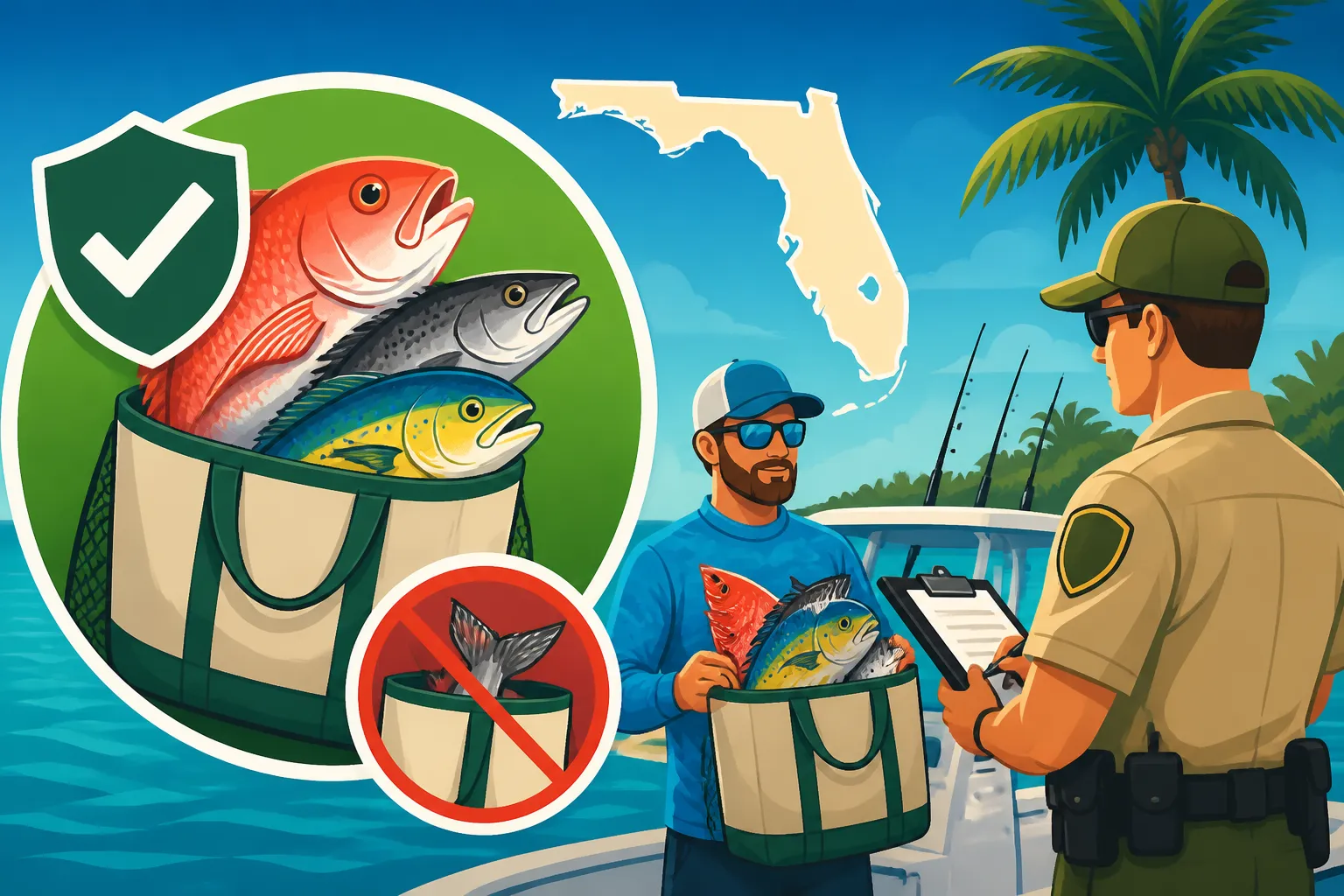
FWC officers conduct routine and targeted patrols across the state, from remote freshwater lakes to busy saltwater passes in the Florida Keys. If an FWC patrol vessel approaches you on the water, they typically do so in a professional and courteous manner. They will often hail you on marine radio or simply pull alongside. During these interactions, they are likely to ask to see your fishing license, check your safety equipment (such as life jackets), and inspect your catch. This is a standard procedure and is perfectly legal, as they have the authority to inspect your vessel and its contents related to fishing activities.
When they inspect your catch, they’ll be looking for several key things:
- Species Identification: They’ll check to make sure you haven’t kept a prohibited species or misidentified one to circumvent limits. Knowing How to Identify a Gag Grouper vs Red Grouper is crucial, as their regulations can differ significantly.
- Size Compliance: They will measure your fish to ensure they meet minimum or maximum size requirements (slot limits). It’s imperative to have your fish intact until you are ashore and finished fishing, as cleaning fish at sea makes it impossible to verify size.
- Bag Limit Compliance: They will count your fish to confirm you haven't exceeded the daily bag limit for any species. This includes all fish possessed by everyone on board, keeping in mind the per-person limits.
- Permit Requirements: For certain species like snook and lobster, specific permits are required in addition to a general fishing license. An officer will check for your Florida Snook Permit Requirements or Florida Lobster Permit Requirements if you possess these species.
It's important to be cooperative and transparent during an inspection. Resist the urge to hide fish or try to pass off an illegal catch. FWC officers are highly experienced in detecting such attempts, and it will only worsen your situation.
Technology and Reporting in Enforcement
Enforcement isn't just about on-the-water patrols. Technology plays an increasingly vital role. FWC officers utilize various tools, including GPS tracking, thermal imaging, and even drones in certain circumstances, to monitor remote areas and deter illegal activity. They also rely heavily on tips from the public. Florida has a Wildlife Alert Program, where citizens can report suspected violations anonymously. This means that an officer might be checking your boat not just on a random patrol, but also in response to a specific tip.
Furthermore, social media and online fishing forums can sometimes become an unintended source of evidence. Anglers often proudly post photos of their catches, which, if not compliant with regulations, can lead to investigations. It’s always wise to ensure that any catch you share online adheres strictly to all current FWC rules. The digital footprint of your fishing activities can be easily traced, and what might seem like a harmless boast could lead to serious repercussions. So, always fish smart, fish legally, and if you’re unsure, err on the side of caution.
Penalties for Violating Florida Fishing Bag Limits
Let's be clear: fishing regulation violations in Florida are not minor slaps on the wrist. They are serious legal matters that can carry significant penalties. The specific consequences depend heavily on the severity of the offense, the species involved, the number of fish over the limit, and whether it’s a repeat offense. It’s truly not worth the risk to disregard these rules.
The Range of Fines and Legal Consequences
Most minor bag limit violations in Florida are considered non-criminal infractions, similar to a traffic ticket. These typically result in a monetary fine. However, these aren't cheap fines. Depending on the species and the number of fish, a fine for exceeding a bag limit can range from a couple of hundred dollars to well over a thousand dollars. For example, keeping just one snook out of season or outside the slot limit can result in a hefty fine, often starting around $500, plus court costs. The fines generally increase with the number of fish over the limit or if the species is particularly protected or endangered.
In addition to monetary fines, the court might impose other penalties. This could include mandatory court appearances, particularly if it's a more serious violation. It can also involve community service hours. Each fish over the limit or illegally harvested can sometimes be treated as a separate count, quickly escalating a seemingly small mistake into a major legal headache. It's truly a scenario where ignorance of the law is not an excuse.
Potential Jail Time or Revocation of Privileges
While most first-time, minor bag limit infractions are civil penalties, more serious violations can indeed lead to criminal charges. If a violation is deemed a misdemeanor, you could face up to 60 days in county jail and/or a fine of up to $500. Factors that can elevate a violation to a misdemeanor include:
- Intent: If there's evidence that you intentionally tried to conceal an illegal catch or blatantly disregard regulations.
- Gross Negligence: Extreme disregard for the rules.
- High Number of Illegally Possessed Fish: Possessing a large quantity of fish over the limit, particularly commercial quantities.
- Repeat Offenses: Multiple prior violations will almost certainly lead to stricter penalties.
- Possession of Highly Protected Species: Illegally possessing certain species like goliath grouper or sawfish carries extremely severe criminal penalties, including significant jail time and fines in the tens of thousands of dollars.
Beyond fines and potential jail time, perhaps one of the most impactful penalties for an angler is the revocation of fishing privileges. A court can order the suspension or permanent revocation of your fishing license. This means you wouldn't be able to legally fish in Florida for a specified period, or potentially ever again. For passionate anglers, losing the ability to fish is often a far more painful consequence than a monetary fine. This is a very real scenario, as outlined in articles like What Happens If You Fish Without a License.
The Long-Term Impact of Violations
A fishing violation isn't just a one-time inconvenience; it can have lasting repercussions. Criminal convictions, even for misdemeanors, can appear on background checks, potentially impacting employment opportunities, particularly for jobs requiring professional licenses or dealing with public trust. It can also affect your ability to obtain certain permits or licenses in the future.
Furthermore, serious violations contribute to the degradation of Florida's fisheries. Every illegally harvested fish is one less fish that can reproduce, one less fish for other anglers to enjoy, and one more dent in the ecosystem. The FWC uses revenue from fines to fund conservation efforts, but prevention through compliance is always the preferred outcome. The collective impact of all anglers adhering to the rules is what keeps our waters vibrant and healthy, supporting both recreational and commercial fishing industries.
Practical Tips for Staying Compliant with Bag Limits
Navigating Florida's fishing regulations doesn't have to be a constant source of anxiety. With a little preparation and mindful practice, you can easily stay compliant and enjoy your time on the water without worry. It's all about being proactive rather than reactive.
Pre-Trip Planning and Research
Before you even hook up the boat or pack your tackle box, take a few minutes to research the regulations for your specific target species and fishing location. Don't assume the rules are the same as last year, or even last month. Seasons open and close, and limits can be adjusted. A quick check of the FWC website or the Fish Rules app can save you a lot of trouble. If you're planning a trip to a specific area, like exploring the Best Fishing Spots in Florida, make sure to look up any localized rules that might apply there.
Consider printing out a summary of the regulations for your target species or saving screenshots on your phone. Having a physical copy or easily accessible digital version can be a lifesaver if you lose cell service on the water. Many tackle shops and bait stores also provide small, laminated cards with common regulations, which are great to keep in your boat or tackle bag. Taking this small step of preparation can make all the difference, especially when a particular species might have a short season, like the Florida Red Snapper Season Guide.
Proper Fish Identification and Measurement
One of the most common accidental violations occurs due to misidentification or improper measurement. Many fish species look similar, especially to novice anglers. For instance, differentiating between a gag grouper and a red grouper is crucial, as their minimum size requirements and seasons can differ. The FWC website and Fish Rules app have excellent visual guides to help with identification. Consider investing in a good fish identification book or a waterproof guide you can keep on your boat. You can find many comprehensive guides on Amazon that fit perfectly in a tackle box.
When measuring fish, always measure from the tip of the jaw to the tip of the tail, with the tail pinched to get the maximum length. For some species, different measurement methods apply (e.g., fork length). Always refer to the specific FWC guidelines. Many fish rulers available on Amazon are clearly marked with FWC specifications. It’s also important to measure fish immediately upon catching them if you intend to keep them. If a fish is undersized, release it gently and quickly to maximize its survival chances. Never try to "stretch" a fish to meet the minimum length; officers are trained to spot this.
Responsible Catch Handling and Documentation
Once you've caught a legal fish you intend to keep, proper handling is key. This includes bleeding the fish, if desired, and putting it on ice immediately. However, remember the FWC regulation that fish with specific size limits must remain in a whole condition, or "reasonably intact," until landed ashore. This means no filleting at sea! If you fillet your fish before returning to the dock, an FWC officer cannot verify its length, and you could be cited. Certain species like dolphin (mahi-mahi) are an exception and can be filleted at sea as long as the carcass size is verifiable. Always check these specific rules.
Also, be mindful of your possession limits. If you've been fishing for several days and have kept fish each day, your total possession limit might be different from your daily bag limit. For example, if the daily limit is one fish, but you have a cooler full of fish from a multi-day trip, ensure you haven't exceeded the possession limit, which is typically equal to one or two days' bag limit, depending on the species. Keeping a simple log in your boat can help you track your catch, especially on longer trips. Understanding factors like How to Read a Tide Chart for Fishing can also indirectly help you plan your fishing days more effectively, ensuring you only head out when you have a better chance of catching legal fish, reducing the temptation to keep questionable ones.
Lastly, make sure you have your fishing license readily accessible. Whether it's the physical card, a printed copy, or displayed on your phone via the GoOutdoors Florida app, be ready to present it upon request. The FWC encourages anglers to carry their licenses, just like a driver's license. Having everything in order ensures a smooth inspection and allows you to get back to enjoying Florida's fantastic fishing.
Disclaimer
The information provided in this guide is intended for general informational purposes only and does not constitute legal advice. Fishing regulations in Florida are subject to change by the Florida Fish and Wildlife Conservation Commission (FWC). It is always the angler's responsibility to consult the most current and official FWC regulations before engaging in any fishing activities. We recommend checking the FWC website or the "Fish Rules" app for the latest updates.