Fly Fishing vs Spin Fishing for Tarpon
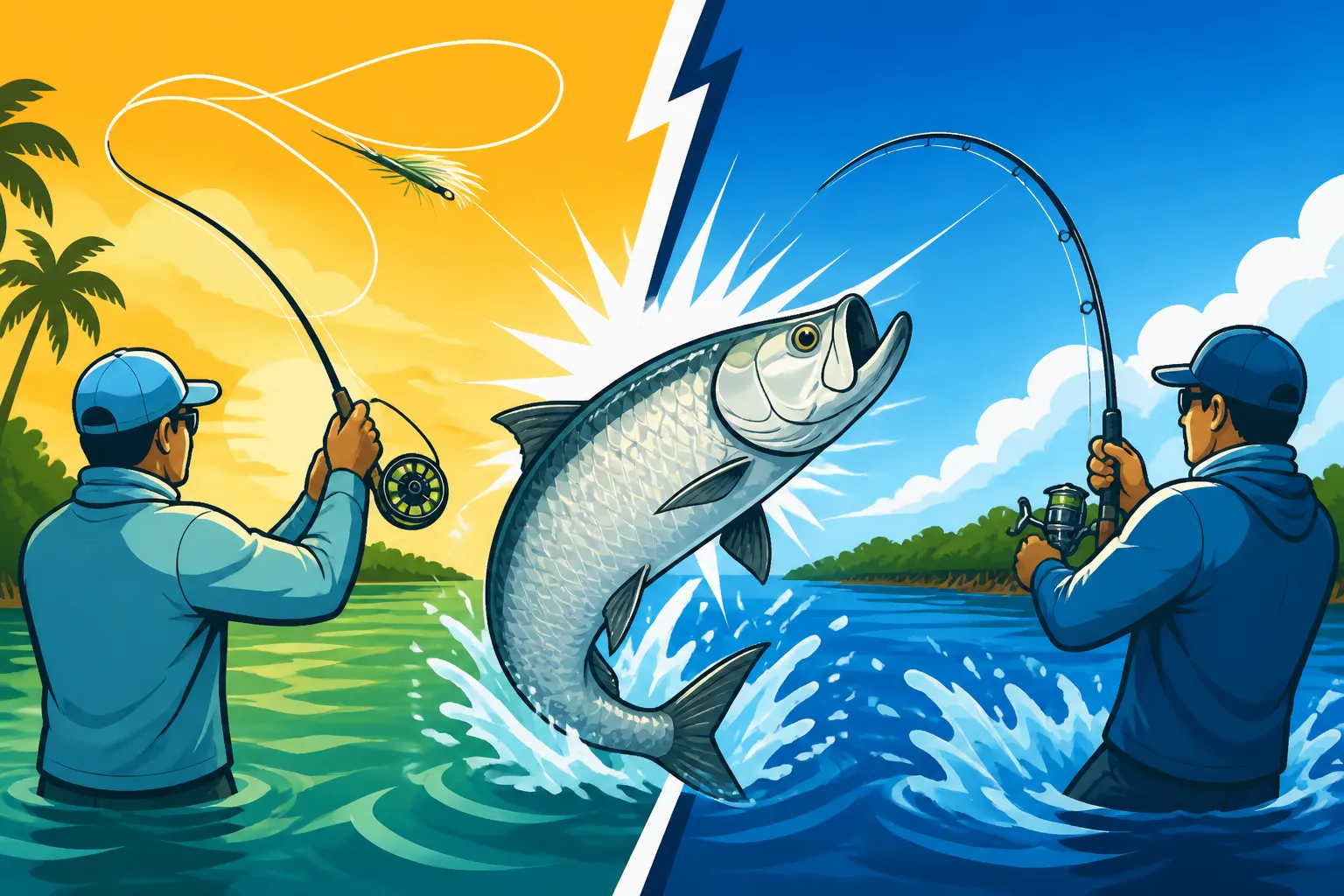
There's a classic debate among Florida anglers, especially when it comes to chasing the mighty tarpon: do you grab the fly rod or stick with trusty spinning gear? Many anglers wrestle with this decision, wondering which method offers the best chance at success or the most rewarding experience. This comprehensive guide will help you navigate the nuances of both fly fishing and spin fishing for Florida's "Silver King," so you can make an informed choice for your next adventure.
The Allure of Tarpon Fishing in Florida
There's something truly special about tarpon. They are, without a doubt, one of Florida's most iconic and sought-after game fish, drawing anglers from all corners of the globe to our sun-drenched coasts and shimmering flats. Understanding why these magnificent creatures captivate us so deeply is key to appreciating the methods we use to pursue them.
Why Tarpon Captivate Anglers
Tarpon earn their legendary "Silver King" moniker not just for their stunning, iridescent scales, but for their incredible fighting prowess. These fish are absolute athletes of the water. When hooked, a tarpon doesn't just pull; it explodes into a series of spectacular, acrobatic leaps, shaking its head violently in an attempt to dislodge the hook. It's a heart-stopping display of raw power and grace that few other fish can match. Imagine a fish easily reaching six feet in length and weighing over 200 pounds launching itself clear out of the water – it's an image that burns into an angler's memory forever. The sheer challenge of landing one of these giants, often after a protracted battle, is what keeps us coming back season after season. It’s a true test of skill, patience, and the strength of your tackle.
Beyond their fight, tarpon have an almost mystical quality. They are often found in breathtakingly beautiful environments, from the crystal-clear flats of the Florida Keys to the murky estuaries of Southwest Florida. Florida Tarpon Fishing Guide provides a deeper dive into these incredible fish. Their elusive nature adds to the thrill; spotting a school of giants rolling on the surface or cruising silently across a flat can make your heart pound even before you make a cast. It's not just about the catch; it's about the entire experience of the hunt.
Key Considerations Before Choosing Your Method
Before you even think about rigging a rod, it’s important to consider a few things that will heavily influence your choice between fly fishing and spin fishing for tarpon. Firstly, your personal skill level and experience with each type of gear play a huge role. Are you an experienced fly caster who can accurately present a fly at 60 feet with a heavy rod, or are you more comfortable with the familiar mechanics of a spinning reel?
Secondly, think about the gear investment. While both methods require robust tackle, fly fishing for tarpon typically involves a higher initial cost for specialized rods, reels, and lines. What kind of experience are you hoping for? Are you chasing the ultimate challenge and the deep satisfaction of fooling a fish on a fly, or are you primarily focused on maximizing your chances of a hook-up and a thrilling fight, regardless of the tackle?
Finally, the specific fishing conditions you anticipate will be a major factor. Will you be sight fishing on calm, clear flats, where stealth and presentation are paramount? Or will you be fishing deeper channels, murky water, or contending with strong winds, where covering ground and casting heavier baits might be more effective? Each scenario lends itself better to one method over the other, and sometimes, a true tarpon expert will have both options ready to go.
Delving into Fly Fishing for Tarpon
Fly fishing for tarpon is often considered the pinnacle of saltwater fly angling. It's a pursuit that demands a high level of skill, precision, and patience, rewarding those who master it with an unparalleled sense of accomplishment. It's not for the faint of heart, but the experience is truly unforgettable.
The Art and Challenge of the Long Rod
To many, fly fishing for tarpon isn't just a method; it's an art form. The technique involves casting large, often weighted, flies with a heavy fly rod, requiring a smooth, powerful double haul to generate the line speed needed for accurate long casts, often into the wind. The presentation is critical: the fly must land softly, often within inches of a cruising tarpon's nose, and then be stripped in with precise movements to imitate natural prey. There’s no heavy lead weight or loud splash; it’s all about subtle deception.
The challenge is immense, and it’s a big part of the appeal. You're typically sight fishing, meaning you're actively searching for tarpon, spotting their subtle movements, or anticipating their path before making a cast. This requires keen eyesight, quick reflexes, and the ability to accurately judge distance and wind direction under pressure. Fly Fishing for Florida Tarpon delves deeper into the specific techniques involved. There's a steep learning curve, no doubt about it. You might spend days practicing your cast, only to have a giant tarpon ignore your perfectly placed fly, or worse, "tail-walk" off after a few exhilarating seconds. But when everything comes together – the perfect cast, the right retrieve, the explosive strike – it's an experience that’s hard to beat, offering an intimate connection to the fish that feels incredibly pure.
Essential Fly Fishing Gear for Tarpon
Choosing the right gear for tarpon fly fishing is paramount, as these fish will test every component of your setup to its absolute limit. You’ll need heavy-duty equipment capable of handling massive power.
- Rod: A 10-weight to 12-weight fly rod is standard. A 10-weight might suffice for smaller tarpon on calm days, but a 11- or 12-weight offers more backbone for larger fish, heavier flies, and battling windy conditions. Look for a fast-action rod that can generate significant line speed.
- Reel: This isn't just about holding line; it's about stopping a freight train. A large arbor, saltwater-specific fly reel with a butter-smooth, sealed drag system is non-negotiable. It needs to hold at least 250-300 yards of 30-50 lb backing in addition to your fly line. Brands like Tibor, Hatch, and Abel are popular for their robust tarpon reels. You can often find a good selection of quality reels, and read reviews, on sites like Amazon.
- Fly Line: A weight-forward (WF) tropical fly line is essential. For most shallow water sight fishing, a floating line with a short, aggressive front taper is ideal for turning over large tarpon flies. For deeper channels or sinking flies, an intermediate or even a full sinking line might be necessary.
- Leader System: This is a crucial, often complex, part of your setup. A typical tarpon leader consists of three main sections:
- Butt Section: A heavy, stiff monofilament (e.g., 50-60 lb fluorocarbon) that tapers from the fly line.
- Class Tippet: A section of lighter monofilament (e.g., 16-20 lb) designed to break before the bite tippet if a fish runs too hard, protecting the fish from breaking off with heavy line in its mouth. This also serves as a legal requirement for IGFA world record rules.
- Bite Tippet: A much heavier, abrasion-resistant fluorocarbon (e.g., 60-100 lb) directly attached to the fly, designed to withstand the tarpon's bony mouth and gill plates.
- Flies: Tarpon flies are typically large and designed to imitate baitfish, crabs, or shrimp. Popular patterns include the Tarpon Toad, Black Death, Purple Death, EP Tarpon Streamer, and Everglades Special. Colors vary, but black and purple, chartreuse, and white are often reliable.
Pros and Cons of Fly Fishing for Tarpon
Like any specialized method, fly fishing for tarpon comes with its own set of advantages and disadvantages.
Pros:
- Immense Satisfaction: Successfully landing a tarpon on a fly rod is one of the most rewarding achievements in sport fishing. It represents a true triumph of skill, patience, and precise presentation.
- Stealth and Presentation: Fly tackle allows for incredibly subtle presentations, especially on shallow, clear flats. The fly lands softly, minimizing disturbance and making it easier to fool wary tarpon that might spook from a heavier lure or bait.
- Intimate Experience: The close-quarters sight fishing, the direct connection to the fish through the fly line, and the hand-to-hand combat (often without a reel handle) create a truly intimate and personal angling experience.
- Perceived Purity: For many, fly fishing represents the purest form of angling, relying on natural imitation and finesse rather than brute force or excessive scent.
Cons:
- High Skill Barrier: The learning curve for effective tarpon fly casting is steep. It takes significant practice to consistently make accurate, long casts, especially under pressure or in windy conditions.
- Expensive Gear: High-quality tarpon fly rods, reels, and lines are a substantial investment. While you can find entry-level options, the gear needed to reliably tackle large tarpon usually costs more than comparable spin tackle.
- Limited Range and Depth: Fly lines don't cast as far or sink as quickly as spin fishing setups. This limits your ability to cover large areas or effectively fish deep channels and fast currents compared to spin gear.
- Weather Dependency: Fly fishing is highly susceptible to wind. A strong breeze can make accurate casting nearly impossible, severely limiting your opportunities. Similarly, murky water can hinder the sight-fishing aspect, making it much tougher to locate fish.
Exploring Spin Fishing for Tarpon
Spin fishing for tarpon offers a different, often more accessible, path to connecting with these incredible fish. It's a highly effective method that many anglers, from beginners to seasoned veterans, employ with great success.
The Versatility and Accessibility of Spin Gear
Spin fishing for tarpon is characterized by its versatility and, for many, its inherent ease of use compared to fly fishing. The mechanics of casting a spinning reel are generally simpler to learn, allowing anglers to get on the water and start targeting tarpon with less upfront practice. You can cast a wide array of baits and lures, from heavy plugs to live crabs, giving you more options to adapt to various conditions and fish preferences.
This method often shines in situations where fly fishing might struggle. For example, in murky water or when tarpon are holding in deeper channels, spin tackle allows you to present heavier lures or live baits directly to the fish, covering water more efficiently. It's also more forgiving in windy conditions, as the weight of the lure or bait helps to cut through the breeze, maintaining casting distance and accuracy. Whether you're tossing a plug from a bridge or drifting a live mullet along a mangrove edge, spin fishing provides a robust and reliable way to engage with the Silver King. Many charters, as detailed in Florida Fishing Charter Guide, offer spin fishing as their primary method, making it a great option for those new to tarpon fishing.
Recommended Spin Fishing Tackle for Tarpon
Spin tackle for tarpon needs to be incredibly strong and durable, designed to withstand powerful runs and acrobatic jumps. Just like fly gear, every component will be tested.
- Rod: A medium-heavy to heavy action spinning rod, typically 7 to 8 feet long, is ideal. Look for a rod with a fast taper that provides sensitivity for detecting subtle bites but still has significant backbone to fight big fish. Graphite or composite blanks are common choices.
- Reel: A high-quality, large-capacity spinning reel with an exceptionally smooth and powerful drag system is essential. Reels in the 6000 to 10000 size range are generally appropriate, capable of holding at least 250-300 yards of braided line. Brands like Shimano, Penn, and Daiwa offer excellent options.
- Line: Braided line (e.g., 50-80 lb test) is almost universally preferred for its incredible strength-to-diameter ratio, minimal stretch, and excellent casting capabilities. The lack of stretch provides direct feel, which is crucial for detecting subtle bites and setting the hook on a bony-mouthed tarpon. What Pound Test Line for Tarpon Fishing? provides specific recommendations.
- Leader: A heavy fluorocarbon leader (e.g., 60-100 lb test) is tied to the braided main line, providing abrasion resistance against the tarpon’s rough mouth and gill plates. The length of the leader can vary, but 4-6 feet is common. A strong knot, like an FG or Alberto knot, is vital for connecting the braid to the fluorocarbon.
- Lures: A wide variety of lures can be effective.
- Hard Baits: Large topwater plugs (e.g., MirrOlure, Rapala Skitter Walk), suspending twitchbaits, and diving plugs (e.g., X-Rap) work well.
- Soft Plastics: Large paddle tails (e.g., Hogy, DOA Bait Buster) rigged on heavy jig heads are excellent for imitating baitfish.
- Jigs: Bucktail jigs or heavily weighted soft plastic jigs can be effective when tarpon are holding deeper or in strong currents.
- You can find a vast array of tarpon lures and quality braided line on Amazon, making it easy to experiment with different options.
- Live Bait: Often the most consistent producer, especially for larger, wary tarpon. Mullet, threadfin herring, pinfish, large shrimp, and blue crabs are all excellent choices. Baits are typically rigged with large, strong circle hooks.
Pros and Cons of Spin Fishing for Tarpon
Spin fishing for tarpon offers a balanced approach, combining effectiveness with relative ease of use.
Pros:
- Easier Learning Curve: The casting mechanics of a spinning reel are generally more intuitive and quicker to master than a fly rod, making it a more accessible entry point for many anglers.
- Wider Range of Baits and Lures: Spin tackle allows for the deployment of a vast array of artificial lures and live baits, offering greater flexibility to match changing conditions and fish preferences. This includes casting heavier baits much further.
- More Forgiving in Challenging Conditions: Spin fishing excels in situations like strong winds, choppy water, or when fishing deeper water, where the weight of the lure or bait helps with casting distance and maintaining depth.
- Often Less Expensive Initial Investment: While high-end spin gear can be pricey, a solid, capable tarpon spinning setup generally requires a lower initial investment than a comparable fly fishing setup.
- Better for Beginners or Casual Anglers: If you're new to tarpon fishing or just want to increase your chances of a hook-up without committing to the intense learning curve of fly fishing, spin gear is an excellent choice.
Cons:
- Less "Sporting" for Some: Some purists argue that spin fishing, particularly with live bait, offers less of a challenge or requires less finesse than fly fishing. This is a subjective opinion, as a big tarpon on any gear is a fight!
- Less Direct Fight Feel: While braided line offers sensitivity, the overall feeling of fighting a fish on spin tackle can be less "direct" or raw compared to the immediate connection felt through a fly line.
- Can Be Less Stealthy: Casting heavier lures or baits can sometimes create more disturbance upon entry than a delicate fly, potentially spooking extremely wary tarpon in very shallow, clear water.
- More Entanglements: The use of treble hooks on many lures or multiple hooks on bait rigs can sometimes lead to more difficult de-hooking situations or accidental snags on the fish. Always prioritize Catch and Release Best Practices for Snook (which largely apply to tarpon as well) to ensure fish survival.
Side-by-Side Comparison: Fly vs. Spin for Tarpon
Now that we've explored each method individually, let's put them head-to-head to help you decide which is the right path for your tarpon quest. It's not about one being definitively "better," but rather which is better for you and for the conditions you expect to encounter.
When Each Method Shines Brightest
Understanding the optimal scenarios for each technique is crucial for maximizing your chances of success.
Fly Fishing for Tarpon Excels When:
- Clear, Calm Flats: This is the quintessential fly fishing scenario. When tarpon are cruising in shallow, clear water, stealth and a delicate presentation are paramount. The ability to sight cast a subtle fly without spooking these wary fish is where the long rod truly shines. You'll often find these conditions in the Florida Keys or certain protected backcountry areas.
- Wary Fish: If tarpon have seen a lot of pressure or are simply being finicky, a precisely presented fly can often entice a strike when heavier, noisier baits or lures fail. The subtle movements of a stripped fly can be incredibly seductive.
- Experienced Anglers Seeking a Challenge: For those who have put in the time to master their fly casting and presentation, the satisfaction of fooling a tarpon on a fly is the ultimate reward. It’s an immersive, skill-intensive experience.
- Small Baitfish Imitations: When tarpon are keyed in on tiny baitfish, small flies can often mimic them more effectively than larger spin lures.
Spin Fishing for Tarpon Shines When:
- Murky or Choppy Water: When visibility is poor, sight fishing becomes difficult or impossible. Spin tackle allows you to cast heavier, more scent-laden baits or vibrating lures that tarpon can locate by sound or smell, even if they can't see them. Choppy water also makes delicate fly presentations nearly impossible.
- Windy Conditions: A strong breeze is the bane of fly anglers. Spin tackle, with its weighted lures and baits, allows you to cast effectively into and across the wind, maintaining distance and accuracy.
- Deeper Channels and Passes: Tarpon often congregate in deeper waters, inlets, and passes, especially during their Florida Tarpon Migration Timing. Spin tackle excels at getting baits or jigs down to these depths quickly and efficiently.
- Covering Large Areas: If you need to search for fish over a wide expanse of water, or if tarpon are scattered, spin casting allows for quicker, longer casts, covering more ground than typical fly casting.
- Beginners or Mixed Skill Groups: If you're guiding a diverse group or just starting out, spin fishing provides a more immediate and often higher chance of hook-ups, ensuring everyone can participate in the thrill.
- Using Live Bait: Live bait, often the most effective method, is almost exclusively presented using spin or conventional tackle.
The Learning Curve and Investment
The choice between fly and spin often boils down to how much time and money you're willing to invest in your angling journey.
| Feature / Method | Fly Fishing for Tarpon | Spin Fishing for Tarpon |
|---|---|---|
| Learning Curve | Steep; requires significant practice for casting, knots, presentation. | Moderate; easier to learn casting, but still requires skill in fish fighting and rigging. |
| Initial Gear Cost | Higher (often significantly) due to specialized rods, reels, lines, and custom flies. | Lower to moderate; wide range of effective rods, reels, and lures available at various price points. |
| Physical Effort | High, especially during casting (double haul) and fighting large fish with heavy tackle. | Moderate; casting is less strenuous, but fighting a tarpon is always physically demanding. |
| Accuracy Needs | Extremely high; often requires landing a fly within inches of the fish. | High, but more forgiving than fly fishing; good cast still important. |
| Range of Lures/Baits | Limited to artificial flies, mimicking specific prey. | Broad range of artificial lures (plugs, soft plastics, jigs) and live baits. |
| Stealth Factor | High; delicate presentations, minimal splash. | Moderate to low; heavier baits/lures can create more disturbance. |
It's worth noting that while spin fishing gear might be less expensive initially, investing in high-quality components is still crucial for handling a fish as powerful as a tarpon. A broken rod or a locked-up drag can quickly turn an epic battle into a heartbreaking loss. You can find excellent value on durable rods and reels suitable for tarpon spin fishing on Amazon, often with helpful customer reviews to guide your choice.
Maximizing Your Chances: A Hybrid Approach?
For the serious tarpon angler or seasoned guide, the question isn't always "fly or spin," but rather "fly and spin." Many experienced captains and anglers will carry both types of setups on their boat, especially when targeting tarpon in diverse environments like the Everglades, the Florida Keys backcountry, or the inlets of the Gulf Coast. This hybrid approach ensures you always have the right tool for the job.
Imagine a scenario where you start the morning sight fishing on a calm flat, where a delicate fly presentation is perfect. You might connect with a few smaller tarpon. But as the sun rises higher, the wind picks up, or the fish move into a deeper channel. Suddenly, the fly rod becomes a hindrance. This is when switching to a spin rod rigged with a large soft plastic or a live crab can keep you in the game, allowing you to cast further and present bait more effectively in the changing conditions. Similarly, if you're exploring new areas, having the versatility to quickly switch between covering water with lures and making a precise presentation to a sighted fish can significantly increase your success rate. Ultimately, the best method is the one that puts a tarpon on your line, and sometimes, that means being prepared for anything. Consider learning How to Fight a Tarpon on Light Tackle for both methods, as a common thread.
Whether you choose the artistic challenge of the fly rod or the versatile power of spin tackle, targeting tarpon in Florida is an incredible adventure. Both methods offer unique thrills and their own sets of challenges. The "best" choice truly depends on your personal preference, skill level, and the specific conditions you encounter on the water. Many anglers find themselves drawn to both, appreciating the distinct experiences each provides. So, pick your poison, gear up, and get ready for the fight of a lifetime with the Silver King! Florida Keys Fishing Guide or a Florida Backcountry Fishing Guide will often be well-versed in both techniques.
Disclaimer
This article is for general informational purposes only and does not constitute professional advice. Laws, prices and regulations vary by location and change over time. Consult a qualified professional for guidance on your specific situation.