How to Tell a Redfish From a Black Drum
One of the most common head-scratchers for new and even seasoned anglers hitting Florida's beautiful inshore waters is telling the difference between a redfish and a black drum. They share similar habitats, sometimes look strikingly alike from a distance, and can both put up a fantastic fight. This guide is here to clear up the confusion, helping you identify these fantastic species correctly, which is crucial for following regulations and truly appreciating each catch.
The Core Challenge: Why Anglers Mix Them Up
It’s completely understandable why so many anglers, especially those new to Florida's diverse fisheries, find themselves scratching their heads when they pull in a redfish or a black drum. These two species, while distinct, share enough similarities to cause genuine confusion. It’s not just a matter of casual identification; misidentification can lead to inadvertently breaking fishing regulations, which is something none of us want.
Shared Habitats and Appearances
Both redfish, also known as red drum, and black drum are frequently found patrolling the same shallow, brackish, and saltwater environments throughout Florida. Think about those classic inshore spots: oyster bars, grass flats, mangrove shorelines, and even deeper channels in estuaries and bays. They thrive in these areas, often feeding on similar prey like crustaceans and small fish. When you’re sight fishing or pulling fish out of murky water, their general body shape can look quite similar – robust, deep-bodied fish with powerful tails. Both can have a bronze or coppery hue, especially the younger black drum, making initial visual differentiation tricky. In low light, or if the fish is covered in mud or slime from a fight, those subtle differences become even harder to spot.
Common Misconceptions
Many anglers develop quick mental shortcuts for identification, which can sometimes lead them astray. For instance, a popular belief is that all redfish have a prominent spot on their tail, and all black drum are completely spot-free. While generally true, some redfish might have very faint spots or even multiple spots, and on rare occasions, a black drum might have a slight discoloration that mimics a spot. Another misconception is that black drum are always much larger and darker. While they can grow to impressive sizes and certainly become darker with age, juvenile black drum can be quite similar in size and color to an average redfish. This overlap in characteristics is precisely why a deeper understanding of their unique features is so important, especially when you consider the legal implications of misidentification.
Redfish Deep Dive: The Spotty Warrior
Ah, the redfish! Or as we often call them down here, "reds." These are truly iconic Florida game fish, beloved for their powerful runs and willingness to strike a variety of baits and lures. There's nothing quite like watching a big redfish tailing in shallow water, its tail waving like a flag as it roots for crabs. Getting to know their specific traits will make identifying them a breeze once you get the hang of it. If you're looking for more general information, our Florida Redfish Fishing Guide is a great resource.
Distinctive Physical Traits
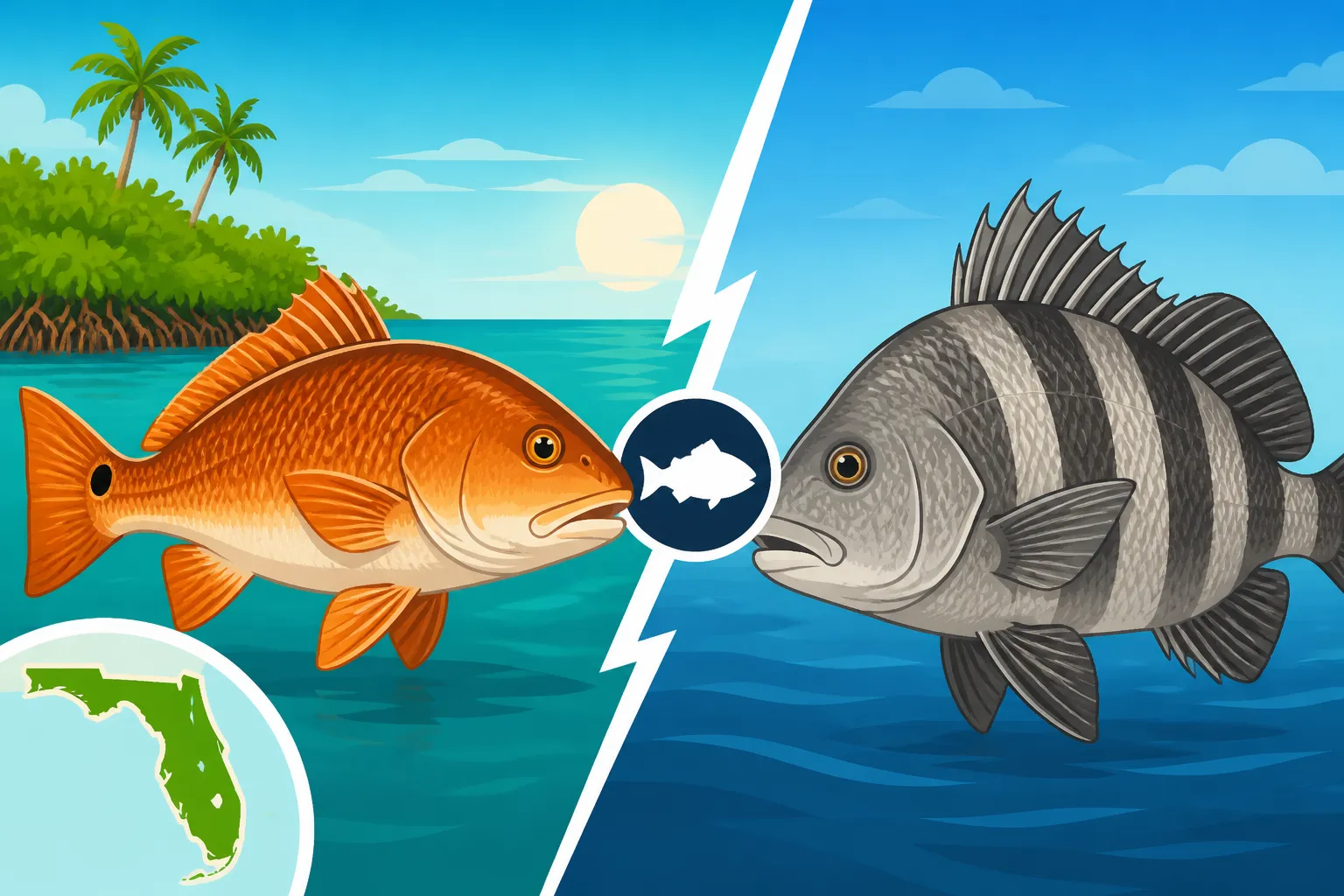
The absolute giveaway for a redfish, almost universally, is the prominent, often singular, black spot located at the base of its tail, just before the tail fin begins. While most have one, some lucky anglers might catch a redfish with two, three, or even a scatter of spots. These spots are usually perfectly round and dark, making them quite easy to see. Beyond the spot, look at their overall body shape: redfish have a more streamlined, torpedo-like body compared to a black drum. Their snout is rounded, and their mouth is positioned more forward, making it ideal for grabbing prey that's swimming or actively moving. The scales on a redfish are relatively large and uniform, and their coloration typically ranges from a coppery bronze to a reddish-brown, often fading to a lighter, sometimes even white, belly.
Typical Behavior and Habitat
Redfish are opportunistic predators, constantly on the hunt. You'll often find them actively cruising shallow flats, particularly over seagrass beds or around oyster reefs, rooting around for crabs, shrimp, and small baitfish. They are notorious for "tailing," a behavior where their head is down in the mud or grass, and their tail is sticking out of the water as they feed. This makes them a favorite target for sight fishermen. They also frequent mangrove shorelines, docks, and bridges, using these structures for cover and as ambush points. They're strong fighters, making powerful runs once hooked, and can be quite skittish in clear, shallow water. Their preferred habitat is typically saltwater or brackish estuaries, bays, and even nearshore waters, but they generally stay out of purely freshwater environments for extended periods.
Fishing for Redfish
Fishing for redfish is incredibly popular across Florida. They're not particularly picky eaters, which makes them accessible to anglers of all skill levels. Live bait like shrimp, cut bait (mullet or pinfish), or even live pinfish are all highly effective. For lure anglers, gold spoons, soft plastic jerkbaits, and topwater plugs are go-to choices. When fishing shallow flats, a stealthy approach is key. You can wade, pole a shallow-draft boat, or use a kayak to get close without spooking them. Redfish often congregate in schools, especially juveniles, so where you find one, you're likely to find more. Remember to check local regulations for Florida Redfish Size and Bag Limits before you head out, as these can vary by region and season. For specific bait recommendations, you might find our Best Bait for Redfish Fishing in Florida article helpful.
Black Drum Deep Dive: The Bearded Bottom Feeder
Now, let's talk about the black drum. These powerful fish are often overlooked in favor of their flashier redfish cousins, but they offer an equally rewarding fishing experience. They are known for their impressive size potential and their unique "drumming" sound, which gives them their name. Once you know what to look for, distinguishing them becomes second nature.
Distinctive Physical Traits
The most reliable way to identify a black drum is by the presence of prominent whisker-like barbels, or sensory appendages, located under their chin. These barbels are essentially feelers that they use to forage for food along the bottom, making them instantly distinguishable from a redfish, which lacks them entirely. Another key difference is their body shape: black drum tend to be stockier, deeper-bodied, and less streamlined than redfish, with a somewhat humped back, especially as they get larger. Their mouth is downturned, or subterminal, making it perfect for sucking up crabs, oysters, and other bottom-dwelling organisms. Coloration varies widely, from a silvery-gray in younger fish to a dark, almost black, color in larger adults. They often have several dark vertical bars, which can be quite pronounced in juveniles but tend to fade with age. Unlike redfish, black drum do not have a distinct black spot on their tail.
Typical Behavior and Habitat
Black drum are primarily bottom feeders. Those chin barbels are not just for show; they're critical tools for rooting around in the mud and sand, searching for clams, oysters, mussels, and crabs. You'll often find them congregating in deeper channels, around oyster bars, bridges, jetties, and near structures where shellfish are abundant. They're less likely to be found tailing aggressively in super shallow grass flats, though smaller drum will sometimes venture onto the flats during higher tides. One fascinating characteristic is their "drumming" sound, which they produce by vibrating a muscle against their swim bladder. This sound can sometimes be heard through the hull of a boat or even from shore, especially during spawning season. They can tolerate a wide range of salinities and temperatures, often moving between brackish estuaries and nearshore saltwater.
Fishing for Black Drum
Fishing for black drum is a waiting game that often pays off with a strong fight. They aren't as active or as likely to chase lures as redfish. Instead, still fishing with natural baits on the bottom is the most effective approach. Cracked crab, dead shrimp, oysters, or cut bait are all excellent choices. Use a sturdy bottom rig with a sinker heavy enough to hold your bait in place, especially if there's current. Circle hooks are a great choice for both species to ensure a good hookset and minimize harm. You can find a wide variety of reliable circle hooks and other terminal tackle on Amazon, perfect for preparing your black drum setup. Target areas with good current, deeper pockets, or hard bottom structures. While they don't school in the same way redfish do, you can often find several drum in a good feeding area. Be prepared for a powerful, dogged fight; larger black drum are incredibly strong and will test your tackle.
Side-by-Side Comparison: Spotting the Differences at a Glance
When you have a fish in hand, or even when you're just observing from a distance, knowing the exact features to look for can make all the difference. It's about combining visual cues with behavioral patterns to make a confident identification.
Key Visual Identifiers
Let's break down the most crucial visual distinctions in a quick reference table. This is what you need to remember when that fish hits the deck!
| Feature | Redfish (Red Drum) | Black Drum |
|---|---|---|
| Tail Spot | Almost always has one or more distinct black spots at the base of the tail. | No black spot on the tail. |
| Chin Barbels | Absent (no whiskers under the chin). | Prominent, whisker-like barbels under the chin. |
| Mouth Position | Terminal (forward-facing), slightly upturned. | Subterminal (downturned), ideal for bottom feeding. |
| Body Shape | More streamlined, torpedo-like. | Stockier, deeper body, often with a humped back. |
| Coloration | Coppery bronze to reddish-brown, lighter belly. Can have varying shades. | Silvery-gray to dark black, often with vertical bars in juveniles. |
| Scales | Relatively large and uniform. | Larger, rougher scales. |
Behavioral Clues
Beyond their physical appearance, the way these fish behave can also offer clues. Redfish are often more active feeders, cruising and ambushing prey. They are the classic "tailing" fish on the flats, indicating they are actively rooting around. When hooked, they tend to make strong, explosive runs, often heading for cover or deeper water.
Black drum, on the other hand, are typically more lethargic. They're bottom dwellers, slowly grubbing for food. If you hear a distinctive "drumming" sound coming from the water, especially during certain times of the year, it's almost certainly a black drum. When hooked, they put up a very powerful, bulldog-like fight, often trying to stay deep and turn their broad side to the angler, rather than making long, swift runs.
Habitat Preferences
While both species can certainly overlap in certain areas, there are general preferences to keep in mind. Redfish are more commonly associated with shallow, clear water environments like seagrass flats, mangrove edges, and oyster reefs. They like to forage in these areas during higher tides.
Black drum, particularly the larger ones, tend to prefer deeper channels, bridge pilings, jetties, and areas with abundant shellfish beds. They are less sensitive to water clarity and will often be found in muddier, murkier water where their barbels can be put to good use. Smaller black drum might venture into shallower areas, but generally, if you're fishing a very shallow, pristine grass flat, you're more likely to encounter reds.
Implications for Anglers: Why Knowing Matters
Beyond just satisfying your curiosity, accurately telling a redfish from a black drum has some very real, practical implications for every angler. It's not just about bragging rights; it's about legality, conservation, and even your dinner plate!
Regulations and Bag Limits
This is arguably the most critical reason to know the difference. Florida has distinct regulations for redfish and black drum, covering everything from minimum and maximum size limits (slot limits) to the number of fish you can keep (bag limits). For example, the Florida Redfish Size and Bag Limits are very specific, and these can differ from those for black drum. FWC (Florida Fish and Wildlife Conservation Commission) regulations are designed to protect fish populations and ensure sustainable fishing for future generations. Accidentally keeping an undersized or oversized fish, or exceeding the bag limit for the wrong species, can lead to stiff fines and penalties. Imagine the disappointment of thinking you have a legal redfish, only to find out it was an oversized black drum after an FWC officer checks your cooler. This is why paying attention to details like the tail spot and barbels is so incredibly important every single time you make a catch. Our comprehensive Florida Fishing Regulations and Bag Limits guide can help you understand the broader framework.
Taste and Culinary Considerations
While both redfish and black drum are edible, their culinary qualities can differ slightly. Many anglers consider redfish, particularly slot-sized fish, to be excellent table fare, with a mild, flaky white meat. They are incredibly versatile and can be grilled, baked, fried, or blackened with delicious results. If you're curious about preparing your catch, you might want to read Is Redfish Good to Eat?.
Black drum, on the other hand, especially larger specimens, can sometimes have a coarser texture and a slightly stronger, almost "muddy" taste if not handled properly. However, smaller black drum, often referred to as "puppy drum," are generally considered quite good to eat. Their meat is firm and white, making them suitable for frying, baking, or in fish stews. The key is often in the size and freshness. Regardless of species, proper handling after the catch – bleeding, icing, and cleaning – is crucial for the best flavor.
Conservation and Responsible Angling
Understanding the differences between species also plays a vital role in conservation efforts. When you correctly identify a fish, you're better equipped to follow catch-and-release best practices for that specific species, especially if it's outside the legal slot limit or if you've already met your bag limit. For instance, knowing if you have a redfish or a black drum means you can quickly decide if it needs to be released and handle it appropriately to maximize its survival chances.
Responsible angling means respecting the regulations put in place to protect these amazing resources. It contributes to healthy fish populations and ensures that future generations can enjoy the thrill of catching these Florida favorites. By taking the time to learn these distinctions, you're not just becoming a more knowledgeable angler; you're becoming a better steward of our precious marine environment. This commitment benefits everyone who loves to fish our beautiful state.
Conclusion
Distinguishing between a redfish and a black drum doesn't have to be a confusing ordeal. By focusing on those key physical identifiers like the redfish's tail spot and the black drum's chin barbels, along with observing their behavior and preferred habitats, you'll quickly become an expert. Knowing these differences is more than just academic; it's crucial for legal compliance, culinary enjoyment, and responsible conservation. So next time you're out on the water, take a moment to really look at your catch. You'll not only avoid potential missteps but also gain a deeper appreciation for the unique characteristics of these fantastic Florida fish!
Disclaimer
This article is for general informational purposes only and does not constitute professional advice. Laws, prices and regulations vary by location and change over time. Consult a qualified professional for guidance on your specific situation.