Florida Peacock Bass Fishing Guide
Many anglers come to Florida with dreams of battling big snook, powerful redfish, or even offshore giants, but what if I told you there's an equally thrilling, hard-fighting freshwater fish right in our urban canals, often overlooked by those fixated on the coasts? If you're looking to add an exotic, colorful, and incredibly aggressive species to your Florida fishing resume, the peacock bass is your answer, and this guide will take you through everything you need to know to hook into these freshwater bruisers.
The Allure of Florida's Peacock Bass: Why These Fish Are So Special
Let's be honest, when you think "Florida fishing," a vividly colored, exotically patterned fish tearing through the freshwater canals isn't usually the first image that springs to mind. But that's precisely what makes the peacock bass such a captivating target. They're a curveball in the best possible way, offering a completely different kind of challenge and reward.
A Tropical Transplant Thrives in the Sunshine State
The story of the peacock bass in Florida is quite fascinating. These fish aren't native to our waters; they hail from the warm, tropical rivers and canals of South America. They were intentionally introduced into specific South Florida canal systems by the Florida Fish and Wildlife Conservation Commission (FWC) way back in the mid-1980s. The goal was twofold: to provide another exciting sportfish for anglers and, more importantly, to help control the populations of undesirable exotic species like tilapia and other cichlids that were overrunning our waterways.
And thrive they have! Our warm, often interconnected canal systems, particularly in the southeastern part of the state, proved to be an ideal habitat, mimicking their native environment perfectly. What you get is an incredible opportunity to target a truly unique species without ever leaving the continental United States. It's a taste of Amazonian adventure right here in the Sunshine State, and for many, that exotic appeal is a huge part of the draw. It feels like you're fishing somewhere far more remote, even if you're casting next to a busy road! You might be surprised to learn more about their journey here in How Did Peacock Bass Get to Florida Canals?.
Unmatched Fighting Spirit for Freshwater Anglers
If you've spent your time targeting largemouth bass, you know they can put up a respectable fight. But the peacock bass? They're often in a league of their own. These fish are renowned for their aggressive strikes, often smashing a lure with a ferocity that can startle even seasoned anglers. Imagine a bass strike, but on steroids – that's a peacock hit.
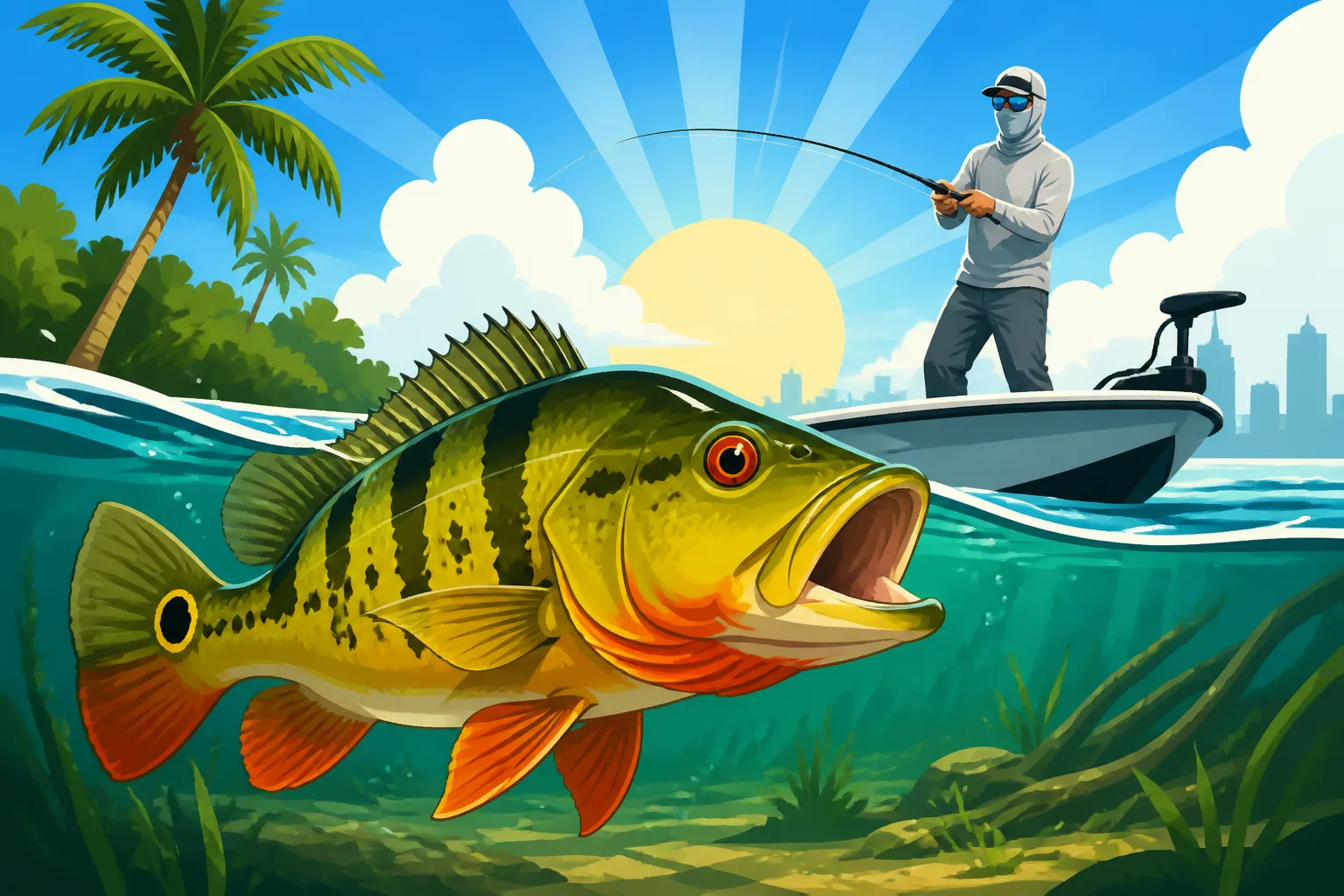
Once hooked, they don't just pull; they fight dirty. They'll make powerful, blistering runs, often trying to dive into the nearest cover like culverts, bridge pilings, or submerged vegetation. And if they can't make it to cover, they're more than happy to launch themselves skyward with acrobatic jumps that can shake a hook loose in a blink. Their power-to-size ratio is incredible, and even a modest 2-pound peacock bass can feel like a much larger fish on the end of your line. This relentless fighting style is why so many anglers become absolutely addicted to chasing them – every hook-up is an adrenaline rush.
Where to Find Peacock Bass in Florida: Navigating the Urban Jungle
Unlike many other sought-after Florida species that might require a boat trip offshore or a long drive to a remote lake, peacock bass are often found in surprisingly accessible, urban environments. Think canals alongside busy highways, retention ponds nestled within housing developments, and interconnected waterway systems. It’s fishing that feels a world away, yet is often just around the corner.
Prime Peacock Bass Habitats: Canals, Lakes, and Retention Ponds
Peacock bass absolutely adore the intricate canal systems that crisscross South Florida. These canals offer everything they need: warm, often clear water, plenty of baitfish, and a labyrinth of structures for ambush points. You'll find them congregating around specific types of cover. Think bridge pilings, especially those with current breaks or shaded areas. Culverts, where water flows from one section of a canal to another, are absolute hotspots. Seawalls, particularly those with slight irregularities, cracks, or submerged ledges, are also prime real estate. Fallen trees, submerged shopping carts (yes, really!), and any kind of brush or vegetation that creates a current break or shade will hold fish.
They're not just limited to canals, though. Many larger lakes and even some retention ponds that are connected to these canal systems will have thriving populations. The key is water clarity and warmth. Peacocks prefer cleaner water where they can use their keen eyesight to spot prey, and they are highly sensitive to cold, which we'll discuss more later. Understanding these preferences is your first step to narrowing down productive spots. For a more detailed look, check out Where Are Peacock Bass Found in Florida?.
Key South Florida Fishing Zones
When it comes to specific regions, South Florida is undeniably the capital of peacock bass fishing. Miami-Dade, Broward, and Palm Beach counties are laced with countless miles of productive canals. Some of the most famous systems include:
- Miami-Dade Canals: The vast network of canals throughout Miami-Dade County is legendary. The C-4 (Snapper Creek), C-8 (Biscayne Canal), C-9 (Tamiami Canal), and C-100 (Black Creek) systems are all fantastic. These can often be accessed by foot, kayak, or small boat, offering incredible opportunities within city limits. You can explore Best Canals in Miami for Peacock Bass for more localized insights.
- Broward County Canals: Similar to Miami-Dade, Broward County boasts an extensive canal network, particularly around Fort Lauderdale and surrounding areas. These canals are well-known for their healthy peacock bass populations.
- Palm Beach County Canals: Head further north into Palm Beach County, and you'll find more excellent canal systems, such as the Lake Ida chain. These waters often connect, creating a continuous habitat for peacocks.
The beauty of these urban fishing zones is their accessibility. You don't always need a fancy boat to get to the fish. Many anglers find great success fishing from canal banks, under bridges, or from small Jon boats and kayaks. Just remember to be mindful of private property and local access points.
Essential Gear for Peacock Bass Fishing: Rods, Reels, Lines, and Lures
Alright, let's talk tackle! While you don't need highly specialized gear to catch peacock bass, having the right setup can dramatically increase your success and, more importantly, handle the aggressive power of these fish. You don't want to bring a knife to a gunfight, and a peacock bass definitely brings the heat.
Rod and Reel Setups for Power and Precision
For peacock bass, you're going to want gear that's a step up from what you might use for your typical freshwater panfish or even smaller largemouth bass. We're talking about a balance of power to control those hard runs and sensitivity to feel the subtle bumps (though often their strikes are anything but subtle!).
- Rods: A medium-heavy action rod, typically between 6'6" and 7'0" in length, is ideal. This action provides enough backbone to set the hook firmly and muscle a strong fish away from cover, while the length offers good casting distance and accuracy. Whether you prefer spinning or baitcasting is largely personal preference, but many anglers opt for baitcasting gear for its superior casting accuracy with heavier lures and control during the fight.
- Reels: For spinning setups, a 2500 to 3000 series reel offers a good balance of line capacity and drag power. For baitcasting, a 100 or 200 series reel should be more than sufficient. The most crucial aspect of your reel is a smooth, reliable drag system. When a peacock bass decides to bolt for a culvert, you need that drag to work flawlessly to prevent a snapped line or pulled hook.
Line Choices: Braided, Fluorocarbon, or Monofilament?
Your line choice is critical when targeting peacock bass, largely due to their powerful runs and their tendency to dive into abrasive cover.
- Main Line – Braided: Most experienced peacock bass anglers swear by braided line for their main line. A 20 to 30-pound test braided line offers incredible strength for its diameter, zero stretch for excellent sensitivity (you'll feel everything!), and superior abrasion resistance against rough structures like concrete seawalls or submerged wood. Plus, if you get snagged, braid often allows you to pull free more easily. You can find quality braided line on Amazon to get started.
- Leader – Fluorocarbon: While braid is fantastic for your main line, it's highly visible in clear water. This is where a fluorocarbon leader comes into play. Attach a 20 to 40-pound test fluorocarbon leader, typically 18-36 inches long, to your braided main line using a strong knot like an FG knot or a double uni knot. Fluorocarbon is nearly invisible underwater, extremely abrasion-resistant, and provides that extra bit of stealth needed in clear canal waters. Monofilament isn't generally recommended as a main line due to its stretch and lower abrasion resistance, though some might use it for a leader in specific situations.
Top Lures and Baits That Peacock Bass Can't Resist
Peacock bass are aggressive predators, and they'll hit a wide variety of lures. However, some stand out as consistent producers.
- Topwater Lures: This is arguably the most exciting way to catch a peacock bass! Poppers, walk-the-dog lures (like a Heddon Super Spook Jr.), and prop baits are all incredibly effective, especially during low light conditions or when fish are actively feeding on the surface. The explosive strikes on topwater are truly unforgettable.
- Jerkbaits/Suspended Minnows: Lures like the Rapala X-Rap or a good old-fashioned suspending jerkbait are dynamite. These lures mimic baitfish perfectly and can be worked with a twitch-pause retrieve that drives peacocks wild. Many anglers specifically look for jerkbaits that have a wide wobble and good flash.
- Crankbaits: Medium-diving crankbaits that reach depths of 3-6 feet are excellent for covering water and targeting fish holding deeper around structure. Choose natural baitfish colors or bright, aggressive patterns.
- Soft Plastics: Flukes (unweighted or lightly weighted) and plastic worms rigged Texas-style can be deadly, especially when fish are a bit finicky or holding tight to cover. Jigs with soft plastic trailers also work very well.
- Spinnerbaits/Chatterbaits: While not always the first choice, a small spinnerbait or chatterbait can be effective, especially in slightly murky water or when you need to cover ground quickly.
- Live Bait – Shiners: If all else fails, live shiners are the ultimate peacock bass magnet. These baitfish are readily available at local bait shops and are a guaranteed way to get a bite, often attracting the larger specimens. Hook them through the lips or behind the dorsal fin for the best presentation.
When choosing lures, consider the water clarity and the light conditions. In clear water, more natural colors often work best. In darker or stained water, brighter colors like chartreuse, orange, or firetiger can be more effective. You can find a vast selection of all these lures and related tackle on Amazon, making it convenient to gear up for your next trip. For tips on choosing colors, refer to Best Lure Color for Murky Water in Florida.
Mastering Peacock Bass Techniques: Strategies for Success
Catching peacock bass isn't just about having the right gear; it's about understanding their behavior, knowing how to present your offerings, and being prepared for their formidable fight. These aren't lazy fish; they require an active and strategic approach.
Reading the Water and Targeting Productive Structures
Peacock bass are ambush predators, meaning they love to hide and dart out to attack unsuspecting prey. This makes identifying potential ambush points crucial for your success.
- Look for Current Breaks: Any place where the current is disrupted – bridge pilings, fallen trees, dock pilings, even submerged rocks – creates a slack water area where peacocks can conserve energy while waiting for food to drift by. Cast upstream of these structures and allow your lure to drift into the strike zone.
- Seek Out Shade: On bright, sunny days, peacocks will often hold in shaded areas. This could be under bridges, against shady seawalls, or beneath overhanging vegetation. The shade provides comfort and concealment.
- Identify Deep Pockets and Drop-offs: While they often patrol the shallower edges of canals, peacocks will also use deeper sections, especially during colder periods or when seeking refuge. Look for areas where the canal bank drops off abruptly or where feeder canals enter, creating deeper holes.
- Observe Baitfish Activity: If you see schools of small baitfish flickering on the surface or congregating near structure, chances are there's a predator lurking nearby. Pay close attention to any commotion on the water; a peacock bass busting a baitfish is an unmistakable sign.
- Use Polarized Sunglasses: These are not optional for peacock bass fishing. They allow you to cut through the glare on the water's surface, helping you spot cruising fish, submerged structures, and pockets of clear water where fish might be holding.
Retrieves and Presentations: Making Your Lures Irresistible
The way you work your lure is just as important as the lure itself. Peacock bass are usually looking for an easy meal, but they are also triggered by erratic, aggressive movements.
- Topwater Lures: For poppers, a "pop-pop-pause" retrieve often works wonders, mimicking a distressed baitfish. For walk-the-dog lures, a rhythmic twitching of the rod tip will make the lure sashay back and forth across the surface. Vary your retrieve speed and pause duration until you find what triggers a strike. Sometimes a rapid, frantic retrieve is key, other times a longer pause between twitches is needed.
- Jerkbaits: A "twitch-twitch-pause" or "jerk-jerk-pause" is the standard. The pause is often when the strike occurs, as the suspended lure looks like an injured or dying baitfish. Experiment with the length of your pauses; sometimes a 5-second pause is what it takes.
- Crankbaits: Cast your crankbait out and retrieve it at a steady pace, allowing it to dive to its intended depth. Occasionally, give your rod tip a sharp twitch to change its action, which can often provoke a following fish into striking.
- Soft Plastics/Jigs: For soft plastics like flukes, an erratic "twitch-twitch-fall" retrieve is effective. For jigs, a "lift-fall" or "drag-and-hop" along the bottom can entice strikes from fish holding deeper.
- Live Bait: If you're using live shiners, simply hook them and let them swim naturally near cover. A float can help keep them in the strike zone, or you can free-line them for a more natural presentation. The frantic movements of a live shiner are often irresistible.
Remember, the key is often to provoke a reaction strike. Peacock bass are aggressive, and they often hit out of instinct or territoriality, not just hunger. Don't be afraid to make your lure dance and move!
Fighting and Landing These Freshwater Powerhouses
Once a peacock bass hits your lure, hold on tight! They strike hard, and the fight that follows is equally intense.
- Set the Hook Hard: When you feel that aggressive strike, respond with a swift, powerful hookset. With braided line and a strong rod, you'll get excellent penetration.
- Keep Them Out of Cover: This is paramount. As soon as you set the hook, try to turn the fish's head away from any nearby structure – bridge pilings, culverts, submerged trees. If they make it into heavy cover, it's often game over. Keep steady pressure on them, but don't try to horse them in with a locked drag, as this can snap your line.
- Manage Their Jumps: When a peacock bass jumps, lower your rod tip quickly to create slack in the line. This prevents the fish from using the leverage of a tight line to throw the hook. Once they're back in the water, resume pressure.
- Landing the Fish: For smaller fish, a firm lip-grip (be careful of the spiny dorsal fin!) or a net will work. For larger peacocks, a landing net is highly recommended to protect both you and the fish. If you're planning to release them, minimize their time out of the water. Handle them gently, support their body, and ensure they are revived before letting them go. These catch and release best practices, similar to those for Catch and Release Best Practices for Snook, are crucial for maintaining healthy populations.
When and How Weather Impacts Peacock Bass Action
Just like any other fish, peacock bass are creatures of habit and are highly influenced by environmental factors, especially weather. Understanding these patterns can mean the difference between an epic day on the water and a frustrating skunk.
Ideal Conditions: Sun, Warmth, and Stable Weather
If you want to catch peacock bass, the forecast you're hoping for is consistent warmth and plenty of sunshine. These tropical transplants absolutely thrive in warm water.
- Sunshine is Key: Bright, sunny days are often the best for peacock bass fishing. The warm sun raises water temperatures, making the fish more active and increasing their metabolism. On sunny days, they're often more visible, cruising the edges of canals or holding in ambush points where the sun penetrates the water column. They use their excellent eyesight to hunt, and clear, sunny conditions enhance their predatory abilities. You'll often see them patrolling shallow flats or along seawalls, making them prime targets for sight-fishing with topwater lures or shallow-diving jerkbaits.
- Consistent Warmth: Extended periods of stable, warm weather, particularly outside of the cooler winter months, are prime time. When water temperatures are consistently in the 70s and 80s Fahrenheit, peacock bass are at their most aggressive and active. This means they're more likely to chase lures and strike with that characteristic ferocity. During these periods, they're not just active in terms of feeding; they're also highly territorial, making them more likely to strike out of aggression if a lure invades their space.
Navigating Cold Fronts and Rainy Days
While peacocks love the heat, they are not big fans of sudden changes, especially drops in temperature. This sensitivity to cold is one of their biggest vulnerabilities in Florida.
- Cold Fronts Can Shut Them Down: A strong cold front can severely impact peacock bass activity. As water temperatures drop, these fish become lethargic and seek refuge in deeper, warmer pockets of water, often near springs, industrial outflows, or deep channels. Their metabolism slows down, and they become far less inclined to chase fast-moving lures. During these periods, you'll need to slow down your presentation considerably, perhaps opting for slower-moving jigs or even live bait fished patiently in deeper areas. Understanding How Cold Fronts Affect Winter Fishing in Florida affects them is crucial. Fishing right after a significant cold snap is often a tough grind, as detailed in Fishing After a Cold Snap in Florida.
- Rainy Days and Water Clarity: Light rain can sometimes trigger a bite, as it washes insects and other food into the water, and can also reduce surface glare, making it easier for fish to hunt. However, heavy, prolonged downpours can muddy the water significantly. Peacock bass are primarily sight feeders, so reduced water clarity can make it harder for them to locate your lure. In these conditions, you might need to switch to lures that create more vibration (like spinnerbaits or chatterbaits) or use brighter, more contrasting colors to get their attention. Fishing near areas where cleaner water is flowing into a canal can sometimes be productive after heavy rains.
It's all about adapting to the conditions. Keep an eye on the forecast, pay attention to water temperatures, and be ready to adjust your techniques and lure choices accordingly.
Conservation and Regulations for Florida Peacock Bass
When we talk about fishing in Florida, understanding the rules and our role in conservation is always important. Peacock bass, being a non-native species, have a unique place in the regulatory landscape compared to their native counterparts.
Understanding Limits and Local Rules
One of the interesting aspects of peacock bass management in Florida is that their non-native status often leads to different regulations. The Florida Fish and Wildlife Conservation Commission (FWC) typically establishes specific rules for them. While many native species have stricter bag and size limits to protect their populations, the approach with peacock bass can be different.
- Harvest Encouraged, but Catch & Release Popular: Because peacock bass were introduced, and to help manage other non-native species they prey upon, there is often a generous bag limit, and sometimes no minimum size limit. This allows anglers to harvest them, and they are quite delicious, making for a tasty dinner as highlighted in Is Peacock Bass Good to Eat?. However, despite the FWC's encouragement of harvest, many dedicated peacock bass anglers choose to practice catch-and-release, especially for the larger, trophy-sized fish. This helps ensure that the canals continue to offer fantastic angling opportunities for everyone. Always check the latest FWC regulations before heading out, as they can change. For general information on Florida fishing rules, refer to Florida Fishing Regulations and Bag Limits.
The Role of Peacock Bass in Florida's Ecosystem
The introduction of any non-native species can be a sensitive topic, and the FWC's decision to introduce peacock bass was carefully considered. Their role in Florida's freshwater ecosystem is a blend of benefits and ongoing management.
- Controlling Other Exotics: The primary ecological purpose for introducing peacock bass was to help control populations of other undesirable exotic species, particularly various types of cichlids that were proliferating in South Florida canals. These cichlids were often outcompeting native species for food and habitat. Peacock bass, being aggressive predators, proved effective in preying on these nuisance fish, helping to rebalance the local ecology to some extent.
- Limited Impact on Native Species (in specific habitats): While any new predator creates a shift, the FWC carefully chose peacock bass due to their specific habitat requirements and their sensitivity to cold temperatures. This means they are largely confined to the warmer canal systems of South Florida. They generally don't spread to areas where native largemouth bass are the primary apex predators, thus minimizing direct competition or predation on native gamefish in their established territories. They've found their niche, providing a unique sportfishing experience without significantly disrupting the broader native freshwater fisheries. This careful balance makes them a unique case study in fisheries management. As a general point of interest, you can also learn more about if they are truly native in Are Peacock Bass Native to Florida?.
| Lure Type | Best Conditions | Typical Retrieve | Key Benefit |
|---|---|---|---|
| Topwater Poppers | Low light, calm water, active surface feeding | Pop-pop-pause, erratic twitches | Explosive, visual strikes |
| Jerkbaits | Clear water, around structure, active baitfish | Twitch-twitch-pause, varying pause length | Mimics injured baitfish, triggers reaction strikes |
| Crankbaits | Deeper water, covering ground, searching for fish | Steady retrieve with occasional twitches | Reaches deeper fish, covers water efficiently |
| Soft Plastic Flukes | Fickle fish, around dense cover, sight fishing | Erratic twitches, allow to fall naturally | Versatile, natural presentation |
| Live Shiners | All conditions, especially for finicky or large fish | Free-lined or under a float near cover | Natural bait, high success rate for wary fish |
Disclaimer
This article is for general informational purposes only and does not constitute professional advice. Laws, prices and regulations vary by location and change over time. Consult a qualified professional for guidance on your specific situation.