What Do Largemouth Bass Eat?
Many anglers find themselves scratching their heads when the bass just aren't biting, wondering what exactly those elusive largemouth are feasting on. It's a common frustration, feeling like you've tried every lure in your tackle box without success. Understanding the natural diet of largemouth bass is key to unlocking more productive fishing trips, and this comprehensive guide will break down their varied menu and how you can use that knowledge to your advantage.
The Natural Diet of Florida Largemouth Bass
Florida's waters are teeming with life, and largemouth bass are apex predators within their freshwater ecosystems. Their diet is surprisingly diverse, adapting to whatever food sources are most abundant and easiest to catch. It's not just about shiners and worms; these fish are true opportunists with a broad palate, always on the lookout for an easy meal or an energetic chase.
Forage Fish and Baitfish
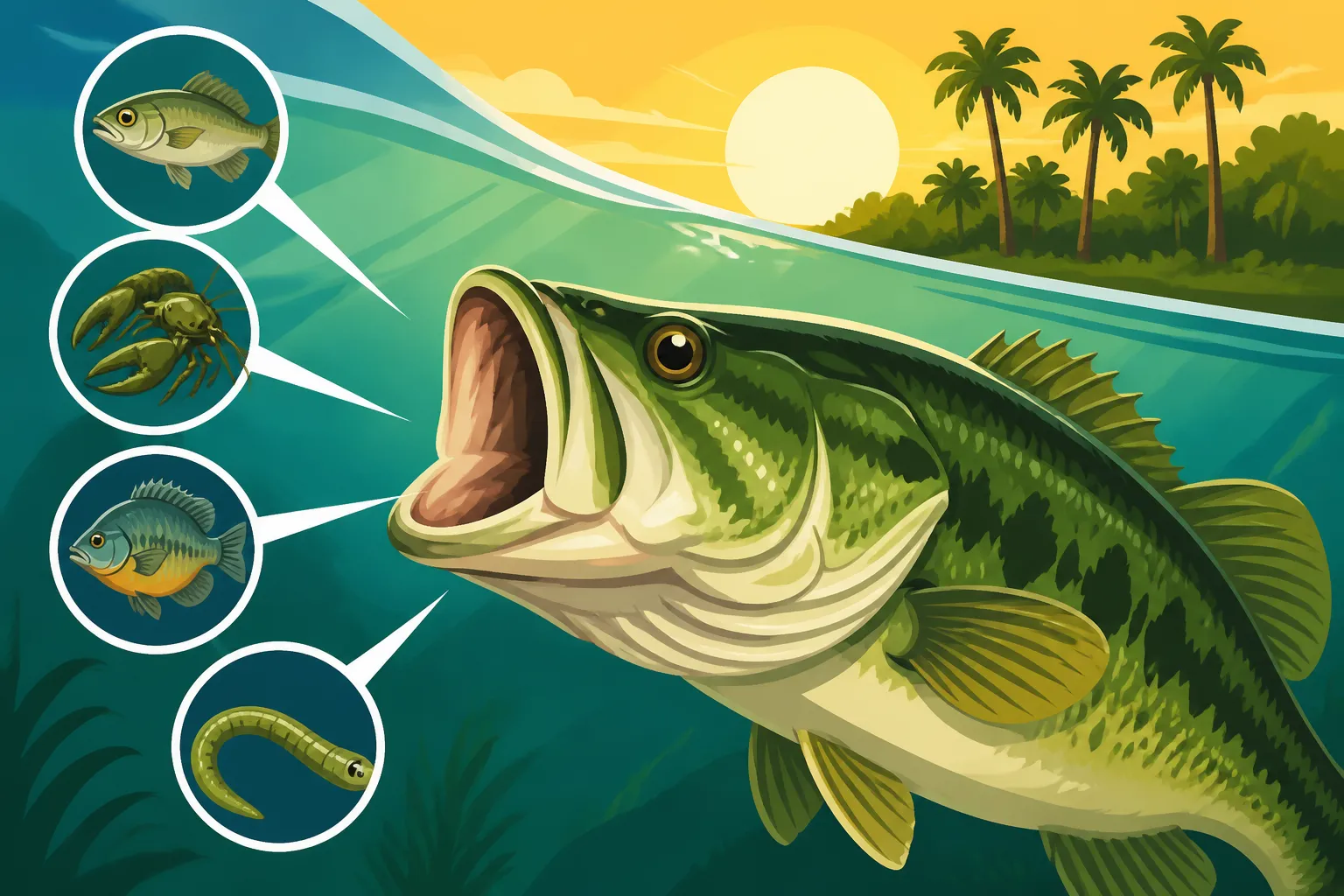
When you think of a bass's primary meal, often the first thing that comes to mind is smaller fish, and you'd be right. Forage fish make up a significant portion of a largemouth bass's diet, especially as they grow larger and need more substantial calories. These can include anything from tiny minnows to larger panfish that swim a little too close.
In Florida, specific species like shiners (golden shiners, primarily) are a huge part of the natural food chain for bass. They are prolific, often schooling in open water or around vegetation, making them easy targets for an ambushing bass. Other common forage fish that largemouth bass readily consume include bluegill, sunfish, and even smaller crappie. Bass are perfectly adapted to ambush these prey items, using their keen eyesight and lateral line to detect movement and vibrations in the water. Anglers who consistently catch bass often pay close attention to the specific baitfish present in a given body of water, as matching the hatch, so to speak, can be incredibly effective.
Think about a serene morning on a Central Florida lake; you might see a sudden splash near a lily pad line. More often than not, that's a bass exploding on a school of baitfish pushed up against the cover. These feeding frenzies are a clear indicator of what's on the menu. Replicating the size, color, and action of these local forage fish with your lures can dramatically increase your hook-up rates. Sometimes, observing the water for these signs gives you more information than any fishing report ever could. Learning about these specific fish can really help your game, so check out our Florida Largemouth Bass Fishing Guide for more in-depth tips.
Crustaceans and Amphibians
While fish might be the main course, largemouth bass are certainly not opposed to a side of crustaceans or amphibians. These creatures offer a different kind of nutritional value and are often easier to ambush in denser cover, making them a caloric payoff with less effort. If you've ever found a crawfish or a small frog in a bass's stomach, you know exactly what I'm talking about.
Crawfish, or crayfish as some call them, are a particular favorite. They hide under rocks, logs, and in dense vegetation, but when they scuttle across the bottom or make a dash for it, they become prime targets. Bass will often cruise the bottom, especially in areas with rocky structure or submerged timber, specifically looking for these crunchy meals. There's a reason so many popular bass lures, like jigs and soft plastic creature baits, are designed to imitate crawfish. The distinct "clack" of a jig hitting a rock or the subtle movement of a soft plastic craw can be irresistible to a hungry bass. You can find a huge variety of these lure types on Amazon, often with detailed descriptions to help you pick the perfect imitation.
Frogs and salamanders are also on the menu, especially in marshy areas or shallow edges where they are abundant. A frog jumping across the surface might seem innocent, but to a largemouth bass, it's a clear signal for dinner. Topwater frog lures are incredibly popular in areas with heavy vegetation for this exact reason. The way they walk across matted grass or lily pads, mimicking a real frog, can provoke explosive strikes that are truly unforgettable. These prey items might not be as constantly available as baitfish, but when they are, bass are quick to capitalize on the easy meal.
Insects and Other Opportunistic Meals
Don't underestimate the bass's willingness to snack on insects, especially in certain conditions, or even larger, more unusual prey if the opportunity arises. While they might not be chasing individual dragonflies across the lake, large insects that fall into the water can become an easy meal, especially if they're struggling. Grasshoppers, cicadas, and even large beetles can tempt a bass.
This is where the term "opportunistic feeder" truly shines for largemouth bass. They're not picky about what falls into their strike zone, as long as it looks like a meal. I've heard stories, and even seen pictures, of bass eating baby ducks, small snakes, or even mice that ventured too close to the water's edge. These aren't daily occurrences, of course, but it speaks to their predatory nature and their willingness to consume almost anything that presents itself as a vulnerable food source.
Consider fishing near overhanging trees or brush, especially after a windy day. Insects might get blown off branches and land in the water, creating a ripple that a lurking bass will quickly investigate. While most anglers focus on fish or crawfish imitations, sometimes a subtle retrieve with a small lure that mimics a struggling insect can be surprisingly effective, particularly in pressured waters where bass might be wary of more common presentations. It all comes down to what's available and what seems like the easiest calorie count for the energy expended.
How Diet Changes with Bass Size and Season
The diet of a largemouth bass isn't static; it's a dynamic menu that evolves as the fish grows and as the seasons shift. What a tiny fingerling eats is vastly different from what a trophy-sized lunker consumes, and the abundance and activity of food sources also play a huge role in their preferences throughout the year. Understanding these changes is critical for consistent success.
Juvenile Bass vs. Mature Bass Preferences
When largemouth bass are just fry, they start their lives feeding on microscopic plankton, which provides the initial burst of energy for growth. As they grow a little bigger, they quickly transition to small insects, insect larvae, and tiny crustaceans. These smaller prey items are essential for their rapid growth during their vulnerable early stages, as their mouths are simply too small for larger prey.
As they mature, their diet undergoes a significant shift. Once they reach a few inches in length, they become true predators, and their diet becomes more piscivorous, meaning fish-eating. They'll start targeting small shiners, minnows, and the fry of other fish species. This transition is crucial for their survival and growth into larger, more dominant predators. A mature, 5-pound bass needs a lot more energy than a 6-inch juvenile, so they naturally seek out larger, more calorically dense prey items. This is why you'll often find bigger bass lurking around schools of larger baitfish or in areas where bigger panfish are abundant. If you're hunting for a real trophy, you might be interested in our guide to the Best Time of Year to Catch a Trophy Bass in Florida.
Think of it like this: a human baby drinks milk, then moves to purees, and eventually eats solid food. A bass's diet follows a similar progression. Understanding this helps you select appropriate lure sizes and types. You wouldn't throw a massive swimbait at a spot known for small bass, just as you wouldn't expect a tiny jig to consistently catch the biggest bass in the lake. Matching the size of your offering to the likely size of the bass, and thus their preferred prey, is a foundational principle of successful bass fishing.
Seasonal Shifts in Food Availability
Florida doesn't experience the drastic seasonal changes that northern states do, but we still see distinct patterns that influence what largemouth bass eat. Temperature, water levels, and even spawning cycles of other fish all contribute to what's available on the bass's dinner plate. These subtle shifts can have a big impact on their feeding patterns.
During the warmer months, especially spring and summer, metabolism is high, and bass are often incredibly active, burning through calories quickly. This is when baitfish populations are booming, and insects, frogs, and crawfish are all very active and easy to find. Bass will actively chase down schools of shiners in open water or ambush frogs and soft-bodied critters in thick vegetation. Anglers often find success with fast-moving lures like spinnerbaits, crankbaits, or topwater frogs during these times because the bass are willing to expend energy to chase. The Florida Bass Spawning Season is also a key time when their activity changes significantly.
As water temperatures cool slightly in the fall and winter, bass might become a bit more sluggish, and some prey items become less active or move to deeper water. Crawfish might burrow, and certain baitfish might move to deeper, more stable water. During these periods, bass might still feed aggressively, but their targets might change. They might key in on larger, slower-moving meals that offer more calories for less effort. This is often a good time for slower presentations, like jigs or slow-rolled swimbaits, imitating a solitary, vulnerable meal. Think about how many times you've heard about big bass being caught on jigs in cooler water – it's often because a slow-moving craw imitation is exactly what they're looking for.
Using Knowledge of Bass Diet to Catch More Fish
Knowing what largemouth bass eat isn't just academic; it's the bedrock of effective fishing strategies. By understanding their natural prey, you can make informed decisions about your lure selection, presentation, and even where you choose to cast. It's about thinking like a bass, anticipating their next meal, and placing your offering right where they expect it.
Mimicking Natural Prey with Lures
The entire artificial lure industry is built around the concept of mimicking what bass naturally eat. From the subtle shimmy of a soft plastic worm imitating a desperate crawfish to the violent splash of a topwater frog, every lure is designed to fool a bass into thinking it's an easy meal. The key is to select the right imitation for the conditions and the expected prey. This is where a good understanding of Best Lures for Florida Bass Fishing comes in handy.
Let's say you're fishing a clear-water lake known for its abundant shiner population. A silver or chrome lipless crankbait or a jerkbait that closely resembles a shiner in size and action would be an excellent choice. The flash and erratic movement can perfectly mimic a panicked baitfish. If you're in a heavily vegetated pond after a rain, where frogs are active, a soft plastic frog lure, worked slowly over the mats, would be a much more effective option. The color is also critical – often, matching the natural hue of the prey in that specific water body can make a huge difference. Are the bluegill in that pond particularly vibrant blue, or more subdued? Pay attention. On Amazon, you can find a huge variety of options for any type of forage imitation you can imagine, often with user reviews that can help guide your choice.
It's not just about the lure itself, but how you present it. A retrieve that mimics an injured baitfish – a twitch-pause, twitch-pause – can be far more effective than a steady, robotic retrieve. Similarly, a jig "crawling" along the bottom, bumping into structure, simulates a crawfish trying to escape. Understanding the natural behavior of the prey helps you bring your artificial lure to life in a way that bass can't resist. For specific techniques, our guide on How to Fish a Soft Plastic Jerkbait for Bass can provide some excellent tips.
The Effectiveness of Live Bait
While artificial lures are incredibly fun and rewarding, there's no denying the raw effectiveness of live bait when targeting largemouth bass. After all, what could be a better imitation of a bass's meal than the real thing? When bass are finicky or the bite is tough, live bait can often produce strikes when artificials fail, proving its worth time and time again.
Shiners are king for Florida bass fishing when it comes to live bait. Their natural scent, movement, and vulnerability are almost irresistible to a hungry bass. Freeline a lively shiner near a submerged brush pile or under a dock, and it's only a matter of time before a bass comes calling. Other effective live baits include wild-caught bluegill, worms, and even crawfish. The beauty of live bait is that it does most of the work for you, presenting a natural offering that a bass is programmed to recognize and strike. It's particularly useful when trying to entice larger, more cautious bass that might have seen every artificial lure under the sun. You can learn more about the pros and cons in our Live Bait vs Lures for Bass Fishing article.
However, there are nuances. The health and liveliness of your bait are paramount. A sluggish, dying shiner isn't nearly as appealing as a vibrant, active one. Proper rigging also makes a difference, allowing the bait to swim naturally without being hindered. While live bait might seem like a "cheat code," it still requires skill and understanding to use effectively. And always remember to check local regulations regarding the use of live bait, as some areas have restrictions on what you can use or transport.
| Prey Type | Common Lure Imitations | Live Bait Options | Preferred Environments |
|---|---|---|---|
| Forage Fish | Crankbaits (lipless, diving), Jerkbaits, Swimbaits, Spinnerbaits | Shiners, Bluegill, Shad, Minnows | Open water, edges of grass, drops |
| Crustaceans | Jigs (flipping, football), Creature Baits, Crawfish Im. | Live Crawfish | Bottom structure, rocks, wood |
| Amphibians | Topwater Frogs, Soft Plastic Frogs | Live Frogs (check legality) | Matted vegetation, lily pads |
| Large Insects | Poppers, Buzzbaits (subtle), Small Soft Plastics | Grasshoppers, Cicadas | Overhanging trees, shorelines |
| Small Mammals | Topwater Rats/Mice, Larger Swimbaits | (Rarely used live bait) | Docks, heavy cover near shore |
Common Misconceptions About Bass Feeding Habits
Despite their popularity and the wealth of information available, there are still a few myths and misunderstandings floating around about what largemouth bass eat and how they feed. Clearing up these misconceptions can help you approach your fishing with a more realistic and ultimately more successful mindset, saving you from unnecessary frustration.
Are Bass Picky Eaters?
One common belief is that bass are incredibly picky, only striking at specific colors, sizes, or presentations. While bass can certainly show preferences based on local forage or environmental conditions, calling them "picky" in a general sense is misleading. As we've discussed, they are highly opportunistic predators. If something looks like an easy meal, smells like a meal, or acts like a meal, they're likely to investigate it and potentially strike.
The idea that bass are picky often stems from days when the bite is tough, and anglers struggle to get a strike. It's easy to blame the bass for being "picky" rather than re-evaluating our approach. Often, it's not pickiness, but rather the bass being less active due to weather changes, water temperature fluctuations, or fishing pressure. In these situations, a subtle change in retrieve, a smaller lure, or a different depth can trigger a bite, not because the bass suddenly decided they only eat chartreuse, but because that presentation better matched their current mood or the prevalent forage. Understanding Best Water Temperature for Bass Fishing can often explain why bass might seem "picky" on a given day.
Think about it: if a bass truly only ate one specific type of minnow, in one specific color, how would they survive when that minnow population crashed or moved? Their adaptability is a huge part of their success as a species. So, while they can be selective, especially when pressured, it's more accurate to describe them as adaptable and opportunistic rather than inherently picky. Keep experimenting, and you'll often find they're willing to bite if you present something appealing.
Do Bass Eat Only What's Dying or Injured?
Another frequent misconception is that bass exclusively target prey that is dying, injured, or otherwise weak. While it's absolutely true that a bass will capitalize on a vulnerable meal – it's an efficient way to feed and conserve energy – they are perfectly capable of, and often do, pursue healthy, active prey. A healthy shiner frantically fleeing a predator is just as likely to trigger a strike as one struggling near the surface.
This myth might come from the effectiveness of "wounded baitfish" retrieve styles with crankbaits or jerkbaits. An erratic, darting motion followed by a pause can be incredibly effective because it does mimic a disoriented or injured fish. However, this doesn't mean it's the only thing bass will strike. They will actively chase down schools of healthy baitfish, ambush frogs leaping across the water, or stalk crawfish confidently scuttling along the bottom. The "injured" presentation is just one successful tactic in an angler's arsenal, not a universal rule of bass feeding.
Consider the energetic explosions of bass chasing topwater lures – those aren't usually targeting dying prey. Those strikes are aggressive, predatory reactions to something moving quickly and provocatively across the surface. While a bass is certainly smart enough to pick off an easy meal, it's also a powerful predator built for the chase. Understanding this can free you from only using slow, subtle retrieves, and encourage you to experiment with more aggressive and active presentations, especially when bass are in a more active feeding mood. Remember, a bass's diet is driven by hunger and opportunity, not solely by a desire for a handicapped meal. The wide array of fishing tackle available on Amazon reflects this, offering lures for every scenario, whether you're mimicking a frantic escape or a leisurely cruise.
By truly grasping the varied diet of Florida largemouth bass, you're not just gaining information; you're gaining a significant edge on the water. It’s all about putting yourself in their fins and offering them exactly what they’re looking for, or at least a very convincing imitation.
And before you head out, make sure you know what else you might encounter in the water. Check out Florida Freshwater Fishing License Rules to make sure you're properly licensed for freshwater fishing. If you're looking for where to put this knowledge to the test, you might explore Best Freshwater Fishing Lakes in Florida. Knowing the local forage can significantly boost your success. Also, if you're planning a trip to a famous bass haven, make sure to read Best Month for Bass Fishing on Lake Okeechobee. For those just starting out, Beginner Tips for Bass Fishing in Florida offers a solid foundation. And for an even deeper dive into specific techniques, consider How to Fish a Soft Plastic Jerkbait for Bass. Sometimes, the right gear makes all the difference, so researching Best Rod for Inshore Fishing in Florida (even though bass are freshwater, inshore often implies similar casting needs for larger species) can be beneficial.
Disclaimer
This article is for general informational purposes only and does not constitute professional advice. Laws, prices and regulations vary by location and change over time. Consult a qualified professional for guidance on your specific situation.