What Tide Is Best for Snook Fishing?
There's nothing quite as frustrating as heading out to your favorite snook spot, perfectly geared up, only to find the fish just aren't biting. You cast, you retrieve, you try every trick in the book, but those elusive snook seem to have vanished. Often, the missing piece of the puzzle isn't your bait or your technique, but your understanding of the tide. Snook are incredibly sensitive to water movement, and figuring out what tide is best for snook fishing can truly make or break your day on the water. This comprehensive guide will peel back the layers on tidal influences, helping you decode snook behavior and dramatically improve your chances of success.
Understanding How Tides Dictate Snook Behavior
Snook are apex predators in Florida's inshore waters, and their entire existence revolves around finding food and conserving energy. The ebb and flow of the tides directly influence these two critical aspects of their lives. Ignoring the tides is like trying to navigate the Everglades without a map – you might get somewhere, but it's likely not where you want to be.
Why Tidal Flow Is Key for Snook Feeding
Imagine a conveyor belt constantly moving food. That's essentially what a strong tidal current does for snook. These fish are masters of ambush, and they prefer to let the current do most of the work for them. When the water is moving, it stirs up the bottom, dislodges crustaceans, and pushes baitfish – like mullet, pilchards, and sardines – out of their hiding spots and into the open.
Snook will position themselves strategically along current breaks, structure, or changes in bottom contour, waiting for an easy meal to be swept past. This could be anything from a mangrove point where the current splits, the backside of a dock piling, or a submerged oyster bar. Without that current, baitfish often spread out, making them harder targets, and snook become less active, conserving their energy rather than expending it chasing scattered prey. It's a game of efficiency, and the tide sets the rules.
The Impact of Water Levels on Snook Habitat
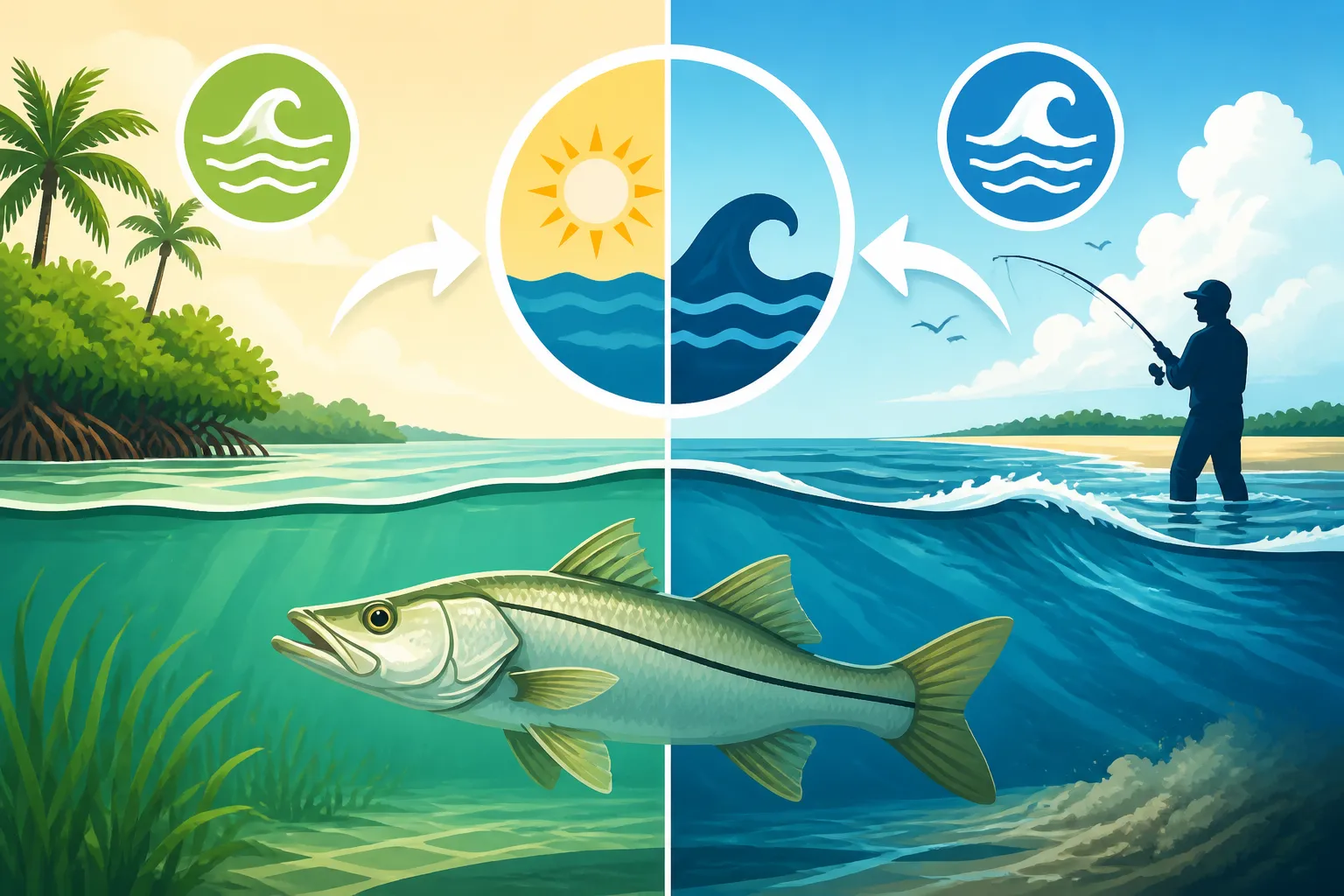
Beyond just creating current, tides also drastically alter water levels, which in turn expands or shrinks the available habitat for snook and their prey. During high tides, especially a strong "flood" tide, water pushes deep into mangrove root systems, over oyster beds, and onto shallow flats that might be completely dry at low tide. This influx of water opens up new feeding grounds for snook, allowing them to patrol areas that were previously inaccessible.
Conversely, as the tide recedes, snook are often "flushed" out of these shallow areas. They'll retreat to deeper channels, cuts, and the edges of flats, often congregating in these areas where baitfish are also funneled. Understanding these movements is crucial. If you're fishing a flat that's only productive on a high incoming tide, you'll be wasting your time trying to fish it at dead low. This dynamic interplay between water levels, current, and habitat availability is why "Florida Fishing Seasons Explained" often highlights tidal patterns alongside seasonal changes for species like snook.
Unpacking the Optimal Tide Stages for Snook
Let's get down to the brass tacks: which tide is actually the best? The truth is, there isn't one single "best" tide for snook universally, as it often depends on the specific location and conditions. However, experienced anglers know that certain tide stages consistently offer better opportunities than others. It's all about understanding what each stage brings to the table.
The Productive Incoming Tide
For many inshore snook anglers, the incoming, or "flood," tide is a favorite, and for good reason. As the water begins to rise and push inland, it brings with it a fresh supply of clean, often cooler, water and a bounty of baitfish. Snook use this rising water to their advantage, pushing deep into protective cover like mangrove shorelines, grass flats, and around submerged structures.
Think about fishing a mangrove tunnel or a creek mouth. As the tide comes in, snook will often stage right at the entrance, waiting for bait to be carried in with the flow. They'll also follow the water as it floods the roots, hunting shrimp, crabs, and small fish that have been displaced. This is a fantastic time for sight fishing on the flats, as snook will move up into shallower water to feed, especially if the water is clear. You might want to consider using techniques like "Topwater Lure Fishing for Snook" during this phase, as snook can be incredibly aggressive when the water is pushing into their preferred hunting grounds. The key is to fish the leading edge of the incoming water, anticipating where the bait will be pushed and where snook will set up their ambush points.
The Powerful Outgoing Tide
If the incoming tide is about pushing snook into new territory, the outgoing, or "ebb," tide is about flushing them out and concentrating them. As the water level drops, all the baitfish, crabs, and shrimp that ventured into the mangroves and onto the flats during high tide suddenly find themselves being pulled back out into deeper channels, cuts, and along shoreline edges. This makes them easy targets for hungry snook.
The last few hours of a strong outgoing tide are often considered prime time, particularly around choke points. These are areas where large volumes of water are forced through a narrower opening, creating intense current. Think about bridges, natural passes between islands, deep cuts, and the mouths of creeks and rivers. Snook will stack up in these areas, facing into the current, waiting for an easy meal. This is when live bait, like pilchards or threadfin herring, fished on a simple "Florida Inshore Fishing Techniques" jig head or free-lined, can be incredibly effective. Consider fishing the down-current side of bridge pilings or prominent points, where the snook can hold in a current break and ambush passing prey. Places like Sebastian Inlet are legendary for snook fishing on outgoing tides because of the sheer volume of water moving through.
Slack Tide Challenges and Opportunities
The periods right before and after the peak of high tide and low tide are known as "slack tide." During these moments, the water movement slows down significantly, sometimes coming to a complete standstill. This can be one of the most challenging times to catch snook. Without the active current to deliver bait, snook tend to become lethargic and less interested in feeding. They might retreat to deeper, cooler water or simply hold tight to structure, waiting for the current to pick up again.
However, "challenging" doesn't mean "impossible." While the main current breaks might be dead, snook still need to breathe and exist. During slack tide, your best bet is often to target snook holding tight to heavy structure or in deeper holes where they might be resting. Look for areas with slight residual current, even if the overall flow is minimal. Deeper dock lines, channel edges, or shaded bridge pilings can still hold fish. Sometimes, a slow-moving, tempting presentation, like a slowly worked soft plastic or a live shrimp, can entice a bite when the fish aren't actively chasing. It's a game of patience and precise presentation during these quieter periods.
Here's a quick reference table for snook behavior across different tide stages:
| Tide Stage | Snook Behavior | Optimal Fishing Strategy | Prime Locations |
|---|---|---|---|
| Incoming (Flood) | Actively pushes into shallow cover (mangroves, flats) following bait. More aggressive. | Target leading edge of rising water. Sight fish on flats. Cast into mangrove roots. Use topwater or live bait. | Mangrove shorelines, shallow grass flats, oyster bars, creek mouths. |
| Outgoing (Ebb) | Flushed out of shallow areas, congregating at choke points and current breaks. Highly concentrated. | Fish ambush points: channel edges, bridge pilings, jetties. Use live bait or jigs. Target last hours of tide. | Passes, inlets, bridge pilings, deep cuts, mouths of rivers and creeks. |
| Slack Tide | Less active, conserve energy. Hold tight to structure or deeper water. Reduced feeding. | Slow, precise presentations near heavy cover or deep holes. Look for subtle current. | Deep dock lines, shaded bridge pilings, channel bends, deeper pockets within flats. |
| Tidal Transition | Often the most productive! Fish become highly active as current starts/stops, presenting prime ambush opportunities. | Be present during the first and last hour of both incoming and outgoing tides. | Wherever snook congregate during incoming/outgoing, but be especially alert as the current begins to pick up or slow down. This is often the "magic hour." |
How to Read and Utilize Florida Tide Charts for Snook Success
Knowing about tides is one thing, but actually using tide information to plan your fishing trips is where the rubber meets the road. Florida's coastline is incredibly diverse, and tidal patterns can vary significantly even over short distances, so local knowledge combined with reliable data is your best friend.
Finding Reliable Tide Information
The first step is to get your hands on accurate tide charts. While printed tide tables used to be the gold standard, today we have a wealth of digital resources that are often more precise and convenient.
- NOAA Tide and Current Data: The National Oceanic and Atmospheric Administration (NOAA) provides comprehensive, real-time tide and current predictions for thousands of locations across the U.S. Their website is a fantastic, authoritative source. Just plug in your general location, and you'll find nearby stations.
- Fishing Apps: Many popular fishing apps, like Fishbrain, iAngler, or Tide Charts Near Me, integrate tide data directly into their platforms, often with user-friendly interfaces. These can be incredibly helpful for on-the-go planning.
- Local Bait Shops: Never underestimate the power of local intelligence. Bait and tackle shops are usually staffed by passionate anglers who live and breathe fishing. They often have printed tide charts for their immediate area and can provide invaluable insights into how local conditions (like wind direction) might alter the predicted tides.
- Tide Watches and Devices: For those who prefer a dedicated device, you can find specialized tide watches on platforms like Amazon that provide tide data at a glance. These can be convenient for quick checks while you're out on the water.
When looking at a tide chart, pay attention to the times for high and low tide, but also crucially, the height of the tide. A "strong" tide with a large difference between high and low (e.g., a 3-foot swing) will generally produce much stronger currents and more active feeding than a "weak" tide with a small swing (e.g., a 0.5-foot swing).
Interpreting and Applying Tide Chart Data
Once you have your tide chart, it's time to become a detective. Look for patterns and specific data points that will inform your snook strategy.
- Strongest Currents: The strongest currents typically occur in the middle two hours of both the incoming and outgoing tides. These are often the most productive times, especially for snook ambushing bait at current breaks. Plan to be at your prime spots during these windows.
- Slack Water: Note the exact times of high and low slack. As mentioned, these can be tougher, so you might use these periods for moving to a new spot, re-tying, or having a snack.
- Lunar Influence: Tides are largely governed by the moon. New moons and full moons ("spring tides") create larger tidal swings and stronger currents. Quarter moons ("neap tides") result in weaker currents and smaller water level changes. Fishing around new and full moons can often translate to more aggressive snook action. You can often find a good fishing calendar or planner that details these moon phases on Amazon.
- Wind Direction and Speed: This is where local knowledge truly shines. While a tide chart predicts astronomical tides, strong winds can drastically affect actual water movement, especially in shallower bays and estuaries. A strong west wind pushing against an incoming tide in an east-facing bay, for example, could effectively slow down or even reverse the predicted flow. Always factor in the wind when planning your trip.
By cross-referencing tide charts with your target species like snook and knowing their preferences, you're building a much more effective game plan. Remember, while a "Florida Fishing License Guide" helps you stay legal, understanding the tides helps you catch more fish!
Applying Tide Knowledge to Florida's Snook Hotspots
Florida offers an incredible array of habitats for snook, from the intricate mangrove systems of the Everglades to the bustling inlets of the Atlantic coast. Each type of location interacts with the tide in a unique way, and a truly successful snook angler learns to adapt their approach.
Fishing Mangroves and Shorelines
Mangroves are the quintessential snook habitat in much of South and Southwest Florida. These tangled root systems provide unparalleled cover, ambush points, and nurseries for baitfish.
- High Incoming Tide: As the water rises, snook will push deep into the mangrove tunnels and undercuts. This is when you want to cast your lures or baits right against the root line, or even into the small cuts and pockets within the mangroves. They're actively hunting the bait that's also seeking refuge there. Focus on points and prominent outcroppings where the current sweeps past, creating an ambush point for a hungry snook.
- Outgoing Tide: As the water recedes, snook often position themselves at the very mouths of creeks, channels, and cuts leading out of the mangroves. They're waiting for the bait to be flushed out. Try to present your offering so it drifts naturally with the current right into their strike zone. This is a classic scenario for catching a "Florida Redfish Fishing Guide" quality fish as well, as redfish often share these habitats and feeding patterns.
Bridges, Docks, and Inlets: Current Magnets
Structures like bridges, docks, and inlets are natural funnels for tidal currents and are absolute magnets for snook. The pilings, fenders, and rocks create current breaks where snook can sit comfortably, expending minimal energy while waiting for food to be delivered.
- Strong Currents (Mid-Tide): Whether incoming or outgoing, these structures shine during peak tidal flow. Snook will hold tight to the pilings, just out of the main current, ambushing anything that gets swept past. Cast upstream and let your lure or bait drift naturally with the current, aiming to hit the "strike zone" as it passes the structure. Live bait on a knocker rig or a heavy jig are excellent choices.
- Inlets: Inlets, like those found along the Gulf Coast or the Atlantic (e.g., Jupiter Inlet, Sebastian Inlet), are prime spots for large snook due to the massive volume of water and bait moving through. The best time to fish these can often be the last hour or two of the outgoing tide, especially when it coincides with "Florida Tarpon Fishing Season Guide" activity, as the snook are often targeting the same baitfish that are flushing out. They can also be fantastic during the first hour of the incoming tide, as new bait pushes in. Be mindful of boat traffic and strong currents in these areas.
Passes and Estuaries
Larger passes and expansive estuarine systems like those found in Tampa Bay or Charlotte Harbor present their own unique tidal challenges and opportunities. Here, you're looking for subtle current flows over large areas.
- Channel Edges and Flats: In these bigger systems, snook will often patrol the edges of deeper channels and the vast grass flats. During incoming tides, they'll push onto the flats to hunt. As the tide turns outgoing, they'll often retreat to the security of the channel edges, especially those with good structure like oyster bars or submerged ledges.
- Feeder Creeks and Bays: Many estuaries have numerous smaller creeks and bays that feed into the main system. Fishing the mouths of these feeders, particularly during an outgoing tide, can be incredibly productive as bait is flushed out into the larger body of water.
Remember that "What Pound Test Line for Snook Fishing?" you use might vary based on the strength of the current and the size of snook you anticipate. Heavy currents and larger fish around bridge pilings will require heavier gear than sight fishing on a calm, shallow flat. Always ensure you're aware of the current "Florida Snook Season Guide" and "Florida Fishing Regulations and Bag Limits" to ensure you're fishing legally and sustainably.
Disclaimer
Fishing conditions and regulations in Florida can change frequently. Always consult the latest rules and advisories from the Florida Fish and Wildlife Conservation Commission (FWC) before heading out on the water. This guide is for informational purposes only and does not constitute legal or professional advice.