What to Wear on a Florida Fishing Charter
Stepping aboard a Florida fishing charter is an exciting prospect, but the Sunshine State's weather can be a bit of a trickster. You might start your morning feeling a slight chill on the water, only to be baking under a scorching sun by noon, or suddenly caught in a quick, passing shower. Figuring out what to wear can feel like a guessing game, leading to discomfort or, worse, a nasty sunburn that ruins the rest of your vacation. This guide is here to take the guesswork out of your wardrobe choices, ensuring you're comfortable, protected, and ready to reel in that trophy fish, no matter what the Florida skies throw at you.
Navigating Florida's Ever-Changing Fishing Weather
Florida's reputation for sunshine is well-deserved, but what many don't realize is how quickly conditions can shift, especially on the water. A good fishing outfit isn't just about looking the part; it's about being prepared for anything.
From Morning Chill to Afternoon Blaze
Imagine this: You've set your alarm for a pre-dawn start, eager to hit the water as the sun rises. When you leave the dock, there's a definite cool crispness in the air, perhaps a light breeze off the water that makes you shiver slightly. It's not cold, but it's certainly not beach weather. You're grateful for that light jacket or long-sleeved shirt you grabbed.
Fast forward a few hours, and that gentle breeze has turned into a warm whisper, and the sun is beating down with an intensity that only Florida can deliver. That jacket you were so thankful for now feels like a furnace, and you're peeling off layers as quickly as possible. This rapid change from cool mornings to hot afternoons is typical, especially during spring and fall, but can even happen in summer. Being able to adapt with your clothing choices means you stay comfortable, focused on fishing, and don't end up too hot, too cold, or worse, miserably sunburnt. Knowing the Best Time of Year to Fish in Florida can help anticipate general temperature trends, but daily variations are always a factor.
Unexpected Rain Showers and Gusty Winds
Florida is infamous for its pop-up afternoon thunderstorms, especially during the summer months. One moment, it's clear blue skies, and the next, dark clouds roll in, unleashing a brief but intense downpour. While charter captains are masters at navigating weather patterns and often try to avoid the worst of it, you can't always outrun every sprinkle. Getting soaked when you're miles offshore or even just a short boat ride from the dock can be a real buzzkill.
Beyond the rain, wind can also play a significant role in your comfort. Even on a sunny day, a brisk wind across the water can make it feel much cooler, especially when combined with boat spray. This is particularly true if you're on an Florida Offshore Fishing Charter Guide, where you're moving at higher speeds and exposed to more open elements. Wind can also be a factor in how much sun you feel, as it can make you underestimate the sun's intensity. Being ready for these sudden shifts, from a cooling breeze to a soaking shower, means you won't be huddled miserably or wishing you'd checked the bag one last time. It's a key part of the Florida fishing experience to be prepared for it all.
Essential Clothing for Comfort and Protection
When you're out on the water, your clothing isn't just about personal style; it's your first line of defense against the elements. Choosing the right fabrics and layering strategies can make all the difference between a memorable day and a miserable one.
Lightweight, Breathable Fabrics Are Key
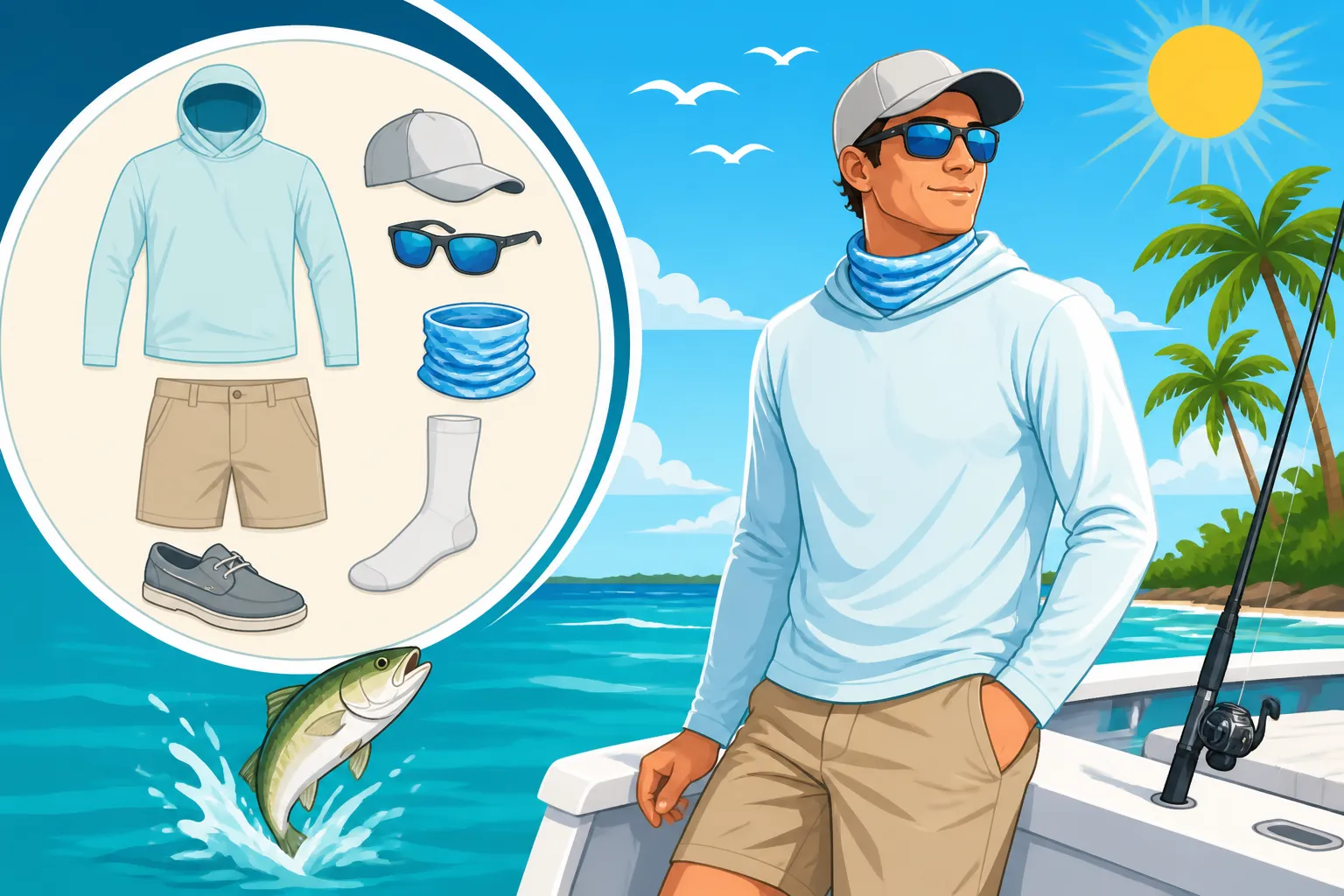
Think about it: you're going to be active. You'll be casting, reeling, perhaps even fighting a strong fish. You'll likely be sweating, and there's a good chance you'll get splashed by a wave or spray from the boat. This is where your fabric choices become absolutely crucial. Opt for lightweight, breathable materials that wick moisture away from your skin. Synthetic fabrics like polyester, nylon, or blends specifically designed for activewear are fantastic choices. They dry quickly, which is a huge bonus if you get wet, and they don't cling uncomfortably when you're hot and sweaty.
Avoid heavy cotton items, especially for your primary layers. While a cotton t-shirt might feel nice and cool initially, once it gets wet from sweat or water, it stays wet, becomes heavy, and can actually make you feel colder in a breeze. In the heat, wet cotton feels clammy and takes ages to dry, which is simply uncomfortable on a boat for hours. Brands like Columbia Sportswear, Huk Gear, or AFTCO specialize in fishing-specific apparel made from these advanced, quick-drying materials that also often come with built-in UPF sun protection.
The Argument for Long Sleeves and Pants (Even in Summer)
This might sound counterintuitive, especially if you're picturing sunny Florida and think shorts and a tank top. But trust me on this: long sleeves and long pants are often your best friends on a fishing charter, even in the dead of summer. The sun's intensity on the water is magnified by reflection, and exposed skin can get severely burned in a surprisingly short amount of time.
High-quality fishing shirts and pants are designed with UPF (Ultraviolet Protection Factor) ratings, which is like SPF for clothing. A shirt with a UPF 30 or 50 rating can block out a significant amount of harmful UV rays, offering far more consistent protection than sunscreen alone, which can rub off, sweat off, or get washed off by spray. Beyond sun protection, these longer garments can also offer a layer of defense against minor scrapes from boat equipment, the occasional fly or mosquito bite, especially if you're fishing in areas like the Everglades Fishing Guide where insects can be more prevalent. You'll thank yourself for choosing coverage over minimal clothing when you're not dealing with sunburn pain later.
Layers Are Your Friend
The classic Florida dilemma of morning chill versus midday heat is best solved with strategic layering. You want to be able to add or subtract clothing easily without having to completely change outfits. Think of it as building your personal climate control system.
Start with a lightweight, moisture-wicking base layer, like one of those breathable long-sleeved shirts we just discussed. This will be your primary sun protection and moisture management. Over that, you might consider a light fleece vest or a thin long-sleeved shirt if the morning promises to be particularly cool or breezy. This can be easily removed and stowed in your bag once the sun climbs higher. For an outer layer, especially if there's a chance of rain or significant boat spray, a lightweight, packable rain jacket that also blocks wind is invaluable.
The beauty of layers is their versatility. You can start the day bundled up and progressively shed items as the temperature rises. If a sudden cloud cover or breeze comes in, you can easily pull a layer back on. This approach ensures you're always just right, never too hot or too cold, allowing you to focus on the fish rather than your discomfort. Many experienced anglers use a system like this, knowing that conditions on a Florida Fishing Charter Guide can change hour by hour.
Footwear: Staying Safe and Steady on Deck
Your feet take a beating on a boat – from slippery surfaces to rogue hooks. The right footwear is about both comfort and, more importantly, safety.
Non-Marking, Closed-Toe Shoes Are Your Best Bet
When it comes to fishing on a charter, your footwear is critical. My absolute top recommendation is always non-marking, closed-toe shoes. Why non-marking? Because charter captains (and their boat decks) will love you for not leaving scuff marks all over their pristine vessel. Why closed-toe? This is where safety comes in. A boat deck can be a hazardous place: there are hooks, sinkers, gaffs, tackle boxes, and coolers, all of which could potentially fall or shift and injure an exposed toe.
Think of it this way: you're fighting a big fish, the boat is rocking, and someone accidentally drops a pair of pliers. Would you rather have a sturdy shoe protecting your foot, or just a thin strap of a sandal? Shoes like deck shoes, boat shoes, or even old athletic sneakers with good grip are ideal. They provide stability on wet and potentially slippery surfaces, give you leverage when reeling, and protect your feet from unexpected encounters with fishing gear or the fish themselves. You'll find yourself much more confident moving around the boat when your feet feel secure and protected.
When to Think Twice About Sandals and Flip-Flops
I get it, it's Florida! The temptation to throw on some flip-flops is strong. And for a casual walk on the beach or a trip to the local bait shop, they're fine. But for an actual fishing charter, especially one where you're actively casting and potentially moving around a wet deck, I strongly advise against them.
Flip-flops and many sandals offer minimal foot protection. Your toes are completely exposed to hooks, fish spines, and dropped weights. Their lack of grip can also be a serious safety concern on a wet, rocking boat. Imagine trying to quickly move to the stern to follow a running fish, and your foot slips. It's an accident waiting to happen. Furthermore, they can easily get kicked off or washed overboard by a rogue wave, leaving you barefoot for the rest of the trip – which is definitely not ideal. While some lighter fishing might tolerate sturdy, strap-on sandals with good grip (like Tevas or Chacos), for anything more active, especially if you're on a Florida Inshore Fishing Charter Guide where you might be standing for long periods, closed-toe shoes are a much safer and more comfortable option.
Your Best Defense Against the Florida Sun
The sun in Florida, while glorious, is also incredibly powerful. Protecting yourself from its relentless rays is paramount to having an enjoyable trip and avoiding painful sunburns.
Hats and Neck Gaiters Are Non-Negotiable
Seriously, if there's one thing you absolutely MUST have on a Florida fishing charter, it's a good hat. And ideally, a neck gaiter to go with it. A wide-brimmed hat offers crucial shade for your face, ears, and neck, areas that are highly susceptible to sunburn. Baseball caps are okay, but they leave your ears and neck exposed, which can lead to uncomfortable burns. Look for fishing-specific hats that might have longer brims or even attachable neck flaps for maximum coverage.
A neck gaiter (also sometimes called a buff or fishing mask) is a simple tube of stretchy, breathable fabric that you can pull up over your neck, ears, and even your nose and mouth. It provides fantastic sun protection for your often-forgotten neck and lower face, which are constantly exposed to direct and reflected sunlight on the water. Many fishing gaiters are made from UPF-rated material, offering even better protection. Together, a hat and a neck gaiter form an almost impenetrable barrier against the sun for your head and neck, allowing you to focus on the fishing, not the burn.
Sunglasses: More Than Just Style
Sure, sunglasses make you look cool, but on a fishing charter, they're an absolute necessity for both eye protection and improving your fishing experience. The sun's glare off the water can be intense, causing eye strain and fatigue, and prolonged exposure to UV rays can damage your eyes.
But here's the real kicker for anglers: polarized sunglasses. These are a game-changer. Polarized lenses cut through the glare on the water's surface, allowing you to see into the water. This means you can spot fish, identify submerged structures, or even see a subtle twitch of your bait that you'd otherwise miss. This can be particularly useful if you're on a flats fishing trip, sight fishing for species like redfish or snook. While they might be an investment, a good pair of polarized sunglasses will enhance your vision, protect your eyes, and significantly improve your chances of success. They truly are an essential piece of gear, right up there with your rod and reel.
Sunscreen: Slather It On Generously
Even with long sleeves, pants, hats, and gaiters, there will inevitably be some exposed skin – your hands, maybe the tops of your feet if you're not wearing high shoes, and any gaps in your clothing. This is where high-quality, broad-spectrum sunscreen comes in.
Choose a sunscreen with an SPF of at least 30, and ideally, one that is water-resistant. Apply it before you even leave the dock. Don't wait until you're already out on the water, because by then, the sun has already started its work, and it's harder to get an even application on a moving boat. Be generous with your application, covering all exposed skin. And here's the critical part: reapply frequently, especially if you're sweating, getting splashed by saltwater, or after using a towel. Sunscreen wears off, and it's easy to forget to reapply when you're focused on catching fish. Missing even one reapplication can lead to a nasty burn. Consider brands like Blue Lizard or Sun Bum, which are often recommended for their effectiveness and water resistance. Your skin will thank you!
Additional Gear to Make Your Trip More Enjoyable
While the core clothing items are crucial, a few extra bits of gear can elevate your comfort and preparedness, ensuring a smoother, more enjoyable day on the water.
Don't Forget the Rain Gear
We talked about those pop-up Florida showers, right? Even if the forecast looks clear, a lightweight, packable rain jacket (and maybe even rain pants) can be a lifesaver. You don't need heavy-duty foul-weather gear unless you're specifically going out in predicted bad weather, but a simple rain shell that folds up small can make all the difference if you get caught in an unexpected downpour.
Think about it: getting completely drenched can be miserable, making you cold and uncomfortable for the rest of the trip. A good rain jacket will keep you dry, and it also doubles as an excellent windbreaker on those cooler, breezier mornings or when the boat is running at speed. When you're researching What to Pack for a Florida Offshore Fishing Trip, a rain jacket is almost always at the top of the list for good reason. It’s an easy item to throw into a small bag, and you’ll be incredibly glad to have it if the skies decide to open up, even for just a few minutes.
Fishing Gloves for Comfort and Protection
Fishing gloves might seem like an extra, but they offer several benefits that can greatly improve your experience. First and foremost, they provide sun protection for your hands, an area often overlooked and highly prone to burning. Many fishing gloves are made with UPF-rated fabric specifically for this purpose.
Beyond sun protection, gloves can also protect your hands from abrasions and cuts. Handling fish, especially those with sharp fins or gill plates, can result in nicks and scrapes. They also offer a better grip on your rod, especially if your hands are wet from sweat or saltwater, and can prevent line burn if a big fish takes off quickly. Some gloves even have reinforced palms for extra durability. Whether you’re a seasoned angler or considering a trip with Best Fishing Charters for Beginners in Florida, a good pair of gloves adds comfort and safety, keeping your hands happy throughout the day.
A Small, Waterproof Bag for Essentials
You’ll undoubtedly have a few personal items you want to bring: your phone, wallet, keys, maybe some medication, a snack, or extra layers. A small, waterproof or highly water-resistant dry bag or backpack is an absolute must for keeping these items safe and dry.
Boat decks can get wet quickly from spray, rain, or even just melting ice from a cooler. Having a dedicated bag that protects your electronics and other valuables from moisture is crucial. Look for bags with roll-top closures or waterproof zippers that are designed for marine environments. This way, you can relax, knowing your phone won’t be ruined if a wave splashes over the side, and you won't have to worry about your wallet getting soaked. If you need to find a charter that can accommodate a larger bag, or have questions about what they provide versus what you should bring, you can often find details on platforms like FishingBooker or by directly asking the captain when you How to Book a Florida Fishing Charter Online.
Here’s a handy checklist to help you pack for your next Florida fishing adventure:
| Item | Why It's Essential | Notes |
|---|---|---|
| Long-Sleeved Shirt | Sun protection, moisture-wicking | UPF-rated, quick-drying synthetic fabric |
| Long Pants | Sun protection, comfort, protection from scrapes/insects | UPF-rated, lightweight, quick-drying |
| Light Jacket/Hoodie | Morning chill, wind protection, layering | Easy to shed, quick-drying material (fleece or light synthetic) |
| Non-Marking, Closed-Toe Shoes | Safety, grip, foot protection | Deck shoes, boat shoes, old sneakers (good tread) |
| Wide-Brimmed Hat | Face, ear, and neck sun protection | Provides more coverage than a baseball cap |
| Neck Gaiter/Buff | Neck and lower face sun protection | UPF-rated, breathable fabric |
| Polarized Sunglasses | Eye protection, glare reduction, fish spotting | Crucial for visibility and comfort |
| High SPF Sunscreen | Skin protection (reapply often) | Water-resistant, broad-spectrum (SPF 30+) |
| Rain Gear | Protection from unexpected showers/boat spray | Lightweight, packable rain jacket (pants optional) |
| Fishing Gloves | Sun protection, grip, hand protection | Protects from line burns, fish, and abrasions |
| Small Dry Bag | Keeps essentials safe and dry | For phone, wallet, keys, medication |
Remember, being prepared allows you to truly enjoy the incredible fishing Florida has to offer. A little planning now can save you a lot of discomfort later, so you can focus on the thrill of the catch!
Disclaimer
This article is for general informational purposes only and does not constitute professional advice. Laws, prices and regulations vary by location and change over time. Consult a qualified professional for guidance on your specific situation.