How to Tell a Mangrove Snapper From a Mutton Snapper Up Close
It's incredibly common to find yourself scratching your head, holding up a beautiful snapper, and wondering if it's a mangrove or a mutton. These two popular Florida game fish share enough similarities in appearance and habitat that even seasoned anglers can get them mixed up, leading to frustration and sometimes, even a run-in with regulations. This guide is here to help you confidently tell the difference between a mangrove snapper and a mutton snapper, ensuring you're always in compliance and can accurately identify your catch.
The Frustration of Snapper Identification
There's a reason why so many anglers struggle with telling apart the various snapper species, and especially the mangrove and mutton. Florida waters are teeming with diverse marine life, and many fish have evolved similar adaptations to thrive in the same environments. When you're out on the water, perhaps with the sun glaring down or in the low light of dawn, those subtle distinctions can become incredibly hard to spot.
Why It's So Easy to Get Them Mixed Up
Imagine this: you've just pulled up a feisty snapper from a patch of structure, maybe a dock piling or a rocky outcropping. It's got that classic snapper body, the reddish-pinkish hue, and those keen eyes. Your mind immediately races through the possibilities. Both mangrove and mutton snapper inhabit both inshore and offshore waters, especially when they're younger. They both have that torpedo-like body, and depending on the light or their immediate surroundings, their colors can shift, making a definitive ID feel like a game of chance. You might even have a fish in hand that seems to have characteristics of both, leaving you utterly stumped. It's a real challenge, and if you've been there, you're certainly not alone in that moment of doubt.
The Importance of Correct Identification
Getting your snapper ID right isn't just about showing off your fishing prowess (though that's certainly a bonus!). It's absolutely crucial for several practical reasons. First and foremost are the legal implications. Florida has specific Florida Fishing Regulations and Bag Limits for different species, including distinct size and bag limits for mangrove snapper and mutton snapper. Keeping a fish that is undersized or over your bag limit, even accidentally due to misidentification, can lead to hefty fines and even confiscation of your gear. No one wants to end a great day on the water with a citation because they couldn't tell the difference between two fish.
Beyond the law, accurate identification plays a vital role in conservation. Each species has a different reproductive cycle and population health. Knowing what you're catching helps you, and fisheries managers, understand population trends and ensure sustainable fishing for future generations. Plus, let's be honest, it just feels good to know exactly what you've caught. When you're showing off a photo of your prized catch, you want to be able to confidently say, "That's a beautiful mutton snapper!" or "Check out this mangrove!" It adds to the enjoyment and respect of the sport.
Key Visual Differences: Mangrove Snapper Up Close
When you've got a snapper in your hands, the first place to start looking for clues is right around its head and body. Mangrove snapper, sometimes affectionately called "mangos," have some distinct features that, once you know what to look for, become quite obvious.
The Tell-Tale Dark Stripe and Canine Teeth
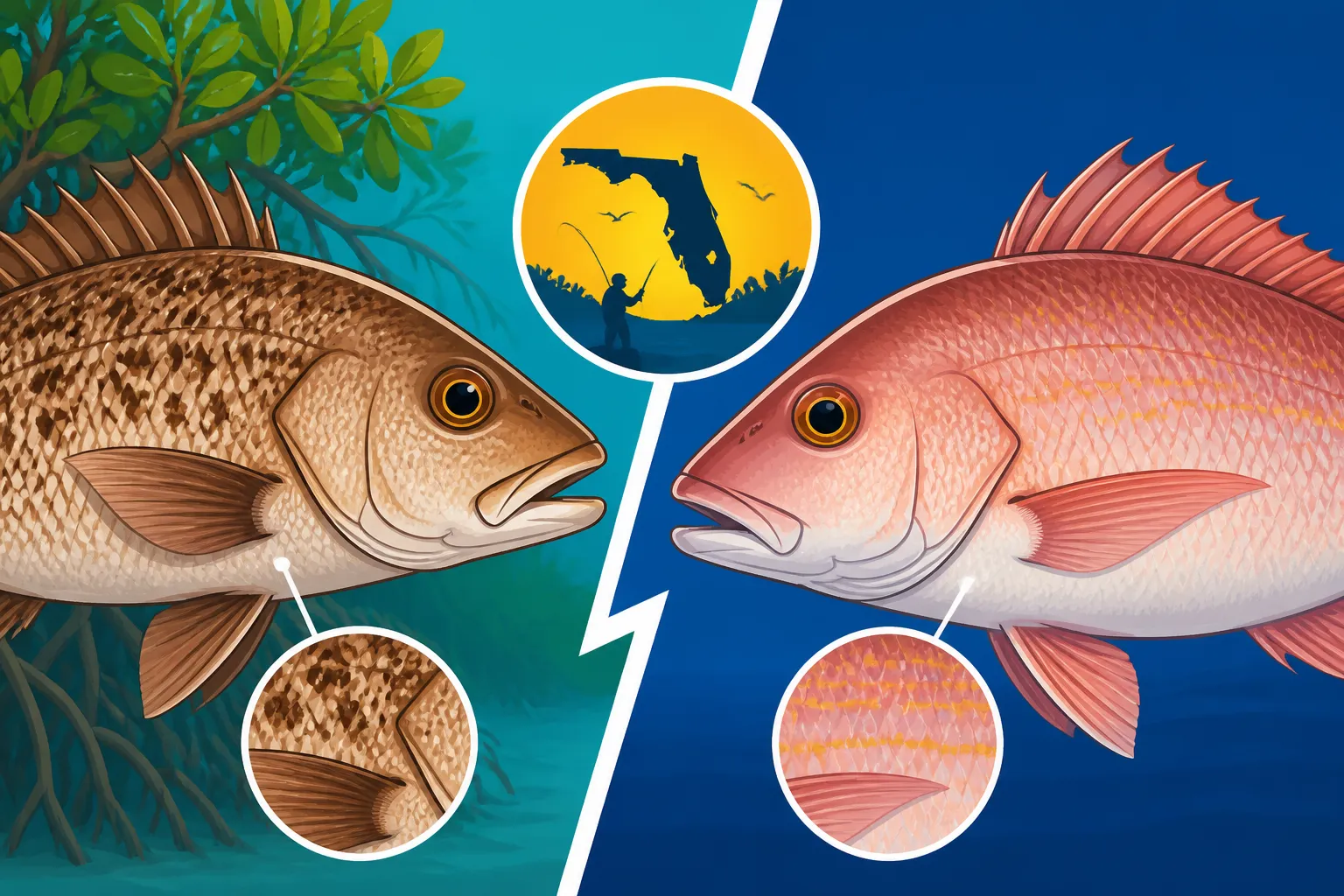
The absolute best indicator for a mangrove snapper is a prominent, dark, reddish-brown stripe that runs horizontally from its snout, right through its eye, and often fades as it reaches the gill plate. This isn't always super dark, but it's almost always there, especially on a freshly caught fish. Imagine drawing a pencil line from its nose directly through its pupil – that's the stripe you're looking for. This stripe is almost never present on a mutton snapper in the same distinct way.
Now, take a peek at its mouth. Mangrove snapper tend to have more pronounced canine teeth visible even when their mouth is mostly closed. These teeth are sharp and noticeable, perfect for grabbing small baitfish and crustaceans. While both snappers have teeth, the mangroves' canines often appear more prominent and forward-facing. If you're comparing two fish side-by-side, you'll likely notice the difference.
Coloration and Body Shape Nuances
While color can be tricky due to habitat and lighting, mangrove snapper generally have a darker overall appearance. Their bodies are typically a reddish-brown, grayish-brown, or even a greenish-gray, often with subtle vertical bars or blotches that can appear or disappear depending on their mood or surroundings. They blend in perfectly with the shadows of the Florida Mangrove Snapper Fishing Guide suggests, which is where they get their name. They tend to have a slightly more compact, robust, or "stocky" body build compared to the mutton. Think of them as more stout, built for darting into cover. Their fins might also have a bit of a reddish or yellowish tint, but again, this can vary.
Key Visual Differences: Mutton Snapper Up Close
Mutton snapper, on the other hand, carry their own set of unique markings that can help you differentiate them from their mangrove cousins. These fish are renowned for their beauty and their fighting spirit, and knowing you've landed one is always a treat.
The Distinctive Blue Line and Pectoral Fin
The most reliable identifier for a mutton snapper is a striking, iridescent blue line that runs from its snout, under its eye, and back towards its gill plate. Unlike the mangrove's dark eye-stripe, this line is almost fluorescent blue and truly stands out. It's often accompanied by other wavy blue lines on its cheek. This blue line is incredibly distinctive and is the feature most anglers use to make a quick and accurate identification. If you see that vibrant blue streak, you've got yourself a mutton!
Another excellent distinguishing feature is the pectoral fin (the one just behind the gill plate, usually used for steering). Mutton snapper typically have longer, more pointed pectoral fins that extend noticeably further back along their body. When you lay the fin back, it often reaches past the anus. Compare this to the mangrove snapper, whose pectoral fin is usually shorter and more rounded, not extending as far back. This difference in fin shape and length is a consistent characteristic that can really help solidify your identification.
Coloration and Body Shape Nuances
Mutton snapper generally have a lighter, more vibrant coloration. Their bodies are often a beautiful silvery-pink to reddish-orange, sometimes with faint, broad, diagonal stripes or blotches, particularly towards the tail. They also possess a prominent, rectangular black spot located below the lateral line, just below the front of the soft dorsal fin. This spot is a key identifier and is typically much larger and more distinct than any markings you'd find on a mangrove. Their overall body shape tends to be more elongated and streamlined, built for cruising open water and reefs. Think of them as more sleek and graceful than the mangrove. The fins of a mutton snapper are often tinged with yellow or red, and their caudal (tail) fin often has a distinctive V-shape with pointed tips. You can see many examples of their beauty by searching for "mutton snapper identification chart" on Amazon to compare images.
Additional Clues for Confident Identification
Sometimes, a quick visual isn't enough, especially if the fish is stressed or has been out of the water for a bit. That's when you need to dig a little deeper and use all the clues available to you, combining visual cues with knowledge of their preferred habitats and typical behavior.
Habitat and Behavior
One of the biggest clues, even before you see the fish up close, is where you caught it. Mangrove snapper, as their name suggests, are often found inshore, lurking around structures like mangrove roots, dock pilings, jetties, and shallow reefs. They're opportunistic feeders and won't hesitate to snatch a bait near structure. If you're fishing in a canal in Miami or off a bridge in the Keys, and you hook into a snapper, there's a good chance it's a mangrove. They’re quite comfortable in brackish water, too. This is particularly true if you're engaging in Florida Shoreline Fishing License Explained situations.
Mutton snapper, while sometimes found inshore as juveniles, are primarily an offshore species. They love deeper reefs, wrecks, and rocky bottom structures further out in the Gulf or Atlantic. If you're 20 miles offshore, dropping a line down to a submerged wreck, the chances of pulling up a mutton snapper are significantly higher. They're often caught when employing a Bottom Fishing Technique for Snapper. Understanding the typical haunts of each species can give you a strong head start on identification. Don't forget, these fish also have different diets depending on their environment.
Size and Age Considerations
Generally speaking, mutton snapper grow significantly larger than mangrove snapper. While both can be caught in a range of sizes, a trophy mutton snapper can easily tip the scales at 10-15 pounds or more, with some absolute monsters pushing 20 pounds. Mangrove snapper, while they can get to a respectable size, are more commonly caught in the 1-5 pound range, with larger ones being 8-10 pounds. So, if you've got a truly massive snapper on the line, especially one caught offshore, it's more likely to be a mutton.
Juvenile fish, however, can be tricky. Young mangrove and mutton snapper might be found in similar nearshore areas, and their distinguishing features might not be as pronounced. This is where patience and careful observation come into play. Always default to releasing the fish if you are unsure, especially if it appears to be close to a minimum size limit. Checking out various Mangrove Snapper Size and Bag Limits and comparing them to those for muttons can help you understand what you're looking for.
Here’s a quick reference table to help you keep these distinctions straight when you're out on the water:
| Feature | Mangrove Snapper | Mutton Snapper |
|---|---|---|
| Eye Stripe | Distinct dark, reddish-brown stripe through the eye | No dark stripe; often iridescent blue line under the eye |
| Pectoral Fin | Shorter, more rounded; usually doesn't extend past anus | Longer, more pointed; often extends past anus |
| Body Color | Darker; reddish-brown, grayish-brown, or greenish-gray; subtle vertical bars | Lighter; silvery-pink to reddish-orange; faint diagonal bars |
| Black Spot | Absent or very faint on upper flank | Prominent, rectangular black spot below dorsal fin |
| Canine Teeth | Often more pronounced and visible | Present but less pronounced; usually not as visible |
| Body Shape | More compact, robust, "stocky" | More elongated, streamlined, "sleek" |
| Typical Habitat | Primarily inshore: mangroves, docks, jetties, shallow reefs | Primarily offshore: deeper reefs, wrecks, rocky bottoms |
| Max Size | Smaller, typically 1-8 lbs (up to 10-12 lbs) | Larger, typically 5-15 lbs (up to 20+ lbs) |
When you're preparing for your next fishing trip, consider grabbing a good fish identification chart. There are many excellent, laminated versions available on Amazon that you can keep right on your boat or in your tackle box for quick reference. Having a visual aid in hand can be incredibly helpful for those moments of uncertainty. And once you've made your catch, whether it's a mangrove snapper or a mutton snapper, knowing exactly what you have makes dinner even better!
The key to mastering snapper identification is practice and a keen eye. The more you encounter these fish, the easier it will become to spot their unique characteristics. Remember, always err on the side of caution if you're unsure, and when in doubt, release the fish to fight another day. Happy fishing!
Disclaimer
This article is for general informational purposes only and does not constitute professional advice. Laws, prices and regulations vary by location and change over time. Consult a qualified professional for guidance on your specific situation.