What Is the Florida State Record Tarpon?
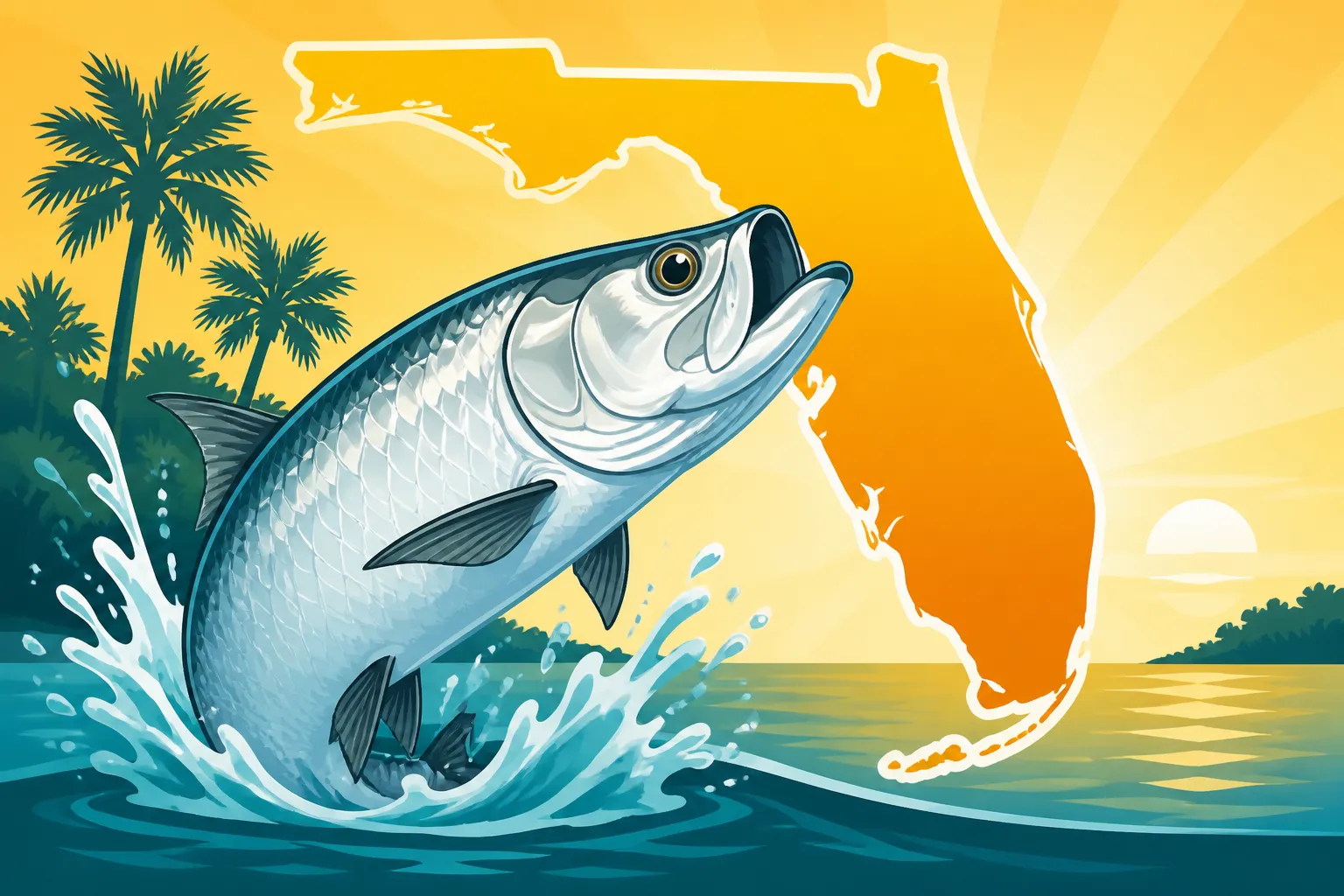
That magnificent flash of silver, the electrifying tug on your line, the incredible aerial acrobatics – chasing tarpon in Florida is more than just fishing; it's an obsession for many, a true angling pilgrimage. When you're out there on the water, battling one of these giants, a thought often crosses your mind: "Could this be the one? Could this be a state record?" It’s a dream that fuels countless trips, countless hours under the Florida sun. This guide will dive deep into the world of Florida's state record tarpon, exploring not just the incredible fish that holds the title, but also what it takes to pursue such a legendary catch and why these records hold such a special place in our fishing culture.
The Allure of the Silver King: Why Tarpon Records Matter
There's just something about a tarpon, isn't there? From their prehistoric look to their unparalleled fighting spirit, they've earned their regal nickname, the "Silver King." For anglers who pursue them, it's often the ultimate challenge, a test of skill, endurance, and sheer will.
The Legend of Tarpon in Florida Waters
Florida is undeniably the global epicenter for tarpon fishing. From the shallow flats of the Florida Keys to the estuaries of the Gulf Coast and the inlets of the Atlantic, these magnificent fish are intertwined with the state's angling identity. The tales of giant tarpon pulling anglers boats for miles, leaping spectacularly, and often winning their freedom, are legendary. Every seasoned angler has a story about the "one that got away," a testament to the tarpon's power and cunning. It's this almost mythical status that drives so many to dedicate themselves to understanding their migrations, their feeding habits, and the precise techniques needed to entice a bite. It's not just about catching a fish; it's about entering a long-standing tradition of pursuing a truly iconic creature.
The thrill begins long before the hook set. It's in the quiet anticipation of spotting a rolling tarpon at dawn, the nervous energy as a school swims into casting range, or the heart-stopping moment when a massive fish suddenly inhales your bait. The fight itself is an experience unlike any other, demanding quick reflexes to "bow to the king" when it jumps, and relentless pressure to bring its powerful body to the boat. This incredible battle, often lasting an hour or more for a truly large fish, is what cements the tarpon's place as a bucket-list species for anglers worldwide. It’s this pure, unadulterated excitement that makes the idea of a record-breaking tarpon so captivating.
Beyond Bragging Rights: The Value of State Records
While the immediate thought of setting a state record often revolves around bragging rights and eternal glory, these official benchmarks serve a much deeper purpose. State records, meticulously documented by organizations like the Florida Fish and Wildlife Conservation Commission (FWC), provide valuable historical data points that illustrate the health and potential of our fisheries. They show us what's truly possible in Florida waters and inspire generations of anglers to dream bigger.
Moreover, the pursuit of records often goes hand-in-hand with conservation efforts. To catch a record-breaking tarpon, anglers must understand the species' needs, habitat, and vulnerabilities. This knowledge naturally fosters a greater appreciation and desire to protect these incredible fish and their ecosystems. Organizations dedicated to tarpon research and conservation often highlight record catches as a way to engage the public and raise awareness. It’s a powerful reminder of the natural wonders we have in our backyard and the importance of responsible angling practices, especially for species like tarpon which are primarily catch-and-release. Learning about the official process for declaring a record also highlights the scientific rigor involved, giving these achievements a weight that goes beyond mere anecdote.
Unveiling the Champion: The Florida State Record Tarpon
Every state has its legends, and Florida's tarpon record is a story whispered among anglers, a benchmark of what’s truly possible when a magnificent fish meets a determined angler. It’s a testament to the sheer size and power these "Silver Kings" can achieve in the bountiful waters of the Sunshine State.
The Current Record Holder and Its Story
The Florida state record for tarpon stands as a monumental achievement, a fish of truly epic proportions that exemplifies the ultimate potential of the species in our waters. While specific weights and dates for state records are dynamic and best confirmed directly through the official Florida Fish and Wildlife Conservation Commission (FWC) records, it's widely known that the current record represents a fish weighing well over 200 pounds, a true monster of the deep. Imagine hooking into a fish that size! It's the kind of catch that defines an angling career, a moment etched forever in the memories of those fortunate enough to be there.
The story behind such a record-breaking catch is always one of immense struggle, perseverance, and often a touch of luck. It involves an angler, sometimes seasoned, sometimes a relative newcomer, who found themselves in the right place at the right time, with the right tackle and the skill to back it up. The battle would have been nothing short of Herculean, with the tarpon's legendary leaps and powerful runs testing every fiber of the angler's resolve and the integrity of their gear. Landing a fish of that magnitude safely and then getting it weighed on certified scales before its careful release (or, in rare cases, retention for a record, following strict FWC guidelines) is an accomplishment that truly earns its place in the record books. This kind of story highlights why so many chase the Florida Tarpon Fishing Season Guide with such passion, hoping to write their own chapter.
The Weigh-In Process: How a Record is Validated
Achieving a state record isn't just about landing a huge fish; it's about meticulously documenting every step to meet stringent official requirements. The process for validating a state record tarpon, or any state record fish for that matter, is incredibly precise to ensure accuracy and fairness. First and foremost, the fish must be caught in accordance with all current Florida Fishing Regulations and Bag Limits and ethical angling practices. If the intent is to keep the fish for a record, the angler must possess the appropriate tarpon tag, as these fish are almost exclusively catch-and-release.
Upon landing, the fish must be transported as quickly and carefully as possible to a certified weigh station. This isn't just any old scale; it must be officially calibrated and approved, often found at marinas, tackle shops, or designated FWC offices. Witnesses are crucial—ideally, multiple credible individuals, sometimes including a wildlife officer, who can attest to the catch and the weigh-in process. Photographs documenting the fish, the angler, and the weighing are also typically required. Finally, detailed paperwork must be completed, providing all the specifics of the catch, the gear used, and the identifying information of the angler and witnesses. This entire process, while rigorous, is essential to uphold the integrity of the state record program and ensure that only truly legitimate catches are recognized.
Chasing Your Own Giant: Strategies for Targeting Trophy Tarpon
So, you're inspired by the state record and ready to chase your own monster tarpon? While breaking the record is a monumental task, consistently targeting and hooking large tarpon is an achievable goal with the right knowledge, gear, and a healthy dose of patience. Florida offers some of the best opportunities in the world for trophy tarpon.
Prime Locations for Monster Tarpon
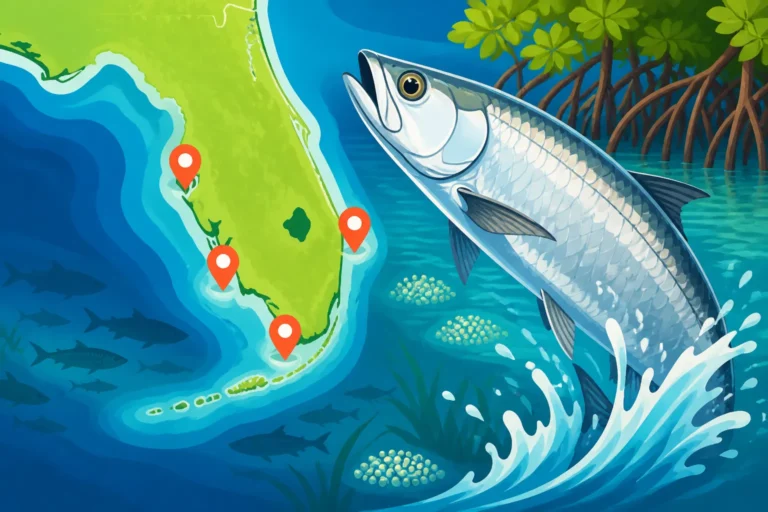
Florida's unique geography provides an incredible array of habitats for giant tarpon. Perhaps no single location is as famous as Boca Grande Pass on the state's southwest coast. During the Florida Tarpon Migration Timing, usually from April through July, this deep pass becomes a superhighway for tens of thousands of migrating tarpon, many of them absolute giants. Anglers flock here for the chance to hook into a true "silver king," often using heavy tackle and specific drift fishing techniques.
Beyond Boca Grande, the entire chain of the Florida Keys offers world-class tarpon fishing, particularly on the shallow flats and around the many bridges. Destinations like Islamorada, Marathon, and Key West are renowned for their spring and summer tarpon runs. Further north, the Everglades National Park and the Ten Thousand Islands offer a more wild and remote experience, where huge tarpon can be found in the backcountry creeks and bays. Even some of Florida's larger inlets on the Atlantic coast, such as Sebastian Inlet or Jupiter Inlet, can hold surprisingly large tarpon during specific tides and seasons, especially at night. Understanding the Best Time of Year to Fish in Florida for these migratory patterns is absolutely critical.
Gear Up for the Fight of Your Life
Battling a tarpon, especially a potential trophy, is not for the faint of heart or the poorly equipped. You're going to need serious gear that can withstand immense pressure and prolonged fights. For rods, think heavy-action spinning or conventional rods, typically in the 7 to 8-foot range, capable of handling 50 to 80-pound braided line. Brands like Penn, Shimano, and Daiwa offer excellent options that you can often find on Amazon with a wide selection. Pair that with a robust reel, like a large spinning reel (8000 to 14000 series) with a smooth drag system and ample line capacity, or a heavy-duty conventional reel. You need every advantage you can get when a hundred-pound-plus fish decides to launch itself ten feet in the air!
As for line, 50 to 80-pound braided main line is standard for its strength and minimal stretch, giving you direct control. This should be connected to a heavy fluorocarbon leader, usually 80 to 120 pounds, to resist the tarpon's abrasive mouth and provide some shock absorption. Terminal tackle includes strong circle hooks (typically 7/0 to 12/0, depending on bait size) to ensure a solid hookset in the corner of the mouth, which is safer for the fish, and heavy swivels and snaps. Don't skimp on quality here; one weak link and that trophy tarpon will be gone. When exploring options, a quick search on Amazon for "heavy duty tarpon fishing tackle" will show you the range of robust equipment serious anglers rely on. You can dive deeper into specific choices with resources like What Pound Test Line for Tarpon Fishing?.
| Gear Component | Recommended Characteristics | Why It Matters |
|---|---|---|
| Rod | 7-8 ft, Heavy Action, Fast Taper | Power to turn large fish, sensitivity for subtle bites, handle heavy line |
| Reel | Large Spinning (8000-14000) or Conventional, Smooth Drag | High line capacity, robust construction, consistent drag pressure during long runs |
| Main Line | 50-80 lb Braided Line | High strength-to-diameter ratio, no stretch for solid hooksets, abrasion resistance |
| Leader | 80-120 lb Fluorocarbon | Abrasive resistance against tarpon's mouth, low visibility in clear water |
| Hooks | 7/0-12/0 Circle Hooks (live bait), J-Hooks (lures) | Promote mouth hooksets for safer release, strong enough not to bend out |
| Baits/Lures | Live crabs, mullet, threadfin herring, large swimbaits, flies | Proven attractants for large tarpon, vary by location and technique |
Techniques and Patience: The Keys to Success
Tarpon fishing demands a blend of specific techniques and an abundance of patience. One of the most common and effective methods, especially in passes and channels, is drift fishing with live bait. Anglers will typically use live crabs, mullet, or threadfin herring, allowing them to drift naturally with the current into tarpon holding areas. This technique requires constant attention to your line and an understanding of how to read the current. On the shallow flats, sight fishing is paramount. This involves quietly poling a boat or standing on the bow, scanning for rolling tarpon or subtle wakes, then making a precise cast with a fly or artificial lure to intercept the fish. This is where you might find specialized rods and reels that are excellent for the specific requirements of fly fishing, available from various reputable brands, including those found on Amazon.
Once a tarpon is hooked, the real work begins. Fighting a large tarpon is an art form. When the fish leaps, you must "bow to the king" by lowering your rod tip towards the water, giving slack and preventing the fish from breaking the line on its head shakes. This instinctual reaction often separates successful tarpon anglers from those who repeatedly lose fish. Keeping constant, heavy pressure is crucial, but avoid horsing the fish too quickly, which can exhaust and harm it. The goal is to bring the fish alongside the boat as efficiently and safely as possible for a quick release, as detailed in Catch and Release Best Practices for Snook which shares many similarities with tarpon handling. It's a marathon, not a sprint, and patience will be your greatest asset.
Responsible Angling: Preserving Florida's Tarpon Legacy
Catching a tarpon is a monumental achievement, but the true measure of a great angler lies in their commitment to the species' long-term health. Tarpon populations, while robust in Florida, face various pressures, making responsible angling practices more important than ever.
Catch and Release: Protecting Our Silver Kings
The vast majority of tarpon caught in Florida are released alive, a practice that is vital for sustaining their populations. These magnificent fish are highly valued for their sporting qualities, not typically for table fare. When you do hook into a tarpon, especially a large one, ensuring its safe release should be your top priority. This means minimizing the fight time where possible, avoiding over-stressing the fish, and using proper handling techniques.
Never lift a large tarpon by its jaw or gill plate if you intend to release it. The best practice is to keep the fish in the water boat-side for photos and de-hooking. If you must bring it aboard for a quick photo, ensure you have wet gloves, support its entire body horizontally, and get it back in the water within seconds. Use de-hooking tools to quickly remove hooks, especially circle hooks, which usually embed in the corner of the mouth. If the fish is exhausted, hold it by the tail and gently move it back and forth in the water to force water over its gills until it regains strength and can swim away under its own power. These practices ensure that the Silver King can continue its life cycle and provide thrilling battles for future generations.
Regulations and Permits: Staying Legal
Florida has specific regulations designed to protect its tarpon fishery, and understanding these is paramount for any angler. Unlike many other sport fish, tarpon are almost exclusively a catch-and-release species. If you intend to harvest a tarpon (a rare occurrence, usually for a potential state record, and only one per person per year is allowed), you must possess a valid tarpon tag. These tags are limited in number and must be purchased in advance. It’s imperative to consult the latest FWC regulations or the Florida Fishing License Guide to understand current rules, as they can change.
Even for catch-and-release, there are strict rules regarding handling. For example, large tarpon over a certain length cannot be removed from the water for photos in many areas. This rule is in place to reduce stress on these massive fish. Always check the current Florida tarpon permit requirements and general fishing regulations before heading out. Being informed not only keeps you on the right side of the law but also ensures you're contributing positively to the health and future of Florida's incredible tarpon fishery. Following these guidelines is part of being a true steward of our precious marine resources.
Disclaimer
This article is for general informational purposes only and does not constitute professional advice. Laws, prices and regulations vary by location and change over time. Consult a qualified professional for guidance on your specific situation.