Do You Need a License to Fish From a Florida Pier?
Standing on a sun-drenched wooden plank pier with a warm ocean breeze in your face, watching pelicans dive while you drop a line into the surf, is the quintessential Florida coastal experience. But nothing sours a sunrise cast faster than the knot of anxiety in your stomach when you spot an FWC officer walking your way and you aren’t sure whether you are legally covered. This guide breaks down exactly when you need an individual license to fish from a Florida pier, how commercial pier licenses work, and what steps you must take to stay completely compliant with state wildlife laws.
Understanding Pier Fishing License Exemptions in Florida
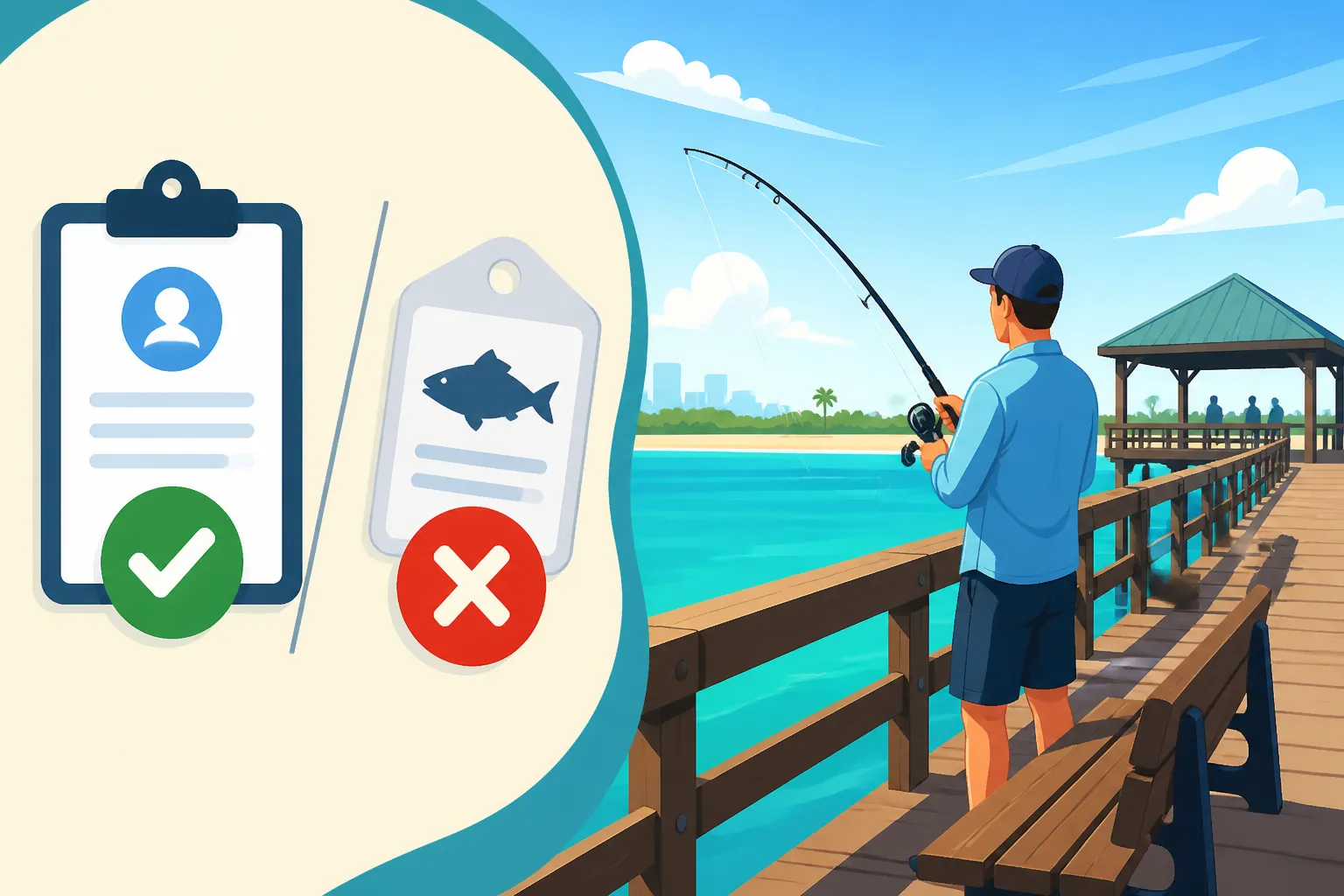
The short answer to whether you need a license to fish from a pier in Florida is: it depends on the specific pier. Florida fish and wildlife regulations allow certain ocean and bay piers to hold a blanket commercial pier license. When a pier holds this specialized permit, anyone fishing from that structure is covered under the pier’s master license, meaning individual anglers do not need to purchase or carry their own individual saltwater fishing license.
However, assuming every pier you walk onto automatically covers you is one of the most common and expensive mistakes visiting and local anglers make. State regulations treat licensed commercial piers, unlicensed public structures, jetties, and walkways quite differently.
How the Commercial Pier License Works
When a municipality, state park, or private business operates a fishing pier, they have the option to purchase an annual Pier Saltwater Fishing License directly from the Florida Fish and Wildlife Conservation Commission (FWC). This commercial license is designed specifically to encourage tourism and accessible recreational fishing.
When a pier operator pays for this umbrella coverage, the fee is typically folded into the small daily walking or fishing admission fee you pay at the pier bait shop or entry gate. When you pay your entry fee, you are effectively buying a temporary spot under their master permit. While fishing from one of these licensed structures, you do not need to present an individual state fishing license if an officer inspects your cooler. To learn more about where these structures are located, you can review our guide on Which Florida Piers Don’t Require a Fishing License?.
Licensed Piers vs. Unlicensed Public Piers
Not every structure sticking out into Florida saltwater is a licensed fishing pier. Many small community piers, county park docks, neighborhood walkways, and public catwalks do not hold a master commercial license. Operating a master pier license requires significant administrative costs and maintenance compliance that smaller local parks departments often cannot justify.
If you step onto an unlicensed pier—such as a small wooden dock at a neighborhood park along the Intracoastal Waterway—you must possess a valid individual recreational saltwater fishing license. Ignorance of the structure’s licensing status will not excuse you from a citation. You can check broader saltwater legal requirements in our comprehensive breakdown of Florida Saltwater Fishing License Rules.
How Pier Rules Differ From Bridges and Jetties
Anglers frequently lump piers, bridges, and rock jetties into the same legal bucket, assuming that if a oceanfront pier covers them, the nearby bridge or rock spillway will too. This is a dangerous assumption.
Bridges, causeways, and rock jetties almost never hold blanket fishing licenses. Even if a bridge has been decommissioned and converted into a dedicated pedestrian fishing pier (like several famous spans throughout the Florida Keys or Tampa Bay), you must verify whether the managing authority maintains an active master pier permit. To explore how state rules apply to causeways and overhead spans, check out our guide on Bridge Fishing License Rules in Florida.
Visual Overview of Florida Pier Types and License Requirements
| Structure Type | Master License Held? | Do You Need Your Own License? |
|---|---|---|
| Licensed Ocean Pier | Yes (Paid by Pier) | No (Covered by entry fee) |
| Unlicensed Park Pier | No | Yes (Individual license required) |
| Public Rock Jetty | No | Yes (Individual license required) |
| Highway Bridge Span | No | Yes (Individual license required) |
Exceptions, Special Permits, and Residency Requirements
Even when you are fishing from a licensed pier that waives the requirement for a standard saltwater license, your regulatory obligations may not end there. Florida law enforces specific exemptions, residency distinctions, and tag requirements that every pier angler needs to understand before dropping a hook.
Resident vs. Nonresident Regulations
Florida treats residents and out-of-state visitors differently when it comes to shoreline and pier access. Florida residents have access to a specialized shoreline license that covers fishing from land or land-attached structures. You can read the details in our article on Florida Shoreline Fishing License Explained.
Florida residents who wish to fish from an unlicensed pier can often obtain a Florida Free Shoreline Fishing License for Residents, provided they meet specific state residency criteria. However, nonresidents do not qualify for this free shoreline option. If an out-of-state angler fishes from an unlicensed pier, county dock, or beach shoreline, they must purchase a standard nonresident saltwater fishing license regardless of whether they are standing on dry land or a wooden plank. If you are unsure of what qualifies as land-based fishing under these statutes, read What Counts as Shoreline for Florida’s Free Fishing License?.
Species-Specific Permit Requirements
This is where many experienced anglers get caught off guard: a pier’s master license only covers basic saltwater recreational fishing. It does not automatically cover specialized species permits or stamps required by the state.
If you are targeting specific highly regulated species from a pier—even a licensed pier that covers your basic entry—you may still be required to possess individual species permits on your person:
- Snook Permits: If you plan to harvest a snook during an open season, you must hold an individual snook permit, even if the pier itself covers your general saltwater license. Review the full rules in our breakdown of Florida Snook Permit Cost and Requirements.
- Spiny Lobster Permits: If you are dipping or netting for spiny lobster from a pier structure during open harvest periods, an individual spiny lobster permit is required. Details can be found in our guide to Florida Lobster Permit Cost and Requirements.
- State Reef Fish Survey: If you are targeting reef species like snapper or grouper from deepwater piers, you may need to be signed up for the free State Reef Fish Angler designation on your FWC profile.
Age and Disability Exemptions
Florida provides several legal exemptions based on age and military service that apply universally across all fishing spots, including unlicensed piers:
- Youth Anglers: Children under 16 years of age do not need a saltwater fishing license to fish anywhere in Florida, whether on a pier, boat, or shoreline.
- Seniors: Florida residents age 65 and older do not need to buy a saltwater license, provided they carry proof of age and residency (such as a valid Florida driver’s license).
- Disabled Veterans and Residents: Florida residents holding a valid Personal Disability License or certified military disability paperwork are exempt from standard license requirements.
Failing to carry proper identification or fishing on an unlicensed pier without the correct paperwork can lead to strict penalties. If you are curious about enforcement standards, read our detailed article on the Penalty for Fishing Without a License in Florida.
Essential Gear and Practical Considerations for Pier Fishing
Pier fishing presents unique physical challenges compared to fishing from a beach or a boat. You are elevated high above the water, working around overhead lights, pilings encrusted with razor-sharp barnacles, and dozens of fellow anglers casting in tight quarters. Having the right setup makes all the difference between a successful outing and losing a trophy fish to a concrete piling.
Critical Pier Tackle and Setup
Because you cannot step down to the water’s edge to lip a fish or land it with a short hand-net, specialized gear is mandatory for pier fishing:
- Pier Nets and Hoop Nets: Trying to hoist a four-pound mangrove snapper or a heavy redfish twenty feet vertically out of the water will snap your line or tear the hook right out of the fish’s mouth. Experienced pier anglers carry a folding hoop net attached to a thick rope. You can easily find heavy-duty drop nets on Amazon that fold flat for easy transport.
- Pier Carts: Transporting heavy tackle boxes, coolers, buckets, and multiple rods down a half-mile pier gets exhausting fast. A specialized beach or pier cart with oversized wheels is an essential investment. Browse cart setups on Amazon to find models equipped with built-in rod holders and cutting boards.
- Heavy Monofilament Leaders: Pier pilings are coated in barnacles, mussels, and sharp debris. When a big fish feels the hook, its immediate instinct is to dart underneath the pier. Using high-abrasion monofilament or fluorocarbon leader material is vital to prevent immediate cut-offs. Stocking up on leader spools from Amazon before your trip ensures you have plenty of backup material when the bite is hot.
To discover some of the top locations across the state where you can test out your gear without renting a vessel, read our curated list of the Best Piers for Fishing Without a Boat.
Comparison of Pier Fishing Environments
To help you understand how licensing, access, and target species vary across different pier environments, consult the table below:
| Pier Classification | Typical Entry Fee | License Included? | Common Target Species | Recommended Gear |
|---|---|---|---|---|
| Major Ocean Pier (e.g., Jacksonville Beach Pier) | Small Daily Fee | Yes | King Mackerel, Pompano, Bluefish, Cobia | 9–11ft Surf/Pier Rod, Drop Net, Heavy Leader |
| Gulf Coast Pier (e.g., Gulf State Park Pier / Pensacola) | Small Daily Fee | Yes | Spanish Mackerel, Redfish, Sheepshead, Snook | 7–9ft Medium-Heavy Spinning Gear, Pier Cart |
| County Park Pier (e.g., Intracoastal Docks) | Free or Park Fee | No (Must carry own) | Mangrove Snapper, Spotted Seatrout, Black Drum | 6.5–7ft Inshore Spinning Combo, Live Bait Bucket |
| Converted Bridge Span (e.g., Skyway Fishing Pier) | Vehicle / Person Fee | Usually Yes | Groupers, Snook, Tarpon, Sheepshead | Heavy Conventional Gear, Wire Leaders, Drop Net |
Steps to Take Before Casting a Line from a Florida Pier
Before you pack your cooler and head out to the coast, following a simple verification routine will save you from legal trouble and ensure a smooth day on the water.
1. Verify the Pier’s Licensing Status
Never rely on word-of-mouth or outdated forum posts. When you arrive at the pier, check the signage posted near the ticket window, bait shop, or boardwalk entrance.
Legally, piers holding a master FWC Pier Saltwater Fishing License are required to display their status clearly or provide written notice to patrons upon entry. If you are ever uncertain, ask the attendant at the gate directly: “Does my entry fee cover my state saltwater fishing license?” If the answer is no, or if there is no attendant on duty, you must supply your own license.
2. Purchase Your License Online or Mobile
If you discover that the pier you are visiting does not hold a master license, purchasing your coverage takes only a couple of minutes. The state of Florida allows residents and nonresidents to instantly buy licenses through official mobile apps, online portals, or approved local retailers. If you need step-by-step guidance, follow our tutorial on How to Buy a Fishing License Online.
Before purchasing, ensure you are buying the correct category for the water body you are fishing. Most piers sit in salt or brackish water, but some upriver piers sit in freshwater zones where a freshwater permit is required instead. Learn how to tell the difference in our guide comparing a Florida Saltwater vs Freshwater Fishing License.
3. Practice Pier Etiquette and Responsible Harvest
When fishing on a crowded pier, practicing good angling etiquette keeps the pier safe and enjoyable for everyone:
- Cast Straight Out: Avoid casting at sharp angles across neighboring lines.
- Clear the Way for Big Fish: If an angler next to you hooks a massive snook or cobia running down the pier, reel in your line quickly to give them room to fight and land the fish.
- Measure Fish Accurately: Keep a rigid measuring device or fish ruler taped to your cooler. Do not rely on flexible cloth tapes that can stretch and cause you to keep an undersized fish accidentally.
- Dispose of Monofilament Responsibly: Discarded fishing line poses a severe threat to coastal birds like pelicans and egrets. Always deposit scrap line into dedicated monofilament recycling bins located along the pier rail.
By checking the pier’s master license status, securing any necessary individual stamps for snook or lobster, and gearing up with proper landing equipment, you can focus entirely on enjoying your time on the water.
Disclaimer
This article is for general informational purposes only and does not constitute professional advice. Laws, prices and regulations vary by location and change over time. Consult a qualified professional for guidance on your specific situation.