What Happens If You Keep an Undersized Fish in Florida?
It's happened to the best of us: you're out on the water, the bite is hot, and you pull in what looks like a keeper, only to realize a moment too late that it's just a hair under the legal size limit. That sinking feeling of "oops" can quickly turn into anxiety about what might happen if you keep it. This guide is here to walk you through the real-world consequences and how to confidently stay on the right side of Florida's fishing regulations.
Understanding Florida's Fishing Regulations and Why They Matter
When you're out enjoying the stunning waterways of Florida, whether it's the shimmering Gulf Coast or a serene freshwater lake, it's easy to get caught up in the thrill of the catch. But behind every successful cast and every beautiful fish, there's a framework of regulations designed to protect these precious resources for everyone. Understanding these rules, especially those pertaining to size and bag limits, isn't just about avoiding a fine; it's about being a responsible steward of Florida's incredible marine and freshwater ecosystems.
The Purpose of Size and Bag Limits
Think of size and bag limits as the backbone of conservation efforts here in Florida. They aren't arbitrary rules cooked up to make your life harder; they are carefully calculated measures based on scientific research and data. The primary goal is to ensure the long-term health and sustainability of fish populations. For many species, like the popular snook or redfish, catching them before they reach a certain size means they haven't had a chance to reproduce. If too many juvenile fish are removed from the population, it can severely impact future generations, leading to fewer fish for everyone down the line.
Bag limits work hand-in-hand with size limits. Even if a fish is legal size, restricting the number you can keep helps prevent overfishing. This is especially critical for slow-growing or highly sought-after species. These limits help maintain a healthy balance, allowing fish to mature, spawn, and contribute to a robust ecosystem. As an angler, respecting these rules is your direct contribution to keeping Florida's fishing phenomenal for years to come. You can learn more about the specifics in our comprehensive guide to Florida Fishing Regulations and Bag Limits.
How Regulations Are Set and Why They Change
Florida's fishing regulations are primarily set by the Florida Fish and Wildlife Conservation Commission (FWC). This isn't a one-person job; it's a dynamic process involving a lot of dedicated scientists, resource managers, and even public input. FWC biologists constantly monitor fish populations, studying data on reproduction rates, growth patterns, migration habits, and catch statistics. They use this information to determine what limits are necessary to keep a species healthy.
Because fish populations and environmental conditions can change, regulations are often reviewed and updated. Things like red tide events, cold snaps, habitat loss, or even increased fishing pressure can all influence the health of a stock. Sometimes, changes are regional, meaning rules might differ from the Gulf Coast to the Atlantic Coast, or even in specific bodies of water. This is why it's so important to always check the most current regulations before you head out, as what was legal last season might not be legal today. The FWC website and their Fish Rules app are invaluable tools for staying updated.
The Immediate Consequences of Keeping an Undersized Fish
Alright, let's get down to the nitty-gritty: what actually happens if you're caught with an undersized fish? It’s rarely a pleasant experience, and while it might seem like a minor oversight, the FWC takes these violations seriously. Their officers are out there specifically to enforce these critical conservation rules, and they're pretty good at spotting irregularities.
What Happens During a Stop by Law Enforcement
Imagine you're heading back to the boat ramp or packing up your gear after a long day of fishing, feeling pretty good about your catch. Then, you see a uniformed FWC officer approaching. First and foremost, remain calm and cooperative. They're doing their job, and being combative won't help your situation.
An officer will typically ask to see your fishing license (which you should always have on you, digitally or physically, after you understand the Florida Fishing License Guide). They'll also request to inspect your catch. This is where those rulers and measuring devices become absolutely critical. If you have an undersized fish among your keepers, they will measure it. If it doesn't meet the legal minimum, or falls outside the slot limit, that's where the trouble begins.
They'll document the violation, often taking photos of the fish and noting its measurements. They’ll also ask you questions about how and where it was caught. The fish itself might be confiscated, especially if it's significantly undersized or a protected species. This initial interaction usually results in a citation, which is essentially a ticket. It's not usually an immediate arrest unless there are other, more serious violations involved, but it definitely puts a damper on your fishing trip.
Fines and Penalties for Minor Violations
For a first-time offense of keeping an undersized fish, you're generally looking at a civil penalty, which is essentially a fine. These fines can vary depending on the species, how undersized the fish is, and the specific county you're in, but they're rarely cheap. For example, keeping an undersized snook, redfish, or trout can easily lead to a fine in the hundreds of dollars.
Here’s a general idea of what you might expect for common violations, though these are subject to change and local discretion:
| Violation Type | Example Species | Typical Fine Range | Additional Penalties (Possible) |
|---|---|---|---|
| Undersized Fish | Snook, Redfish | $50 – $250+ | Confiscation of fish |
| Over Slot Limit Fish | Snook, Redfish | $50 – $250+ | Confiscation of fish |
| Exceeding Bag Limit | Trout, Snapper | $50 – $250+ per fish | Confiscation of fish |
| No Fishing License | N/A | $50 – $100+ | Mandatory purchase of license |
| Using Illegal Gear | N/A | $100 – $500+ | Confiscation of gear |
It’s crucial to understand that these fines aren't just a slap on the wrist. They're designed to deter illegal harvesting and contribute to the substantial costs of wildlife enforcement and conservation efforts. Imagine planning a fun day trip and then having to shell out $200 for a mistake that could have been avoided with a quick check of the regulations or a simple measuring device. That's a steep price to pay for what feels like a small error. If you're curious about the costs of licenses themselves, check out Florida Fishing License Costs and Fees.
Deeper Legal Ramifications and Repeat Offenses
While a first offense for an undersized fish might result in a civil penalty, the consequences can escalate significantly if you're a repeat offender or if the violation is particularly egregious. This isn't just about a one-time ticket; it can impact your fishing privileges and even lead to more serious legal trouble.
Potential for More Serious Charges
Florida takes its natural resources seriously, and the FWC isn't afraid to pursue stiffer penalties when necessary. If you've been cited for undersized fish multiple times, or if the violation involves a highly protected species, or a large number of fish, what started as a civil infraction can quickly become a criminal misdemeanor.
For instance, continually violating Florida Snook Size and Slot Limits or Florida Redfish Size and Bag Limits after repeated warnings or citations will likely result in a court summons. A criminal misdemeanor conviction carries far more weight than a civil fine. It can include:
- Higher Fines: Expect fines to jump from hundreds into the thousands of dollars.
- Jail Time: While rare for a single undersized fish, repeat or severe violations can lead to actual jail time, usually up to 60 days for a second-degree misdemeanor.
- Forfeiture of Equipment: Your boat, motor, fishing gear, and even your vehicle used in the commission of the crime could be confiscated.
- Revocation of Fishing Privileges: This is a big one for any passionate angler. The FWC has the authority to suspend or revoke your Florida fishing license, or even ban you from fishing in the state for a specified period. Imagine not being able to cast a line in the Sunshine State because of past mistakes. This is a very real possibility.
These are not hypothetical scenarios; FWC officers regularly make arrests and pursue criminal charges for those who repeatedly or intentionally disregard fishing laws. The goal is to send a clear message that conservation laws are not to be trifled with.
Court Appearances and Legal Costs
If your violation escalates to a criminal misdemeanor, you'll be required to appear in court. This means taking time off work, dealing with court schedules, and potentially hiring an attorney. Even if you represent yourself, the time and stress involved are considerable.
Legal representation can be expensive, easily running into thousands of dollars, far outweighing the cost of the initial fine or the value of the fish itself. An attorney can help navigate the legal system, explain your rights, and potentially negotiate a plea deal, but it's an added burden that no one wants to face simply for misjudging a fish's length.
Beyond the immediate fines and legal fees, a criminal conviction can have long-term repercussions. It can show up on background checks, impacting future employment, housing, or even professional licenses. It's a stark reminder that what seems like a minor oversight can have a cascading effect on various aspects of your life. This is why understanding regulations is paramount, and why an FWC officer might say, "Ignorance of the law is no excuse." Much like the consequences of What Happens If You Fish Without a License, these violations are taken seriously.
Preventing Undersized Fish Mistakes
No one wants to get a ticket or face legal trouble. The good news is that preventing these mistakes is entirely within your control. It boils down to preparation, knowledge, and responsible angling practices.
Essential Tools for Every Angler
Before you even leave the dock or head to the bank, make sure you have the right tools. The most crucial piece of equipment for avoiding undersized fish violations is a reliable measuring device.
- Fish Rulers and Measuring Boards: These are non-negotiable. Don't eyeball it! A good, clearly marked fish ruler or measuring board should be part of your standard gear. They come in various lengths and materials, from rigid plastic boards to flexible tape measures. You can find excellent options on platforms like Amazon that are designed to withstand saltwater environments and provide clear, accurate measurements. Many boat manufacturers even build measuring tapes right into the gunwales of their boats.
- Identification Guides/Apps: Sometimes, the challenge isn't just measuring, but correctly identifying the species. Different species have different limits, and some fish look very similar. The FWC offers free resources, and there are many excellent smartphone apps like the "Fish Rules" app that can tell you exactly what the current regulations are for your location, including size and bag limits for various species. Having this information literally in your pocket can be a game-changer.
- Proper Dehooking Tools: If you accidentally catch an undersized fish, you'll need to release it quickly and with minimal harm. Investing in quality dehooking tools, like long-nose pliers or specialized dehookers, is essential for a clean and swift release.
Make a checklist before every trip to ensure you have your measuring device, a way to access current regulations, and dehooking tools. A few extra minutes of preparation can save you a lot of headache and money.
Knowing Your Species and Their Limits
This might sound obvious, but you'd be surprised how many anglers get caught because they didn't know the specific limits for the fish they were targeting. Florida has an incredible diversity of fish, and the rules vary wildly.
- FWC Regulations: The official source for all Florida fishing regulations is the FWC. Their website is constantly updated, and you can download their annual regulations brochure. Before each season or before targeting a new species, make it a habit to check their site. Pay close attention to minimum and maximum sizes, also known as "slot limits" for species like snook and redfish. These slot limits mean the fish must be within a specific size range, not too small and not too big, to protect prime breeding-age fish. Our specific articles on Spotted Seatrout Size and Bag Limits are a great place to start.
- Regional Differences: Remember that regulations can vary by region. A snook limit on the Gulf Coast might be different from the Atlantic Coast, or even from one part of the Indian River Lagoon to another. Always verify the rules for the specific body of water you're fishing.
- Permits: Certain highly sought-after species, like snook and lobster, require an additional permit even if you have a valid fishing license. Make sure you've covered all your bases for the species you intend to keep.
By making regulation checks a part of your fishing routine, you'll feel much more confident and avoid those costly "oops" moments.
Proper Catch and Release Techniques
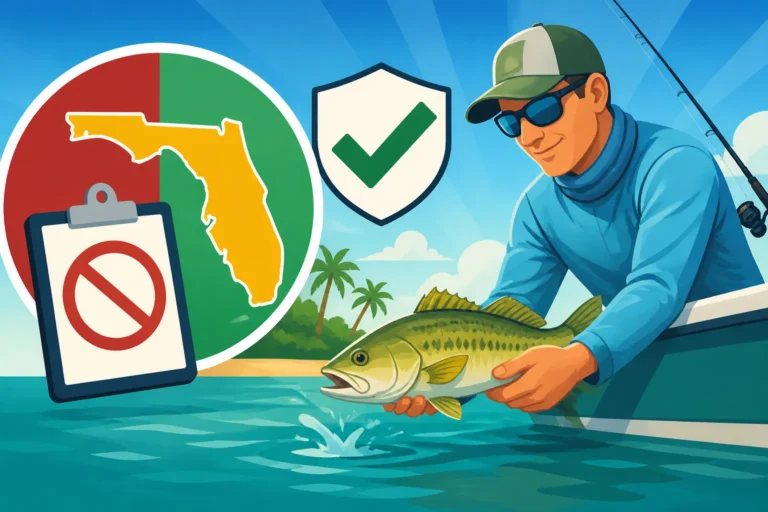
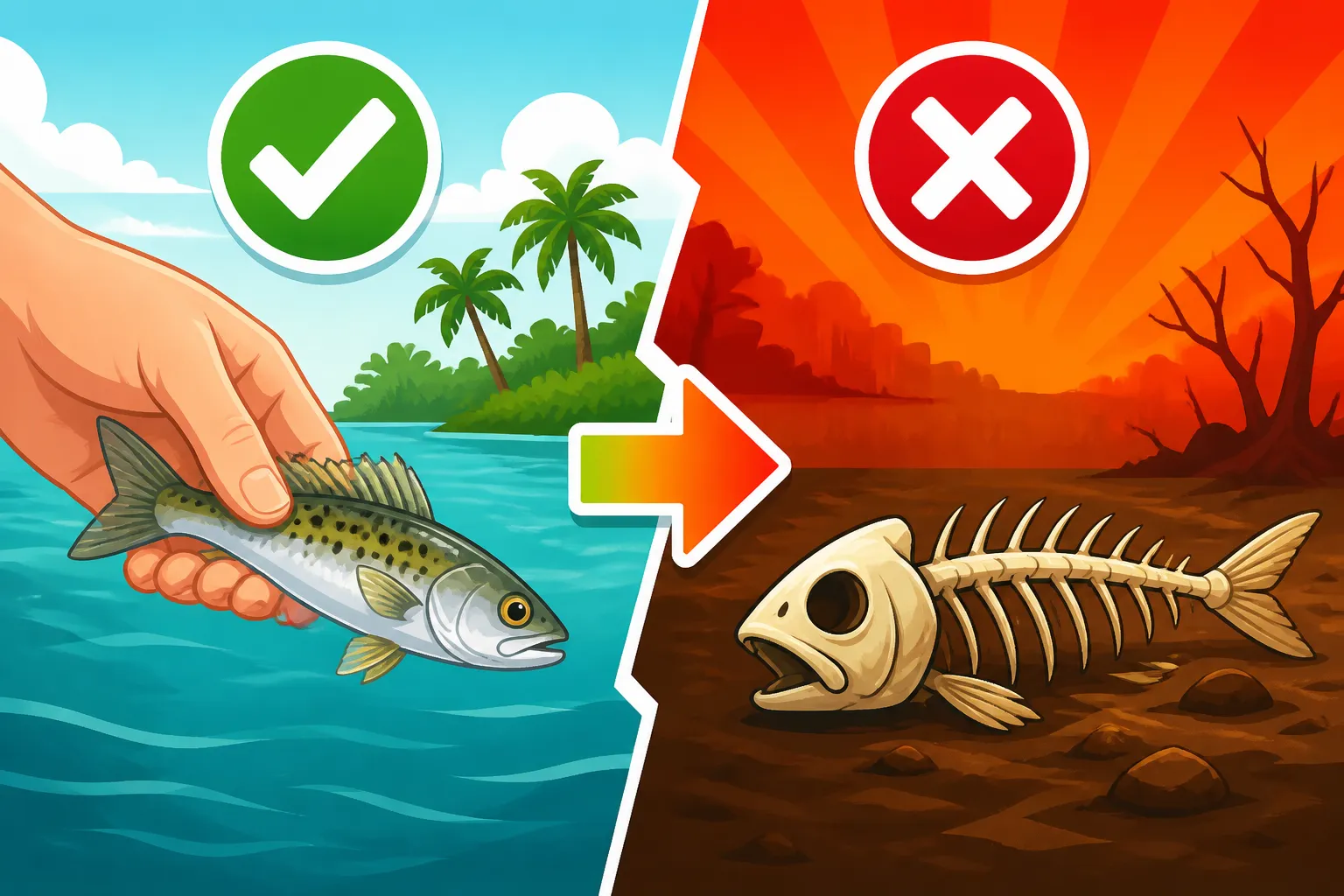
Even with all the preparation in the world, you're going to catch undersized fish. It's just part of fishing! What matters then is how you handle them. Proper catch and release techniques are crucial for the survival of those fish so they can grow up and reproduce.
- Minimize Handling Time: The less time a fish is out of the water, the better. Have your measuring device and dehooking tools ready before you even reel in the fish.
- Wet Hands: Always wet your hands before touching a fish. Dry hands can remove the protective slime coat, making the fish more susceptible to disease.
- Support the Fish: If you need to handle it for a quick measurement, support its body horizontally, especially heavier fish. Avoid holding them vertically by the jaw or tail, as this can damage their internal organs and spine.
- Use Dehookers: Learn how to use a dehooker to quickly remove hooks. If the fish is deeply hooked, especially in the gills or throat, it might be better to cut the line as close to the hook as possible rather than tearing vital tissues trying to remove it.
- Revive the Fish: For exhausted fish, especially after a tough fight, gently hold them in the water, facing into the current, until they regain their strength and can swim away on their own. This is particularly important for species like snook. You can learn more about Catch and Release Best Practices for Snook and How to Handle a Redfish for Release in our detailed guides.
Being prepared with knowledge and tools means you can enjoy your time on the water, contribute to conservation, and avoid any unwanted encounters with law enforcement. You can stock up on your essential gear, from rulers to dehookers, on Amazon before your next trip.
Disclaimer
The information provided in this guide is for general informational purposes only and does not constitute legal advice. Fishing regulations in Florida are subject to change, and it is the angler's responsibility to always consult the most current Florida Fish and Wildlife Conservation Commission (FWC) regulations before fishing. Always refer to official FWC sources for the definitive and up-to-date rules.