Best Spots on the Suwannee River for Catfish
Many anglers find themselves drawn to the legendary Suwannee River, but trying to pinpoint the best spots to consistently reel in catfish can feel like searching for a needle in a haystack. This mighty river, with its diverse habitats and currents, presents both incredible opportunities and unique challenges for those looking to land a big whiskered catch. This comprehensive guide will navigate you through the prime catfishing locations, effective techniques, and crucial tips to make your Suwannee River catfishing adventure a resounding success.
Understanding the Suwannee River's Catfish Haven
The Suwannee River is truly a gem in Florida's freshwater fishing crown, offering a rich environment for a variety of catfish species. It flows approximately 246 miles from the Okefenokee Swamp in Georgia, winding its way through North Florida before emptying into the Gulf of Mexico. This journey creates incredibly diverse ecosystems, from dark, tannic waters upstream to clearer, spring-fed sections, and finally to brackish estuarine zones. Understanding these changes is key to unlocking its catfishing potential.
River Characteristics and Catfish Habitat
The Suwannee is not a uniform river; its character changes significantly as it progresses. The upper reaches are often narrower, darker, and more swampy, influenced heavily by the Okefenokee. Here, you'll find plenty of submerged logs, fallen trees, and deep pockets—perfect ambush points for channel catfish and flatheads. The tannin-stained water, rich in organic matter, provides ample food sources and excellent cover. The river's natural flow and numerous bends create a dynamic environment where catfish can thrive, hiding from predators and waiting for prey to come to them.
As you move downstream, especially through areas like the Big Bend region, the river widens, the water clears up due to numerous freshwater springs feeding into it, and the bottom composition shifts to limestone and sand. These middle sections, with their clearer water and rockier structure, can hold larger blue catfish, which often prefer deeper holes and stronger currents. The cool, oxygenated water from the springs creates ideal conditions, especially during warmer months when other parts of the river might get too warm. These deeper runs and spring-fed pockets are where many anglers focus their efforts for trophy-sized blues.
Further downstream, as the river approaches the Gulf, it becomes tidal and brackish. While still home to freshwater catfish, you might also encounter bullheads that tolerate the saltier water. The blending of fresh and saltwater creates unique ecological niches where catfish adapt to the changing salinity. The tidal currents here bring in a steady supply of food, making the lower Suwannee a productive area, particularly around creek mouths and oyster bars that line the river's edges. Knowing these changes helps you predict where different species will congregate and how their feeding patterns might shift.
Types of Catfish You'll Find
The Suwannee River is home to several popular catfish species, each with its own preferences and fighting style. Being able to identify them and understand their habits will greatly improve your targeting strategy.
- Channel Catfish: These are perhaps the most widespread and commonly caught catfish in the Suwannee. They're identifiable by their slender bodies, deeply forked tails, and often spotted appearance when young, though older fish may lose their spots. Channels thrive in moderate currents and can be found throughout the river, especially in deeper pools, near fallen timber, and around tributary mouths. They're opportunistic feeders, readily taking a variety of baits. They're excellent eating and put up a respectable fight, making them a favorite for many anglers.
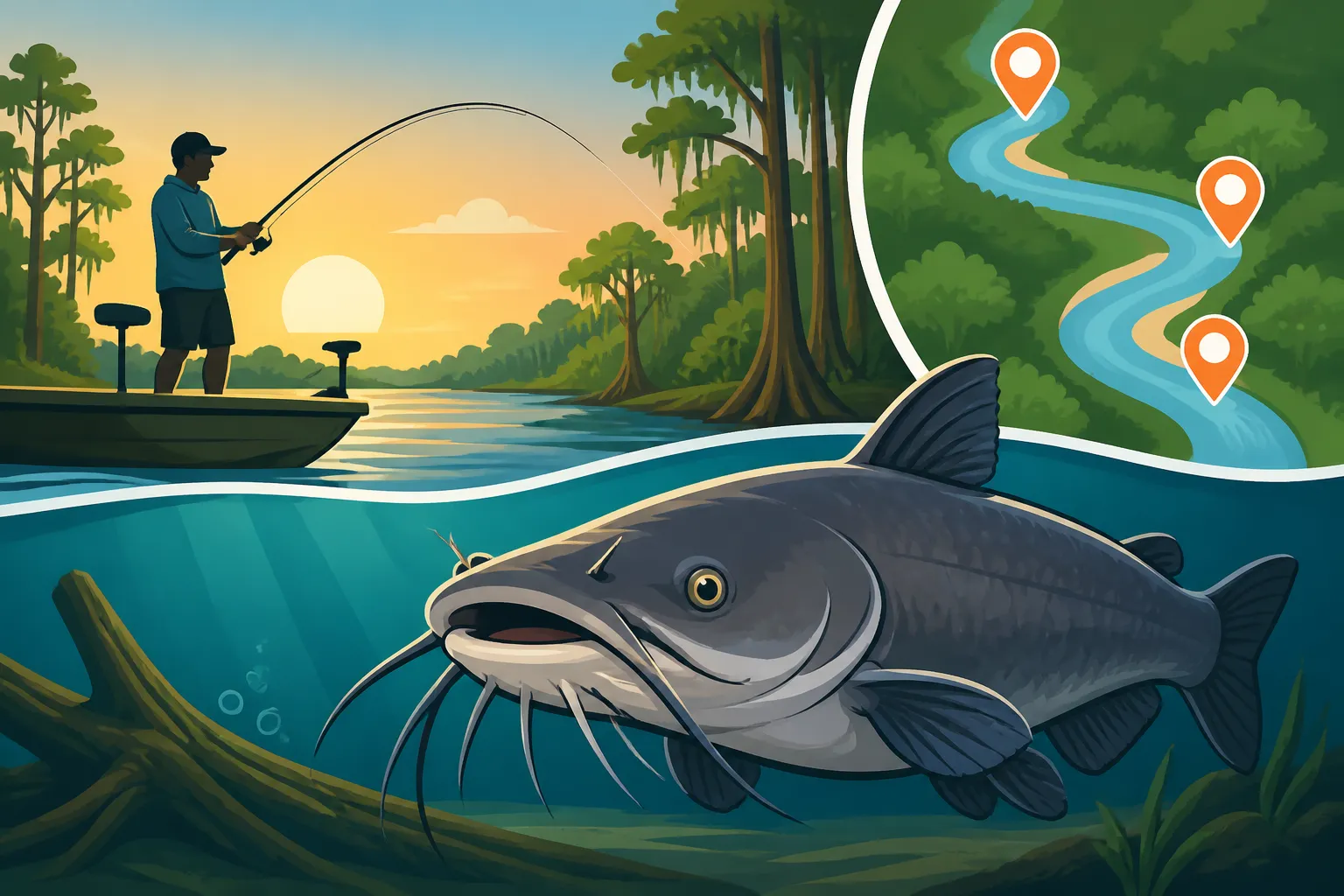
- Blue Catfish: Known for their sheer size and power, blue catfish are a prized catch. They have a more pronounced hump on their back, a deeply forked tail, and are typically silvery-blue to gray in color. Blues prefer larger rivers, deeper channels, and strong currents, making the middle and lower Suwannee ideal for targeting them. They are often found in significant concentrations in the deeper holes and bends where the current brings food to them. The Suwannee River has a reputation for producing some truly massive blue catfish, giving anglers a real thrill. They are strong fighters and can grow to well over 50 pounds in these waters.
- Flathead Catfish: These unique catfish have a flattened head (hence the name), small eyes, and a square or slightly rounded tail, distinguishing them from their fork-tailed cousins. Flatheads are solitary ambush predators that prefer slower, deeper pools with plenty of cover, like submerged logs, rootwads, and undercut banks. They primarily feed on live fish, making them a challenging and rewarding target for anglers using live bait. They can grow to impressive sizes and are often considered one of the best-eating freshwater fish due to their firm, white flesh. You'll typically find them hiding in dense cover, waiting to strike unsuspecting baitfish.
- Bullhead Catfish (Brown, Yellow, Black): While smaller than channels, blues, and flatheads, bullheads are abundant in the Suwannee, particularly in the slower-moving backwaters, oxbows, and tributary creeks. They have rounded tails and are often darker in color, varying from olive to black. They're less sought after by sport anglers but are still a fun catch for a casual day of fishing, especially for younger anglers or those looking for consistent action. They'll readily take a variety of baits and are quite hardy, making them an accessible target for beginners.
Key Catfishing Hotspots Along the Suwannee River
Knowing which species frequent which sections of the river is only half the battle; the real trick is knowing where to drop your line. The Suwannee River offers countless spots, but some consistently produce better results for catfish anglers due to ideal habitat and food availability.
Upper Suwannee River: From the Okefenokee to Suwannee River State Park
The upper stretch of the Suwannee, influenced heavily by its origin in the Okefenokee Swamp, is characterized by dark, tannin-stained waters, dense cypress and tupelo forests, and numerous logjams. This environment is fantastic for channel catfish and flatheads, particularly during cooler months when they are more active.
- Areas near Fargo, Georgia, and Stephen Foster Folk Culture Center State Park: Just south of the Georgia border, the river here is narrower and intimate. Focus on deep bends, submerged timber, and the mouths of smaller creeks that feed into the main river. These areas collect debris and create current breaks where catfish love to hide and ambush prey. The numerous logjams provide excellent cover and ambush points for flatheads, which prefer to sit and wait for their prey. Using cut bait or live shiners fished on the bottom can be very effective in these tannin-stained waters, as the scent trail travels well. This stretch is less pressured than some lower areas and can offer a more secluded fishing experience, perfect for a peaceful day on the water.
- Around Suwannee River State Park: The park itself offers excellent bank access and boat ramps, making it a convenient entry point. Look for deeper holes downstream from rapids or shoals, as these natural features create turbulence that disorients baitfish, making them easy pickings for catfish. The confluence of the Withlacoochee River and the Suwannee near the park is another prime location, as the merging currents create eddies and depth changes that attract fish. These eddies are often packed with bait, drawing in hungry channel and flathead catfish. Local anglers often report good success with both channel and flathead catfish in this vicinity, particularly by targeting the deep water near the limestone bluffs that are characteristic of this area.
Middle Suwannee River: The Limestone Belt and Springs
As the Suwannee flows further south, it enters Florida's limestone belt, which contributes to clearer water and provides unique habitats. This is where you start seeing significant numbers of large blue catfish, drawn by the deeper, cooler water.
- Branford and Surrounding Springs: Branford is a well-known hub for Suwannee River fishing, largely due to the many springs like Branford Spring, Little River Spring, and Peacock Spring that feed into the river. These springs not only introduce clear, cool water but also create distinct current lines and often deep, scoured-out holes where catfish stack up. The convergence of different water temperatures and currents is a magnet for baitfish, and consequently, for predatory catfish. Fishing the edges of these spring runs and the deeper channels around boat ramps and bridges (like the one in Branford) can yield impressive blue catfish. Many anglers book guides through platforms like FishingBooker to explore these exact spots with local expertise, ensuring they hit the most productive areas.
- Rock Bluff and Fanning Springs Area: Further downstream, around Rock Bluff and near Fanning Springs State Park, the river maintains its depth and offers similar opportunities. The numerous caves and crevices in the limestone provide excellent cover for catfish, particularly flatheads and large blue catfish. Focus on areas with significant structural changes, such as sharp bends, drop-offs, and deep eddies. Again, bridges spanning the river in these areas, like the US 19/98 bridge near Fanning Springs, often have deep pilings that serve as prime catfish habitat. The currents around these structures are natural feeding lanes, channeling baitfish directly to waiting catfish. The deep, clear holes scoured by the current are ideal for bottom fishing with heavy cut bait.
Lower Suwannee River: Estuary and Salt-to-Fresh Transition
The lowest section of the Suwannee River, leading into the Gulf of Mexico, becomes tidal and increasingly brackish. While saltwater species become more prevalent here, freshwater catfish still thrive, especially in the areas where the salt and fresh water mix, creating a rich feeding ground.
- Suwannee Town and the Delta: The small community of Suwannee, right at the river's mouth, is a fantastic staging point for fishing the lower river and its extensive delta. In this region, you’ll find channel catfish and blue catfish that tolerate the varying salinity. Focus on creek mouths, deeper channels, and oyster bars in the main river and its larger tributaries like the East River and Salt Creek. The tidal flow here concentrates baitfish, creating excellent feeding opportunities. Anglers often find success by targeting the transition zones, where the freshwater meets the brackish, especially during incoming or outgoing tides. This area also sees a lot of commercial crabbing, indicating a rich ecosystem that supports large catfish.
- Cedar Key Area Tributaries: While Cedar Key is famous for its saltwater fishing, the freshwater tributaries that eventually flow into the Gulf near it, such as the Waccasassa River and the Steinhatchee River, also hold good populations of catfish, particularly in their upper freshwater sections. These rivers, though separate from the main Suwannee, share similar characteristics of dark water and dense cover in their freshwater stretches, making them worthwhile explorations if you're in the region. Always check local regulations, which can differ slightly in these smaller river systems, as detailed in the Florida Fishing Regulations and Bag Limits guide. These smaller rivers provide excellent opportunities for quieter, more secluded catfishing.
Here's a quick reference table for prime Suwannee River catfishing:
| River Section | Primary Catfish Species | Typical Water Characteristics | Best Fishing Structures/Spots |
|---|---|---|---|
| Upper Suwannee | Channel, Flathead | Tannic, dark, swampy | Logjams, deep bends, creek mouths, undercut banks |
| Middle Suwannee | Blue, Channel, Flathead | Clearer (spring-fed), limestone bottom | Deep holes, spring mouths, bridge pilings, rock bluffs |
| Lower Suwannee | Channel, Blue, Bullhead | Brackish, tidal, estuarine | Delta channels, creek mouths, oyster bars, transition zones |
Best Techniques and Baits for Suwannee Catfish
Catching catfish on the Suwannee River is incredibly rewarding, but it often requires a blend of the right bait, proper technique, and a bit of patience. Understanding what works best for different species and conditions can significantly increase your success and help you land that trophy catfish you're dreaming of.
Preferred Baits for Different Catfish Species
Catfish are opportunistic feeders, but they do have preferences, especially when targeting specific species. Using the right bait can make all the difference.
- Cut Bait: This is a universal catfish killer on the Suwannee. Freshly cut pieces of oily fish like mullet, shad, perch, or even bluegill are irresistible to all catfish species, especially blue and channel cats. The scent trail it puts out in the current is a powerful attractant that catfish can detect from a considerable distance. Many anglers will catch baitfish directly from the river using a cast net, ensuring the freshest possible offering. Make sure your cut bait pieces are appropriately sized for the target fish – smaller chunks for channels, larger fillets or halves for trophy blues and flatheads. Using local bait is often the most effective strategy, as it's what the catfish are naturally feeding on.
- Live Bait: For flathead catfish, live bait is almost always the go-to. Live bream (bluegill), shiners, or small perch, fished near cover, are deadly. Flatheads are true predators that prefer to actively hunt their food, and a lively baitfish is exactly what they're looking for. Rig your live bait to allow it to swim naturally, but keep it within striking distance of the cover where flatheads lurk. While flatheads prefer live bait, large blue catfish will also readily hit a lively shiner or small bream, especially if it's struggling in the current. Ensure your live bait is healthy and active to maximize its appeal. For more tips on effective bait choices, consider guides like Best Live Bait for Florida Inshore Fishing, which often have crossover advice for freshwater species.
- Worms and Nightcrawlers: While often seen as a panfish bait, a big wad of nightcrawlers can be incredibly effective for channel catfish and bullheads, especially in the upper river and slower-moving sections. The constant wriggling and scent draw them in, making it a simple yet potent option. It's a fantastic choice for a more relaxed, family-friendly fishing session, and you might also pick up some bonus bream or bass. These baits are readily available and easy to use, making them perfect for beginner anglers.
- Prepared Baits (Stink Baits/Punch Baits): These commercially prepared baits are designed to appeal to the strong sense of smell of channel and bullhead catfish. Brands like Catfish Charlie or Sonny's Super Sticky are popular for a reason. They are especially effective in warmer water when catfish are very active and their metabolism is high. While not typically as effective for the larger blue or flathead catfish, they can lead to consistent action for smaller channels, providing plenty of bites throughout the day.
- Chicken Liver: A classic catfish bait, chicken liver is messy but highly effective for channel and bullhead catfish. Its strong scent and soft texture make it appealing. Use a bait holder hook or wrap it with a small piece of nylon mesh or elastic thread to keep it on the hook in the current, as it can easily wash off. Many anglers swear by its effectiveness, especially when targeting channel cats in moderate currents.
Effective Fishing Techniques
Matching your technique to the river conditions and your target species is crucial for a productive day on the water. The Suwannee's varied environment allows for several effective approaches.
- Bottom Fishing: This is the most common and often most effective method for Suwannee River catfish. A simple Carolina rig or a three-way swivel rig with a pyramid or egg sinker is standard. The key is to use enough weight to hold your bait on the bottom without it rolling in the current, but not so much that you can't feel a bite. For heavier current areas, a slightly heavier sinker will be necessary to keep your bait in the strike zone. Pay attention to structure—catfish love to hug the bottom near ledges, drop-offs, and woody debris, where they can ambush prey with ease.
- Drift Fishing: When targeting blue catfish in open, deeper sections of the middle and lower river, drift fishing can be very productive. Allow your boat to drift slowly with the current, dragging your bait along the bottom. This covers more water and presents your bait to a wider range of potential feeding catfish. Use a sensitive rod to detect subtle bites, as catfish can sometimes be very gentle when first picking up a bait. When drift fishing with a guide, they often employ specific patterns or routes to maximize coverage, a service often detailed when booking through platforms like FishingBooker, which connects you with local experts.
- Still Fishing from Shore or Anchored Boat: For targeting flatheads in their preferred ambush spots or channel cats in specific holes, anchoring or fishing from shore is effective. Cast your bait to likely cover spots like logjams, undercut banks, or deep scour holes. Be patient, as flatheads, in particular, might take a while to decide to strike, but when they do, it's usually with force. This technique is also excellent for families or those who prefer a more relaxed fishing experience, allowing you to enjoy the scenery while waiting for a bite. Remember to keep an eye out for potential hazards like swift currents if you're fishing from a smaller vessel, especially on days when the Best Time of Day to Fish in Florida might be influenced by strong tides or heavy river flow.
Essential Tips for a Successful Catfishing Trip
A successful day on the Suwannee River chasing catfish isn't just about bait and technique; it also involves preparation, timing, and an understanding of the river's unique environment. Being well-prepared can significantly enhance your experience and increase your chances of a great catch.
Timing Your Trip for Optimal Success
Like any fishing, timing is everything. Catfish behavior can be influenced by weather, water levels, and even time of day, so planning your trip around these factors is crucial.
- Seasonality: While you can catch catfish year-round on the Suwannee, certain times are better for specific species. Spring and fall are generally considered prime catfishing seasons. In spring, as water temperatures rise, catfish become more active and start moving towards spawning grounds, making them easier to locate and more aggressive feeders. Fall brings cooler temperatures, which often triggers a feeding frenzy as they bulk up for winter, making them very eager to strike. During the hot Florida summers, catfish activity often peaks during cooler morning or evening hours, or even at night, when temperatures are more comfortable for them. For specific seasonal patterns and broader context, check out the comprehensive Florida Fishing Seasons Explained guide.
- Water Levels and Current: Pay close attention to river conditions. After heavy rains, the river can rise and become muddier, which can actually be good for catfish, as the increased flow dislodges food from the banks and the murkiness provides cover. However, excessively high or fast water can make fishing difficult and even dangerous. Stable or slowly falling water levels after a high-water event are often ideal, as fish are more predictable and concentrated. Strong currents tend to position catfish behind cover, so target eddies and slack water pockets where they can rest and ambush prey.
- Time of Day: Many anglers swear by night fishing for large catfish, especially flatheads and big blues. Catfish are primarily nocturnal feeders, using their sensitive whiskers to locate food in the dark. If night fishing isn't your thing, the low light conditions of dawn and dusk are also incredibly productive, as these are natural feeding times for many fish. During the brighter parts of the day, focus on deeper holes, shaded areas, or heavy cover where catfish retreat from the sun and bright light.
Navigating the River and Safety Considerations
The Suwannee is a wild and beautiful river, but it demands respect, especially when navigating by boat. Safety should always be your top priority.
- Navigation Challenges: The river can be shallow in places, especially during low water periods, and is notorious for submerged logs and limestone rock formations. If you're using a boat, a shallow-draft vessel is often preferred, and a good map or GPS with current river charts is essential. Exercise extreme caution, especially if you're new to the river, as hidden obstacles can cause significant damage. Many of the best spots are only accessible by boat, so familiarity with your vessel and the river is key. If you plan to use a kayak or canoe, be aware of the currents and potential hazards, and always portage around rapids if you're unsure.
- Boat Ramps and Access Points: There are numerous public boat ramps along the Suwannee, from Fargo, GA, down to the Gulf. Popular access points include Stephen Foster Folk Culture Center State Park, Branford, Fanning Springs State Park, and Suwannee Town. Each offers unique access to different river sections, so choose your launch point based on the area you intend to fish. Always ensure you have the necessary Florida Freshwater Fishing License Rules before heading out, and be aware of any specific requirements for children under the Florida Fishing License Age Requirements.
- Safety First: Always wear a life jacket, especially if boating alone or in swift currents. Tell someone your float plan (where you're going and when you expect to return). Carry plenty of water, sunscreen, and bug spray, as mosquitos and gnats can be fierce, particularly in the warmer months. Be mindful of wildlife; alligators are present in the Suwannee River, so maintain a respectful distance and never feed them. For a broader understanding of general safety and what to pack, checking out a guide like What to Bring on a Florida Fishing Charter can provide useful insights even for a solo trip, covering essentials like first-aid kits and emergency communication.
Gear and Tackle Recommendations
Having the right gear makes a huge difference, especially when a monster blue or flathead takes your bait. You don't want to be underprepared for a fight.
- Rods and Reels: For general catfishing, a medium-heavy to heavy action rod, 6.5 to 8 feet in length, paired with a sturdy baitcasting or spinning reel, is ideal. Your reel should have a smooth drag system and enough line capacity for strong runs. Brands like Penn, Ugly Stik, and Shimano offer excellent options for durability and performance in freshwater environments. For bigger flatheads and blues, consider a heavier setup with a 3000-5000 series spinning reel or a robust baitcaster spooled with 20-50 lb monofilament or braided line. The heavier gear provides the backbone needed to pull large fish out of heavy cover.
- Line: Monofilament is popular for its stretch, which can absorb sudden shocks from a hard-fighting catfish, and its abrasion resistance. However, braided line offers superior strength-to-diameter ratio and sensitivity, which can be critical for feeling subtle bites in current or at long distances. A 20-30 lb test mono or 30-50 lb braid is a good starting point for most Suwannee River catfishing, depending on the size of fish you're targeting and the amount of cover present.
- Terminal Tackle:
- Hooks: Circle hooks are highly recommended for catfishing, especially if you plan to catch and release some fish, as they greatly reduce gut-hooking. Sizes from 4/0 to 8/0 are common, depending on your bait and target species.
- Sinkers: Pyramid or egg sinkers ranging from 1/2 oz to 3 oz are standard. The weight needed will depend on the current; in strong currents, you might need even heavier to keep your bait stationary.
- Swivels and Leaders: Use strong barrel swivels to prevent line twist and a heavy monofilament or fluorocarbon leader (30-80 lb test) to resist abrasion from catfish teeth or rough river bottom.
- Other Essentials: A sturdy landing net or a set of lip grippers is crucial for safely handling large catfish, especially those with sharp fins. A cooler with ice for keeping your catch fresh (if you plan to keep any within legal limits), and pliers for hook removal are also must-haves. Many anglers also carry a strong headlamp for night fishing, along with a waterproof bag for electronics. If you're looking for guidance or simply want to maximize your chances, considering a local guide found on services like FishingBooker can provide invaluable expertise, often including all the necessary gear and local insights into Best Fishing Spots in Florida.
Catfishing on the Suwannee River offers an incredible experience, blending the tranquility of nature with the excitement of a hard-fighting fish. By understanding the river's nuances, selecting the right spots, and employing effective techniques, you're well on your way to a memorable adventure on one of Florida's most iconic waterways. Don't forget that if you're fishing from a boat, you might consider How to Chum for Fish From a Boat to attract more catfish to your area.
Disclaimer
Fishing conditions and regulations in Florida can change frequently. Always consult the latest rules and advisories from the Florida Fish and Wildlife Conservation Commission (FWC) before planning any fishing trip. This guide is for informational purposes only and does not constitute official legal or safety advice.