Best Spots at Sebastian Inlet for Snook
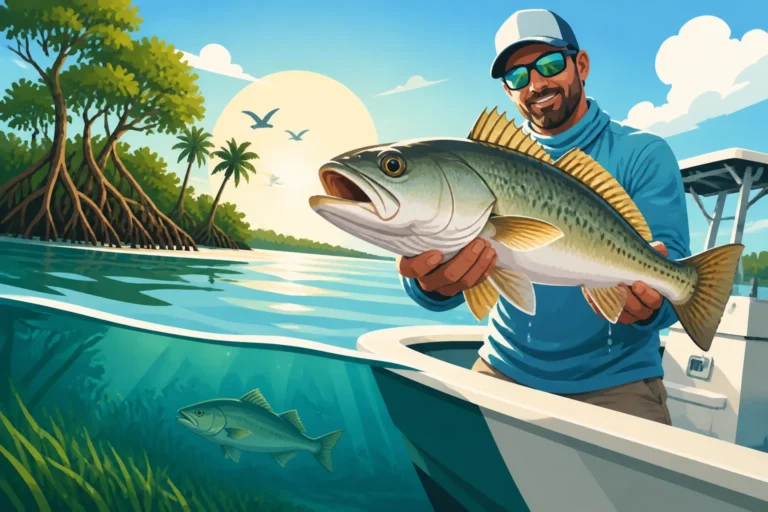
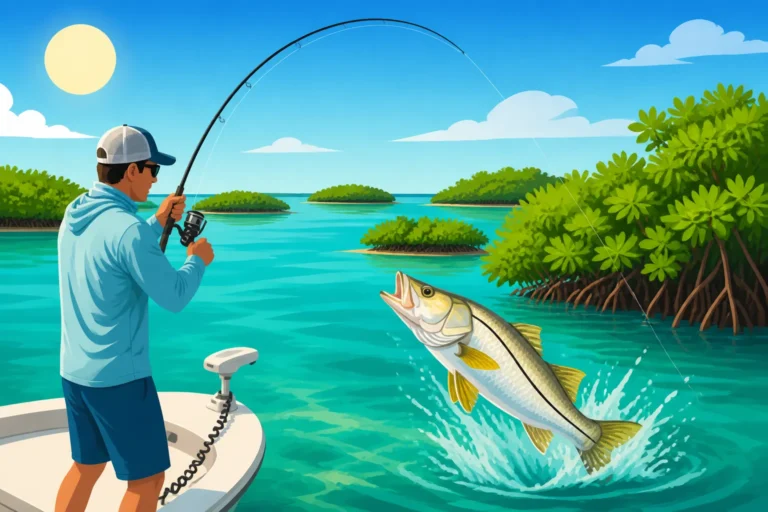
Trying to pin down the best snook spots at Sebastian Inlet can feel like a lifelong quest, even for seasoned anglers. This iconic Florida fishing destination is legendary for its snook, but their elusive nature and the inlet's complex currents mean you can't just throw a line in anywhere and expect results. This guide is dedicated to unraveling the mysteries of Sebastian Inlet, providing you with a deep dive into the most productive areas and tactics to help you consistently find and catch those coveted linesiders.
Why Sebastian Inlet is a Snook Angler's Paradise
Sebastian Inlet isn't just a good spot for snook; it's often considered one of the best in the entire state. There's a confluence of factors here that create an almost perfect habitat for these predatory fish, making it a magnet for both the snook themselves and the dedicated anglers who pursue them. It’s a dynamic, ever-changing environment, and understanding its unique characteristics is the first step to success.
The Unique Geography and Habitat for Snook
Imagine a narrow cut that connects the vast Indian River Lagoon to the Atlantic Ocean. That's Sebastian Inlet. This natural gateway means there's a constant, powerful exchange of water, bringing in fresh ocean nutrients and flushing out brackish lagoon water. This constant flow creates a diverse environment that snook absolutely thrive in. You've got deep channels, rocky jetties, expansive grass flats just inside the mouth, and sandy beaches outside—all within a relatively small area. Snook are highly adaptable, capable of moving between freshwater and saltwater, but they particularly love the brackish water and high-salinity zones found around inlets. The varied bottom structure—from sand to oyster beds to rock piles—provides ample ambush points and shelter from strong currents, making it an ideal hunting ground for them. This unique blending of habitats is what makes Sebastian Inlet truly special for snook fishing.
Prime Feeding Opportunities and Abundant Baitfish
The powerful currents flowing through Sebastian Inlet act like a natural conveyor belt, delivering an endless buffet of baitfish right to the snook. From finger mullet and pilchards to threadfin herring and various shrimp species, the bait presence here is often astounding. Snook are ambush predators, and they take full advantage of these currents, positioning themselves in eddies and current breaks where they can dart out and snatch unsuspecting prey. When the tides are strong, especially on an outgoing tide, massive schools of baitfish are pulled from the Indian River Lagoon and through the narrow cut, creating a feeding frenzy. This is why understanding the tides and the movement of bait is paramount at Sebastian Inlet. Without this constant influx of food, the snook wouldn't congregate here in such impressive numbers. Anglers often spend considerable time learning how to Cast Net for Live Bait to capitalize on these feeding opportunities.
Top Productive Snook Hotspots Within Sebastian Inlet
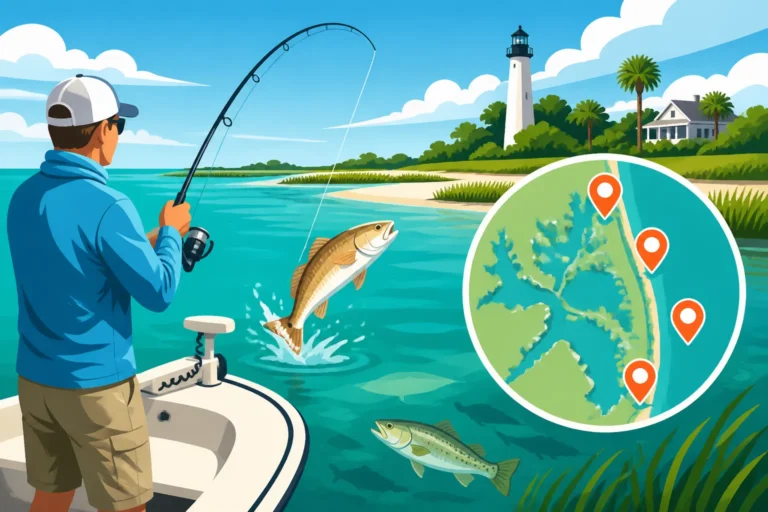
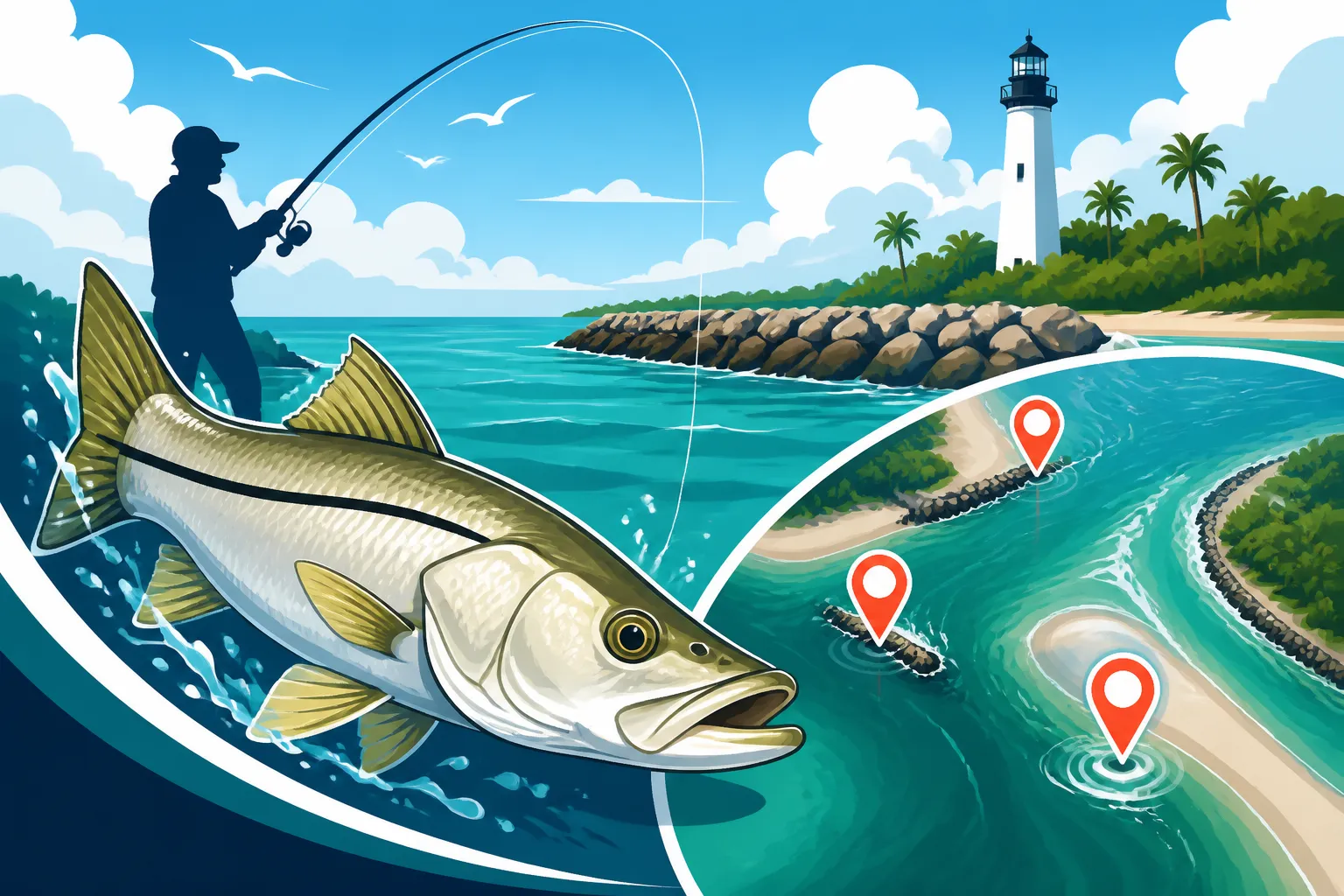
Sebastian Inlet offers a variety of key locations that consistently hold snook. Each spot has its own nuances regarding structure, current, and optimal fishing conditions. Knowing these specific areas and how to approach them can dramatically increase your chances of hooking into a trophy snook.
The North and South Jetties: Structure and Current
The jetties at Sebastian Inlet are legendary, drawing anglers from all over. These long, rocky structures extend out into the ocean on both the north and south sides of the inlet, creating incredible habitat for snook. The rocks provide shelter, ambush points, and attract baitfish seeking refuge from the open water.
On an outgoing tide, the current rips past these jetties, sweeping baitfish out of the lagoon and creating strong current seams and eddies along the rocks. Snook will often position themselves on the down-current side of the rocks, waiting to ambush anything that gets swept past. Anglers often cast live baits like pilchards, greenies, or even croakers, letting the current carry them naturally along the jetty line. Artificial lures like soft plastics, bucktail jigs, or suspending twitchbaits can also be highly effective when retrieved slowly along the bottom or jigged in the current breaks.
The north jetty tends to be more accessible for wading and shore fishing, while the south jetty often requires a bit more effort or a boat to fish effectively in certain areas. Fishing the jetty tips, where the current is strongest and the water deepest, can yield some of the largest snook, especially during tidal changes when bait is flushed through. Just be mindful of the sharp rocks and powerful currents; safety is always paramount.
Under the Sebastian Inlet Bridge: Light and Shelter
The towering Sebastian Inlet Bridge is another prime snook holding area, particularly at night or during low light conditions. The bridge pilings create significant underwater structure, providing both shelter from the powerful currents and ambush points for predatory snook. More importantly, the bridge lights illuminate the water at night, attracting clouds of baitfish that, in turn, draw in hungry snook.
Fishing under the bridge requires a different approach. During the day, snook might be deeper in the shadows, relating tightly to the pilings. Live baits dropped vertically or bounced along the bottom near these structures can be very effective. At night, it's all about the light lines. Snook will sit just outside the brightest areas, darting into the light to grab baitfish that are drawn to it. Casting a topwater plug, a suspending jerkbait, or a soft plastic lure across the light line and retrieving it into the darkness can trigger explosive strikes. The challenge here is the strong current that often funnels under the bridge. Heavier jigs or weighted rigs might be necessary to get your bait down to the strike zone. Finding a good spot on the catwalks of the bridge can offer excellent vantage points, but it can also be very crowded, especially during peak season. Remember to check the Florida Snook Season Guide before heading out.
The Tides and Eddies: Mastering Current Breaks
Understanding the tides and how they create current breaks and eddies is perhaps the most critical skill for consistently catching snook at Sebastian Inlet. Snook are inherently lazy, preferring to expend as little energy as possible while still being in a prime position to feed. This means they will almost always be found in areas where they can sit out of the main current, waiting for food to be delivered to them.
An eddy is essentially a swirling pool of relatively calm water formed behind an obstruction, like a jetty rock or a bridge piling, where the main current flows past. Snook love to hang in these eddies, conserving energy while having a direct line of sight to the passing parade of baitfish. On an outgoing tide, eddies form on the ocean side of obstructions as water rushes from the lagoon. On an incoming tide, they form on the lagoon side as ocean water flows in. The key is to cast your bait or lure into the main current upstream from the eddy and let it drift naturally into the calmer water where the snook are waiting. This presentation mimics a stunned or disoriented baitfish, making it an irresistible target. Learning to "read the water" and identify these subtle current breaks will set you apart from other anglers.
Essential Techniques and Tackle for Sebastian Inlet Snook
Successfully targeting snook at Sebastian Inlet isn't just about knowing where they are; it's also about understanding how to present your bait or lure effectively and having the right gear to handle these powerful fish. The strong currents and robust snook here demand specific approaches.
Live Bait vs. Artificial Lures: What Works Best
Both live bait and artificial lures can be incredibly effective for snook at Sebastian Inlet, and often, the choice depends on the conditions and personal preference.
Live Bait: For many, live bait is the ultimate weapon for snook. The natural scent, action, and presentation are often irresistible. Local baitfish like finger mullet, pilchards (greenies), threadfin herring, and even croakers are top choices. Shrimp can also be productive, especially during cooler months or when targeting smaller snook. The trick is to match the hatch – use the baitfish that are present in the inlet at that time.
- Rigging: Live baits are typically fished on a knocker rig or a sliding sinker rig with a circle hook (appropriate for the bait size) or freelined with just a hook if the current allows. For the jetties, a fish-finder rig can keep the bait near the bottom. For under the bridge, a vertical presentation is often best.
- Presentation: Cast your live bait upstream of where you expect the snook to be, letting the current carry it naturally into the strike zone. If the current is too strong, add just enough weight to keep it in the lower water column without anchoring it to the bottom.
Artificial Lures: Don't underestimate the power of artificials, especially for aggressive snook or when bait is scarce. The advantage here is being able to cover more water and elicit reaction strikes.
- Soft Plastics: Paddle tails, jerk shads, and Gulp! shrimp on jig heads (1/4 to 1 oz, depending on current depth) are fantastic. Colors like white, chartreuse, natural pilchard, or dark-back/silver-belly are reliable.
- Hard Baits: Suspending twitchbaits (like MirrOlure MirrOdine or Paul Brown's Original Floating/Sinking Lures) are excellent for working current seams and under lights. Topwater plugs (like Heddon Super Spook Jr. or Skitter Walk) can produce explosive strikes at dawn, dusk, or night.
- Jigs: Bucktail jigs in white, chartreuse, or natural baitfish colors are classics, especially when bounced along the bottom near structure or jigged vertically under the bridge.
- Presentation: For soft plastics and jigs, a slow, steady retrieve with occasional twitches, or a lift-and-drop retrieve, is often key. For twitchbaits, a twitch-pause-twitch cadence is usually effective. For topwaters, a "walk-the-dog" retrieve works wonders. You'll find more details on the best lures for Topwater Lure Fishing for Snook.
Optimal Rods, Reels, and Line for Inlet Snook
Fishing for snook at Sebastian Inlet is not for light tackle. These fish are incredibly powerful, especially in strong currents, and they'll try to break you off on every piece of structure imaginable.
- Rods: A medium-heavy to heavy action spinning rod, typically 7 to 8 feet in length, is ideal. The longer rod provides better casting distance, leverage for fighting big fish, and shock absorption. Look for something with a strong backbone but a sensitive tip.
- Reels: A durable spinning reel in the 4000 to 6000 series size is recommended. It needs a smooth drag system and ample line capacity. Popular brands like Penn, Shimano, and Daiwa offer excellent options that can stand up to the rigors of saltwater fishing. You want a reel that can handle strong runs and the occasional dousing in saltwater.
- Line: Braided line is almost a necessity here due to its strength-to-diameter ratio, sensitivity, and casting distance. Typically, 30 to 50 lb braided line is a good choice. You'll need to tie on a fluorocarbon leader of 30 to 60 lb test, depending on the conditions and the size of the snook you're targeting. The fluorocarbon is nearly invisible in the water and is more abrasion-resistant than mono, which is crucial around the sharp rocks and barnacles. If you're unsure about your setup, checking out the Best Rod and Reel Setup for Florida Inshore Fishing can provide excellent guidance.
Understanding Tides, Moon Phases, and Best Fishing Times
As mentioned, tides are everything at Sebastian Inlet. The general rule of thumb is that snook fishing is best during moving water—either incoming or outgoing. However, local experience often suggests that one tide might be better than the other for specific spots.
- Outgoing Tide: This is often preferred by many anglers, especially for jetty fishing. As the water rushes out of the Indian River Lagoon, it carries a wealth of baitfish, creating prime ambush opportunities for snook positioned in current breaks. The first half of the outgoing tide can be particularly productive.
- Incoming Tide: While sometimes less aggressive than the outgoing, the incoming tide brings in clear, clean ocean water, often cooler in summer and warmer in winter, which can also trigger feeding. Snook will still position themselves in current breaks, but these might be on the opposite side of structures compared to the outgoing tide.
- Slack Tide: This is generally considered the slowest time for snook fishing. With minimal current, baitfish aren't moving as actively, and snook tend to be less aggressive. It's often a good time for a snack or a gear check.
- Moon Phases: Like many saltwater species, snook can be influenced by moon phases. Full and new moons often correlate with stronger tidal currents (spring tides), which can mean more active feeding if you hit the right part of the tide. The days leading up to and immediately following these major moon phases can be particularly productive.
- Best Times: Dawn and dusk are almost universally prime times for snook, regardless of location. These low-light conditions make snook less wary and more likely to feed aggressively. Night fishing, especially under the bridge lights, can also be incredibly productive. Some of the biggest snook are caught after dark.
Navigating Challenges and Maximizing Your Success
Sebastian Inlet is a world-class fishing destination, but with that reputation comes challenges. Being prepared for crowds and understanding the regulations are crucial for a successful and enjoyable trip.
Dealing with Crowds and Fishing Etiquette
Sebastian Inlet can get packed, especially during peak season, weekends, and holidays. Finding a good spot on the jetties or under the bridge often requires getting there early, sometimes before dawn.
- Patience and Respect: The Golden Rule applies here. Be patient, respect other anglers' space, and avoid casting over their lines. A friendly demeanor goes a long way.
- Timing Your Trip: If you can, try to fish on weekdays or during off-peak hours to avoid the biggest crowds. Sometimes, fishing during the middle of the day, when many have retreated from the heat, can offer unexpected solitude and good fishing.
- Boating Etiquette: If you're fishing from a boat, be mindful of shore anglers and other boats. Maintain a safe distance, especially when idling through crowded areas. The Florida Marine Patrol frequently patrols the area, enforcing rules.
Snook Season Regulations and Conservation Efforts
Snook are a highly prized sportfish in Florida, and as such, they are heavily regulated to ensure their conservation. Fishing for snook out of season, or keeping snook outside of the legal slot limit, can result in hefty fines and penalties.
- Season Closures: Florida has specific closed seasons for snook, which vary by region (Atlantic vs. Gulf). Typically, the Atlantic coast (where Sebastian Inlet is located) has closed seasons during winter (December-January) and summer (June-August). Always check the latest Florida Fishing Regulations and Bag Limits from the Florida Fish and Wildlife Conservation Commission (FWC) before you go. This information is critical for responsible angling. You can also specifically look up When Does Florida Snook Season Close?
- Slot Limits: Snook have a strict slot limit, meaning you can only keep fish within a certain size range. This protects both juvenile and large, breeding-size snook. For the Atlantic coast, the slot limit is generally 28 to 32 inches total length. Only one snook per person per day is allowed.
- Snook Permit: If you plan on harvesting a snook, you'll also need a valid Florida saltwater fishing license and a Snook Permit, even if you are exempt from the general license requirement.
- Catch and Release Best Practices: Many anglers practice catch and release for snook, even during open season, to help conserve the species. If you do catch and release, handle the fish carefully, minimize its time out of water, and use appropriate tools like dehookers. Avoid dragging the fish on rocks or sand. Learning proper Catch and Release Best Practices for Snook is vital for their survival. If you're looking to charter a trip with a focus on conservation, platforms like FishingBooker can help you find captains who prioritize sustainable practices and can educate you on local regulations.
Sebastian Inlet Snook Fishing Hotspots and Conditions
To help you visualize and plan your trip, here's a breakdown of the top snook fishing spots within Sebastian Inlet and the general conditions that tend to make them most productive.
| Hotspot | Key Characteristics | Primary Snook Holding Strategy | Optimal Conditions |
|---|---|---|---|
| North and South Jetties | Rocky structure, deep water, strong currents, surf access | Ambush points in current breaks/eddies, near bottom | Strong outgoing or incoming tide, dawn/dusk, artificials or live bait. |
| Under the Inlet Bridge | Bridge pilings, deep shadows, night lights, intense current | Sheltered deep water, light lines at night, ambush points | Night fishing, strong tidal flow (day or night), live bait or suspending lures. |
| Tidal Eddies & Current Seams | Formed behind any obstruction (jetties, pilings, points) | Low-energy zones where snook await passing baitfish | Active moving tides (outgoing often best), matching bait presentation to current. |
| Lagoon Side Flats (just inside inlet) | Shallow grass flats, oyster bars, slower currents | Cruising and feeding in shallower water | High tide (for access), dawn/dusk, sight fishing, topwater or soft plastics. |
Remember, while this table provides a general guide, snook are opportunistic, and their behavior can change based on weather, water temperature, bait presence, and even fishing pressure. Staying flexible and observant is key. Many experienced captains, easily found on platforms like FishingBooker, can help interpret these conditions for you.
Disclaimer
Fishing involves inherent risks, including but not limited to adverse weather conditions, marine life encounters, and potential injury. Always prioritize safety, check local weather forecasts, and adhere to all Florida Fish and Wildlife Conservation Commission (FWC) regulations. The information provided in this guide is for informational purposes only and should not be considered a substitute for personal research, professional advice, or adherence to official regulations. Ensure you have the proper Florida Fishing License Guide and any required permits before casting a line.