Florida Offshore Fishing Techniques
There's nothing quite like the allure of Florida's offshore waters, but let's be real, the sheer vastness and ever-changing conditions can feel incredibly daunting. It’s easy to get overwhelmed trying to figure out where to go, what to use, and how to actually catch those elusive big fish. This comprehensive guide is here to cut through the confusion, offering practical, in-depth insights into the most effective offshore fishing techniques Florida has to offer, so you can transform those frustrating days into thrilling successes.
Understanding Florida's Offshore Environment
Stepping out onto Florida’s deep blue waters is an experience unlike any other, but to truly conquer offshore fishing, you need to first understand the environment you're operating in. It's not just a big, open ocean; it's a complex ecosystem with its own rules, boundaries, and hidden treasures. Knowing these fundamentals is the foundation for any successful offshore trip, turning guesswork into educated strategy.
Defining State Versus Federal Waters
One of the most crucial distinctions to grasp when heading offshore in Florida is the difference between state and federal waters. This isn't just bureaucratic jargon; it directly impacts the regulations you must follow, the species you can target, and the bag limits you're allowed. Florida's state waters generally extend 3 nautical miles into the Atlantic Ocean and 9 nautical miles into the Gulf of Mexico. Beyond these lines, you enter federal waters, where different rules, set by federal agencies like NOAA Fisheries and the Gulf of Mexico Fishery Management Council, often apply. It's a common frustration for anglers, especially those new to the game, to realize they've accidentally crossed into federal territory only to find that the fish they just caught is out of season or undersized for that zone.
For instance, species like Red Snapper have notoriously strict seasons and size limits that can vary wildly between state and federal waters, and even between the Gulf and Atlantic. Understanding these nuances is absolutely essential to avoid hefty fines or losing your catch. Always check the latest regulations for both state and federal waters before you leave the dock, paying close attention to your planned fishing grounds. Apps like the FWC Fish Rules app can be a lifesaver for quickly determining what's legal where you are. Remember, ignorance of the law is no excuse, and wardens patrol these waters regularly. If you want to learn more about the specifics, our guide on Florida Fishing Regulations and Bag Limits is a great resource.
Identifying Key Offshore Structures
Fish don't just swim aimlessly in the vast ocean; they congregate around structure. For offshore anglers, identifying and understanding these key structures is like finding a treasure map. These could be natural formations like coral reefs, ledges, and rocky outcroppings, or artificial structures such as shipwrecks, military debris, and even abandoned oil rigs. These structures provide shelter, food sources, and navigational points for baitfish, which in turn attract larger predatory species like Grouper, Snapper, Amberjack, and even pelagics like King Mackerel. Without a clear understanding of these underwater features, you're essentially just drifting in the middle of nowhere, hoping for a bite.
Learning to read your chartplotter and understand bathymetric maps to locate these structures is a skill every serious offshore angler needs to develop. Look for abrupt changes in depth, contour lines bunching together, or marked wrecks and reefs. Many seasoned captains guard their most productive numbers like state secrets, but plenty of public numbers for artificial reefs and wrecks are available online or through local bait shops. The Gulf of Mexico, for example, is dotted with thousands of these structures, providing endless opportunities for bottom fishing. Don't underestimate the power of a good fish finder to not only locate these structures but also to identify bait schools and target fish hovering around them. Spending time researching these spots before you even leave the dock will dramatically increase your chances of success.
Weather and Ocean Conditions
Ignoring weather and ocean conditions when planning an offshore trip is a rookie mistake that can quickly turn a dream day into a nightmare. Florida's weather can be notoriously fickle, with calm mornings giving way to afternoon thunderstorms and rapidly building seas. Beyond just safety, understanding these conditions is critical for fishing success. Water temperature, current, wind direction, and wave height all play significant roles in how fish behave and where they might be found. A strong current might mean you need heavier lead to get your bait to the bottom, while a specific wind direction could create advantageous drift patterns for trolling.
Before every trip, I make it a point to check multiple weather forecasts – not just for wind and rain, but also for sea state, including wave height and period. NOAA marine forecasts are your best friend here. Also, pay attention to water temperature breaks, which often indicate convergences where baitfish and predators gather. Even subtle changes in water color or clarity can give clues about nutrient upwellings or the presence of specific bait. It’s important to remember that offshore conditions can change rapidly, so continuous monitoring of the weather while you're out there, using your VHF radio or satellite weather services, is paramount. Never push your luck, and always be prepared to head back to shore if the weather turns sour.
Essential Gear for Offshore Success
When you're miles offshore, battling a powerful fish, the last thing you want is a gear failure. Offshore fishing demands robust, reliable equipment that can withstand the harsh saltwater environment and the immense strain of fighting large, strong species. Skimping on quality here isn't just a cost-saving measure; it's a recipe for disappointment and lost fish. Investing in the right tools for the job is paramount to ensuring your safety and maximizing your chances of a successful catch.
Rods, Reels, and Line Selection
Choosing the right rod, reel, and line combination is critical for different offshore techniques. For heavy-duty bottom fishing for species like Grouper and Snapper, you'll need sturdy conventional reels (think 30-80 class) paired with equally powerful rods that have a strong backbone to lift fish from deep water. For pelagic species like Mahi-Mahi or King Mackerel, faster action rods and high-speed spinning or conventional reels (20-50 class) are often preferred, allowing for quick retrieves and long casts. Line selection is also vital; braided line is popular for its strength-to-diameter ratio and lack of stretch, which provides excellent sensitivity in deep water. However, a monofilament top shot or leader is almost always used to provide shock absorption and stealth.
Consider the specific species you’re targeting and the method you'll employ. If you're planning on Trolling Technique for Offshore Fishing with large lures, you'll need heavier gear than if you're light-tackle jigging for smaller Amberjack. For a good all-around setup, many anglers opt for a medium-heavy conventional or large spinning reel spooled with 50-80 lb braided line, paired with a matching 6'6" to 7' fast-action rod. Brands like Penn, Shimano, and Daiwa offer a wide range of reliable offshore gear. You can find excellent deals on robust rods and reels on Amazon, making it easier to build out your offshore arsenal without breaking the bank. Always rinse your rods and reels thoroughly with fresh water after every trip to prevent corrosion, a common destroyer of expensive offshore tackle.
Terminal Tackle and Lure Choices
Your terminal tackle is the business end of your fishing setup – the hooks, swivels, leaders, and weights that directly interact with the fish. Offshores species often have sharp teeth and incredible pulling power, so stout, high-quality terminal tackle is non-negotiable. Heavy-duty fluorocarbon or monofilament leaders (80-200 lb test, depending on the target) are essential for abrasion resistance and stealth. Swivels should be appropriately rated to prevent line twist and handle the stress of the fight, and hooks must be sharp, strong, and corrosion-resistant. Circle hooks are often mandated for certain species in federal waters for conservation purposes, so always double-check regulations.
When it comes to lures, the options are endless, but some stand out for Florida offshore fishing. For trolling, natural baits like ballyhoo, mullet, and squid are perennial favorites, often rigged with skirts or chuggers. Artificial lures like large lipped plugs, diving baits, and cedar plugs are also highly effective for species like Wahoo, Tuna, and Mahi-Mahi. For bottom fishing, heavy jigs, bucktails, and sinker rigs with natural bait (squid, chunks of fish, live pinfish) are standard. Having a variety of lure sizes and colors on board is a smart move, as fish preferences can change throughout the day. Don't forget a sturdy pair of pliers, line cutters, and a dehooker – essential tools for handling tough fish and safely releasing those you don't intend to keep.
Electronics and Navigation Tools
In the vastness of the ocean, your electronics are your eyes and ears, guiding you to productive fishing grounds and keeping you safe. A reliable GPS chartplotter is absolutely essential for navigation, marking your fishing spots (like wrecks and reefs), and getting you back to port safely. Modern units often come preloaded with detailed bathymetric charts, showing depth contours that highlight potential fish-holding structures. Coupled with your GPS, a high-quality fish finder (sonar) is indispensable. Look for units with CHIRP technology for clearer target separation and better depth penetration. These devices help you locate bait schools, identify predatory fish lurking below, and mark structure you might otherwise miss.
Beyond just finding fish, safety electronics are non-negotiable for offshore trips. A VHF radio is critical for communication with other vessels and for hailing the Coast Guard in an emergency. Many modern VHFs have Digital Selective Calling (DSC), which can automatically transmit your boat's location to rescue authorities with the push of a button. For longer runs or truly remote areas, a satellite communication device like a satellite phone or a personal locator beacon (PLB) is a wise investment. Even a simple compass and paper charts should be on board as a backup in case of electronics failure. Remember, all this sophisticated gear means nothing if you don't know how to use it effectively. Take the time to learn your electronics thoroughly before you head out.
Top Offshore Fishing Techniques
Florida's offshore waters demand a versatile approach. There isn't a single "best" technique, as different species, depths, and conditions call for different strategies. Mastering a variety of methods will make you a more adaptable and successful angler, capable of capitalizing on whatever the ocean throws your way. Let's dive into some of the most productive techniques you'll encounter.
Trolling for Pelagics
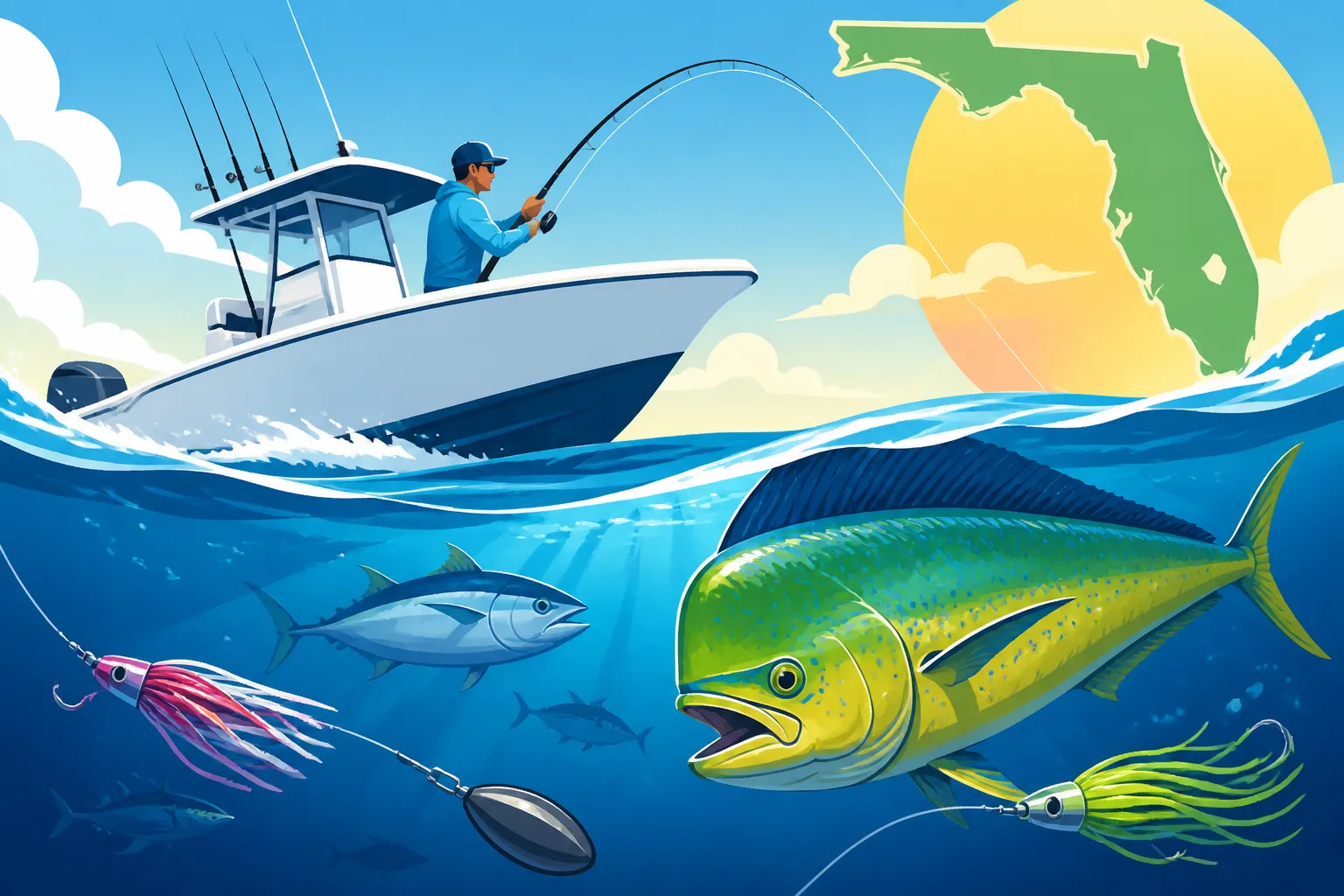
Trolling is perhaps the quintessential offshore technique, especially for targeting fast-moving pelagic species like Mahi-Mahi, Wahoo, Tuna, and King Mackerel. The idea is simple: drag baits or lures behind a moving boat at various speeds and depths, covering a large area to entice strikes. What makes trolling challenging and exciting is perfecting the spread – deploying multiple lines with different baits, lures, and depths to mimic a school of baitfish. This often involves using outriggers, downriggers, and planer boards to get your baits away from the boat and at specific depths.
The speed of your troll is crucial and varies depending on the target species. Faster speeds (7-15 knots) are excellent for Wahoo and some Tuna species, often utilizing high-speed lures like jet heads or weighted plugs. Slower speeds (5-8 knots) are more effective for Mahi-Mahi and King Mackerel, especially when using natural baits like rigged ballyhoo or strip baits. The "spread" is also vital; you want to ensure your lines are separated to avoid tangles and cover different parts of the water column. This often means some baits run close to the boat (flat lines), some are pulled wide by outriggers, and others are sent deep with downriggers or planers. It’s an art form that takes practice, but the reward of multiple hookups on a schooling fish like Mahi-Mahi is incredibly satisfying. Don't forget to keep an eye on your baits; sometimes a slight adjustment in speed or lure color can make all the difference.
Bottom Fishing and Deep Dropping
When pelagics aren't biting, or your target species prefers the comfort of the seafloor, bottom fishing is your go-to technique. This method involves getting your bait directly to the bottom where species like Grouper, Snapper, Amberjack, and Hogfish reside around reefs and wrecks. The primary challenge here is getting your bait down through strong currents and to the right spot, often requiring heavy lead weights (up to several pounds) and a good feel for the bottom. Using a fish finder to locate schools of fish or structure is non-negotiable for successful bottom fishing.
Deep dropping takes this concept to the extreme, targeting species like Snowy Grouper, Golden Tilefish, and Queen Snapper in depths ranging from 600 to 1,500 feet or even more. This requires specialized electric reels and heavy-duty rods, often spooled with hundreds of yards of braided line. The baits are usually large chunks of squid or fish, often rigged with multiple hooks on a spreader bar. While physically less demanding thanks to electric reels, deep dropping is technically challenging. You're fishing in extreme conditions, battling incredible pressure, temperature changes, and often strong currents. Knowing your Bottom Fishing Technique for Snapper can really pay off. The table below outlines some common offshore targets and their preferred fishing depths:
| Technique | Target Species | Ideal Depth Range (feet) | Typical Baits/Lures | Key Considerations |
|---|---|---|---|---|
| Trolling | Mahi-Mahi, Wahoo, King Mackerel, Tuna, Sailfish | Surface to 100 | Ballyhoo, Skirted Lures, Cedar Plugs, Diving Plugs | Speed, Spread, Water Temperature Breaks |
| Bottom Fishing | Gag Grouper, Red Snapper, Mangrove Snapper, Amberjack, Hogfish | 60 to 400 | Live Pinfish, Squid, Cut Bait, Jigs | Structure location, Current, Heavy Tackle |
| Deep Dropping | Snowy Grouper, Golden Tilefish, Queen Snapper, Barrelfish | 400 to 1500+ | Squid, Fish Chunks, Electric Reels | Depth, Specialized Gear, Current, Temperature |
| Jigging | Amberjack, Tuna, Bonito, Permit | Mid-column to Bottom | Vertical Jigs, Butterfly Jigs | Rod action, Jig weight, Fish finder accuracy |
| Live Baiting (Freeline) | Sailfish, Mahi-Mahi, King Mackerel | Surface to Mid-column | Live Sardines, Pilchards, Threadfin, Goggle Eyes | Bait presentation, Kite fishing, Circle Hooks |
Jigging and Live Baiting
Jigging is a more active, hands-on offshore technique that can be incredibly effective when done right. It involves rapidly raising and lowering a weighted lure (a jig) through the water column to mimic a wounded baitfish, enticing predatory strikes. Vertical jigging is popular for species like Amberjack, various Tuna, and even Grouper that are holding tight to structure or bait schools. The weight and style of jig depend on the depth and current; anything from heavy metal butterfly jigs to lighter soft plastic jigs can be used. The key is consistent action and a sharp hookset.
Live baiting, on the other hand, relies on the irresistible appeal of a natural, lively baitfish. This can be done by freelining a live pilchard or goggle eye on the surface for cruising Sailfish or Mahi-Mahi, or by slow-trolling a larger bait like a blue runner or threadfin for King Mackerel or Tuna. The challenge here is acquiring and keeping your live bait healthy. Cast netting for pilchards around channel markers or using a sabiki rig for threadfins are common methods. A good livewell with a robust pump system is essential to ensure your baits stay frisky. Many serious anglers even employ specialized bait pens. The thrill of watching a live bait get annihilated by a charging pelagic is one of the most exciting aspects of Florida offshore fishing.
Targeting Specific Offshore Species
Florida's offshore waters are a diverse fishery, home to a staggering array of sportfish and table fare. Each species presents its own unique challenges and requires a tailored approach. Understanding the habits, preferred habitats, and feeding patterns of your target fish is key to consistent success. Generic tactics might catch something, but precise strategies catch what you're truly after.
Mahi-Mahi and Wahoo Strategies
Mahi-Mahi, often called dolphin or dorado, are one of Florida's most sought-after offshore species, renowned for their vibrant colors, acrobatic fights, and delicious meat. They are pelagic, meaning they roam the open ocean, often congregating around weed lines, floating debris, and temperature breaks. For Mahi-Mahi, trolling rigged ballyhoo, plastic skirts, or cedar plugs is highly effective. Pay close attention to any floating structure – a lonely pallet, a patch of sargassum, or even a derelict buoy can hold an entire school of Mahi. When you hook one, leave a fish or two in the water near the boat; this often keeps the school around, allowing for multiple hookups on pitch baits. Our Florida Mahi Mahi Fishing Guide delves deeper into this exciting species.
Wahoo are another pelagic powerhouse, famous for their blistering runs and razor-sharp teeth. They are typically found in deeper offshore waters, often around ledges, seamounts, and current rips. High-speed trolling is the most common method for Wahoo, often exceeding 10-15 knots. Heavy-duty wire leaders are a must to prevent cut-offs, and specialized Wahoo lures like high-speed trolling skirts or weighted plugs are incredibly effective. Look for Wahoo during specific moon phases or around structure that creates current eddies. They often strike hard and fast, so be prepared for an explosive fight. Having a gaff ready is crucial, as these fish are incredibly powerful and slippery.
Grouper and Snapper Tactics
Grouper and Snapper are the kings of the reef, making them prime targets for bottom fishermen. These species prefer rocky bottoms, ledges, wrecks, and artificial reefs where they can ambush prey and find shelter. For Grouper, sturdy conventional gear with powerful rods and heavy leaders is essential to "reef them out" before they can dive back into the structure and cut your line. Live baits like pinfish, grunts, or even small blue runners are irresistible to larger Groupers. Cut bait, such as squid or chunks of bonita, also works well. Understanding the specific Florida Grouper Season Guide is critical, as seasons vary by species and region.
Snapper, including the prized Red Snapper and various Lane, Vermilion, and Mutton Snapper, are also excellent table fare and provide a great fight. They often respond well to smaller live baits, cut bait, or vertical jigs presented on lighter tackle than what you'd use for big Groupers. For Red Snapper, the season is often very short and strictly regulated, making it a highly anticipated event. When bottom fishing, using a "chicken rig" with multiple hooks can be effective for catching several Snapper at once. Chumming can also bring these fish closer to the boat, increasing your chances. Keep an eye on your fish finder for "meat balls" or clusters of fish around structure. The best spots for these species are often found in the deeper federal waters.
Billfish and Tuna Pursuits
Targeting billfish – Sailfish, Marlin, and Swordfish – is the pinnacle of offshore angling for many. Florida is particularly famous for its Sailfish fishery, especially off the Atlantic coast. Sailfish are often found around the edge of the Gulf Stream, bait balls, or even just free-swimming. Kite fishing with live baits like goggle eyes or pilchards is an incredibly effective and visual way to target them, presenting baits right on the surface. Trolling with rigged ballyhoo is also a productive method. When a Sailfish hits, it's an explosion of aerial acrobatics and blistering runs. Check out our Florida Sailfish Fishing Guide for more detailed strategies.
Tuna, including Blackfin, Yellowfin, and Skipjack, offer another exciting challenge. Blackfin Tuna are common in Florida's offshore waters, often found schooling around deep water humps, oil rigs, or current rips. Trolling small lures or rigged baits, jigging, and chunking (chumming with cut bait) are all effective methods. Yellowfin Tuna, while less common closer to shore, are targeted further offshore, often by long-range boats using similar techniques. These powerful fish demand heavy tackle and endurance from the angler. When targeting any of these pelagic species, always have a keen eye on your surroundings. Birds diving, schools of bait showering, or even changes in water color can all indicate the presence of these magnificent fish.
Advanced Strategies for Florida's Deep Waters
Once you've mastered the basics, there are always more sophisticated techniques to explore in Florida's rich offshore fishery. These advanced strategies can significantly increase your catch rates and open up opportunities for targeting highly prized species that might ignore conventional presentations. It's about thinking outside the box and leveraging specialized equipment and knowledge.
Kite Fishing for Sailfish
Kite fishing is a highly specialized and incredibly effective method, particularly famous in South Florida for targeting Sailfish, Tuna, and even large Mahi-Mahi. The technique involves using a large kite to suspend live baits (like goggle eyes, pilchards, or threadfin herring) on or just below the surface, many yards away from the boat. This presentation is incredibly natural, as the bait splashes enticingly without any visible line in the water, mimicking a distressed baitfish. The kite also allows you to cover a wide area without spooking wary fish that might be boat-shy.
Setting up a kite rig can be complex, involving specialized kites, release clips, and often multiple lines off a single kite. The wind conditions are paramount; too much wind and the kite pulls too hard, too little and it won't fly. Many boats use two kites simultaneously to create a wider spread and present more baits. When a fish strikes, the release clip frees the main line, and the angler fights the fish directly. It's an incredibly visual and thrilling way to fish, as you often see the Sailfish appear out of nowhere to smash the bait. Success in kite fishing comes from precise bait placement, meticulous riggings, and a keen understanding of wind and current. Many top-tier Florida fishing charters specialize in this method.
Night Fishing Offshore
While most offshore fishing occurs during daylight hours, night fishing offshore opens up a whole new world of possibilities, especially during the warmer months. Many predatory species become more active at night, moving into shallower depths or feeding aggressively under the cover of darkness. Swordfish are perhaps the most famous nocturnal offshore target, caught deep dropping during the day but often moving up into the mid-water column at night. Their elusive nature makes them a highly prized catch, often requiring specific bait presentations with glow sticks or specialized lights.
Beyond Swordfish, night fishing can also be productive for Snapper, Grouper, and even pelagics that are attracted to boat lights or chum slicks. Deploying underwater lights can attract vast quantities of baitfish, which in turn draw in predators. Anchor up over a productive reef or wreck and deploy various baits at different depths. Safety is an even greater concern at night; proper navigation lights, radar, and vigilant watchkeeping are crucial. The cooler temperatures and calmer seas often found at night can make for a more comfortable and unexpectedly productive fishing experience, a truly unique aspect of Florida Fishing Seasons Explained.
Utilizing Fish Aggregating Devices (FADs)
Fish Aggregating Devices, or FADs, are man-made or natural floating objects that serve as beacons in the open ocean, attracting baitfish and, subsequently, larger predatory species. While purpose-built FADs are deployed by governments or fishing organizations in some parts of the world, in Florida's context, this often refers to natural floating debris like weed lines, derelict buoys, or even large pieces of timber. These objects provide shelter and a food source in an otherwise barren environment, acting as magnets for everything from small baitfish to large Mahi-Mahi, Wahoo, and even Tuna.
Spotting a FAD from a distance can be a game-changer. Keep a sharp lookout for birds circling or hovering over a patch of weed or debris – this is a strong indicator of baitfish below. When you approach a FAD, do so carefully to avoid spooking the fish. Start by trolling around it, then switch to casting live baits or artificial lures towards the structure. Often, the fish will be holding right underneath or slightly down-current. It's not uncommon to find multiple species congregating around a single FAD, offering a diverse array of fishing opportunities. A keen eye and a bit of luck in finding these floating oases can turn a slow day into an epic one.
Safety First: Navigating Offshore Challenges
Offshore fishing in Florida offers incredible rewards, but it also comes with inherent risks. The ocean is a powerful and unpredictable force, and being miles from shore means you're largely on your own. Prioritizing safety isn't just about following regulations; it's about common sense, preparedness, and a healthy respect for the marine environment. A fun day can turn dangerous quickly, so always be ready for the unexpected.
Emergency Preparedness and Communication
Before you even leave the dock, your boat needs to be equipped with essential safety gear, and you and your crew need to know how to use it. This includes life jackets for everyone on board (easily accessible!), a throwable flotation device, a first-aid kit, fire extinguishers, and visual distress signals (flares). A functional VHF radio is paramount for communication, and as mentioned earlier, one with DSC capabilities can automatically send your location in an emergency. For longer trips or more remote areas, an EPIRB (Emergency Position Indicating Radio Beacon) or PLB (Personal Locator Beacon) is a non-negotiable investment. These devices transmit a distress signal to satellites, guiding rescuers directly to your location.
Beyond equipment, having a float plan is a critical but often overlooked safety measure. Let someone on shore know where you're going, when you expect to return, and who is on board. This simple step ensures that if you don't return as planned, someone knows to initiate a search. Familiarize yourself with basic boat maintenance, carry spare parts for common issues, and know how to perform simple repairs. Being prepared for a dead battery, a fouled propeller, or a leaky hose can prevent a minor inconvenience from becoming a major emergency when you're far offshore.
Understanding Marine Weather Forecasts
The weather offshore can change dramatically and rapidly, especially in Florida. What starts as a calm, sunny morning can quickly evolve into a torrential downpour with strong winds and dangerously choppy seas. Relying on a simple weather app for offshore conditions is a recipe for trouble. Instead, learn to interpret marine weather forecasts, paying close attention to factors like wave height, swell period, wind speed, and direction. NOAA marine forecasts are the gold standard, providing detailed information for specific offshore zones.
Always check the forecast from multiple sources before departing, and continue to monitor it via your VHF radio or satellite weather services while you're on the water. Look for trends, not just a single snapshot. Pay attention to cold fronts, which can bring sudden squalls, and tropical systems, which can churn up the ocean days before they even make landfall. If there's any doubt about the conditions, err on the side of caution. No fish is worth risking your life or the lives of your crew. Respecting the weather is the mark of a seasoned and responsible offshore angler.
First Aid and Seasickness Prevention
Even on the calmest days, accidents can happen offshore, from hook punctures to propeller cuts. A well-stocked, comprehensive first-aid kit is absolutely essential. This should include basics like bandages, antiseptic wipes, pain relievers, and motion sickness medication, but also more advanced supplies for treating serious wounds, allergic reactions, or even minor burns. Consider taking a marine first-aid course; knowing how to stabilize a serious injury miles from help can be a lifesaver.
Seasickness is another common offshore challenge that can quickly ruin a trip and incapacitate a crew member. Prevention is key. Over-the-counter medications like Dramamine or Bonine work well for many, but they need to be taken before you feel sick. Staying hydrated, avoiding greasy foods, and focusing on the horizon can also help. For those prone to severe seasickness, prescription patches or wristbands might be an option. If someone does get seasick, encourage them to stay on deck in fresh air, look at the horizon, and avoid reading or looking at screens. A severe case of seasickness can be debilitating and even dangerous if it prevents someone from assisting in an emergency.
Environmental Awareness and Best Practices
As anglers, we are stewards of Florida's incredible marine resources. Offshore fishing provides unforgettable experiences, but it's vital that we conduct ourselves in a manner that ensures these resources remain healthy and abundant for future generations. This means adhering to regulations, practicing responsible fish handling, and always being mindful of our impact on the environment.
Sustainable Fishing and Conservation
The sustainability of Florida's offshore fisheries relies heavily on the responsible actions of every angler. This starts with knowing and strictly adhering to all current fishing regulations, including size limits, bag limits, and closed seasons for specific species. These rules are put in place by agencies like the Florida Fish and Wildlife Conservation Commission (FWC) to manage fish stocks and prevent overfishing. Ignoring them isn't just illegal; it actively harms the very fish populations we love to pursue. Our Florida Fishing License Guide can help you ensure you're compliant.
Beyond just following the law, embrace catch-and-release practices for certain species, especially those that are stressed, out of season, or if you've already filled your cooler. Many prized offshore species like Sailfish and Tarpon are primarily catch-and-release in Florida to protect their populations. Consider using circle hooks, which significantly reduce gut hooking and improve the survival rate of released fish. Participating in citizen science programs, like those that tag billfish, also contributes valuable data to conservation efforts. Remember, every fish you release has the chance to reproduce and contribute to a healthier fishery.
Proper Fish Handling and Release
When you do catch a fish you intend to release, doing so quickly and correctly is crucial for its survival. Minimize the time the fish spends out of the water. Handle fish gently with wet hands, or better yet, use a dehooker to remove the hook while the fish is still in the water. Avoid touching the gills or eyes, and support the fish horizontally to prevent damage to internal organs. For larger fish, like Grouper or Snapper caught from deep water, barotrauma can be an issue. This occurs when gases expand in their swim bladder as they are brought to the surface, causing internal damage.
Proper venting or using a descending device (like a 'seaqualizer' or 'recompression tool') is often necessary to help these fish survive. Venting involves puncturing the swim bladder with a sharp, sterile tool to release the excess gas, allowing the fish to swim back down. Descending devices simply re-pressurize the fish by sending it back down to a specific depth. Both methods require training and care to avoid further injury. Understanding how to properly handle and release fish is a mark of a truly ethical and conservation-minded angler.
Navigating Regulations and Bag Limits
Florida's fishing regulations can be complex, and they frequently change. It's not uncommon for bag limits, size limits, and open seasons to differ between state and federal waters, between the Gulf and Atlantic coasts, and even for specific regions or species. Trying to keep track of it all can be a real headache, leading to frustrations and potential violations. This is why having reliable, up-to-date information at your fingertips is so important.
The FWC Fish Rules app is an indispensable tool for any Florida angler, providing instant access to the latest regulations based on your exact GPS location. It covers both recreational and commercial rules, federal and state waters, and includes clear visuals for identifying species. Before heading out, always double-check the FWC website or app for any recent changes, especially if you're targeting seasonal species like Red Snapper or Gag Grouper. Being caught with an undersized fish or an over-the-limit catch can result in hefty fines and even loss of fishing privileges. A little bit of homework before your trip can save you a lot of grief and ensure you're contributing to healthy fish populations.
Planning Your Offshore Adventure
Offshore fishing is rarely a spontaneous endeavor. The most successful and enjoyable trips are almost always the result of meticulous planning and preparation. From choosing the right vessel to packing the right provisions, every detail contributes to a safer, more productive, and more comfortable experience. Don't let a lack of planning turn your offshore dream into a logistical nightmare.
Choosing the Right Boat and Crew
The type of boat you use for offshore fishing significantly impacts your capabilities and safety. For serious offshore runs, you'll need a vessel designed to handle open ocean conditions – typically a center console, sportfisher, or express cruiser of at least 25 feet, though many anglers confidently run smaller boats in favorable conditions. Look for a boat with sufficient fuel capacity for your intended range, redundant engine systems (twin outboards are common), and enough deck space and fishability for your crew and gear. While owning your own offshore boat is a dream for many, chartering a boat with an experienced captain is an excellent way to experience offshore fishing without the massive investment. Our Florida Offshore Fishing Charter Guide can help you find a reputable charter.
Your crew is just as important as your boat. Choose reliable, experienced individuals who understand the demands of offshore fishing, or at least are willing to learn and contribute. A good crew works as a team, from setting lines and gaffing fish to keeping the boat tidy and safe. Discuss roles and responsibilities before you leave the dock. If you're bringing inexperienced friends or family, assign them simpler tasks and ensure they understand basic safety protocols. A bad crew can quickly turn a good trip sour, while a cohesive team can make even a challenging day enjoyable and productive.
Essential Provisions and Supplies
A day offshore requires more than just fishing gear. You need to be self-sufficient. Hydration is key; bring plenty of water, sports drinks, and other non-alcoholic beverages. Pack enough food for everyone, opting for easy-to-eat snacks and sandwiches that don't require extensive preparation. Don't forget sunscreen, sunglasses, hats, and appropriate clothing to protect against the sun, wind, and spray. Rain gear is also a smart addition, even if the forecast looks clear.
Beyond personal provisions, think about other supplies. Do you have enough ice for your catch and your drinks? Is your baitwell stocked with fresh, lively bait? Do you have spare leaders, hooks, and weights? What about a good quality cooler like a YETI or a RTIC to keep your fish fresh on the ride home? Even seemingly small items, like paper towels, trash bags (pack out everything you pack in!), and a knife sharpener can make a big difference. Creating a detailed checklist before each trip can help ensure you don't forget anything critical. Many essential items can be easily purchased through Amazon and delivered right to your door, simplifying your pre-trip preparations.
Pre-Trip Checks and Maintenance
Preventative maintenance and thorough pre-trip checks are non-negotiable for offshore safety. Before every trip, inspect your boat's engines: check oil levels, fuel filters, and battery connections. Run the bilge pumps to ensure they're working correctly. Test all your electronics – GPS, VHF, fish finder – to confirm they're operational. Check your safety gear: flares are in date, life jackets are accessible, and the first aid kit is complete. Even a quick check of your trailer lights and tires if you're trailering the boat is important.
Pay attention to your fishing gear as well. Are your reels spooled with fresh line? Are your rod guides free of cracks? Are your hooks sharp? The time to discover a frayed line or a sticky drag is not when you have a trophy fish on the hook miles from shore. Taking a few extra minutes to perform these checks before you leave can prevent costly breakdowns, dangerous situations, and heartbreaking lost fish. A well-maintained boat and properly functioning gear give you the confidence to tackle whatever the Florida offshore waters throw your way.
Disclaimer
The information provided in this guide is for general informational purposes only and does not constitute professional advice. Fishing regulations, conditions, and best practices can change rapidly. Always consult official sources like the Florida Fish and Wildlife Conservation Commission (FWC) and NOAA Fisheries for the most current regulations and safety guidelines before engaging in any fishing activities. Adhere to all local, state, and federal laws. Fishing inherently carries risks, and participation is at your own risk.