Best Rigs for Surf Fishing
There's nothing quite like the feeling of the salty air on your face and the rhythmic crash of waves as you stand on a Florida beach, rod in hand, hoping for a bite. But let's be real, many of us have spent hours staring at a motionless rod tip, wondering if we're doing something wrong. Often, the secret to turning those slow days into fish-catching adventures isn't just about bait or location, but the very rig you're using. This comprehensive guide will walk you through the best surf fishing rigs for Florida's diverse beaches, helping you understand how each one works and when to deploy it for maximum success.
Understanding the Basics of Surf Fishing Rigs in Florida
Surf fishing is an art form, and like any art, it requires the right tools. The beauty of Florida's coastline is its incredible variety – from the calm, shallow waters of the Gulf Coast to the powerful breakers on the Atlantic. Each presents its own set of challenges, and your rig is your primary weapon against them.
Why Rigs Matter on the Beach
Imagine trying to catch a fish in a strong current with a rig designed for still water. It simply won't work, or at best, it'll be incredibly frustrating. The waves, the undertow, the sandy or shelly bottom, and even the type of fish you're targeting all dictate the perfect rig. A good rig ensures your bait stays where the fish are, presents it naturally, and allows you to feel those subtle bites. Without the right setup, your bait could be washing around uselessly, getting buried in the sand, or simply overlooked by your quarry. This frustration is a common hurdle for many surf anglers, but a little knowledge goes a long way.
Think about it: the constantly shifting sands and powerful currents can easily dislodge a lightweight bait or bury a poorly chosen sinker. A rig that works wonders on a calm day might be a tangled mess in heavy surf. Knowing the purpose of each component and how they interact with the environment is key to keeping your bait in the strike zone and improving your chances of success.
Essential Components of Any Surf Rig
While rigs vary, they all share fundamental components. Understanding these building blocks is crucial for both tying your own rigs and choosing pre-tied options.
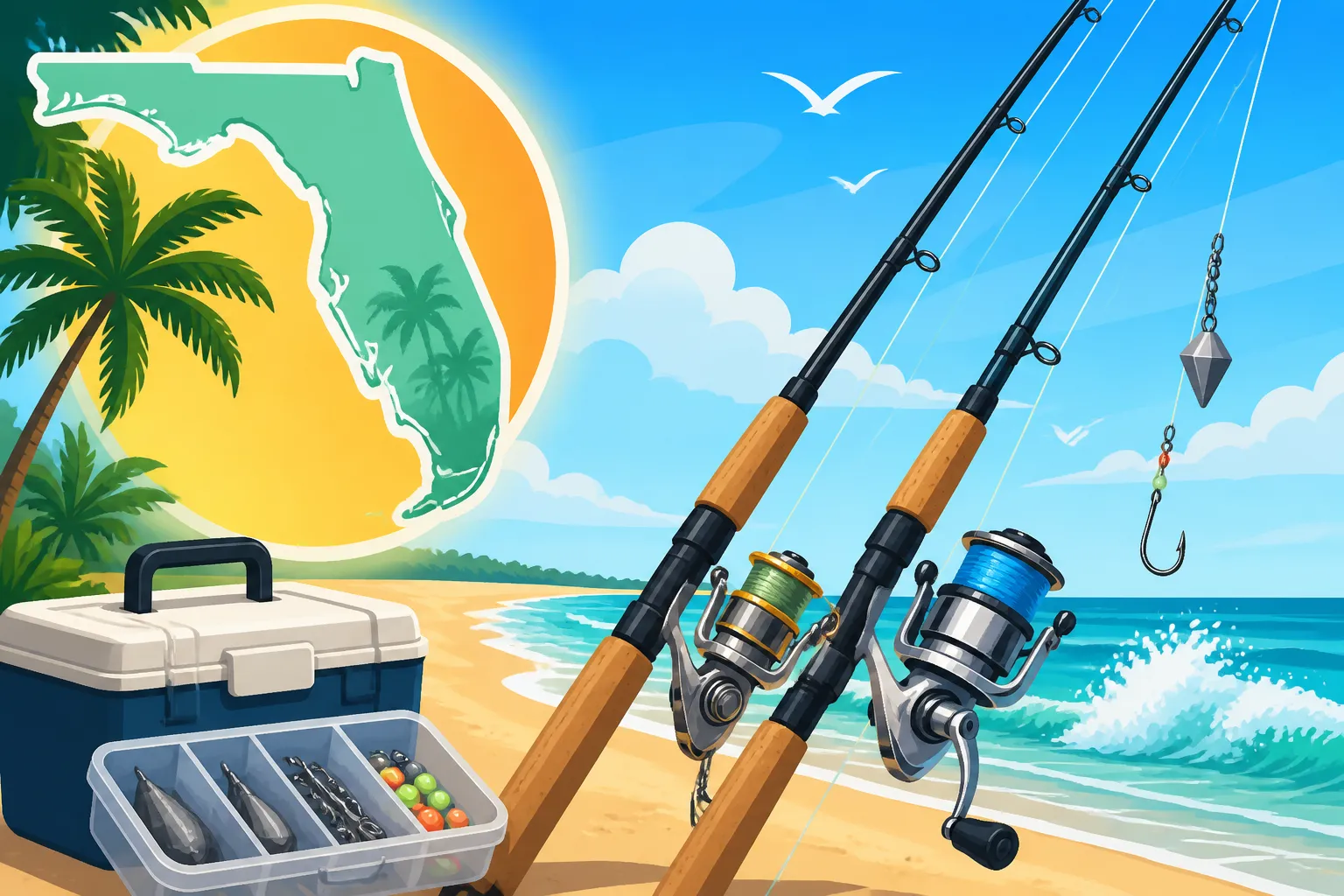
- Sinkers: These are perhaps the most critical part of a surf rig, as they anchor your bait in the desired location.
- Pyramid Sinkers: Shaped like a pyramid, these are excellent for digging into the sand and holding bottom in moderate currents. They are a go-to for many surf anglers.
- Sputnik Sinkers: Featuring wire prongs that deploy and dig into the sand, Sputniks are the champions of holding power in very strong currents, like those found at inlets or passes. They're often heavier and a bit more expensive but invaluable in certain situations.
- Disc or Flat Sinkers: Less common for true surf fishing but sometimes used in very calm conditions or when you want the bait to roll slightly with the current without getting swept away entirely.
- Swivels: These small but mighty connectors prevent line twist, which is a common nuisance when casting and retrieving, especially with spinning gear. Barrel swivels and ball-bearing swivels are the most common types.
- Leaders: The section of line between your main line and your hook. Leaders are typically made of fluorocarbon or monofilament, which are more abrasion-resistant than braided main lines and often less visible to fish. The strength of your leader depends on your target species; for example, a stout leader is essential when targeting larger species like Florida Shark Fishing Guide.
- Hooks: The business end of your rig! Hook size and style (circle, J-hook) depend on your bait and target fish. Circle hooks are often preferred in surf fishing because they are self-setting and minimize gut-hooking, which is great for catch and release and often required by regulations for certain species.
- Beads: Small plastic beads are often used as spacers, protecting knots from sinkers or adding attraction near the hook. Certain colors, like chartreuse or orange, are believed to attract Pompano.
Having a good assortment of these components in your tackle box is a smart move. You can find a wide range of sinkers, swivels, and hooks on platforms like Amazon, allowing you to tailor your setup precisely to the conditions and fish you're targeting on any given day.
The Classic Fish Finder Rig: A Florida Staple
When you picture a quintessential surf fishing setup, chances are you're imagining something very close to a fish finder rig. This is a workhorse for many Florida anglers, offering a natural presentation that larger game fish often can't resist.
Anatomy and How It Works
The beauty of the fish finder rig lies in its simplicity and effectiveness. It typically consists of a main line (often braided for strength and sensitivity) connected to a barrel swivel. Above this swivel, a fish finder slide (a small plastic sleeve with a clip) is threaded onto the main line, and your sinker is attached to this slide. Below the swivel, you'll have a leader, usually 12 to 36 inches long, tied to a single hook.
The genius of this design is that the sinker rests directly on the bottom, while the main line runs freely through the fish finder slide. When a fish picks up your bait, it can swim away with it without immediately feeling the weight of the sinker. This "free-lining" presentation allows the fish to confidently take the bait, giving you a much better chance to get a solid hook set. The swivel acts as a stopper for the fish finder slide, ensuring the sinker doesn't slide down to your hook and tangle things up.
Best Applications and Target Species
The fish finder rig excels when you're targeting larger, more aggressive fish that might be spooked by immediate resistance. It's particularly effective for species that tend to mouth the bait before fully committing. In Florida, this includes prized catches like Pompano, Redfish, and Snook. It's also a fantastic choice if you're using larger baits, such as whole dead baitfish, chunks of mullet, or large shrimp, as it allows these baits to appear more natural on the bottom.
This rig performs best in areas with moderate currents where you want your bait to stay put but still offer that natural drift potential. It's excellent for fishing the first and second troughs on the beach, where larger fish often cruise. If you're wondering What Tide Is Best for Snook Fishing?, a fish finder rig can be very effective during an incoming or outgoing tide when these fish are actively feeding. You can also deploy this rig to target smaller sharks or large Whiting, especially if you're using a heavier leader and larger hook.
Pros and Cons
Like any rig, the fish finder has its strengths and weaknesses, and understanding them helps you decide when to tie one on.
- Pros:
- Natural Presentation: The free-sliding sinker allows fish to pick up the bait without feeling immediate resistance, leading to more confident bites. This is a huge advantage for wary fish.
- Good for Larger Fish: It's stout enough to handle strong fighters and accommodates bigger baits, increasing your chances of landing impressive catches like a bull Redfish.
- Versatility: While it excels with larger baits, you can scale it down for smaller targets, making it quite adaptable.
- Cons:
- Prone to Tangles in Heavy Current: In exceptionally strong currents or very choppy surf, the free-sliding nature can sometimes lead to the leader wrapping around the main line or sinker.
- Only One Bait: You're limited to a single hook, which means fewer opportunities for a bite if fish are scattered or feeding lightly. This can be a disadvantage compared to multi-hook rigs.
- Requires Careful Observation: Because the fish doesn't feel the sinker, you might experience more subtle bites initially, requiring you to pay close attention to your rod tip.
Despite these minor drawbacks, the fish finder rig remains a top choice for serious surf anglers across Florida. Its ability to present bait naturally to larger fish makes it indispensable for many fishing scenarios.
The Versatile Pompano Rig: Small but Mighty
If you've ever spent time surf fishing on Florida's Gulf Coast or the calmer stretches of the Atlantic, you've undoubtedly seen or used a Pompano rig. This deceptively simple setup is a powerhouse for smaller, schooling fish that hug the surf line.
Design and Functionality
The classic Pompano rig is designed to present multiple baits simultaneously, typically very close to the bottom. It usually features a main leader line, often made of 20-30 lb fluorocarbon or monofilament, with two or three "dropper loops" tied into it. Each dropper loop has a small, sharp hook (sizes #1 to #2/0 are common), often adorned with colorful floats or beads in hues of chartreuse, orange, pink, or even glow-in-the-dark. The terminal end of the rig has a swivel or snap for attaching your sinker, usually a pyramid or Sputnik, weighing 2-4 ounces depending on conditions.
The functionality is brilliant: the sinker anchors the rig, while the dropper loops suspend your baits just above the sand, making them highly visible and accessible to foraging fish. The small floats on the loops provide buoyancy, fluttering the bait tantalizingly in the current, mimicking small crustaceans or baitfish. The multiple hooks mean you can try different baits or simply increase your chances of getting a strike from a schooling species.
When and Where to Use It
This rig is truly in its element when targeting surf favorites like Pompano, Whiting, Croaker, and smaller Redfish. These fish often feed in the first trough – the shallow depression just beyond the breaking waves – sifting through the sand for crabs, sand fleas, and small baitfish. The Pompano rig is perfectly suited to present offerings like sand fleas, bits of shrimp, or artificial baits like Fishbites in this zone.
It shines in conditions ranging from calm, glassy surf to moderate chop. On calm days, the floats provide maximum attraction. In slightly choppier conditions, the rig helps keep your baits stable while still allowing them to waft naturally. Beaches with relatively shallow gradients and good populations of sand fleas are prime territory. Popular spots like Anna Maria Island, Playalinda Beach, and the beaches around St. George Island are often Pompano rig hotspots. Don't forget, these rigs can be fantastic even if you're just fishing for dinner on a family trip, as they reliably catch panfish like Whiting.
Customizing Your Pompano Rig
One of the great joys of the Pompano rig is how easily you can customize it to match conditions and fish preferences. This allows you to really dial in your presentation and find what works best on any given day.
- Hook Size: While #1 to #2/0 is standard, you might go slightly smaller (#2) for very finicky Whiting or slightly larger (#1/0 or even #2/0) if you're consistently hooking larger Pompano or Redfish.
- Bead and Float Colors: This is where the fun really begins! Pompano, in particular, are known to be attracted to specific colors. Common wisdom suggests chartreuse, orange, and pink are top producers. Some anglers swear by contrasting colors, while others prefer monochrome. It's wise to experiment. Many anglers purchase pre-tied Pompano rigs from brands like Pompano Rigs by Fish Finder, or you can buy the individual components, including colored beads and floats, on Amazon to tie your own.
- Number of Hooks: Most pre-tied Pompano rigs feature two hooks, but some anglers prefer a single hook for reduced tangles or three hooks to maximize chances. Be mindful of Florida Fishing Regulations and Bag Limits, which dictate the number of hooks and fishing methods allowed. In general, recreational anglers can use up to three hooks per line, but always check local regulations.
- Leader Material and Test: While 20-30 lb fluorocarbon is standard for its invisibility and abrasion resistance, you might drop down to 15 lb in exceptionally clear water or bump up to 40 lb if toothy Spanish Mackerel are present (though they'll often cut through mono/fluoro anyway).
Experimentation is the name of the game with Pompano rigs. Changing up colors, baits, and even hook sizes can make a huge difference in your catch rate.
The Reliable Double-Drop Bottom Rig: For Multiple Opportunities
Beyond the dedicated Pompano rig and the single-hook fish finder, there's a broader category of multi-hook setups often referred to as double-drop bottom rigs. These are fantastic utility rigs, especially when you're targeting a variety of bottom-feeding species or simply want to increase your chances of a bite.
Construction and Benefits
The double-drop bottom rig shares some lineage with the Pompano rig but is often built with slightly heavier components, making it more robust for larger baits and a broader range of species. It typically features a main leader line, often 30-50 lb monofilament or fluorocarbon, with two snelled hooks branching off via short dropper lines or loops. These hooks are usually larger than Pompano rig hooks, ranging from #1 to 4/0, to accommodate larger baits like chunks of shrimp, cut bait, or even live bait like a finger mullet or a How to Rig a Pinfish for Snook. The sinker, usually a pyramid or Sputnik, is attached to the very bottom of the rig, weighing anywhere from 3 to 8 ounces depending on current conditions.
The primary benefit of this rig is its ability to present two different baits at once, or two of the same bait, maximizing your presentation spread. This is incredibly useful when you're unsure what the fish are biting on or when you suspect there's a mixed bag of species in the area. It keeps your baits near the bottom, where many surf dwellers forage, and the sturdy construction means it can stand up to tougher conditions and bigger fish than a delicate Pompano rig.
Target Species and Ideal Conditions
The double-drop bottom rig is your go-to when you're aiming for a "mixed bag" of bottom dwellers. Think Whiting, Croaker, Black Drum, Sheepshead, and even smaller Redfish. It's also a solid choice if you're trying to figure out what's biting. You can put a piece of shrimp on one hook and a chunk of cut bait on the other, letting the fish tell you what they prefer.
This rig performs well in various conditions, from calm to moderately rough surf. Its heavier construction means it can hold its own in currents where a lighter Pompano rig might struggle. It's particularly effective when fishing sloughs, holes, or near structure where different species might congregate. If you're fishing a new spot on the beach and haven't quite figured out the prevailing currents or the preferred diet of the local fish, a double-drop rig is an excellent exploratory tool. It allows you to cover more ground, both in terms of bait presentation and species targeting.
Tips for Rigging and Deployment
Getting the most out of your double-drop bottom rig involves a few key considerations for both setup and technique.
- Sinker Selection: Always match your sinker weight to the current. A 3-ounce sinker might be fine in calm conditions, but you'll need 5-8 ounces or even more for strong currents or to prevent your bait from tumbling too much. Don't be afraid to go heavy; the goal is to keep your bait stationary. You can buy a good selection of various sinker weights on Amazon, which is crucial for adapting to changing conditions.
- Leader Length: Keep the dropper lines or loops relatively short (4-6 inches) to minimize tangles during casting. A longer leader between the main line and the first hook, and between the two hooks, can also help reduce unwanted intertwining.
- Baiting: When using two hooks, try varying your baits. For instance, put a whole peeled shrimp on one hook for Pompano and Whiting, and a piece of cut mullet or a chunk of blue crab on the other for Black Drum or Redfish. This strategy increases your chances of getting a bite from whatever species is present.
- Casting Technique: With multiple hooks and baits, smooth casting is essential to avoid tangles. Use a controlled overhead or sidearm cast rather than a hard, jerky motion. Make sure your lines are clear of any obstructions before you launch your bait.
- Rod Placement: Once cast, place your rod in a sand spike and adjust the drag appropriately. Watch the rod tip constantly for bites, but also know that many fish will simply "load up" the rod without a dramatic tap. Periodically check your bait to ensure it hasn't been stolen or washed off.
The double-drop bottom rig offers a fantastic balance of versatility and effectiveness, making it a staple for anyone serious about surf fishing in Florida's varied environments.
Specialty Rigs for Unique Florida Surf Situations
While the fish finder, Pompano, and double-drop rigs cover most common surf fishing scenarios, Florida's diverse coastline and target species sometimes call for more specialized approaches. These unique rigs can make all the difference when conditions get tough or when you're after a particular trophy.
The Sputnik Sinker Rig for Heavy Current
We touched on Sputnik sinkers earlier, but it's worth highlighting how a dedicated rig built around this innovative sinker can be a game-changer. There are places in Florida, like the famous Sebastian Inlet or certain passes in the Florida Keys, where the current rips so hard that a traditional pyramid sinker simply won't hold. Your bait will be swept away faster than you can say "fish on."
This is where the Sputnik sinker rig comes into its own. The Sputnik sinker isn't just heavy; it has four collapsible wire prongs that dig into the sand or shell bottom, acting like tiny anchors. Once cast, a quick tug on the line extends these wires, allowing the sinker to firmly grip the bottom. When you're ready to retrieve, another strong pull collapses the wires, making it easier to reel in without snagging. The rig itself is often a simple fish finder style or a variation of a double-drop, with the Sputnik sinker attached at the end. The key is that the sinker holds, keeping your bait precisely where you want it in powerful moving water. This is crucial for presenting baits to game fish that feed in strong currents, such as large Redfish or Snook.
Shark Rigs for the Big Bites
If you're looking for truly monstrous catches from the Florida surf, you'll need a rig that can stand up to powerful jaws and incredible fighting strength. Dedicated shark rigs are built for this purpose and are vastly different from the light tackle setups used for Pompano.
A typical shark rig will feature extremely heavy leader material, usually 200-400 lb monofilament or heavy multi-strand wire. This is essential to prevent the shark's sharp teeth from immediately severing your line. This heavy leader is crimped (not knotted, as knots on such heavy line can be unreliable) to a large, stout circle hook, typically ranging from 12/0 to 20/0, depending on the target shark size. Circle hooks are mandatory for shark fishing in Florida because they are far less likely to deep-hook a shark, increasing its chances of survival upon release. Some rigs incorporate a short section of heavy wire directly above the hook for extra protection against bite-offs. The main line from your reel, which should be very heavy braided line (80-130 lb test), is usually connected to the shark leader via a heavy-duty swivel. Often, these rigs will incorporate a large float or balloon rig to suspend a whole dead baitfish (like a mullet or bonita) just below the surface, or a very heavy "breakaway" sinker system is used to anchor a bottom bait. Remember to be fully aware of Florida Fishing Regulations and Bag Limits for sharks, as many species are protected or have strict catch-and-release rules.
Float Rigs for Suspended Bait
While most surf fishing focuses on bottom dwellers, sometimes the fish are cruising higher in the water column. This is where float rigs (often called popping cork rigs) become incredibly effective, especially when targeting schooling pelagic species or fish that actively hunt bait near the surface.
A common float rig in Florida involves a large popping cork (like a How to Fish a Popping Cork for Trout setup), which creates a "chugging" sound when retrieved, attracting curious fish. Below the cork, a leader (usually 2-3 feet of fluorocarbon) is tied to a jig head or a bare hook, on which you'd put a live shrimp, a small baitfish, or a soft plastic lure. This rig is fantastic for Spanish Mackerel, Bluefish, and sometimes even cruising Snook or Seatrout. The cork keeps your bait suspended at a desired depth, and the popping action mimics a feeding fish or escaping bait, triggering strikes.
Another variation is a slip float rig, which allows you to fish deeper without having to use a super long leader that's hard to cast. The slip float slides freely on your main line, stopped by a small knot (a "bobber stop") that you can adjust up or down to set your bait's depth. This is useful when fish are holding just above the bottom, but the water is too deep for a standard fixed float.
These specialty rigs demonstrate the depth and adaptability required for successful surf fishing in Florida, ensuring you have a tool for almost any scenario Mother Nature throws your way.
Gear and Techniques for Successful Surf Rigging
Having the right rig is only half the battle. To truly master surf fishing in Florida, you need complementary gear and the proper techniques to deploy your chosen rig effectively. It's an ecosystem of equipment and skill that leads to consistent catches.
Selecting the Right Rod, Reel, and Line
Your rod, reel, and line are the extensions of your rig, crucial for casting distance, fighting fish, and feeling subtle bites.
- Rods: For surf fishing, longer is generally better. Most Florida surf anglers use rods between 9 and 12 feet, sometimes even longer for extreme distance casting. Longer rods allow for greater casting leverage, helping you reach distant sandbars or troughs where fish might be holding. They also help keep your line elevated above breaking waves, reducing current drag. Look for rods with a moderate-fast to fast action, which provide both casting power and sensitivity. Medium-heavy to heavy power ratings are typical to handle heavier sinkers and larger fish.
- Reels: Durability and line capacity are key. Spinning reels are most common for surf fishing due to their ease of casting and versatility. Look for reels sized 6000 to 10000 (or equivalent, depending on the brand) with a high-quality sealed drag system to protect against sand and saltwater intrusion. Brands like Penn, Shimano, and Daiwa offer excellent saltwater-specific spinning reels.
- Line: Braided line has become the standard for surf fishing due to its incredible strength-to-diameter ratio and lack of stretch. This means you can cast further with lighter line and feel even the slightest tap on your bait. Typically, 20-50 lb test braided line is used as the main line. You'll then attach a shock leader (a heavier monofilament line, 40-80 lb test) that absorbs the shock of casting heavy weights and provides abrasion resistance near your rig. Many anglers also use fluorocarbon leader material for the actual rig itself, as it's nearly invisible underwater, a definite advantage in Florida's often clear waters. For more general advice, check out our guide on the Best Rod and Reel Setup for Florida Inshore Fishing.
Essential Terminal Tackle and Tools
Beyond your rod and reel, a well-stocked tackle box is your best friend on the beach. Having the right small components and tools ensures you can tie new rigs, replace worn parts, and handle fish efficiently.
- Swivels and Snaps: Always carry an assortment of good quality barrel swivels, snap swivels, and interlock snaps. These allow you to quickly change rigs or leaders without retying your main line.
- Leader Material: Spools of fluorocarbon and monofilament in various weights (20-80 lb) are essential for tying leaders and entire rigs. Fluorocarbon is pricier but nearly invisible, while mono is more affordable and has good knot strength.
- Hooks: As discussed, carry a range of hook sizes and styles (circle, J-hook) to match your bait and target species. Ensure they are strong and corrosion-resistant.
- Weights/Sinkers: A variety of pyramid and Sputnik sinkers in different weights (2-8 ounces) is crucial for adapting to varying current conditions.
- Cutting Tools: Sharp fishing pliers with cutters are a must for cutting line, removing hooks, and crimping sleeves. A good bait knife is also invaluable for preparing cut bait.
- Other Essentials: A comfortable sand spike to hold your rod, a bait bucket with an aerator for live bait, and a cooler for your catch are practical necessities.
You can easily stock up on these terminal tackle items on Amazon, ensuring you have everything you need before hitting the beach.
Casting and Retrieval Techniques
Proper technique can make your fishing day a success or a frustrating tangle.
- Casting for Distance: For long surf rods and heavy rigs, a smooth, controlled cast is better than a jerky, powerful one. The "pendulum cast" or a two-handed overhead cast are popular choices for maximizing distance and minimizing tangles. Allow the rod to do the work, loading up with the weight of the sinker and then smoothly releasing the line.
- Finding the Right Spot: Once cast, identify the sandbars and troughs. These underwater structures are critical. Cast beyond the first sandbar into the first trough, or even further to the second trough if your gear allows. Fish often cruise these deeper channels looking for food. The Best Beaches for Surf Fishing in Florida often have pronounced troughs.
- Setting Your Rod: Place your rod firmly in a sand spike, ensuring it's angled slightly towards the incoming waves. Tighten your main line until there's a slight bend in the rod tip, indicating tension without moving your sinker.
- Monitoring and Retrieval: Watch your rod tip for any movement – a twitch, a steady bend, or a sudden drop can all indicate a bite. Don't be afraid to leave your bait out for extended periods, especially with a fish finder rig. However, if you're using softer baits like shrimp, check and refresh them every 15-30 minutes, as smaller baitfish or crabs can quickly steal them. When retrieving, do so steadily to avoid tangles and be ready for a fish to hit as your bait moves through different parts of the water column. Consider the Best Time of Day to Fish in Florida for higher activity.
By combining the right rigs with appropriate gear and practiced techniques, you'll be well on your way to a successful and enjoyable surf fishing experience along Florida's beautiful coastlines.
Popular Florida Surf Rigs Comparison
To help visualize the differences and choose the best rig for your next outing, here's a handy comparison of the primary surf fishing rigs discussed.
| Rig Type | Target Species | Ideal Conditions | Pros | Cons |
|---|---|---|---|---|
| Fish Finder Rig | Pompano, Redfish, Snook, Whiting, smaller Sharks | Moderate current, calm to choppy surf | Natural bait presentation, good for larger fish | One bait only, prone to tangles in heavy current |
| Pompano Rig | Pompano, Whiting, Croaker | Calm to moderate surf, shallow troughs | Multiple baits, highly attractive to Pompano, good catch rate | Delicate for very large fish, can tangle easily in rough surf |
| Double-Drop Bottom Rig | Whiting, Croaker, Black Drum, smaller Redfish, Sheepshead | Varied conditions, mixed bag fishing | Two baits, versatile for different species and baits | Can tangle if not cast smoothly, may not hold in extreme currents |
| Sputnik Sinker Rig | Large Redfish, Snook, Tarpon, Sharks | Very heavy current, inlets, passes | Unmatched holding power in strong currents | Can be heavier to cast, expensive sinkers |
| Float Rigs (Popping Cork/Slip Float) | Spanish Mackerel, Bluefish, Trout, Snook | When fish are near surface or suspended | Excites fish with action, keeps bait off bottom | Less effective for bottom feeders, limited depth for fixed floats |
Disclaimer
Fishing conditions and regulations in Florida can change frequently. Always check the latest Florida Fish and Wildlife Conservation Commission (FWC) regulations before heading out. This guide provides general information and should not be considered legal advice. Be aware of local rules and bag limits for all species you target.