How to Fish a Bridge for Snook
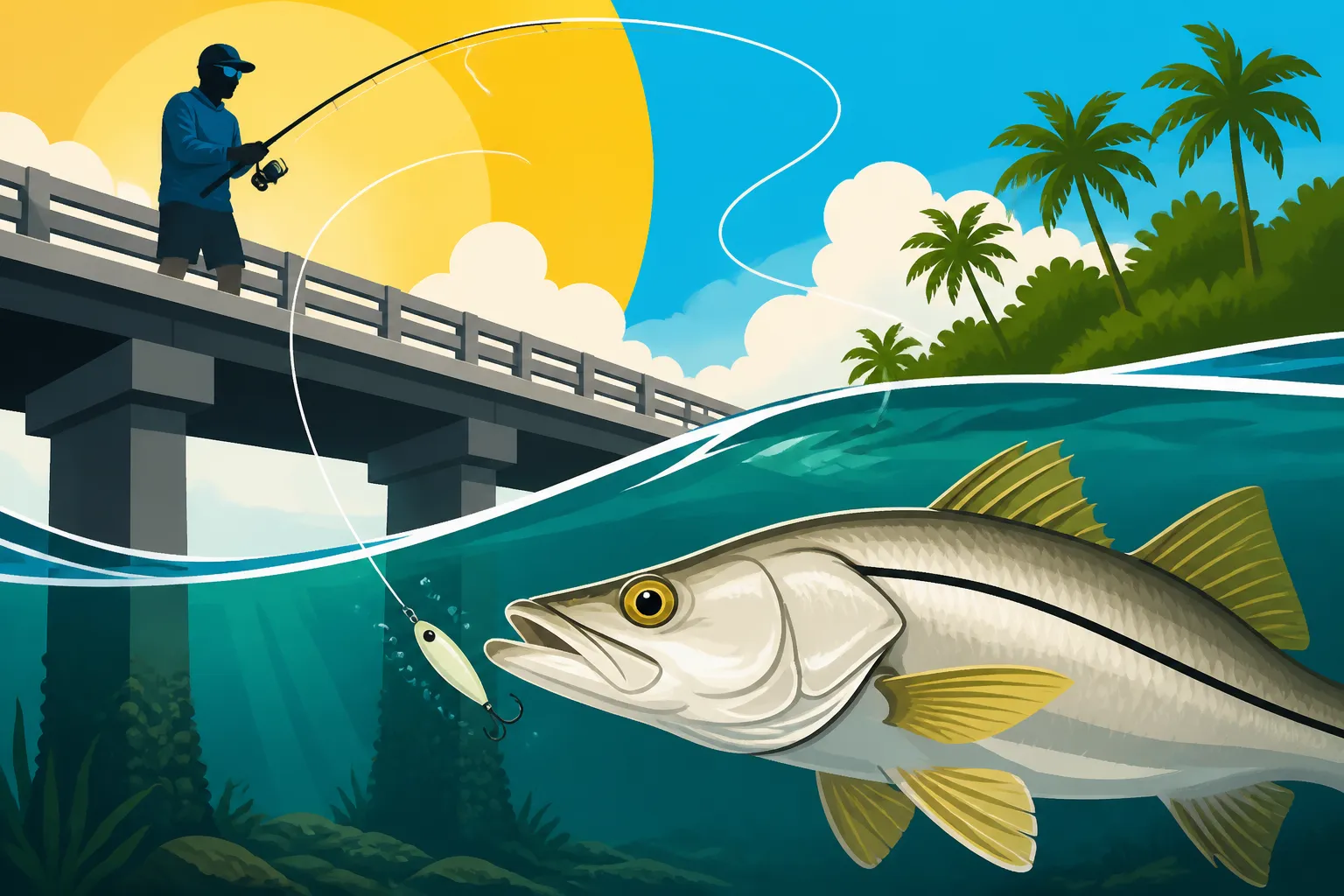
There's nothing quite like the thrill of seeing that unmistakable snook shadow lurking near a bridge pilings, but if you've ever tried to target them, you know it can be incredibly frustrating. From strong currents to tricky structures and the sheer power of these fish, bridge fishing for snook often feels like a puzzle. This guide will help you understand the dynamics of bridge fishing, equip you with the right gear, and teach you the techniques to consistently hook into those elusive "linesiders" that call these concrete structures home.
Understanding Snook Behavior Around Bridges
Bridges aren't just random spots on the water; they're bustling ecosystems for snook, offering everything a hungry predator could want. Knowing why snook are there and how they use the structure is your first step to success.
Why Bridges Attract Snook
Think of a bridge as an apartment complex for fish. Those pilings provide incredible cover, a place for smaller baitfish to hide from bigger predators, and a sanctuary for snook to ambush their prey. Snook are ambush predators, and the myriad of nooks and crannies, shadows, and current breaks created by bridge pilings, fenders, and even the rubble at the base, offer perfect hunting grounds. They love to sit just out of the main current, conserving energy, waiting for an easy meal to be swept by. The light penetration at dawn and dusk, or even at night from bridge lights, also draws in baitfish, creating a buffet that snook simply can't resist. You'll often find them stacked up on the downcurrent side of a piling or tucked deep into the shadow lines, ready to dart out and strike.
Moreover, bridges often span across natural channels or connect larger bodies of water, making them natural migration routes for various bait species and, consequently, for the snook that follow them. In many areas, bridges provide a crucial transition zone between deeper channels and shallower flats, allowing snook to move between different feeding and resting areas with ease. The constant flow of water around these structures also brings in nutrients and oxygen, fostering a rich environment. For a deeper dive into these incredible game fish, check out our comprehensive Florida Snook Fishing Guide.
Reading the Tides and Currents
When you're fishing a bridge for snook, the tide isn't just a recommendation; it's the absolute heartbeat of your success. Snook use tidal currents to their advantage, letting the water do the work of bringing food to them. On an outgoing tide, baitfish often get flushed out from canals and creeks connected to the bridge, making them easy targets. Conversely, an incoming tide pushes bait from larger bodies of water towards and under the bridge. The prime time is usually around the peak of the tide, just as the current starts to slow, or the beginning and end of the outgoing or incoming flow. This is when baitfish are often most disoriented and vulnerable.
Observing the current is crucial. Look for eddies behind pilings, distinct current lines, and areas where the water seems to swirl or slow. These are exactly where snook will be holding. They're smart; they won't fight the current unless they have to. Instead, they'll position themselves where they can dart out into the current, grab a passing meal, and retreat to safety with minimal effort. This makes understanding What Tide Is Best for Snook Fishing? absolutely critical to your planning. If the current is ripping too hard, snook might be tucked so deep into the structure that they're nearly impossible to reach. Conversely, if there's no current, the baitfish aren't moving, and the snook might not be actively feeding around the bridge.
Essential Gear for Bridge Snook Fishing
Fishing for snook around bridges demands robust gear. These fish are powerful, and the structure itself can be unforgiving. You'll need equipment that can handle hard runs and the abrasive nature of concrete and barnacles.
Rods, Reels, and Line Selection
For bridge snook, you're going to want a medium-heavy to heavy spinning rod, typically in the 7 to 7.5-foot range. This length gives you the casting distance needed to reach distant pilings and the leverage to steer a strong fish away from structure. A fast action rod tip is essential for feeling subtle bites and setting the hook quickly. My preferred setup would be a quality rod designed for heavy inshore use; something with good backbone that won't break when a big snook tries to spool you. For a deeper discussion on suitable options, explore our guide on the Best Rod for Inshore Fishing in Florida.
Pair that rod with a robust spinning reel, sized 4000 to 5000, capable of holding a good amount of line and possessing a smooth, strong drag system. When a snook bolts for a piling, you need that drag to perform flawlessly. Spool your reel with 30 to 50-pound braided line. Braid offers superior casting distance, incredible sensitivity, and most importantly, exceptional strength-to-diameter ratio, which is vital when you're fighting a fish that wants to dive into barnacle-encrusted pilings. For more details on line strength, consider reading What Pound Test Line for Snook Fishing?. The braid's lack of stretch also means you get a much more direct fight, which is advantageous for turning a fish quickly.
Lures, Baits, and Terminal Tackle
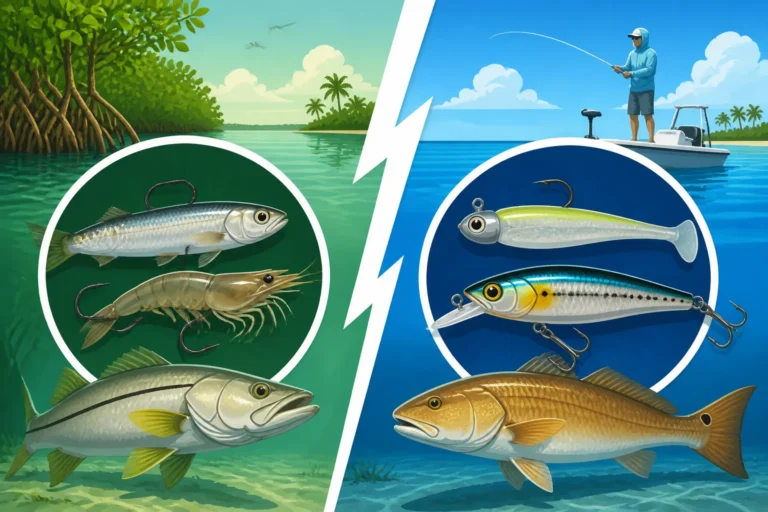
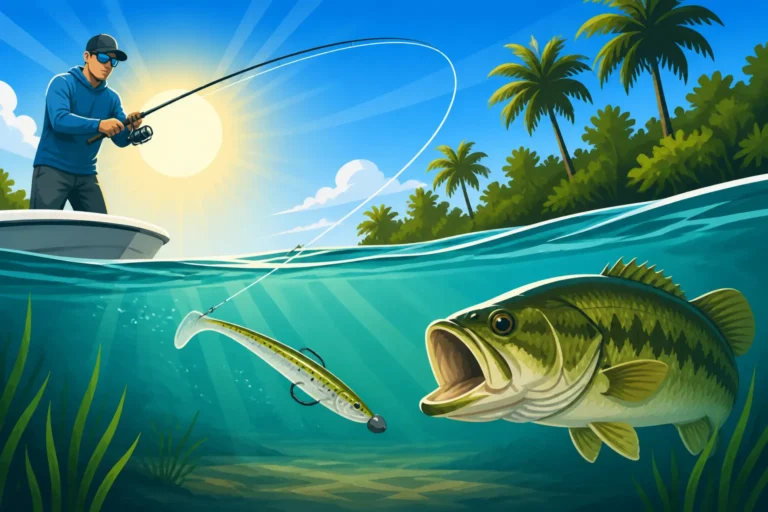
When it comes to lures for bridge snook, you'll want a versatile arsenal. Subsurface lipped plugs are fantastic for working around pilings, diving to specific depths to intercept fish. Soft plastic paddletails or jerkbaits rigged on heavy jig heads (1/4 oz to 1 oz, depending on current) are also deadly, especially when bounced along the bottom or allowed to drift naturally with the current. Topwater plugs can be explosive during low light conditions, mimicking injured baitfish on the surface. Don't forget flair hawk jigs, especially for targeting bigger snook in strong currents. Brands like D.O.A. Lures and MirrOlure offer a wide range of proven snook lures. You can often find great deals and a huge selection of these lures on Amazon.
Live bait, however, is often king for snook, especially around bridges. Pilchards, threadfin herring, pinfish, and mullet are all irresistible to snook. For a comprehensive look at bait options, check out our guide on the Best Bait for Snook Fishing in Florida. Rig your live bait on a simple circle hook (sized 3/0 to 6/0, depending on bait size) with a fluorocarbon leader. Speaking of leaders, this is not where you want to skimp. Snook have abrasive gill plates and strong jaws, so a 40 to 60-pound fluorocarbon leader, at least 2-3 feet long, is non-negotiable. Fluorocarbon is less visible in the water and more abrasion-resistant than monofilament. You'll also need sturdy swivels to connect your braid to your leader, and perhaps a small egg sinker above your swivel if you need to get your bait down in heavy current. Having a strong pair of pliers for hook removal and a reliable set of bolt cutters, just in case a hook gets swallowed or deeply embedded, is also crucial.
Techniques for Targeting Snook From Bridges
Successfully catching snook from a bridge isn't just about showing up with the right gear; it's about executing precise techniques that exploit their predictable behaviors.
Casting Strategies and Presentation
Your casting accuracy is paramount when bridge fishing. You need to get your lure or bait as close to the pilings and shadow lines as possible without hitting them directly and getting snagged. Often, snook are holding tight to the structure, meaning a cast that lands even a few feet away might be ignored. Learn to skip baits under the bridge, cast parallel to the pilings, or work your offering along the current seams. A common technique is to cast slightly upcurrent of a piling, allowing the current to sweep your bait naturally past the strike zone. This natural presentation is key; snook are opportunistic but not foolish.
When using artificial lures, vary your retrieve. Sometimes a slow, steady retrieve works best; other times, a quick twitch-and-pause retrieve mimics a wounded baitfish perfectly. For live bait, simply present it to the snook's hiding spot. Let the current do the work, or if needed, add just enough weight to get it down to the desired depth. Pay attention to every bump and subtle change in resistance. Snook bites can range from a violent strike that nearly rips the rod from your hands to a gentle "thump." It’s a good idea to always keep your bail open after the cast for a brief moment, letting the lure sink naturally, as many strikes occur on the fall, especially when the current carries it past structure. Remember to adjust your technique based on the tide and light conditions. Night fishing under bridge lights can be particularly productive as the lights draw in bait, and snook are less wary in the dark.
Fighting and Landing Snook Safely
Once you feel that unmistakable snook strike, the fight is on, and it's often a brutal tug-of-war. The first few seconds are critical. Snook will immediately try to run back into the pilings, and if they succeed, you'll likely get cut off. Your job is to turn their head and pull them away from the structure as quickly as possible. This is where the strong backbone of your rod and the smooth drag of your reel come into play. Apply maximum pressure, but don't horse the fish too much or you risk breaking your line or pulling the hook. Keep your rod tip high, pointed toward the fish, and reel continuously, using short, powerful pumps to gain line. If you're using braided line, be mindful that it has no stretch, so sudden jerks can be detrimental.
Once you've pulled the snook away from the immediate danger of the pilings, the fight often moves into open water. Snook are known for their spectacular jumps and powerful head shakes, so be ready for anything. Maintain tension, and be prepared to drop your rod tip if they jump to prevent the hook from pulling free. Bringing a snook onto a bridge can be challenging. A long-handled net is ideal, but if you don't have one, carefully hand-landing the fish by gripping its lower jaw (the "lip") is an option, but only if you're confident and the fish is subdued. Never lift a large snook by the gill plate or horizontally by the mouth, as this can cause serious damage. Always prioritize the fish's well-being. For larger fish, a boga grip or similar lip-gripper can be very helpful for control and measurement. When handling snook, especially those you plan to release, refer to Catch and Release Best Practices for Snook to ensure their survival.
Here's a quick look at some common snook lures and their ideal uses around bridges:
| Lure Type | Best Use Case | Ideal Conditions | Key Feature |
|---|---|---|---|
| Lipped Plugs | Working around pilings, targeting specific depths. | Day or night, moderate current. | Dive to set depth, erratic swimming action. |
| Soft Plastics | Bouncing along bottom, drifting with current. | Day or night, varying current. | Versatile, can be rigged with different jig heads. |
| Topwater Plugs | Mimicking injured baitfish on surface, ambushes. | Low light (dawn/dusk), calm water. | Surface commotion, "walk-the-dog" action. |
| Flair Hawk Jigs | Targeting larger snook in strong currents. | Strong current, deeper water. | Heavy, sinks fast, bucktail flair attracts strikes. |
| Live Bait | Presenting natural food source, high probability. | Anytime, any current. | Irresistible natural action and scent. |
Safety Considerations and Bridge Fishing Etiquette
Bridge fishing, while rewarding, comes with its own set of challenges and responsibilities. Being mindful of your surroundings and respectful of others is crucial for a positive experience.
Navigating Bridge Environments
Fishing from a bridge means you're often in close proximity to traffic, whether it's cars overhead or boats passing underneath. Always be aware of your casting arc and ensure no one is behind you or in harm's way before you cast. Many bridges have pedestrian walkways or designated fishing areas, but some don't. Always check local ordinances and signage before you set up your gear. You don't want to get a ticket or, worse, put yourself or others in danger. For an understanding of related regulations, consider our guide: Do You Need a License to Fish From a Florida Pier?.
Additionally, the concrete surfaces can be slippery, especially if wet, so wear appropriate footwear with good grip. Watch out for uneven surfaces, rebar, or broken glass. If you're fishing at night, a headlamp is indispensable, not just for rigging and seeing your line, but also for being visible to others. Don't forget your fishing license! You can easily get one through the Florida GoOutdoors App Fishing License or at many local retailers. And of course, always check the weather conditions. Florida is famous for its sudden thunderstorms, and being caught on an exposed bridge during a lightning storm is incredibly dangerous.
Respecting Fellow Anglers and Regulations
Bridge fishing spots can get crowded, especially during prime fishing times. It's essential to practice good fishing etiquette to ensure everyone has an enjoyable and safe experience. Give your fellow anglers ample space to cast and retrieve, and avoid casting over their lines. If you hook into a fish that runs into another angler's line, communicate clearly and calmly to work together to untangle the situation. A friendly "Fish on!" or "Crossing your line!" can go a long way.
Beyond courtesy, always adhere to Florida's fishing regulations, including size and bag limits for snook. These rules are in place to protect the fishery for future generations, and wardens patrol these areas regularly. Familiarize yourself with the current Florida Fishing Regulations and Bag Limits before you head out. Another important aspect of bridge fishing is keeping your area clean. Pack out everything you pack in, including discarded fishing line, bait containers, and any other trash. Leaving behind litter not only harms the environment but also reflects poorly on the fishing community. Consider carrying a small trash bag to make cleanup easy.
Finally, remember that snook season has specific open and closed dates, varying by region. Make sure you're aware of the Florida Snook Season Guide before you even think about keeping one. If you're fishing a bridge that is directly connected to the shore, you might be eligible for a Florida Shoreline Fishing License Explained which can sometimes offer cost savings for residents, but always verify the exact rules for your specific location.
Good luck out there, and remember, patience and persistence are key to cracking the code of bridge snook fishing!
Disclaimer
This article is for general informational purposes only and does not constitute professional advice. Laws, prices and regulations vary by location and change over time. Consult a qualified professional for guidance on your specific situation.