How to Fish a Dock at Night for Trout
Ah, the Florida night. There’s something truly magical about the way the heat breaks after sunset, and a gentle breeze might finally grace the air. For many of us, when the sun dips below the horizon, our fishing gear usually gets put away. But what if I told you that some of the best trout fishing opportunities in Florida actually begin when the lights come on? Fishing docks at night for speckled trout is a thrilling, often overlooked technique that can lead to some incredible catches, and this guide will show you exactly how to make the most of those nocturnal hours.
Why Docks Are a Nighttime Trout Goldmine in Florida
It’s easy to think of fishing as a daytime activity, but for many species, especially our beloved spotted seatrout, the night brings a whole new world of opportunity. Docks, particularly those with lights, become irresistible magnets for these fish after dark, transforming into bustling underwater cafeterias.
The Allure of Artificial Light
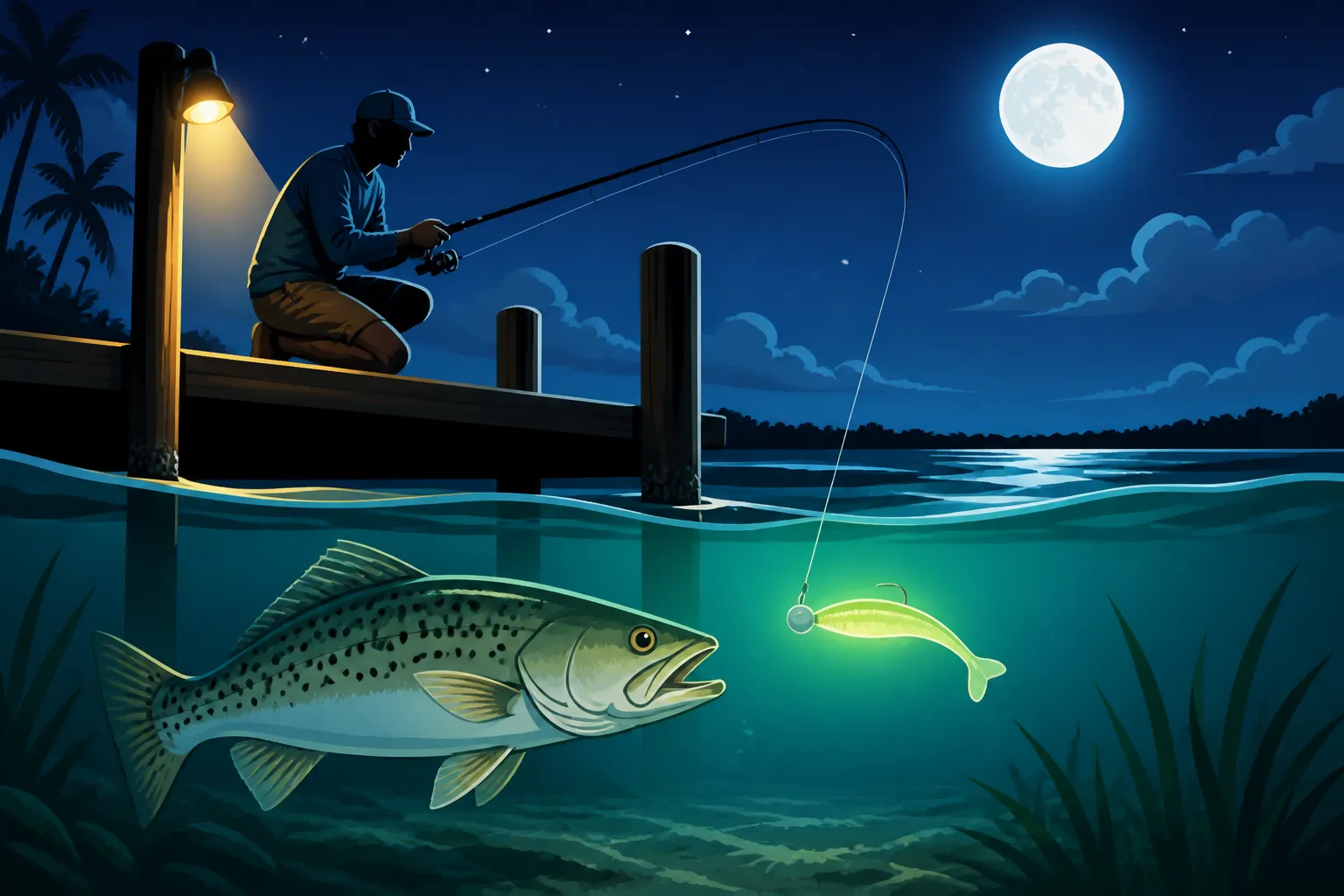
Think about it: when you turn on a porch light at night, what happens? Bugs swarm! It's the same principle underwater. Dock lights, whether they’re mounted above the water or submersed, illuminate the water column beneath and around them. This light acts like a beacon for all sorts of tiny marine life – plankton, small shrimp, and other invertebrates. These minuscule creatures then attract baitfish, like pilchards, mullet, and glass minnows, which are drawn to the light for an easy meal. And where the baitfish go, the predators follow. Spotted seatrout are opportunistic feeders, and a concentration of easy prey under a dock light is an invitation they simply can't refuse. It’s like a fast-food drive-thru for them, available all night long.
Structure and Shelter
Docks aren't just about the lights; they're also fantastic pieces of structure. During the day, they provide shade and ambush points for fish looking to avoid the scorching sun or hide from larger predators. At night, this structural advantage only intensifies. The pilings, crossbeams, and even the shadows cast by the dock itself offer trout excellent places to stage their attacks. They can lurk in the darker edges, just outside the brightest halo of light, waiting for an unsuspecting baitfish to swim by. This means you can often find them patrolling the perimeter of the light, darting in and out, or holding tight to the pilings themselves, especially where there's some current to bring food to them. Understanding that these structures provide both cover and an ambush point is key to predicting where a trout might be holding.
Prime Feeding Grounds
When you combine the artificial light attracting bait and the inherent structure offering ambush points, you create a perfect storm for active feeding. Nighttime can often be less pressured than daytime fishing, with fewer boats and less human activity, allowing fish to be bolder. Trout will often move into shallower areas at night, especially around docks, to hunt. These locations become high-traffic zones where they can feed efficiently. You might see the water come alive with splashes and swirls as trout corral baitfish against the dock or just under the surface. It’s a dynamic environment, constantly shifting as bait moves and trout react, making it an exciting challenge to present your lure or bait in just the right way. This makes understanding the nuances of how and where fish feed a critical part of a successful outing, much like you'd learn about different feeding patterns in a broader guide to Florida Spotted Seatrout Fishing Guide Furthermore, the cooler water temperatures at night can invigorate trout, making them more aggressive and willing to strike.
Essential Gear for Night Dock Trout Fishing
When you’re heading out to fish docks at night for trout, having the right gear isn’t just about making the catch; it’s about making the experience enjoyable, efficient, and safe. You don't need a boatload of specialized equipment, but a few thoughtful choices can make all the difference.
Rods, Reels, and Line Selection
For speckled trout, especially in the inshore waters of Florida, you'll want a setup that offers sensitivity, casting distance, and enough backbone to handle a decent fish. A medium-light to medium power spinning rod, typically 6'6" to 7'6" in length, is usually perfect. The longer rod helps with casting distance and managing your line around dock pilings. Pair this with a 2500 or 3000 series spinning reel. This size reel holds enough line and offers a smooth drag system, which is crucial when a spirited trout decides to make a run.
When it comes to line, a braided line of 10 to 15-pound test is an excellent choice for your main line. Braid offers superior casting distance, minimal stretch for increased sensitivity, and a smaller diameter, which is great for cutting through the water. However, braid is visible to fish, so you'll absolutely need a fluorocarbon leader. A 15 to 25-pound test fluorocarbon leader, about 2-3 feet long, is ideal. Fluorocarbon is nearly invisible underwater, more abrasion-resistant for those inevitable scrapes against dock pilings, and provides a little stretch which can be helpful during the fight. Knowing your optimal Best Rod and Reel Setup for Florida Inshore Fishing will set you up for success here.
Lures, Baits, and Tackle
This is where the fun really begins! Trout aren’t usually overly picky, especially when they’re in a feeding frenzy under a light, but having a few go-to options will serve you well.
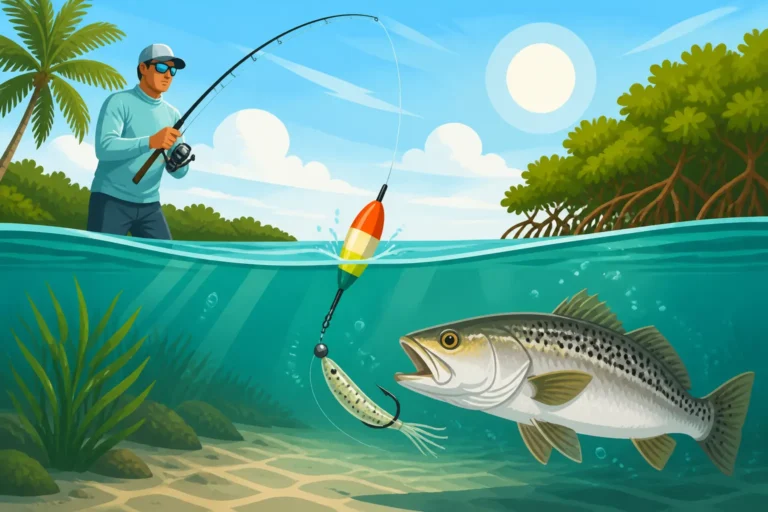
- Soft Plastics: These are arguably the most versatile and effective lures for trout. Paddle tails, grub tails, and jerk shads in lengths of 3 to 5 inches are fantastic. Colors like white, chartreuse, clear with glitter, or natural baitfish patterns tend to work best under dock lights. Rig them on a 1/8 to 1/4 ounce jig head. Experiment with different weights based on current and desired sink rate. You can find a huge variety of these on Amazon, often in multi-packs, making it easy to stock up.
- Live Bait: If you prefer live bait, shrimp are king. Live shrimp under a popping cork or free-lined with a small split shot are deadly effective. Pinfish, mullet fingerlings, or pilchards can also be very productive, especially if you're targeting larger trout. A simple kahle hook (1/0 to 2/0) or a small J-hook with a fluorocarbon leader is all you need. Sometimes the simplest presentation is the best, as outlined in guides like How to Rig a Live Shrimp for Trout.
- Hard Baits: Topwater lures, like a walk-the-dog style or prop bait, can be exhilarating when trout are schooling on the surface. Small suspending or slow-sinking twitch baits that imitate a wounded baitfish also work wonders, especially when fished just outside the light's glow. Again, white, silver, or light green patterns are solid choices. For other predatory fish that might be around, you might even consider some of the lures mentioned for Best Lure for Topwater Snook Fishing, as the action can often entice a trout as well.
- Terminal Tackle: Beyond hooks and jig heads, bring some spare fluorocarbon leader material, small swivels (if you're prone to line twist, though often unnecessary with braid), a pair of fishing pliers, and a small net for landing fish.
Lighting and Safety Gear
Since you’re fishing in the dark, proper lighting and safety are paramount.
- Headlamp: A good headlamp with a red light option is indispensable. The red light preserves your night vision and is less likely to spook fish than a bright white beam. Use the white light sparingly, mainly for tying knots or unhooking fish.
- Navigational Lights (if boating): If you're approaching by boat, ensure your vessel's navigation lights are fully functional. This is not just a legal requirement but a crucial safety measure to prevent collisions.
- Bug Spray: Florida nights often come with mosquitoes and no-see-ums. Don’t let them ruin your trip; pack a good bug repellent.
- Water and Snacks: Even at night, Florida can be humid. Stay hydrated.
- First-Aid Kit: A small kit with essentials like bandages, antiseptic wipes, and pain relievers is always a good idea, especially when handling hooks in low light.
- Appropriate Clothing: Dress in layers. Even if it's warm, a light jacket might be welcome later in the evening or if a breeze picks up. Long sleeves and pants can also help ward off bugs.
Mastering the Technique: Fishing Docks After Dark
Night fishing for trout around docks isn't just about showing up with gear; it's about strategy, stealth, and understanding how fish react to their nocturnal environment.
Approaching Docks Quietly
This is perhaps the most critical step, and one often overlooked. Trout are incredibly sensitive to vibrations and sudden movements, especially in the calm of night. Imagine you're a trout comfortably feeding under a dock light; any sudden thud, loud voice, or bright light could send you scattering into the darkness.
If you're fishing from shore, approach the dock slowly and deliberately. Avoid stomping your feet on the wooden planks; instead, shuffle or walk softly. Keep your conversations to a low murmur. Don't shine your bright headlamp directly into the water or onto the dock area you intend to fish. Instead, use the red light setting or keep your light pointed down. If you're in a kayak or small boat, approach the dock with extreme caution. Avoid bumping the boat against pilings or dropping anything loudly. Paddle silently, use a trolling motor on its lowest setting, or even pole your way into position if possible. Remember, the goal is to become part of the night, not disrupt it. Think of it like hunting: the less aware your prey is of your presence, the better your chances of success.
Casting Strategies Around Lights
Once you’re in position, your casting strategy becomes paramount. The key is to work the entire illuminated zone, as well as the transition areas between light and shadow.
- Cast Beyond the Light: Don't just cast directly into the brightest spot. Often, the bigger trout will lurk in the shadows, just outside the main glow, ambushing baitfish that venture too far from cover. Cast your lure or bait into the darker water beyond the light and retrieve it through the illuminated zone. This often triggers a strike as the fish dart out of the dark.
- Work the Edges: Pay close attention to the perimeter of the light. Cast parallel to the dock pilings, letting your lure or bait drift with any current. Work it along the edges of the light where it meets the darkness. This is a prime ambush zone.
- Fan Casting: Systematically fan cast around the dock. Start by casting straight out, then move your casts slightly to the left, then slightly to the right, covering a wide area. Don't neglect the water directly under the dock, especially if there are submerged lights.
- Vary Your Casts: Sometimes a long cast is best, other times a short, precise drop right next to a piling will do the trick. Don't be afraid to experiment with different angles and distances.
- Observe and Adapt: Watch the water. Are you seeing baitfish skipping? Are there swirls or splashes? These are visual cues that tell you where the trout might be actively feeding. Adjust your casts to target those areas.
Retrieval and Presentation Tips
How you retrieve your lure or present your bait is just as important as where you cast it. Trout under lights are often aggressive, but a natural presentation can make all the difference.
- Soft Plastics: For jig heads with soft plastics, a slow, steady retrieve with occasional twitches or pauses often works wonders. Let the jig head sink for a few seconds after casting, then begin a retrieve that mimics a wounded or swimming baitfish. If you see baitfish jumping, try speeding up your retrieve to emulate a fleeing meal. Don't be afraid to let it settle on the bottom for a moment, then give it a sharp hop; sometimes trout will strike it right off the bottom.
- Live Bait: If using live shrimp under a popping cork, cast it up-current from the light and let it drift naturally into the illuminated zone. Pop the cork occasionally to create a disturbance that attracts attention. For free-lined live bait, let it swim naturally, perhaps with a small split shot to keep it in the strike zone. The key here is to let the bait do the work, moving as it would naturally.
- Topwater Lures: If trout are busting on the surface, a topwater lure can be incredibly exciting. Use a walk-the-dog retrieve, creating a side-to-side sashaying action. If you're using a prop bait, short, sharp jerks will create a splashing commotion. The strikes on topwater lures at night are often explosive and unforgettable.
- Vary Your Speed and Depth: If one retrieve isn't working, try another. Go faster, go slower, let it sink deeper, or keep it shallower. Trout can be finicky, and finding their preference for the night is part of the puzzle. This adaptability is something you learn over time, much like discerning the Best Tides for Inshore Fishing in Florida for various species.
Handling Your Catch in the Dark
Landing and handling fish at night requires a bit more care, both for you and the fish.
- Use a Net: A landing net is your best friend when night fishing. It helps you quickly and safely secure the fish without fumbling with your hands or risking a treble hook in the dark.
- Keep a Light Handy (Red Preferred): Once you have the fish in hand or in the net, switch on your red headlamp. This allows you to see what you're doing without completely blinding yourself or the fish with a bright white light.
- Unhooking Tools: Have your fishing pliers or hook removers easily accessible. If the fish has swallowed the hook, use a de-hooker to minimize damage.
- Minimize Out-of-Water Time: If you plan to release the fish, keep its time out of the water to an absolute minimum. Hold it horizontally, support its belly, and quickly take a picture if you wish, then get it back in the water. For guidance on responsible handling, tips from Catch and Release Best Practices for Snook can be easily applied to trout and other species.
- Measure Carefully: If you're keeping trout, ensure you measure them accurately with your red light before putting them on ice. There's nothing worse than getting home and realizing your fish is undersized, which could lead to a penalty for fishing without proper adherence to regulations.
Top Tips for a Successful Night Fishing Trip
Even with the right gear and techniques, a few extra tips can truly elevate your night fishing game and lead to more consistent success.
Timing and Tides
Just because it's dark doesn't mean all times are equal. Tides play a massive role in inshore fishing, and night fishing for trout is no exception. An incoming or outgoing tide usually creates current, which can concentrate baitfish and make trout more active. A strong moving tide will often pull bait past the dock lights, creating those perfect ambush opportunities. Slack tide, when the water is mostly still, can sometimes be slower, but not always.
The moon phase can also influence night fishing. Many anglers swear by the periods around the new and full moons, when tidal swings are often stronger. However, any night with moving water can be productive. The best approach is to check your local tide charts and plan your trip to coincide with a strong incoming or outgoing tide, especially during the first few hours after sunset or before sunrise. Knowing How to Read a Tide Chart for Fishing is an invaluable skill for any angler, day or night. And while trout might bite at any time, understanding What Time of Day Do Trout Bite Best in Florida? can give you an edge, even after dark.
Stealth is Key
We talked about approaching quietly, but stealth extends throughout your entire fishing session. This means:
- Minimize Noise: Avoid banging tackle boxes, dropping lures, or making unnecessary loud movements. Sound travels efficiently through water, and what might seem minor to you could sound like a cannon shot to a fish just below the surface.
- Limit Light Pollution: Use your red headlamp only when absolutely necessary. Resist the urge to shine a bright white light constantly. Your eyes will adjust to the darkness, allowing you to see enough to fish effectively. If you're on a boat, use only the minimum necessary navigation lights to remain safe and legal.
- Cast with Purpose: Avoid excessive splashing when your lure or bait hits the water. A gentle, controlled cast is always better than a forceful one that spooks the fish before your lure even begins its retrieve.
- Observe Your Surroundings: Take a moment to watch the water before you cast. Are there fish actively feeding? Are baitfish present? What are the conditions like? A few moments of observation can save you many fruitless casts.
- Silence is Golden: If you're fishing with friends, keep conversations low. The atmosphere of night fishing is often quiet and contemplative anyway, so embrace it!
Patience and Persistence
Night fishing, like all fishing, requires patience. There will be nights when the bite is on fire, and others when it’s slow. Don't get discouraged if you're not getting bites right away.
- Change Lures/Baits: If one lure isn't working, switch it up. Try a different color, size, or retrieve. If soft plastics aren't producing, try a topwater or even a live shrimp.
- Work Different Depths: Trout might be holding high in the water column, suspended just under the lights, or hugging the bottom in the shadows. Vary your retrieve depth until you find where they are.
- Move Around: If one dock isn't producing, try another one nearby. Different docks might have different amounts of bait, current, or water depth, all of which can influence where the trout are holding. You might find one spot to be a complete bust, and another just a hundred yards away to be brimming with activity. This is part of the adventure of Night Fishing Technique for Trout Under Dock Lights.
- Trust the Process: If you've done your homework, have the right gear, and are fishing a dock with good light and structure, the trout are likely there. Sometimes it just takes a bit more time to figure out their pattern for that particular night. Stay positive, keep experimenting, and enjoy the unique experience of fishing under the stars. You might even find some unexpected catches lurking in the shadows!
Here's a quick reference for setting up your gear for night dock trout fishing:
| Gear Category | Recommendation | Details |
|---|---|---|
| Rod | Medium-light to Medium Power Spinning Rod | 6'6" to 7'6" length for casting distance and control. |
| Reel | 2500-3000 Series Spinning Reel | Smooth drag, sufficient line capacity for typical trout. |
| Main Line | 10-15 lb Braided Line | Excellent sensitivity, casting distance, smaller diameter. |
| Leader | 15-25 lb Fluorocarbon Leader | 2-3 feet long, low visibility, abrasion resistance. |
| Artificial Lures | 3-5 inch Soft Plastics (paddle tails, grub tails, jerk shads) | White, chartreuse, clear w/ glitter, natural baitfish patterns. Rig on 1/8-1/4 oz jig heads. |
| Small Topwater Lures (walk-the-dog, prop baits) | For surface activity, white/silver. | |
| Suspending/Slow-Sinking Twitch Baits | Mimic wounded baitfish, good for working the light edges. | |
| Live Bait | Live Shrimp, Pinfish, Mullet Fingerlings, Pilchards | Free-lined or under a popping cork with a 1/0-2/0 Kahle or J-hook. |
| Terminal Tackle | Jig Heads (1/8-1/4 oz), Kahle/J-hooks, Split Shots, Leader Material, Swivels (opt.) | Ensure sharp hooks and appropriate sizes for your bait. |
| Lighting | Headlamp with Red Light Option | Preserves night vision, less disruptive to fish. Use white light sparingly. |
| Safety/Comfort | Fishing Pliers, Landing Net, Bug Spray, Water, First-Aid Kit, Layers of Clothing | Essential for safe fish handling, personal comfort, and emergency preparedness. |
Fishing docks at night for trout offers a truly unique and rewarding experience. The cooler temperatures, the quiet of the night, and the visual spectacle of fish feeding under lights combine to create memories that are different from any daytime trip. With the right preparation, a bit of stealth, and a willingness to learn, you'll be well on your way to enjoying the magic of Florida's nocturnal trout bite. Grab your gear (you can often find excellent deals on specific types of soft plastics or jig heads on Amazon if you're looking to stock up!) and embrace the darkness – your next trophy trout might just be waiting under that dock light.
Disclaimer
This article is for general informational purposes only and does not constitute professional advice. Laws, prices and regulations vary by location and change over time. Consult a qualified professional for guidance on your specific situation.