What Pound Test Line for Tarpon Fishing?
Oh, the elusive "Silver King"! If you're anything like me, you've probably spent countless hours staring at your tackle box, wondering if your current line setup is truly up to the task of battling one of Florida's most magnificent and challenging game fish. Choosing the right pound test line for tarpon isn't just about strength; it's about strategy, understanding their incredible power, and making sure you're prepared for an epic fight. This guide is here to cut through the confusion and give you the confidence you need when targeting these acrobatic giants.
Understanding Tarpon and Their Fighting Style
Before we even talk about specific pound test numbers, we absolutely have to get into what makes tarpon, well, tarpon. These aren't your average fish, and trying to land one with inadequate gear is a recipe for heartbreak and a whole lot of snapped lines.
The "Silver King" and Its Power
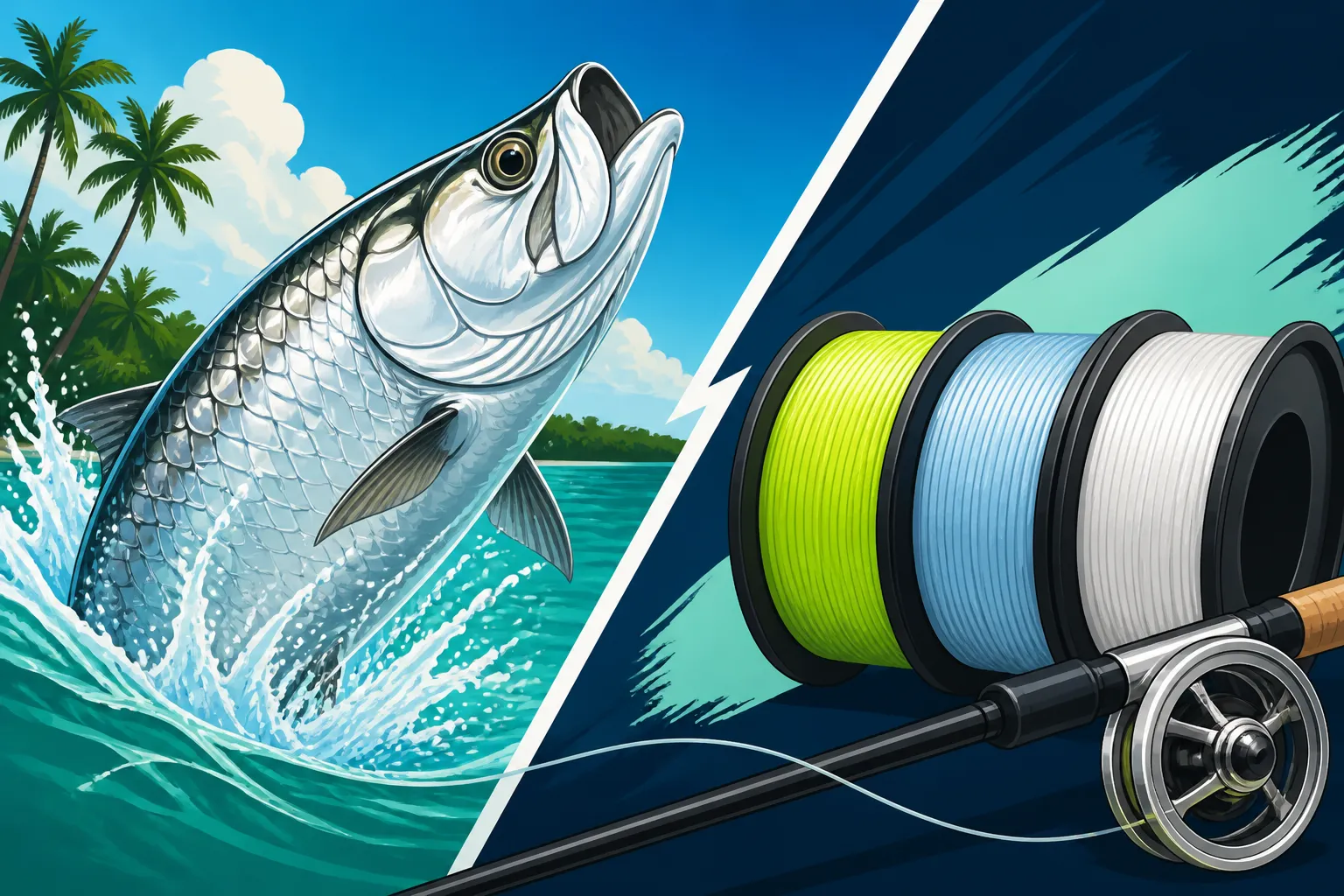
When you hook into a tarpon, you're not just fighting a fish; you're engaging with a force of nature. These magnificent creatures, often referred to as the "Silver King," can grow to immense sizes, easily exceeding 100 pounds, with some truly colossal specimens pushing well over 200. What really sets them apart, though, isn't just their bulk, but their unparalleled athleticism. Imagine a fish that can suddenly explode from the water, shaking its head violently in an attempt to dislodge the hook, then embark on blistering runs that strip line from your reel at an alarming rate.
Their sheer power is incredible. They have broad, muscular tails that allow them to accelerate with astonishing speed, making initial runs feel like you've hooked a freight train. Then comes the aerial show. Tarpon are famous for their spectacular jumps, sometimes clearing the water by several feet. Each jump is an opportunity for the hook to come loose, or for the fish's rough gill plates and abrasive mouth to fray your line. This is why having strong, reliable tackle isn't just a recommendation; it's an absolute necessity. You simply cannot afford any weak links in your setup when a fish capable of such raw power is on the other end. Anglers who are passionate about the sport often spend years refining their approach, and a significant part of that refinement involves perfecting their line choice. If you're planning your trip around the prime season, our Florida Tarpon Fishing Season Guide is an excellent resource to ensure you're there when they're most active.
The Importance of Shock Absorption
Another critical aspect of the tarpon fight is the sudden, jarring shock they can deliver to your line. One moment you're reeling, the next they've decided to make a sudden sprint in the opposite direction or launch themselves skyward. This creates immense, instantaneous pressure on your line. If your line has no give, no elasticity, something's going to snap. This is where the concept of shock absorption comes into play.
Monofilament lines, for instance, have a natural stretch that acts like a shock absorber, cushioning those brutal head shakes and explosive runs. This can be a huge advantage, especially when you're dealing with a powerful fish making unpredictable moves. Conversely, braided lines, which are incredibly strong for their diameter, have very little stretch. While this offers fantastic sensitivity and direct pulling power, it means your rod and reel's drag system bear the brunt of every sudden impact. It’s a delicate balance to strike: you need enough strength to physically hold the fish, but also enough give in the system (either from the line itself or the rod's action) to prevent abrupt breaks. Think of it like a bungee cord versus a steel cable; both are strong, but one offers critical give. Understanding this dynamic is key to successfully battling a tarpon without feeling like you're fighting a losing battle against physics.
Deciphering Pound Test Ratings for Tarpon Fishing
Now that we appreciate the incredible forces at play, let's dive into the nitty-gritty of line choices. It's not just about picking the heaviest line you can find; it's about making smart choices for your main line and, perhaps even more critically, your leader.
Main Line Considerations: Braided vs. Monofilament
When it comes to your main line, anglers typically choose between braided line and monofilament line, each with its own set of pros and cons for tarpon fishing. The "pound test" rating on the spool indicates the approximate breaking strength of the line.
Braided Line (Braid): Braid has gained immense popularity, and for good reason. For a given diameter, it is significantly stronger than monofilament. This means you can spool a much higher pound test braid onto your reel compared to mono, giving you more pulling power and line capacity. Braid also has virtually no stretch, which translates to incredible sensitivity – you can feel every bump, every nibble, and certainly every powerful head shake. This lack of stretch also provides direct power for setting the hook and turning a fish. However, this non-stretch property means that all the shock from a tarpon's antics is transferred directly to your rod and reel, requiring a well-tuned drag system and a rod with good flex. Also, braid can be less abrasion resistant than mono, especially against the rough scales or gill plates of a tarpon, or against barnacles on a bridge piling. Many anglers opt for braid in the 50 to 80-pound test range for their main line, sometimes even up to 100 pounds for larger fish or tougher conditions. If you're new to the game, you might want to learn about Florida Inshore Fishing Techniques to get a better handle on how braid integrates with other gear.
Monofilament Line (Mono): Monofilament has been the workhorse of fishing lines for decades, and it still holds its own for tarpon. Its primary advantage is its stretch. This elasticity acts as a fantastic shock absorber, cushioning those sudden, violent runs and jumps, which can prevent hooks from tearing out or lines from snapping under instantaneous pressure. Mono is also more abrasion resistant than braid in many situations, offering a bit more forgiveness if your line rubs against something. However, mono is thicker than braid for the same pound test, meaning you get less line capacity on your reel, and its stretch can reduce sensitivity, making it harder to detect subtle bites or differentiate between a fish and bottom structure. For main lines, anglers often use monofilament in the 30 to 50-pound test range, understanding they'll need to compensate for the stretch and lower breaking strength with careful rod work and drag management.
Many seasoned tarpon anglers actually opt for a hybrid approach: a braided main line for its strength and capacity, connected to a monofilament or fluorocarbon leader for abrasion resistance and some shock absorption. This gives you the best of both worlds.
Leader Line: The Unsung Hero
If your main line is the backbone, your leader line is the crucial nerve ending. This short, strong section of line connects your main line to your hook or lure, and it's where the rubber truly meets the road. Tarpon have incredibly abrasive mouths, like sandpaper, and their gill plates are razor-sharp. Without a robust leader, your main line, even a heavy braid, would likely be severed in moments.
Fluorocarbon vs. Monofilament Leader:
- Fluorocarbon: This is the top choice for many tarpon anglers. It's almost invisible underwater, a huge advantage in clear Florida waters where tarpon can be spooky. More importantly, it boasts superior abrasion resistance compared to standard monofilament, making it ideal for standing up to those rough mouths and gill plates. It also sinks faster than mono, which can be beneficial for presenting certain baits or lures.
- Monofilament: A good quality, heavy-duty monofilament leader (often labeled as "shock leader") can also be very effective. It's generally more affordable than fluorocarbon and offers a bit more stretch, which adds to the shock absorption. While perhaps not as invisible or abrasion-resistant as fluorocarbon, it's still a strong contender, especially in murky water or when using larger, more aggressive presentations where stealth is less critical.
Pound Test for Leader: The pound test of your leader needs to be significantly higher than your main line in most cases. For tarpon, leader tests typically range from 60 pounds all the way up to 120 pounds, and sometimes even higher for truly giant fish or specific scenarios like bridge fishing. The choice depends on several factors:
- Fish Size: Smaller tarpon might be fooled with 60-80 lb leader, while large "silver kings" definitely warrant 100-120 lb.
- Water Clarity: In gin-clear flats, you might try to go as light as you dare, perhaps 60-80 lb fluorocarbon, to avoid spooking the fish.
- Lure vs. Bait: Live bait can sometimes tolerate a slightly heavier leader better than a finesse lure presentation.
- Structure: If you're fishing near bridge pilings, docks, or mangroves, you'll want the heaviest, most abrasion-resistant leader possible, often 100-120 lb. This is particularly important for techniques discussed in our Florida Bridge Fishing License Rules guide.
The knot connecting your main line to your leader is also paramount. Knots like the FG knot, Alberto knot, or uni-to-uni knot are popular choices for their strength and slim profile, allowing them to pass through rod guides smoothly. Without a strong, reliable connection here, all your careful line choices mean nothing.
Recommended Pound Test Ranges for Different Tarpon Scenarios
Alright, let's get down to some concrete numbers. Remember, these are general guidelines, and local conditions, personal preference, and the specific tackle you're using will always play a role. However, these ranges will give you a solid starting point.
Inshore and Flats Fishing for Smaller Tarpon (40-80 lb class)
When you're sight fishing on the shallow flats or cruising along mangrove lines for those acrobatic, smaller-to-medium sized tarpon – generally fish in the 40 to 80-pound range – stealth and a delicate presentation can sometimes be just as important as brute strength. These fish can be incredibly wary, especially in clear water.
- Main Line: For this scenario, I'd lean towards a high-quality braided line in the 30-50 pound test range. This gives you excellent casting distance, sensitivity to feel the subtle takes, and enough strength to apply pressure. Remember, braid's thin diameter also helps with less wind resistance when casting. Some anglers might prefer 30-40 lb monofilament for its stretch and slightly better abrasion resistance if they're fishing around sparse structure, but you'll sacrifice some casting distance and sensitivity.
- Leader Line: This is where you might go a little lighter to aid in presentation, but never at the expense of necessary strength. A 60-80 pound test fluorocarbon leader is often the sweet spot. The fluorocarbon's invisibility is a huge asset here, and 60-80 lb has enough abrasion resistance for these fish, provided you fight them intelligently and keep them away from major snags. If you're particularly skilled at fighting fish and minimizing drag, you might even drop down to 50 lb fluorocarbon for extreme stealth, but I generally wouldn't recommend going any lighter. This approach is often paired with specific Florida Flats Fishing Guide Rates and techniques where precision is paramount.
When targeting these "smaller" tarpon, the fight is often characterized by explosive jumps and quick, darting runs. Your tackle should be light enough to be sporting and allow for accurate casts, but robust enough to handle the initial shock and sustained battle. Think of it as a dance – you need to lead, but also be prepared for their improvisations.
Medium Tarpon (80-120 lb class) and Bridge Fishing
Now we're stepping up the game. Medium-sized tarpon, those impressive fish in the 80 to 120-pound class, demand more respect from your line. This is especially true if you're engaging in the heart-pounding world of bridge fishing, where the stakes are incredibly high due to strong currents and unforgiving structure.
- Main Line: For these beasts, I strongly recommend a braided main line in the 60-80 pound test range. This significantly boosts your pulling power and gives you the leverage needed to turn a fish that's trying to wrap you around a pilings or dash under a bridge. The zero stretch of braid helps you apply direct pressure and maintain control. If you're using monofilament, you'd be looking at 40-50 pound test, but you'll really need to work your rod and reel to absorb the shocks and maintain tension.
- Leader Line: This is where you absolutely cannot skimp. For bridge fishing or targeting larger tarpon, you need serious abrasion resistance. I'd go with a 100-120 pound test fluorocarbon or heavy-duty monofilament leader. The extra girth and strength of this leader are crucial for withstanding the inevitable rubs against bridge pilings, rocks, or the tarpon's formidable mouth. When a tarpon takes off under a bridge, it’s a terrifying rush, and that heavy leader is your only insurance policy against a sudden, heartbreaking snap. This heavy leader is often connected to your main line with a solid FG knot, ensuring a smooth transition that can withstand immense pressure. For more on specific techniques in these areas, check out our Best Bridges for Shore Fishing in Florida guide.
The adrenaline rush of hooking a tarpon around a bridge or in a strong pass is incomparable. These fish use the current and structure to their advantage, and your tackle needs to be robust enough to withstand both the fish's power and its environment.
Giant Tarpon and Offshore Encounters (120+ lb class)
For those truly monumental tarpon, the ones that push the scales well past 120 pounds and can sometimes even be found in nearshore offshore environments, you need to bring out the heavy artillery. These are the fish that dreams are made of, and also the ones that will test every single component of your fishing setup.
- Main Line: Here, you're looking at 80-100 pound test braided line. Some anglers even go up to 120 pound test braid, particularly if they are consistently targeting trophy-sized fish in deep channels or strong passes where the current is fierce and the fish are truly enormous. This extreme strength is essential for putting maximum pressure on the fish, trying to turn its head, and preventing it from diving into deep structure or reaching distant open water.
- Leader Line: You'll want an equally robust leader to match. A 120-150 pound test fluorocarbon or heavy mono leader is appropriate here. When you're dealing with fish of this caliber, the risk of the leader getting wrapped around a gill plate or suffering extreme abrasion is incredibly high. This heavy leader provides the best chance of survival. These situations often involve specialized techniques discussed in our Florida Offshore Fishing Techniques guide, where larger baits and heavier tackle are the norm.
Battling a giant tarpon is often a sustained, grueling test of endurance for both angler and tackle. You need to be prepared for long fights, immense runs, and the sheer, unyielding power of these incredible fish. Going with the heaviest line you can comfortably fish with is always a good idea when targeting these true giants.
Other Factors Influencing Line Choice
Choosing the right pound test is paramount, but it's not a decision made in a vacuum. Several other critical factors work in conjunction with your line to create a cohesive and effective tarpon fishing system. Overlooking these can undermine even the best line choice.
Rod and Reel Matching
Your line is just one part of the equation; it needs to be perfectly matched with your rod and reel. Think of your fishing setup as an integrated system, where each component plays a vital role in balancing strength, sensitivity, and shock absorption.
- Rod Action and Power: A rod's "power" refers to its lifting strength, while "action" describes where it bends. For tarpon, you generally want a medium-heavy to heavy power rod with a fast to moderate-fast action. This combination allows you to cast heavier baits or lures, absorb the initial shock of a strike, and still have the backbone to apply significant pressure to a running fish. If your rod is too light, it won't be able to handle the high pound test line you're using, making it difficult to control the fish and potentially leading to rod breakage. Conversely, a rod that's too stiff with a light line will pull hooks and offer no cushion.
- Reel Size and Drag System: Your reel must be capable of holding enough of your chosen line (especially important with monofilament, which is thicker). More critically, it needs a smooth, powerful drag system. A sticky or uneven drag will lead to snapped lines when a tarpon makes a blistering run. The drag should be set to roughly 25-30% of your line's breaking strength. If you're using 80 lb braid, your drag should be set around 20-25 lbs. This allows the fish to take line when it needs to, preventing snaps, while still applying enough pressure to eventually tire it out. Companies like Shimano and Penn are well-known for producing reels with robust drag systems suitable for tarpon. Learning how to properly set and manage your drag is a key component to understanding How to Fight a Tarpon on Light Tackle, even if you're not using "light" gear.
A properly matched rod and reel will maximize the performance of your chosen line, giving you the best chance to land that "Silver King."
Terminal Tackle and Knots
The old adage "a chain is only as strong as its weakest link" is incredibly true in tarpon fishing. Your line choice is only as good as the knots and terminal tackle it's connected to.
- Knots: This cannot be stressed enough: learn and practice strong knots. For connecting your main line to your leader, knots like the FG knot, Alberto knot, or Uni-to-Uni knot are highly recommended for braided lines. For tying your leader to your hook or swivel, tried-and-true knots like the improved clinch knot, Palomar knot, or the snell knot (especially for circle hooks) are excellent choices. A poorly tied knot can reduce your line's effective breaking strength by 50% or more, leading to frustrating break-offs. Even the best 100 lb line is useless if the knot only holds at 40 lbs.
- Hooks: Always use sharp, strong hooks appropriate for the size of the tarpon you're targeting and the bait or lure you're using. Circle hooks are mandatory when fishing with natural bait for tarpon in Florida, as they significantly reduce gut-hooking, improving the fish's survival rate upon release. For artificial lures, strong J-hooks or trebles are necessary. Light wire hooks will straighten out in a tarpon's powerful jaw.
- Swivels and Split Rings: If you're using swivels (e.g., to prevent line twist or to quickly change leaders), ensure they are high-quality, heavy-duty ball bearing swivels with a pound test rating that matches or exceeds your main line or leader. The same goes for split rings on lures – cheap, weak split rings will simply open up under the pressure of a tarpon. These small components, if overlooked, can be the critical failure point.
Water Clarity and Structure
Finally, the environment you're fishing in will significantly influence your leader choice, even if your main line pound test remains relatively consistent.
- Water Clarity: In gin-clear flats or nearshore waters, tarpon can be incredibly line-shy. They have excellent eyesight. In these situations, using a fluorocarbon leader (60-80 lb) is almost non-negotiable due to its near-invisibility underwater. Even a slight glint from a monofilament leader can be enough to spook a wary tarpon. While you still need strength, sometimes a slightly lighter, stealthier leader can be the difference between a bite and no bite. This is crucial for success in areas like Islamorada, Florida Fishing Spots where the water is often crystal clear.
- Structure: Conversely, if you're fishing around heavy structure like bridge pilings, jetties, rock outcroppings, or dense mangroves, abrasion resistance becomes paramount. These environments are notorious for breaking off fish. Here, even if the water isn't perfectly clear, you'll want to lean towards the heaviest fluorocarbon or tough monofilament leader you can get away with (100-120 lb, or even higher). The trade-off in visibility is worth the added protection against sharp edges and rough surfaces. A tarpon's immediate instinct when hooked near structure is to try and wrap you around it, and a heavy leader gives you those precious extra seconds to try and turn its head.
Understanding these environmental factors allows you to fine-tune your leader choice, ensuring you're prepared for both the fish's power and its surroundings.
Here's a quick reference table to help visualize the recommended line setups:
| Tarpon Size / Scenario | Main Line (Braid) | Main Line (Monofilament) | Leader Line (Fluorocarbon/Mono) | Key Considerations |
|---|---|---|---|---|
| Inshore / Flats (40-80 lbs) | 30-50 lb | 30-40 lb | 60-80 lb | Stealth, casting distance, lighter presentation |
| Medium / Bridge (80-120 lbs) | 60-80 lb | 40-50 lb | 100-120 lb | Strength for structure, current, heavy runs |
| Giant / Offshore (120+ lbs) | 80-100 lb | 50-60 lb | 120-150 lb | Max power, sustained battle, extreme abrasion resist. |
Choosing the right pound test line for tarpon fishing is a nuanced decision, influenced by the size of the fish you're targeting, the environment, your personal fishing style, and the rest of your tackle. There's no single "magic number," but by understanding the characteristics of different lines and how they interact with tarpon and their habitat, you can rig up with confidence. Whether you're stalking them in the Everglades or battling them in the passes of the Florida Keys, being prepared with the right line will significantly increase your chances of experiencing the thrill of landing the "Silver King." For specific strategies on how to engage these magnificent fish, our comprehensive Florida Tarpon Fishing Guide is an invaluable resource.
Disclaimer
This article is for general informational purposes only and does not constitute professional advice. Laws, prices and regulations vary by location and change over time. Consult a qualified professional for guidance on your specific situation.