Florida Cobia Fishing Guide
Ah, the cobia! Also known as ling or lemonfish, this isn't just any fish you casually stumble upon. Cobia are known for being strong fighters and absolutely delicious on the plate, making them a highly sought-after species here in Florida. But let's be real, they can be incredibly elusive, making many anglers wonder how to even begin targeting them. This guide is here to unravel the mystery of Florida cobia fishing, offering you all the insights you need to confidently pursue these magnificent fish.
Decoding the Enigma: Understanding Florida Cobia
Cobia are one of those fish that just captivate you. Their distinct appearance, powerful fight, and superb culinary value make them a true prize for any angler. But to catch them, you first have to understand them. They're not like your average redfish or trout, waiting patiently in the grass flats. These fish are cruisers, often on the move, and understanding their habits is the first step to success.
What Makes Cobia So Special?
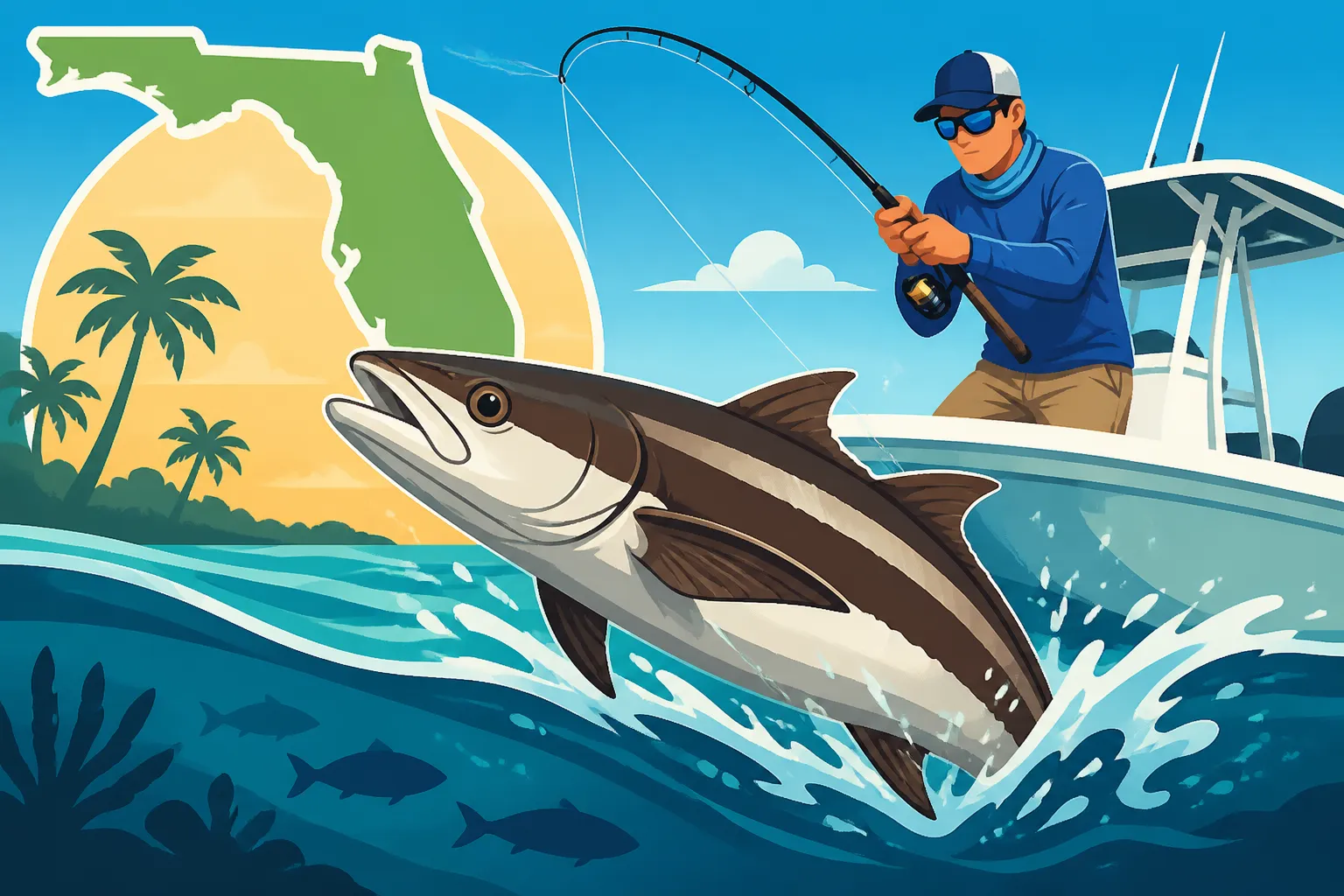
Cobia, or Rachycentron canadum if you want to get scientific, are truly unique among Florida's game fish. They're built like torpedoes, sleek and muscular, capable of blistering runs and powerful dives. What's really fascinating about them is their opportunistic feeding habits. They're not picky; they'll eat just about anything from crabs and shrimp to small fish. This broad diet means they can be targeted with a variety of baits and lures, which is a blessing and a curse. A blessing because you have options, a curse because sometimes they're just not interested in what you're offering!
Beyond their fighting prowess, cobia have a distinctive look and often hang out in places other fish might avoid, making them a thrilling challenge. When you finally hook into a big one, you'll know it. The fight is often protracted and requires a good deal of skill and patience to bring them boatside. They're known for their powerful tail kicks and can often surprise you with a last-minute burst of energy right at the boat, leading to many a lost fish if you're not prepared.
Identifying Cobia: Look for the 'Lemonfish'
Cobia are fairly easy to identify once you know what to look for, though they can sometimes be confused with sharks from a distance due to their dark coloration and long, cigar-shaped bodies. They have a distinct flat head and a prominent dark lateral stripe running from their eye to the tail, often bordered by lighter white stripes. Their dorsal fin is made up of several short, strong spines followed by a much longer soft-rayed fin, which gives them a shark-like profile. Their tail fin is typically forked, with the upper lobe slightly longer than the lower.
Locally, they're often called "lemonfish" because of a yellowish or bronze tint on their underside, especially noticeable on fresh catches. Their skin is smooth with small scales, making them a beautiful fish up close. Keep an eye out for these visual cues, especially when they're cruising near the surface – it's a dead giveaway that you've spotted a cobia. Learning to distinguish them quickly can save you valuable casting time, as they often don't linger for long.
Where Cobia Like to Hang Out
One of the most intriguing aspects of cobia is their tendency to associate with various forms of structure and even other large marine animals. While they are pelagic (open-water) fish, they frequently gravitate towards anything that offers shade, food, or a break in the current. This makes them a bit predictable, but still requires keen observation.
You'll often find them cruising around buoys, channel markers, navigational aids, and especially around large marine animals like manta rays, sharks, or even large turtles. It's thought they follow these creatures to ambush smaller fish or crustaceans that are stirred up. Offshore, they love wrecks, artificial reefs, and ledges. Nearshore, bridges, pilings, and even large floating debris can hold them. Don't overlook the sandy bottoms near these structures either; they'll often patrol these areas looking for crabs. This habit of cruising near structure is why anglers often spend time slowly moving around these features, scanning the water diligently.
Timing and Tides: When and Where to Hunt for Cobia
Like many migratory species, cobia movements in Florida are heavily influenced by seasons and water temperatures. Knowing when and where to find them significantly increases your chances of a successful day on the water. It's not just about throwing a line in; it's about being strategic.
Prime Cobia Seasons Across Florida
Florida's lengthy coastline offers cobia fishing opportunities throughout much of the year, but there are definite peak seasons. Generally, the spring migration (March to May) is a fantastic time, especially along the Gulf Coast. As water temperatures rise after winter, cobia move closer to shore and along coastal beaches and structures, making them more accessible for sight-casting. Many anglers consider this the absolute best time to target them, as large schools move through the shallows.
In the summer months, while some fish remain, many will push further offshore to deeper reefs and wrecks as inshore waters heat up. You can still find them, but it might require a longer boat ride. Fall (September to November) also sees a strong resurgence, particularly on Florida's Atlantic coast, as cobia migrate south, often following baitfish schools. Winter fishing can be a bit tougher, but some resident cobia can still be found around deeper structures and warmer waters, particularly in South Florida. Understanding these seasonal shifts is crucial for planning your trips. Best Time of Year to Fish in Florida will give you a broader view of seasonal opportunities for various species.
Top Spots to Target Cobia in Florida
Florida is truly a cobia angler's paradise, with prime locations stretching from the Panhandle down to the Florida Keys. Each region offers slightly different conditions and strategies for success.
- Florida Panhandle (Destin, Panama City Beach, Pensacola): This area is famous for its spring cobia run. Anglers often patrol the beaches and nearshore waters, looking for cruising fish. Piers here are also hot spots, offering land-based anglers a shot at these powerful fish. The numerous artificial reefs and wrecks offshore also hold good numbers.
- Big Bend Region (Steinhatchee, Homosassa, Crystal River): While perhaps not as renowned for the sheer numbers seen during the Panhandle run, this area's clear, shallow waters and extensive grass flats can surprise anglers with cobia cruising the edges or associating with rocky outcrops and channel markers. Keep an eye out for them trailing manta rays here.
- Southwest Florida (Tampa Bay, Fort Myers, Naples, Boca Grande): The nearshore waters, especially around Tampa Bay and its large structures like bridges and channel markers, can hold cobia. Further south, the wrecks and reefs off Naples and Fort Myers are productive. Charlotte Harbor Fishing Guide offers insights into a region where cobia can pop up unexpectedly.
- Southeast Florida (Miami, Fort Lauderdale, Palm Beach): While more known for offshore pelagics like sailfish and mahi-mahi, cobia can be found on reefs and wrecks. Look for them around channel markers and even deeper inshore bridges.
- Central Atlantic Coast (Sebastian Inlet, Mosquito Lagoon, Indian River Lagoon): Sebastian Inlet is a major cobia hotspot, especially during spring and fall migrations. Fish will often stage here, making it an excellent spot for both boat and shore anglers. The extensive structure and baitfish presence attract them.
- Florida Keys: While not the primary target, cobia are certainly present around the many bridges, channel markers, and offshore wrecks throughout the Keys. They often pop up as a welcome surprise when targeting other species.
Reading the Water for Cobia Hotspots
Finding cobia often comes down to keen observation and understanding what they're looking for in the water. It's not always about GPS coordinates; sometimes it's about seeing the subtle signs.
- Surface Activity: Look for disturbances on the water's surface. This could be a manta ray slowly flapping along, a large shark, or even just a school of baitfish getting nervous. Cobia often cruise just under the surface, making their dark silhouettes visible in clear water, especially when the sun is high and at your back.
- Structure: Any floating debris, buoys, channel markers, crab trap floats, or even a clump of sargassum weed can hold a cobia. These provide cover and attract baitfish, making them prime ambush points. Make it a habit to check every piece of floating structure you pass.
- Water Clarity and Temperature: Cobia prefer clear water where they can see their prey, and they have specific temperature preferences. They'll follow temperature breaks and tend to avoid excessively turbid waters. A good fish finder can help you locate thermoclines or areas with bait, which might attract cobia.
- Tides and Currents: While not as tide-dependent as some inshore species, cobia will often position themselves in currents to ambush baitfish. Strong tidal flows around inlets, passes, and bridge pilings can be productive. An outgoing tide, especially, can bring baitfish out into open water, where cobia are often waiting. Understanding how currents affect baitfish movement is key.
Arming Your Arsenal: Essential Cobia Gear
Cobia are formidable adversaries, and showing up with inadequate gear is a surefire way to end up with a heartbreaking story of "the one that got away." You need robust tackle that can handle their powerful runs and surprising strength.
The Right Rod and Reel Combo
For cobia, you'll want a medium-heavy to heavy spinning or conventional setup. The key is backbone and line capacity.
- Rods: Look for a rod in the 7 to 8-foot range, with a fast action and a strong butt section. This length gives you good casting distance for sight-casting to cruising fish and enough leverage to fight a large cobia effectively. A quality graphite or composite rod will offer the sensitivity to feel subtle bites and the power to control a surging fish. Brands like Star Rods, St. Croix, or Penn offer excellent options for these conditions.
- Reels: Spinning reels in the 5000-8000 series are popular, offering smooth drag systems and good line capacity. For conventional setups, a 20-30 pound class reel is ideal. A reliable drag system is paramount, as cobia will test it to its limits with their powerful initial runs. Make sure your reel can hold at least 250-300 yards of line. You can find robust options from brands like Penn, Shimano, or Daiwa on Amazon, which are often favored by serious anglers for their durability and performance.
- Line: Braided line is almost universally preferred for cobia fishing due to its incredible strength-to-diameter ratio, minimal stretch, and excellent casting distance. A 30 to 60-pound braided mainline is a good starting point, depending on the size of fish you expect and the structure you're fishing around. For a leader, a heavy fluorocarbon (50-80 lb test) is essential. Cobia have surprisingly keen eyesight, so fluorocarbon's invisibility underwater is a huge advantage, and its abrasion resistance is crucial when they rub against structure. Many anglers will use a long leader, often 6-8 feet, connected to the main line with a strong knot like an FG knot or a double uni. What Pound Test Line for Snook Fishing? will give you an idea of leader principles, which apply similarly to cobia.
Baits and Lures That Cobia Can't Resist
Cobia are opportunistic feeders, so a variety of baits and lures can be effective. Having a few different options ready is a smart strategy.
- Live Bait: This is often the most effective choice, especially for larger, more finicky cobia. Pinfish, mullet, threadfin herring, pilchards, and even live shrimp are all excellent choices. Crabs, particularly blue crabs, are also highly effective, especially when cobia are near structure where crabs are abundant. Presenting live bait on a simple knocker rig or a free-lined setup is often best. Best Live Bait for Florida Inshore Fishing will give you a good overview of baitfish often used for a variety of species, including cobia.
- Dead Bait: While live bait is king, fresh dead bait can also work, especially for bottom fishing. A chunk of mullet, a whole ballyhoo, or even squid can entice a bite. Make sure it's fresh, as cobia are less likely to hit stale bait.
- Lures: Jigs are arguably the most popular and effective artificial lure for cobia. Bucktail jigs in white, chartreuse, or pink, weighing from 1/2 oz to 2 oz, are excellent. Pair them with a soft plastic trailer like a curly tail grub or a paddle tail for added action and scent. Large soft plastic swimbaits, jerkbaits, and even some topwater plugs can also be effective, especially when cobia are actively feeding near the surface. Many anglers find great success with these types of lures, which can be easily purchased from online retailers like Amazon. Keep a variety of colors and sizes on hand.
- Soft Plastics: Large Gulp! shrimp or artificial swimbaits can be very effective, especially when sight casting. The scent impregnation in some soft plastics can make a big difference, triggering strikes even when fish are hesitant.
Terminal Tackle: The Little Things That Matter
Don't skimp on terminal tackle when cobia fishing; a weak link in your chain will almost certainly lead to a lost fish.
- Hooks: Strong, sharp hooks are non-negotiable. Circle hooks are often preferred, especially when fishing with live bait, as they are safer for the fish if you plan to release it and are incredibly effective at hooking fish in the corner of the mouth, reducing gut hooks. Sizes ranging from 5/0 to 8/0 are common. J-hooks are suitable for jigs and artificials.
- Swivels: High-quality barrel swivels or ball bearing swivels are essential, especially if you're using braided line and a heavy leader. They prevent line twist and provide a strong connection.
- Weights: Depending on your technique, you'll need various weights. Egg sinkers or pyramid sinkers are common for bottom fishing, ranging from 1 oz to 4 oz, or more, depending on current and depth. When free-lining live bait, you might not use any weight at all, or just a small split shot to help the bait sink slowly.
- Chum Bag: If you're planning to chum, a sturdy mesh chum bag is necessary. This will help disperse your chum effectively and keep it contained. You can even find these readily available on Amazon to have them delivered straight to your door.
Mastering the Hunt: Effective Cobia Fishing Techniques
Cobia fishing is a mix of patience, stealth, and sometimes, pure adrenaline. There's no single magic bullet, but a combination of techniques tailored to their habits will dramatically improve your success rate.
The Art of Sight Casting for Cruisers
Sight casting is perhaps the most exciting and rewarding way to catch cobia. It involves actively searching for fish, spotting them visually, and then casting your bait or lure directly to them. This technique is most effective in clear, shallow waters, particularly during the spring migration along beaches and nearshore structures.
- Spotting: This requires a keen eye and polarized sunglasses. Look for the distinct dark silhouette of a cobia, often cruising alone or in small groups. Sometimes they'll be trailing a manta ray or a shark. A tower on your boat or even a high vantage point on a pier can significantly aid in spotting. Calm, sunny days with minimal chop are ideal for sight fishing.
- The Approach: Once you spot a fish, the approach is critical. You want to get within casting range without spooking it. This means using your trolling motor quietly, poling your boat, or approaching on foot if fishing from shore. Try to position your boat so the sun is at your back, making it easier to see the fish and harder for the fish to see you.
- The Cast: The cast needs to be accurate and lead the fish. Cast your lure or bait a few feet in front of and past the cobia, allowing it to sink or move into the fish's path naturally. Avoid casting directly on top of the fish, as this will almost always spook it. The goal is to make it look like an easy meal that's swimming away.
- The Retrieve: Once your bait is in the zone, retrieve it with a slow, enticing action. If using a jig, a series of short hops or sweeps of the rod tip can mimic a wounded baitfish or crab. If using live bait, let it swim naturally. Watch the cobia's reaction; if it turns and follows, you're doing something right! Be prepared for a powerful strike.
Chumming Them Up: Drawing Cobia to You
Chumming is an excellent tactic, especially when you suspect cobia are in the area but aren't actively cruising on the surface, or when fishing around deeper structures. It relies on scent to draw fish in.
- Chum Selection: A block of frozen chum (sardine or menhaden) is a common choice. You can also make your own by grinding up baitfish, shrimp, and other tasty morsels. Adding a little menhaden oil or another fish attractant can boost its effectiveness.
- Deployment: Place your chum bag in the water, allowing the current to carry the scent trail. When fishing from a boat, position yourself so the chum drift flows over the area you believe holds cobia, such as a wreck, reef, or channel marker. For pier fishing, deploy the chum from your spot, letting it drift with the current.
- Fishing with Chum: As the chum disperses, it creates a scent corridor that can attract cobia from a distance. Fish your live baits or jigs in and around this chum line. Often, cobia will come right up to the surface in the slick. Be ready with a pitch bait (a rigged live bait or jig on a separate rod) to throw to any fish that appears. This can be especially productive when fishing wrecks or reefs, where cobia might be holding deeper. Don't be surprised if other species, like king mackerel or snapper, also show up in your chum slick.
Bottom Fishing and Structure Strategy
When cobia aren't visible on the surface, they often hold tight to structure below. This is where bottom fishing techniques come into play.
- Wrecks and Reefs: Offshore wrecks, artificial reefs, and natural ledges are prime real estate for cobia. They'll often hover just above or within the structure, waiting to ambush prey. Drop live baits (like a pinfish or legal-sized grunt) or heavy jigs down to the structure. You might need to use a fairly heavy lead to get your bait down and keep it there against the current. Be prepared to quickly reel the fish away from the structure once hooked, or you risk getting cut off.
- Bridges and Pilings: Nearshore, large bridge pilings and causeways provide excellent habitat. Cobia will often stack up on the current side of these structures, seeking shelter and ambushing bait. Use strong tackle and a leader that can withstand abrasion. A live crab or a jig pitched close to the pilings can be irresistible. Be aware of boat traffic and other anglers, especially in popular spots. Bridge Fishing License Rules in Florida might be useful for understanding specific regulations related to fishing from bridges.
- Knocker Rigs: A simple but effective bottom rig for cobia involves an egg sinker threaded directly onto your main line, above a swivel, and then a short leader to your hook. This "knocker" allows the sinker to sit on the bottom while your bait drifts more naturally just above it, making it less detectable to the fish.
- Drift Fishing: Sometimes, drifting over a known wreck or reef with live baits can be more effective than anchoring. This allows you to cover more ground and present your baits to a wider area. Pay close attention to your depth sounder and drift speed to stay over the productive zones.
Playing by the Rules: Florida Cobia Regulations and Conservation
As with all fishing in Florida, understanding and adhering to the specific regulations for cobia is not just important for avoiding fines, but crucial for ensuring a healthy fishery for generations to come.
Current Florida Cobia Regulations
Cobia regulations can vary slightly between Florida's Gulf and Atlantic coasts, and they can also change, so always double-check the latest FWC (Florida Fish and Wildlife Conservation Commission) guidelines before you head out. These details are typically provided directly on the FWC website. Generally, you'll need a Florida Saltwater Fishing License Rules if you're fishing in saltwater, unless you qualify for an exemption.
Here’s a general overview of common regulations, but remember to verify:
- Size Limits: Cobia usually have a minimum fork length. Fish smaller than this must be immediately released. This is designed to allow fish to reach sexual maturity and reproduce.
- Bag Limits: There's typically a daily bag limit per person, and sometimes a vessel limit as well, meaning only a certain number of cobia can be kept on a boat, regardless of how many licensed anglers are on board. This helps prevent overfishing.
- Gear Restrictions: While less common for cobia, some areas or situations might have specific gear restrictions (e.g., circle hook requirements when using natural bait).
- Closed Seasons: While cobia often have year-round seasons, it's always worth checking if any specific seasonal closures are in effect for particular regions or during spawning periods.
A great way to stay informed is to download the FWC Fish Rules app, which provides up-to-date regulations based on your location. Florida Fishing Regulations and Bag Limits provides a more general look at regulations for various species.
Why Conservation Matters for Cobia
Cobia are a relatively long-lived species and can grow quite large, making them susceptible to overfishing if not managed properly. The slot and bag limits, along with size restrictions, are all in place to ensure a sustainable population. When you catch and release a cobia, you're directly contributing to the health of the fishery.
- Spawning Success: Larger, older fish are often the most prolific spawners, contributing significantly more eggs to the population. Protecting these fish, especially during their spawning season, is vital.
- Genetic Diversity: Allowing a diverse range of sizes and ages to reproduce helps maintain a healthy gene pool, making the population more resilient to environmental changes.
- Ecosystem Balance: Cobia are predators in their ecosystem. Maintaining a healthy population helps keep their prey species in check and contributes to the overall balance of marine life. Every time you respect the limits, you're helping to keep this incredible species thriving in our waters.
Responsible Catch and Release Practices
If you're not keeping your catch, or if you're over your bag limit, practicing responsible catch and release is essential for the cobia's survival. These powerful fish can exhaust themselves during a fight, and proper handling dramatically increases their chances of recovery.
- Minimize Fight Time: Use appropriate tackle to bring the fish in as quickly as possible without over-stressing it. A prolonged fight can lead to lactic acid buildup and exhaustion.
- Handle With Care: Avoid touching the fish's gills or eyes. If possible, keep the fish in the water while you remove the hook. If you must bring it aboard, use a wet glove or cloth to handle it, supporting its body horizontally. Do not hang a cobia vertically by its jaw.
- Quick Hook Removal: Use de-hooking tools, especially if the hook is deep. If the fish is deeply hooked and removing the hook quickly would cause more harm, simply cut the line as close to the hook as possible. Circle hooks greatly reduce the incidence of deep hooking.
- Revive the Fish: If the cobia appears sluggish or tired, hold it gently in the water, facing into the current, and move it back and forth to force water over its gills. Only release it when it swims away strongly on its own power.
- Ventilate When Necessary: If you catch a cobia from deep water and it shows signs of barotrauma (e.g., bulging eyes, distended stomach), you may need to ventilate it with a descending device to help it return to depth. Familiarize yourself with these techniques before you encounter such a situation.
Beyond the Basics: Advanced Tips and Common Pitfalls
Even seasoned anglers can learn something new when it comes to a challenging species like cobia. Here are some extra insights to help you elevate your game and avoid common frustrations.
Expert Tips for Landing That Lunker
Catching a truly massive cobia is a dream for many, and a few pro tips can significantly increase your odds.
- Stay Ready: Cobia often appear out of nowhere. Have a "pitch rod" rigged and ready with a live bait or a jig at all times. This eliminates fumbling when a cruiser suddenly appears. That split second can make all the difference.
- The "Double Hook-Up" Strategy: If you're lucky enough to have two cobia follow your bait, resist the urge to immediately cast at the second one. Focus on landing the first fish. Once that one is secured, then you can try for the second, often by throwing a live bait or jig back into the water near where the first fish was caught. Cobia are curious and sometimes protective, so the second fish might still be hanging around.
- Patience with Following Fish: Sometimes a cobia will follow your lure or bait all the way to the boat without striking. Don't pull the bait out of the water! Figure-eight the lure beside the boat, or let the live bait swim around. Often, this is enough to trigger a strike when the fish thinks its meal is about to escape. A slow, steady retrieve can be more effective than erratic movements in this situation.
- Bring a Big Net or Gaff: Once you've fought a cobia all the way to the boat, the battle isn't over. They often have a powerful surge of energy right at the boat. A large, sturdy net or a well-placed gaff (if you intend to keep the fish and it's legal size) is essential for securing your catch. Don't rush this critical final step; many cobia are lost right at the boat.
Mistakes Even Experienced Anglers Make
We've all been there, and cobia have a way of humbling even the best of us. Learning from common errors can save you a lot of frustration.
- Not Being Stealthy Enough: Cobia have excellent eyesight and can be easily spooked. Loud noises, sudden movements on the boat, or clumsy casts can send them scurrying. Try to be as quiet and deliberate as possible in your approach.
- Using Underpowered Gear: Trying to fight a 50-pound cobia with light tackle is asking for trouble. It prolongs the fight, exhausts the fish (reducing its chances of survival if released), and often results in lost tackle or broken lines. Invest in the right Best Rod and Reel Setup for Florida Offshore Fishing to handle these powerful fish.
- Lack of Leader Material: Cobia often rub against structure or have rough mouths. Skipping the heavy fluorocarbon leader is a recipe for break-offs. It's not just about strength; it's about abrasion resistance.
- Not Leading the Fish with the Cast: Casting directly on top of a cruising cobia is a common mistake. It spooks them almost every time. Remember to lead the fish, allowing the bait to settle into its path. Think of it like throwing a football to a moving receiver.
- Giving Them Slack: Cobia are notorious for headshakes and powerful surges. Any slack in the line can give them the leverage they need to throw the hook. Keep your rod bent and maintain constant pressure during the fight.
- Ignoring the Second Fish: While the "double hook-up" strategy suggests focusing on one, a common mistake is not even looking for a second fish. Often, cobia travel in pairs or small groups, especially during migration. Always scan the water for another fish after hooking the first.
Safely Handling and Releasing Cobia
If you decide to release your cobia, doing it properly is key to its survival. A fish that swims away vigorously is a testament to good angling.
- Avoid the Deck: The deck of a boat is hot and rough. Keep the fish in the water as much as possible. If a photo is desired, be quick and gentle, supporting the fish horizontally.
- Mind the Spines: Cobia have sharp dorsal spines. Be careful when handling them, especially near the head.
- Use the Right Tools: Long-nose pliers or a de-hooking tool make removing hooks much easier and safer for both you and the fish.
- Picture Perfect, Quickly: If taking photos, do so swiftly and get the fish back in the water. Remember, the goal is to get it back to its element as quickly and safely as possible.
- No "Hero Shots" Hanging Vertically: Do not hold a large cobia vertically by its jaw. This can damage its internal organs and jaw structure. Always support its weight horizontally, ideally with one hand on the jaw or gill plate (carefully!) and the other under its belly.
With these tips and a solid understanding of cobia behavior and regulations, you're well on your way to a thrilling and successful day of Florida cobia fishing! Tight lines!
Disclaimer
This article is for general informational purposes only and does not constitute professional advice. Laws, prices and regulations vary by location and change over time. Consult a qualified professional for guidance on your specific situation.