Florida Sheepshead Fishing Guide
There's nothing quite like the thrill of a Florida fishing trip, but for many anglers, the elusive sheepshead can be a source of both fascination and profound frustration. These striped bandits, with their human-like teeth and uncanny ability to steal bait right off the hook, are notorious for challenging even the most seasoned fisher. If you've ever felt like you're just feeding the fish instead of catching them, you're not alone! This comprehensive guide is here to unravel the mysteries of the sheepshead, equipping you with the knowledge and tactics to finally turn those frustrating nibbles into a successful catch.
Understanding Florida Sheepshead: The Convict of the Coast
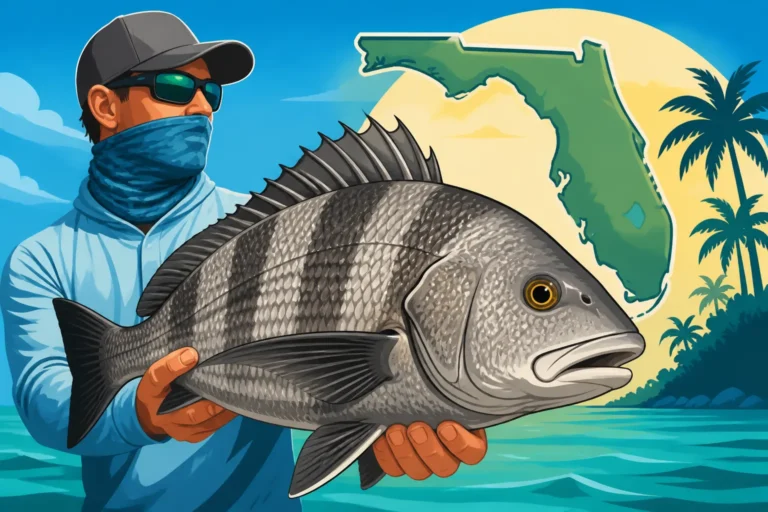
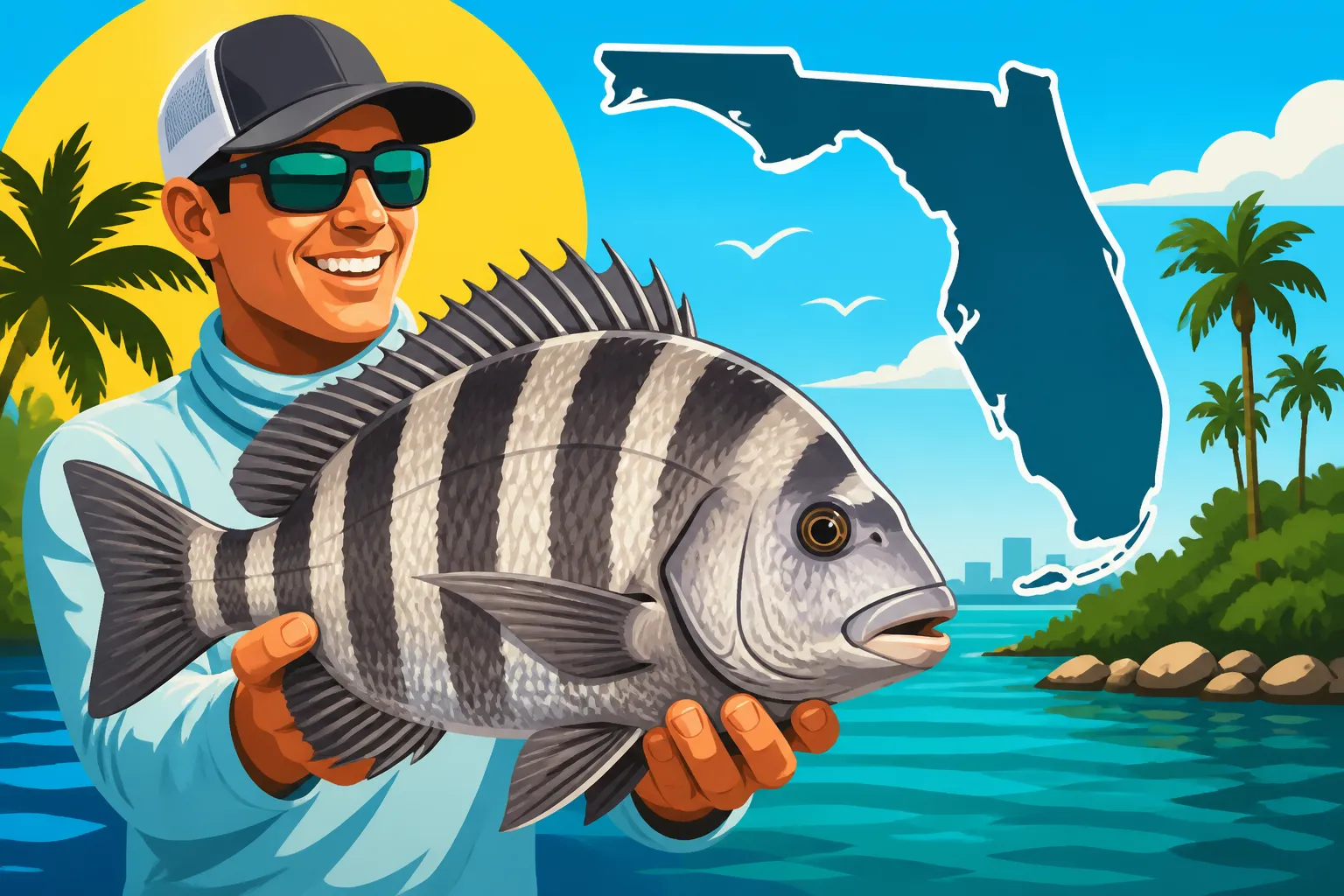
Sheepshead, often affectionately (or perhaps exasperatedly) called "convict fish" due to their distinctive black and white vertical stripes, are truly unique inhabitants of Florida's inshore and nearshore waters. They're a favorite target for many, not just for the challenge they present, but also for their delicious, flaky white meat. But before you can catch them, you really need to understand what makes them tick – and what makes them so tricky.
Appearance and Characteristics
One of the most striking features of a sheepshead is its dentition. They boast incisor-like teeth at the front, molars in the back, and even flat grinding teeth in the throat. This dental setup is perfectly adapted for crushing the shells of their preferred diet: crustaceans and mollusks. Imagine trying to pick up a tiny crab with a pair of pliers – that's essentially what a sheepshead does, making their bite incredibly subtle. Their body is deep and compressed, adorned with those prominent dark vertical bars on a silvery-grey background, which provide excellent camouflage against pilings and rocky bottoms.
They are typically found in saltwater and brackish environments, rarely venturing far into freshwater. These fish can grow to a respectable size, with many anglers landing specimens in the 3-5 pound range, though much larger ones are caught. Their powerful jaws and ability to maneuver through heavy structure make them a strong fighter on light tackle, adding to the excitement once you finally get one hooked.
Diet and Feeding Habits
Sheepshead are opportunistic feeders with a specialized diet. They primarily graze on sessile (non-moving) organisms attached to underwater structures. Think barnacles, oysters, mussels, and various crustaceans like fiddler crabs and sand fleas. They'll also happily munch on small shrimp. This dietary preference is key to understanding why certain baits work so well and why their bite feels so different from other fish.
Because they're scraping and crushing, their bite isn't typically a hard strike or a violent tug. Instead, it's a very light, almost imperceptible "tap-tap" as they nibble away at the bait, trying to dislodge it from the hook or crush it in their mouths. Many anglers describe it as feeling like a shrimp swimming by, or just a slight weight on the line. This gentle approach is precisely why so many anglers miss their strikes. It takes a keen sense of feel and often, a lot of patience, to distinguish a sheepshead bite from the current or other minor disturbances. If you're not paying close attention, your bait will be gone before you even realize a fish was there.
Where Sheepshead Live in Florida Waters
Sheepshead are structure-oriented fish, meaning they love to hang out around anything solid in the water that can host their food sources. This makes them incredibly predictable in terms of location, which is a huge advantage for anglers. You'll find them congregating around bridge pilings, dock posts, oyster bars, rock piles, jetties, seawalls, and even submerged wrecks. Anywhere barnacles, small crabs, and other invertebrates can thrive, sheepshead will likely be close by.
In Florida, you can find them across the entire state, from the Panhandle down to the Keys, and on both the Gulf and Atlantic coasts. Popular areas include Tampa Bay, Charlotte Harbor, the Indian River Lagoon, and countless bridges and causeways throughout the state. During the cooler months, especially late winter and early spring, they tend to gather in larger aggregations for spawning, making certain spots particularly productive. Knowing that they stick to structure is half the battle; the other half is presenting your bait effectively in those often snag-prone environments. For more specific local insights, check out Best Spots to Catch Sheepshead Around Docks.
Essential Gear and Bait for Sheepshead Fishing
Catching sheepshead isn't just about finding them; it's about being equipped with the right tools to outsmart their notoriously subtle bite. Using the wrong gear is a sure-fire way to end up frustrated, watching your expensive bait disappear without so much as a bend in your rod.
Rod, Reel, and Line Selection
For sheepshead, finesse is the name of the game. You'll want a rod that is light to medium-light action, typically 6 to 7 feet in length, with a very sensitive tip. This sensitive tip is crucial for detecting those barely-there bites. A graphite rod is often preferred over fiberglass for its superior sensitivity, allowing you to feel every little tap. Paired with this, a reliable spinning reel in the 2500-3000 size range will offer smooth drag and enough line capacity for most inshore encounters. You don't need heavy-duty gear because sheepshead aren't typically making long, blistering runs, but they will try to pull you into structure, so a smooth drag is still important.
When it comes to line, many anglers opt for a thin braided line (10-15 lb test) for its incredible sensitivity and zero stretch, which further enhances bite detection. However, braid is highly visible, so you absolutely need a fluorocarbon leader (15-20 lb test) for abrasion resistance against sharp shells and pilings, and for its near-invisibility underwater. Fluorocarbon is also a bit stiffer than monofilament, which can help keep your bait from spinning too much in the current. If you're curious about line choices for other species, you might find What Pound Test Line for Snook Fishing? helpful for comparison. For readily available gear, you can often find great rod and reel combos, as well as various types of line and leaders, on Amazon.
The Best Baits to Entice Sheepshead
This is where the sheepshead angler's dedication truly shines. While they can sometimes be caught on artificial lures, live bait is overwhelmingly the most effective choice. And not just any live bait – sheepshead have specific preferences.
- Fiddler Crabs: These are arguably the gold standard for sheepshead. Their small size, hard shell, and natural occurrence in sheepshead habitats make them irresistible. You can often find them scampering around mangrove roots or rocky shorelines at low tide.
- Live Shrimp: A perennial favorite for almost all inshore species in Florida, shrimp also work wonders for sheepshead. Hook them carefully through the tail or under the horn to keep them lively. How to Catch Shrimp for Bait in Florida offers great tips if you're looking to catch your own.
- Sand Fleas (Mole Crabs): Found buried in the wet sand along Florida's beaches, these small crustaceans are another excellent natural bait. They're particularly effective when fishing near beaches, jetties, or passes.
- Oysters and Barnacles: You can actually chip these directly off pilings and rocks where sheepshead are feeding. The trick is to present just the meat on a small hook, which requires a gentle touch and knowing how to deal with their tough shells without destroying the bait.
- Clams and Mussels: Similar to oysters, the meats from these mollusks are also very enticing. Freshness is key, as they can quickly become mushy and fall off the hook.
Regardless of the bait, the key is to use small pieces that fit their mouths and to present them naturally. For a broader look at bait options, check out Best Live Bait for Florida Inshore Fishing.
Terminal Tackle for Success
Getting your bait to the sheepshead and then converting a bite into a hook-up requires specialized terminal tackle. Small, sharp hooks are non-negotiable. Sheepshead have small mouths and those crushing teeth, so a large hook will simply not fit or will be quickly spit out.
- Hooks: Size 1 or 1/0 J-hooks are popular, but many anglers swear by small, sharp circle hooks (sizes #2 to 1/0). Circle hooks are excellent because they are designed to hook the fish in the corner of the mouth as it tries to swim away, reducing gut-hooking and often increasing your hook-up ratio once you get used to not setting the hook aggressively.
- Riggings: The most common rig is a simple knocker rig or a Carolina rig.
- Knocker Rig: Thread an egg sinker (1/4 to 1/2 ounce, depending on current) directly onto your main line, then tie on a small barrel swivel, followed by about 12-18 inches of fluorocarbon leader, and finally your hook. The sinker "knocks" right against the swivel, keeping the bait tight to the bottom in current.
- Carolina Rig: This is similar, but the sinker is placed above a swivel, and then a longer leader (18-36 inches) is attached. This allows the bait to drift a bit more naturally away from the weight.
- Some anglers also use a small jig head (1/8 to 1/4 ounce) with a small piece of bait. This can be particularly effective for a more active presentation.
The goal with any rig is to present your small bait directly where the sheepshead are feeding, usually tight to the structure, with as little resistance as possible. Heavy weights or clunky tackle will deter these wary fish.
| Bait Type | Best Use Case | Collection Tips | Notes |
|---|---|---|---|
| Fiddler Crabs | All-around best, especially near mangrove roots. | Hand-catch near shorelines at low tide. | Tough, stays on hook well. |
| Live Shrimp | Versatile, works in many scenarios. | Cast net, trap, or buy from bait shops. | Very effective, but can be easily stolen. |
| Sand Fleas | Excellent near sandy beaches, jetties, passes. | Use a sand flea rake at the surf line. | Digs into the sand, good for bottom fishing. |
| Oyster/Barnacle | Direct from structure, mimics natural feeding. | Chip off pilings/rocks. | Requires careful handling, can be messy. |
| Clam/Mussel Meat | Good alternative, especially if other baits scarce. | Buy fresh, shuck carefully. | Can be soft, use small pieces, thread onto hook. |
Top Techniques for Catching Florida Sheepshead
Sheepshead fishing is an art form that demands a specific approach. It's less about power and more about precision, patience, and a deep understanding of how these tricky fish feed. If you're used to aggressive strikes, you'll need to recalibrate your senses for the subtle world of sheepshead.
Finesse and Patience: The Key to Sheepshead Bites
The number one rule for sheepshead fishing is patience. These fish are masters of stealthy bait theft. Their bite is often described as a slight "tick," a gentle "tap," or just a feeling of unusual pressure on your line. It's not a strong pull or a violent twitch. Imagine a fish sucking the bait off your hook rather than swallowing it whole. This is why a sensitive rod and braided line are so crucial – they transmit these minuscule movements to your fingertips.
When fishing, hold your rod tip high and keep a keen eye on your line for any unusual movement, or just feel for those light taps. If you feel anything at all that isn't clearly the current, a snag, or another fish, it's often a sheepshead. Don't immediately yank your rod. Instead, apply slow, steady pressure, reeling up any slack, until you feel the weight of the fish. Then, a quick, firm sweep-set of the hook, rather than a violent jerk, is usually all it takes. Aggressive hooksets often pull the bait straight out of their mouth. It takes practice, but once you start recognizing that subtle bite, your success rate will skyrocket.
Fishing Around Structure and Pilings
As we've covered, sheepshead are almost always found around structure. This means bridge pilings, dock posts, oyster beds, and rock piles are your prime targets. The trick is to present your bait as close to the structure as possible without getting immediately snagged.
- Vertical Presentation: Often, the most effective method is to drop your bait straight down alongside a piling or into a hole in a rock pile. This mimics how their natural food sources are found. Use just enough weight to hold your bait on the bottom, allowing it to gently bounce or rest right where the sheepshead are grazing.
- Current Considerations: Sheepshead typically face into the current, waiting for food to drift past. Position your boat or cast upstream of the structure, allowing your bait to drift naturally into the feeding zone. However, be mindful of strong currents that can make it difficult to keep your bait in place and feel bites.
- Targeting Barnacle Lines: Look for areas on pilings or rocks that are heavily encrusted with barnacles. These are prime feeding grounds. Sheepshead will often hang just below these lines, picking off their crunchy meals. Being able to drop your bait precisely into these spots is a game-changer. For other structure-related fishing, consider reading Best Spots to Catch Sheepshead Around Docks.
Chumming Strategies for Sheepshead
Chumming can be incredibly effective for sheepshead, especially when you're trying to draw them out from heavy cover or concentrate them in a specific area. The best chum for sheepshead is usually natural to their diet.
- Crushed Oysters or Barnacles: Take some oysters or barnacles (you can buy them at seafood markets or chip them off existing structure) and crush them up into small pieces. Drop these bits directly into the water near your fishing spot. The aroma and tiny particles will drift down, attracting sheepshead.
- Crushed Shrimp or Crab: If you have extra bait, crushing a few shrimp or small crabs and tossing them in can also work wonders. The key is to create a consistent, but not overwhelming, chum slick. You want to attract them, not feed them so much they ignore your hook.
- Frequency and Amount: Don't dump a huge bucket of chum all at once. Instead, sprinkle small amounts frequently, every few minutes. This keeps a steady stream of scent and particles in the water, encouraging fish to investigate and stay in the area. A small mesh bag filled with crushed chum can be hung near the structure to slowly disperse the attractants, allowing you to focus on feeling those bites.
Florida Sheepshead Seasons and Regulations
Understanding the regulations and prime times to target sheepshead is just as important as knowing your gear and techniques. Fishing legally and responsibly ensures the sustainability of this fantastic sportfish for future generations of anglers.
Best Time of Year to Target Sheepshead
While you can catch sheepshead year-round in Florida, their activity and concentrations vary significantly throughout the seasons. The undisputed prime time for sheepshead fishing in Florida is late winter through early spring, roughly from January to April. During these cooler months, sheepshead gather in large numbers for their spawning aggregations. They move into shallower coastal waters, estuaries, and around major structures like bridges and jetties, making them more accessible and numerous for anglers.
As the water temperatures rise in late spring and summer, sheepshead tend to disperse and move into deeper, cooler waters or more isolated structures. While still catchable, they are generally less concentrated and require more effort to locate. Fall can also be a productive time as water temperatures begin to drop, signaling a return to more active feeding in preparation for winter. If you want to know more about fishing across different times of the year, take a look at Florida Fishing Seasons Explained and Best Time of Year to Fish in Florida.
Size and Bag Limits for Sheepshead
Florida has specific regulations governing the harvest of sheepshead, designed to maintain healthy fish populations. It's crucial to always check the most current regulations provided by the Florida Fish and Wildlife Conservation Commission (FWC) before heading out, as they can change. Generally, there will be a minimum size limit and a daily bag limit per person.
For sheepshead, common regulations include a minimum size (e.g., 12 inches total length) and a daily bag limit (e.g., 8 or 10 fish per person). These limits ensure that smaller, immature fish have a chance to grow and reproduce, and that overfishing does not deplete the population. Always measure your fish carefully from the tip of the nose to the end of the tail to ensure it meets the minimum length requirement. Releasing undersized fish promptly and safely is a key part of responsible angling. You can find precise details on current regulations in resources like Florida Bag Limit for Sheepshead.
Understanding Licensure for Sheepshead Fishing
Like most recreational fishing activities in Florida, targeting sheepshead requires a valid Florida saltwater fishing license for residents and non-residents aged 16 and older. This license is essential for anyone fishing in coastal waters, which is where sheepshead primarily reside. The funds generated from license sales directly support conservation efforts, habitat restoration, and fisheries management across the state.
However, there are a few important exemptions:
- Shoreline Fishing: Florida residents fishing with hook and line from shore or a structure attached to shore (like a pier or bridge not requiring a separate license) may be exempt from the saltwater fishing license.
- Charter Boats: If you're fishing on a licensed for-hire vessel (like a fishing charter or party boat) that has a valid charter license, you generally do not need an individual recreational fishing license. The boat's license covers all anglers on board.
- Age Exemptions: Children under 16 years of age are not required to have a fishing license.
- Disabled Residents/Military: Certain disabled residents and active military personnel on leave may also qualify for exemptions or discounted licenses.
It’s always best to verify your specific situation with the FWC directly to ensure you are compliant. Don't risk a fine for fishing without the proper documentation. For a deep dive into who needs a license and the various rules, refer to Florida Saltwater Fishing License Rules and Who Needs a Fishing License in Florida. Obtaining your license online is often the easiest and quickest way, but bait shops and sporting goods stores like those that carry gear from brands often found on Amazon can also help you out.
Cooking Your Catch: Enjoying Florida Sheepshead
You've put in the time, mastered the subtle bites, and successfully landed a few "convicts." Now comes one of the most rewarding parts: enjoying the fruits of your labor! Sheepshead are highly prized for their table fare, offering a delicious, mild, and flaky white meat that's incredibly versatile in the kitchen.
Cleaning and Filleting Sheepshead
Cleaning a sheepshead can be a bit more challenging than some other common Florida species due to their tough scales and somewhat bony structure. Don't let that deter you, though! With the right technique, it's manageable.
- Tough Scales: Sheepshead have thick, armor-like scales that can be difficult to remove with a standard scaler. Many anglers find it easier to use a sturdy, sharp knife to carefully cut the scales off, or even use a heavy-duty descaler. Some even opt to skin the fish rather than scale it, which can be an easier method for these particular fish.
- Filleting Process: Once scaled (or skinned), the filleting process is similar to other fish. Start by cutting behind the gill plate, down to the backbone. Then, turn your knife parallel to the backbone and run it down the length of the fish, separating the fillet. Be mindful of their surprisingly thick ribs, which you'll need to cut around. The meat is firm and holds its shape well, making for beautiful fillets. If you're new to filleting, a general guide like How to Fillet a Grouper can provide helpful visual and technique tips that apply across different species.
Popular Sheepshead Recipes and Preparation
Sheepshead meat is characterized by its mild flavor, firm texture, and flaky consistency when cooked. It's not overly "fishy," making it a great choice for those who prefer lighter seafood.
- Baking or Broiling: This is a fantastic way to prepare sheepshead fillets. Season simply with salt, pepper, a squeeze of lemon, and a pat of butter or a drizzle of olive oil. Bake at around 375°F (190°C) until the fish flakes easily with a fork, usually 12-15 minutes depending on thickness. Broiling for a few minutes can give it a nice crispy top.
- Grilling: Sheepshead fillets hold up well on the grill. Marinate them briefly in some citrus and herbs, or just use a simple rub. Cook on a medium-hot grill until cooked through, flipping once. Using a grill basket can prevent smaller fillets from falling apart.
- Frying: For a classic preparation, sheepshead fillets can be breaded and pan-fried or deep-fried. A simple cornmeal or flour dredge seasoned with your favorite spices will create a delicious crispy crust, perfectly complementing the tender interior.
- Ceviche: Due to its firm texture and mild flavor, sheepshead is also an excellent candidate for ceviche. Cube the raw fish and marinate it in lime juice with onions, cilantro, and chili peppers. The acid "cooks" the fish, creating a refreshing dish perfect for a warm Florida day.
Ultimately, the best way to prepare sheepshead is the way you enjoy it most. Its versatility means you can experiment with various flavors and cooking methods. If you're debating whether the effort is worth it, the general consensus is a resounding yes.
Handling Your Catch Responsibly
Responsible angling doesn't end when the fish is caught and measured. Whether you plan to keep your sheepshead or release it, proper handling is vital.
- For Keeping: If you're keeping your legal-sized sheepshead for dinner, immediately place it on ice in a cooler. This not only keeps the meat fresh and firm but also helps dispatch the fish humanely. Keeping fish cold is paramount to preserving its quality and flavor.
- For Release: If a sheepshead is undersized, or if you've already met your bag limit, it must be released quickly and carefully. Handle the fish as little as possible. Use wet hands to avoid removing their protective slime coat. If using circle hooks, they often hook in the mouth, making removal easier. Cut the line if the hook is deeply embedded and cannot be removed without causing further damage. Barbless hooks can also aid in quick releases. Minimizing the fish's time out of water and supporting its body weight properly will greatly increase its chances of survival after release. We want to ensure these wily "convicts" continue to challenge anglers for years to come.
Disclaimer
This article is for general informational purposes only and does not constitute professional advice. Laws, prices and regulations vary by location and change over time. Consult a qualified professional for guidance on your specific situation.