Best Depth to Fish for Snapper Offshore
One of the biggest head-scratchers for anglers heading out into Florida's vast offshore waters is figuring out just how deep to drop their lines for snapper. It's not as simple as "deep" or "shallow" because different snapper species call different depths home, and environmental factors are always changing the game. This guide will cut through the confusion and help you pinpoint the best depths to fish for snapper offshore, transforming those puzzling trips into productive ones.
Understanding Florida Snapper Species and Their Habitats Offshore
Florida's offshore waters are teeming with various snapper species, and understanding their preferred habitats is the first step to figuring out where your bait should be. It's not a one-size-fits-all approach; each species has its own quirks and comfort zones.
Red Snapper: The Deepwater Trophy
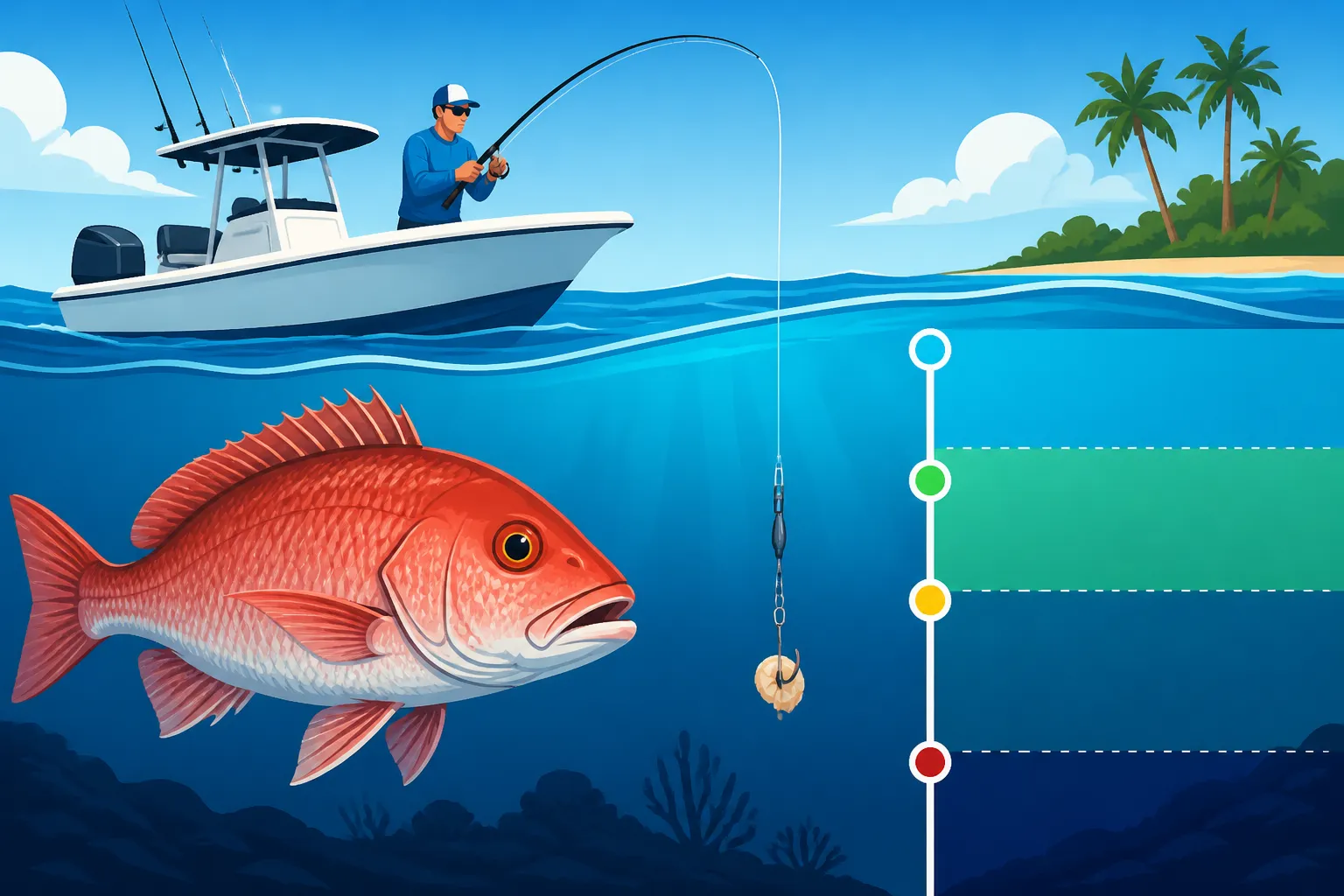
Ah, the mighty Red Snapper. These are often the holy grail for offshore anglers, known for their size, fighting prowess, and delicious fillets. But they make you work for them! Red Snapper typically prefer deeper, cooler waters, often congregating around significant bottom structure like artificial reefs, natural ledges, shipwrecks, and even oil rigs. You're usually looking at depths ranging anywhere from 60 feet all the way out to 300+ feet. On the Gulf Coast, especially, these fish can be found in incredible numbers on deep-water structures.
During the cooler months, or when there's a strong thermocline, they might move a bit shallower within their preferred depth range, but they’ll always be near some kind of structure that offers shelter and ambush points for baitfish. Understanding the Florida Red Snapper Season Guide is crucial here, as their season is often tightly regulated and can be quite short, making every trip count! The thrill of bringing up a big "red" from the deep is truly something special, but remember, the deeper you go, the more specialized your gear needs to be to handle the pressure and the fight.
Mangrove Snapper: Versatile Bottom Dwellers
Also known as Grey Snapper, Mangrove Snapper are incredibly adaptable and can be found in a surprising array of depths, from shallow inshore mangroves (hence the name!) to much deeper offshore reefs. When we talk about offshore, you'll find them on rocky ledges, wrecks, and coral reefs, often alongside their red snapper cousins, but generally in slightly shallower zones. While you might catch them in 20-30 feet of water near artificial reefs closer to shore, they’re also abundant in depths of 60 to 150 feet.
What makes Mangrove Snapper unique is their tendency to school tightly around structure and their keen eyesight, making them a bit more challenging to fool sometimes. They're not always hugging the very bottom; sometimes you'll find them suspended slightly above the structure, picking off passing bait. These fish are a blast to catch and offer consistent action, often being a reliable target even when other species are finicky. Our detailed Florida Mangrove Snapper Fishing Guide offers even more insights into targeting these savvy fish.
Vermilion Snapper: Schooling on the Reef
Vermilion Snapper, or "Beeliners" as they're affectionately known, are smaller than Red Snapper but make up for it in sheer numbers and aggressive bites. They are typically found in deeper waters, from 80 to 350 feet, congregating in large schools over hard bottom, rocky outcroppings, and ledges. Unlike the solitary giants, Vermilion Snapper are prolific biters, often leading to multiple hookups if you hit the right spot. They love to feed on small invertebrates and baitfish, swarming around structures.
They aren't usually found on the exact same ledges as massive Red Snapper, but rather on nearby, often less dramatic, hard bottom areas. When you find a school of Vermilion, the action can be non-stop, making for a truly memorable day of fishing. While they don't reach the same trophy sizes, their abundance and delicious white meat make them a fantastic target for offshore anglers looking to fill the cooler.
Factors Influencing Snapper Depth Offshore
Fishing isn't just about dropping a line in a general area and hoping for the best; it's about understanding the subtle cues that dictate where fish will be. For offshore snapper, several key factors constantly influence their preferred depth. Ignoring these can mean the difference between a barren trip and a bountiful catch.
Water Temperature and Thermoclines
Just like us, fish have comfort zones when it comes to temperature. Snapper, particularly Red Snapper, prefer cooler water. In Florida, this often means deeper water, especially during the warmer months. What you really need to pay attention to is the thermocline – a distinct layer in the water column where the temperature changes rapidly. This layer acts like an invisible floor or ceiling for many offshore species.
Fish will often stack up right above or below a thermocline, seeking optimal temperature and oxygen levels. For instance, if the surface water is scorching hot, snapper will dive below the thermocline to find that sweet spot. Conversely, if the deeper waters are too cold or oxygen-depleted, they might move shallower. Your fish finder is your best friend here, as it can often detect these temperature breaks. Being able to read and adapt to these thermal layers can dramatically increase your chances of finding fish, especially when you're focusing on Florida Offshore Fishing Techniques.
Bottom Structure and Reefs
This is perhaps the most critical factor for snapper fishing offshore. Snapper are structure-oriented fish; they love anything that offers shelter, ambush points, and a place for baitfish to congregate. This includes natural coral reefs, rocky ledges, underwater caves, wrecks, and even artificial reef deployments. The type, size, and depth of the structure will heavily influence which snapper species you find there.
For Red Snapper, you're looking for significant, often complex, structures in deeper water. Think shipwrecks that rise 20-30 feet off the bottom, or extensive rock ledges that drop off dramatically. Mangrove Snapper will also use these, but they might be found on smaller patches of hard bottom or less pronounced ledges. Vermilion Snapper, while also structure-oriented, often school over flatter, hard-bottom areas adjacent to more significant structures. Having good charts and a reliable GPS is essential for marking and revisiting these productive spots.
Current and Forage Availability
Current plays a huge role in offshore fishing, both for presenting your bait and influencing fish behavior. Snapper will often orient themselves into the current, waiting for food to drift past. A moderate current is generally good, as it brings nutrients and baitfish, stimulating a feeding bite. Too strong a current, however, can make it difficult to get your bait down to the desired depth and keep it there, and it might make fish more lethargic or seek shelter behind structure.
The presence of baitfish is also a massive indicator. Where there's bait, there are predators. If your electronics show clouds of baitfish suspended at a certain depth near a structure, it's a good bet that snapper won't be far behind. Sometimes, snapper will suspend off the bottom if there's a large school of bait holding in the middle of the water column. Always keep an eye out for signs of life, both on your screen and visually on the surface, as bait schools are often betrayed by diving birds or subtle disturbances.
Targeting Specific Depths for Maximum Snapper Success
Now that we understand the 'why' behind snapper depths, let's talk about the 'how'. Getting your bait to the right depth consistently is paramount, and it requires a combination of technique and the right gear.
Techniques for Deepwater Red Snapper
When you're chasing Red Snapper in 100+ feet of water, precision is everything. Heavy tackle is a must, not just for the fight but for getting your bait down quickly through the current and to withstand the immense pressure. Bottom fishing is the most common technique here. You'll typically use a heavy lead sinker – sometimes up to a pound or more – with a multiple-hook rig, often a "chicken rig" or a variation of a dropper loop rig, armed with strong circle hooks. You can find some excellent pre-made rigs on Amazon if you're looking to stock up before your trip.
The key is to drop your bait directly onto or slightly above the structure where Red Snapper are holding. Sometimes, a "dead stick" approach, letting your bait sit on the bottom, works wonders. Other times, a slow jigging motion, lifting the bait a few feet off the bottom and letting it fall, can trigger a strike. Keep an eye on your fish finder; if you see fish stacked up 10-20 feet off the bottom, adjust your retrieve to match their depth. Don't be afraid to try different baits either, from squid and cut bait to live pinfish or cigar minnows.
Adapting for Mangrove and Vermilion Snapper
While Red Snapper demand heavy gear, Mangrove and Vermilion Snapper can often be targeted with slightly lighter tackle, making the fight even more exhilarating. For Mangrove Snapper in shallower offshore waters (40-80 feet), a stout spinning reel spooled with 30-40 lb braided line and a fluorocarbon leader will work. They are smart, so a longer fluorocarbon leader (6-10 feet) is often beneficial. Chumming can be incredibly effective for these guys, drawing them out from their hiding spots.
For Vermilion Snapper, since they school in numbers, a multi-hook "sabiki" style rig or small dropper loop rigs with tiny pieces of cut bait (squid or sardine are favorites) or even small jigs can be deadly. You might also want to explore the Bottom Fishing Technique for Snapper to ensure your presentation is flawless for these keen biters. The trick is often to get your bait down quickly through the top layers where smaller, unwanted fish might pick at it, and then present it subtly to the snapper. Many anglers use a small piece of lead on a sliding sinker rig to allow the bait to drift naturally near the bottom.
Gear Recommendations for Offshore Snapper
Having the right gear is non-negotiable for successful offshore snapper fishing. Your rods and reels need to be robust enough to handle the size and fighting power of snapper, as well as the demands of deepwater fishing.
- Rods: Look for heavy-action rods, typically 6 to 7.5 feet in length, with strong backbones. For Red Snapper, you might even opt for conventional stand-up rods. For smaller snapper, a medium-heavy spinning rod can suffice.
- Reels: Conventional reels with a good drag system and high line capacity are popular for deepwater Red Snapper. Brands like Penn and Shimano offer excellent options. For Mangrove and Vermilion, a robust spinning reel in the 5000-8000 series is often perfect. You can find a wide selection of quality reels suitable for offshore fishing on Amazon.
- Line: Braided line (50-80 lb test for Red Snapper, 30-50 lb for others) is highly recommended due to its strength-to-diameter ratio and lack of stretch, which helps detect subtle bites in deep water. Always pair it with a heavy fluorocarbon leader (40-100 lb test, depending on target species and structure) for abrasion resistance and invisibility.
- Terminal Tackle: A variety of lead weights (from 3 oz to 2 lbs), swivels, and strong circle hooks (sizes 3/0 to 8/0) are essential. Don't forget your knife, pliers, and a sturdy landing net or gaff.
For a broader understanding of appropriate setups, check out our guide on the Best Rod and Reel Setup for Offshore Fishing in Florida.
Practical Tips for Finding the "Sweet Spot"
Finding that perfect depth and location offshore can feel like searching for a needle in a haystack, but with the right tools and strategies, you can turn guesswork into guided precision.
Reading Your Electronics
Your boat's electronics – specifically your fish finder and GPS – are your most valuable assets when hunting for offshore snapper. Before you even drop a line, spend time idling over potential spots, carefully observing your fish finder screen.
- Identify Structure: Look for distinct humps, ledges, wrecks, and rocky patches. The sharper the contour changes, the more likely it is to hold fish. Mark these structures on your GPS.
- Locate Fish: Snapper will often appear as distinct arches or blobs directly on or slightly above the structure. Pay attention to the density of these marks – tight, dense marks often indicate a good school.
- Detect Thermoclines: Many modern fish finders can display water temperature and will show a visible line on the screen where the thermocline exists. This is your cue to adjust your target depth. If fish are consistently showing up at a certain depth, make sure your bait is getting there.
- Watch for Bait: Clouds of baitfish on your screen are a huge positive. Where there's bait, predators are usually nearby.
Remember, fish move! A spot that was hot last week might be barren today, or the fish might have shifted their position on the structure. Continuously monitoring your electronics and adapting your strategy is key. Understanding How to Use a Fish Finder for Inshore Fishing can provide a great foundation, even though offshore applications might require more advanced interpretation.
The Importance of Scouting and Marking Spots
Offshore fishing is often about having a mental (and digital) library of productive spots. Don't just rely on public numbers; take the time to scout new areas.
- Explore: Use your electronics to slowly cruise over promising bottom contours that aren't on any public chart. Pay attention to subtle changes in depth or bottom composition.
- Mark Every Bite: Every time you get a bite, especially from a target species, immediately mark that exact spot on your GPS. Don't wait until you've reeled in the fish. Over time, you'll build up a collection of "secret" spots that consistently produce.
- Drift Patterns: Understand how your boat drifts over a spot. Current and wind will dictate your drift. Make several passes, observing your drift, to figure out the best approach to present your bait accurately. Sometimes, anchoring directly over a small, isolated wreck is the ticket, while other times a slow drift across a large ledge is more effective.
- Record Conditions: Keep a fishing log. Note the date, time, tide, current, water temperature, depth, and what you caught. This data, over time, will reveal patterns and help you predict the best conditions for future trips. This diligent approach helps you understand nuances like the Best Time of Year to Fish in Florida for specific species.
By systematically approaching offshore snapper fishing with a keen eye on your electronics and a commitment to scouting, you'll dramatically improve your success rate and truly unlock the secrets of Florida's bountiful offshore waters.
| Snapper Species | Typical Offshore Depth Range (Feet) | Preferred Structure | Common Bait | Rigging Notes |
|---|---|---|---|---|
| Red Snapper | 60 – 300+ | Large wrecks, deep ledges, artificial reefs | Pinfish, Cigar Minnows, Sardines, Squid | Heavy chicken rig, 50-80lb main, 8/0 circle |
| Mangrove Snapper | 30 – 150 | Ledges, rocky bottom, wrecks, coral reefs | Live shrimp, small pinfish, cut bait, squid | Dropper loop, 30-50lb main, 4/0-6/0 circle |
| Vermilion Snapper | 80 – 350 | Hard bottom, rocky patches, smaller ledges | Small cut bait, squid strips, sabiki rigs | Small dropper loop, 20-30lb main, 2/0-3/0 hook |
Disclaimer
This article is for general informational purposes only and does not constitute professional advice. Laws, prices and regulations vary by location and change over time. Consult a qualified professional for guidance on your specific situation.