Florida Bag Limit for Pompano
Navigating the world of Florida fishing regulations can sometimes feel like trying to untangle a particularly stubborn fishing knot, especially when it comes to specific species. Many anglers, whether seasoned locals or excited visitors, often find themselves scratching their heads over the precise rules for catching delicious pompano. This guide is here to untangle those complexities, walking you through Florida's pompano bag and size limits so you can enjoy your time on the water legally and responsibly, ensuring there are plenty of these fantastic fish for everyone, for years to come.
Understanding Florida's Pompano Bag Limits: Why They Matter
When you're out on the beautiful Florida coasts, chasing the elusive, hard-fighting pompano, it's easy to get caught up in the thrill of the catch. But every fish you decide to keep plays a role in the bigger picture of our marine ecosystem. Understanding and adhering to bag limits isn't just about following the law; it's about being a good steward of our natural resources.
The Importance of Conservation and Sustainable Fishing
Think about it: Florida's waters are teeming with life, and that's not by accident. Decades of careful management, informed by scientific research, have helped maintain healthy fish populations. Bag limits, like those for pompano, are a crucial tool in this effort. They prevent overfishing, ensuring that enough fish are left in the water to reproduce and grow, sustaining the species for future generations of anglers. It's a delicate balance, where the joy of fishing today is weighed against the promise of fishing tomorrow. Without these limits, a few banner days for many anglers could quickly deplete a stock, leading to seasons being shortened or even closed entirely. Nobody wants that!
For a fish like the Florida pompano, which is highly sought after for its delectable meat and strong fight, the pressure from anglers can be significant. By respecting the established limits, you're directly contributing to the health and longevity of the pompano population. This includes not just the number of fish you can keep, but also the size limits, which often protect younger, smaller fish that haven't had a chance to spawn, as well as the larger, mature breeding stock. It’s about ensuring a robust and resilient population. You can learn more about the broader regulatory landscape in our Florida Fishing Regulations and Bag Limits guide.
The Specifics of Pompano Limits: What Every Angler Needs to Know
So, let's get down to the nitty-gritty for Florida pompano. The rules are pretty straightforward once you know them, but they are absolutely essential to commit to memory before you even cast your first line.
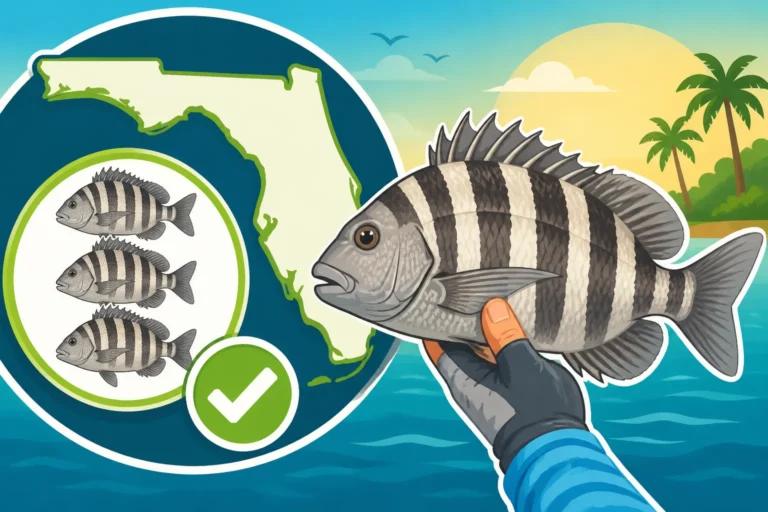
Currently, the recreational harvest limit for pompano in Florida is six (6) fish per person, per day. This means that no single angler is allowed to possess more than six pompano at any given time, regardless of how many trips they take in a day or how many they might have caught and released. This is a hard limit designed to spread the harvest among many anglers and prevent excessive individual take.
Beyond the number, there's also a crucial size restriction: pompano must be not less than 11 inches fork length and not more than 20 inches fork length. This "slot limit" is incredibly important. It aims to protect juvenile pompano, giving them time to grow and contribute to the breeding population, while also protecting the largest, most prolific breeders. The sweet spot of 11-20 inches ensures you're taking fish that are mature enough to have potentially spawned, but not so large that they are irreplaceable components of the breeding stock.
However, there is a special allowance within that slot limit. You are permitted to keep one (1) pompano over 20 inches fork length as part of your six-fish bag limit. This means if you catch a true monster pompano, you don't necessarily have to let it go, but it counts as one of your six. This "one over" rule allows for the excitement of a trophy catch while still generally maintaining the integrity of the slot. Always make sure you understand who needs a fishing license in Florida, and the specific rules, by checking our Who Needs a Fishing License in Florida guide.
Navigating Pompano Size Regulations: The Fork Length Rule
Understanding the exact measurement required for pompano isn't just a technicality; it's a critical component of legal and responsible fishing. The "fork length" measurement is a specific standard used by fisheries management, and knowing how to apply it correctly can save you a lot of hassle and potential fines.
What is "Fork Length" and How to Measure It Correctly
When the regulations state "fork length," they're referring to a very precise way of measuring a fish. It's not just the total length from nose to tail tip, nor is it the length to the shortest part of the tail. Instead, fork length is measured from the tip of the fish's snout (mouth closed) to the center of the fork in its tail. Imagine a straight line from the very front of the fish to the deepest indentation of its caudal fin (tail). That's your fork length.
Here's how to do it correctly:
- Lay the fish flat: Place the pompano on a flat, hard surface, like a measuring board or a cooler lid.
- Close the mouth: Gently push the fish's mouth shut so the snout is at the zero mark of your measuring device.
- Compress the tail: Lightly squeeze the tail fins together to clearly define the "fork."
- Read the measurement: Note the measurement at the deepest part of the tail's fork.
It's absolutely vital to have a reliable measuring device on hand. Many anglers use dedicated fish measuring boards, which are often clearly marked and provide a rigid surface for accuracy. You can find excellent, durable measuring boards and tapes on Amazon that are designed for saltwater conditions. Avoid using flexible tape measures or just "eyeballing" it, as even an inch or two can put you outside the legal slot. Accuracy is key to avoid keeping an undersized or oversized fish accidentally. Remember, the FWC officers will be using a precise method, and you'll want to be just as precise.
The "One Over" Rule and its Nuances
As mentioned, Florida's pompano regulations include a special provision that allows for one fish over the 20-inch maximum fork length, within your overall six-fish bag limit. This "one over 20 inches fork length" rule is a small but significant detail. It recognizes that sometimes a truly impressive fish comes along, and it offers anglers the chance to keep a trophy while still maintaining the primary conservation objective of the slot limit.
However, this rule comes with a couple of nuances you need to understand:
- It's still part of the bag: That oversized pompano counts as one of your six allowable fish. You can't keep six slot-sized fish plus an oversized one; it's six total, with one of those possibly being over 20 inches.
- It's only one fish: No matter how many large pompano you might encounter, only one can be over the 20-inch fork length maximum. If you catch a second one that's over 20 inches, it must be immediately released.
This rule encourages anglers to make thoughtful decisions. If you're hoping for a potential trophy, you might save your "one over" allowance. If you've already kept an oversized pompano, you know all subsequent fish must fall strictly within the 11-20 inch slot. This targeted allowance helps manage the harvest of larger, potentially more mature fish, ensuring they continue to contribute to the breeding stock while giving anglers a chance at a memorable catch.
| Pompano Scenario | Number of Fish Kept | Individual Fish Size (Fork Length) | Legal Status | Notes |
|---|---|---|---|---|
| Standard Slot | 6 | All 11-20 inches | Legal | All fish must be within the 11-20 inch slot. |
| One Oversized | 6 | 5 fish 11-20 inches, 1 fish > 20 inches | Legal | One fish can be over 20 inches, but it counts towards your 6-fish bag limit. |
| Undersized Fish | 1 | < 11 inches | Illegal | Any fish under 11 inches fork length must be immediately released. |
| Oversized (Multiple) | 2+ | > 20 inches | Illegal | Only one fish over 20 inches fork length is allowed per person, per day. All others must be released. |
| Exceeding Bag Limit | 7+ | Any size | Illegal | Regardless of size, exceeding 6 total pompano per person, per day is illegal. |
Common Misconceptions and Legal Repercussions
It's a beautiful sunny day, the pompano are biting, and you're having a blast. The last thing you want is for that perfect day to turn sour due to a misunderstanding of the rules. Unfortunately, ignorance is rarely an excuse in the eyes of the law, and fishing regulations are no exception. Knowing the common pitfalls and the serious consequences of breaking the rules is just as important as knowing the rules themselves.
When and Where These Rules Apply Shore, Boat, Pier, Charter
One of the biggest misconceptions anglers often have is thinking that regulations might change based on where or how they're fishing. This simply isn't true for pompano bag and size limits. These rules apply universally across all Florida waters, regardless of your fishing method or location.
- From Shore: Whether you're casting into the surf from a pristine beach, wading in an estuary, or fishing from a bridge, the 6-fish, 11-20 inch fork length (with one over 20") rule applies. This is particularly relevant for pompano, as they are a popular target for surf anglers. If you're fishing from a Florida pier, you might even have an exemption from needing a fishing license for yourself, but the bag and size limits still apply. Make sure you understand Florida Shoreline Fishing License Explained if this applies to you.
- From a Boat: If you're on your own vessel, whether a small skiff or a larger center console, the individual bag and size limits are still in effect for each angler on board.
- From a Pier: Even public fishing piers that may hold master licenses covering anglers still require individual compliance with bag and size limits. Don't assume that because you're on a designated fishing structure, the rules are different.
- On a Charter Boat: This is a common area of confusion. While many licensed charter boats operate under a vessel-specific fishing license that covers all passengers, individual bag and size limits still apply to each person on board. A charter captain is responsible for ensuring their vessel operates legally, but ultimately, you are responsible for the fish you catch and keep. Do not assume the captain will manage your individual bag limit for you; it's your job to know and adhere to it. For more details on charter fishing, check out our Charter Boat Fishing License Rules in Florida guide.
The consistency of these regulations is designed to make it simple: the rules for pompano are the rules for pompano, no matter what.
Penalties for Exceeding Bag or Size Limits
It's tempting to think that an extra fish or one that's slightly undersized won't matter, but law enforcement takes these violations very seriously. The Florida Fish and Wildlife Conservation Commission (FWC) officers are out there to protect our resources, and they are well-trained to spot violations.
The consequences of exceeding bag or size limits for pompano can range from a warning (rare for repeat offenders or significant violations) to substantial fines, seizure of your catch, and even confiscation of your fishing gear or boat in severe cases. Each undersized or over-limit fish typically constitutes a separate violation, meaning fines can quickly add up. In more extreme or repeated instances, you could face criminal charges, loss of fishing privileges, or even jail time.
Imagine catching a few extra pompano, thinking it's no big deal, only to have an FWC officer board your boat or approach you on the beach. Not only would you lose your catch, but you'd also be facing a hefty fine and a ruined day on the water. It’s simply not worth the risk. The goal of these penalties isn't just to punish, but to deter violations and reinforce the importance of conservation. It’s always better to err on the side of caution and release any fish that is borderline or puts you over your limit. For a detailed look at consequences, see What Happens If You Keep an Undersized Fish in Florida?.
Best Practices for Responsible Pompano Fishing
Being a successful angler in Florida isn't just about catching fish; it's about fishing smart, ethically, and responsibly. This means equipping yourself with the right knowledge and tools, not only for the catch itself but also for handling fish that you intend to release.
Gear Selection for Ethical Catch and Release
When targeting pompano, especially if you anticipate releasing a significant portion of your catch, having the right gear can make all the difference in the fish's survival rate. The goal is to minimize stress and physical damage to the fish.
- Circle Hooks: These are often highly recommended, particularly if you're using natural bait. Circle hooks are designed to hook fish in the corner of the mouth, rather than deep in the gullet, which significantly increases survival rates for released fish. They're a fantastic choice for ethical angling and can be found readily in most tackle shops or on Amazon.
- Appropriate Tackle: Using tackle that is appropriately matched to the size and fighting power of pompano (they're surprisingly strong for their size!) helps you land them quickly without over-exhausting them. This reduces the time the fish spends fighting and out of the water, increasing their chances of recovery.
- De-hooking Tools: A quality de-hooking tool or a pair of long-nosed pliers is essential. These allow you to quickly and safely remove hooks, especially if they're deeply set, without having to put your hands inside the fish's mouth or gill plate. Speed and gentleness are critical.
- Landing Net: While not always necessary, a rubberized landing net can be very helpful for quickly securing a fish and bringing it aboard without excessive handling or dropping it. The rubberized mesh is also much gentler on a fish's delicate slime coat and fins compared to traditional knotted nylon nets.
Remember, every fish you catch, even those you plan to release, should be treated with care. Wet your hands before handling fish to protect their slime coat, support their body horizontally, and get them back into the water as quickly as possible. These small actions contribute significantly to the health of the overall fishery. If you're focused on specific species, our Florida Pompano Fishing Guide provides more insights.
How to Stay Informed About Regulation Changes
Florida's fishing regulations are dynamic. They can change based on scientific assessments, population trends, environmental factors (like red tide events), and management decisions by the Florida Fish and Wildlife Conservation Commission (FWC). What was legal last season might not be legal next season, and sometimes, emergency closures or changes can happen mid-season. It's your responsibility as an angler to stay up-to-date.
Here are the best ways to keep yourself informed:
- FWC Website and App: The Florida Fish and Wildlife Conservation Commission (FWC) is the official source for all fishing regulations. Their website (MyFWC.com) is a treasure trove of information, and they also offer a fantastic mobile app (Fish|Hunt FL) that provides instant access to regulations, bag limits, and season dates right on your phone. This is truly the most reliable and current source.
- Local Tackle Shops: Your local tackle shop owners and employees are often invaluable resources. They're on the water constantly, interacting with other anglers, and typically stay very informed about local and state-wide regulation changes. Don't be shy about asking questions when you pick up your bait or gear.
- Official Signage: Many boat ramps, piers, and public fishing access points will have signage detailing local regulations. While these are helpful, they might not always be the absolute most up-to-date, so always cross-reference with the FWC directly.
- Subscribe to FWC Updates: Consider signing up for email newsletters or alerts from the FWC. This ensures you're notified directly when significant changes occur.
By proactively checking these resources, especially before each trip, you can fish with confidence, knowing you're operating within the current legal framework. It’s part of being a responsible and informed angler, protecting the resource we all love to enjoy. You can even find information on specific permits, like the Florida Snook Permit Requirements or Florida Lobster Permit Requirements, through these channels.
Disclaimer
This article is for general informational purposes only and does not constitute professional advice. Laws, prices and regulations vary by location and change over time. Consult a qualified professional for guidance on your specific situation.