What Do Snook Eat?
It can be incredibly frustrating to hit your favorite snook spot, cast tirelessly, and come up empty-handed. You know they're there, but what are they really looking for? Understanding what snook eat is the secret sauce to turning those frustrating outings into successful ones, helping you choose the right bait or lure to trick these elusive predators. This comprehensive guide will dive deep into the snook's diet, helping you understand their natural food sources, feeding behaviors, and how you can use this knowledge to your advantage.
The Snook's Natural Menu: A Predator's Palate
Snook are apex predators in their inshore Florida habitats, and their diet reflects that. They're opportunistic feeders, meaning they'll pretty much strike at anything that looks like an easy meal and fits into their mouths. But don't let that fool you; they definitely have favorites, and knowing these can dramatically increase your chances of hooking one. Thinking about what's naturally swimming around in the same waters as your target snook is always the first step.
Primary Forage Fish
When you picture a snook's ideal meal, small, baitfish-sized snacks are usually at the top of the list. These energetic swimmers provide the necessary protein and fat to fuel a snook's powerful bursts of speed and ambush tactics. Imagine a snook lying in wait, perfectly camouflaged, and then exploding from cover to snatch its unsuspecting prey.
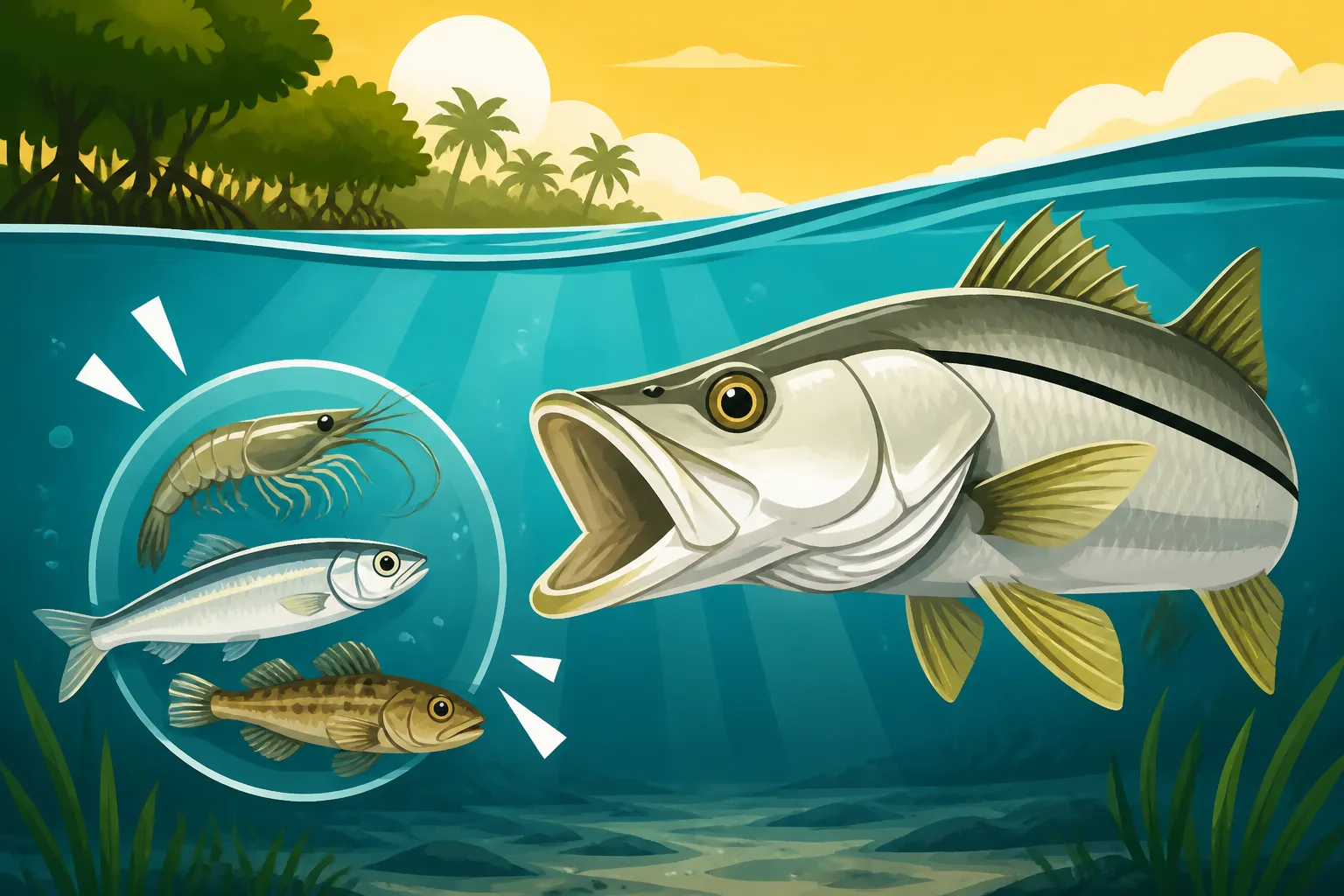
One of the absolute top contenders on their menu is the pilchard, often called a "whitebait." These little silver bullets are everywhere in Florida's inshore waters, and snook absolutely gorge on them when available. They swim in massive schools, making them an easy target for a hungry snook. Another favorite is the sardine, very similar in appearance and behavior to pilchards, also schooling heavily. You'll also find snook chasing threadfin herring and menhaden (often called "pogies"), especially in areas where these larger baitfish congregate. These are robust, oily baitfish that make a substantial meal for a snook. Targeting snook where these baitfish are actively schooling is a tried-and-true method. Best Bait for Snook Fishing in Florida goes into even more detail on how to choose and present these natural offerings.
Crustaceans: Shrimp and Crabs
While baitfish might be the flashiest item on the menu, snook certainly don't turn their noses up at a tasty crustacean. In fact, in certain situations, shrimp and crabs can be the absolute best offerings. Think about those areas where snook frequently reside – mangrove shorelines, docks, bridge pilings. What else lives in those same habitats? A whole lot of shrimp and crabs!
Shrimp, particularly live shrimp, are like candy to a snook. They're relatively slow-moving, easy to catch, and provide a fantastic nutritional punch. Snook will readily inhale shrimp, especially when shrimp are migrating or abundant in an area. You'll often see them targeting shrimp around oyster beds or muddy bottoms.
Crabs are another significant food source, especially smaller varieties like fiddler crabs or small blue crabs. Snook are incredibly adept at crushing crab shells with their powerful jaws. If you're fishing around structure or grassy areas where crabs are plentiful, don't be surprised if a snook takes your crab offering. They might not chase them as actively as baitfish, but if a crab presents itself as an easy meal, a snook won't hesitate.
Other Opportunistic Meals
Snook, as we mentioned, are not picky eaters when the opportunity arises. Their diet can be surprisingly diverse depending on what's available and how hungry they are. It’s all about energy efficiency for these fish; if it’s easy to catch and provides sustenance, it’s fair game.
They’ve been known to eat smaller mullet (especially finger mullet), pinfish, and even Mojarras, which are common in sandy and grassy areas. Sometimes, particularly larger snook, will even prey on juvenile snook or other smaller game fish, demonstrating their true predatory nature. Don't underestimate their willingness to ambush something that might seem a bit unusual. Anything that swims or scurries within striking distance can end up in a snook's maw. This is why artificial lures that imitate a wide variety of prey are so effective; they tap into the snook's general predatory instinct.
Factors Influencing Snook Feeding Behavior
It's not just what snook eat, but when and how they prefer to eat it. Understanding the environmental cues that trigger a snook's feeding frenzy or cause them to shut down can be just as crucial as having the right bait. These fish are highly attuned to their environment, and subtle changes can dictate their activity levels.
Tides and Currents
The tide cycle is arguably the single most important factor influencing snook feeding. Snook are ambush predators, and they use tidal currents to their advantage. They don't want to expend excessive energy chasing food; they prefer it delivered right to their doorstep.
During an incoming tide, snook often position themselves in ambush points where the current brings food to them. Think about points, creek mouths, or deeper cuts where baitfish are swept in from larger bodies of water. The rising water also pushes bait deeper into the mangroves or onto flats, giving snook access to new feeding grounds. Conversely, an outgoing tide can be equally productive, as baitfish are flushed out of creeks, ponds, and mangrove roots, creating a buffet line for waiting snook. They'll often station themselves at choke points or deeper edges, waiting for the current to deliver their next meal.
| Tide Phase | Snook Behavior | Prime Locations |
|---|---|---|
| Incoming Tide | Move into shallow water and structure, ambush bait being pushed in. More active feeding. | Mangrove roots, oyster bars, shallow flats, creek mouths. |
| High Slack | Often slow down, less current to bring bait. Can be found deep in cover or resting. | Deep channels, under docks, dense mangrove cover. |
| Outgoing Tide | Position at choke points, structure edges, waiting for bait to be flushed out. Highly active feeding. | Outflow points, bridge pilings, channel edges, points. |
| Low Slack | Similar to high slack, but fish are often more concentrated in deeper holes or main channels, waiting for the turn. | Deep holes, main channels, near strong current breaks. |
Understanding What Tide Is Best for Snook Fishing? can help you plan your trips around the most productive windows.
Time of Day and Light Conditions
Snook are often most active during periods of low light, which gives them a distinct advantage over their prey. This means dawn, dusk, and even night fishing can be incredibly productive.
At dawn and dusk, the low light conditions make it harder for baitfish to see an approaching snook. The cooler temperatures during these times also contribute to increased activity. Snook will cruise the edges of flats, mangrove lines, and around dock lights looking for a meal.
Night fishing for snook is legendary in Florida. Dock lights, bridge lights, and streetlights illuminating the water create a beacon for baitfish, drawing them in like moths to a flame. Snook, perfectly adapted to hunt in low light, will lurk just outside the halo of light, darting in to snatch baitfish that wander into their strike zone. This is a thrilling way to target them and often yields some of the biggest fish. Remember that snook are highly sensitive to shadows and sudden movements, especially during these low-light conditions.
Water Temperature and Clarity
Like all fish, snook are ectothermic, meaning their body temperature is regulated by the surrounding water. Water temperature plays a significant role in their metabolism and, consequently, their feeding habits. Snook prefer warmer waters, typically above 68 degrees Fahrenheit. If temperatures drop too low, they become lethargic and cease feeding almost entirely, seeking out warmer pockets of water. This is Why Snook Are Protected During Cold Weather is so important, as cold snaps can be devastating for their populations.
Water clarity also influences their hunting strategy. In clear water, snook rely heavily on sight to ambush their prey. They might be more wary and require more subtle presentations. In murky or turbid water, however, they'll often use their lateral line to detect vibrations, becoming less reliant on sight. This means noisy lures or baits that create strong vibrations can be highly effective in stained water.
Mimicking Snook Prey with Baits and Lures
Now that we understand what snook eat and when they prefer to eat it, the next logical step is to translate that knowledge into effective fishing strategies. The goal is to present something that perfectly imitates their natural prey, whether it’s a real fish or a cleverly designed piece of plastic. This is where your tackle box comes into play, and having a diverse selection can make all the difference.
Live Bait: The Real Deal
For many seasoned snook anglers, nothing beats live bait. It's the most natural presentation you can offer, and the frantic swimming action and natural scent of a live baitfish or shrimp are often irresistible to a hungry snook.
- Pilchards and Sardines: If you can net these tiny dynamos, you're in business. Free-line them with a light leader and hook, letting them swim naturally in areas where snook are known to ambush. The erratic, panicked movements of a live pilchard will almost always get a snook's attention.
- Shrimp: Live shrimp, fished under a popping cork or free-lined near structure, are incredibly effective, especially for snook that might be a bit lethargic or spooky. The "pop" of the cork can draw attention, mimicking a feeding fish, while the live shrimp below is an easy meal.
- Finger Mullet: Larger snook love a good-sized mullet. These can be fished similarly to pilchards, free-lined or with a small weight to get them into the strike zone. Their robust nature means they'll stay lively on the hook, putting out plenty of scent and vibration.
- Pinfish: While sometimes considered a "trash fish" by anglers, snook will devour a live pinfish. They're hardy and readily available in many bait shops.
Using live bait often requires careful handling to keep them lively. A good baitwell and attention to water quality are essential.
Artificial Lures: The Art of Deception
For those who prefer the thrill of fooling a fish with artificials, the market is overflowing with options designed to mimic snook prey. The key is to match the hatch – choosing a lure that imitates the size, shape, and swimming action of whatever the snook are currently feeding on. Amazon offers a vast selection of these types of lures.
- Soft Plastic Swimbaits: These are incredibly versatile. Brands like Gambler Lures or Saltwater Assassin make paddle tail and jerk shad style baits that, when rigged on a jig head, perfectly imitate fleeing baitfish. The subtle tail action and realistic profile can be deadly. Vary your retrieve to mimic an injured baitfish.
- Hard Plastic Jerkbaits (Subsurface): Lures like the MirrOlure MirrOdine or Yo-Zuri Crystal Minnow are fantastic for imitating injured or disoriented baitfish just below the surface. Their erratic darting action when twitched can trigger aggressive strikes. These are especially good around grass flats and mangrove edges.
- Topwater Plugs: Nothing beats the explosive strike of a snook on a topwater lure. "Walk-the-dog" style plugs like a Heddon Super Spook or Rapala Skitter Walk create a commotion on the surface that mimics a struggling baitfish. These are best in low light conditions or over shallow grass. Topwater Lure Fishing for Snook provides excellent tips for this exciting technique.
- Jigs (Bucktails and Soft Plastics): A classic bucktail jig or a soft plastic jig can be incredibly effective, especially when snook are holding deeper or around strong current. The key is to choose the right weight to get to the strike zone and impart a jigging action that mimics a shrimp or fleeing baitfish.
- Spoon Lures: While less common for snook, a well-presented silver or gold spoon can imitate a wounded baitfish, particularly in areas with a lot of schooling forage. Brands like Johnson Silver Minnow can be surprisingly effective.
When fishing artificials, pay close attention to the retrieve. Mimicking natural prey means not just looking the part, but acting it too. Experiment with pauses, twitches, and varying speeds until you find what the snook want.
Seasonal and Regional Diet Variations
Just like humans crave different foods depending on the season, snook's diets can shift throughout the year and across different regions of Florida. These variations are largely driven by the availability of prey, which itself is influenced by environmental factors. Understanding these patterns allows you to fine-tune your approach, increasing your chances of success no matter where or when you're fishing.
Spring and Summer Feeding Frenzies
As water temperatures rise in spring and continue through the summer, snook become incredibly active. This is often a period of abundant baitfish, particularly pilchards, sardines, and finger mullet, which proliferate in the warmer inshore waters. Snook will often target these schooling baitfish with voracious appetites, especially around the new and full moons when tidal flows are strongest.
- Spring: During spring, snook are often moving out of their winter hideouts and beginning to bulk up for the spawning season. They’ll be aggressively feeding on whatever baitfish are readily available as they migrate towards inlets and passes. This is a great time for live bait and fast-moving artificials that imitate these baitfish.
- Summer: Summer is prime snook spawning season, and while they might be focused on reproduction, they still need to eat. Baitfish populations are usually at their peak, and snook will be found in passes, inlets, and along beaches. They'll also be actively feeding in mangrove estuaries. Look for large schools of bait and target the snook that are pushing them around. Best Month to Catch Snook in Florida delves deeper into seasonal prime times.
Fall and Winter Shifts
As the cooler air begins to move in, especially in the fall, snook start to transition their feeding habits and locations. The "fall mullet run" is a legendary event across Florida, where massive schools of mullet migrate south along the coast. Snook, along with many other predators, gorge themselves on this plentiful food source, building up fat reserves for the lean winter months.
- Fall: During the fall run, snook will be concentrated in passes, inlets, and along the beaches, ambushing the migrating mullet. This is when larger artificial lures and live mullet become exceptionally effective. After the main mullet run, they'll continue to feed heavily on remaining baitfish and any crustaceans they can find before temperatures really drop.
- Winter: Winter can be the toughest time to catch snook, as their metabolism slows down significantly in colder water. They'll seek out warmer refuges, like deeper channels, canals, and power plant outflows. Their diet shifts to more opportunistic, slower-moving prey like shrimp or small, lethargic baitfish. Light tackle and subtle presentations are key. When they do feed, it's often a short window, making persistence and knowledge of their winter haunts crucial. Where Do Snook Live in Florida? becomes even more relevant during these colder periods.
Regional Differences in Prey Availability
Florida is a big state with diverse ecosystems, and what's abundant in one region might be scarce in another. This naturally leads to regional differences in what snook eat.
- South Florida: The abundant canal systems, Everglades fringes, and proximity to the Keys mean a slightly different array of prey. While pilchards and mullet are still key, you might find snook also targeting exotic baitfish introduced into canals, or a wider variety of crustaceans in the unique Everglades environment. Areas like the Ten Thousand Islands offer a vast network of mangrove islands where crabs and shrimp are incredibly prevalent.
- Central and Southwest Florida: This vast area, encompassing Tampa Bay, Charlotte Harbor, and points south, is classic snook country. Here, pilchards, threadfin herring, sardines, and finger mullet are the absolute staples. The extensive grass flats and mangrove shorelines provide ideal habitat for these baitfish, which in turn support healthy snook populations.
- North Florida/Panhandle: While snook are less common this far north due to colder winter temperatures, those that do reside here will still primarily feed on mullet and various baitfish, adapting to the slightly different species that might be more prevalent in those waters. However, their numbers are much lower compared to south and central Florida.
Understanding these regional nuances allows you to tailor your bait and lure choices to what's genuinely available and natural in the specific area you're fishing, whether you're fishing a river system or a coastal flat. Can You Catch Snook in a River? and Florida Snook Fishing Guide offer more insights into these different environments.
Disclaimer
This article is for general informational purposes only and does not constitute professional advice. Laws, prices and regulations vary by location and change over time. Consult a qualified professional for guidance on your specific situation.