Florida Triggerfish Fishing Guide
Ah, the Florida triggerfish! If you've ever tried to target these guys, you know the frustration of feeling a nibble, setting the hook, and coming up with nothing but a bare hook. They're notorious bait-stealers, but when you crack the code, they offer a seriously fun fight and absolutely delicious fillets. This guide is going to dive deep into everything you need to know about finding, catching, and enjoying these quirky, tough-mouthed fish in the Sunshine State.
Understanding the Florida Triggerfish: More Than Just a Pretty Face
When you talk about Florida triggerfish, most folks immediately think of the gray triggerfish, which is the most commonly targeted species for anglers. But there are a few members of this family gracing our waters, each with their own charm. These fish aren't just an accidental bycatch; they're a legitimate target species once you understand their unique quirks. Their peculiar appearance, with those small, pig-like mouths and strong, independent dorsal spines, makes them truly one-of-a-kind. It's that "trigger" spine that locks into place, making them incredibly difficult for predators (or even us anglers) to dislodge from tight spots.
They might look a bit comical, but don't let that fool you. Triggerfish are surprisingly intelligent and incredibly adept at what they do – which is, often, stealing your bait without getting caught. Their diet consists largely of crustaceans and other invertebrates, meaning they've evolved these super strong, almost parrot-like mouths to crush shells. This is a critical piece of information for anglers, as it informs everything from bait choice to hook selection and even how you fight them once they're on the line. Getting to know their biology is the first step in outsmarting them.
Identifying Florida's Triggerfish Species
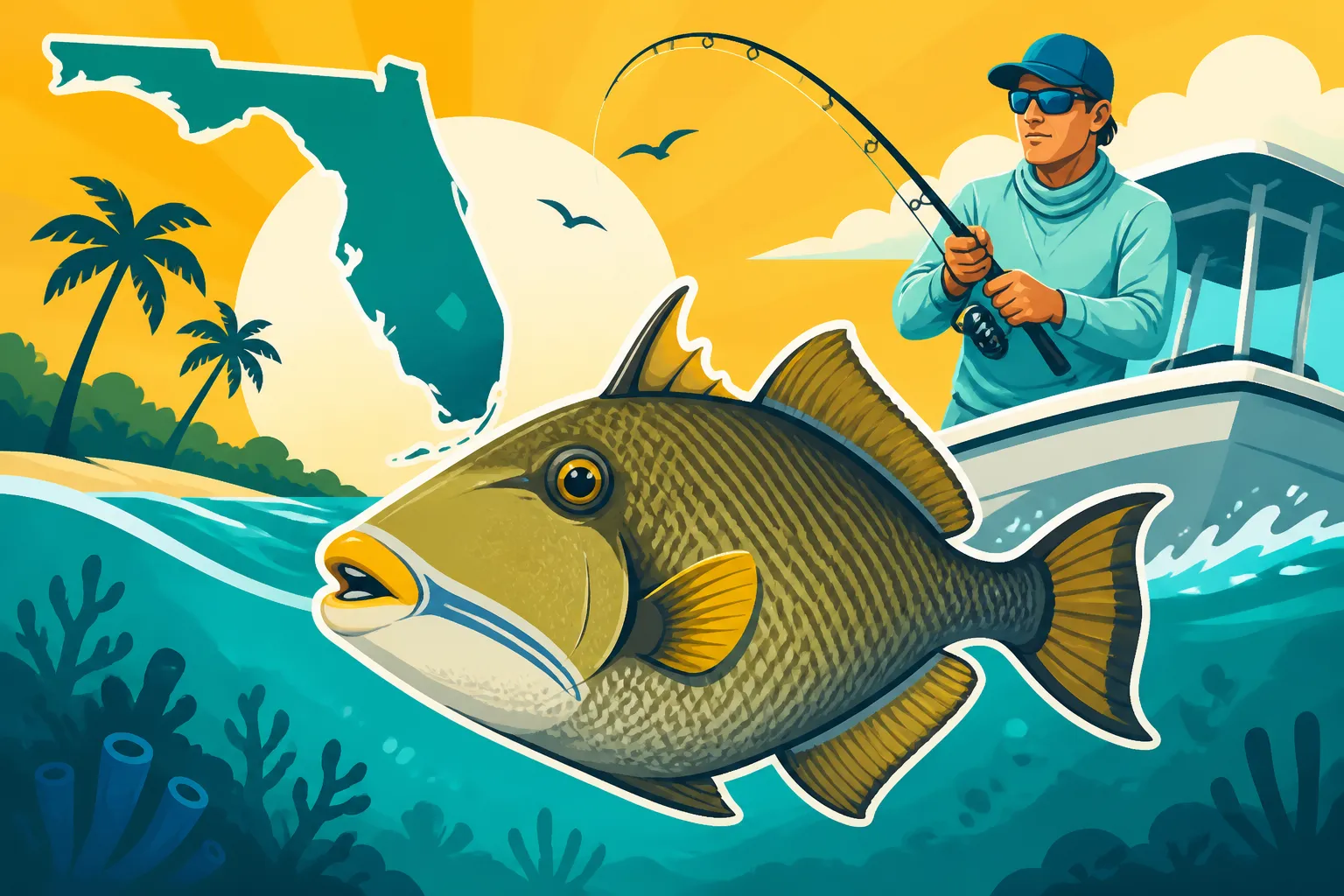
While there are several types of triggerfish globally, in Florida, when we talk about fishing, we're primarily focused on the gray triggerfish ( Balistes capriscus). These are the ones that populate our reefs and wrecks in abundance and are most commonly seen on dinner plates. They have a rather drab, grayish-brown coloration, often with mottled patterns that help them blend into rocky bottoms. You'll notice those distinctive small eyes set high on their heads and the tough, leathery skin. They also have a very characteristic diamond-shaped body profile.
Occasionally, you might encounter other species like the queen triggerfish (Balistes vetula) or the ocean triggerfish (Canthidermis sufflamen), but these are less common targets for recreational anglers. Queen triggerfish are absolutely stunning with their vibrant blue, green, and yellow hues, often found in clearer, deeper waters, especially around the Florida Keys. Ocean triggerfish are a bit larger and darker, also found in offshore, open water environments. For the purposes of harvesting, the gray triggerfish is almost always the species you'll be looking for, and recognizing it accurately is crucial for staying within regulations.
Their Unique Behavior and Habitat
Triggerfish are opportunistic feeders and bottom dwellers. They love structure – and I mean love it. Think natural reefs, artificial reefs, sunken wrecks, rock piles, ledges, and even bridge pilings far offshore. These structures provide both shelter from predators and a bounty of food, like crabs, shrimp, mollusks, and sea urchins. They're often found in depths ranging from 20 feet out to several hundred feet, depending on the specific location and availability of suitable habitat. Florida Offshore Fishing Techniques often involve targeting these same structures, so you'll frequently find triggerfish alongside snapper and grouper.
Their behavior around bait is what truly sets them apart. They have this incredibly irritating (to us, brilliant to them!) way of pecking at the bait, using their small, strong mouths to pick off pieces without actually engulfing the hook. It's a subtle bite, more like a tap-tap-tap, that can drive you absolutely mad if you're not paying close attention. They're also quite territorial, especially around their chosen structure. This means if you find one, there are often more in the vicinity. Understanding this behavior is key to adjusting your technique and finally getting that hook set correctly.
Where to Find Triggerfish in Florida's Waters
Florida is blessed with an abundance of marine habitat, and triggerfish take full advantage. While they are primarily a saltwater species, their range covers both the Gulf and Atlantic coasts of Florida, extending throughout the entire peninsula. The key to finding them isn't necessarily a specific geographical region as much as it is understanding the type of bottom they prefer. Forget vast, open sandy flats; these fish are structure junkies.
Think about areas where there's complexity and something to hide in or feed off. This includes everything from natural limestone ledges that create crevices and overhangs to the countless artificial reefs that Florida has painstakingly created over the years. Even deeper water bridge pilings or major shipping channels can hold them. When you're looking for Best Saltwater Fishing Spots in Florida, remember that structure is king for triggerfish. Getting your bait down to their level, right in the heart of these structures, is paramount.
Offshore Reefs and Wrecks: Their Prime Real Estate
The absolute best places to find triggerfish are offshore reefs and wrecks. Whether you're 5 miles out or 50 miles out, if there's structure, there's a good chance triggerfish are calling it home. Natural coral reefs, limestone ledges, and rocky bottom are perfect. Even more prolific are the thousands of artificial reefs scattered off Florida's coasts, ranging from old military tanks and concrete culverts to purposely sunk ships and barges. These provide complex ecosystems where triggerfish thrive alongside snapper, grouper, and other reef species.
When targeting these spots, boat positioning is crucial. You want to anchor up-current or up-wind from the structure and allow your bait to drift naturally into the fish zone. Sometimes, you'll need to make multiple drifts or anchor attempts to get it just right. The biggest challenge here is often sharing the space with other species that might be more aggressive or larger, requiring you to be patient and precise with your drops. Pay close attention to your fish finder; you're not always looking for a huge school, but rather those distinct marks hovering around the structure.
Nearshore Structures and Piers: Sometimes a Surprise Catch
While offshore is their preferred domain, it's not impossible to find triggerfish in nearshore waters, particularly around deeper structures. This might include larger, older public fishing piers that extend into deeper water, or jetties and rock piles that offer sufficient cover and food sources. They're less common in these areas compared to true offshore spots, but a sharp-eyed angler might still hook into one. These spots are often accessible without a boat, making them popular choices for many anglers.
However, the size of the fish caught from nearshore structures tends to be smaller on average than those caught offshore. They're also often caught as a bonus when targeting other species like Florida Pompano Fishing Guide or Florida Sheepshead Fishing Guide, which also frequent structure. If you are specifically targeting triggerfish from a pier, you'll need to employ very similar tactics to offshore fishing: small baits, sensitive gear, and a keen eye for that subtle bite. While not the primary hunting grounds, these spots offer a glimmer of hope for the shore-bound angler looking to add a trigger to their cooler.
The Art of Catching Florida Triggerfish: Techniques That Work
Catching triggerfish is a unique challenge that tests an angler's patience and precision. These aren't your typical smash-and-grab predators. They're delicate diners with incredibly tough mouths, making them master bait thieves. Many anglers find themselves utterly frustrated, reeling in bare hooks time and time again. But once you understand their feeding habits and adapt your technique, you'll find that hooking a triggerfish is incredibly rewarding – and they put up a surprisingly strong fight for their size!
The key really comes down to understanding that small, precise bite and having the right tackle to match. You can't just throw out a big chunk of bait and expect them to engulf it like a snapper. They'll meticulously peck away at it, often nibbling off the edges until there's nothing left but your exposed hook. It's a game of finesse and quick reflexes, requiring you to be constantly engaged with your line and ready to react at a moment's notice.
Rigging Up for Success: Small Baits, Strong Line
When it comes to rigging for triggerfish, think small but mighty. Their mouths are tiny, so a big hook will simply get ignored or pecked around. You want small, sharp hooks, typically size #1 to #2/0, often circle hooks to ensure a good lip set. As for bait, crustaceans are king. Small pieces of cut squid, shrimp, fiddler crabs, or even pieces of sardine or cut fish work wonders. The trick is to present a bait small enough for them to swallow whole, or at least get enough of the hook in their mouth.
For your main line, a 15-30 lb braided line is ideal as it offers superior sensitivity, letting you feel those subtle taps. Pair this with a fluorocarbon leader of 20-30 lb test. The leader is essential because triggerfish often live in abrasive, structure-rich environments that can easily fray monofilament. A simple two-hook dropper rig or a Carolina rig with a small egg sinker (1/2 to 2 oz, depending on current and depth) is usually effective. The shorter the leader on your dropper rig, the better, to keep the bait close to the bottom and easily detectable. You might even find specialized triggerfish rigs available on Amazon that are designed for this specific challenge.
The Subtle Bite: Hooking These Master Bait Stealers
The triggerfish bite is often described as a series of gentle taps, almost like a bluegill in freshwater, but with a surprising amount of resistance when they finally commit. You'll feel a tiny peck, then another, then maybe a slightly stronger tug. The mistake most anglers make is trying to set the hook on the first few taps. You need to resist that urge! Let them work at it for a moment, waiting for a more definitive pull or the line to just barely start moving steadily. This means they've finally taken the bait into their mouth.
When you do feel that distinct pull, a firm, but not overpowering, sweep of the rod tip is usually enough to set the hook, especially with sharp circle hooks. With J-hooks, you'll need a bit more of a direct strike. Sometimes, simply lifting the rod slowly and steadily until you feel the weight of the fish is all it takes. Once hooked, they put up a surprisingly strong, dogged fight, often diving straight back into the structure, so be ready to reel hard and keep them away from snags.
Dealing with Their Tough Mouths and Sharp Teeth
One of the biggest challenges with triggerfish, once you've managed to hook them, is their incredibly tough mouths. They have bony plates instead of soft lips, which makes hook penetration difficult. This is why super-sharp hooks are non-negotiable. Furthermore, they possess incredibly strong, almost human-like teeth designed to crush shells, which can easily cut through mono leader if they manage to get it in their jaws.
To combat this, some anglers will use a very short trace of light wire leader, perhaps 20-30 lb test, right before the hook, especially if they are consistently getting bitten off. However, wire leader can sometimes deter bites due to its visibility. A more common approach is to simply ensure your fluorocarbon leader is robust and that your hook set is solid, aiming to embed the hook in the corner of their mouth, away from their main crushing plates. Using circle hooks can significantly improve your chances of a clean, lip-hooked fish. Be very careful when handling them, as those teeth can deliver a nasty bite, and their dorsal spines are incredibly sharp.
Essential Gear for Triggerfish Anglers
Having the right gear is paramount to a successful day of triggerfish fishing. You're not going for brute force, but rather finesse and sensitivity combined with enough backbone to pull them away from structure. Skimping on tackle quality, especially hooks and leader, will lead to endless frustration and lost fish. Think of it as a precision operation – you need tools that are up to the task of detecting subtle bites and handling a surprisingly strong, structure-oriented fight. This often means a lighter setup than you might use for larger bottom fish, but with no compromise on strength where it counts.
Many anglers already have much of what they need in their existing arsenal, especially if they dabble in Florida Grouper Fishing Guide or general reef fishing. However, a few tweaks to your terminal tackle can make all the difference. It's about optimizing for the triggerfish's unique mouth and fighting style.
Rods, Reels, and Lines: The Right Combination
For triggerfish, you want a rod that has a fast to moderate-fast action and a sensitive tip, but also enough power in the backbone to pry a fish away from structure. A 6.5 to 7.5-foot medium-light to medium power spinning rod is often ideal. This setup allows you to feel those delicate bites and cast accurately, while still providing the leverage needed to battle a strong-pulling fish. Look for rods with good graphite blanks for maximum sensitivity.
Pair this with a 2500 to 4000 series spinning reel spooled with 15-30 lb braided line. The braid's no-stretch characteristic is absolutely critical for feeling those light bites in deeper water and for maximizing hook-setting power. It also helps cut through the water, reducing bow in the line in strong currents. The drag system on your reel should be smooth and reliable, as triggerfish can make surprisingly powerful runs. Many great options for sensitive rods and reels can be found on Amazon for every budget.
Hooks, Sinkers, and Leaders: Battle-Tested Terminal Tackle
This is where the real specialized gear comes into play for triggerfish.
- Hooks: As mentioned, small and super sharp are the golden rules. Sizes #1 to #2/0 circle hooks are highly recommended, as they typically hook the fish in the corner of the mouth, reducing cut-offs and making for easier release if desired. J-hooks of similar size can also work but require more precise timing on the hook set. Offset circle hooks are particularly effective.
- Sinkers: You'll need just enough weight to get your bait to the bottom and hold it there without drifting too far. Egg sinkers from 1/2 oz to 2 oz are common, depending on current strength and depth. If using a dropper rig, the weight goes at the very bottom.
- Leaders: Fluorocarbon leader is essential for its abrasion resistance and low visibility underwater. Use 20-30 lb test, connected to your main braid with a strong knot like an FG knot or a double uni. While wire leader can prevent bite-offs, many anglers find it reduces bites, so experiment if you're experiencing frequent cut-offs. Sometimes, a short section of 20-30lb monofilament as a "bite leader" followed by fluorocarbon can be a decent compromise.
- Swivels and Snaps: Small, strong barrel swivels (size #7 or #10) can be used to prevent line twist and connect your leader to your main line. Avoid overly large or shiny hardware that might deter bites.
Florida Triggerfish Regulations: Staying Legal
Fishing in Florida means adhering to a comprehensive set of regulations designed to protect our precious marine resources. Triggerfish, like all other managed species, have specific rules governing their harvest. It's not just about what you catch, but also how many, how big, and sometimes, when. Falling afoul of these rules, even unintentionally, can lead to stiff penalties, so understanding them before you even cast a line is incredibly important. The Florida Fish and Wildlife Conservation Commission (FWC) is the governing body for these regulations, and their rules can sometimes vary slightly between the Gulf and Atlantic coasts, and also between state and federal waters.
Always make sure to consult the most current FWC regulations online or through their app before each trip, as rules can change. Florida Fishing Regulations and Bag Limits is a great general resource, but double-checking for triggerfish specifically is always a smart move.
Size and Bag Limits: What You Need to Know
For gray triggerfish in Florida, there are usually specific minimum size limits and daily bag limits. For instance, a common regulation for gray triggerfish might be a minimum fork length of 14 inches (measured from the tip of the snout to the fork in the tail). This means any fish shorter than that must be immediately released unharmed. The daily bag limit often restricts anglers to a certain number of triggerfish per person per day.
These limits are in place to ensure sustainable fishing practices and allow the fish populations to thrive. It's vital to measure your catch accurately and release any undersized fish quickly and carefully. What Happens If You Keep an Undersized Fish in Florida? isn't a situation you want to find yourself in. Always keep a measuring device on your boat or in your tackle box. If you're fishing from a charter boat, the captain will be well-versed in these rules, but it's still good practice for individual anglers to know them.
Seasonality and Closures: Timing Your Trip
Beyond size and bag limits, triggerfish also have specific seasons or potential closures, particularly when fishing in federal waters. Federal waters generally begin 9 nautical miles off Florida's Gulf coast and 3 nautical miles off Florida's Atlantic coast. State Waters vs Federal Waters Fishing Rules in Florida can significantly impact when and where you can legally harvest certain species, including triggerfish.
For example, there may be seasonal closures in federal waters to protect spawning populations. These closures can vary year by year and coast by coast. It's not uncommon for federal regulations to differ from state regulations, which can sometimes create confusion for anglers. Always check the FWC's Gulf Council and South Atlantic Council advisories if you plan to fish offshore. While triggerfish aren't always subject to the same strict, short seasons as something like red snapper, they can and do have them, so staying informed is key to avoid disappointment or a citation.
Handling Your Catch: From Hook to Table
You've done it! You've outsmarted the wily triggerfish and brought one to the boat. Now what? Handling a triggerfish requires a bit of caution due to its sharp dorsal spines and those powerful teeth. But with proper technique, getting your catch ready for the cooler and then the dinner table is straightforward. These fish are renowned for their firm, white, flaky meat and are considered a delicacy by many, making all that effort worthwhile.
The process from hook removal to cleaning is critical not only for your safety but also for ensuring the quality of the meat. A properly handled fish will taste significantly better than one that has been mishandled or left to languish. Respecting your catch and preparing it well is part of the whole angling experience.
Safely Removing the Hook and Handling Spines
First things first: safety. Triggerfish have two prominent dorsal spines that can lock upright, making them resemble a dangerous porcupine. These spines are incredibly sharp and stiff. They also have those crushing teeth. When handling a triggerfish, always grip it firmly by its lower jaw or by the body, being careful to avoid the dorsal spines and the mouth. A pair of fish pliers or a dehooking tool is absolutely essential for removing the hook.
To "un-trigger" the fish and lay its dorsal fins flat, you can gently depress the smaller, second dorsal spine, which will release the lock on the larger, first spine. This makes handling a bit safer. Once the hook is removed, if the fish is legal size and you intend to keep it, dispatch it humanely and place it on ice immediately. If it's undersized, release it gently, supporting its body in the water until it swims away strongly.
Cleaning and Filleting Triggerfish for Delicious Meals
Cleaning a triggerfish is different from most other fish due to its incredibly tough, leathery skin. You can't just scale it; you have to peel it. One common method is to make a cut behind the head, down to the backbone, but not through it. Then, using pliers or a sturdy knife, grab the corner of the skin at the cut and peel it off like a banana, working from head to tail. This will remove the tough outer layer, making filleting much easier.
Once the skin is removed, the rest of the filleting process is similar to other fish, like learning How to Fillet a Snapper. You'll run your knife along the backbone, separating the fillet from the rib cage. Triggerfish yield beautiful, firm, white fillets that are perfect for grilling, frying, baking, or searing. Their meat holds up well to various cooking methods and has a mild, sweet flavor that's hard to beat. Don't let the initial challenge of cleaning deter you; the reward is truly delicious!
Disclaimer
This article is for general informational purposes only and does not constitute professional advice. Laws, prices and regulations vary by location and change over time. Consult a qualified professional for guidance on your specific situation.