Difference Between Speckled Trout and White Trout
Oh, the age-old question that has stumped many an angler on Florida's beautiful waters! You're out there, reeling in what you think is a nice "speck," only to have a buddy say, "Nah, that's a white trout." It's confusing, right? Especially when both are sleek, silver, and often found in similar saltwater environments. This guide is going to clear up that mystery once and for all, helping you confidently identify the subtle, yet distinct, differences between the beloved Spotted Seatrout and the often-misunderstood White Trout.
The Spotted Seatrout: Florida's Beloved "Speck"
When most Floridians talk about "trout fishing," they're almost certainly referring to the spotted seatrout. These are truly iconic inshore game fish, known for their aggressive strikes, decent fight, and delicious table fare. They are a cornerstone of Florida's recreational fishing scene, gracing countless dinner plates and fishing reports across the state. Understanding their unique characteristics is the first step in appreciating what makes them such a special catch.
Physical Characteristics of the Spotted Seatrout
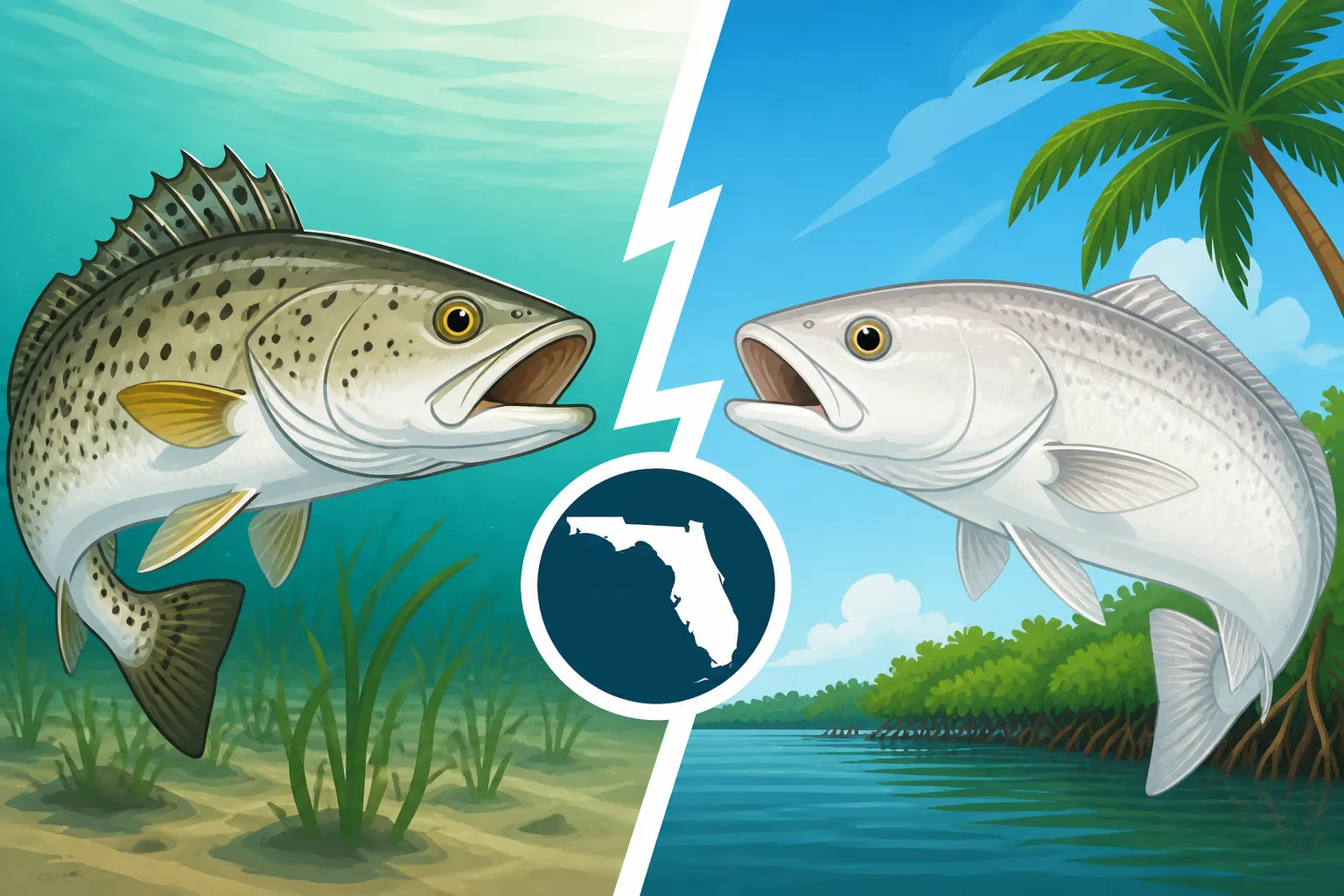
Let's get down to the nitty-gritty of what a true spotted seatrout looks like. The most defining characteristic, and the one that gives them their common nickname "speckled trout" or simply "speck," is their distinctive black spots. These spots are scattered irregularly over their back and upper flanks, extending onto their dorsal and caudal (tail) fins. Think of it like a beautiful constellation against a backdrop of silvery-gold.
Beyond the spots, their body shape is also quite telling. They have a long, slender, and somewhat compressed body, tapering gracefully towards a forked tail. Their coloration can vary slightly depending on their habitat and water clarity, ranging from a darker olive-green on the back to a silvery-white belly, with iridescence shimmering along their sides. One key feature that often goes unnoticed by novice anglers is their mouth. Spotted seatrout have a prominent lower jaw that protrudes slightly, and inside, you'll find two prominent, fang-like canine teeth at the front of their upper jaw. These teeth are very sharp and are perfectly designed for grasping their prey. Their first dorsal fin is typically short with sharp spines, while the second dorsal fin is longer and soft-rayed, often bearing those tell-tale spots.
Habitat and Behavior of Spotted Seatrout
Spotted seatrout are true inshore specialists. You'll find them thriving in the shallow, brackish, and saltwater environments that define much of Florida's coastline. Their preferred haunts include vast, lush seagrass flats, especially those with sandy potholes where they can ambush prey. They also congregate around oyster bars, mangrove shorelines, and along the edges of channels and tidal creeks. These fish are masters of their environment, using the cover of grass and structure to their advantage, blending in seamlessly with their surroundings.
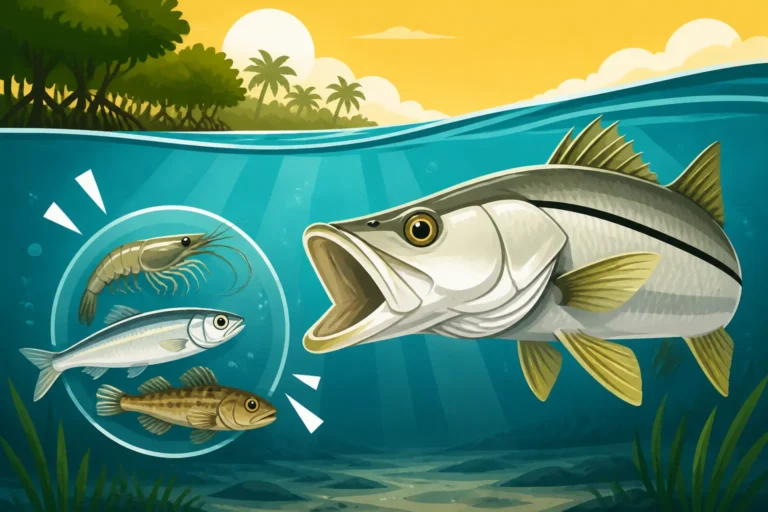
They are ambush predators, often lying in wait for an unsuspecting shrimp or baitfish to swim by. Their diet primarily consists of small fish like mullet and pilchards, and crustaceans, especially shrimp. Spotted seatrout are social creatures and will often be found in schools, particularly during cooler months or when actively feeding. This schooling behavior can lead to incredible fishing action when you find a productive spot. They are highly sensitive to water temperature, preferring warmer waters, which is why they are so prevalent in Florida. Anglers love them not just for their fight, but also because they are often quite accessible, not requiring offshore excursions to find them. If you want to learn more about targeting these beauties, check out our Florida Spotted Seatrout Fishing Guide.
Fishing for Spotted Seatrout in Florida
Fishing for spotted seatrout is a quintessential Florida experience, accessible to anglers of all skill levels. These fish are eager biters, which makes them a fantastic target for beginners and seasoned pros alike. You can target them using a variety of methods, from casting artificial lures to fishing with live bait under a popping cork. When fishing the grass flats, a natural approach often yields the best results. Live shrimp or small baitfish like pilchards are irresistible to a hungry "speck." Many anglers swear by a simple popping cork rig, where the "pop" draws attention, mimicking a feeding fish.
For those who prefer artificials, soft plastic jerkbaits, paddle tails, and topwater plugs can be incredibly effective, especially during dawn and dusk. The thrill of a spotted seatrout exploding on a topwater lure is something every angler should experience. Their fight is characterized by strong head shakes and sometimes a surprising burst of speed, making them a fun challenge on light tackle. Just remember to handle them with care, especially if practicing catch and release, as their soft mouths can be easily damaged. Properly identifying your catch is also crucial for adhering to Spotted Seatrout Size and Bag Limits in Florida.
Understanding the White Trout: A Different Fish Entirely
Now, let's turn our attention to the other "trout" of Florida's waters – the white trout. While they share a similar common name and a somewhat similar silhouette to their spotted cousins, the white trout (which is actually a type of croaker, specifically Cynoscion arenarius, also known as Sand Seatrout) is a distinct species with its own unique characteristics, habitats, and angling appeal. The confusion often arises because they are both members of the drum and croaker family and often occupy similar coastal zones.
Physical Characteristics of the White Trout (Sand Seatrout)
The most immediate and obvious difference when looking at a white trout compared to a spotted seatrout is the absence of distinct black spots on its body and fins. While they might have a very faint, almost imperceptible mottling or dusty appearance on their backs, they lack the prominent, well-defined spots that are the hallmark of the spotted seatrout. Instead, their coloration is typically a uniform silvery-white, sometimes with a grayish or faintly greenish tint on the back, fading to a bright, pearly white belly. This gives them a clean, streamlined look, reflecting light as they move through the water.
Their body shape is generally more slender and elongated than a spotted seatrout, often appearing less compressed from side to side. White trout also possess a different head and mouth structure. Their lower jaw usually does not protrude as much as a spotted seatrout's, and while they have small, sharp teeth, they lack the two prominent canine fangs seen in their spotted relatives. Their fins are generally translucent or pale, lacking the pigmentation found on the spotted seatrout's fins. This sleek, un-spotted appearance is your primary visual cue when trying to tell them apart.
Habitat and Behavior of White Trout
Unlike the spotted seatrout's preference for lush grass flats and oyster beds, white trout typically favor areas with sandy or muddy bottoms. You'll often find them in slightly deeper waters of bays, estuaries, and nearshore coastal areas, though they can certainly venture into shallower channels and along beaches. They tend to school in larger aggregations than spotted seatrout, sometimes forming massive schools over expansive sandy areas. This schooling behavior makes them a popular target for anglers looking to fill a cooler quickly.
White trout are primarily bottom feeders, though they will also chase bait in the water column. Their diet mainly consists of small crustaceans, worms, and small baitfish. They are less selective feeders than spotted seatrout, often aggressively striking at anything that resembles a meal. This makes them somewhat easier to catch if you're fishing in their preferred habitat. They are a resilient species, often tolerating a wider range of salinities and water conditions than the more sensitive spotted seatrout. Many anglers consider them a common catch when bottom fishing in various areas, sometimes even catching them as a "bycatch" when targeting other species.
Fishing for White Trout in Florida
Fishing for white trout can be a blast, especially if you're looking for consistent action and a plentiful supply of fresh fish for the dinner table. Because they school heavily and are less finicky eaters, they can offer some fast-paced fishing, making them an excellent target for families or novice anglers. While they may not offer the same acrobatic fight as a big "speck," they provide a respectable tug on light tackle and are known for their rapid, sometimes continuous, bites.
The most effective methods for white trout involve bottom fishing. Simple rigs like a "fish finder" rig or a two-hook dropper rig, baited with small pieces of shrimp, squid, or cut bait, work wonders. They aren't picky, so even artificial baits like small jigs or grub tails can entice a strike. You'll often find them in deeper cuts, channels, and near structure like bridges or jetties, especially where there's a sandy bottom current. These fish are a common sight in the coolers of anglers fishing from piers, bridges, and boats in appropriate areas. While not as prized as the spotted seatrout for sport, their delicious, flaky white meat makes them a highly sought-after food fish, and a welcome addition to any angler's catch. Many anglers head out specifically for the fun of catching a cooler full of these tasty fish, perhaps with a basic jig and some gulp shrimp found on Amazon.
Key Differences: Side-by-Side Comparison
Navigating the nuances between these two popular Florida species can feel like trying to solve a riddle without all the clues. But once you know what to look for, the distinctions become quite clear. It’s not just about what they look like, but also where they prefer to hang out and how they behave. Understanding these fundamental differences is key to becoming a more knowledgeable and successful angler in Florida.
Visual Distinctions: Spots, Fins, and Mouths
The easiest way to tell a spotted seatrout from a white trout is by examining their visual cues. It's often said that "the spots tell the story," and that couldn't be truer here. Beyond the obvious spots, paying attention to the mouth and overall body profile will solidify your identification. Here's a quick comparison table to keep handy:
| Feature | Spotted Seatrout (Speckled Trout) | White Trout (Sand Seatrout) |
|---|---|---|
| Body Markings | Prominent, distinct black spots on back, sides, and fins | No distinct black spots; sometimes faint mottling or dusty |
| Coloration | Olive-green to silvery-gold back, silvery sides | Uniform silvery-white, sometimes grayish/greenish back |
| Mouth/Teeth | Prominent lower jaw, two large canine teeth on upper jaw | Lower jaw less pronounced, small sharp teeth, no large canines |
| Body Shape | Slender, slightly compressed, tapers to forked tail | More elongated and streamlined, tapers to moderately forked tail |
| Fins | Spots often extend to dorsal and caudal fins | Fins generally clear/translucent, no spots |
Let's elaborate a bit on these. The spots on a spotted seatrout are usually very clear and round or oval. You can literally count them if you wanted to! On the other hand, a white trout is almost completely devoid of these. If you see any spots, and they are distinct, it's a speck. If not, it's likely a white trout. Next, feel inside their mouths (carefully!). Those two sharp canines in the upper jaw of a spotted seatrout are unmistakable and designed for piercing their prey. White trout have smaller, more uniform teeth for grasping smaller, softer-bodied organisms. Finally, while both are slender, the spotted seatrout tends to have a slightly deeper body profile compared to the more cylindrical white trout, especially in larger specimens.
Habitat and Feeding Preferences
Their preferred environments and typical diets also differ significantly, which means you'll often find them in different "zones" within an estuary or coastal area. Spotted seatrout are champions of the shallow, structured environments. They thrive in the labyrinthine world of seagrass beds, mangrove roots, and oyster reefs. These areas provide ample cover for ambush predation and a rich buffet of shrimp and small finfish. Think of them as the stealthy hunters of the inshore flats. If you're drifting across a lush grass flat in a foot or two of water, casting a topwater plug, you are almost certainly targeting "specks."
White trout, conversely, are more associated with open, soft-bottom environments. They are often found in deeper channels, sandy stretches, and nearshore waters, where they can school up in large numbers. Their diet is less focused on actively chasing down larger baitfish and more on scavenging and opportunistically feeding on bottom-dwelling crustaceans, worms, and smaller schooling fish. If you're fishing a deep channel with a sandy bottom or anchored near a pass, dropping baits straight down, you're more likely to encounter white trout. Understanding these preferences helps immensely with your Florida Inshore Fishing Techniques and deciding where to drop anchor.
Angling Experience and Table Fare
The fishing experience and what happens after the catch also offer distinct differences. Spotted seatrout are renowned for their aggressive strikes and spirited fights on light tackle. They're not huge, but they put up a respectable battle with strong runs and head shakes, particularly when hooked on a swift-moving lure. Many anglers seek them out specifically for the sport, and their delicate, flaky white meat makes them a highly prized table fish. A properly filleted and cooked spotted seatrout is a true culinary delight, often considered among the best inshore eating fish in Florida.
White trout, while still providing a fun tussle on light gear, generally don't offer the same kind of powerful fight as a spotted seatrout. Their strikes are often more subtle, sometimes feeling like a series of taps rather than a hard hit. However, what they lack in individual fighting prowess, they often make up for in sheer numbers. When you find a school of white trout, the action can be non-stop, providing an exciting experience for anglers looking to catch a lot of fish. For the table, white trout are also excellent! Their meat is very similar to spotted seatrout – white, flaky, and mild. Some even argue they are nearly identical in flavor. They are often fried whole or filleted for a delicious meal, providing abundant portions when you hit a good school.
Common Misconceptions and Identification Tips
It's completely understandable why anglers, especially those new to Florida fishing, often get these two species mixed up. The word "trout" itself can be a bit misleading, as neither are true trout in the freshwater sense, and their general silvery appearance can certainly cause confusion at first glance. But with a few pointers and a bit of practice, you'll be identifying them like a seasoned pro in no time.
Why Anglers Often Confuse Them
The primary reason for confusion lies in their common names and shared habitats. Both are referred to as "trout" (or variations like "speckled trout" and "sand trout"), and both inhabit Florida's coastal saltwater environments. They also share a generally similar elongated, silvery body shape. Imagine you've just reeled in a fish quickly, maybe in low light or amidst the excitement of a hot bite. A quick glance might not reveal the absence or presence of subtle spots if you're not specifically looking for them. Moreover, smaller or juvenile spotted seatrout can sometimes have less pronounced spots, and larger white trout can be quite robust, further blurring the lines for an inexperienced eye.
Another factor is regional colloquialisms. Depending on where you grew up fishing in Florida, local anglers might use different terms or lump similar-looking species together. This informal language, while endearing, doesn't always align with precise biological identification. Without a clear understanding of the specific biological markers, it's easy for anglers to continue perpetuating these honest mistakes. This is why having a clear, visual checklist and understanding the scientific distinctions is so important.
Practical On-the-Water Identification Checklist
When you've got a fish in hand and you're trying to figure out if it's a spotted seatrout or a white trout, go through this quick mental (or actual) checklist:
- Check for Spots: This is your number one indicator. Are there distinct, dark spots scattered across the fish's back, sides, and fins? If yes, it's almost certainly a spotted seatrout. If the body is uniform silver with no clear spots, proceed to the next step.
- Examine the Mouth: Carefully (those teeth can be sharp!), look at the upper jaw. Does it have two prominent, fang-like canine teeth right at the front? If so, you've got a spotted seatrout. If the teeth are smaller and more uniform, lacking those "fangs," it's a white trout.
- Observe Overall Color and Fin Appearance: A spotted seatrout often has a more olive or golden hue on its back, with spots on its fins. A white trout will be a cleaner, more uniform silver-white, and its fins will typically be clear or translucent.
- Consider the Catch Location/Method: Were you fishing shallow grass flats with artificial lures or live shrimp under a cork? More likely a speck. Were you fishing deeper channels or sandy bottoms with cut bait or bottom rigs? More likely a white trout.
Having a good, waterproof fish identification chart or even a field guide app on your phone can be a huge help. You can find excellent laminated guides that easily fit in your tackle box or boat bag, available through retailers like Amazon. These tools are invaluable for confirming your identification in real-time.
Regulations and Conservation Implications
Correct identification isn't just about showing off your fish knowledge; it has real-world implications, especially concerning fishing regulations and conservation efforts. Florida has specific size and bag limits for various species, and these often differ between spotted seatrout and white trout. For example, spotted seatrout typically have a slot limit (meaning you can only keep fish within a certain size range) and a specific bag limit per angler per day, which can vary by region and season. The rules for white trout, on the other hand, might be more lenient, often with a higher bag limit or no size restrictions at all.
If you mistakenly identify a fish and keep it out of the legal slot or over the bag limit for that specific species, you could face fines and penalties. Wildlife officers are trained to identify these fish, and ignorance of the law is no excuse. By knowing exactly what you've caught, you ensure you're fishing legally and contributing to responsible fisheries management. These regulations are put in place to ensure the sustainability of fish populations for future generations of anglers. Always consult the latest Florida Fishing Regulations and Bag Limits from the FWC before heading out.
Enhancing Your Florida Fishing Experience
Whether you're targeting the elusive "speck" on the flats or enjoying the rapid-fire action of a white trout school, understanding both species simply makes you a better, more prepared angler. It allows you to tailor your approach, choose the right gear, and fish responsibly, all of which contribute to a more enjoyable and successful day on the water.
Gear and Tackle for Both Species
The good news is that much of the same light tackle gear works beautifully for both spotted seatrout and white trout. You don't necessarily need completely separate setups, but understanding the nuances can help you optimize your approach. For inshore fishing in Florida, a medium-light to medium action spinning rod, typically 7 feet in length, paired with a 2500 or 3000 series spinning reel, is a fantastic all-around choice. This setup provides enough sensitivity for subtle bites and enough backbone to handle a decent fish. You'll want to spool it with 10-15 pound braided line, which offers excellent casting distance and sensitivity, and then tie on a 20-30 pound fluorocarbon leader. Fluorocarbon is nearly invisible underwater and is more abrasion-resistant than mono, which is great around oyster bars or structure.
When it comes to baits, both species respond well to live shrimp, small baitfish (like pilchards or finger mullet), and cut bait. For spotted seatrout, consider topwater lures, soft plastic jerkbaits, or paddle tails rigged on a jig head. These are especially effective when worked over grass flats or along mangrove lines. For white trout, bottom fishing with small jigs, grub tails, or pieces of shrimp or squid is highly effective. You can rig these on a simple jig head or a two-drop bottom rig. The key is to have versatile tackle that can handle both, allowing you to adapt quickly if you encounter either species. A good tackle box with a variety of lures and weights is essential, and you can stock up on all your essentials, from leaders to lures, through Amazon. Read more about optimizing your setup in Best Rod and Reel Setup for Florida Inshore Fishing.
Best Practices for Catch and Release or Harvest
No matter what you're targeting, practicing responsible angling is paramount. Whether you plan to release your catch or harvest it for dinner, doing so ethically ensures the health of Florida's fisheries. For both spotted seatrout and white trout, if you're releasing them, handle them as little as possible. Wet your hands before touching the fish to protect its slime coat, which is vital for disease prevention. Use dehooking tools to quickly remove hooks, especially if the fish has swallowed the bait. Avoid dragging the fish onto hot surfaces or holding it by the gill plates.
If you're harvesting, adhere strictly to the current Florida Fishing Regulations and Bag Limits. This means knowing the legal slot limits, minimum sizes, and daily bag limits for each species. For example, spotted seatrout have a specific "slot" which means you can only keep fish within a certain length range, while white trout might only have a bag limit. Keep your harvested fish on ice in a cooler immediately to preserve their quality. Bleeding fish soon after capture can also improve their flavor and texture. By following these practices, you're not only enjoying your fishing but also contributing to the longevity of these incredible resources.
Exploring Florida's Diverse Fishing Opportunities
The beauty of Florida fishing is its incredible diversity, and distinguishing between species like the spotted seatrout and white trout is just one small part of that adventure. Knowing the differences helps you appreciate each fish for what it is and allows you to tailor your trips more effectively. Maybe one day you're chasing trophy "specks" on the shallow flats of the Indian River Lagoon, and the next you're enjoying a non-stop bite of white trout in a deeper bay channel. Each offers a unique experience and a delicious meal.
Don't let the subtle similarities deter you. Embrace the learning process, use the tips provided, and most importantly, get out on the water and experience it for yourself. Florida's waters are teeming with life, and with a little knowledge, you'll be well-equipped to enjoy every moment. Whether it's the thrill of the chase or the satisfaction of a fresh fish dinner, there's always something new to discover. For other great bait options, refer to Best Live Bait for Florida Inshore Fishing.
Disclaimer
This article is for general informational purposes only and does not constitute professional advice. Laws, prices and regulations vary by location and change over time. Consult a qualified professional for guidance on your specific situation.