Difference Between King Mackerel and Spanish Mackerel
It's incredibly common for anglers, both seasoned and new to Florida's waters, to scratch their heads when trying to tell the difference between a King Mackerel and a Spanish Mackerel. They're both fast, toothy, and found in many of the same areas, leading to understandable confusion. This comprehensive guide will clear up that mystery, helping you confidently identify your catch and understand the nuances of targeting each species.
The Mackerel Family Reunion: A Quick Overview
Florida's coastal waters are teeming with a diverse array of fish, and among the most exhilarating to catch are the mackerel. Both King Mackerel and Spanish Mackerel belong to the same Scombridae family, making their superficial resemblances quite strong. However, despite their shared lineage, these two species have distinct characteristics, habits, and fishing challenges. Knowing these differences isn't just about identifying your catch; it's about understanding their preferred habitats, diet, and behavior, which are crucial for a successful day on the water.
King Mackerel: The Big Smoker
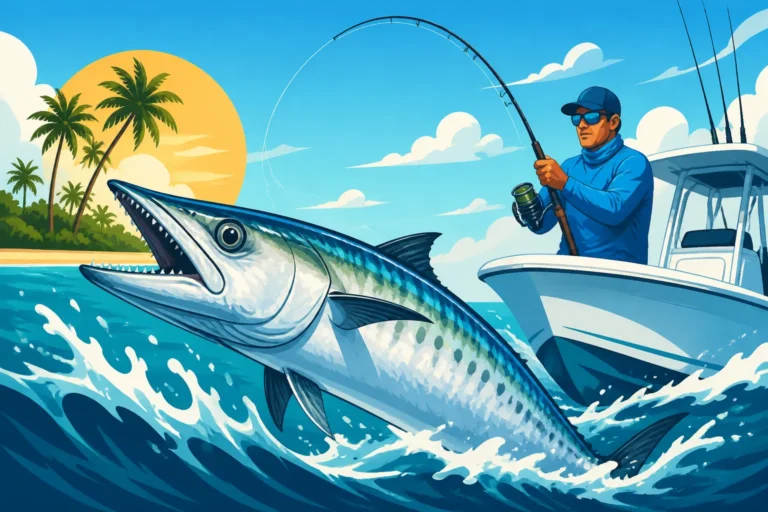
King Mackerel, often affectionately called "Kingfish" or "Smokers" (due to their popularity for smoking), are the titans of the mackerel world. These powerful pelagic fish are built for speed and aggression, making them a formidable opponent for any angler. When a Kingfish hits your line, be prepared for screaming drags and long, blistering runs that test both your tackle and your stamina. They are highly migratory, following baitfish schools along Florida's coasts, often venturing into deeper, offshore waters but can also be found surprisingly close to shore, especially around structure or bait pods. Their sheer size and fighting prowess make them a bucket-list species for many Florida fishermen.
These magnificent fish are known for their iridescent, silvery bodies and razor-sharp teeth. They primarily feed on baitfish such as pilchards, mullet, threadfin herring, and even small bonitos, often slashing through schools with incredible speed. Anglers target them for their thrilling fight and, for some, their delicious meat, especially when prepared properly. Catching a King Mackerel isn't just about the fight; it's about the anticipation of a truly impressive fish.
Spanish Mackerel: The Speedy Schoolie
Spanish Mackerel, on the other hand, are the smaller, but equally feisty, cousins of the Kingfish. While they don't reach the gargantuan sizes of Kings, they more than make up for it with their incredible speed and schooling behavior. Spanish Mackerel are renowned for their quick, darting movements and their ability to hit artificial lures with explosive force. They are predominantly an inshore and nearshore species, often found patrolling grass flats, beaches, piers, and nearshore reefs. This makes them highly accessible to anglers fishing from shore, kayaks, or smaller boats.
These sleek, streamlined fish are a common sight in Florida, often providing fast-paced action and generous catches, especially when the schools are thick. They are voracious predators, preying on small baitfish like glass minnows, anchovies, and small pilchards. Spanish Mackerel are incredibly popular among anglers who enjoy light tackle action and delicious table fare. The sheer numbers you can sometimes encounter, combined with their spirited fight, make them a fantastic target for a fun and productive fishing trip.
Telling Them Apart: Key Identification Features
When you've got a mackerel on the line, especially in the heat of the moment, it can be tough to distinguish between a King and a Spanish. But once you know what to look for, these fish have some very clear differences that make identification straightforward. It’s not just about size; there are distinct physical markers that will help you tell them apart every time.
Size and Shape: A Tale of Two Mackerels
The most obvious difference is often their mature size. King Mackerel are simply much larger fish. An average King Mackerel caught by recreational anglers might range from 10 to 40 pounds, but they can grow well over 60 pounds, with some giants exceeding 90 pounds! Their bodies are more robust and torpedo-shaped, built for sustained speed and power in open water. They have a noticeable tapered body, thicker through the middle, ending in a broad, powerful caudal (tail) fin.
Spanish Mackerel, by contrast, are typically much smaller. A common Spanish Mackerel catch will be in the 1 to 5-pound range, rarely exceeding 10-12 pounds. Their bodies are more slender and streamlined, almost needle-like in comparison to a Kingfish. This svelte profile allows for incredibly fast bursts of speed, perfect for ambushing small baitfish in shallow water. If you hook into something that feels like a freight train, it’s probably a King. If it’s a blur of speed on light tackle, it’s likely a Spanish.
Coloration and Markings: Spotting the Differences
This is where visual identification becomes incredibly easy if you know what to look for. Both fish have iridescent silver bodies, dark backs, and a generally sleek appearance, but their spots tell the story.
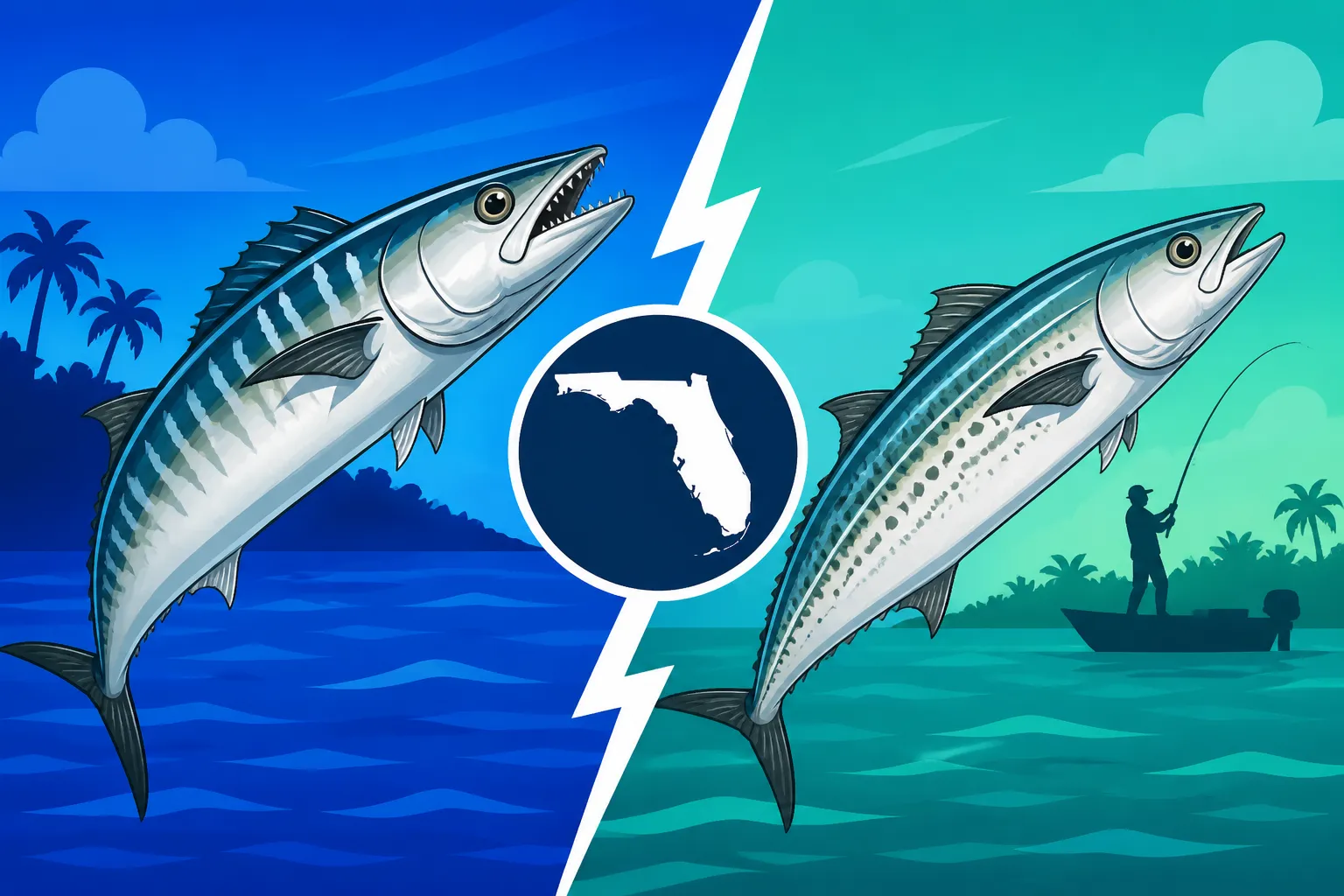
Spanish Mackerel are adorned with distinct, irregularly shaped, golden-bronze spots along their sides. These spots are usually quite prominent and can sometimes appear as broken lines or blotches. They lack any markings on their bellies; their underside is a clean, silvery white. The first dorsal fin (the one closer to the head) on a Spanish Mackerel is also typically dark or black towards the front, fading to clear.
King Mackerel, on the other hand, do not have these distinct golden-bronze spots. Instead, younger King Mackerel might have faint, yellowish-brown spots on their sides that are much less defined and often fade as the fish matures. An adult King Mackerel will have a uniform, silvery-white belly and flanks, with no prominent spots whatsoever. Their first dorsal fin is usually a uniform silvery-gray or slightly dusky color, lacking the prominent black edge seen on a Spanish Mackerel. This difference in dorsal fin color is a dead giveaway, especially on smaller fish where spots might be less clear.
The Dorsal Fin and Lateral Line: Critical Clues
Beyond spots and overall size, paying attention to the dorsal fin and the lateral line can provide definitive identification.
The first dorsal fin is a crucial indicator. On a Spanish Mackerel, the front portion of this fin is prominently black, contrasting sharply with the rest of the fin, which is clear or dusky. It’s like a little black flag at the front of their back. For King Mackerel, the first dorsal fin is typically a uniform dusky or silvery color throughout, without that distinctive black leading edge. This single feature alone can often identify the fish, even for smaller specimens that might cause confusion.
The lateral line is another key anatomical feature. This is the sensory line running along the side of the fish's body. On a King Mackerel, the lateral line has a sharp dip below the second dorsal fin (the smaller fin further back on the body) and then continues relatively straight towards the tail. Imagine it making a distinct "kink" or "zigzag" near the tail. The Spanish Mackerel's lateral line, however, gradually slopes downward from the head towards the tail, forming a smooth, continuous curve without any sharp dips or pronounced changes in direction. This gradual curve versus a distinct dip is a subtle but consistent identifier. Keep an eye out for Florida King Mackerel Fishing Guide for more details on these magnificent fish.
Here's a quick comparison table to keep things clear:
| Feature | King Mackerel | Spanish Mackerel |
|---|---|---|
| Average Size | 10-40+ lbs (can exceed 90 lbs) | 1-5 lbs (rarely over 12 lbs) |
| Body Shape | Robust, torpedo-shaped, thicker body | Slender, streamlined, more elongated |
| Side Markings | Faint yellowish spots on juveniles, fade in adults | Prominent, irregular golden-bronze spots on sides |
| Belly Color | Uniform silvery-white, no spots | Uniform silvery-white, no spots |
| 1st Dorsal Fin | Uniform dusky/silvery, no prominent black edge | Prominent black leading edge, then clear/dusky |
| Lateral Line | Distinct dip below 2nd dorsal fin, then straight | Gradual, smooth slope from head to tail |
| Teeth | Larger, broader, knife-like | Smaller, very sharp, conical |
Habitat, Diet, and Behavior: Where and How They Live
Understanding where these fish prefer to spend their time, what they eat, and how they behave is essential for successful targeting. While there can be some overlap, their primary preferences dictate different fishing strategies. This knowledge will help you predict their movements and present the right bait or lure in the right place.
Where They Roam: Preferred Habitats
King Mackerel are primarily offshore and nearshore pelagic fish. This means they prefer the open waters of the Atlantic Ocean and Gulf of Mexico, often found over reefs, wrecks, ledges, and along temperature breaks where baitfish congregate. While they are usually associated with deeper water, they will frequently move into nearshore waters, sometimes just outside the surf, particularly when baitfish schools are abundant or during their migratory patterns. Piers that extend far into the ocean, like the Sunshine Skyway Fishing Pier or other deep-water structures, can also be hotspots for Kings, especially during cooler months. Their movements are often dictated by water temperature and the availability of their food source, leading them to migrate extensively along the Florida coast. You might find them from the panhandle down to the Florida Keys depending on the season.
Spanish Mackerel, conversely, are much more of an inshore and nearshore species. They absolutely love structure like channel markers, bridges, jetties, and the edges of grass flats. You’ll find them in the surf, around estuaries, and even in larger bays like Tampa Bay or the Indian River Lagoon. They typically stick to shallower waters, often in depths ranging from 5 to 50 feet. Their high energy levels and schooling nature make them a visible target, often seen busting bait on the surface. They are a fantastic target for those who prefer to fish closer to shore or from land-based structures. For more details on this species, check out Florida Spanish Mackerel Fishing Guide.
What's on the Menu: Their Diets
Both mackerel species are opportunistic predators, but their diets reflect their size and preferred hunting grounds.
King Mackerel are formidable carnivores with a diverse diet of larger baitfish. They are keen hunters, targeting species like pilchards, threadfin herring, Spanish sardines, mullet, blue runners, and even small bonitos or ladyfish. They often slash through schools of bait, stunning or injuring their prey before returning to eat them. Their large, triangular, razor-sharp teeth are perfectly adapted for cutting through larger fish. Understanding their diet is key to selecting the right live bait or artificial lure for your presentation.
Spanish Mackerel have smaller mouths and smaller, conical, but equally sharp teeth, which are suited for devouring smaller prey. Their primary diet consists of tiny baitfish such as glass minnows, anchovies, bay anchovies, and small pilchards. They also readily consume squid and small crustaceans. Their schooling behavior allows them to corral baitfish effectively, making short work of dense bait pods. This preference for smaller prey influences the size and type of lures and baits that are most effective when targeting them.
How They Act: Schooling and Hunting Styles
King Mackerel are generally found in smaller schools or even solitary, especially the larger, more mature fish. They tend to be more ambush predators, lurking deeper or on the edges of bait schools, striking with incredible power. When they do hunt, it's often a swift, brutal attack, relying on their speed and powerful jaws. They are known for their "skyrocketing" behavior, where they launch themselves out of the water while chasing prey, a truly spectacular sight. Their fight is characterized by long, powerful runs.
Spanish Mackerel are true school fish, often found in massive schools that can number in the hundreds or even thousands. They are highly active and frequently seen "crashing" or "feeding" on the surface, driving baitfish to the top. This aggressive schooling behavior makes them a blast to target, as you can often get multiple hookups in a short period. Their fight, while strong for their size, is characterized by quick, darting runs and acrobatic leaps. Their energetic feeding frenzies are a hallmark of Florida's inshore fishing scene.
Fishing for Mackerel: Techniques and Gear Differences
Now that you know how to tell them apart and understand their habits, let's talk about how to catch them. While there's some overlap, optimizing your gear and techniques for each species will greatly increase your success.
Gear Up: Rods, Reels, and Lines
The size and fighting style of King and Spanish Mackerel necessitate different tackle setups.
For King Mackerel, you'll want heavier gear capable of handling powerful runs and potentially large fish. A medium-heavy to heavy action conventional or spinning rod, typically 7 to 8 feet long, is a good choice. Pair this with a robust reel (spinning reel size 5000-8000 or a conventional reel with a good drag system) spooled with 20-40 pound braided line, and a 40-80 pound fluorocarbon leader. Due to their sharp teeth, a short section (6-12 inches) of multi-strand wire leader (around 30-60 lb test) is absolutely essential to prevent cut-offs. You can find excellent quality wire leader and other terminal tackle for Kingfish on Amazon or at your local bait and tackle shop. Check out Best Rod and Reel Setup for Florida Offshore Fishing for more in-depth advice.
Spanish Mackerel are typically targeted with lighter tackle, which makes their fight even more exhilarating. A light to medium-light action spinning rod (6.5 to 7.5 feet) paired with a 2500-4000 series spinning reel is perfect. Spool it with 10-15 pound braided line, and a 20-30 pound fluorocarbon leader. While Spanish Mackerel have sharp teeth, they don't always cut heavier monofilament or fluorocarbon as easily as Kings. However, to be safe, a short (6-inch) section of thin, single-strand wire (e.g., #1 or #2 steelon wire) or a heavier fluorocarbon leader (40-60 lb) can prevent bite-offs, especially if you're targeting larger Spanish. Lighter wire is key, as Spanish can be finicky about thick leader. You can stock up on light wire leader and various spoons on Amazon for a convenient shopping experience.
Baits and Lures: What Gets Their Attention
Both species respond well to a variety of baits and lures, but there are distinct preferences.
For King Mackerel, live bait is often king. Pilchards, threadfin herring, blue runners, mullet, and even small ladyfish are highly effective when slow-trolled or free-lined near structure or bait schools. Dead ribbonfish, ballyhoo, or cigar minnows rigged to swim naturally are also excellent choices. Artificial lures include large spoons, lipped trolling plugs, and skirted jigs. The key is to present a bait or lure that mimics their preferred larger forage and can withstand a powerful strike. Often, a live bait rig with a stinger hook is employed to ensure hook-ups when Kings slash at the bait. Consider reading Best Live Bait for Florida Inshore Fishing for more on bait options, though Kings often prefer slightly larger baits.
Spanish Mackerel are less particular and readily strike a wide array of artificial lures, especially when they are actively feeding. Small, fast-moving spoons (like Clarkspoons or Kastmasters), Got-cha plugs, shiny jigs, and small topwater plugs are highly effective. When using live bait, small pilchards, glass minnows, or shrimp can be irresistible. The presentation for Spanish Mackerel often involves a fast retrieve, mimicking a fleeing baitfish. If you're using bait, a free-lined or very lightly weighted presentation will often get the bite. They are visual predators, and anything shiny and fast usually grabs their attention.
Fishing Techniques: Trolling, Casting, and More
Different fishing techniques are employed to effectively target these two distinct mackerel species.
King Mackerel are most frequently caught by trolling. This involves slowly pulling live or dead baits, or large artificial lures, behind a boat at speeds typically ranging from 2-7 knots. Downriggers or planers are often used to present baits at specific depths. Drifting with live baits over reefs or wrecks is another productive method, especially when a strong current is present. When Kings are schooling near a pier or a specific structure, casting large spoons or jigs into the feeding frenzy can be incredibly effective, but it requires stout tackle. Remember that for powerful species like these, following Trolling Technique for Offshore Fishing best practices will improve your chances.
For Spanish Mackerel, casting and retrieving lures is often the most exciting and productive method. Spotting diving birds or surface activity (fish "busting" bait) is a dead giveaway that Spanish are present. Cast a spoon or jig into the commotion and retrieve it quickly. Pier fishing and bridge fishing are also popular for Spanish, where anglers cast spoons or use sabiki rigs to catch bait, then free-line them. Trolling small spoons or jigs behind a boat at moderate speeds (5-8 knots) is also highly effective, especially when searching for schools or covering large areas of nearshore water. Their aggressive nature means they often hit lures with ferocity.
Regulations and Conservation: Playing by the Rules
Florida is passionate about its fisheries, and for good reason! To ensure healthy fish populations for generations to come, strict regulations are in place for both King and Spanish Mackerel. It’s not just a suggestion; it’s the law, and knowing these rules is crucial before you even wet a line. Ignorance is no excuse, and violating regulations can lead to hefty fines and loss of fishing privileges. I highly recommend familiarizing yourself with Florida Fishing Regulations and Bag Limits.
Size and Bag Limits: Knowing What You Can Keep
Both King Mackerel and Spanish Mackerel have specific size limits (minimum length requirements) and bag limits (the number of fish you can legally keep per person per day). These limits can vary based on whether you are fishing in state or federal waters, and sometimes even by region (Gulf of Mexico vs. Atlantic Ocean).
For King Mackerel, there is typically a minimum size limit to ensure that fish have a chance to reproduce at least once before being harvested. There is also a bag limit, usually allowing a couple of fish per person. These regulations are designed to prevent overfishing of this highly migratory and popular sport fish.
Spanish Mackerel also have a minimum size limit, though it is usually smaller than that for King Mackerel, reflecting their generally smaller adult size. Their bag limit is often more generous, allowing anglers to keep more fish per day, due to their abundant populations and faster reproductive rates.
It is absolutely imperative that you check the most current regulations before every fishing trip. The Florida Fish and Wildlife Conservation Commission (FWC) website is your best friend here. Regulations can and do change, so relying on old information is a recipe for trouble. Always measure your fish carefully and accurately from the tip of the nose to the fork of the tail. If in doubt, release it! Remember, adhering to these rules helps protect the fishery for everyone. If you're ever unsure about Who Needs a Fishing License in Florida, that's another critical piece of information to double-check.
Seasonal Considerations: When and Where to Fish
While both species can be caught year-round in certain parts of Florida, their migratory patterns mean that specific seasons and regions will offer peak fishing opportunities. Understanding these movements can dramatically increase your chances of success.
King Mackerel are highly migratory and their presence in certain areas is strongly linked to water temperature and baitfish movements. Generally, they are more abundant in Florida's Atlantic waters during the fall and spring migrations, when they move north and south along the coast. In the Gulf of Mexico, they might be found in nearshore waters during the cooler months (late fall through spring) and move further offshore to deeper structures as waters warm in the summer. Specific seasons might also be established for certain federal waters. Knowing these seasonal patterns is key to finding them consistently. For a broader overview, take a look at Florida Fishing Seasons Explained.
Spanish Mackerel are also migratory, but their movements are often less extensive and more tied to inshore bait concentrations. They are often present in Florida's inshore and nearshore waters for much of the year, particularly during the cooler months (fall, winter, and spring) when large schools of baitfish are present. During the hottest summer months, they may move slightly further offshore or into deeper channels to find cooler water, but they remain accessible. Their abundance can be very localized; if the bait is there, the Spanish Mackerel won't be far behind. Often, a big push of Spanish Mackerel can signal that the King Mackerel are close behind, as both species feed on similar baitfish.
Disclaimer
This article is for general informational purposes only and does not constitute professional advice. Laws, prices and regulations vary by location and change over time. Consult a qualified professional for guidance on your specific situation.