Difference Between Bonefish and Ladyfish
It's incredibly common to be out on the beautiful Florida flats, reeling in a fish, and wonder exactly what you've hooked. Two species that often cause a bit of head-scratching, especially for newer anglers or those unfamiliar with their nuances, are the bonefish and the ladyfish. They both swim in similar waters, have a silvery sheen, and fight like crazy, making it a real challenge to tell them apart at a glance. This guide is here to clear up that confusion once and for all, helping you confidently identify each fish and appreciate their unique characteristics.
Introduction to Bonefish and Ladyfish
Imagine you’re standing on a pristine flat in the Florida Keys, the sun glinting off the clear water, and suddenly your line goes taut with a powerful run. Or maybe you're casting into a grass flat in a bay, and a shimmering, athletic fish strikes your lure. Both scenarios could involve a bonefish or a ladyfish, and knowing which one it is can dramatically change your approach to handling it, your expectations for the fight, and even how you talk about your catch later. These two species, while both fantastic sportfish, are distinctly different, and understanding those differences is key to becoming a more informed angler in Florida's diverse waters.
The Frustration of Misidentification
It's a universal angler frustration: you've battled a feisty fish, finally get it to the boat or shore, and then you're left scratching your head. "Is this a baby tarpon? A ladyfish? Or could it be one of those elusive bonefish?" The confusion is totally understandable. Both bonefish and ladyfish are known for their incredibly hard fighting ability relative to their size, their sleek, torpedo-like bodies, and their silvery coloration, which acts as camouflage in the bright, shallow water. You might even hear seasoned anglers mistakenly call a ladyfish a "poor man's tarpon" or "skipjack," adding to the jumble of names and further blurring the lines between species. Without a clear understanding of their unique physical markers and behaviors, it's easy to lump them together, missing out on the distinct joys and challenges each fish offers.
Why Knowing the Difference Matters
Beyond just satisfying your curiosity, correctly identifying a bonefish versus a ladyfish has practical implications for your fishing experience. For starters, Florida Bonefish Fishing Guide highlights just how prized bonefish are. They are often targeted by fly anglers and sight fishermen who spend hours patiently stalking the flats. These are true trophy fish for many, known for their incredible speed and powerful runs. Ladyfish, on the other hand, while equally spirited, are often considered more accessible and less particular, making them a great target for beginners or when other species are finicky.
From a conservation standpoint, the differences are crucial. Bonefish are primarily a catch-and-release species, treasured for their sporting value rather than their culinary one. Understanding their delicate nature and proper handling for release is paramount to their survival. Ladyfish, while often released, can sometimes be kept for bait or consumption, depending on local regulations. Knowing which one you've caught ensures you adhere to responsible angling practices. Moreover, misidentifying a protected species could lead to unintentional violations of fishing regulations, which is something no angler wants to encounter.
Detailed Identification: Bonefish
The bonefish, scientifically known as Albula vulpes, is often called the "Grey Ghost of the Flats" for good reason. They are notoriously shy, incredibly fast, and blend seamlessly into their shallow water habitat. Catching a bonefish is a badge of honor for many anglers, especially those who prefer the quiet challenge of sight fishing with light tackle or a fly rod.
Physical Characteristics
Bonefish have a distinctive appearance that, once you know what to look for, sets them apart. Their bodies are long, slender, and extremely muscular, giving them that torpedo-like shape. The most striking feature is their brilliant, almost iridescent silver coloration, which transitions to a slightly darker, often olive or bluish-gray hue along their backs. This countershading helps them disappear against the sandy or grassy bottom when viewed from above, and against the sky when viewed from below.
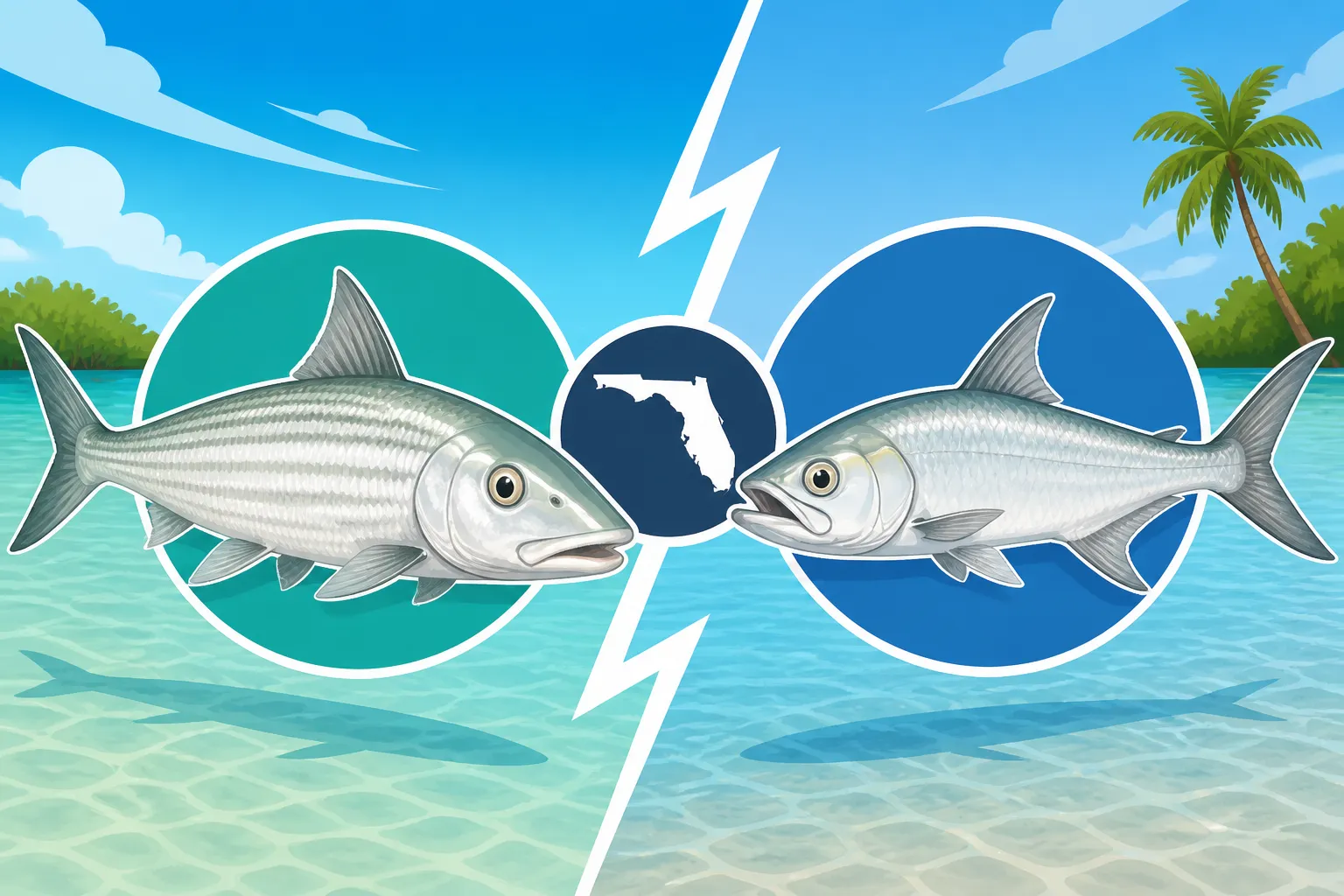
A key identifier is their pointed, pig-like snout, which extends beyond their lower jaw. This specialized snout is perfectly adapted for rooting around in the sand and mud for small crabs, shrimp, and worms – their primary food source. Their mouth is small and located on the underside of their head. Another critical detail is the pattern on their sides: adult bonefish often display faint, dusky stripes running horizontally along their flanks, which can be more visible when the fish is stressed or freshly caught. Their fins are typically clear or slightly dusky, with no prominent spots or coloration. Unlike ladyfish, bonefish lack any visible lateral line on their body, relying on other sensory organs to navigate and hunt.
Habitat and Behavior
Bonefish are true denizens of the shallow, clear, warm waters of tropical and subtropical regions. In Florida, they are predominantly found in the southern reaches, particularly the Florida Keys and the shallow flats of Biscayne Bay. You'll encounter them stalking the expansive grass flats, wading in sandy potholes, and cruising along mangrove shorelines. Their preferred habitat is typically less than six feet deep, where they can be seen "tailing" – poking their tails out of the water as they root for food on the bottom.
Their behavior is what makes them such a challenge and a thrill to catch. They are incredibly wary, easily spooked by sudden movements, boat noise, or even a misplaced cast. When hooked, a bonefish will make blistering, drag-screaming runs that can strip line off your reel at an astonishing pace. They don't jump like a tarpon, but their sheer speed and endurance make for an unforgettable fight. They are highly migratory, moving with the tides and seasons, often congregating in schools on incoming tides to feed on the flats. Best Spots in Biscayne Bay for Bonefish details some prime locations where you can test your skills against these elusive creatures.
Angling Experience and Sporting Value
Catching a bonefish is a truly rewarding experience, often involving specialized techniques. Sight Fishing Technique for Shallow Flats is paramount when targeting bonefish. Anglers typically pole a flats skiff quietly or wade silently, searching for tell-tale signs like tails, nervous water, or subtle movements. Fly fishing for bonefish is incredibly popular, requiring precise casts and delicate presentations with small shrimp or crab imitations. Spin fishermen also find success with light tackle, using small jigs tipped with shrimp or artificial scented baits. Brands like Amazon offer a wide array of specialized bonefish flies and light spinning gear that can greatly enhance your chances.
The sporting value of a bonefish is immense. They are considered one of the premier shallow-water game fish. Due to their elusive nature and the precision required to catch them, they are almost universally released. Conservation efforts are strong for bonefish, as their populations are sensitive to habitat degradation and overfishing. Anglers cherish the memory of the fight and the beauty of the fish, opting to let them swim away to fight another day.
Detailed Identification: Ladyfish
The ladyfish, Elops saurus, is another incredibly energetic inshore species that provides fantastic light tackle action across much of Florida. While often overlooked by anglers obsessed with snook or redfish, the ladyfish truly holds its own as a feisty, acrobatic fighter, earning it nicknames like "poor man's tarpon" or "skipjack." They are found in a broader range of habitats than bonefish and are often more readily available.
Physical Characteristics
At first glance, a ladyfish might be mistaken for a juvenile tarpon or even a small bonefish due to its silvery color and sleek body. However, there are several key differences. Ladyfish have a long, slender, cylindrical body, a bit more streamlined than a bonefish, with a deeply forked tail that aids in their incredible speed. Their coloration is a brilliant, almost chrome-like silver on their sides, fading to a darker, greenish-blue on their backs. Unlike bonefish, they do not typically display distinct horizontal stripes or patterns on their flanks.
A critical distinguishing feature is their large, terminal mouth, meaning it's located at the very front of their head. This mouth is typically large and gaping, designed for ambushing and swallowing baitfish whole. Their eyes are also notably large. Perhaps the most obvious and consistent identifier is a small, hard bony plate present on the underside of their lower jaw, which is entirely absent in bonefish. This is a very reliable characteristic to look for when you're trying to make a positive ID. Their dorsal and anal fins are relatively small and located far back on their body, giving them a very sleek profile. Another subtle difference is their lateral line, which is usually more prominent and distinct than a bonefish, running straight down the side of their body.
Habitat and Behavior
Ladyfish are incredibly adaptable and can be found in a wide variety of inshore and nearshore environments throughout Florida. They thrive in estuaries, bays, tidal creeks, and even venture into brackish and occasionally pure freshwater for short periods. You'll find them cruising along beaches, around oyster bars, in mangrove-lined channels, and over grass flats. They are often found in slightly murkier water than bonefish prefer, but they will readily inhabit clear flats as well. Best Spots in Mosquito Lagoon for Redfish and other similar inshore havens are also prime spots for ladyfish.
Their behavior is defined by their voracious appetite and acrobatic fighting style. Ladyfish are opportunistic predators, schooling up to ambush schools of baitfish like pilchards, threadfins, and mullet. When hooked, they are famous for their spectacular aerial displays, jumping and thrashing vigorously, often throwing the hook in the process. Their runs are not as long or powerful as a bonefish, but they are incredibly fast and erratic, making for an exciting fight on light tackle. They are also known for their habit of "skipping" across the surface when hooked, hence the "skipjack" nickname.
Angling Experience and Sporting Value
Ladyfish are a fantastic target for anglers of all skill levels, offering consistent action and a thrilling fight. They readily strike a wide variety of artificial lures, including spoons, topwater plugs, soft plastic jerkbaits, and small jigs. They are also eager to hit live bait like shrimp, pilchards, or cut bait. Because they are so aggressive, they make excellent introductory fish for new anglers or kids. The Florida Inshore Fishing Techniques that work for trout and redfish will often entice a hungry ladyfish.
While generally not considered a table fish due to their bony nature, ladyfish are excellent bait. Many anglers catch them specifically to use as cut bait for larger predatory fish like sharks, snook, or tarpon. Their sporting value is undeniable, providing endless entertainment on light tackle. For those looking for an affordable and exciting angling experience, targeting ladyfish is a great choice. You can find excellent quality spinning rods and reels perfect for ladyfish on Amazon, often at a very reasonable price.
Key Distinctions and Angler Tips
When you're out on the water and trying to figure out if you've landed a bonefish or a ladyfish, it can still be tricky. But by focusing on a few key characteristics and understanding their typical habitats, you'll be able to tell them apart with confidence.
Side-by-Side Comparison
Let's break down the most crucial differences in a handy table:
| Feature | Bonefish (Albula vulpes) | Ladyfish (Elops saurus) |
|---|---|---|
| Snout/Mouth | Pointed, pig-like snout extending past lower jaw; small, inferior (underneath) mouth. | Large, terminal mouth (at front of head); prominent bony plate on underside of lower jaw. |
| Body Shape | Slender, muscular, torpedo-like. | Long, slender, cylindrical; often more streamlined. |
| Coloration | Iridescent silver, darker olive/bluish-gray back; faint horizontal stripes often visible. | Chrome-like silver, greenish-blue back; no distinct stripes or patterns. |
| Fight Style | Blistering, drag-screaming runs; no jumping. | Acrobatic jumps, fast, erratic runs; "skips" on surface. |
| Habitat | Shallow, clear, warm flats (Florida Keys, Biscayne Bay). | Widely distributed inshore, estuaries, bays, brackish; can be in murkier water. |
| Diet | Bottom dwellers: crabs, shrimp, worms. | Ambush predators: baitfish (pilchards, mullet). |
| Sporting Value | Highly prized, elusive trophy fish; primarily fly/light tackle. | Excellent light tackle sport; readily available; great baitfish. |
| Commonly | "Grey Ghost of the Flats" | "Poor Man's Tarpon," "Skipjack" |
Remember, the mouth structure and the presence (or absence) of the bony plate on the lower jaw are perhaps the most reliable indicators. If you're still unsure, gently feel under the jaw. The bony plate on a ladyfish is quite distinct.
Fishing for Each Species
The techniques for targeting these two fish often differ due to their behavior and preferred diet. For bonefish, stealth and precision are everything. You'll want to use light tackle, such as a 6-8 weight fly rod or a spinning rod with 8-10 lb braid. Delicate presentations of small crab or shrimp patterns are key. The goal is to cast ahead of a moving fish without spooking it. Live shrimp or small pieces of cut crab can also work. Many anglers even consult specific guides or purchase specialized gear from Amazon for bonefish, as it truly is a different kind of challenge.
Ladyfish, by contrast, are less demanding. They'll readily hit a variety of lures and live baits. A light spinning rod with 8-12 lb line is perfect. Small spoons, jigs, soft plastics, and topwater lures can be highly effective. They are also fantastic on a fly rod, offering a great opportunity to practice your casting and fighting skills. Live shrimp or small baitfish presented under a popping cork are almost guaranteed to get strikes. Given their propensity for jumping, a longer leader can sometimes help prevent break-offs. If you're after pure action and plenty of bites, ladyfish are your go-to.
Conservation Considerations
For both species, understanding how to handle them properly upon capture is vital. Bonefish are almost exclusively a catch-and-release species. It is crucial to minimize their time out of the water, handle them with wet hands or gloves to protect their slime coat, and revive them gently before release. Using circle hooks can reduce gut-hooking. Knowing when Florida Snook Season Closed Season Dates are can give you a better idea of how different species are managed and how conservation efforts are implemented.
Ladyfish, while more resilient, still benefit from careful handling, especially if you plan to release them. They are often caught and used as bait, but if released, ensure they are revived sufficiently. Catch and Release Best Practices for Snook provides excellent guidance that can be applied to many sport fish, including bonefish and ladyfish. Whether you're chasing the "Grey Ghost" or enjoying the aerial acrobatics of a ladyfish, respect for the resource ensures these fantastic sportfish will be around for future generations of Florida anglers.
Disclaimer
This article is for general informational purposes only and does not constitute professional advice. Laws, prices and regulations vary by location and change over time. Consult a qualified professional for guidance on your specific situation.