Where to Find Redfish in Tampa Bay
If you've ever cast a line into the shimmering waters of Tampa Bay hoping to hook into a hard-fighting redfish, you know the mix of excitement and frustration that comes with it. These copper-colored beauties are legendary for a reason, but finding them isn't always as simple as just showing up. Many anglers spend countless hours scouring the flats, only to come up empty-handed. This guide is here to cut through the guesswork, helping you understand where redfish live, what they eat, and how to consistently put yourself in a position for a memorable catch in one of Florida's most iconic fisheries.
Decoding Redfish Preferences in Tampa Bay's Diverse Waters
Tampa Bay is a massive, complex estuary, a veritable labyrinth of shallow grass flats, intricate mangrove shorelines, oyster bars, and deeper channels. For a species like the redfish, or Sciaenops ocellatus, this diversity is precisely what makes it such a thriving habitat. However, it also means that their movements and preferred hangouts can shift with the seasons, tides, and even the time of day. Understanding what draws them to a particular spot is the first step in successful redfish angling.
What Redfish Look For in a Habitat
Redfish are opportunists, always on the hunt for their next meal, and their preferred habitats reflect this. They seek out areas that offer both abundant food sources and protection from predators (though they are apex predators themselves in many respects). Think of it like real estate: location, location, location. They want a place with easy access to groceries and a bit of cover.
Typically, you'll find redfish congregating in very shallow water, sometimes so shallow their backs are out of the water, a phenomenon known as "tailing." These flats are often covered in seagrass, which acts as a nursery for smaller baitfish, shrimp, and crabs—all prime redfish forage. The mangroves, with their intricate root systems, provide excellent ambush points and shelter from strong currents or extreme temperatures. Oyster bars are another huge draw, creating structure that attracts crustaceans and other small critters that redfish love to munch on. The clarity and depth of the water also play a role; while they tolerate murky water, they prefer clearer conditions for hunting, and deeper pockets adjacent to shallow flats offer them a quick escape or a place to cool off when the sun is high.
Understanding Redfish Behavior Throughout the Year
Just like us, redfish change their routines with the seasons. Florida doesn't experience the dramatic temperature swings of northern states, but even subtle shifts can influence where redfish decide to spend their time. Knowing these patterns can dramatically increase your chances of finding them.
During the cooler months, from late fall through early spring, redfish often school up in larger numbers in deeper pockets of water, protected canals, or along sun-warmed dark bottom flats. They become less active in very cold water, preferring to conserve energy. This is a great time to target them on the outgoing tide as they move off these warmer, shallower spots into slightly deeper water. As the water warms in late spring and through the summer, redfish spread out more across the vast grass flats and move closer to the mangrove edges, especially during higher tides. This is when sight fishing becomes incredibly productive, as they're actively cruising the shallows. The Florida Redfish Spawning Season typically ramps up in late summer and fall, and during this time, larger "bull" redfish can often be found in deeper passes and channels before returning to their shallower feeding grounds.
Prime Redfish Hotspots and Structures Across Tampa Bay
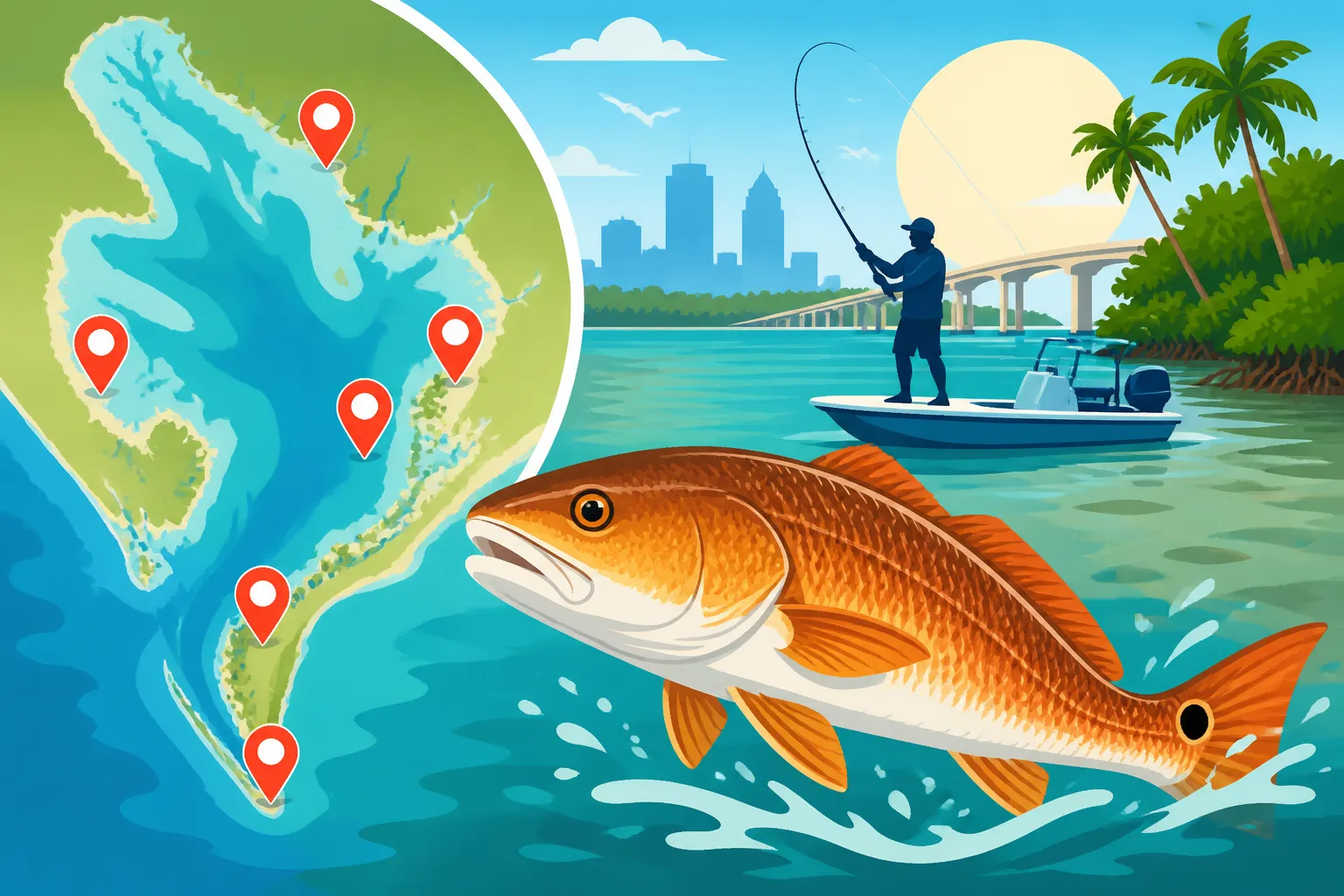
Tampa Bay offers an incredible variety of environments, each with its own appeal for redfish. From the northern reaches near Oldsmar to the southern expanses around Anna Maria Island, knowing the specific types of structures and locations where redfish consistently congregate is key. It’s not just about knowing where on the map, but what kind of habitat within those areas you should be looking for.
Expansive Grass Flats
The vast seagrass beds are arguably the most iconic redfish habitat in Tampa Bay. These underwater meadows provide shelter and food for countless small organisms, forming the base of the food chain that redfish exploit. Look for healthy, vibrant grass with sandy potholes scattered throughout. Redfish will cruise these potholes, ambushing prey.
- Weedon Island Preserve (St. Petersburg): This area is a classic example of prime grass flat habitat. With its intricate network of shallow flats and mangrove islands, Weedon Island offers miles of prime redfish territory. The key here is stealth; these fish can be spooky in such shallow water. Poling or using a trolling motor is essential. The adjacent mangrove shorelines also hold plenty of fish. Many anglers find success here by exploring the numerous small channels and coves that wind through the preserve.
- Fort De Soto Park (St. Petersburg): The flats surrounding Fort De Soto are legendary. From Bunces Pass to the North Beach flats, you'll find extensive grass beds and oyster bars. The outgoing tides near these passes can be particularly productive as bait gets flushed out. This area is easily accessible by boat, and even kayak anglers can reach some fantastic spots.
- Cockroach Bay Aquatic Preserve (Ruskin): Located on the southeastern side of the bay, Cockroach Bay offers vast, unspoiled grass flats interspersed with small mangrove islands and oyster beds. This preserve is a haven for redfish, often less pressured than some of the more central spots. It's a great place to experience true wilderness fishing. When navigating these areas, be mindful of the incredibly shallow water; a good Tampa Bay Fishing Guide or accurate charts are invaluable.
Mangrove Shorelines and Islands
Mangroves are the backbone of Florida's inshore ecosystems, and redfish absolutely love them. The tangled root systems provide protection, shade, and a constant supply of crabs, shrimp, and small baitfish. Redfish will hug these shorelines, especially on higher tides when they can push far back into the roots to forage.
- Terra Ceia Aquatic Preserve (Palmetto): Just south of the Skyway Bridge, Terra Ceia offers incredible mangrove labyrinths. Kayak and small boat anglers can spend hours working the intricate shorelines, casting under the overhanging branches. Look for points, small cuts, and areas where currents create eddies, as these are natural ambush points for hungry redfish. The extensive shallow water access makes it an ideal spot for those who prefer to wade or use a paddle craft.
- The East Side of Tampa Bay (Apollo Beach to Little Manatee River): This stretch is riddled with small mangrove islands and protected coves. During the cooler months, many of these protected areas can hold large schools of redfish seeking refuge from cold fronts. The mouths of creeks and rivers that feed into the bay, like the Little Manatee River, can also be productive, especially after heavy rains when bait is flushed out.
Oyster Bars and Rocky Structures
Oyster bars might not look like much, but they are bustling underwater cities teeming with life. They provide structure, act as natural filters, and attract a plethora of crustaceans and small fish – all irresistible to a redfish. When the tide is moving, these areas are prime feeding grounds.
- Middle Grounds of Tampa Bay (Various Patches): While less defined than distinct islands, there are numerous submerged oyster bars and rocky patches throughout the bay, particularly in the central and southern sections. These require careful navigation but can hold strong numbers of redfish, often alongside snook and trout. You can often spot these areas by changes in water color or subtle disturbances on the surface during low tide.
- River Mouths and Estuary Entrances: Areas where rivers or large creeks meet the bay often feature oyster beds or rocky bottom. The mouths of the Manatee River or Alafia River, for instance, have sections where these structures create excellent feeding lanes. Redfish will stage in these areas, waiting for bait to be carried out with the tide.
A Quick Look at Key Redfish Habitats in Tampa Bay
To help visualize where these elusive redfish tend to hang out, here's a handy table summarizing some of their favorite stomping grounds and the features they offer:
| Location / Area | Primary Habitat Type | Key Features for Redfish | Best Tidal Conditions | Common Bait / Lure Choices |
|---|---|---|---|---|
| Weedon Island Preserve | Grass Flats, Mangrove Shore | Vast seagrass beds, sandy potholes, protected coves | Mid to High Tide | Live Shrimp, Pinfish, Soft Plastic Jigs |
| Fort De Soto Park | Grass Flats, Oyster Bars | Extensive flats, passes (Bunces Pass), oyster beds | Outgoing Tide around passes, High Tide on flats | Whitebait, Shrimp, Spoons |
| Cockroach Bay Aquatic Preserve | Grass Flats, Mangrove Islands | Undeveloped flats, isolated mangrove islands, less pressure | All Tides (careful of extreme lows) | Live Shrimp, Cut Bait, Topwater Plugs |
| Terra Ceia Aquatic Preserve | Mangrove Labyrinths | Deep mangrove tunnels, current-swept points, shallow creeks | High Tide (to access back areas), Mid Tide for points | Live Shrimp, Fiddler Crabs, Weedless Soft Plastics |
| Alafia & Manatee River Mouths | Oyster Bars, Structure | Shell beds, rocky areas, creek outflows | Outgoing Tide | Live Shrimp, Finger Mullet, Scented Soft Plastics |
| Residential Canals / Docks | Deep Pockets, Structures | Docks, seawalls, deep channels, bridge pilings | All Tides (especially slack or slow moving) | Live Shrimp, Small Pilchards, Jigging Lures |
When planning your trip, consider using resources like FishingBooker to connect with local guides who specialize in redfish. They often have the most up-to-date knowledge on where the fish are holding based on recent conditions and can provide valuable insights into specific spots.
Timing Your Hunt: Tides, Seasons, and Strategies for Success
Finding redfish isn't just about knowing where they live; it's also crucial to understand when they're most likely to be active and accessible. Florida's tides and seasons play a massive role in dictating redfish behavior, and a savvy angler uses this knowledge to their advantage. Ignoring these factors can lead to a frustrating day on the water, while paying attention can lead to a banner catch.
The Critical Role of Tides
Inshore fishing, especially for redfish, is inextricably linked to the tides. The ebb and flow of the water dictate everything from where baitfish congregate to where redfish forage and seek cover. Understanding how to Read a Tide Chart for Fishing is paramount for success in Tampa Bay.
- Incoming Tide: As the water rises, it brings in fresh bait and pushes redfish onto the shallow grass flats and into the mangrove roots. This is often an excellent time for sight fishing, as redfish will be actively tailing or cruising the edges, looking for crabs and shrimp dislodged by the rising water. The higher water levels allow them access to areas they couldn't reach at low tide. Focus your efforts on the very edges of mangrove islands, oyster bars, and deeper potholes on the flats as the tide begins to flood.
- Outgoing Tide: As the tide recedes, it pulls baitfish out of the mangroves and off the flats, concentrating them in channels, cuts, and along deeper edges. Redfish will often stage in these areas, ambushing prey as it's flushed out. This can be a fantastic time to target them in passes and around larger oyster bars. Look for current lines and eddies where bait might gather. Fishing the last hour of the outgoing tide can be particularly productive as fish get pushed out of their hiding spots. For more details, check out our guide on How to Fish an Outgoing Tide.
- Slack Tide: This is often considered the slowest fishing period, as the water movement is minimal, and fish tend to be less active. However, it's not entirely unproductive. Redfish might congregate around deeper structure during slack tide, or pause in deeper pockets before the next tidal push. It's a good time to slow down your presentation, perhaps using cut bait or working jigs very slowly.
Seasonal Influences on Redfish Location
While redfish are present in Tampa Bay year-round, their concentrations and typical haunts change with the seasons. Adapting your approach based on the time of year is crucial.
- Spring (March – May): As water temperatures rise, redfish become increasingly active. They'll start spreading out from their wintering holes and move onto the grass flats and mangrove edges. This is a prime time for sight fishing, especially on sunny days. Baitfish populations begin to boom, offering a varied diet.
- Summer (June – August): Summer means hot water and often afternoon thunderstorms. Redfish will seek cooler water during the hottest parts of the day, often moving into deeper channels, under docks, or far back into shaded mangrove tunnels. Early mornings and late evenings are often the most productive times. Higher tides allow access to more remote mangrove areas. Be aware of summer squalls; safety first!
- Fall (September – November): Many consider fall the peak redfish season in Tampa Bay. Water temperatures are ideal, and the Florida Redfish Spawning Season brings larger "bull" redfish into deeper passes and near the mouths of large bays before they return to the flats. Schools of baitfish are plentiful. This is a fantastic time for both sight fishing on the flats and targeting larger fish in deeper areas.
- Winter (December – February): Cooler water temperatures often cause redfish to school up tightly. Look for them in protected canals, dark-bottomed shallow flats that warm up quickly with the sun, and deep channels adjacent to feeding grounds. They might be less active, so a slower, more deliberate presentation with natural bait is often effective. On calm, sunny days, they'll often be seen "sunbathing" in shallow spots.
Moon Phases and Weather Conditions
Beyond tides and seasons, even the moon can influence redfish behavior. Stronger moon phases (full and new moons) create more extreme tidal swings, which can intensify feeding activity. Conversely, weaker moon phases might mean slower fishing, requiring more patience. Weather also plays a part; calm, sunny days are excellent for sight fishing, while pre-front conditions often trigger a feeding frenzy. After a cold front, redfish can become lethargic and seek refuge in deeper, warmer pockets. Always check the forecast and adjust your plans accordingly.
Essential Techniques and Baits for Tampa Bay Redfish
Once you've zeroed in on the right locations and timed your visit, the next step is to present an irresistible offering to those clever redfish. There's an art to choosing the right bait or lure and presenting it effectively, and a little finesse goes a long way with these sharp-eyed fish.
Live Bait: The Gold Standard
When in doubt, live bait is almost always a safe bet for redfish. They are natural predators, and a struggling, natural presentation is hard for them to resist.
- Shrimp: Live shrimp are universally effective for redfish. They're readily available at bait shops throughout the Tampa Bay area and can be fished under a popping cork, free-lined, or on a jig head. When fishing near mangroves or oyster bars, a free-lined shrimp allowed to drift naturally with the current is often deadly. They're particularly good when the fish are a bit finicky.
- Whitebait (Scaled Sardines, Pilchards): These small baitfish are redfish candy. Cast-netting your own whitebait can be an adventure in itself, but it's often worth the effort. They can be fished free-lined with a small circle hook or slowly drifted through potholes on the flats. A frisky whitebait struggling near an oyster bar is an almost guaranteed strike. For tips on gathering your own, check out how to How to Find Bait Fish Schools From a Boat.
- Pinfish and Finger Mullet: Larger redfish, especially the "bulls," will readily take a live pinfish or finger mullet. These baits are tougher and can withstand a bit more casting. They are best fished free-lined or with minimal weight in areas where larger redfish are expected, such as deeper grass flat edges or around structure in passes.
Artificial Lures: The Challenge and the Reward
While live bait is often the easiest, catching a redfish on an artificial lure is incredibly rewarding. It allows for more active fishing and covering more ground. Our guide to Live Bait vs Artificial Lures for Florida Inshore Fishing can offer deeper insights.
- Soft Plastic Jigs: These are perhaps the most versatile artificial lures for redfish. Paddle tails, jerk shads, and curly tails rigged on a jig head can imitate a wide variety of baitfish and crustaceans. Colors like white, chartreuse, natural green, and root beer are consistently productive. The key is to work them slowly along the bottom, mimicking a crab or a wounded baitfish. Brands like Z-Man and D.O.A. offer excellent soft plastics that are popular with local guides.
- Spoons: Gold or silver spoons are classic redfish lures. Their flashing and wobbling action mimic a fleeing baitfish. They cast a mile, making them great for covering large flats. Simply cast and retrieve at a steady pace, varying the speed until you find what the fish prefer. Johnson Silver Minnow spoons are a timeless choice.
- Topwater Plugs: Nothing beats the excitement of a redfish exploding on a topwater lure. These lures are best used in low-light conditions (early morning or late evening) or on overcast days. Walk-the-dog style lures like a Heddon Super Spook or a MirrOLure Top Dog create irresistible surface commotion. They're especially effective when redfish are actively feeding in very shallow water.
- Scented Artificials: Products like Berkley Gulp! shrimp or crab imitations combine the look of an artificial with the irresistible scent of natural bait. These are excellent for slower presentations or when fish are less aggressive, often outperforming traditional soft plastics when a bit of extra enticement is needed.
Stealth and Presentation
Redfish, especially in clear, shallow water, are incredibly wary. Noise from banging tackle boxes, heavy footsteps on the boat deck, or even shadows cast over the water can send them scattering.
- Approach Quietly: Use a trolling motor at low speed, pole your boat, or wade silently. If you’re fishing from a kayak or paddleboard, your natural stealth is a huge advantage.
- Long Casts: Make long casts to avoid spooking fish. A good Best Rod and Reel Setup for Florida Inshore Fishing will help you cast farther and more accurately.
- Natural Presentation: Whether using live bait or artificials, try to make your offering look as natural as possible. Don't fight the current; let it help you present the bait realistically. When fishing near mangroves, try to cast parallel to the shoreline, allowing your bait to be swept naturally along the edge.
- Catch and Release: Remember to practice good How to Handle a Redfish for Release techniques, especially for the larger "bull" redfish, as these are the crucial breeders for the fishery. Handle them gently, support their weight, and release them quickly to ensure their survival.
Many anglers new to Tampa Bay find great success by learning from experienced local captains. You can easily find and book top-rated guides on platforms like FishingBooker, who know these techniques and spots like the back of their hand. They can teach you the subtle nuances that make all the difference, from reading the water to perfecting your cast.
Disclaimer
Fishing regulations, seasons, and bag limits can change frequently in Florida. Always check the latest regulations from the Florida Fish and Wildlife Conservation Commission (FWC) before heading out on the water. This guide provides general information and should not be considered a substitute for official FWC guidelines. Fishing involves inherent risks; always prioritize safety and wear appropriate personal flotation devices.