Florida Red Snapper Season Dates
The frustration of wanting to target delicious red snapper in Florida, only to find the season closed or the rules bafflingly complex, is a common plight for many anglers. It's not just about knowing how to catch them, but when you're even allowed to. This comprehensive guide will meticulously break down the intricate Florida Red Snapper season dates for both the Gulf and Atlantic coasts, helping you navigate the ever-changing regulations so you can plan your trip with confidence and avoid any unwelcome surprises from enforcement.
Unraveling the Complexity of Red Snapper Seasons
Anglers often feel like they need a legal degree just to understand red snapper regulations, and honestly, it’s not far from the truth sometimes! The seasons, limits, and rules are a patchwork of state and federal mandates, and it’s easy to get confused. But with a little patience, we can break down why it's so complicated.
State Versus Federal Waters: A Crucial Distinction
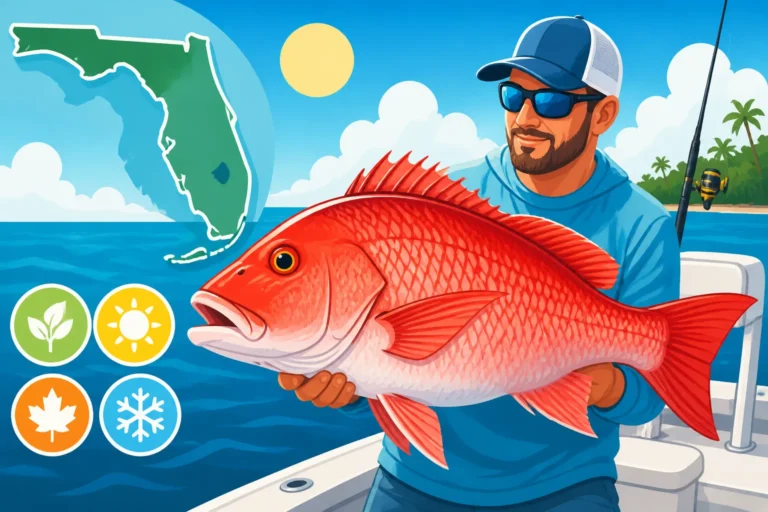
One of the biggest head-scratchers for anglers targeting red snapper in Florida is the distinction between state and federal waters. It’s not a simple imaginary line you can see, and the rules change dramatically once you cross it. For recreational anglers, Florida's state waters typically extend 9 nautical miles into the Gulf of Mexico and 3 nautical miles into the Atlantic Ocean. Beyond those lines, you're in federal waters, and that's where the waters (pun intended!) get even murkier with regulations set by federal agencies like NOAA Fisheries, often advised by the Gulf of Mexico Fishery Management Council (GMFMC) or the South Atlantic Fishery Management Council (SAFMC). The season dates and bag limits can be entirely different depending on whether you're fishing within state lines or out in the federal realm.
This means a red snapper caught just a mile or two further offshore could be illegal to possess, even if you were perfectly legal to keep it back closer to shore. It's a system designed to manage a complex fishery, but it certainly adds a layer of planning for us anglers. Knowing how far out are Florida's state waters? is crucial before you even drop a line. This constant push and pull between state and federal management often leads to varying rules, sometimes even conflicting ones, which is where a lot of the frustration comes from. Imagine meticulously planning a trip, checking the state regulations, only to learn you needed to check federal ones too because your favorite spot is just outside state jurisdiction. It's a common scenario, and understanding this fundamental split is the first step to avoiding potential fines or having to release a perfectly good fish. A deeper dive into these jurisdictional specifics can be found on our State Waters vs Federal Waters Fishing Rules in Florida guide.
Recreational Versus Commercial Harvest: Different Rules for Different Players
Beyond the state and federal water divide, there's another significant split in the red snapper world: recreational versus commercial harvest. These two groups operate under entirely different sets of regulations, season dates, and quotas. Commercial fishermen, who rely on red snapper for their livelihoods, have specific permits, gear restrictions, and often year-round or much longer seasons, albeit with strict quotas and reporting requirements. Their operations are designed to harvest specific amounts of fish over a longer period to supply markets.
Recreational anglers, on the other hand, including both private boaters and charter/headboat clients, are subject to much shorter, often highly publicized seasons. These seasons are designed to allow a limited harvest by a large number of participants, ensuring the overall recreational quota isn't exceeded too quickly. This distinction is vital because what applies to a licensed commercial vessel with specific federal permits certainly won't apply to your weekend fishing trip with friends. For instance, the reasons why Red Snapper season is so short in the Gulf are directly tied to managing the recreational harvest to stay within the annual catch limits set by federal science. This separation helps conservation efforts by allowing for tailored management strategies for each segment of the fishery, but it definitely means recreational anglers need to pay close attention to the specific recreational season announcements.
Gulf of Mexico Red Snapper Season Explained
The Gulf of Mexico is world-renowned for its red snapper fishery, but managing it for sustainability means strict seasons. It's a balancing act that often leaves anglers scratching their heads, but knowing the nuances can make all the difference for your fishing plans.
Federal Recreational Season in Gulf Waters
The federal recreational red snapper season in the Gulf of Mexico is perhaps the most talked-about and often shortest season, causing considerable angst among anglers. Managed by NOAA Fisheries and the GMFMC, this season typically opens in federal waters (beyond 9 nautical miles from Florida's Gulf coast) for a very limited number of days. These dates are usually announced just weeks, sometimes even days, before the season opens, making planning a true challenge. The exact dates vary each year based on stock assessments, projected harvest rates, and the previous year's catch data. It's a highly dynamic process, aimed at ensuring the population remains healthy and sustainable.
In recent years, we've seen seasons that might only be a few weekends long, or perhaps extend slightly into weekdays, often in June and July. For example, the 2023 federal season for recreational red snapper in Gulf federal waters was 9 days, running from June 1 to June 9. The bag limit for red snapper is usually two fish per person per day, with a minimum size limit of 16 inches total length. These dates are strictly enforced, and federal game wardens patrol actively. Missing these short windows means waiting until next year, which is why many anglers obsess over the announcements. You can often find the official FWC guidelines and updates on the Florida Fishing Regulations and Bag Limits page.
Florida's State Recreational Season for Gulf Red Snapper
While the federal season is often painfully short, Florida's Fish and Wildlife Conservation Commission (FWC) typically establishes its own state recreational red snapper season for anglers fishing within state waters (up to 9 nautical miles from shore in the Gulf). This state season often runs concurrently with the federal season for a portion of the time, but importantly, it can also extend beyond the federal closure, giving Florida anglers a slightly longer window to target these prized fish closer to home. This is often done to provide additional fishing opportunities to residents and visitors, while still coordinating with federal management to ensure conservation goals are met.
For instance, after the federal season concludes, Florida might open an additional state-only season, often taking place later in the summer or even into the fall, usually over weekends. This allows anglers on smaller boats that might not venture far offshore, or those simply preferring to fish closer to land, an opportunity to partake. The bag limits and minimum sizes typically mirror the federal regulations (two fish per person per day, 16-inch minimum size), but always check the official FWC announcement as these can sometimes differ slightly. This parallel system offers a bit of relief for those who might miss the tight federal window or prefer to stay within state waters. It's important to differentiate between these two distinct seasons to fully maximize your red snapper opportunities. For current specifics on bag and size, refer to our Red Snapper Size and Bag Limits resource.
Red Snapper Season for Gulf Charter and Headboats
If you're planning to hop on a charter boat or a headboat (often called a party boat) for your red snapper adventure in the Gulf, be aware that their season dates often operate under a different set of rules than private recreational anglers. Federally permitted charter and headboats, meaning those with a specific permit from NOAA Fisheries, also adhere to a federal season, but it's often significantly longer than the private recreational season. This is because these vessels report their catches much more accurately and frequently, allowing federal managers to allocate a separate, larger quota to this sector.
For example, the 2023 federal season for Gulf of Mexico federally permitted for-hire vessels (charter and headboats) was 71 days, running from June 1 through August 10. That's a huge difference compared to the 9-day private recreational season! While the bag limits (two fish per person) and minimum size (16 inches) generally remain the same, the extended season makes booking a charter an attractive option for many who want a reliable chance at red snapper. Reputable companies like Two Conchs Charters out of Marathon, Florida, or Hubbard's Marina in John's Pass, Florida, are popular choices that offer red snapper trips during their specific seasons. These boats typically provide all the necessary gear, but if you prefer to have your own specialized deep-dropping rigs or other specific tackle, you can find a wide selection on Amazon. Make sure to confirm the charter's permit status and specific season dates when booking, as some may only operate within state waters or target other species. Our Florida Deep Sea Fishing Charter Guide provides more insights into booking such trips.
Atlantic Ocean Red Snapper Season Explained
Fishing for red snapper on Florida's Atlantic coast is a unique challenge, often characterized by much stricter and shorter seasons compared to the Gulf. The path to recovery for the Atlantic red snapper stock has been long, and regulations reflect this conservation focus.
Federal Recreational Season in Atlantic Waters
Fishing for red snapper in Florida's Atlantic waters is a completely different ballgame from the Gulf, primarily because the management situation is distinct. The Atlantic red snapper population has been on a longer road to recovery, and as a result, federal recreational seasons in the Atlantic are much more restricted, often only occurring for very brief windows, if at all, in recent years. These seasons are managed by NOAA Fisheries and advised by the South Atlantic Fishery Management Council (SAFMC), and they open in federal waters (beyond 3 nautical miles from Florida's Atlantic coast).
Historically, these seasons have been incredibly short, sometimes just a single weekend, or even specific weekdays, often announced with little lead time. For instance, in some recent years, there were no federal recreational seasons for red snapper in the South Atlantic, or they were limited to a couple of days in July. When open, the bag limit is usually one fish per person per day, with a minimum size limit of 20 inches total length. This conservative approach is a testament to the ongoing rebuilding efforts for the Atlantic red snapper stock. Anglers looking to target them offshore must pay exceptionally close attention to the SAFMC and NOAA Fisheries announcements, as missing the window means no federal red snapper for you that year.
Florida's State Recreational Season for Atlantic Red Snapper
Just like in the Gulf, Florida's FWC may establish its own state recreational red snapper season for anglers fishing within its Atlantic state waters (up to 3 nautical miles from shore). However, due to the more fragile status of the Atlantic red snapper stock, these state seasons are often equally, if not more, restricted than their Gulf counterparts. It's not uncommon for Florida to coordinate very closely with federal management on the Atlantic side, meaning if the federal season is extremely limited or non-existent, the state season might follow suit.
When a state season does open, it typically runs concurrently with any federal season, or for a very short, specific period. The bag limits and minimum sizes for Atlantic red snapper within Florida state waters almost always align with federal regulations: usually one fish per person per day, with a 20-inch minimum size. Because of these tight restrictions, many anglers pursuing red snapper in the Atlantic opt to target other species during their offshore trips, utilizing various Florida Offshore Fishing Techniques. Keeping an eye on the official FWC website for current Florida Saltwater Fishing License Rules and red snapper updates is essential, as these regulations are critical for legal harvest. The cautious approach for Atlantic red snapper highlights the ongoing commitment to allow the stock to rebound fully.
Why the Seasons Are So Different and Dynamic
It's natural to wonder why these seasons are so unpredictable and vary so wildly. It’s not arbitrary; there's a lot of science and public policy that goes into these decisions, attempting to balance conservation with recreational and economic interests.
Stock Assessments and Conservation Imperatives
The primary reason for the vastly different and frequently changing red snapper season dates between the Gulf and Atlantic, and even between private and for-hire recreational segments, boils down to science-based stock assessments and a commitment to conservation. Federal and state fisheries scientists conduct extensive research to estimate the size, health, and reproductive capacity of the red snapper populations. They analyze data from catches, biological samples, and surveys to determine if the fish stock is overfished, undergoing overfishing, or is rebuilding.
These stock assessments lead to annual catch limits (ACLs), which are the maximum total pounds of red snapper that can be harvested in a given year across all sectors (recreational, commercial, for-hire). The management councils (GMFMC and SAFMC) then take these ACLs and divide them into quotas for each sector. The length of the fishing season for each sector is then calculated based on how quickly they are projected to reach their allocated quota. If anglers are catching fish faster than anticipated, or if a previous year's catch exceeded its quota, future seasons might be shortened to compensate. This scientific, adaptive management ensures the long-term sustainability of the fishery, even if it means short and unpredictable seasons for anglers. It's a complex balancing act, often leading to frustrations, but ultimately aimed at preserving the species for future generations, a concept detailed further in How Florida Fishing License Fees Fund Conservation.
Economic Impact and Stakeholder Input
While science forms the backbone of fisheries management, economic impact and stakeholder input also play significant roles in shaping red snapper season dates. The fishing industry, both recreational and commercial, is a massive economic driver in Florida. Charter boat captains, bait and tackle shops, marinas, and tourism businesses all depend on accessible fishing opportunities. When seasons are short or non-existent, it can have a real and measurable negative impact on these businesses and the livelihoods they support.
Fishery management councils hold public meetings and solicit input from various stakeholders, including recreational anglers, charter captains, commercial fishermen, environmental groups, and coastal communities. This input helps inform decisions, although the ultimate determination must align with conservation mandates. For example, the difference in season length for private anglers versus federally permitted charter vessels in the Gulf is partly a result of managing the economic viability of the for-hire industry, which has different data reporting capabilities and management structures. These discussions can be contentious, as everyone has a vested interest, and finding a solution that satisfies all parties while adhering to sustainable limits is incredibly challenging. Understanding How NOAA Sets Florida's Red Snapper Season Length often involves appreciating this intricate dance between science, economics, and public opinion. Similar considerations also explain Why Grouper Season Closes in Parts of the Year.
Staying Informed and Planning Your Red Snapper Trip
Navigating the unpredictable nature of red snapper seasons requires diligence. Don't leave your trip to chance; proactively seek out the latest information and prepare thoroughly.
Essential FWC and Federal Resources for Anglers
Given the dynamic nature of red snapper season dates, staying informed is paramount. The absolute best sources of information are the official channels. For Florida-specific regulations in state waters, the Florida Fish and Wildlife Conservation Commission (FWC) website (MyFWC.com) is your go-to. They publish press releases, regulation changes, and often have interactive maps to show state water boundaries. Many anglers also use the FWC's Fish Rules app, which provides real-time, location-based regulations, including bag and size limits for various species.
For federal waters, you'll need to consult NOAA Fisheries (Fisheries.NOAA.gov) and the respective regional fishery management council: the Gulf of Mexico Fishery Management Council (GulfCouncil.org) for the Gulf, and the South Atlantic Fishery Management Council (SAFMC.net) for the Atlantic. These sites issue official announcements, rule changes, and often provide detailed background on the science and decision-making processes. It's wise to sign up for their email newsletters or follow their social media channels for the quickest updates. Ignoring these resources is like going to a test without studying – you're almost guaranteed to fail. Always double-check current regulations just before your trip; a season that was open last week could be closed today.
Gear and Preparation for Red Snapper Success
Once you've nailed down the season dates, preparing your gear is the next critical step. Red snapper are strong, hard-fighting bottom dwellers that live in rocky areas, wrecks, and artificial reefs, often in deeper water. This means you need robust tackle to get them out of their structure before they break you off. A sturdy conventional rod and reel setup with plenty of backbone and a high-capacity spool is ideal. Many anglers prefer reels capable of holding 50-80 lb braided line, paired with a heavy fluorocarbon leader (50-100 lb test) for abrasion resistance.
Standard rigs include a "knocker rig" or a "chicken rig" with 6/0 to 9/0 circle hooks, using heavy weights (8-16 oz, sometimes more depending on current and depth) to get your bait down quickly. Live baits like pinfish, cigar minnows, or even cut squid and sardines are very effective. Always carry extra lead, hooks, and leader material, as you're bound to lose some gear in the rough bottom structure. You can find a wide array of specialized deep-dropping gear, heavy-duty tackle, and terminal rigging supplies on platforms like Amazon, ensuring you're ready for the fight. Proper preparation also includes understanding the Bottom Fishing Technique for Snapper to maximize your chances of a successful catch and a smooth release if needed.
The Future of Red Snapper Management in Florida
The management of red snapper is an ongoing process, constantly evolving based on new scientific information, angler participation, and changing environmental factors. It's a journey, not a destination, for ensuring the health of this vital fishery.
Ongoing Research and Monitoring Efforts
The story of Florida's red snapper seasons is an evolving one, heavily influenced by ongoing scientific research and monitoring. Scientists are continuously working to improve stock assessments, using new technologies and data collection methods to get a clearer picture of the populations. This includes everything from tagging studies to acoustic surveys, genetic analysis, and sophisticated computer modeling to predict population dynamics. The more accurate the data, the better informed the management decisions can be, potentially leading to more stable or even extended seasons in the future, if the science supports it.
Citizen science initiatives also play a role, with recreational anglers contributing valuable data through catch reports or by participating in specific research programs. The FWC, along with federal partners, invests significant resources into understanding red snapper biology, habitat needs, and fishing mortality rates. These efforts are not just about counting fish; they're about understanding the entire ecosystem to ensure resilient and healthy fish stocks, which ultimately benefits all stakeholders.
Public Participation and Adaptive Management
The future of red snapper management isn't solely in the hands of scientists and government agencies; public participation is a vital component of the adaptive management process. Both state and federal fishery councils actively solicit input from the public during various stages of decision-making. This includes public hearings, online comment periods, and advisory panel meetings where anglers, industry representatives, and conservationists can voice their concerns, share their observations, and propose solutions. Your voice truly matters in shaping these regulations.
Adaptive management means that rules are not set in stone; they can and do change based on new information, stock performance, and feedback from the fishing community. For example, ongoing discussions about regional management in the Gulf or potential state-specific innovative management techniques are often driven by public input and a desire to improve fishing opportunities while maintaining sustainability. Engaging in these processes, whether by attending a meeting, submitting a comment, or simply staying informed through resources like those found on Amazon for fishing literature, is crucial for advocating for a responsible and enjoyable red snapper fishery in Florida. It's about being part of the solution, ensuring that future generations can also enjoy the thrill of catching these magnificent fish.
Red Snapper Season Comparison Table
To help you visualize the differences, here's a quick comparison of the typical red snapper recreational seasons for Florida. Please remember these dates and specifics are subject to change annually, so always check official sources before heading out!
| Feature | Gulf of Mexico Federal Recreational Season | Florida State Gulf Recreational Season | Atlantic Federal & State Recreational Season |
|---|---|---|---|
| Typical Season Length | Very short (e.g., ~9-12 days) | Can extend beyond federal dates | Extremely limited (e.g., 0-2 days) |
| Typical Timeframe (Example) | June/July | June/July + later weekends | July (if open) |
| Minimum Size Limit | 16 inches total length | 16 inches total length | 20 inches total length |
| Daily Bag Limit | 2 fish per person | 2 fish per person | 1 fish per person |
| Waters Covered | Beyond 9 nautical miles offshore | Up to 9 nautical miles offshore | Beyond 3 nautical miles offshore |
| Management Agency (Primary) | NOAA Fisheries, GMFMC | FWC (in coordination with federal) | NOAA Fisheries, SAFMC, FWC (coordinated) |
Disclaimer
Please be aware that fishing regulations, including season dates, bag limits, and size restrictions, are subject to frequent change by the Florida Fish and Wildlife Conservation Commission (FWC) and federal authorities. Always verify the most current rules and regulations directly from official FWC and NOAA Fisheries sources before engaging in any fishing activities. This guide is for informational purposes only and does not constitute legal advice.