Why Grouper Season Closes in Parts of the Year
It's incredibly frustrating, isn't it? You get all hyped up for a deep-sea adventure, dreaming of that powerful tug on your line, only to discover that grouper season is closed. It feels like a punch to the gut when your fishing plans get derailed by regulations. But while it might seem like the rules are put in place just to make our lives harder, there’s a really important, science-backed reason behind why Florida's grouper seasons close for certain parts of the year, and understanding it can actually help us all become better, more responsible anglers. This guide will dive deep into the biological, scientific, and regulatory reasons behind these closures, helping you understand the 'why' behind the 'what.'
The Biological Necessity of Closed Seasons
When you think about it, closing a fishing season for a specific species like grouper isn't about denying anglers a good time. It's fundamentally about giving these amazing fish a chance to thrive, ensuring that the thrill of catching them remains for generations to come. Imagine trying to run a marathon every single day without a break; eventually, you'd burn out. Fish, especially those targeted heavily by recreational and commercial anglers, need their rest periods too, particularly during critical life stages.
Spawning Aggregations and Vulnerability
The biggest, most crucial reason for grouper season closures revolves around their spawning cycle. Many grouper species, including the popular Gag Grouper, are protogynous hermaphrodites, meaning they start life as females and later transition to males. This unique reproductive strategy makes their spawning process particularly delicate. During certain times of the year, usually in the cooler months, grouper migrate to specific locations to form large spawning aggregations. Think of it like a massive singles’ mixer for fish! These aggregations can be found in deeper offshore waters, often on hard bottom structures, ledges, and wrecks.
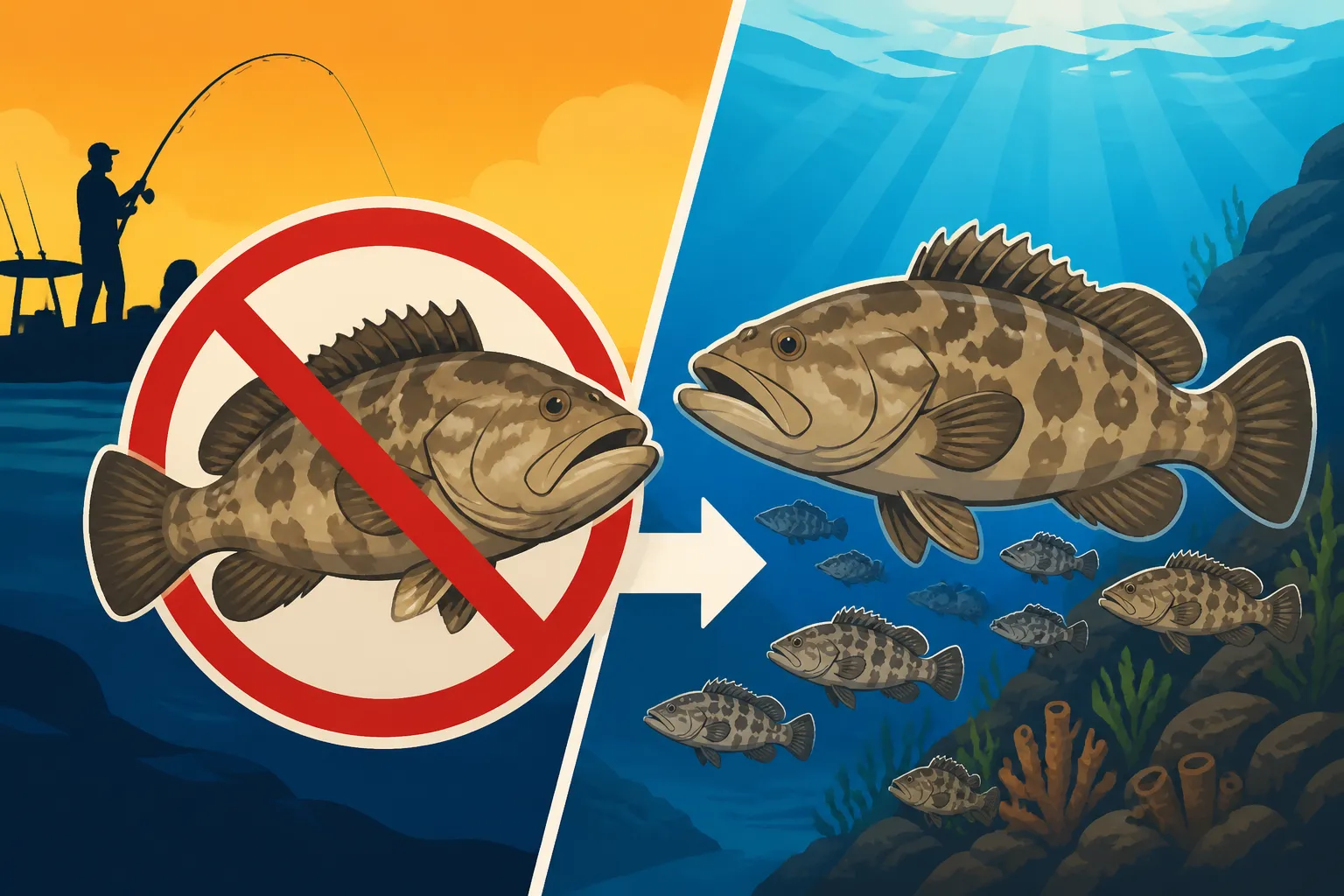
During these aggregations, the grouper are, by their very nature, highly concentrated and quite predictable in their locations. This makes them incredibly vulnerable to fishing pressure. If anglers were allowed to target them during this peak spawning period, it would be far too easy to decimate the breeding population. One boat could potentially catch hundreds of fish in a short amount of time, directly impacting the number of eggs laid and fertilized. It’s a direct threat to the next generation of grouper, and no one wants to see our beloved fisheries disappear. These closures are a critical protective measure, offering a sanctuary for grouper to do their biological duty without human interference.
Protecting Future Generations
Beyond the immediate act of spawning, closed seasons play a vital role in protecting the future health of the entire grouper population. When the parent fish are allowed to spawn successfully and produce a healthy batch of eggs and larvae, it contributes to what scientists call “recruitment.” Recruitment refers to the number of young fish that survive and grow large enough to eventually enter the fishery. Without successful recruitment, the population declines, leading to fewer fish for everyone in the long run. It’s a fundamental principle of sustainable fisheries management.
These closures also allow for the dispersal of eggs and larvae. Grouper eggs are typically pelagic, meaning they float in the water column and are carried by currents, sometimes for long distances, before hatching and settling into juvenile habitats like seagrass beds and shallow reefs. Protecting the spawning adults ensures that this natural distribution can occur without disruption, populating various areas along Florida's coastline and beyond. It’s all about giving those tiny, vulnerable grouper larvae the best possible chance at life, which ultimately benefits anglers down the road. If you're interested in the specifics, you can always check out a Florida Grouper Season Guide to see typical closure periods.
How Scientists Determine Grouper Season Closures
It might seem arbitrary sometimes, but the decisions about when and where to close grouper seasons aren't just pulled out of a hat. There's a tremendous amount of scientific research, data analysis, and careful consideration that goes into these regulations. Agencies like the Florida Fish and Wildlife Conservation Commission (FWC) and the National Oceanic and Atmospheric Administration (NOAA) Fisheries work tirelessly to ensure these decisions are based on the best available science, aiming for a balance between ecological health and economic realities.
Data Collection and Research
The process begins with extensive data collection. Fisheries scientists spend countless hours studying grouper populations. They conduct stock assessments, which are essentially detailed health check-ups for fish populations. This involves looking at a wide array of factors: how many fish are out there, their age and size distribution, how many are being caught by recreational and commercial fishermen, and their reproductive patterns. They analyze data from angler reports, commercial landings, scientific surveys using specialized gear, and even underwater observations.
This data helps them understand the life history of different grouper species, including when and where they spawn, how fast they grow, and their natural mortality rates. For example, they track when Gag Grouper form their large spawning aggregations offshore and identify the specific windows where fishing pressure would be most detrimental. This scientific understanding forms the backbone of all regulatory decisions. You can often find detailed information, sometimes even physical guidebooks, on FWC's website or through resources like those found on Amazon that compile fishing regulations.
Balancing Conservation with Economic Impact
While conservation is paramount, regulators also have to consider the economic impact of closures on the fishing industry and local communities. A closed season directly affects charter captains, bait shops, tackle stores, and even coastal restaurants that rely on fresh seafood. It’s a delicate balancing act to implement measures that protect the fish without completely crippling livelihoods. This is why public input is often sought during the regulation-setting process.
Scientists and policymakers strive to find the shortest possible closure periods that still provide adequate protection for spawning fish. They analyze different scenarios, looking at how various closure dates and durations might affect the overall health of the stock versus the economic impact on the fishing community. It's a complex puzzle, and sometimes compromises have to be made, but the ultimate goal is always long-term sustainability. The funds generated from fishing license fees, as detailed in How Florida Fishing License Fees Fund Conservation, often help support these crucial research and management efforts.
Understanding Regional Differences and Enforcement
Florida's coastline is vast and diverse, stretching from the Gulf of Mexico to the Atlantic Ocean, with unique ecosystems and different fish populations. It stands to reason that grouper regulations aren't a one-size-fits-all approach across the entire state. Understanding these regional differences, and the agencies responsible for them, is crucial for any angler who wants to stay on the right side of the law and contribute to conservation.
State vs. Federal Waters
One of the most significant distinctions in Florida fishing regulations is the difference between state and federal waters. Generally, state waters extend nine nautical miles into the Gulf of Mexico and three nautical miles into the Atlantic Ocean. Beyond these boundaries lie federal waters. Why does this matter? Because different agencies often manage these areas, and their regulations, including grouper seasons, can sometimes vary.
| Jurisdiction | Gulf of Mexico | Atlantic Ocean | Managing Authority |
|---|---|---|---|
| State Waters | 0-9 Nautical Miles from shore | 0-3 Nautical Miles from shore | Florida Fish and Wildlife Conservation Commission (FWC) |
| Federal Waters | Beyond 9 Nautical Miles | Beyond 3 Nautical Miles | National Oceanic and Atmospheric Administration (NOAA) Fisheries, Gulf of Mexico Fishery Management Council (Gulf) / South Atlantic Fishery Management Council (Atlantic) |
This distinction is particularly critical for species like grouper, which often inhabit offshore structures in both state and federal jurisdictions. For example, you might find that the Florida Gag Grouper Season Dates differ slightly between state and federal waters, or even between the Gulf and Atlantic coasts, as explored in Do Grouper Limits Differ Between the Gulf and Atlantic Coasts?. Always check the specific regulations for the waters you plan to fish, especially if you're venturing far offshore.
How to Stay Informed About Regulations
Staying current with fishing regulations can feel like a full-time job, but it’s an essential part of responsible angling. Regulations, including season dates, size limits, and bag limits, can and do change. This is due to ongoing stock assessments, new scientific findings, and management adjustments.
The best ways to stay informed are:
- FWC Website: The Florida Fish and Wildlife Conservation Commission's website is the authoritative source for state water regulations. They provide detailed information and updates.
- NOAA Fisheries Website: For federal water regulations, especially in the Gulf and Atlantic, the NOAA Fisheries website and the respective Fishery Management Council sites are key resources.
- Mobile Apps: The FWC's Fish Rules app (available on app stores) is an incredibly handy tool that provides real-time regulations based on your GPS location, making it easy to check rules right on the water.
- Local Bait and Tackle Shops: These local experts often have up-to-the-minute information on local rules and any recent changes.
- Physical Guides: While digital is king, a laminated FWC regulation guide, easily picked up from many tackle shops or even online through Amazon, is great for quick reference, especially when cell service is spotty.
- Sign up for Alerts: Many state and federal agencies offer email or text alerts for regulation changes.
Ignorance of the law is never an excuse, and violating regulations can lead to significant fines and penalties, as outlined in articles like What Happens If You Keep an Undersized Fish in Florida?. Always double-check before you drop a line!
Angler's Role in Sustainable Grouper Fishing
Even when grouper season is open, our actions as anglers have a profound impact on the sustainability of the fishery. Catching grouper isn't just about the thrill of the fight; it's about being a steward of the marine environment. Every decision we make, from the gear we use to how we handle a fish, contributes to the health of the population. We all have a part to play in ensuring that future generations can experience the joy of catching these incredible fish.
Catch and Release Best Practices
Sometimes, even during an open season, you might catch a grouper that’s either undersized, over the bag limit, or a species that’s currently closed or protected. In these situations, knowing and applying proper catch and release techniques is critical for the fish’s survival. Grouper can suffer from barotrauma (swim bladder expansion) when brought up from deep water, which can be fatal if not properly addressed.
Here are some best practices for catch and release:
- Use appropriate gear: Heavy tackle can exhaust a fish, but too light can prolong the fight to a dangerous degree.
- Minimize fight time: Bring the fish to the boat as quickly as possible without over-stressing it.
- Handle with care: Avoid touching the gills or eyes. Wet your hands before handling to protect the fish's slime coat.
- Consider dehooking tools: Have a dehooker ready to quickly remove hooks, especially if the fish is deeply hooked. A good quality dehooker can be an invaluable tool to keep on your boat, and you can find various options online at Amazon for different hook sizes.
- Vent or Descend: For fish caught in deeper water (typically 50+ feet), be prepared to vent the fish (release excess air from the swim bladder with a hollow needle) or, even better, use a descending device to lower the fish back to the depth it was caught. Descending devices are often more effective and less damaging than venting for many species.
- Revive properly: Hold the fish upright in the water, facing into the current, until it regains strength and swims away on its own.
- Circle hooks: Using circle hooks significantly reduces gut-hooking, increasing the survival rate of released fish. Many Florida Fishing Regulations and Bag Limits even mandate their use in certain fisheries.
These practices, similar to Catch and Release Best Practices for Snook, are vital for giving a released grouper the best chance to survive and continue its role in the ecosystem.
Supporting Conservation Efforts
Beyond individual angling practices, there are broader ways to support grouper conservation. Understanding the “why” behind closed seasons helps foster a greater appreciation for the regulations and encourages compliance. When we adhere to Gag Grouper Size and Bag Limits and respect the closed seasons, we’re actively participating in the management process.
Furthermore, anglers can:
- Purchase fishing licenses: A significant portion of fishing license fees goes directly to conservation programs, research, and enforcement. This directly supports the agencies that protect grouper and other species.
- Report violations: If you witness illegal fishing activity, reporting it to FWC helps them enforce regulations and protect fish stocks.
- Participate in angler surveys: Providing accurate information about your catches (even if you catch nothing!) helps scientists collect better data for stock assessments.
- Educate others: Share your knowledge about sustainable fishing practices and the reasons behind conservation efforts with fellow anglers, friends, and family.
By understanding that grouper season closures are not punitive but rather a vital part of a larger, scientifically-driven effort to ensure healthy fish populations for the future, we can all become more effective advocates and participants in Florida's incredible fishing heritage.
Disclaimer
This article is for general informational purposes only and does not constitute professional advice. Laws, prices and regulations vary by location and change over time. Consult a qualified professional for guidance on your specific situation.