Night Fishing Technique for Trout Under Dock Lights
The sweltering Florida sun can make daytime fishing a real endurance test, sometimes leaving you more drained than delighted. But when the sun dips below the horizon, a whole new world of angling opens up, especially for targeting speckled seatrout under the inviting glow of dock lights. This guide will walk you through everything you need to know to transform those frustrating daylight hours into memorable, cool, and incredibly productive night fishing adventures.
Why Night Fishing Under Lights is a Game Changer for Trout
There's something magical about fishing at night, a peaceful solitude that's hard to find during the bustling daylight hours. But beyond the tranquility, night fishing, particularly under dock lights, offers some serious advantages when you're after those elusive speckled seatrout. It's not just about comfort; it's about capitalizing on natural instincts and a concentrated food source that fish can't resist.
The Allure of Artificial Light
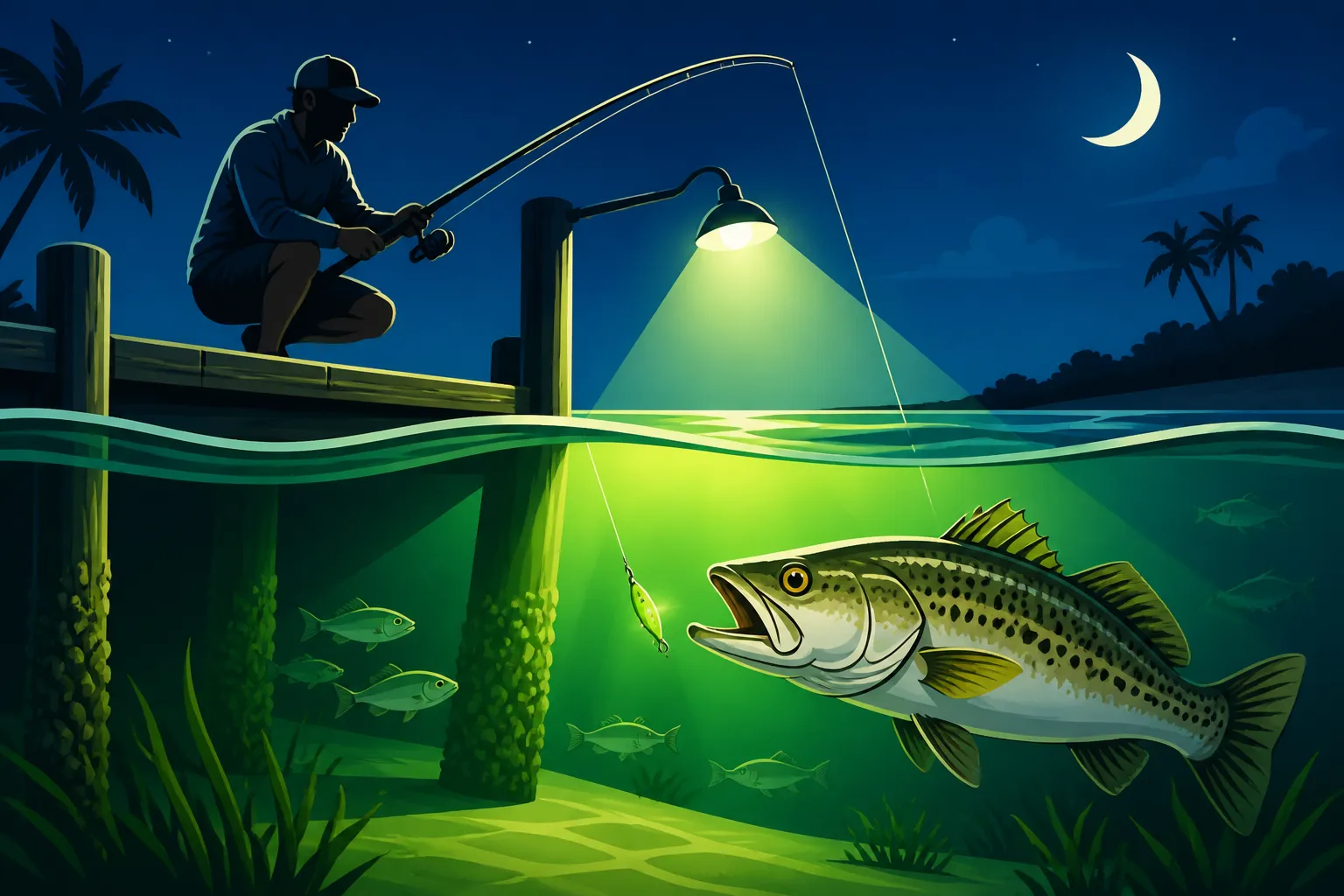
Think of a dock light as a beacon in the darkness for tiny marine organisms. Plankton, microscopic plants and animals, are drawn to the light, creating a veritable buffet. Then, small baitfish like glass minnows, pilchards, and shrimp flock to feed on the plankton, or simply to hide in the illuminated waters. This creates a perfect, predictable food chain. For a predatory fish like a spotted seatrout, these dock lights are essentially a neon sign flashing "Eat Here!" They know the bait will be concentrated, making for an easier meal than hunting in the vast, dark expanses of the bay or flat. This phenomenon, known as phototaxis, dictates that many marine creatures are drawn to light, which is why a well-lit dock can be an absolute goldmine.
Cooler Temperatures, Happier Anglers (and Fish!)
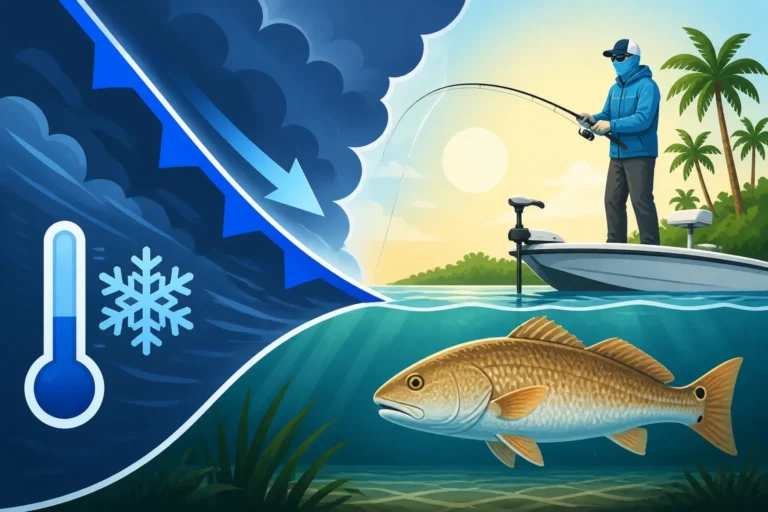
Let's be honest, casting lures under the oppressive Florida summer sun can be brutal. The intense heat, combined with high humidity, often leaves anglers drenched in sweat and longing for a reprieve. Night fishing eliminates this problem entirely. The air cools down, the humidity often drops, and a gentle breeze can make for incredibly pleasant conditions. This isn't just about angler comfort; it also impacts the fish. While trout are resilient, extreme heat can sometimes make them sluggish, sending them to deeper, cooler waters. At night, as the water temperature dips, trout often become more active and willing to feed in shallower areas, especially around these illuminated structures. Plus, there's generally far less boat traffic after dark, leading to a calmer, less pressured environment for both you and the fish. It's a win-win situation, allowing you to focus on the catch without battling the elements or constant boat wakes. If you're wondering about the overall "best" times, we often discuss the nuances in our guide on the Best Time of Day to Fish in Florida, but for trout, night often wins.
Understanding Spotted Seatrout Behavior at Night
To consistently hook into speckled seatrout after dark, you need to think like a trout. Their behavior shifts significantly once the sun sets, moving from wide-ranging hunts to more ambush-oriented strategies around artificial light sources. Knowing these patterns will dramatically increase your success rate.
Nocturnal Feeding Patterns
During the day, spotted seatrout often cruise grass flats and oyster bars, actively hunting by sight. At night, their strategy changes, becoming much more focused on efficiency. Around dock lights, they position themselves strategically, often just outside the brightest halo of light, lurking in the shadows. From this vantage point, they can dart out to snatch any unsuspecting baitfish or shrimp that ventures too close to the light's edge. This means your presentation needs to account for their ambush tactics. They're not necessarily chasing down prey over long distances; rather, they're waiting for an easy meal to come to them. Their lateral line and keen sense of vibration become even more crucial in low light, allowing them to detect subtle movements of baitfish in the water. Understanding this switch from active hunting to ambush predation is key to a successful night out. Our comprehensive Florida Spotted Seatrout Fishing Guide offers even more insights into these fascinating fish.
Preferred Habitats Around Lights
It's not enough to just find a dock with a light; you need to understand the prime real estate within that lit area. Trout will typically hold in specific zones. The most common and productive spot is often the "shadow line" – the boundary where the bright light meets the darkness. This provides them with cover while still allowing them to see and target bait swimming in the illuminated water. They might be right on the edge, or slightly deeper in the darkness, looking into the light. Deeper pockets or drop-offs immediately adjacent to the dock can also be hotspots, offering additional ambush points and a quick escape route. Pay attention to any structure near the dock, such as pilings, submerged debris, or even a nearby oyster bed. These structures provide additional cover and current breaks where trout can conserve energy while waiting for prey. The flow of the current, influenced by the Best Tides for Inshore Fishing in Florida, will also dictate where bait congregates, and thus, where the trout will stage.
Essential Gear for Your Night Trout Expedition
Having the right tackle and accessories can make all the difference between a frustrating night and a fantastic one. You don't need overly specialized gear, but some intentional choices will enhance your success and safety.
Rods, Reels, and Line Selection
For night fishing dock lights for trout, lighter tackle is generally more effective, allowing for more precise casts and better sensitivity.
- Rods: A 7-foot to 7-foot 6-inch spinning rod with a fast to extra-fast action and a medium-light power rating is ideal. This length provides good casting distance and leverage, while the fast action ensures you can feel subtle bites and set the hook effectively. Graphite rods are excellent for sensitivity, which is crucial when bites can be incredibly soft in the dark.
- Reels: Pair your rod with a 2500-sized spinning reel. These reels strike a perfect balance, offering enough line capacity and drag power for a decent-sized trout, yet remaining lightweight and comfortable for hours of casting. A smooth drag system is always a plus, preventing break-offs when a big trout makes a run. Popular brands like Shimano and Daiwa offer excellent options in this size range.
- Line: Spool your reel with 10-pound braided line. Braid offers superior casting distance, incredible sensitivity (you'll feel every twitch!), and no stretch, which is vital for hook sets. To make it invisible to the fish in the clear water under the lights, tie on a 2-foot to 3-foot section of 15-pound fluorocarbon leader. Fluorocarbon is nearly invisible underwater and is more abrasion-resistant, protecting your mainline from sharp dock pilings or oyster shells. Many anglers find the "FG knot" the most reliable way to connect braid to fluorocarbon, but a double uni knot works well too. This setup is quite versatile and is also a great choice for a general Best Rod and Reel Setup for Florida Inshore Fishing.
Lures and Baits That Shine in the Dark
When the lights come on, so does the effectiveness of certain baits and lures. Trout are opportunistic feeders, and while live bait is often king, artificials can be incredibly productive if presented correctly.
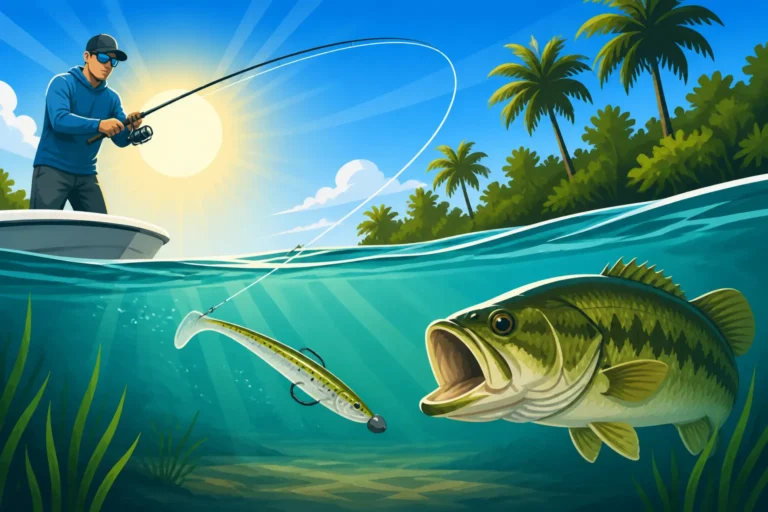
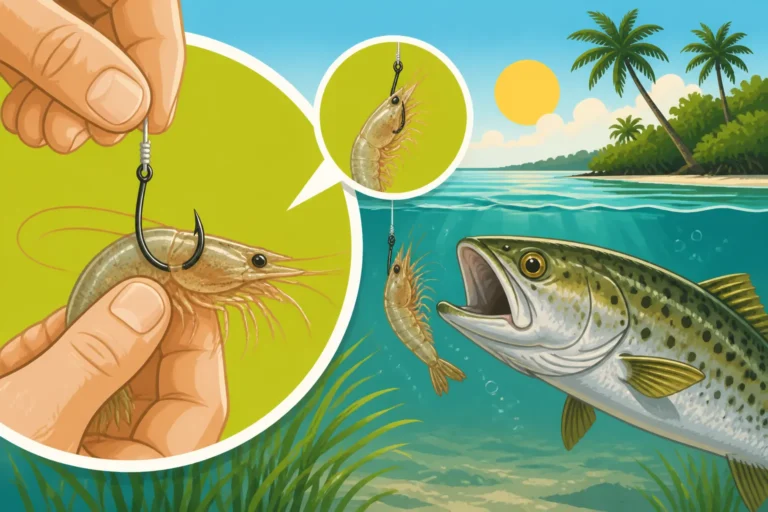
- Live Shrimp: There's almost nothing better than a live shrimp for dock light trout. They are the natural prey drawn to the lights, and trout find them irresistible. Hook a live shrimp through the tail or just under the horn with a small (1/0 or 2/0) circle hook or jig head. Let it drift naturally into the shadow line. If you're not sure how to rig them, check out our guide on How to Rig a Live Shrimp for Trout.
- Artificial Shrimp: When live bait is scarce or you prefer artificials, realistic artificial shrimp lures like those from D.O.A. Lures or Vudu Shrimp are excellent. They come in various colors, but natural shrimp colors (clear with sparkle, or light tan) are often best. Cast them up-current and let them drift, twitching them occasionally.
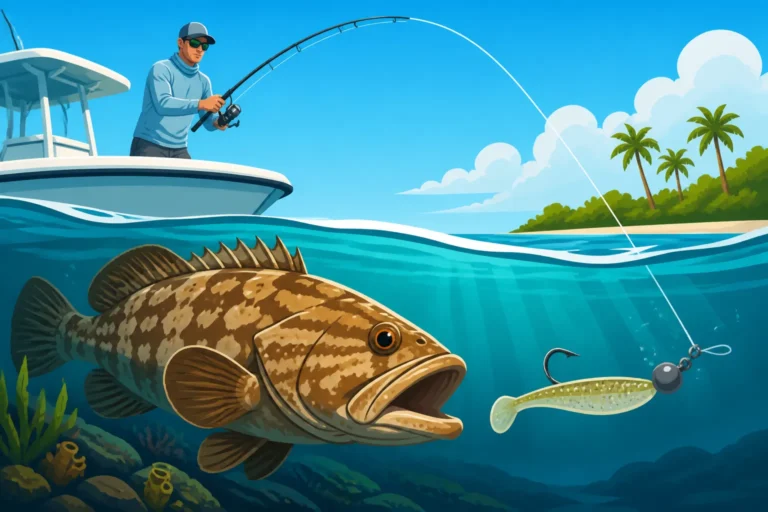
- Soft Plastic Paddle Tails: Small soft plastic paddle tails (2-3 inches) rigged on a 1/8 to 1/4 ounce jig head can be deadly. Colors like white, clear with silver flake, or chartreuse work well. A slow, steady retrieve with occasional pauses is often all it takes. Brands like Z-Man and Gulp! offer very effective options that are available on platforms like Amazon.
- Small Jerkbaits/Twitchbaits: For a more aggressive presentation, a small suspending jerkbait (2-4 inches) can entice a strike. Cast it, let it sit for a moment, then give it a series of short twitches followed by pauses. Again, natural baitfish colors are usually a safe bet.
- Glow-in-the-Dark Options: Some anglers swear by glow-in-the-dark jig heads or soft plastics. While not always necessary, they can provide an added attractant in very dark conditions or when the trout are being finicky. A quick charge with a flashlight can make them glow intensely.
Illumination and Safety
Beyond your fishing gear, personal illumination and safety equipment are non-negotiables for night fishing.
- Headlamps: A good headlamp with a red light setting is essential. White light can spook fish, but red light is less intrusive and still provides enough visibility for tying knots, rigging bait, or navigating. Always use red light when actively fishing around the dock. Keep an extra set of batteries. Many anglers find reliable headlamps from brands like Black Diamond or Petzl available on Amazon.
- Dock Lights: The dock lights themselves are your primary attractant. While you can't control existing residential lights, understanding their color and intensity can help. Green submersible lights are incredibly effective as they penetrate the water better and often attract more plankton and baitfish than white lights.
- Personal Flotation Devices (PFDs): If you're fishing from a boat or kayak, PFDs are not just a good idea; they are often legally required, especially at night. Make sure everyone on board has a properly fitting PFD readily accessible or, even better, worn.
- Other Safety Gear: A whistle, a marine radio or fully charged cell phone, and flares (if boating) are also important. Always let someone know where you're going and when you expect to return. The Is Night Fishing Legal in Florida? guide emphasizes these safety precautions.
Mastering the Techniques for Dock Light Trout
It’s not enough to have the right gear; you need to know how to use it effectively. Night fishing for trout under lights requires a subtle touch, stealth, and a keen understanding of fish behavior.
Approaching and Positioning Your Boat or Kayak
Stealth is paramount when fishing around dock lights at night. Loud noises, bright lights, or a clumsy approach can send trout scattering.
- Silent Approach: If you're in a boat, turn off your main engine well before you reach your target dock. Use your trolling motor on a very low setting, or ideally, pole or paddle into position. If kayaking, paddle quietly. Avoid banging gear around in your boat.
- Stay in the Shadows: Position your vessel so that you are not directly in the bright light of the dock. Stay in the surrounding darkness, casting into and along the edges of the light. This keeps you hidden from the fish, which are often looking up.
- Optimal Casting Angles: Consider the current and wind. You want to be able to cast up-current or up-wind and allow your bait to drift naturally into the strike zone. Experiment with different angles. Sometimes, casting across the light from a parallel position works best, allowing your lure to swing through the entire illuminated area.
- Maintain Distance: Don't get too close. Give the trout some space. A good cast will get your bait to the target without having your boat looming over the fish. This technique also applies if you're targeting fish under bridges, as detailed in our guide on the Best Spots for Night Fishing Under Bridge Lights.
Presentation is Everything
Once you're in position, your bait or lure presentation is crucial. Remember, trout are often ambushing prey, so you need to mimic that natural vulnerability.
- Cast Beyond the Light: Aim your cast a bit past the brightest part of the dock light, allowing your bait to land softly in the darker water. This avoids spooking any fish directly under the light and gives your bait time to sink and start its natural drift.
- Work the Shadow Lines: This is the golden rule. Retrieve your lure or let your live bait drift along the edge where the light meets the dark. This is where trout are actively staging.
- Slow and Natural Retrieve: For artificials, a slow, methodical retrieve is often most effective. Think about how a stunned or disoriented baitfish would move in the current. Small twitches, long pauses, and a slow reel can trigger strikes. If using a live shrimp, let it drift naturally with the current, only reeling in slack.
- The "Dead Stick" Technique: This is incredibly effective with live or artificial shrimp. Cast your bait into the light, let it sink, and then simply hold your rod still, allowing the current to impart subtle movement to the bait. Trout often pick up these "dead-sticked" baits with a very light tap. Pay close attention to your line!
- Vary Your Depth: Trout might be near the surface or holding deeper, depending on the current, baitfish location, and water temperature. Experiment by letting your bait sink to different depths before starting your retrieve.
Adapting to Changing Conditions
Florida's environment is dynamic, and successful anglers are those who can adapt.
- Tides: Tidal movement is a massive factor. Moving water brings in bait and oxygen, making fish more active. An incoming or outgoing tide is usually better than slack tide. Pay attention to the strength and direction of the current, and adjust your casting and retrieve accordingly. The What Time of Day Do Trout Bite Best in Florida? often relates directly to tidal flows.
- Moon Phase: While not as critical as tide, a full moon can make the water significantly brighter, potentially making trout less reliant on artificial lights or more wary. Conversely, a new moon (dark night) might make dock lights even more effective as they are the only significant light source.
- Wind: Wind can make boat control difficult and affect casting accuracy. Try to position yourself so the wind is at your back or side, making casting easier. Wind can also create chop on the water, which can break up the light's reflection and provide additional cover for fish.
- Bait Presence: Always observe what baitfish are present. If you see tiny glass minnows flickering in the light, try to match their size and profile with your lures. If larger shrimp are popping, use a bigger artificial shrimp.
Common Mistakes and How to Avoid Them
Even seasoned anglers can make mistakes, especially when venturing into a different style of fishing like night operations. Knowing what to look out for can save you a lot of frustration and lead to more fish in the net.
Spooking the Fish
Trout are naturally wary, and this wariness is often heightened in the quiet of the night. Making too much noise or using the wrong kind of light can instantly shut down a bite.
- Noise Pollution: This is probably the number one mistake. Banging tackle boxes, dropping pliers, talking loudly, or scraping your boat on pilings sends vibrations through the water that trout can easily detect. Imagine you're hunting in a silent forest; any sudden loud noise will scare off game. It's the same underwater. Always approach and operate with extreme quiet.
- Harsh White Lights: While you need a headlamp for rigging, avoid shining white light directly into the water or onto the dock where fish are holding. This is like shining a spotlight on them; it's startling and can send them fleeing. Always switch to a red light setting on your headlamp once you're in the fishing zone. If you need a moment of white light, turn away from the water.
- Casting Directly Into the Light: While it might seem intuitive to cast right where you see the bait, landing a heavy lure directly into the heart of the illuminated area can create a splash that spooks everything. Instead, cast softly beyond the light's edge and let your lure or bait drift naturally into the strike zone. This subtle entry is far less alarming to the fish.
Wrong Bait or Lure Presentation
Having the right bait or lure is only half the battle; presenting it correctly is crucial, especially when trout are finicky.
- Too Fast or Too Jerky: Trout at night are often ambushing. They're looking for an easy meal, not something they have to chase aggressively. A retrieve that's too fast, erratic, or unnatural will often be ignored. Slow down. Let your lure hover or drift. Imagine a shrimp or baitfish that's slightly disoriented. Many new anglers make the mistake of reeling too quickly, especially with artificials.
- Ignoring the Current: The current is your friend and foe. If you're casting up-current and retrieving too slowly, your line will bow, creating slack that makes it hard to feel bites and set the hook. Conversely, if you're retrieving against a strong current, your lure might not look natural. Pay attention to how the water is moving and adjust your lure's weight and retrieve speed to make it drift as naturally as possible. This often means casting up-current and letting the bait drift with the flow, or using a heavier jig head if the current is strong.
- Not Varying Depth or Retrieve: If what you're doing isn't working, change it up! Don't just cast the same lure to the same spot with the same retrieve repeatedly. Try a different lure color, a different weight jig head, let it sink deeper, or keep it closer to the surface. Vary your retrieve speed and the length of your pauses. Sometimes a single subtle twitch is all it takes; other times, a slightly more aggressive "pop" can draw a reaction strike. Experimentation is key to figuring out what the trout want on any given night.
Here's a quick comparison of popular night fishing options for trout:
| Bait/Lure Type | Pros | Cons | Recommended Presentation | Cost (Approx. per pack/dozen) |
|---|---|---|---|---|
| Live Shrimp | Extremely natural, irresistible to trout | Can be fragile, harder to keep alive, sometimes expensive | Hooked through tail, light jig head, subtle drift along shadow line or dead-sticked. | $5-$10/dozen |
| Artificial Shrimp | Durable, easy to store, wide range of colors | Less natural movement than live, requires angler input | Light jig head, slow retrieve with short twitches, dead-stick. Brands like D.O.A. Lures are popular on Amazon. | $5-$8/pack |
| Soft Plastic Paddle Tail | Versatile, mimics baitfish, good vibration | Can get ripped by smaller fish, some brands less durable | Light jig head (1/8 – 1/4 oz), slow, steady retrieve with pauses, or bounce off the bottom. | $4-$7/pack |
| Small Suspending Jerkbait | Aggressive presentation, can draw reaction strikes | Requires more active retrieve, can be expensive | Cast, pause, 2-3 short twitches, long pause. Focus on natural baitfish colors. | $8-$15/lure |
| Glow-in-the-Dark Lures | Added attractant in dark conditions | Requires charging, not always superior to natural colors | Similar to artificial shrimp or paddle tails, but with the added glow. | $6-$10/pack |
Night fishing for trout under dock lights is an incredibly rewarding experience that offers a unique blend of challenge and tranquility. By understanding trout behavior, selecting the right gear, and mastering subtle presentation techniques, you'll be well on your way to enjoying some of Florida's best kept fishing secrets after dark.
Disclaimer
Fishing conditions and regulations in Florida can change frequently. Always consult the latest rules and regulations from the Florida Fish and Wildlife Conservation Commission (FWC) before heading out on any fishing trip. This guide is for informational purposes only and does not constitute legal advice.