How to Land a Snook Without a Net
Oh, the elusive Florida snook! There's nothing quite like the thrill of hooking one of these powerful, acrobatic fish. But then comes the moment of truth: landing it. Many anglers, myself included, have found ourselves in a bit of a pickle trying to wrangle a feisty snook, especially when a net isn't handy or isn't the best option. This guide is all about equipping you with the knowledge and techniques to confidently land a snook without a net, ensuring both your safety and the well-being of the fish.
Why Going Net-Free Can Be the Best Approach for Snook
You might be thinking, "Why wouldn't I use a net?" And it's a fair question! Nets are fantastic tools in many fishing scenarios. However, when it comes to snook, especially those healthy, vibrant ones you're planning to release, opting to land them without a net can actually be a huge advantage. It's about minimizing stress, preventing damage, and often, making the entire process quicker and smoother.
Minimizing Stress and Injury to the Fish
One of the biggest reasons to consider a net-free landing for snook is the welfare of the fish. Snook are powerful fighters, and when they're in a net, they tend to thrash violently. This thrashing can cause significant damage to their delicate fins, scales, and even their eyes by rubbing against the abrasive mesh. Furthermore, when a snook gets tangled deep in a net, it can become incredibly difficult and time-consuming to extract the hook, prolonging the stress on the fish and increasing its time out of the water.
Imagine you've just brought a gorgeous snook boat-side. If you scoop it with a net, it might immediately start flailing, embedding the treble hooks deeper into the mesh or even into its own body. This not only makes unhooking harder but can also remove the fish's protective slime layer, making it more susceptible to disease once released. By developing a confident net-free landing technique, you're taking a significant step towards practicing proper Catch and Release Best Practices for Snook.
Faster Release and Less Hassle
Let's be honest, untangling a spirited snook from a net, especially one that's got a couple of treble hooks from a topwater lure stuck in it, is no fun. It eats up valuable fishing time and can be incredibly frustrating. A quick, efficient net-free landing allows you to get your hands on the fish, remove the hook, and get it back into the water in a matter of seconds, rather than minutes. This speed is crucial, especially on those hot Florida days when every second counts for the fish's survival.
Think about a scenario where you're actively fishing a mangrove line for snook. You hook a nice one, fight it, and bring it close. If you can quickly lip-grip it, unhook, and release, you're back to casting in no time, maximizing your chances of catching another one. Compare that to spending five minutes trying to untangle a fish and lure from a mesh net – it's a no-brainer for efficiency and ensuring your fishing flow isn't interrupted.
Mastering the Lip-Grip Technique
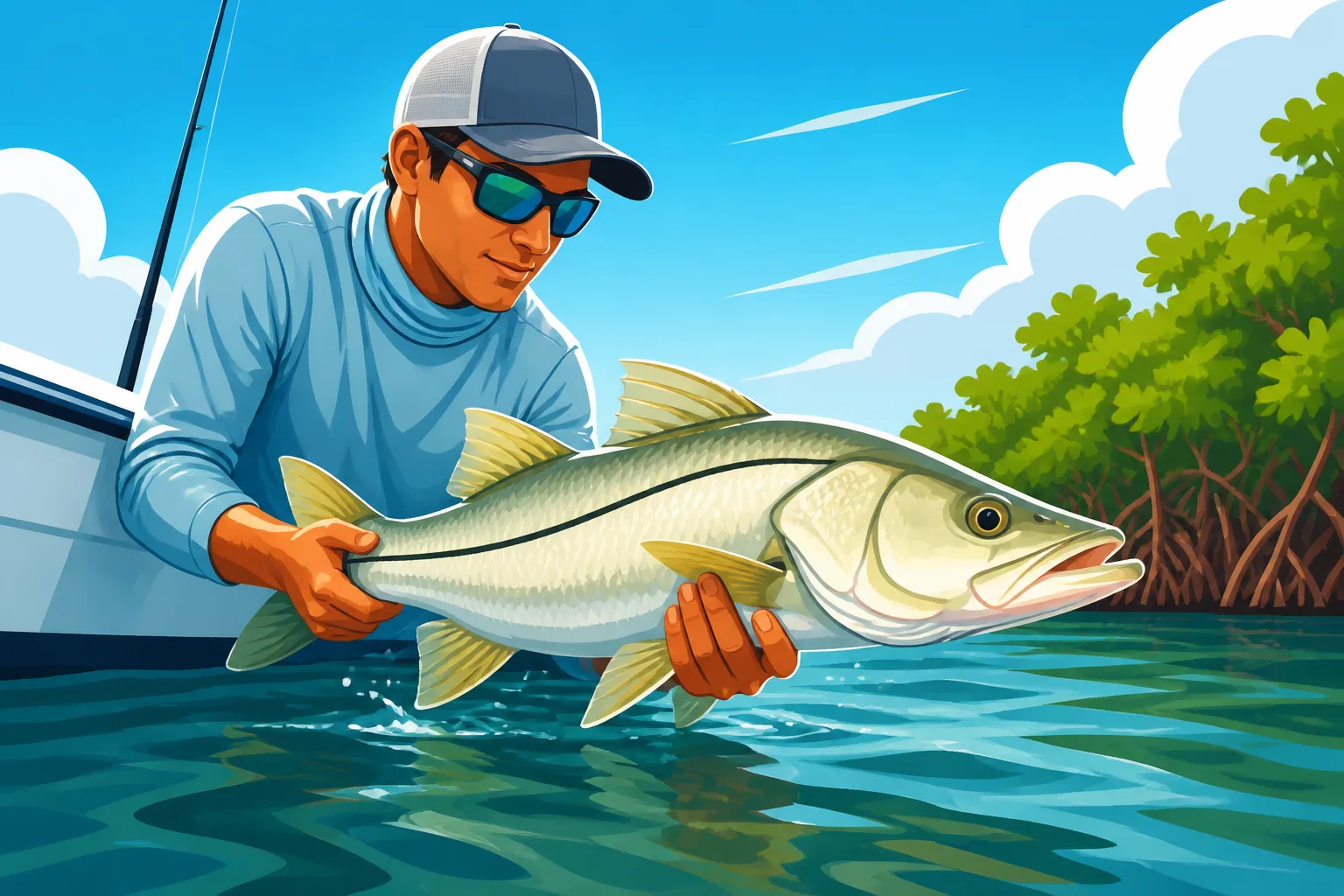
The cornerstone of landing a snook without a net is the lip-grip. It's a confident, firm, and surprisingly gentle way to secure the fish by its lower jaw. This technique, when done correctly, immobilizes the snook enough for you to safely remove the hook and prepare for release. It takes a little practice to get it just right, but once you master it, you'll feel like a true pro on the water.
Approaching the Fish and Hand Placement
The moment you have the snook boat-side or bank-side is critical. First, ensure the fish is tired from the fight. Never try to lip-grip a fish that's still thrashing wildly; give it a moment to calm down. Once it's near, slide your dominant hand down towards its head. Your goal is to get a firm grip on the lower jaw, with your thumb inside its mouth and your fingers wrapped around the outside. Be mindful of the sharp gill plates and the hooks of your lure.
It’s about being decisive and confident. Hesitation can lead to a missed grab, or worse, a flailing fish that causes injury. Many anglers find it helpful to slightly turn the fish's head away from them as they reach for the lip. This gives you a better angle and can help you avoid contact with any rogue hooks. Remember, snook have raspy mouths, not sharp teeth like a barracuda, so a direct lip-grip is generally safe.
The Role of Lip-Gripping Devices
While a bare-hand lip-grip is the ultimate skill, sometimes you need a little help, especially with larger, heavier snook or when fishing with toothy species as bycatch. This is where a quality lip-gripping device comes in handy. Tools like the BogaGrip (or similar brands) are fantastic for this purpose. They securely clamp onto the snook's lower jaw, allowing you to lift and control the fish without ever touching it directly. These devices also have built-in scales, which can be useful for quickly weighing your catch before release.
You can often find a wide selection of these tools on platforms like Amazon, offering various sizes and designs to suit your needs. When using one, simply let the snook come alongside the boat, clamp the device firmly onto its lower lip, and lift. Always keep the fish vertical or gently support its body if it's a larger fish, to avoid putting undue stress on its jaw and internal organs. These tools are also excellent for practicing safe Florida Snook Fishing Guide techniques.
Table: Bare Hand vs. Lip Gripper for Snook
| Feature | Bare Hand Lip-Grip | Lip-Gripping Device (e.g., BogaGrip) |
|---|---|---|
| Control | Excellent, direct feel of the fish | Excellent, mechanical advantage for heavier fish |
| Fish Stress | Low, if done correctly and quickly | Low, as minimal human contact is required |
| Angler Safety | Moderate – risk of hook pricks, gill plate scrapes | High – hands stay clear of hooks and gill plates |
| Ease of Unhooking | High, direct access to the mouth | High, fish is held securely away from angler |
| Portability | Always available, no extra gear | Requires carrying an additional tool |
| Cost | Free | Varies, but can be an investment (check Amazon) |
| Learning Curve | Requires practice and confidence | Easier for beginners to use confidently |
Safety First: For You and the Snook
Landing a snook without a net means you're getting up close and personal with a powerful, wild animal. It's absolutely crucial to prioritize safety for both yourself and the fish. Snook, while not typically aggressive, possess certain physical characteristics that can cause injury if not handled with care. Likewise, improper handling can severely harm the fish, jeopardizing its chances of survival after release.
Protecting Your Hands from Hooks and Gill Plates
Snook are known for their incredibly sharp gill plates, which can feel like razor blades if you slide your hand across them incorrectly. They also have sharp dorsal spines that can deliver a painful poke. And, of course, there's the ever-present danger of getting hooked by your own lure, especially with those lively treble hooks found on many popular snook baits. This is why a confident, precise lip-grip is so important – it keeps your fingers away from these danger zones.
Always consider wearing a good pair of fishing gloves. There are many options available, from thin sun-protective gloves to thicker, more protective styles, which you can easily find on Amazon. These gloves provide an extra layer of defense against minor scrapes, sun exposure, and help you get a better grip on a slippery fish. When reaching for the lip, pay close attention to where the hooks are positioned. If the fish is deeply hooked, or the hooks are awkwardly placed, it might be safer to use a dehooking tool before attempting a lip-grip. These tools are invaluable for quick and safe hook removal.
Supporting the Fish for Healthy Release
Once you've secured the snook with a lip-grip, the next critical step is to support its body properly. Snook are long, slender fish, and simply holding them by the lip, especially a larger one, can put immense strain on their jaw and spine. Imagine hanging a heavy object by one small point; it's not ideal. For smaller snook (say, under 25 inches), a vertical lip-grip for a quick unhook and photo might be fine. However, for any snook of respectable size, you absolutely need to use your other hand to support its belly and tail section.
Supporting the fish horizontally distributes its weight, reducing stress on its internal organs and skeletal structure. This is particularly vital when you're admiring a beautiful fish or trying to get a quick photograph before release. When you're ready to release, gently lower the fish back into the water, headfirst, and hold it upright until it kicks strongly and swims away under its own power. This careful handling contributes directly to the fish's post-release survival, reinforcing the principles outlined in Florida Fishing Regulations and Bag Limits.
Practice Makes Perfect: Refining Your Technique
Like any skill in fishing, mastering the art of landing a snook without a net takes practice. You won't become an expert overnight, but with each fish you hook and handle, you'll gain confidence and refine your technique. The key is to be patient, observe the fish, and continuously learn from your experiences on the water.
What to Do If You Miss the Grab
It happens to the best of us: you go for the lip-grip, and the snook makes a sudden dart or a head shake, and you miss. Don't panic! The worst thing you can do is get frustrated and make a hasty, unsafe grab. If you miss, simply keep the rod tip high and guide the fish back to a controllable position. Re-evaluate its energy level. Is it still fighting hard? Give it a little more time to tire out. Is it calm? Take a deep breath, and try again, perhaps adjusting your approach slightly.
Sometimes, if the fish is particularly frisky, you might need to reconsider your immediate plan. For instance, if you're fishing from a pier and a net is accessible, it might be the safer call for that specific fish. However, for most inshore situations, a missed grab simply means a moment to regroup and try again. Remember, the goal is a safe and efficient landing and release, so don't rush the process if the fish isn't cooperating. This calm approach is especially helpful when dealing with the powerful runs typical of snook.
Observing Fish Behavior and Timing
A big part of becoming proficient at net-free landings is learning to "read" the fish. Each snook is a little different, and their behavior can tell you a lot about when they're ready to be handled. A snook that's still darting rapidly, jumping out of the water, or making powerful runs is clearly not ready for a hand-landing. Conversely, a fish that's coming in smoothly, perhaps shaking its head gently, and swimming in circles without hard pulls is likely tiring and ready for your approach.
Timing is everything. Wait for that opportune moment when the fish is momentarily still or at the surface. Don't chase its head; let it present itself to you. Some anglers find that guiding the fish into a natural "surf" motion towards them can help. Understanding the typical behavior of these fish, especially during different times of the year, can make a huge difference. For instance, snook tend to be more active and fight harder during warmer months. Understanding Florida Snook Season Guide and its implications for fish behavior can be incredibly insightful. With practice, you'll develop an intuition for when that perfect moment to make the grab arrives.
Additional Tips for a Smooth Net-Free Landing
Beyond the core lip-grip technique, there are a few other considerations that can make your net-free snook encounters even more successful. These small adjustments can significantly improve your efficiency, fish welfare, and overall enjoyment of the fishing experience.
Barbless Hooks and Single Hooks
If you're serious about catch and release and want to make net-free landings as safe and efficient as possible, consider crimping down your barbs or even switching to single hooks on your lures. Barbless hooks come out much more easily from a fish's mouth, and if you accidentally hook yourself, they're far less painful to remove. Many seasoned snook anglers swear by them.
Switching from treble hooks to single hooks, especially on larger lures, also makes a huge difference. While treble hooks can sometimes increase hook-up ratios, they are notorious for snagging in nets, on clothing, and on the fish itself in multiple places, leading to more damage and difficult unhooking. Single hooks, on the other hand, are much safer to handle during a lip-grip and come out with minimal fuss. This practice ties into being prepared with the right gear, which you can learn more about in our guide on Best Rod and Reel Setup for Florida Inshore Fishing.
Proper Dehooking Tools and Hook Removal
Even with a perfect lip-grip, sometimes the hook is buried deep, or the fish has swallowed the bait. Having the right dehooking tools at the ready is crucial. Long-nosed pliers, forceps, or specialized dehookers are your best friends here. Keep them easily accessible, perhaps on a lanyard or in a holster, so you don't have to fumble for them while holding a fish.
Once you have the snook secured by the lip, calmly assess the hook placement. If it's visible and accessible, use your pliers to gently twist and remove it. For deeper hooks, a dehooker can reach where your fingers can't. Always prioritize getting the hook out cleanly and quickly. If the fish has swallowed the hook and it's not easily removable without causing significant damage, it's often better to simply cut the line as close to the hook as possible. The hook will likely corrode and fall out over time, giving the fish a better chance of survival. This quick action is essential when you're targeting specific species and need to abide by Florida Saltwater Fishing License Rules and regulations for their protection.
By preparing yourself with the right techniques, tools, and mindset, you'll find that landing a snook without a net isn't just possible, it's often the most rewarding and responsible way to interact with these magnificent fish.
Disclaimer
This article is for general informational purposes only and does not constitute professional advice. Laws, prices and regulations vary by location and change over time. Consult a qualified professional for guidance on your specific situation.