Best Water Temperature for Bass Fishing
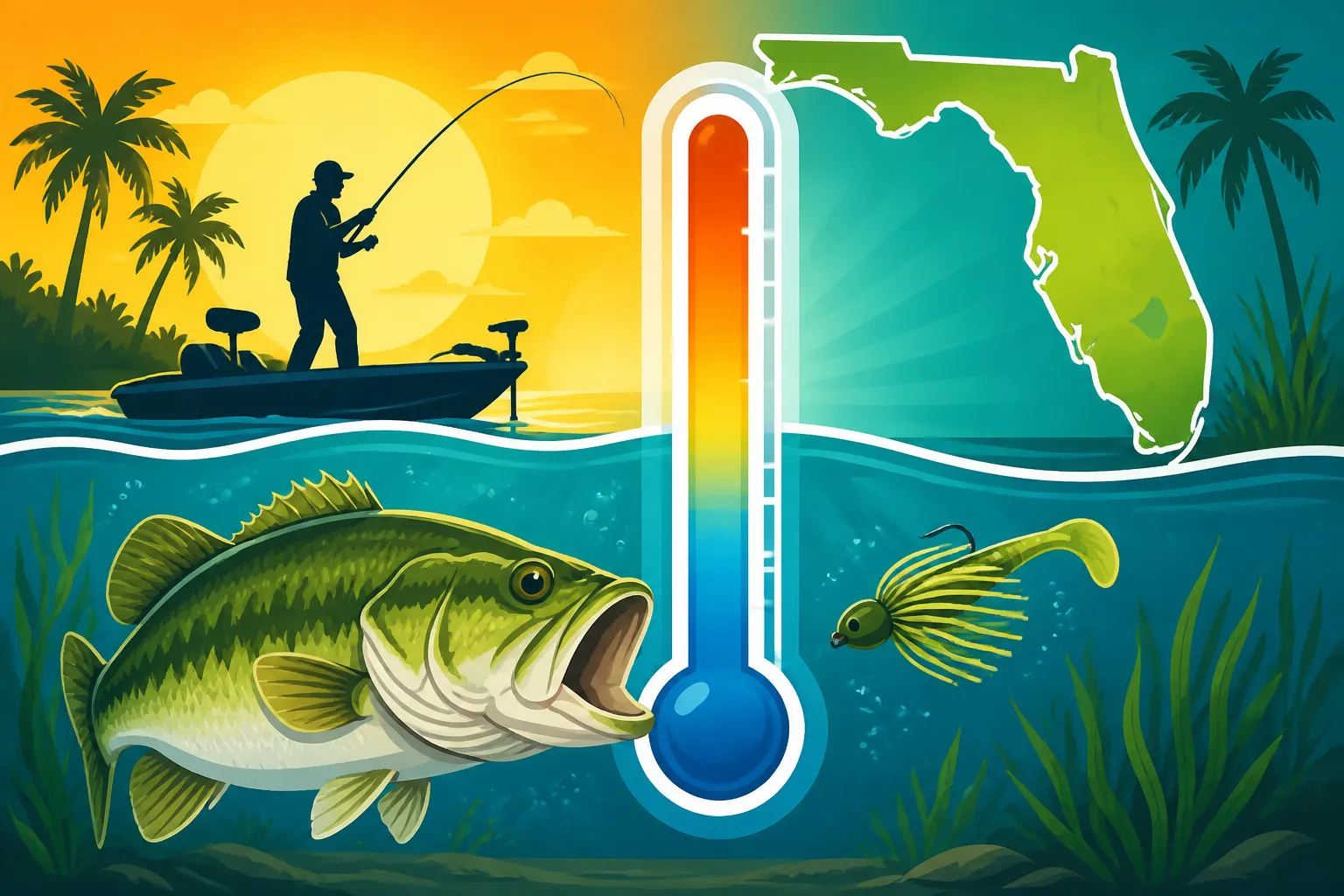
If you've ever spent hours on the water, throwing every lure in your tackle box, only to come up empty-handed while the angler next to you reels in bass after bass, you know the frustration. It often feels like a secret code you just can't crack, especially when targeting those elusive Florida largemouths. Well, my friend, that secret code often boils down to one critical factor: water temperature. Understanding how temperature influences bass behavior is the ultimate game-changer, and this guide is here to unravel those mysteries, helping you dial in your approach for more consistent success on Florida's diverse waterways.
Why Water Temperature is the Ultimate Game Changer for Florida Bass
Let's face it, fishing in Florida isn't like fishing up north. Our seasons are less distinct, and the mercury can swing wildly, impacting our finned friends in profound ways. For bass, water temperature isn't just a comfort preference; it's a direct driver of their very existence – dictating where they eat, where they hide, and even when they decide to make more little bass. Ignoring it is like trying to drive blindfolded.
How Bass Metabolism and Activity Levels are Linked to Temperature
Think of a bass as a cold-blooded athlete. Their body temperature, and consequently their metabolism, is directly tied to the water around them. When the water is cold, their metabolism slows down dramatically. They become sluggish, requiring less food and moving much slower. Imagine trying to run a marathon in a blizzard – that's kind of how a bass feels in chilly water. They'll hug tight to structure, conserving energy, and any feeding they do will be a slow, deliberate affair. A fast-moving bait in cold water is often ignored because it's too much effort to chase.
Conversely, as water temperatures rise, so does their metabolism. They become more active, more aggressive, and their need to feed increases exponentially. This is when you see those explosive topwater strikes or feel that jarring thump on a cranking bait. However, there's a limit. Just like you wouldn't want to run a marathon in the scorching midday Florida sun, bass get stressed when water temperatures climb too high. Oxygen levels in the water decrease, and the fish can become lethargic, seeking cooler, deeper water or dense shade to escape the heat. So, it's a delicate balance, and understanding this fundamental biological link is step one to becoming a better bass angler.
Understanding Florida's Unique Temperature Challenges
Florida, "The Sunshine State," is famous for its warmth, but that doesn't mean our waters are always perfectly temperate for bass. We experience unique challenges that northern anglers might not fully grasp. Our shallow lakes and vast expanses of open water can heat up rapidly under the intense sun, reaching temperatures that can push bass into survival mode. Yet, we also get those sudden, brutal cold fronts that sweep through, dropping air temperatures by twenty or thirty degrees in a single day, sending water temps plummeting and putting bass into a state of shock.
These dramatic shifts mean that what worked yesterday might be completely useless today. A hot bite in the shallows can disappear overnight if a cold front pushes through. Conversely, a prolonged cool spell might suddenly give way to a warming trend that brings bass roaring back to life. It's a constant dance with Mother Nature, and recognizing these rapid changes and their effects on water temperature is key. Using a reliable thermometer (you can find plenty of great options on Amazon) is not just a suggestion; it's an essential tool for unlocking the patterns of Florida's notoriously finicky bass.
The "Sweet Spot" Water Temperature Ranges for Florida Bass
Alright, let's get down to the numbers that truly matter. While every lake is a little different, and every bass has its own personality, there are generally accepted temperature ranges where Florida largemouth bass are most comfortable, most active, and most likely to bite. Knowing these "sweet spots" allows you to predict where they'll be and how they'll behave.
Optimal Spawning Temperatures and Their Impact
The urge to reproduce is one of the strongest drivers in the natural world, and for Florida bass, it's heavily influenced by water temperature. Generally, largemouth bass in Florida begin their spawning rituals when water temperatures consistently reach the mid-60s to low 70s Fahrenheit (around 65-72°F). This is their peak season for procreation, and it's a truly special time to be on the water.
During the pre-spawn phase, as temperatures climb into the high 50s and low 60s, bass move from their deeper wintering haunts towards shallower staging areas. They're feeding heavily, gorging themselves to build up energy for the arduous spawning process. This is often a fantastic time for trophy bass, as large females are at their heaviest. Once the water hits that ideal range, males will fan out beds in shallow, protected areas, and females will move onto them to lay their eggs. During the actual spawn, bass can be surprisingly difficult to catch because their focus is entirely on reproduction, not feeding. They'll strike out of aggression to protect their nests, but don't expect them to chase baits far. After the spawn, in the post-spawn period, bass are often exhausted and scattered, gradually resuming feeding as they recover. Understanding these nuances, especially during the Florida Bass Spawning Season, will significantly increase your chances of success.
Peak Feeding Zones: When Bass are Most Aggressive
Beyond spawning, there are specific temperature windows when bass are simply on the hunt. This is when their metabolism is running efficiently, and they're actively chasing down meals. Generally, the prime feeding temperature for Florida bass falls within the 68-78°F range. This is often described as the "comfort zone" where they are neither too cold nor too hot, and their digestive systems are working optimally.
In this range, bass are typically found in a wider variety of habitats, from shallow flats with submerged grass to offshore ledges and brush piles. They'll be more willing to move for a bait, and you can often elicit strikes with faster retrieves, topwaters, and reaction baits. This is the sweet spot for covering water and actively seeking out aggressive fish. A portable water thermometer or a fish finder with a temperature sensor (many models available on Amazon offer this feature) becomes indispensable here. You can use it to pinpoint areas of water that are within this ideal feeding range, even if the general lake temperature is a bit off. For instance, a shallow cove might warm up faster in the morning sun, creating a temporary feeding zone, even if the main lake is still a few degrees cooler.
Stress Zones: When Water Gets Too Hot or Too Cold
Just as there are ideal temperatures, there are also "stress zones" that make bass uncomfortable and significantly impact their willingness to bite. When water temperatures drop below 50-55°F in Florida, bass become quite lethargic. Their immune systems can be compromised, and they seek out the warmest available water, often burying themselves in dense cover, deep channels, or even congregating near natural springs where the water temperature is more stable. Fishing in these conditions requires a slow, precise presentation, often with smaller baits fished excruciatingly slowly. A severe cold snap can even lead to fish kills in extreme cases. For more on this, check out our guide on Fishing After a Cold Snap in Florida.
On the flip side, when water temperatures climb above 85°F, bass enter another stress zone. The primary issue here is dissolved oxygen. Warmer water holds less oxygen, and bass, like all fish, need it to survive. They'll seek out areas with higher oxygen content, which often means deeper water, shaded areas, or places with moving water like aerated canals or current breaks. They'll also become more nocturnal, feeding under the cover of darkness when surface temperatures cool down. Their bites in these extreme conditions are often soft and tentative, requiring subtle presentations. Understanding these stress zones is crucial not only for catching fish but also for ensuring their health if you're practicing catch and release.
Seasonal Water Temperature Strategies for Florida Bass Fishing
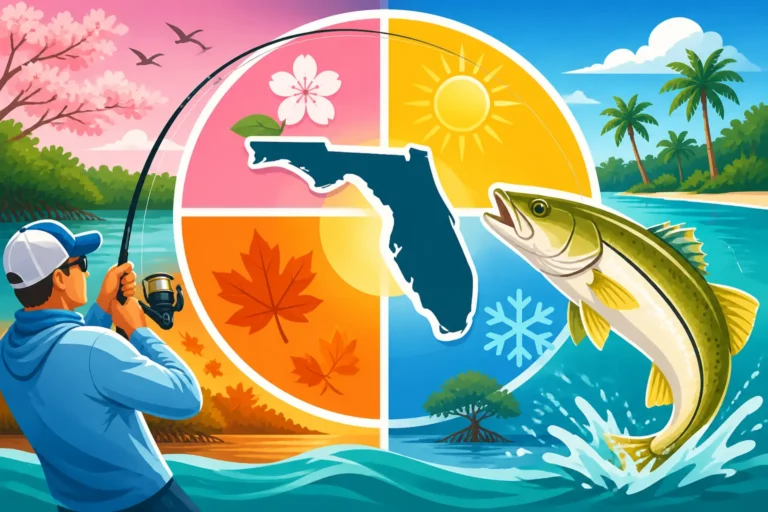
Florida's unique climate means our "seasons" for bass fishing are often defined more by water temperature shifts than by calendar months. Adapting your strategy to these thermal patterns is paramount for consistent success.
Winter Wonders: Finding Warmer Pockets
Florida winters can be notoriously fickle. Some days are warm and sunny, feeling like spring, while others bring those sharp, brutal cold fronts. During the cooler periods, typically when water temperatures are in the 50s and low 60s, bass become less active and seek out thermal refuge. They're looking for stability and warmth. Your goal is to find those subtle warmer pockets.
Look for areas with dark, mucky bottoms that absorb more sunlight, like the backs of shallow coves or canals. These spots can be several degrees warmer than the main lake. Protected areas, out of the direct wind, also tend to hold heat better. Canals, especially those connecting to larger lakes or rivers, can be bass magnets in winter, as they offer deeper, more stable water and often have dark bottoms. Natural springs, common in many parts of Florida, are also fantastic winter havens, as they emit constant-temperature water. Slow-moving baits like jigs, lipless crankbaits, or slow-rolled spinnerbaits are often the ticket. Fish them meticulously around docks, seawalls, and deep grass lines. Don't forget that fish will often suspend, making a fish finder invaluable.
Spring Fever: Capitalizing on the Spawn
Spring in Florida is a high-energy time, transitioning from winter cool to summer heat, and it's all about the spawn. As water temperatures steadily rise into the mid-60s to low 70s, bass move into their pre-spawn, spawn, and post-spawn phases. The pre-spawn period, when temperatures are around 58-65°F, is arguably the best time to catch large, aggressive bass. Females are bulking up, and both sexes are moving towards shallower staging areas.
Focus your efforts on transition zones – points, humps, and submerged grass lines leading into spawning flats. Lipless crankbaits, spinnerbaits, and medium-diving crankbaits are excellent for covering water and eliciting reaction strikes from these hungry fish. Once the water hits the 65-72°F mark, bass are on the beds. Look for circular cleared areas in shallow, protected coves or along shorelines. Sight fishing for bedding bass with soft plastics, jigs, or even topwater frogs can be incredibly effective, but remember to practice responsible catch and release, especially with spawning fish. Post-spawn bass, found when temperatures are pushing into the mid-70s, can be spread out and lethargic from the rigors of spawning. They often retreat to slightly deeper cover near spawning areas. Worms, jigs, and slower presentations usually work best.
Summer Survival: Deeper, Cooler Waters
Florida summers are hot, plain and simple. When water temperatures soar into the high 80s and even low 90s, bass move into survival mode. Their metabolism is high, but the low dissolved oxygen in warm water stresses them out. Your strategy must shift dramatically to find cooler, more oxygenated water. This often means going deeper.
Look for thermoclines – layers of water where the temperature changes rapidly – which often exist at certain depths in deeper lakes. Bass will frequently suspend just above or within these cooler layers. Shaded areas are also crucial: under bridges, docks, thick lily pads, or dense overhead canopy. Fishing early morning, late evening, or even at night when surface temperatures cool down can be incredibly productive. Offshore structures like ledges, brush piles, and submerged hydrilla beds in 10-20 feet of water become key targets. Slow-rolling deep-diving crankbaits, Carolina rigs, shaky heads, and heavy jigs worked slowly along the bottom are effective. For detailed insights on summer fishing, check out our guide on How Hot Weather Affects Summer Fishing in Florida.
Fall Frenzy: Following Baitfish and Cooling Temps
As summer’s oppressive heat finally breaks and water temperatures begin their gradual descent from the high 80s into the 70s and 60s, a "fall frenzy" often ignites. This is a fantastic time to fish, as bass sense the coming winter and begin to feed aggressively to build up fat reserves. They become incredibly active, often chasing large schools of baitfish.
Your strategy should revolve around locating these baitfish schools. Bass will follow them into shallower coves, along creek channels, and around points. Topwater baits, spinnerbaits, lipless crankbaits, and swimbaits are incredibly effective as bass are often ambushing prey near the surface or along grass lines. As temperatures continue to drop, bass will transition from wide-open schooling behavior to more structured patterns, similar to early spring. They'll start relating to main lake points, ledges, and deeper grass. The cooling water reinvigorates them, making them eager to strike. This period offers some of the most dynamic and exciting bass fishing of the year.
Tools and Techniques to Monitor Water Temperature
You can't effectively implement temperature-based strategies if you don't know the temperature! Thankfully, modern fishing technology and a few basic tools make monitoring water temperature easier than ever.
Essential Gear for Temperature Tracking
The simplest and most straightforward tool is a good old-fashioned portable water thermometer. These are inexpensive, easy to use, and give you an accurate surface temperature reading. Just dip it in the water for a minute or two and read the dial. Many anglers keep one handy to check the water in different parts of the lake. You can find reliable waterproof models on Amazon for a minimal investment.
However, for more advanced insights, a fish finder with a temperature sensor is an absolute game-changer. Most modern depth finders, from basic models to high-end units, come equipped with a transducer that provides real-time water temperature readings. This allows you to see how the temperature changes as you move across the lake, whether you're idling over deep channels or exploring shallow flats. Some even display temperature at different depths, helping you identify thermoclines where bass might be holding. Learning How to Use a Fish Finder for Inshore Fishing will give you a great foundation, and many of the principles apply to bass fishing as well. Without a doubt, this is the most useful tool for serious bass anglers looking to dial in temperature patterns.
Practical Tips for On-the-Water Temperature Reading
Getting good temperature readings isn't just about having the gear; it's about how you use it. Here are some practical tips:
- Take Multiple Readings: Don't rely on a single reading, especially on a large body of water. Drive or idle through different areas – shallow coves, main lake points, deep channels, shaded banks – and note the temperature in each. You'll often find significant differences, sometimes 3-5 degrees Fahrenheit or more, that can concentrate bass.
- Surface vs. Depth: Most fish finders read surface temperature. While this is crucial, remember that fish often hold at different depths. In summer, the surface might be 90°F, but 10 feet down, it could be a much more comfortable 82°F. If your fish finder offers depth temperature, use it. Otherwise, assume fish will seek cooler water below the surface in extreme heat.
- Localized Differences: Pay attention to micro-climates. Areas with current, like river or canal mouths, can have different temperatures than stagnant backwaters. Springs pump cooler, constant-temperature water. Dark bottom areas will heat faster than sandy bottoms. Wind can also cool the surface. All these factors create temperature gradients that bass exploit.
- Track Trends: Don't just note today's temperature; understand the trend. Is the water warming up after a cold snap? Is it steadily declining into fall? Bass react to changes in temperature as much as they do to specific numbers. This helps you predict their next move.
Adapting Your Approach Based on Water Temperature
Knowing the water temperature is only half the battle; the other half is adjusting your tactics accordingly. Bass behavior changes dramatically with temperature, and a flexible approach is your best friend.
Lure Selection and Presentation Adjustments
Water temperature directly influences how bass perceive and react to your lures.
- Cold Water (Below 55°F): Bass are lethargic. Think slow and subtle. Smaller jigs, Ned rigs, shaky heads, and slow-rolled finesse spinnerbaits are ideal. Work them extremely slowly, often with long pauses. You want to make it easy for the bass to commit. Colors can be more muted, like browns, blacks, and blues.
- Cool to Warming Water (55-65°F): This is a transition period. Bass are starting to perk up but aren't fully aggressive. Medium-speed retrieves with lipless crankbaits, medium-diving crankbaits, and spinnerbaits can be effective. Soft plastics fished with a moderate retrieve still work. Think about presenting a meal they don't have to work too hard for, but one that still tempts their awakening metabolism.
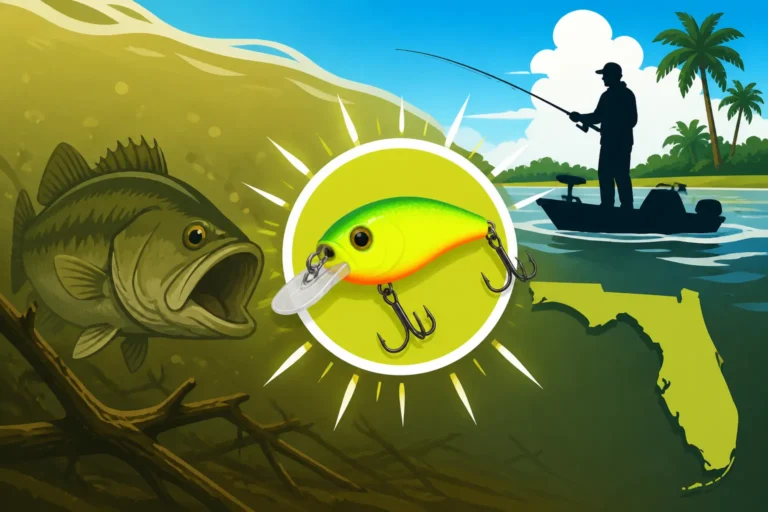
- Optimal Feeding Range (68-78°F): Bass are aggressive and active. This is when you can pull out the power fishing techniques. Topwater baits (frogs, poppers, walking baits), fast-retrieved crankbaits, bladed jigs, and swimbaits will all draw strikes. Experiment with colors, but often brighter or more natural patterns work well. Don't be afraid to try faster presentations and cover a lot of water. You might want to refer to our guide on Best Lures for Florida Bass Fishing for more specific recommendations.
- Hot Water (Above 85°F): Bass are stressed and seeking refuge. Focus on slow, deep presentations. Heavy jigs, Carolina rigs, deep-diving crankbaits, and soft plastics worked along the bottom in shaded or deeper areas are key. Early morning and late evening topwater bites might still occur, but the midday heat will push them down. Subtlety is often required, as their bites can be very soft.
Locating Bass by Temperature Gradients
Bass are masters at finding their comfort zone, and they'll actively seek out areas with optimal temperatures or exploit subtle temperature changes. Learning to identify these "temperature gradients" can put you directly on the fish. For instance, in winter, if a large cold front has passed, bass will often congregate in protected canals that might have warmed a few degrees more than the main lake. Similarly, if a major lake has a natural spring entering it, the constant temperature water from the spring can draw bass like a magnet, creating a distinct fishing pattern.
Think about how different parts of a lake heat up or cool down. Shallow, dark-bottomed flats will absorb heat faster in the morning sun, creating a temporary hot spot. Conversely, on a scorching summer day, bass might be found on the deeper, offshore side of a main lake point where slightly cooler water from the thermocline "bumps up" against the structure. Even current from a river or canal flowing into a lake can create a distinct temperature break that bass will stage on. Understanding these subtle shifts and how Where Fish Go During a Cold Snap in Florida can help you find where the bass are most likely to be holding. Your fish finder's temperature gauge isn't just a number; it's a treasure map guiding you to the most productive water.
| Water Temperature Range (Fahrenheit) | Bass Behavior | Recommended Lures & Techniques |
|---|---|---|
| Below 50°F | Very Lethargic, seeking deep, stable water | Small jigs, Ned rigs, shaky heads; extremely slow, deliberate |
| 50-58°F | Sluggish, pre-spawn staging, slower metabolism | Jigs, lipless crankbaits, finesse worms; slow to moderate |
| 58-65°F (Pre-Spawn) | Increasingly active, feeding heavily, staging | Spinnerbaits, crankbaits, swimbaits, jerkbaits; moderate to fast |
| 65-72°F (Spawn) | Nesting, protecting beds, aggressive strikes | Soft plastics, jigs, creature baits; sight fishing, defensive |
| 72-78°F (Post-Spawn/Peak Feeding) | Highly active, aggressive, recovering | Topwaters, crankbaits, bladed jigs, Texas rigs; varied speeds |
| 78-85°F | Active, but may seek shade/depth in midday | Jigs, worms, frogs (shade), deep crankbaits; moderate to slow |
| Above 85°F | Stressed, seeking deep, oxygenated water, shade | Heavy jigs, Carolina rigs, deep worms; very slow, subtle |
Disclaimer
This article is for general informational purposes only and does not constitute professional advice. Laws, prices and regulations vary by location and change over time. Consult a qualified professional for guidance on your specific situation.