How Far Offshore Do You Need to Go for Mahi Mahi?
One of the most thrilling pursuits in Florida offshore fishing is targeting Mahi Mahi, also affectionately known as dolphin fish. But if you’ve ever found yourself staring out at the vast expanse of the ocean, wondering just how far you need to motor out to find those vibrant, high-flying beauties, you're not alone. It's a question that plagues many anglers, balancing fuel costs and precious fishing time against the allure of that perfect mahi bite. This guide will dive deep into where Mahi Mahi tend to roam and what signs tell you you're in the right neighborhood, no matter your starting point in Florida.
Understanding Mahi Mahi Habitat and Behavior
Before we talk about miles, let's talk about the fish themselves. Mahi Mahi are truly creatures of the open ocean, constantly on the move, chasing bait and riding currents. Their unique adaptations and hunting strategies dictate where you'll most likely find them.
Mahi Mahi: Pelagic Wanderers of the Open Ocean
Mahi Mahi are classic pelagic fish, meaning they live in the open ocean rather than near the coast or on the bottom. They thrive in warm, tropical, and subtropical waters, which makes Florida's extensive coastline a prime hunting ground for them throughout much of the year. Unlike many inshore species that stick to reefs, mangroves, or grass flats, mahi prefer the vast, blue expanses where they can hunt smaller baitfish like flying fish, squid, and sardines.
These fish are incredibly fast-growing and have a high metabolism, which means they are almost always on the hunt for their next meal. Their iridescent colors, from brilliant blues and greens to striking yellows, are not just for show; they also help them blend into the sun-dappled surface waters where they often feed. This constant need for food means they are always following their prey, which is often dictated by ocean currents and water temperature breaks.
What does this mean for you, the angler? It means you need to think like a mahi: where's the food, where's the warm water, and what structure can I hide around to ambush my next meal? They are opportunistic feeders and will strike at a variety of baits and lures, making them a fantastic sport fish once you locate them. Knowing their pelagic nature is the first step in figuring out how far offshore to venture.
The Importance of Sargassum and Debris Lines
If there's one golden rule for finding Mahi Mahi, it's "find the weed lines and floating debris." Sargassum seaweed, often forming vast mats or long, meandering lines, is a floating ecosystem unto itself. It provides shelter, food, and camouflage for countless smaller marine organisms, from tiny crabs and shrimp to juvenile baitfish. This creates a natural cafeteria for predators like mahi.
These floating nurseries attract baitfish in droves, and where the bait goes, the mahi will follow. You'll often see mahi congregating under these mats, darting out to ambush unsuspecting prey. Beyond sargassum, any significant floating structure can hold mahi. This could be a floating log, a derelict buoy, a lost crab trap, or even a discarded palette. These items act as an aggregation point, creating a small zone of shelter and ambush opportunity in an otherwise featureless open ocean.
When you're out on the water, keep a keen eye out for any patches of weeds, especially those that form distinct lines or clumps. These lines are often pushed together by currents and wind, creating a visible "highway" for fish. Approach these areas slowly and quietly, often trolling along the edges or casting small baits or lures into the weed line. Understanding that these floating structures are critical to a mahi's lifestyle is paramount, often more so than simply hitting a predetermined GPS coordinate.
General Offshore Distances for Mahi Mahi in Florida
The question "how far offshore" is always on an angler's mind, but with Mahi Mahi, it's less about a fixed number and more about environmental cues. Still, there are some general guidelines for Florida's diverse coasts.
The "Magic Number" is Rarely Fixed
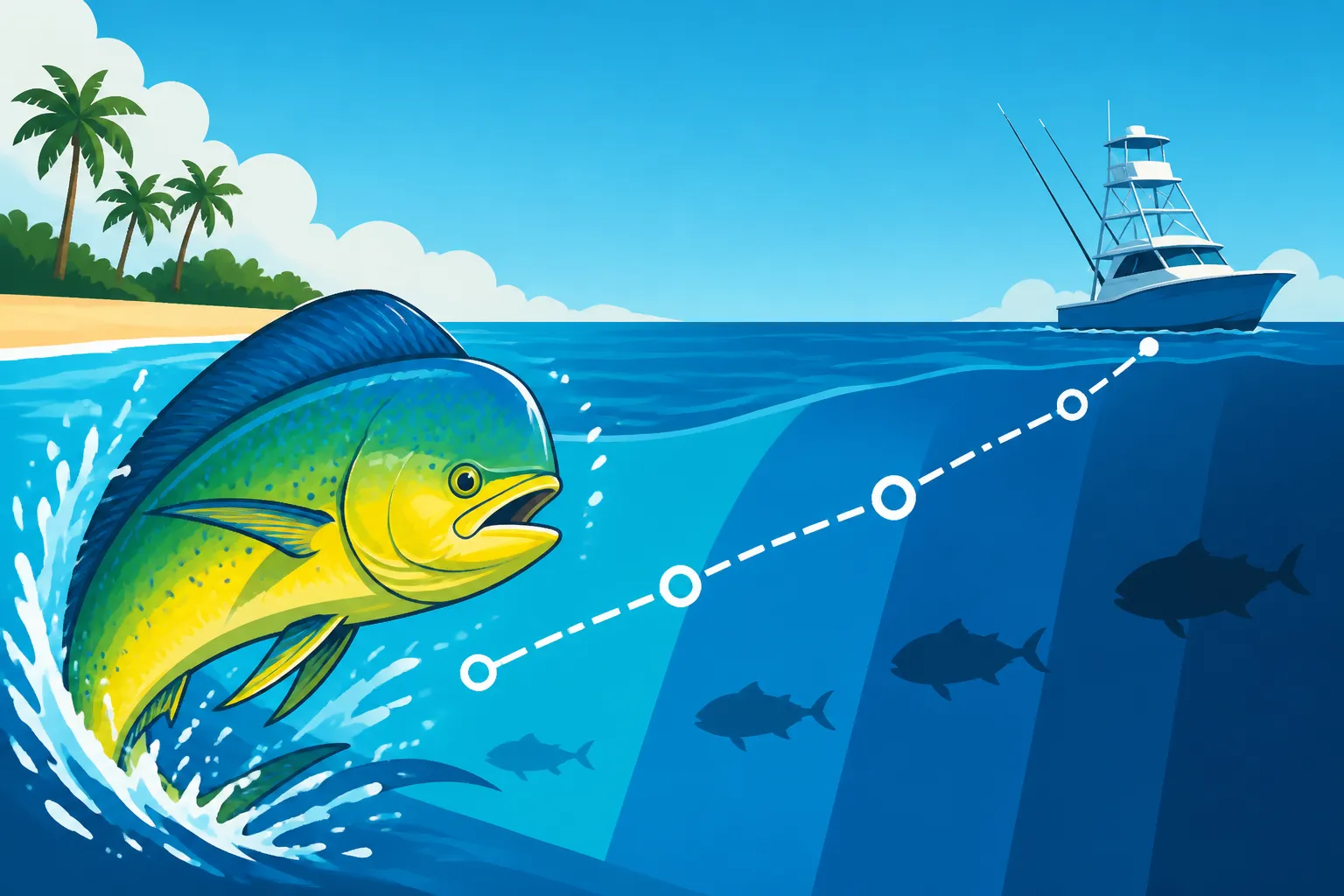
Let's get this straight: there's no single "magic number" of miles you must travel offshore to find Mahi Mahi. Anyone who tells you exactly 15 miles or precisely 30 miles has likely just had good luck on a particular day. The truth is, mahi are incredibly nomadic, and their proximity to shore can change daily, even hourly, depending on conditions. On some fantastic days, especially during migratory periods or after strong offshore winds push weed lines closer, you might find them just a few miles offshore, sometimes even within sight of the beach!
Conversely, on other days, particularly when bait is sparse or conditions are calm and spread out, you might need to run 30, 40, or even 50+ miles to find that ideal convergence of currents, temperature breaks, and baitfish schools. The key is to look for the signs of life and the right water conditions, rather than fixating on a specific distance. This requires patience, a good understanding of ocean dynamics, and a willingness to adapt your game plan on the fly. It's truly a hunt, and sometimes the biggest reward comes from recognizing the subtle hints the ocean provides.
Your boat's capabilities and fuel range will naturally play a role in how far you can go, so always prioritize safety and having enough fuel for the round trip plus a reserve. It's often better to focus on prime areas within your range than to push too far out and run into trouble.
Atlantic Coast vs. Gulf Coast Nuances
Florida's two coasts present slightly different scenarios when it comes to finding offshore species like Mahi Mahi, largely due to their distinct geological features and oceanography.
On the Atlantic Coast, the continental shelf drops off much more steeply than on the Gulf side. This means that deep, pelagic waters, and the strong offshore currents like the Gulf Stream, are often much closer to shore. For anglers departing from places like Miami, Fort Lauderdale, Jupiter, or even as far north as Jacksonville, you can often reach prime mahi territory within 5-20 miles. The proximity of the Gulf Stream's warm, nutrient-rich waters brings baitfish and, consequently, mahi within relatively easy reach. Weed lines are frequently pushed in by the current, making for excellent fishing opportunities without an excessively long run. This is one reason why Florida's Atlantic coast is so renowned for its offshore fishing. If you're looking for prime deep sea action, understanding these currents is key, as detailed in our guide on Florida Offshore Fishing Techniques.
The Gulf Coast is a different beast entirely. The continental shelf is much wider and shallower, extending many miles offshore before dropping into truly deep water. This means that to reach the deeper, bluer, more pelagic waters where mahi prefer to roam, you typically have to run significantly further. From ports on the Gulf like Clearwater, Sarasota, Naples, or Destin, it's not uncommon to make runs of 30-60 miles, or even more, to find those consistent mahi grounds. While mahi can be found closer to shore in the Gulf, especially around certain structures or during specific migrations, the reliable spots are usually much further out. The trade-off for the longer run is often incredibly productive fishing once you hit those sweet spots. For example, if you're exploring the Destin Fishing Spots or those near Panama City Beach Fishing Spots, expect a good run to target mahi specifically.
| Coast | Shelf Drop-off | Proximity to Deep Water (Mahi Habitat) | Typical Offshore Distance (Estimate) | Notes |
|---|---|---|---|---|
| Atlantic | Steep | Close to Shore | 5 – 25 miles | Influenced by Gulf Stream, weed lines often closer. |
| Gulf | Gradual/Wide | Further Offshore | 30 – 70+ miles | Requires longer runs to reach true pelagic conditions, less current influence. |
Factors Influencing How Far Offshore You'll Go
While knowing the general coast differences is helpful, the dynamic nature of the ocean means you need to be a detective, constantly looking for clues. Several key factors will tell you whether mahi are close or far.
Ocean Currents and Water Temperature
Mahi Mahi are warm-water fish, so water temperature is a huge indicator of their presence. They typically prefer water temperatures above 70-72°F (around 21-22°C) and will often congregate along temperature breaks where warmer water meets cooler water. These breaks, sometimes visible as a color change in the water, concentrate baitfish and nutrients, creating a feeding frenzy zone. Satellite imagery and specialized fishing apps can often show you these temperature breaks, which are invaluable tools for planning your trip and predicting where to start your search.
Ocean currents are equally important. Strong currents, like the mighty Gulf Stream on Florida's Atlantic coast, act as migratory highways for pelagic species. They carry baitfish, push weed lines together, and create upwellings that bring nutrient-rich water to the surface. When you're fishing in these currents, you're fishing in a dynamic, productive environment. Mahi will often ride these currents, making them easier to intercept if you can identify the primary flow and any eddies or rips off the main current. Understanding how these currents affect Florida Offshore Fishing Techniques can greatly improve your success.
The interplay of temperature and current is crucial. Finding a distinct temperature break within a strong current line is often the holy grail for mahi fishing. This can happen anywhere from a few miles to many miles offshore, reinforcing the idea that conditions, not just distance, are the most important variable.
Baitfish Presence and Forage
The old adage "find the bait, find the fish" is never truer than when chasing Mahi Mahi. These aggressive predators are constantly on the move, looking for their next meal. If you find concentrations of baitfish, you're almost certainly in the vicinity of mahi or other hungry predators. Keep an eye out for visual cues like diving birds, especially terns and gulls, which often indicate bait being pushed to the surface from below. Look for nervous water, schools of baitfish jumping, or even disturbances caused by larger fish feeding.
Common baitfish that attract mahi include flying fish, ballyhoo, sardines, cigar minnows, and small jacks. Mahi will gorge themselves on these schools, sometimes creating a chaotic scene on the surface known as a "boil." If you encounter such a sight, cast your lures or baits quickly, as the mahi can disappear as fast as they appeared.
Sometimes, the bait is too deep to see visually. This is where your sonar comes in. Look for dense schools of bait suspended in the water column. If you see bait and there's a strong current or a temperature break nearby, you're in a prime zone. Don't be afraid to slow down and work an area thoroughly if you're seeing signs of life, even if you haven't seen a mahi jump yet.
Floating Debris and Structure
As mentioned earlier, floating debris and weed lines are veritable magnets for Mahi Mahi. These aren't just incidental spots; they are critical micro-habitats in the vast blue desert of the open ocean. Imagine a tiny oasis in the middle of nowhere – that's what a good weed line or a piece of floating debris is to a mahi. They provide shelter, ambush points, and a concentrated food source.
When you're running offshore, always keep a keen eye on the horizon for any changes in the water, especially distinct color changes or lines of sargassum. Sometimes these lines can be miles long, offering endless opportunities. It’s not just the big mats; even small, isolated pieces of flotsam can hold a few hungry mahi. A single five-gallon bucket or a floating pallet can be the anchor for a school of fish.
When you find a promising weed line or piece of debris, don't just troll past it. Work it thoroughly. Troll along both sides of the line, making turns and changes in speed. Cast live bait or artificial lures right up to the edge of the weeds. Often, the bigger mahi will hang deeper under the mat or debris, so try dropping a bait down a bit. Even a small piece of wood could be holding the fish of a lifetime. The amount of floating debris can vary greatly, and checking conditions before heading out, especially during Florida's Hurricane Season, can be helpful.
Time of Year and Seasonality
Mahi Mahi are migratory fish, and their presence in Florida waters, and how far offshore you need to go to find them, is heavily influenced by the time of year.
During the spring (March-May), especially on the Atlantic coast, mahi begin their northward migration, often following the warming waters of the Gulf Stream. This is a prime time for finding them, and they can often be caught closer to shore as they move along the coast. It's one of the Best Time of Year to Fish in Florida for these amazing fish.
Summer (June-August) is generally peak mahi season across much of Florida, particularly on the Atlantic. The waters are warm, the bait is abundant, and mahi are typically present in large numbers. While you might still need to run offshore, the likelihood of finding them is very high. They can be found around weed lines and other floating debris, often in larger schools.
In the fall (September-November), as waters start to cool, mahi begin their southward migration. Fishing can remain excellent, especially early in the fall, but as winter approaches, their numbers in more northern parts of Florida will diminish, requiring longer runs to warmer waters or targeting them in the deep south of Florida.
Winter (December-February) is generally the slowest season for mahi in most of Florida, as many have moved further south into warmer Caribbean waters. However, they can still be caught, particularly off the lower Florida Keys and in the very deep offshore waters of the Atlantic, where the Gulf Stream maintains consistent warmth. During these months, you'll almost certainly need to venture much further offshore to find them. Knowing the Florida Fishing Seasons Explained for various species helps align expectations.
Gear and Preparation for Offshore Mahi Mahi Fishing
Once you've got your strategy down for finding the fish, having the right tools and knowing how to stay safe are equally crucial for a successful and enjoyable trip.
Essential Gear for Pelagic Species
When you're heading offshore for Mahi Mahi, you're looking for strong, fast fish that put up an incredible fight. Your gear needs to be up to the task. For trolling, which is a common and effective method for covering ground and finding mahi, you'll want medium-heavy conventional outfits or heavy spinning gear. Rods in the 6' to 7' range with a fast action and good backbone are ideal. Pair these with reels spooled with 20-50 lb monofilament or braided line. Many anglers prefer braid for its sensitivity and strength, often topping it with a fluorocarbon leader for stealth. You can find a wide array of reliable fishing gear on platforms like Amazon if you're looking to stock up before your trip.
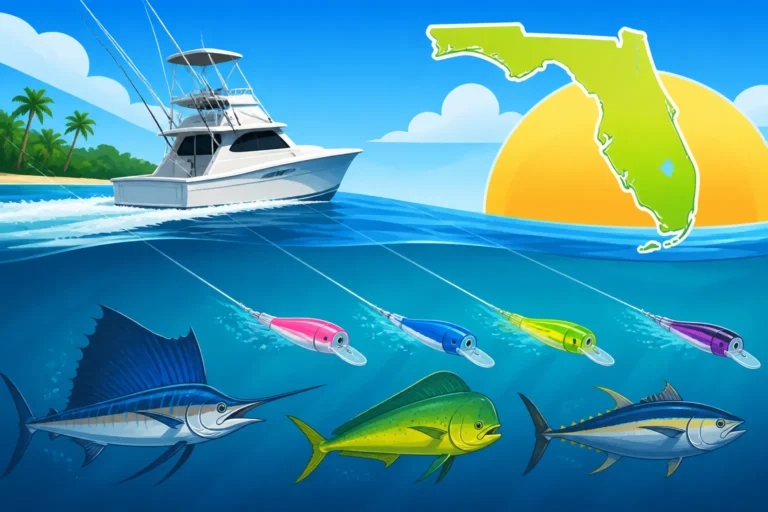
For terminal tackle, a selection of skirted trolling lures in various colors (pink, blue/white, green/yellow are classics) is a must. These mimic the flying fish and squid that mahi love. Don't forget a good supply of hooks, swivels, and leader material (50-80 lb fluorocarbon is common). Live bait, such as pilchards, goggle eyes, or blue runners, can be incredibly effective when you find a school of mahi, so having a livewell and a sabiki rig for catching your own bait is a huge plus. Always make sure your tackle is sharp and strong – mahi have surprisingly tough mouths.
Finally, don't forget the essentials for handling your catch: a good gaff, a heavy-duty pair of pliers, and a large cooler with plenty of ice to keep your mahi fresh. For advice on what type of gear is best for this kind of fishing, you might also look at our article on Best Rod and Reel Setup for Florida Offshore Fishing.
Safety Considerations for Offshore Trips
Heading far offshore is exhilarating, but it also carries inherent risks that demand respect and thorough preparation. Safety should always be your top priority. First and foremost, check the marine weather forecast religiously before you even think about leaving the dock. Look for wind speeds, wave height, and any potential for pop-up storms, especially during Florida's summer thunderstorm pattern. Never venture out if conditions are forecasted to be beyond your boat's and your crew's comfort and capability levels.
Equip your boat with all necessary safety gear, including a properly sized life jacket for every person on board, flares, a horn or whistle, a first-aid kit, and a VHF radio for communication. For longer runs offshore, consider investing in an EPIRB (Emergency Position Indicating Radio Beacon) or a personal locator beacon (PLB), which can broadcast your location in an emergency. Always file a float plan with a trusted contact on shore, letting them know where you're going, who's with you, and when you expect to return.
Hydration and sun protection are also crucial. The Florida sun is intense, even on cloudy days, so bring plenty of water, sunscreen, hats, and protective clothing. Make sure your boat is in top mechanical condition, with a full tank of fuel (and ideally a reserve), charged batteries, and all systems functioning properly. A well-prepared angler is a safe angler, ensuring that your pursuit of mahi is memorable for all the right reasons. For more on safe boating, you can consult guides on navigating Fishing During Florida's Hurricane Season.
Conclusion
So, how far offshore do you need to go for Mahi Mahi in Florida? The honest answer is: it depends! It's rarely about a fixed number of miles on the GPS. Instead, it's about being a keen observer of the ocean. You're looking for the confluence of warm, blue water, strong currents, tell-tale weed lines, and the undeniable signs of baitfish activity. Whether you're hugging the Atlantic coast or making a long run into the Gulf, understanding these environmental factors is far more critical than simply punching in coordinates.
Equip yourself with the right gear, prioritize safety, and most importantly, stay vigilant. Scan the horizon for diving birds, look for changes in water color, and always investigate those tempting weed lines and floating debris. Sometimes the mahi will be just a few miles out, dazzling you with their acrobatics close to shore. Other times, the true giants will require a dedicated voyage into the deep blue. Embrace the hunt, trust your instincts, and the reward of a vibrant Mahi Mahi on the line will be well worth the effort.
Disclaimer
This article is for general informational purposes only and does not constitute professional advice. Laws, prices and regulations vary by location and change over time. Consult a qualified professional for guidance on your specific situation.