Best Spots on Lake George for Fishing
For anglers venturing into the vastness of Florida’s inland waterways, pinpointing the best fishing spots on a lake as immense as Lake George can often feel like searching for a needle in a haystack. This sprawling, somewhat intimidating body of water holds incredible potential, but knowing exactly where to cast your line for a productive day is key. This comprehensive guide aims to demystify Lake George, revealing its most fruitful fishing locations and offering insights to help you land your next big catch.
Understanding Lake George's Unique Appeal for Anglers
Lake George isn't just another Florida lake; it's the second-largest lake in Florida by surface area, a natural widening of the St. Johns River. This connection to a major river system is precisely what makes it so distinct and rich in aquatic life. Its sheer size and diverse habitat provide a unique challenge and reward for both seasoned and novice anglers.
The St. Johns River Connection and Its Impact
The constant flow of the St. Johns River through Lake George is a game-changer. Unlike many landlocked lakes, Lake George benefits from a dynamic ecosystem influenced by tidal flows and the migratory patterns of various fish species. This means you're not just dealing with freshwater species; the brackish influence from the St. Johns River allows for a fascinating mix of fish. Think about it: you could be targeting largemouth bass one minute and then encountering a striped bass or even a redfish that has ventured far upstream. This blend of environments demands a versatile approach and makes every trip an adventure. For a broader understanding of the region, explore our detailed guide on the St. Johns River Fishing Guide.
The river's flow also brings nutrients, baitfish, and oxygen, creating thriving ecosystems within the lake. This continuous replenishment means healthier fish populations and a constant influx of new opportunities. The lake's average depth is relatively shallow, around 8 to 10 feet, but it features deeper channels, submerged vegetation, and abundant structure that fish absolutely love. This complex environment requires anglers to be adaptable and observant, always looking for subtle cues that indicate where the fish are holding.
Diverse Habitats and Structure
Lake George boasts an incredible variety of habitats, making it a truly diverse fishery. You'll find expansive open water, dense fields of submerged grasses like hydrilla and eelgrass, cypress trees lining the shores, sunken logs, and even old shell beds. Each of these structures attracts different species at different times of the year and under varying conditions.
For example, the shallower grass flats are often teeming with baitfish, drawing in predatory species like largemouth bass and various panfish. These areas are fantastic for throwing topwater lures in the early morning or late evening. The deeper channels, on the other hand, provide cooler water and cover, making them prime locations for catfish and striped bass, especially during the hotter months. Understanding these different habitats and how fish utilize them is crucial for planning a successful trip. A simple change in bait or technique can make all the difference, transforming a slow day into a memorable one.
Navigating the Prime Fishing Locations on Lake George
With its immense size, breaking down Lake George into manageable fishing zones is essential. Several areas consistently produce excellent results due to their unique characteristics and abundance of fish-holding structure. These spots are renowned among local anglers for their reliability.
Lake George's Northern End: Drayton Island and Surrounding Areas
The northern end of Lake George, particularly around Drayton Island, is a highly regarded hotspot. This area features deeper pockets, intricate channels, and abundant submerged vegetation, providing perfect ambush points for a variety of game fish. The water flow here is often stronger due to its proximity to where the St. Johns River enters and exits the main body of the lake, which tends to concentrate baitfish and, consequently, their predators.
Anglers often focus on the edges of the submerged grass beds near Drayton Island, especially where they meet the deeper channels. This transition zone is a superhighway for fish moving between feeding grounds and deeper cover. Flipping jigs or soft plastics into the thickest cover can yield impressive largemouth bass. For those targeting catfish, setting up near the deeper river channels with bottom rigs and cut bait is often effective. Furthermore, the numerous small creeks and cuts around the island can hold incredible surprises, especially during cooler months when fish seek warmer, calmer waters.
The Western Shoreline: Salt Springs Run and Other Tributaries
Moving along the western shoreline, you'll encounter several significant tributaries, with Salt Springs Run being one of the most prominent and productive. The crystal-clear, mineral-rich water flowing from Salt Springs attracts an incredible array of fish and bait, making it a natural magnet for anglers. This influx of fresh, clean water creates a unique environment compared to the main lake.
Fishing near the mouth of Salt Springs Run, where the clear water meets the slightly darker lake water, is a prime location. This thermal and clarity break often concentrates baitfish, creating a feeding frenzy for predatory species. Bass love to ambush prey here, and you might even find striped bass or redfish cruising the edges. Further upstream into the run itself, especially in the cooler months, trout and panfish can be abundant. Using smaller lures, live worms, or crickets is often the ticket for these panfish. Other smaller, less-known creeks feeding into the western side of the lake also offer similar, albeit often less crowded, opportunities for those willing to explore. Remember to check local regulations, as some spring runs might have specific rules.
The Eastern Shoreline and Southern Expanses
While the western side gets a lot of attention, the eastern shoreline and the southern reaches of Lake George offer equally compelling fishing opportunities, often with less boat traffic. The eastern side is characterized by expansive shallow flats, cypress tree lines, and numerous small coves and points that break up the shoreline. These areas are fantastic for sight fishing, especially for species like largemouth bass, when water clarity allows.
The southern end of the lake, where the St. Johns River truly enters its wider basin, features vast areas of submerged hydrilla and eelgrass. These massive grass beds are essentially underwater cities for baitfish, providing endless cover and food. Punching through dense mats of vegetation with heavy tungsten weights and creature baits is a highly effective technique here for trophy largemouth bass. Anglers should also pay attention to any isolated clumps of reeds or cypress trees standing slightly apart from the main shoreline, as these often hold solitary, larger fish. For those seeking to simplify their trip and find the best current conditions, consulting with local guides, perhaps found through platforms like FishingBooker, can give you an invaluable edge.
Targeting Top Species and Proven Techniques
Lake George's diverse ecosystem means you can target a wide variety of fish. Knowing which species are prevalent and the most effective techniques to catch them can significantly enhance your fishing experience.
Largemouth Bass: The Undisputed King
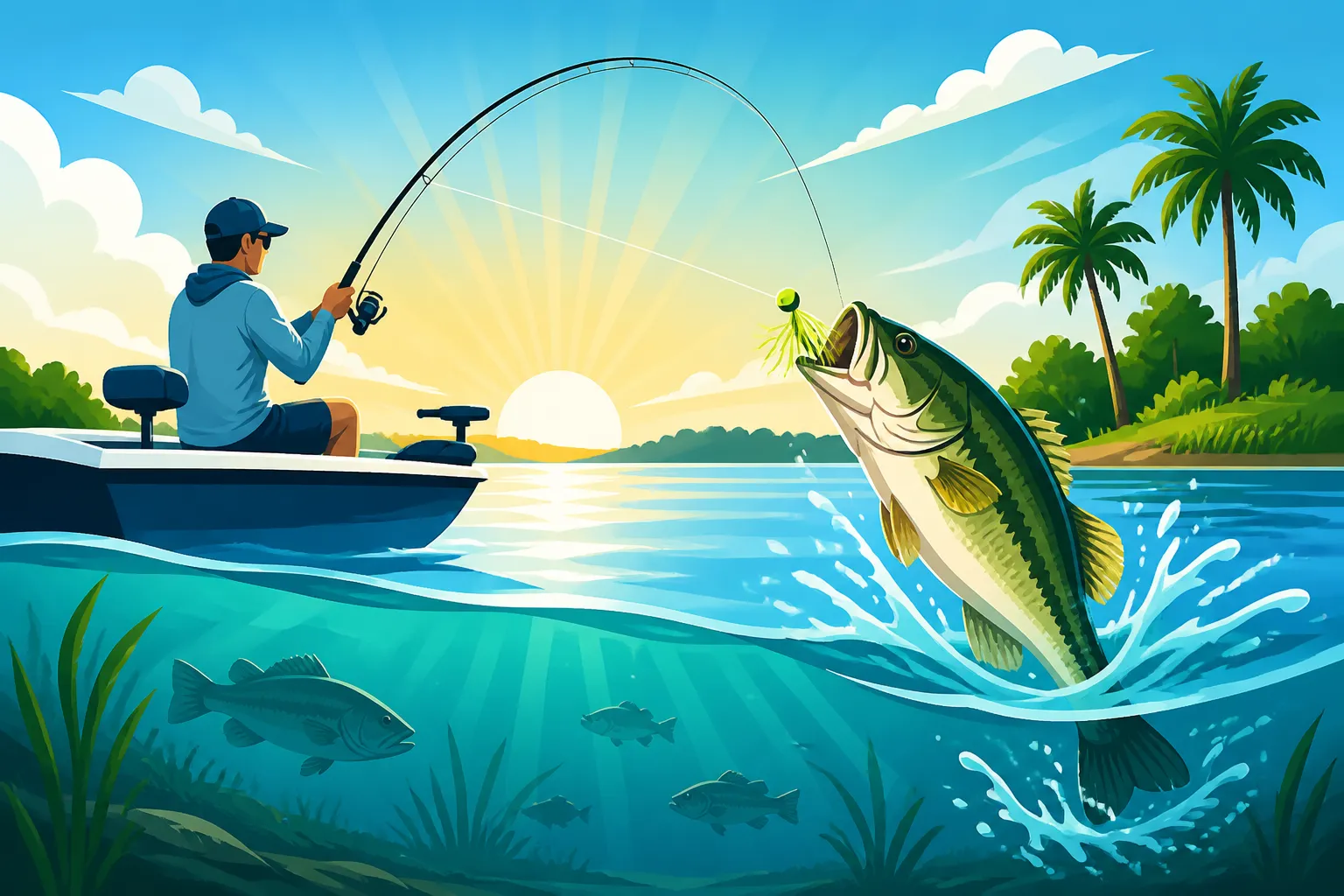
Largemouth bass are, without a doubt, the most popular target on Lake George. The lake consistently produces both good numbers of bass and trophy-sized specimens, especially for anglers who understand its unique structure. The optimal time for bass fishing often coincides with cooler temperatures, from late fall through spring, when bass are more active and feeding aggressively.
- Spring Spawning: During the spring, usually February to April, bass move into shallower waters to spawn. Look for them around protected coves, lily pads, and the edges of grass beds. Spinnerbaits, ChatterBaits, and soft plastic worms fished slowly are excellent choices. This is also a fantastic time to explore areas around Drayton Island, where the cover provides ample spawning habitat. Check out our in-depth guide on Florida Largemouth Bass Fishing Guide for more specialized tips.
- Summer Patterns: As temperatures rise in summer, bass often retreat to deeper, cooler waters or seek refuge in dense overhead cover. Focus on the main river channel edges, deeper pockets within grass flats, or underneath the thickest mats of hydrilla. Punching jigs or heavy Texas-rigged creature baits through the vegetation can be incredibly effective. Early mornings and late evenings, or even night fishing, can also bring success with topwater lures around open water edges.
- Fall and Winter: Fall sees bass becoming more active again, feeding up before winter. They'll often school up and chase baitfish, making crankbaits, jerkbaits, and Rat-L-Traps excellent choices along grass edges and points. Winter fishing can be phenomenal on Lake George, with bass often holding tight to cover in slightly deeper areas or soaking up warmth in sun-drenched coves. Slowly presented jigs, soft plastics, and even live shiners can entice bites.
Catfish and Panfish: Abundant and Fun
Beyond bass, Lake George is a fantastic destination for catching a variety of panfish and an abundance of catfish. These species provide consistent action and are perfect for a relaxing day on the water, especially for families or beginners. The lake holds strong populations of channel catfish, bluegill, and various types of bream.
| Species | Best Locations | Recommended Bait/Lure | Season | Notes |
|---|---|---|---|---|
| Largemouth Bass | Drayton Island, Salt Springs Run mouth, Southern grass flats | Soft plastics, Jigs, Crankbaits, Spinnerbaits, Live shiners | Year-round | Early morning/late evening, focus on cover. |
| Channel Catfish | Main river channels, Deeper holes near structure | Cut bait (shad, mullet), Worms, Stink baits | Year-round | Bottom fishing, especially after rain. |
| Bluegill/Bream | Shallow grass beds, Cypress trees, Spring runs | Live worms, Crickets, Small poppers, Jigs | Spring-Fall | Great for kids, light tackle fun. |
| Crappie | Submerged brush piles, Deep grass edges | Live minnows, Small jigs, Trolling | Fall-Spring | Slow retrieve, schooling fish. |
Catfish can be found throughout the lake, but the deeper sections of the main river channel and around submerged logs or brush piles are prime locations. For more specific tactics, delve into our Florida Catfish Fishing Guide. Simple bottom rigs with cut bait (like shad or mullet), chicken livers, or commercial stink baits work wonders. Fishing these areas after a good rain can be particularly productive, as the increased flow often stirs up their food sources.
For panfish like bluegill and bream, target the shallower areas with plenty of submerged vegetation, lily pads, or cypress tree roots. Small worms, crickets, or tiny jigs under a bobber are incredibly effective. These fish are often eager biters and provide continuous entertainment. Crappie, another popular panfish, can be found in deeper areas, often schooling around submerged brush piles or deep grass edges. Live minnows or small jigs fished vertically are key to success here. For specialized crappie techniques, see our Florida Crappie Fishing Guide.
Essential Tips for a Successful Lake George Fishing Expedition
A successful fishing trip on Lake George involves more than just knowing where the fish are. It requires preparation, adaptability, and an understanding of the local environment.
Gear Up Properly for Diverse Conditions
Given the varied nature of Lake George, having the right gear is crucial. You'll want to be prepared for both heavy cover fishing and open-water presentations. For largemouth bass, a medium-heavy to heavy action baitcasting rod with 15-20 lb fluorocarbon or braided line is ideal for punching through mats or pulling fish from dense vegetation. A medium-action spinning rod with 8-10 lb line is also good for lighter presentations like wacky rigs or throwing smaller jerkbaits.
For catfish and panfish, lighter spinning gear is generally sufficient. A light to medium-light action rod with 6-8 lb monofilament line is perfect for bluegill and crappie. For catfish, a medium-heavy spinning or baitcasting outfit with 15-25 lb line will handle even the larger channel cats. Don't forget essentials like a good pair of polarized sunglasses to spot fish and structure, a wide-brimmed hat, sunscreen, and plenty of water. Having a diverse tackle box with various lures for different situations, from topwaters to deep-diving crankbaits and an assortment of soft plastics, will also set you up for success.
Navigating Lake George's Waters Safely
Lake George is a large body of water, and while beautiful, it demands respect. Navigation can be tricky, especially for those unfamiliar with the area. The main river channel is generally well-marked, but venturing into the shallower flats or less-traveled creeks requires caution. Submerged logs, oyster bars, and shallow sandbars can pose hazards. A reliable GPS unit with detailed mapping is highly recommended. Many modern depth finders and chartplotters offer excellent mapping capabilities that can help you navigate safely and identify potential fishing structures.
Always keep an eye on the weather. Florida weather can change rapidly, with afternoon thunderstorms common, especially in summer. Be prepared for sudden downpours and lightning. For a deeper look into the general fishing patterns, consider exploring Best Time of Year to Fish in Florida. If you're using a boat, ensure all safety equipment is on board and in good working order. If you're planning a boat launch, knowing where to go can save time; our guide on Where to Launch a Boat on Lake Okeechobee offers insights applicable to any large lake. If you’re not confident in navigating on your own, hiring a local fishing guide is a fantastic option. Guides not only know the safest routes but also possess an intimate knowledge of current fish patterns and hot spots. You can easily find reputable guides through platforms like FishingBooker who specialize in Lake George.
Seasonal Considerations and Local Knowledge
Fishing success on Lake George, like anywhere else, is heavily influenced by the seasons and specific environmental conditions. Fish behavior changes dramatically with water temperature, clarity, and river flow. Knowing when to target certain species and adjust your tactics accordingly is paramount. For example, during cooler months, fish might concentrate in deeper holes or seek sun-warmed shallows, while in summer, they often move to deeper oxygenated water or hide under dense cover during the heat of the day.
Local knowledge is invaluable on a lake of this size. Engaging with bait shop owners, other anglers, or even reading online fishing reports can provide timely information on what's biting, where, and on what bait. FishingBooker also offers reviews of local guides, which often contain insights into their expertise in seasonal patterns. Don't be afraid to experiment with different baits and techniques; what worked yesterday might not work today. Factors like tide, moon phase, and recent weather fronts can all play a role in fish activity. Persistence and adaptability are your best friends on Lake George. For more general advice on picking an expert, read our guide on How to Choose a Florida Fishing Guide.
Disclaimer
Fishing involves inherent risks, and conditions can change rapidly. Always prioritize safety, check local weather forecasts, and ensure you comply with all current Florida Fish and Wildlife Conservation Commission (FWC) regulations, including licensing requirements, bag limits, and size restrictions. The information provided in this guide is for informational purposes only and should not be considered a substitute for personal research or professional guidance.