Best Spots to Catch King Mackerel Near Piers
There's nothing quite like the thrill of feeling that line scream off your reel, the drag singing its high-pitched song, as a powerful King Mackerel tears through the water. For many anglers, the idea of catching these toothy speed demons often conjures images of offshore battles from a boat, far from the coastline. But what if I told you that some of the most accessible and exciting King Mackerel action can be had right from Florida's many public piers? It's a common frustration to feel like you need a pricey boat to target big game, but this guide is here to shed light on how you can land a "smoker" king from solid ground, highlighting the best pier locations and techniques to make it happen.
Why Florida Piers Are King Mackerel Magnets
Piers in Florida aren't just convenient platforms for casual fishing; they're strategic outposts that often extend far into prime migratory routes and baitfish havens. These man-made structures create unique ecological hotspots that attract a wide array of marine life, including the predatory King Mackerel. Understanding why these long wooden and concrete fingers are so effective is key to successfully targeting these thrilling fish.
Natural Migration Patterns and Baitfish Magnetism
King Mackerel are highly migratory, moving along Florida's coasts with the changing seasons, primarily driven by water temperature and the availability of their favorite foods. They often travel in schools, following vast shoals of baitfish like menhaden, cigar minnows, and mullet. Florida's longer piers, particularly those that reach into deeper channels or near passes, act like natural interception points along these migratory highways. As schools of baitfish move inshore or along the coastline, they naturally funnel past these structures, seeking refuge or food.
The piers themselves create an artificial reef effect, providing shelter for smaller fish and invertebrates. This concentration of smaller species then becomes an irresistible buffet for larger predators. Think of it like a giant sign for hungry King Mackerel, signaling an easy meal. During peak seasons, it’s not uncommon to see kings busting bait right at the end of the pier or hear the tell-tale "zzzzzzzzzz" of a screaming drag as one hits a bait meant for a different species. For anglers looking to understand the broader movements, our comprehensive guide on Florida Fishing Seasons Explained offers great insights into when to expect various species to be most active.
Structure and Depth Advantages for Ambushes
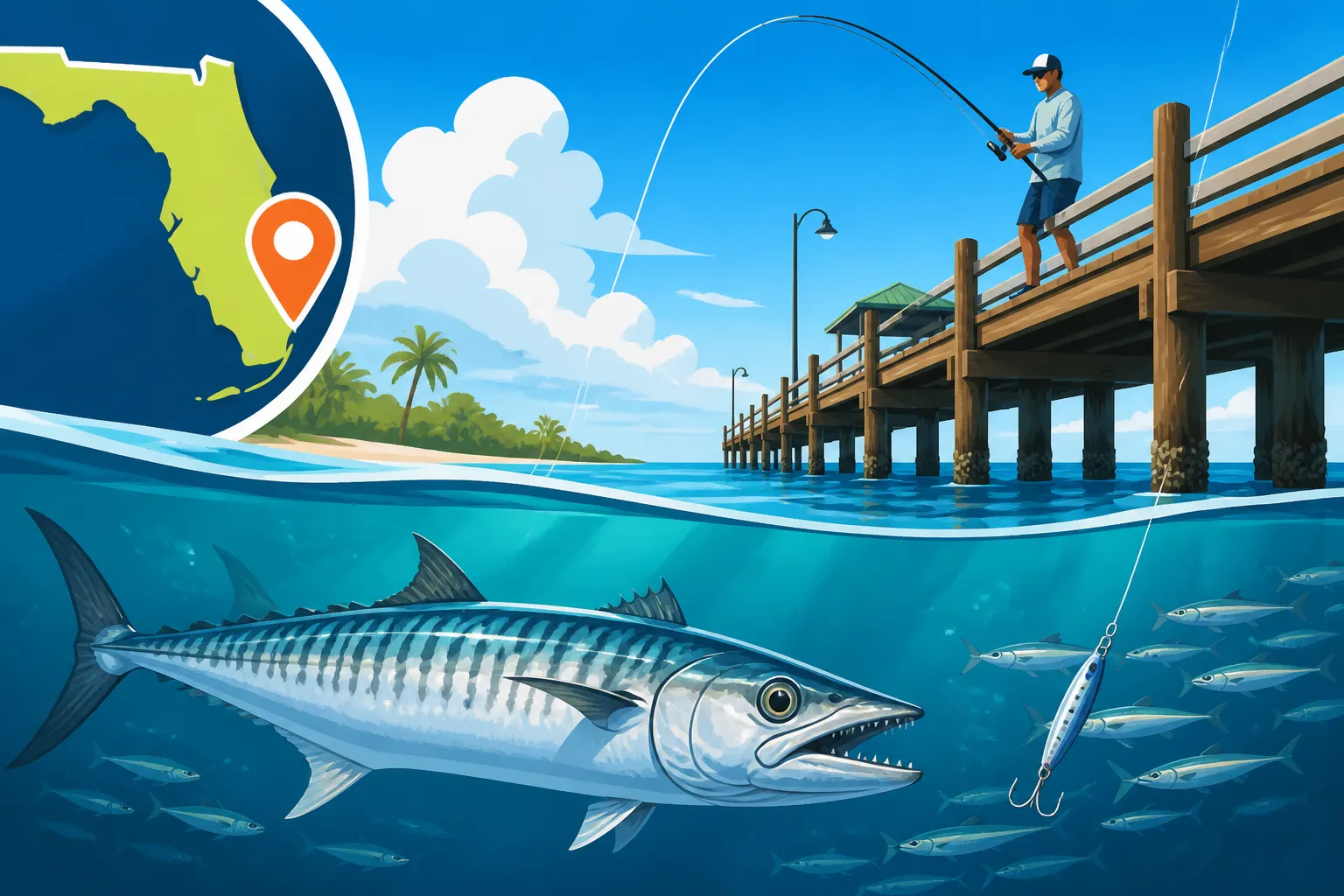
Unlike fishing from the beach, where you're limited to casting into relatively shallow surf, piers give you direct access to deeper water without needing a boat. Many of Florida's prime fishing piers extend hundreds, sometimes thousands, of feet into the ocean, allowing anglers to reach depths and currents typically reserved for offshore vessels. This increased depth is crucial for King Mackerel, which prefer slightly cooler, deeper water, especially during the warmer months.
The pilings and underlying structure of a pier also create a dynamic underwater environment. These structures attract barnacles, algae, and smaller fish, forming an ecosystem that Kings can utilize. They often patrol the edges of the pier, using the shadows and structure as ambush points to surprise passing baitfish. The current flowing around these pilings also creates eddies and upwellings that concentrate bait, making it an even more attractive hunting ground for predatory species. This combination of deep water access and abundant structure makes piers exceptionally productive for targeting King Mackerel, offering a fishing experience that rivals what you might find on a boat.
Top Piers for King Mackerel in Florida
Florida is blessed with an abundance of piers, each with its unique charm and fishing opportunities. However, when it comes to consistently hooking King Mackerel, some piers stand out above the rest due to their location, depth, and track record. Knowing which piers offer the best chances can save you time and greatly increase your success.
Gulf Coast Hotspots
The Gulf Coast of Florida is renowned for its diverse fishery, and several piers here are prime spots for King Mackerel, especially during their spring and fall migrations. The calmer waters of the Gulf, compared to the Atlantic, can sometimes make for a more comfortable pier fishing experience, but don't let that fool you – the kings here fight just as hard!
One of the most iconic locations is the Skyway Fishing Pier State Park in St. Petersburg. This isn't just a pier; it's two repurposed sections of the old Sunshine Skyway Bridge, stretching miles into Tampa Bay and the Gulf of Mexico. Its sheer length and depth provide unparalleled access to migratory patterns. Anglers here regularly target King Mackerel, particularly in the spring (March-May) and fall (September-November), when the baitfish are thick. The deep channels and strong currents around the Skyway are perfect for kings. It's a fantastic spot for anglers who don't have a boat but want to experience serious saltwater action. For those unfamiliar with the regulations, a Florida Saltwater Fishing License Rules guide is essential, although often covered if you're fishing from a dedicated public fishing pier with a blanket license.
Further up the coast, piers in Destin and Panama City Beach are also excellent choices. The Okaloosa Island Pier in Fort Walton Beach and the Russell-Fields Pier in Panama City Beach are well-known for their King Mackerel action. These piers often extend well into the Gulf, accessing deeper water and close to passes where baitfish concentrate. During the late spring and fall, when kings are migrating, anglers frequently use large live baits under balloons or employ Spanish mackerel as cut bait to entice bigger kings. Local tackle shops near these piers are invaluable resources for up-to-the-minute information on bait availability and recent catches.
Atlantic Coast Powerhouses
Florida's Atlantic coast offers a different kind of fishing experience, often characterized by stronger currents and more direct exposure to the open ocean. These conditions can be excellent for King Mackerel, which thrive in active, bait-rich waters.
The Sebastian Inlet State Park Pier in Melbourne Beach is a legendary spot for various species, and King Mackerel are definitely on the menu. The inlet itself is a funnel for baitfish moving between the Indian River Lagoon and the Atlantic, creating a prime feeding ground. While snook get a lot of attention here, kings are regularly caught, especially at the end of the north jetty where deeper water and strong currents prevail. Early mornings and late evenings during the spring and fall migrations are particularly productive. This pier demands heavy tackle and a good understanding of tidal currents, which can be significant. Our guide on Best Time of Year to Fish in Florida might give you an idea of peak seasons across the state.
Another fantastic option is the Juno Beach Pier just north of West Palm Beach. This 990-foot pier reaches out into significant depth, providing access to migrating bait schools and the King Mackerel that follow them. It's a well-maintained pier with amenities, making it a comfortable spot for a long day of fishing. Anglers often set up multiple rods, one for freelining live bait out with a balloon, and another for casting lures or smaller baits for Spanish mackerel, which are often present and can themselves be used as cut bait for kings. The pier hosts several fishing tournaments throughout the year, some specifically targeting King Mackerel, which is a testament to its productivity.
The Fort Pierce City Marina North Jetty (not strictly a pier, but functions similarly for anglers with pier-like access) and the Fort Pierce Inlet State Park South Jetty also provide excellent opportunities. These jetties extend into the dynamic Fort Pierce Inlet, another major conduit for baitfish. While you won't get the same amenities as a dedicated fishing pier, the access to current and deep water can be phenomenal for kings. Anglers need to be mindful of heavy boat traffic in these areas, especially during peak seasons. When considering these spots, it's always a good idea to check local regulations, as Florida Fishing Regulations and Bag Limits can vary, especially for certain species or in specific state park areas.
Essential Techniques and Gear for Pier King Mackerel
Catching King Mackerel from a pier isn't just about luck; it's about employing the right techniques and having the appropriate gear to handle these powerful, fast-moving predators. Kings are known for their incredible speed and razor-sharp teeth, so being prepared is crucial.
The Right Rig for the Fight
When targeting King Mackerel, you need a rig that can withstand their initial blistering run and their sharp teeth. A common mistake many pier anglers make is underestimating the power of these fish. You'll want a medium-heavy to heavy spinning or conventional rod, ideally 7-9 feet long, paired with a reel capable of holding at least 250-300 yards of 20-30 lb monofilament or 30-50 lb braided line. Our guide on Best Rod and Reel Setup for Florida Offshore Fishing offers some excellent insights that can be adapted for pier fishing for these strong species.
For the terminal tackle, a wire leader is absolutely non-negotiable. King Mackerel have mouths full of very sharp, conical teeth designed for slicing through baitfish, and they will easily cut through monofilament or fluorocarbon leader. A good setup typically involves 2-3 feet of 40-80 lb single-strand wire (often called "Kingfish wire") connected to your main line with a swivel. To this, you'll attach a "stinger rig" – this usually consists of a large main hook (like a 4/0-6/0 treble or J-hook) followed by one or two smaller treble "stinger" hooks. The stinger hooks are connected by a short piece of wire (often 10-12 inches) to catch the king if it short-strikes the bait, aiming for the tail. Some anglers prefer to use a single J-hook and simply fish very lively bait, but the stinger rig significantly increases your hook-up ratio. Knowing what pound test line for king mackerel is key to ensuring you're geared up for the battle.
Live Bait is King
While some kings are caught on artificial lures, live bait is overwhelmingly the most effective way to tempt a King Mackerel from a pier. Kings are visual predators, and a frantic, swimming baitfish sends all the right signals. The best live baits mimic their natural forage:
- Menhaden (Pogies): These oily, silver fish are a top choice. They're often found in large schools and can be netted near many piers or purchased from bait shops.
- Cigar Minnows: Another excellent bait, often found offshore but can be netted in certain areas or bought frozen (though live is always better).
- Mullet: Especially finger mullet, are readily available in many Florida waters and are hearty baits that can withstand casting.
- Spanish Mackerel: Small Spanish mackerel caught directly from the pier can be used as live bait for larger kings. This is a bit of a meta-strategy, but it works!
The key is to keep your live bait fresh and lively. A good bait bucket with an aerator is essential. When deploying live bait, many pier anglers use a balloon rig. This involves attaching a balloon to your main line (often with a rubber band or specific clip) a few feet above your wire leader. The balloon drifts your live bait away from the pier, preventing it from swimming back towards the structure and allowing it to cover more water. This method also keeps your bait near the surface, where kings often feed. For detailed information on procuring bait, you might find our article on Best Live Bait for Florida Inshore Fishing quite useful, as many inshore baits can be effective for pier fishing too.
Trolling from a Pier? Think Drifting!
You can't exactly troll from a stationary pier, but you can achieve a similar effect through controlled drifting. The balloon rig mentioned above is one way to present your bait over a wider area. Another common method, especially on longer piers with sufficient wind, is kite fishing. While more involved, a fishing kite can carry your live bait far out from the pier, skipping it enticingly on the surface, which is a deadly presentation for King Mackerel. This mimics how a boat might troll baits at varying depths and distances.
Alternatively, some anglers employ a technique where they cast a weight out as far as possible, then use a "pinfish slide" or "trolley rig." With this method, once your weight is set, you clip your baited line (with a live bait and a kingfish rig) onto the main line and let it slide down to the water or to a specific depth. This allows you to present multiple baits at different distances and depths, covering more of the water column. The trick with any of these methods is to stay engaged, constantly monitoring your line for a strike, and being ready to react instantly when that king decides to hit.
Best Times and Conditions for Pier King Mackerel
Knowing where to fish is only half the battle; knowing when to fish significantly improves your chances. King Mackerel activity on piers is heavily influenced by seasonal migrations, as well as daily factors like tides, wind, and water clarity.
Seasonal Migrations
King Mackerel are warm-water fish, and their presence in Florida's nearshore waters is highly seasonal. Understanding these patterns is crucial for planning a successful pier trip.
- Spring Run (March to May): This is arguably the most exciting time for pier King Mackerel fishing on both coasts. As water temperatures rise, large schools of baitfish move closer to shore, and the kings follow. On the Gulf Coast, this run can be incredibly productive as kings migrate northward. On the Atlantic side, the same holds true, with baitfish schools drawing kings within casting distance of many piers. This period often sees larger "smoker" kings, making it a prime target for trophy anglers.
- Summer Lull (June to August): While kings can still be caught in summer, especially on deeper piers or during early mornings and late evenings, the action generally slows down as many larger kings move further offshore to cooler, deeper waters. Smaller "schoolie" kings might still be present, particularly if there's a strong influx of bait.
- Fall Run (September to November): This is another peak season, often as good as, if not better than, the spring run. As water temperatures begin to cool, baitfish schools once again move close to shore, migrating southward. The kings follow, feeding aggressively to build up reserves for their winter grounds. This period can offer consistent action on both the Gulf and Atlantic coasts, often lasting well into November if the weather remains mild.
To truly dial in your timing, check out our dedicated guide on Best Month to Catch King Mackerel in Florida, which breaks down the seasonal opportunities in more detail.
Tides, Wind, and Water Clarity
Beyond the general seasons, daily conditions play a massive role in King Mackerel activity on piers. Paying attention to these factors can turn a slow day into a banner one.
- Tides: Moving water is almost always better for King Mackerel. A strong incoming or outgoing tide creates current, which stimulates baitfish movement and concentrates them, making them easier targets for kings. Slack tide, when the water is still, is generally the least productive time. Look for periods around the peak of the tide (high or low) when the current is strongest. The flow of water around the pier pilings will be more pronounced, creating those essential ambush points. Understanding how to read How to Read a Tide Chart for Fishing is an invaluable skill for any pier angler.
- Wind: A moderate wind can be your friend, especially if it's blowing offshore (away from the pier). This helps carry your balloon rigs and live baits further out, covering more ground and keeping your bait away from the pier structure itself. However, too much wind can make casting difficult and create uncomfortable conditions. A strong onshore wind can also push sargassum or other debris against the pier, making fishing challenging.
- Water Clarity: King Mackerel are sight feeders, so clear or slightly stained water is generally preferred. While they can still hit in murky water, their hunting efficiency is reduced. If the water is chocolate milk-colored after a storm or due to heavy runoff, kings might move out until it clears. Look for water that has a greenish or bluish tint, indicating cleaner, more open-ocean conditions.
Combining seasonal knowledge with daily environmental factors will significantly boost your chances of landing a King Mackerel from a Florida pier. It's all about understanding their behavior and presenting your bait in the most appealing way under the right conditions.
Pier Etiquette and Safety Considerations
Pier fishing for King Mackerel can be an exhilarating experience, but it often involves sharing limited space with many other anglers. To ensure everyone has a safe and enjoyable time, it's essential to practice good pier etiquette and be mindful of safety, especially when dealing with large, toothy fish.
Respecting Fellow Anglers
One of the biggest challenges on a busy fishing pier is managing lines and maintaining personal space. When fishing for Kings, you're often deploying large baits and potentially using balloon rigs that drift your line a considerable distance. This can easily interfere with other anglers if not managed carefully.
Always be aware of who is fishing around you and what they are doing. Before casting out a balloon rig, communicate with anglers up-current and down-current from you to avoid tangles. If you hook a large king, it will likely make a long, powerful run that could cross other lines. Politely alert nearby anglers, yelling "fish on!" or "kingfish!" so they can reel in their lines or clear the way. Be prepared to move along the pier if necessary to follow your fish, but always do so with consideration for others. Similarly, when retrieving your bait, try to do so in a way that minimizes disturbance. Having a dedicated space for your tackle, cooler, and other gear, without sprawling out, helps keep the pier accessible for everyone. Many larger piers, such as those that can be found via a search like Best Piers for Fishing Without a Boat, often have designated areas or unwritten rules about where to set up for specific types of fishing.
Gear Management and Safety
Landing a King Mackerel from a pier involves specialized equipment and a degree of caution. These fish are powerful, can pull extremely hard, and have mouths full of dangerous teeth.
When a King Mackerel is at the pier, you’ll typically need a long-handled gaff to lift it out of the water. Make sure your gaff is in good condition and that you know how to use it safely. If you’re not comfortable gaffing a fish, ask a more experienced angler for help. Never try to hand-line a thrashing king onto the pier – that's a recipe for injury. Once the fish is on the pier, immediately subdue it. A sharp knock to the head can dispatch it quickly and humanely, making it safer to handle. Use long-nosed pliers or a dehooker to remove hooks, and a jaw spreader can be helpful to keep its mouth open while you work.
Always keep your area clear of loose line, hooks, and other tripping hazards. A large fish thrashing on a cluttered pier is a dangerous situation. Be especially cautious of the king's teeth, even after it's been subdued. It’s a good idea to wear protective gloves when handling them. Finally, remember to dispose of any unwanted bait, fish carcasses, or trash properly in designated receptacles. Keeping the pier clean ensures a pleasant environment for all users and for the wildlife that calls these waters home. For more localized information on how to find guides for various fishing experiences, even near piers, consider checking resources like FishingBooker to learn about local captains' approaches to handling different species.
Disclaimer
Please note that fishing regulations, seasons, and licensing requirements can change. Always consult the latest Florida Fish and Wildlife Conservation Commission (FWC) guidelines before planning your fishing trip. This guide is for informational purposes only and does not constitute official legal advice.