Do You Need a License to Fish a Private Pond in Florida?
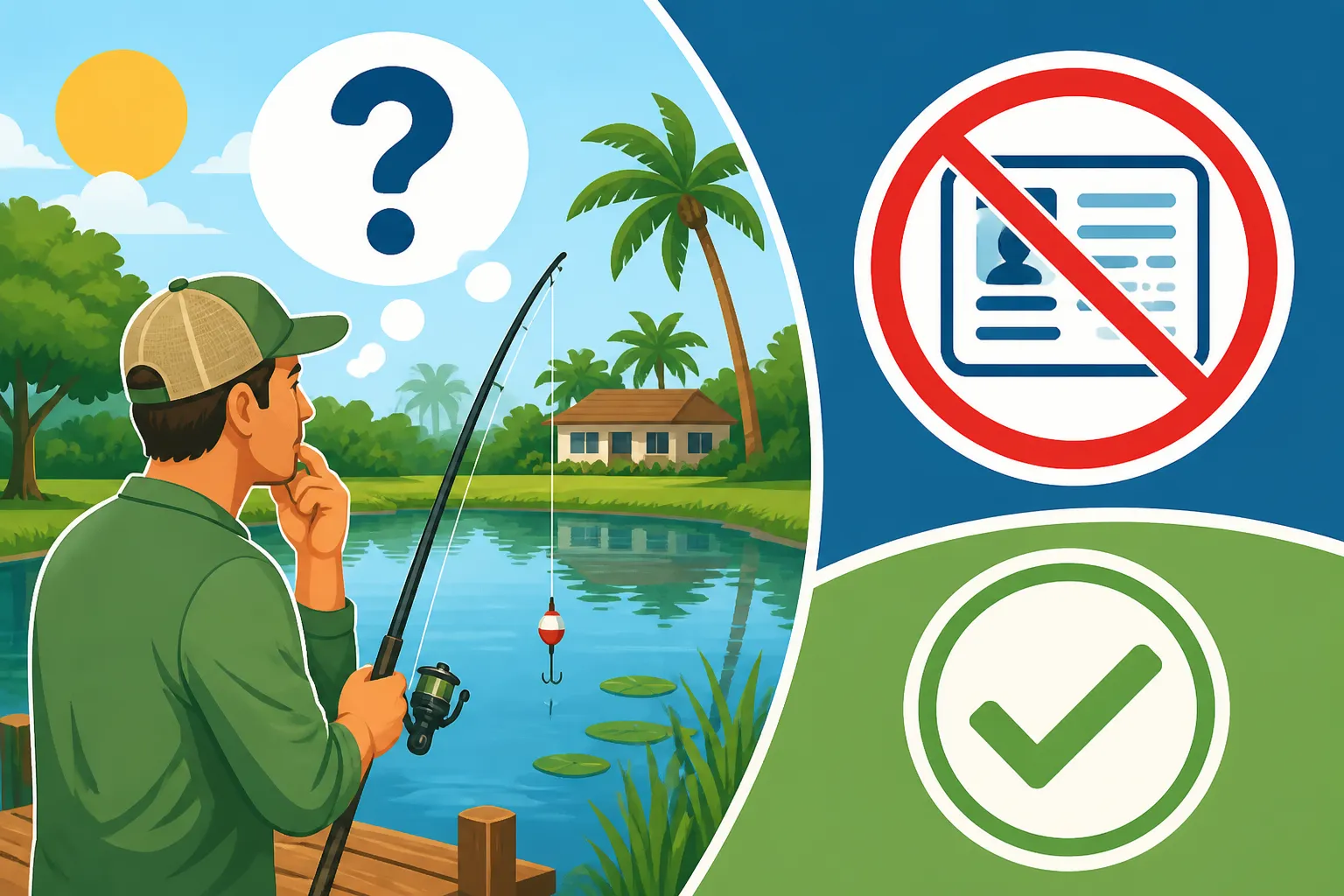
There’s a common misconception that if a body of water is on private property, you automatically don't need a fishing license to cast a line. While that can be true in Florida, it's not a blanket rule, and getting it wrong can lead to unexpected fines and a ruined day of fishing. This guide will clarify the ins and outs of Florida's fishing license requirements for private ponds, helping you avoid legal hassles and fish with peace of mind.
The Core Question: Is a License Required for Private Pond Fishing?
Many anglers, especially those new to Florida, assume "private" means "exempt." It's an understandable assumption, but the reality is a little more nuanced. Florida's fishing regulations are designed to protect and manage fish populations across the state, and that includes waters that might seem private but are actually interconnected with larger public systems. The key lies in understanding what the Florida Fish and Wildlife Conservation Commission (FWC) defines as a "private pond" for licensing purposes.
Differentiating True Private Ponds from Public Waters
The FWC's definition of a truly private pond is very specific. It's not just about the pond being located on private land. The critical factor is whether the water body is "wholly within" the boundaries of private property and has absolutely no connection, either natural or man-made, to any public waters. Think of it like this: if a fish can swim from a public lake or canal into the pond, or vice-versa, then that pond is generally considered part of the public fishery.
For example, a small, man-made pond in your backyard that you filled with a hose and stocked yourself, with no inlet or outlet, would typically be considered private. However, a beautiful lake in a gated community, while on private land, might be fed by a natural spring or have a culvert connecting it to a larger canal system. In that second scenario, it's no longer considered "wholly within" and is treated as public water for fishing license purposes. This distinction is often a source of frustration and confusion for residents and visitors alike, but it's central to conservation efforts.
The "Wholly Within" Rule
Let's dive a bit deeper into what "wholly within" truly means according to the FWC. For a pond to be exempt from fishing license requirements, it must meet these strict criteria:
- Entirely Self-Contained: The pond must be completely enclosed by privately owned land. No part of it, including its shoreline, can touch or cross a public boundary.
- No Connection to Public Waters: This is the big one. There can be no direct or indirect connection to any natural or artificial public waterbody. This includes rivers, streams, canals, lakes, or even drainage ditches that eventually lead to public waters. If water flows in or out, carrying fish with it, then it's not "wholly within."
- Owned and Operated by a Single Entity or Group: The pond typically needs to be under the ownership or lease of a single individual, family, or a defined private entity like a homeowner's association, where fishing access is controlled.
Consider a retention pond in a new housing development. While it's on private property, these ponds are almost always designed with drainage systems that connect to other retention ponds, canals, or larger storm drains that eventually lead to rivers or the ocean. In such cases, these are not considered private ponds in the FWC's eyes, and fishing them would require a license. This is a common trap many anglers fall into. For more specific details, our guide on Florida Private Pond and Farm Pond Fishing Rules offers a deeper dive.
Understanding Exemptions and Gray Areas
It's easy to look at a beautiful, serene pond nestled amongst palm trees and think, "This must be private." But as we've discussed, the water's true status isn't always obvious. Florida has a unique hydrology, with an intricate network of wetlands, canals, and underground connections, making the "wholly within" rule more complex than it might appear.
When No License is Needed
So, when can you truly fish without a license in a private pond in Florida? It boils down to those explicit FWC conditions. If the pond is:
- Completely isolated from any natural or man-made public water system.
- Located entirely within the boundaries of private land.
- Where the fish population is predominantly stocked by the owner and not naturally occurring migratory species from public waters.
In these rare, truly self-contained scenarios, you can enjoy a day of fishing without needing a Florida Fishing License Guide. However, it's crucial to remember that even then, you always need permission from the property owner. Trespassing is an entirely separate legal issue, and showing up with your rod and reel uninvited is a surefire way to get into trouble.
What Happens If There's a Connection?
If that "private pond" has any sort of connection to public waters, even a seasonal overflow or a culvert hidden by vegetation, it's generally treated as public water. This means all standard Florida Freshwater Fishing License Rules apply. This is where most people get caught out.
Think about the thousands of golf course ponds, community retention ponds, or even decorative lakes in large estates across Florida. Many of these appear isolated but are designed to manage water flow and are often part of larger drainage basins. If these ponds connect to a canal, creek, or even a swamp that eventually drains into a river or lake, then fishing them requires a valid Florida fishing license. The FWC considers the fish in these interconnected systems to be part of the state's managed resources, and therefore, a license is necessary to harvest them. The onus is on the angler to verify the status of the water body before casting a line. For information on who specifically needs a license, check out Who Needs a Fishing License in Florida.
Here's a quick reference table to help clarify:
| Pond Characteristic | License Required? | Why? |
|---|---|---|
| Wholly within private property, no public connection | No | Considered truly private, fish stocked by owner, not part of public fisheries. |
| On private property, but connects to public waters | Yes | The water and fish are considered part of the public fishery, subject to state management and conservation efforts. Includes canals, rivers, lakes, even large drainage systems. |
| Golf course pond with drainage system | Yes | Almost always connected to a larger drainage network that leads to public waters. |
| Community retention pond | Yes | Designed to manage stormwater, typically with inlets/outlets connecting to other systems. |
| Farm pond used for agricultural purposes | Sometimes | If truly isolated and self-contained, no. If connected to irrigation ditches that lead to public waters, yes. Always verify! |
Practical Advice and Double-Checking
Navigating the nuances of private pond fishing licenses can feel like a maze, but there are practical steps you can take to ensure you're always on the right side of the law. It's better to spend a few minutes verifying than to face a fine or have your gear confiscated.
How to Verify Pond Status
The best way to know for sure if a particular pond is truly exempt from licensing requirements is to check directly with the source.
- Contact the Florida Fish and Wildlife Conservation Commission (FWC): This is your most reliable resource. You can often find regional FWC offices or contact numbers on their official website. Provide them with the exact location of the pond (address, GPS coordinates, or clear landmarks), and they can usually clarify its status. They are there to help clarify these regulations.
- Ask the Property Owner for Documentation: If you're fishing a pond on private land with permission, ask the owner if they have any documentation or have already checked with the FWC regarding its status. A responsible property owner who allows fishing should be aware of these rules.
- Consult Local Experts: Sometimes, a knowledgeable local bait and tackle shop, like one of the many Bass Pro Shops or independent tackle stores you find scattered throughout Florida, can offer insights into local water bodies. While not official, they often know the common pitfalls in their area regarding specific ponds. Just remember, their advice isn't legally binding, so always back it up with official FWC information if there's any doubt.
- Review Maps and Satellite Imagery: Before you even get to the FWC, you can do some preliminary research using online mapping tools. Look for visible inlets, outlets, or connections to other water bodies. While not definitive, it can give you a strong indication.
When in doubt, always err on the side of caution and assume a license is required. It's much simpler to get a license than to deal with the repercussions of not having one. You can easily purchase a Florida Fishing License Online or check the Florida GoOutdoors App Fishing License for convenience.
Essential Gear for Pond Fishing
Even if you're lucky enough to find a truly private, license-exempt pond, you still need the right gear to make your fishing trip successful and enjoyable. Pond fishing, especially for species like largemouth bass or panfish, requires different approaches than saltwater or big lake fishing.
- Rods and Reels: For most ponds, a medium-light to medium action spinning rod and reel combo is perfect. It's versatile enough for smaller panfish but can handle a decent-sized bass. You don't need heavy offshore gear here.
- Line: A 6-10 lb monofilament or braided line is usually sufficient. If you're targeting bigger bass in thick cover, you might bump it up a bit.
- Hooks and Sinkers: A selection of small to medium hooks (sizes 2-6 for panfish, 1/0 to 3/0 for bass) and a few split shot sinkers will cover most situations.
- Bait and Lures: Live worms, crickets, or small shiners are deadly for almost any pond fish. For lures, consider soft plastic worms, small crankbaits, spinnerbaits, or topwater poppers for bass. These can easily be found on Amazon, where you can stock up your tackle box. For specific lure recommendations, check out our guide on Best Lures for Florida Bass Fishing.
- Terminal Tackle: Don't forget swivels, leader material (fluorocarbon is great for finesse fishing), and a pair of pliers for hook removal. You can find excellent multi-tool fishing pliers on Amazon that will serve you well.
- Comfort and Safety: Sun protection is key in Florida! A wide-brimmed hat, sunglasses (polarized ones, also available on Amazon, help you see into the water), and plenty of sunscreen are non-negotiable. Bring water, snacks, and a small cooler to keep your catch fresh if you plan to keep any. A basic first-aid kit is always a good idea too.
Having the right equipment ensures you're prepared, whether the fish are biting or not.
The Risks of Getting It Wrong
Ignoring fishing regulations, even unintentionally, can lead to serious consequences. The FWC takes conservation and compliance very seriously, and they routinely patrol both public and seemingly private waters. It's simply not worth the risk to fish without proper verification.
Penalties for Fishing Without a License
If you're caught fishing without a valid license in Florida where one is required, you could face:
- Fines: The most common penalty is a monetary fine, which can vary depending on whether it's your first offense and the specific circumstances. These fines can quickly add up and are far more expensive than the cost of a Florida Fishing License Costs and Fees.
- Confiscation of Gear: In some cases, FWC officers may confiscate your fishing equipment, including rods, reels, and tackle. This is a significant loss on top of any fines.
- Criminal Charges: While rare for a first-time, simple license violation, repeat offenses or fishing in protected areas could lead to more severe penalties, including misdemeanor charges. Our article on What Happens If You Fish Without a License provides more detail on these repercussions.
- Embarrassment and Lost Fishing Time: Beyond the legal and financial aspects, getting cited can be embarrassing and certainly puts a damper on your day outdoors. It's a preventable situation by simply being informed and prepared.
Remember, FWC officers are highly trained law enforcement professionals. They are polite but firm, and they are doing their job to protect Florida's valuable natural resources. Arguing or being uncooperative will only worsen the situation.
Other Regulations to Consider
Even in a truly private, license-exempt pond, simply having the property owner's permission isn't the end of the story. There are still other regulations and ethical considerations to keep in mind:
- Bag and Size Limits: While "private" ponds might seem like a free-for-all, if they connect to public waters, then state Florida Fishing Regulations and Bag Limits regarding species, size, and bag limits will apply. Even if it's truly private and stocked by the owner, responsible fishing practices, such as not overharvesting, are always recommended to maintain a healthy fish population.
- Property Owner's Rules: The property owner might have their own specific rules, such as catch-and-release only, specific bait restrictions, or designated fishing areas. Always respect these rules.
- Environmental Concerns: Be mindful of local environmental advisories. Some ponds, even private ones, might have issues with water quality, harmful algae blooms, or fish consumption advisories. These advisories are often issued by local health departments and should be heeded regardless of the pond's license status.
- Aquatic Plant Management: Never introduce non-native fish or aquatic plants into a pond without proper research and permission, even a private one. Invasive species can quickly spread and devastate local ecosystems once they find a way into public waters.
By understanding these distinctions and doing your due diligence, you can enjoy the fantastic fishing opportunities that Florida offers, whether it's in a vast public lake or a quiet, truly private pond.
Disclaimer
The information provided in this guide is for general informational purposes only and does not constitute legal advice. Fishing regulations in Florida can change, and specific interpretations may vary. Always consult the most current regulations directly from the Florida Fish and Wildlife Conservation Commission (FWC) or a legal professional for definitive guidance before engaging in any fishing activities.