Florida Red Snapper Season Guide
The dream of hooking into a powerful Florida Red Snapper is one many anglers share, but the reality of their fishing season can often feel like navigating a complex maze. With constantly shifting dates, different rules for state and federal waters, and strict bag limits, it's easy to get frustrated and even risk a hefty fine. This comprehensive guide is here to untangle all those complexities, breaking down everything you need to know about Florida's Red Snapper season in both the Gulf and Atlantic, ensuring you're well-informed and ready to responsibly target this prized game fish.
Understanding the Allure of Florida Red Snapper
For many anglers, the red snapper isn't just another fish; it's a symbol of deep-sea adventure and a testament to skill. Its vibrant red hue, impressive fighting power, and delectable taste make it one of the most sought-after species in Florida waters. But what exactly is it about the red snapper that holds such a strong appeal?
Why Red Snapper are a Prized Catch
First off, there's the sheer thrill of the fight. When a red snapper hits your line, especially a larger one, you know you're in for a battle. They pull hard, using their broad, flat bodies to create immense resistance, often trying to dive back into the reef structure they call home. This powerful, head-shaking struggle is incredibly rewarding for anglers, pushing their gear and their technique to the limit. The anticipation of that first strong tug on a deep line is what keeps many of us coming back for more, year after year.
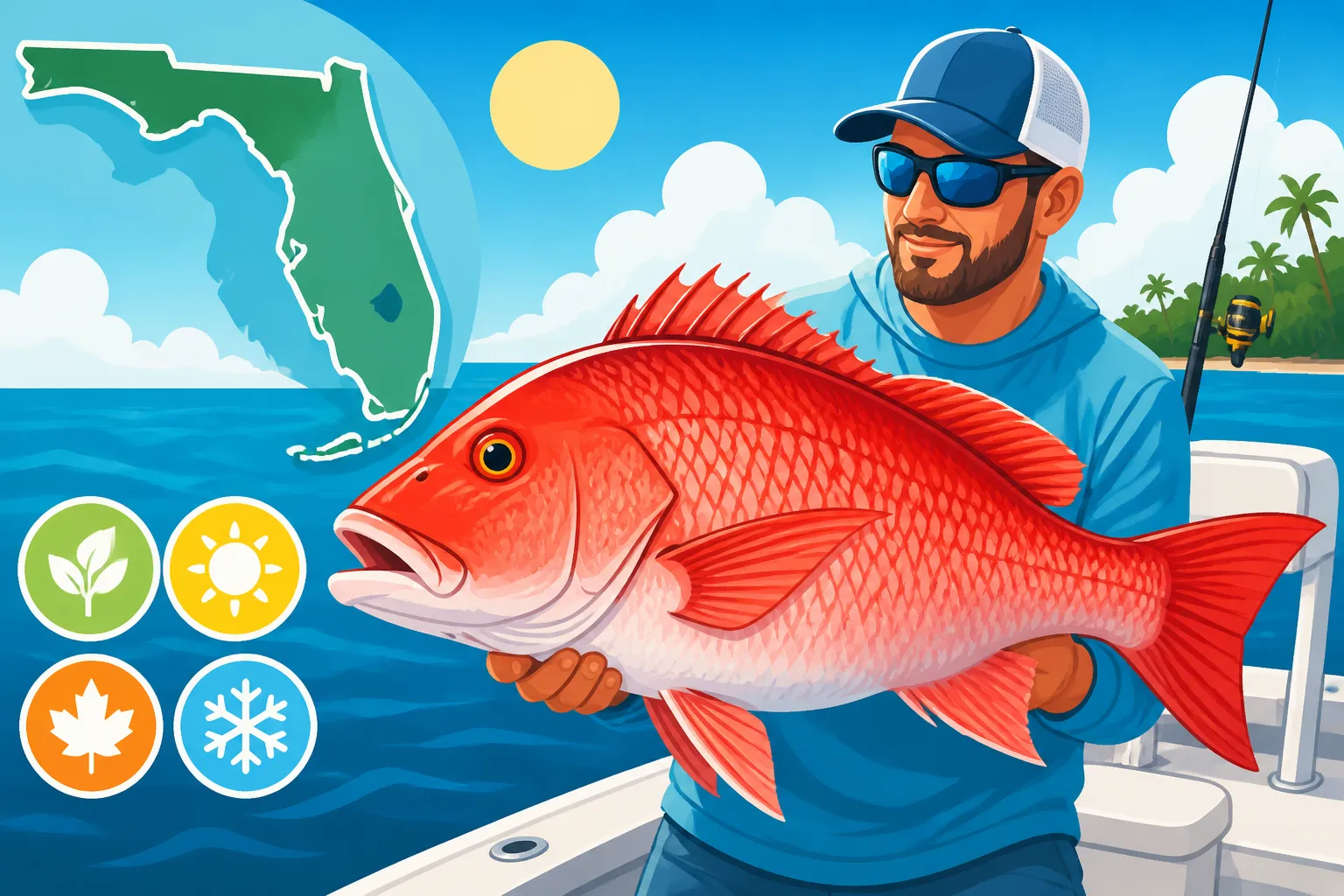
Beyond the fight, their aesthetic appeal is undeniable. With their striking red to reddish-pink scales, often with a silvery belly, and large, piercing eyes, they are truly beautiful fish. Landing a healthy red snapper and seeing its vibrant colors come alive in the sunlight is a moment of pride for any angler. And of course, we can't forget the table fare. Red snapper is widely considered one of the finest eating fish in the ocean. Its firm, white, flaky meat with a mild, sweet flavor is highly prized by chefs and home cooks alike. Whether grilled, baked, or fried, a freshly caught red snapper makes for an unforgettable meal, making all the effort of a deep-sea trip completely worthwhile. They really are the full package: a challenge to catch, beautiful to behold, and delicious to eat.
The Challenge of Red Snapper Fishing
While the rewards are great, catching red snapper is far from easy, presenting a unique set of challenges that add to their mystique. Primarily, red snapper are deep-water dwellers, often found anywhere from 50 to 300 feet down, sometimes even deeper. This means you can't just cast a line from the shore; you need a capable boat equipped with specialized gear for deep dropping. Finding the right spots, typically wrecks, reefs, and ledges where they congregate, requires good sonar and an understanding of underwater topography. Even with the best electronics, pinpointing those productive structures and staying on top of them can be tricky, especially with currents and wind.
Then there's the gear itself. You need robust rods and reels capable of handling heavy weights and powerful fish. Forget your light inshore setup; this is heavy-duty work. The conditions offshore also play a significant role. Good weather windows are essential for safe and comfortable deep-sea fishing, and these windows don't always align perfectly with the often-short and unpredictable red snapper seasons. Furthermore, the strict regulations, including short seasons and precise size and bag limits, mean every fish you bring to the boat counts. Missing the season by even a day or misidentifying your catch can lead to disappointment or, worse, legal trouble. It’s a pursuit that demands patience, knowledge, the right equipment, and often, a bit of luck.
Decoding Florida's Red Snapper Season: A Complex Dance
If you've ever tried to pin down Florida's red snapper season dates, you've likely experienced a headache or two. It's not as simple as checking a calendar; it's a dynamic system influenced by biology, economics, and politics, resulting in a management structure that can feel incredibly complicated.
State vs. Federal Waters: A Critical Distinction
One of the biggest sources of confusion for anglers targeting red snapper in Florida is the critical distinction between state and federal waters. This isn't just a line on a map; it dictates which governing body's rules you must follow, and those rules can be vastly different. In Florida, state waters extend out to nine nautical miles in the Gulf of Mexico and three nautical miles in the Atlantic Ocean. Beyond those boundaries lie federal waters.
Why does this matter so much for red snapper? Because state waters are managed by the Florida Fish and Wildlife Conservation Commission (FWC), while federal waters are managed by regional councils – the Gulf of Mexico Fishery Management Council (GMFMC) for the Gulf and the South Atlantic Fishery Management Council (SAFMC) for the Atlantic – and then implemented by NOAA Fisheries. These different entities often have different stock assessments, different management goals, and therefore, different season dates and regulations. For instance, the FWC might open a red snapper season in state waters even if federal waters are closed, or vice-versa, though typically efforts are made to align them to reduce confusion. Understanding where you are fishing is paramount, as accidentally crossing into federal waters with state-compliant fish during a federal closure can result in significant penalties. Familiarizing yourself with resources like the FWC's website and NOAA Fisheries announcements is essential to ensure you're in compliance. For a deeper dive into these boundaries, you can check out our guide on State Waters vs Federal Waters Fishing Rules in Florida.
Annual Variability in Season Dates
The frustrating truth about Florida's red snapper season is that the dates are rarely the same from one year to the next. This annual variability is a direct consequence of adaptive fishery management, which aims to ensure the long-term health of the red snapper population. Unlike some other species with fixed seasons, red snapper seasons are often set based on annual stock assessments, which evaluate the current population size, reproduction rates, and mortality. If the stock assessment indicates a healthier population, managers might allocate a slightly longer season or a larger quota. Conversely, if the population is struggling or previous year's catch limits were exceeded, the season might be shortened drastically or even closed for a year.
This process involves a complex dance of data collection, scientific modeling, public input, and council meetings. The uncertainty means that anglers can't just assume previous years' dates will hold true. You need to be proactive and constantly check official sources like the FWC and the regional fishery councils for the most up-to-date information. It’s a system designed for sustainability, but it can certainly be challenging for anglers trying to plan their trips well in advance, leading to last-minute adjustments and sometimes disappointment. The best advice is to remain flexible and always verify the current season dates right before you head out.
The Science Behind Season Setting
Behind the sometimes-frustrating variability of red snapper seasons lies a rigorous scientific process, driven by the need for sustainable fisheries management. It all starts with stock assessments, which are comprehensive scientific evaluations of a fish population's health. Biologists analyze data on catch rates, fishing effort, fish age and size, reproductive success, and environmental factors. This information is then fed into complex models to estimate the current population size, how many fish are being caught, and what the future trends might look like.
Once the stock assessment provides a scientific basis, fishery managers at the FWC and the federal councils (Gulf and South Atlantic) propose annual catch limits (ACLs) based on what the stock can sustainably support. These ACLs are then divided into recreational and commercial quotas. For the recreational sector, the quota is translated into season length, bag limits, and minimum size requirements. The goal is to set regulations that allow anglers to harvest a portion of the stock while ensuring enough fish remain to reproduce and maintain a healthy population for future generations. It’s a balancing act, and a slight miscalculation or unforeseen event (like a major fish kill or an unexpected surge in fishing effort) can lead to adjustments in subsequent seasons. Understanding this scientific foundation helps to appreciate why the seasons are often so precise and subject to change, all in the name of long-term conservation. To understand this process more fully, consider reading our guide on How NOAA Sets Florida's Red Snapper Season Length.
Gulf of Mexico Red Snapper Season Specifics
When most people think of Florida red snapper fishing, they're usually picturing the Gulf of Mexico. This is where the largest and often most consistent red snapper fishery exists, though "consistent" in this context still means highly managed and variable.
Recreational Angler Season Dates and Expectations
For recreational anglers in Florida, the Gulf of Mexico red snapper season is usually the highlight of the summer, but it's often a short window, making every day count. The FWC typically announces the state waters season (extending nine miles offshore) and often coordinates with federal partners to announce the federal waters season at the same time. While dates shift annually, a common pattern has been a season opening in June and potentially extending through July, though sometimes it's just a few weekends or a couple of weeks total. For example, in 2024, Florida's Gulf state waters, and by extension, federal waters, were open for recreational harvest on specific dates throughout June and July. It's crucial to check the FWC website or the MyFWC app immediately before planning your trip, as these dates are finalized and published close to the season opening. This emphasis on checking current regulations is vital because exceeding catch limits or fishing outside the open season can lead to severe fines and penalties. For the very latest information, always refer to the official Florida Red Snapper Season Guide put out by the FWC.
For-Hire Charter and Headboat Season Details
The season for federally permitted for-hire charter and headboat operations in the Gulf of Mexico often operates on a separate schedule from private recreational anglers. This distinction is made because the for-hire fleet is managed under a different federal quota system. Historically, their season might open earlier or run for a longer duration compared to the private recreational season, sometimes spanning several months. This allows charter captains and headboats, which are critical to the fishing economy, to have a more predictable operating window.
These vessels operate under strict federal permits and are required to report their catches, which provides valuable data for fishery managers. Anglers fishing on a charter or headboat generally don't need their own individual federal permits, as the vessel's permit covers them. However, it's still essential to ensure the charter you book is properly licensed and operating within the current regulations for the for-hire sector. Always confirm the captain's credentials and their understanding of the current federal red snapper season for charter boats. You can learn more about these requirements by reading our Florida Charter Boat Fishing License Rules guide.
Regional Variations Within the Gulf
While the federal recreational red snapper season dates are generally uniform across the entire Gulf of Mexico (federal waters off Florida, Alabama, Mississippi, Louisiana, and Texas), there can occasionally be subtle regional variations, particularly concerning Florida's state waters. The FWC has the authority to manage state waters, and while they often align their season with federal guidelines to simplify things for anglers, they can implement specific rules.
For instance, there might be particular management zones or areas where unique circumstances lead to slightly different opening or closing dates within the nine-mile state water boundary. This is less common for the broader recreational red snapper season but important to be aware of. Anglers fishing in state waters should always check Florida-specific FWC regulations, especially if they are fishing close to the state water line or in areas like the Florida Panhandle versus the Southwest Florida coast. While rare, a quick check ensures you're not caught off guard by a hyper-local rule.
Atlantic Ocean Red Snapper Season Specifics
While the Gulf Coast boasts a more robust red snapper fishery, the Atlantic coast of Florida also has a red snapper population, though its management and seasons present a very different picture.
The Infamously Short Atlantic Season
The Atlantic Ocean red snapper season for Florida is notoriously brief, if it opens at all, for recreational anglers. Unlike the Gulf, where seasons, though short, are a relatively regular occurrence, the Atlantic recreational season has been characterized by either complete closures or extremely limited openings, sometimes for only a few days over several years. For example, recent years might have seen a total of just two or three days of recreational red snapper harvest, usually over a summer weekend. In some years, there's no recreational season at all, a stark contrast to the Gulf.
This brevity stems from a history of overfishing and a much slower population recovery. The Atlantic red snapper stock has faced significant challenges, and fishery managers have taken a highly conservative approach to rebuild it. The South Atlantic Fishery Management Council (SAFMC) sets the quotas for the Atlantic, and these quotas are often very small for the recreational sector, leading to extremely short seasons to ensure the limit isn't exceeded. This means if you want to target Atlantic red snapper, you need to be constantly vigilant for announcements and prepared to drop everything for a very narrow window.
Managing a Recovering Population
The reason for these stringent regulations and the frustratingly short seasons in the Atlantic is a long-term commitment to managing a recovering red snapper population. Decades ago, the Atlantic red snapper stock was severely overfished, leading to concerns about its viability. Since then, aggressive conservation measures have been put in place, including severe catch limits and extended closures, to allow the population to rebound.
The South Atlantic Fishery Management Council, in conjunction with NOAA Fisheries, carefully monitors the stock's progress through ongoing assessments. While there have been signs of recovery, the population is still not at the healthy levels seen in the Gulf, meaning a cautious approach remains necessary. Every fish caught contributes to the annual quota, and exceeding that quota could jeopardize the recovery efforts and lead to even longer closures in the future. It's a testament to the long-term vision of conservation, even if it means short-term sacrifices for anglers. The hope is that with continued disciplined management, the Atlantic red snapper population will one day support more consistent fishing opportunities. This delicate balance truly highlights Why Atlantic Red Snapper Season Differs From Gulf Season so significantly from its Gulf counterpart.
How Atlantic Seasons are Announced
Given the extremely limited nature of the Atlantic red snapper season, staying informed about opening dates is absolutely critical. These seasons are typically announced by the South Atlantic Fishery Management Council (SAFMC) and then officially implemented by NOAA Fisheries. Unlike the FWC, which primarily handles state waters, these federal agencies are the authoritative sources for Atlantic federal waters, which extend beyond three nautical miles from Florida's Atlantic coast.
Announcements are usually made through press releases, public notices, and updates on their respective websites. Because the season might literally be only a day or two, these notices often come with short lead times, sometimes just a few weeks or even less before the opening. Anglers with a keen interest in Atlantic red snapper should regularly check the SAFMC website and the NOAA Fisheries Southeast Regional Office's website. Subscribing to their email alerts or following their social media channels can also be an effective way to receive timely notifications. Without this proactive approach, it's very easy to miss the season entirely.
Essential Regulations Beyond Season Dates
Beyond knowing when you can fish for red snapper, understanding how you can fish for them is equally crucial. Florida and federal agencies have a robust set of regulations designed to protect the species and ensure fair recreational harvest.
Size and Bag Limits for Red Snapper
Once you've navigated the tricky season dates, you'll still need to adhere to specific size and bag limits, which are designed to allow fish to reach maturity and contribute to the spawning population before being harvested. These limits can vary between the Gulf and Atlantic, and sometimes even within state and federal waters, so always verify the exact regulations for your specific fishing location.
For the Gulf of Mexico, recreational anglers typically face a minimum size limit of 16 inches total length and a bag limit of two red snapper per person per day. This means any fish shorter than 16 inches must be immediately released. For the Atlantic Ocean, due to the more fragile stock, the regulations are often stricter, with a minimum size limit frequently set at 20 inches total length and a bag limit of one red snapper per person per day. It’s imperative to measure your fish accurately from the tip of the snout to the end of the tail (total length) and ensure you don't exceed the per-person bag limit. These limits are non-negotiable and are strictly enforced by law enforcement agencies. Always consult the FWC's official publications for the most current Florida Red Snapper Minimum Size and Florida Fishing Regulations and Bag Limits.
Required Gear for Responsible Angling
Beyond your rod and reel, certain pieces of gear are not just recommended but often legally required when fishing for reef fish like red snapper. These tools are essential for the responsible and ethical release of fish, particularly those caught in deep water.
Dehooking Tools: A non-stainless steel dehooking device, at least 16 inches long for recreational vessels, is mandatory when fishing for reef fish in federal waters. This tool allows you to safely remove hooks from fish, especially undersized or non-target species, without handling them directly. This minimizes stress and injury to the fish, significantly increasing their survival chances.
Venting Tools: When bringing fish up from deep water, they often suffer from barotrauma—a condition caused by the rapid expansion of gases in their swim bladder as they ascend. This can make it difficult for fish to swim back down, leaving them vulnerable to predators or environmental stress. A venting tool (a hollow, sharpened instrument) is used to safely puncture the swim bladder and release the excess gas, allowing the fish to swim back down to depth. Like dehooking tools, it's often legally required to have a functional venting tool on board when fishing for reef fish in federal waters. Proper use of these tools is crucial, and it’s a good idea to familiarize yourself with their operation before you hit the water. Anglers can easily find FWC-approved dehooking and venting tools on sites like Amazon, ensuring they are compliant and prepared for safe releases.
Special Permits and Reporting
For red snapper, and other reef fish, there are a few additional requirements that anglers might encounter. One important designation for those fishing in the Gulf of Mexico is the "State Reef Fish Angler" designation. If you intend to harvest certain reef fish species, including red snapper, in Florida's Gulf waters (state or federal), you typically need to obtain this designation, which is free and can be added to your Florida Saltwater Fishing License Rules. This helps the FWC collect crucial data on recreational catch and effort, contributing to better management decisions.
Furthermore, some federally permitted charter boats are required to adhere to specific reporting requirements, logging their catch data to NOAA Fisheries. While this isn't a direct responsibility of the recreational angler, it's part of the comprehensive management system. Always ask your charter captain if they are federally permitted for reef fish and if they comply with all reporting. This ensures that the data used for future season settings is as accurate as possible. Staying informed about these nuances is part of being a responsible angler in Florida's highly managed fisheries.
Maximizing Your Chances During Red Snapper Season
With the season often being so short, every moment on the water counts. Maximizing your chances of landing a legal red snapper requires strategy, the right bait, and knowing where to look.
Best Baits and Lures for Red Snapper
Red snapper are opportunistic feeders, but some baits and lures consistently outperform others. Choosing the right presentation can make all the difference in a short season.
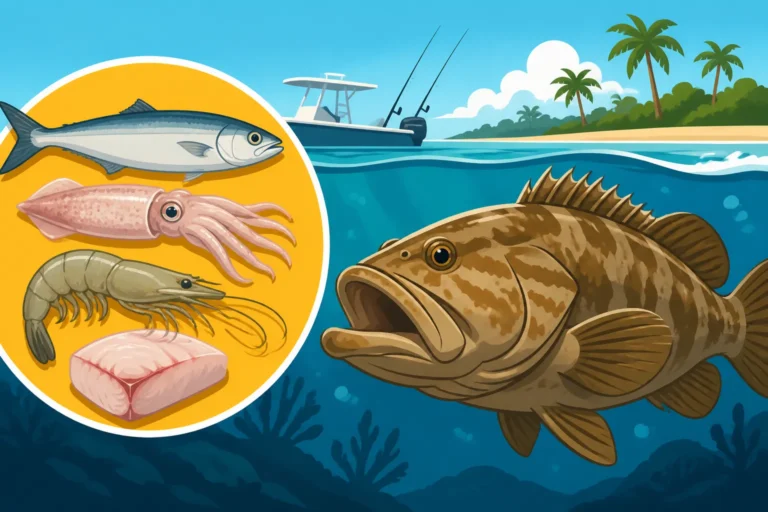
Live Baits: Without a doubt, live bait is often the king for red snapper. Natural, struggling prey is hard for a snapper to resist. Popular choices include:
- Pinfish: These small, spiny fish are a favorite among snapper and other reef fish. Hooked through the nose or back, they'll swim naturally and attract attention.
- Pilchards/Sardines: These oily baitfish create a strong scent trail and are a natural food source for snapper.
- Squid: While not technically "live," a fresh, whole squid dropped to the bottom can be incredibly effective, especially for larger snapper.
- Threadfin Herring: Another excellent choice, particularly when snapper are actively feeding.
Cut Baits: If live bait isn't available, fresh cut bait can be highly effective. The key is freshness and a strong scent.
- Sardine/Mackerel Chunks: Oily fish cut into strips or chunks release a powerful scent that can draw snapper from a distance.
- Bonita Strips: Tougher than other baits, bonita strips stay on the hook well and can withstand multiple bites.
- Squid Strips: Cut into strips, squid is a durable bait that snapper readily take.
Lures: While live and cut bait often dominate, lures can be very effective, especially for aggressive fish or when you want to cover ground quickly.
- Vertical Jigs: Heavy metal jigs, dropped quickly to the bottom and then jigged up and down, can provoke reaction strikes. Popular colors include silver, pink, and chartreuse.
- Heavy Lead-Head Jigs with Soft Plastics: Combining a large jig head (2-4 oz or more) with a durable soft plastic paddle tail or grub can mimic a variety of bottom dwellers.
- Flutter Jigs: These jigs have an erratic, fluttering action on the fall, which can entice snapper that are suspended above structure.
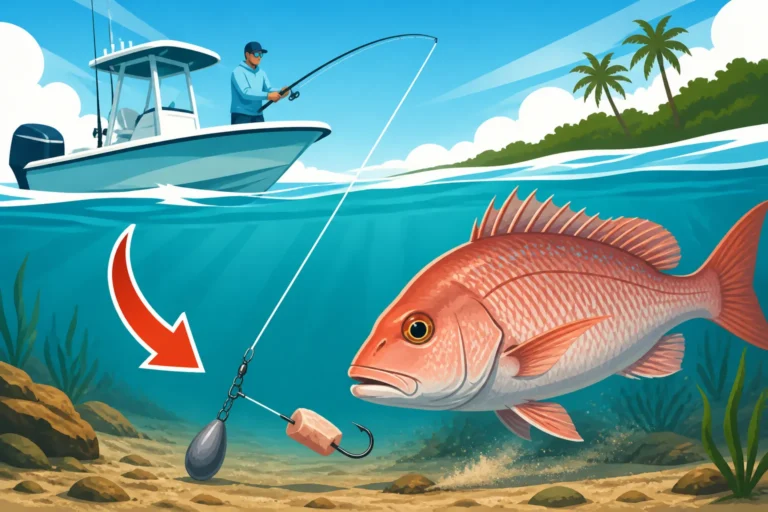
Remember, the presentation matters. Using a proper Bottom Fishing Technique for Snapper with sufficient weight to get your bait down quickly and keep it near the structure is crucial. Many popular jig brands for red snapper, as well as quality hooks and leader material, can be purchased on Amazon, ensuring you're well-equipped.
Preferred Depths and Structures
Red snapper are inextricably linked to underwater structure. They are not typically found over vast, open expanses of sand. Instead, they congregate around features that offer shelter, ambush points, and a source of food. Knowing where to focus your efforts is paramount.
Wrecks and Artificial Reefs: These are prime red snapper habitats. Sunken boats, old bridge rubble, and purposely deployed artificial reef modules create vertical relief and complex environments that attract baitfish and, consequently, predators like snapper. Many of these locations are well-known and often publicly available on FWC reef guides or fishing charts.
Natural Ledges and Rock Piles: Natural geological formations like rock ledges, coral reefs, and rocky outcroppings also hold significant numbers of red snapper. These features provide the same benefits as artificial structures, offering current breaks and hiding spots. Finding these natural structures often requires a good fish finder and experience interpreting sonar readings.
Oil Rigs (Gulf of Mexico): In the deeper parts of the Gulf, decommissioned oil and gas platforms that have been converted into artificial reefs (Rigs-to-Reefs program) are legendary red snapper havens. The sheer size and complexity of these structures attract an incredible amount of marine life.
Depths: While snapper can be found shallower, especially during certain times or in specific areas, the most productive depths for larger red snapper generally range from 80 feet to over 300 feet in the Gulf of Mexico. In the Atlantic, depending on the specific location and structure, you might be targeting them in similar or even deeper waters. The key is to look for these structures at their preferred depths. A good fish finder is your best friend in locating these spots and ensuring your bait gets down to where the fish are holding. Understanding the Best Depth to Fish for Snapper Offshore will significantly improve your success rate.
Booking a Charter for Red Snapper Success
Given the complexities of red snapper fishing—deep water, specific gear requirements, accurate navigation, and stringent regulations—booking a reputable fishing charter is often the most effective way to experience a successful red snapper trip, especially for those less experienced with offshore fishing or who don't own a deep-sea capable boat.
Charter captains are intimately familiar with the local waters, possess the necessary federal permits to fish in deeper federal waters (where many of the best snapper spots are), and have specialized knowledge of where the fish are biting. They come equipped with all the heavy-duty gear, bait, and safety equipment, eliminating the need for you to invest in expensive setups. Furthermore, they are experts on current regulations, ensuring your trip is compliant with all size and bag limits.
Due to the limited and often short red snapper seasons, demand for charters during these windows can be incredibly high. It is absolutely crucial to book your trip well in advance, sometimes months ahead, especially for prime dates. Discuss with the captain their experience with red snapper, what's included in the trip (bait, tackle, fish cleaning), and their cancellation policy. A good charter captain can make the difference between a frustrating search and a memorable day of landing impressive red snapper. For a full guide on selecting the right vessel, check out our Florida Deep Sea Fishing Charter Guide and learn How to Choose a Florida Fishing Guide.
The Role of Conservation in Red Snapper Management
The rigorous management of Florida's red snapper fishery isn't just about limiting catches; it's deeply rooted in a commitment to conservation and ensuring these valuable fish are available for future generations.
How Fishing License Fees Fund Conservation
Every time you purchase a Florida Fishing License Guide in Florida, you're contributing directly to the conservation efforts that benefit species like the red snapper, even if you're targeting other species. A significant portion of the revenue generated from fishing license sales goes into dedicated funds that support the Florida Fish and Wildlife Conservation Commission (FWC) and other state agencies.
These funds are vital for a wide range of conservation initiatives, including:
- Fisheries Management: This involves conducting scientific research, stock assessments, and data collection to monitor fish populations and inform management decisions, such as setting seasons, bag limits, and size restrictions. Without this data, effective management of complex species like red snapper would be impossible.
- Habitat Restoration and Protection: License fees help fund projects to restore and protect critical marine and freshwater habitats, including coastal estuaries, seagrass beds, and artificial reef programs. Healthy habitats are essential for the survival and reproduction of all fish species, including red snapper.
- Law Enforcement and Education: A portion of the fees supports marine law enforcement efforts, ensuring compliance with fishing regulations and deterring illegal fishing activities. It also funds educational programs that teach anglers about responsible fishing practices, conservation ethics, and the importance of adhering to rules.
- Fish Stocking and Research: While less common for marine species like red snapper, some funds may also support freshwater fish stocking programs or research into aquaculture techniques for threatened species.
In essence, your fishing license is more than just a permit; it's an investment in the health and future of Florida's aquatic resources, ensuring that the thrill of catching a red snapper remains a possibility for years to come. For more details, explore How Florida Fishing License Fees Fund Conservation.
The Future of Red Snapper Fishing in Florida
The future of red snapper fishing in Florida, particularly in the Gulf of Mexico, holds cautious optimism, while the Atlantic stock continues its slow but steady recovery. Management strategies are continually evolving, driven by scientific data and aimed at achieving long-term sustainability.
In the Gulf, the red snapper population has shown significant signs of recovery over the past decade, largely due to the stringent measures implemented. This recovery has, at times, allowed for slightly longer recreational seasons than previously experienced, though these remain subject to annual stock assessments and quotas. There's ongoing discussion and pilot programs exploring alternative management approaches, such as regional management or even more advanced electronic reporting systems, to provide greater flexibility and potentially longer seasons while still ensuring the stock remains healthy.
For the Atlantic, the outlook is more conservative. While the population is rebuilding, it's doing so at a slower rate, meaning short or closed seasons are likely to continue for the foreseeable future. The emphasis here remains on strict conservation to allow for continued growth.
Ultimately, the future of red snapper fishing hinges on continued scientific research, effective management, and the responsible participation of anglers. Anglers play a critical role not only by adhering to regulations but also by participating in citizen science programs, reporting their catches accurately, and advocating for sound conservation policies. As the science improves and populations stabilize, there's hope that anglers across Florida will continue to enjoy the incredible experience of targeting this iconic species for generations.
Disclaimer
Fishing regulations, including season dates, size limits, and bag limits, are subject to change by the Florida Fish and Wildlife Conservation Commission (FWC), the Gulf of Mexico Fishery Management Council, and the South Atlantic Fishery Management Council. This guide provides general information based on recent and typical regulations. It is the responsibility of every angler to verify the most current and specific regulations for their intended fishing location (state vs. federal waters, Gulf vs. Atlantic) immediately prior to fishing. Always consult official FWC and federal fisheries websites for the latest updates.