Is Night Fishing Legal in Florida?
It’s a common scenario: the sun dips below the horizon, the air cools, and the water starts to calm. You look out over a quiet Florida flat or a dimly lit pier and think, "This would be amazing for fishing!" But then that nagging question creeps in: Is night fishing even legal here? Many anglers, both residents and visitors, grapple with this uncertainty, worrying they might inadvertently break a rule just by casting a line after dark. This guide is here to clear up that confusion, diving deep into Florida's regulations, potential restrictions, essential safety measures, and everything else you need to know to enjoy successful and legal night fishing excursions across the Sunshine State.
Understanding Florida's Night Fishing Regulations
For many, the idea of fishing under the stars is incredibly appealing. The tranquility, the cooler temperatures, and the chance to target different species that become more active at night all contribute to a unique angling experience. Thankfully, for the most part, Florida embraces this passion.
General Legality of Night Fishing
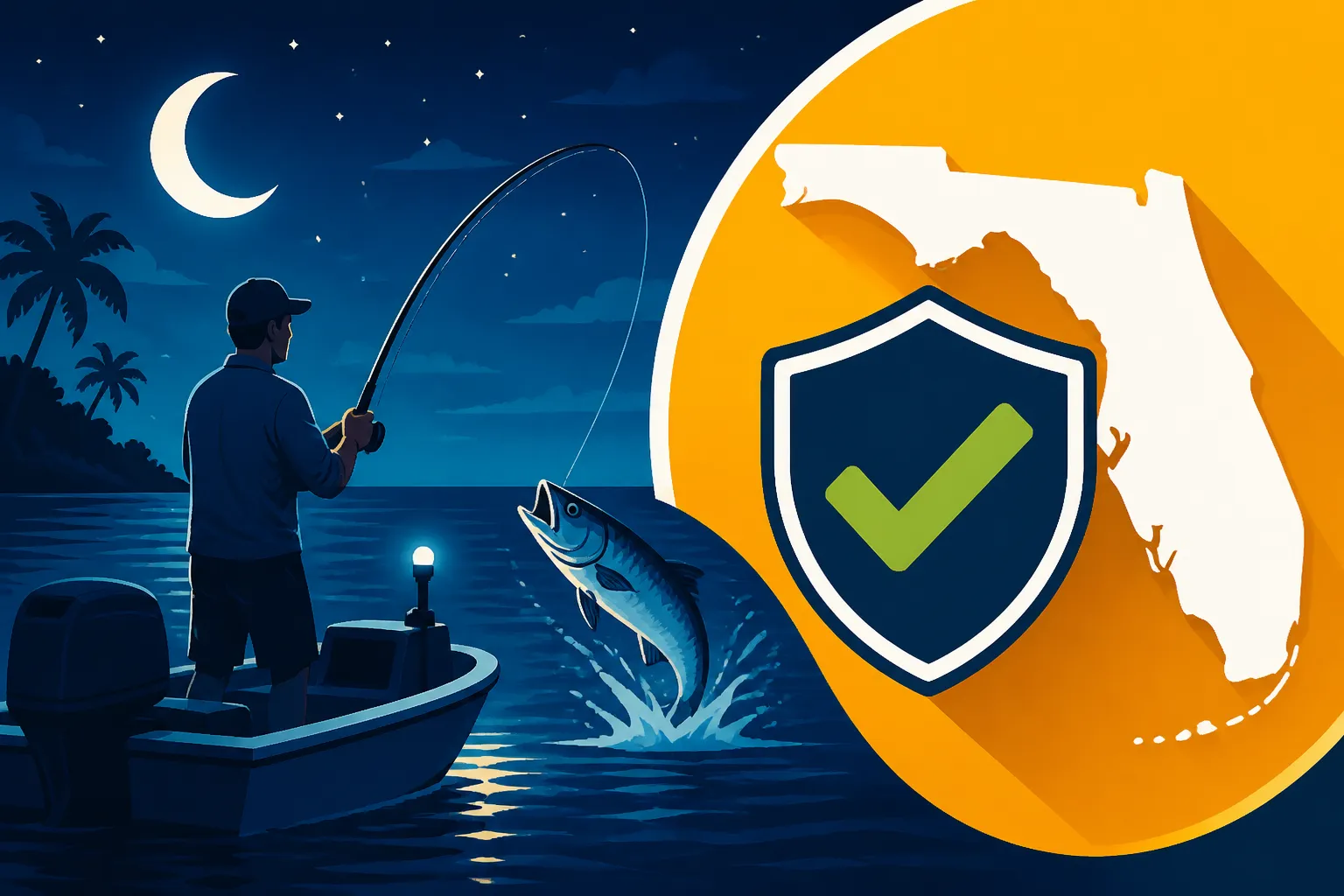
Let's cut to the chase: generally speaking, night fishing is legal throughout Florida. The Florida Fish and Wildlife Conservation Commission (FWC), which sets the vast majority of statewide fishing rules, does not typically impose blanket restrictions on fishing during nighttime hours. If you hold a valid Florida Fishing License Guide and adhere to all other regulations – such as bag limits, size limits, and species-specific seasons – you are usually good to go when the sun sets.
However, this doesn't mean it's a free-for-all everywhere. The key phrase here is "generally speaking." While the FWC sets the overarching framework, there are always nuances and specific circumstances that might alter the legality of night fishing in particular spots. Think of it like driving: it's legal to drive at night, but certain roads might be closed, or specific areas might have different speed limits. Always be vigilant for local signage, especially if you're venturing into a new area. The FWC focuses on the what and how of fishing (species, gear, limits), not usually the when, unless it's for conservation reasons related to specific species or habitats.
Specific Rules for Freshwater vs. Saltwater Night Fishing
While the general rule of "night fishing is legal" applies across both fresh and saltwater environments, it's worth noting that the specific species, gear, and some localized regulations can differ significantly. You'll still need to ensure you have the correct Florida Saltwater Fishing License Rules or Florida Freshwater Fishing License Rules depending on where you're casting your line.
In freshwater, popular night targets often include catfish, crappie, and even largemouth bass, especially during warmer months when they retreat to deeper, cooler waters during the day. The FWC's statewide bag and size limits for these species remain in effect 24/7. So, if you're out chasing catfish on Lake Okeechobee after dark, you still need to respect the legal limits. There isn't a special "night exemption" for these rules.
For saltwater anglers, night fishing opens up incredible opportunities for species like snook, redfish, spotted seatrout, and various snapper species, which often feed more aggressively under the cover of darkness. Many of these fish congregate around lighted docks, bridges, and inlets. It’s important to remember that all existing Florida Fishing Regulations and Bag Limits still apply. This includes regional closures for certain species, like snook, which have specific seasons and slots that are rigorously enforced. If snook season is closed, it's closed whether it's noon or midnight. You also need to be aware of any special permits, such as a Florida Snook Permit Requirements, which are required to harvest snook, regardless of the time of day.
Where Night Fishing Might Be Restricted
While Florida's FWC generally permits night fishing, local jurisdictions and specific property managers have the authority to implement their own rules. This is where most confusion and potential issues arise, so it’s crucial to do your homework before heading out.
Local Ordinances and Park Rules
This is arguably the most common pitfall for night anglers. While the state says "go for it," your local city, county, or park management might say, "not here, not now." Many public parks, city piers, and beach access points have posted hours that explicitly prohibit entry or activity after dark. This isn't usually about fishing itself, but rather about managing public safety, noise, or preventing illicit activities in unsupervised areas.
For example, a municipal pier in Clearwater might close at 10 PM, meaning any fishing after that time is strictly prohibited. Similarly, certain stretches of beach, particularly those near residential areas or sensitive nesting grounds, could have nighttime curfews. Even if you don't see an explicit "no fishing" sign, a "park closed at dusk" sign generally means all activities, including fishing, are off-limits until sunrise. It's always a good practice to check the website of the specific pier, beach, or park you plan to visit, or look for signage upon arrival. Don't assume that because it's a public space, it's open 24/7. Ignoring these local ordinances can lead to fines, citations, or even being asked to leave by local law enforcement.
Consider public boat ramps as well. While many are open all night, some might have gates that lock at a certain hour. Imagine launching your boat at midnight, only to return at 3 AM to find the gate secured until morning. Always verify access hours for any ramp or access point you plan to use for your night fishing adventure.
Wildlife Management Areas and Preserves
Florida is home to an extensive network of wildlife management areas (WMAs), state forests, national wildlife refuges, and other protected natural preserves. These areas are managed with specific conservation goals in mind, which often include strict regulations on human activity, including fishing hours. It's very common for WMAs to have gates that close at sunset and reopen at sunrise, or to restrict access to certain times of the year.
For instance, some WMAs might be open for fishing during daylight hours but are closed at night to protect nocturnal wildlife, prevent poaching, or manage hunting activities that occur during specific seasons. Fishing in these areas is a privilege, and it comes with the responsibility of understanding and adhering to their unique sets of rules. Trying to sneak into a WMA after hours or fish past their designated times can result in significant penalties and loss of access.
The best way to avoid issues in these protected areas is to consult the FWC's WMA regulations handbook, which is updated annually, or visit the specific WMA's page on the FWC website. They often provide detailed maps and specific rules for each area, including designated fishing times. Never assume; always verify. These areas are vital for Florida's ecosystems, and respecting their rules helps ensure they remain healthy and accessible for future generations of anglers.
Essential Gear and Safety for Night Fishing in Florida
Night fishing isn't just about figuring out what's legal; it's also about being prepared. The challenges of navigating in the dark, handling fish, and staying safe require a different approach and specific gear compared to daytime angling.
Lighting and Visibility Requirements
When you're out on the water or standing on a shoreline after dark, visibility becomes your number one concern. Not only do you need to see what you're doing, but you also need others to see you. For shore anglers, a reliable headlamp is an absolute must. It keeps your hands free for casting, tying knots, and handling your catch. Look for one with a red light option; red light is less disruptive to your night vision and won't spook fish as easily as a bright white beam. Many anglers find quality headlamps from brands like Black Diamond or Petzl to be indispensable tools. You can often find a wide variety of options on Amazon, making it easy to compare features and reviews to pick the best one for your needs.
If you're fishing from a boat, proper navigation lights are not just recommended, they are legally required. Florida law mandates specific lighting configurations for vessels operating between sunset and sunrise, or during periods of restricted visibility. This typically includes a masthead light, sidelights (red and green), and an all-around white light visible from 360 degrees. Make sure all your boat's lights are in perfect working order before you even think about leaving the dock. Beyond navigation, having a powerful spotlight on board can be invaluable for spotting markers, navigating tight channels, or identifying potential hazards. Always carry spare batteries for headlamps and flashlights, because nothing ruins a night trip faster than being plunged into total darkness.
Safety Precautions and Best Practices
Safety should always be paramount when night fishing. The reduced visibility significantly increases risks. First and foremost, know your fishing spot intimately during the day before you attempt to fish it at night. Understand the terrain, identify potential obstacles, and be aware of any drops, holes, or slippery surfaces. It's much harder to notice a loose rock or a jagged oyster bar when you can barely see your feet.
Always inform someone of your plans – where you're going, when you expect to be back, and who you're with. If possible, use the buddy system; two sets of eyes and hands are always better than one, especially in an emergency. Personal flotation devices (PFDs) are critical if you're on a boat, kayak, or even fishing from a pier near deep water. It's too easy to lose your balance or slip in the dark. A PFD should be within reach or, even better, worn at all times. Many comfortable, lightweight PFDs are available on Amazon for both adults and children.
Beyond physical safety, consider the elements. Even on a warm Florida evening, temperatures can drop, especially after a cool front. Bring appropriate layers of clothing. Insect repellent is another absolute must-have, as mosquitoes and no-see-ums can be relentless after dark. A well-stocked first-aid kit should be part of your standard gear, ready for minor cuts, hook punctures, or allergic reactions. Finally, be mindful of wildlife; nocturnal animals are out and about, and you might encounter anything from raccoons scavenging bait to alligators in freshwater environments. Give them space and respect.
Choosing the Right Gear for Nocturnal Angling
Selecting the right fishing gear for night excursions can significantly improve your experience and success rate. While your standard rod and reel setups will work, a few specialized items can make a big difference. Many anglers prefer slightly stiffer rods for night fishing, as it can be harder to detect subtle bites visually, relying more on feel. Pair this with a reliable reel spooled with braided line, which offers superior sensitivity.
Consider your terminal tackle. Lures that glow in the dark or have built-in LED lights can be incredibly effective for attracting curious fish in low light conditions. You can find a range of these "night fishing lures" and even glowing bobbers on Amazon. Similarly, using brightly colored or glow-in-the-dark fishing line can help you see line movement, though often the feel of the bite is more important. For bait fishing, consider using light sticks or small LED lights clipped to your rod tip or a floating bobber to help detect strikes.
When it comes to bait, live bait often shines brightest at night because its natural movements create vibrations that fish can detect even in pitch black. Pilchards, shrimp, mullet, and pinfish are all excellent choices depending on your target species. If using artificials, dark colors like black or purple can often be surprisingly effective at night, as they create a strong silhouette against the moonlit sky or artificial lights. Ultimately, the best gear is what you're comfortable and confident using, but these specialized additions can give you an edge in the dark.
Navigating Permits and Licenses for Night Fishing
One of the simplest aspects of night fishing legality in Florida is that the requirements for permits and licenses don't change just because it's dark. If you need a license during the day, you'll need one at night.
Standard Fishing License Requirements
This is where things are straightforward: a valid Florida fishing license is required for night fishing, exactly as it is for daytime fishing. There are no special "night fishing licenses" or exemptions based solely on the time of day. Whether you're targeting bass in a freshwater lake or snook under a bridge after midnight, you must possess the appropriate Florida Fishing License Costs and Fees for the type of water you're fishing (freshwater or saltwater).
If you are a Florida resident, you'll need a Florida Resident Fishing License Rules. If you're visiting from out of state, then Florida Nonresident Fishing License Rules will apply. The only general exemptions to needing a license for recreational fishing in Florida are for children under 16, Florida residents 65 and older who hold a free Resident Senior Citizen Hunting and Fishing Certificate, or those fishing on one of the designated Florida Free Fishing Days. Even in these cases, all other regulations like bag and size limits still apply.
It's critical to have your license readily available, whether it's a physical copy or stored digitally on your phone via the Florida Fish and Wildlife Conservation Commission (FWC) Fish|Hunt Florida App. Wildlife officers routinely patrol both day and night, and if you're found fishing without a valid license, you could face penalties. It's simply not worth the risk. For more information on what could happen, you might want to read up on What Happens If You Fish Without a License.
Special Permits and Considerations
Beyond the standard fishing license, there are a few other permits and considerations that might come into play during a night fishing trip. These are usually species-specific and are required regardless of whether you're fishing at noon or 2 AM.
For instance, if you plan to harvest snook, you'll need a valid snook permit in addition to your saltwater fishing license. The same applies if you're venturing into specialized activities like lobstering during the mini-season or regular season – you'll need a spiny lobster permit, and all the relevant gear and harvest restrictions will still be in full effect, even under the cloak of darkness. It's easy to assume that because it's night, enforcement is lax, but that's a dangerous misconception. FWC officers are dedicated to conservation and patrol around the clock.
Also, be aware of any areas that might require special access permits, like some portions of the Everglades or certain private lands that permit public access under specific conditions. While these are less common for general recreational fishing, they do exist. Always consult local regulations, FWC publications, and signage at your chosen fishing destination. A little research upfront can save you a lot of headache (and potential fines) later on, ensuring your night fishing adventure is both enjoyable and fully compliant with Florida law.
Night Fishing Legality & Requirements Summary
To make it a little easier, here's a quick reference table outlining common night fishing scenarios and their typical legality:
| Scenario | Typical Legality | Key Considerations & Requirements |
|---|---|---|
| Public Docks & Piers (Open 24/7) | Generally Legal | Valid Florida fishing license (unless exempt). All state bag/size limits apply. Adequate lighting for safety. Check local pier rules for specific curfews or gear restrictions. Many great Best Piers for Fishing Without a Boat are available if open at night. |
| Public Beaches & Shorelines (Open 24/7) | Generally Legal | Valid Florida fishing license. All state bag/size limits apply. Be aware of beach curfews, turtle nesting season restrictions (often prohibit lights on beach at night), and local ordinances. Avoid private property. |
| Boat Fishing (Freshwater & Saltwater) | Generally Legal | Valid Florida fishing license. All state bag/size limits apply. Mandatory navigation lights, PFDs, and safety gear. Know your waterways well at night. Be aware of Fishing During Florida's Hurricane Season Safely if applicable. |
| Public Parks (Designated Hours) | Often Restricted/Illegal | Check park hours. If "Closed at Dusk" or specific closing times are posted, night fishing is prohibited. Fines may apply for trespassing. |
| Wildlife Management Areas (WMAs) | Often Restricted/Permit-Dependent | Check specific WMA regulations for allowed hours. Many WMAs have gates that close at sunset. Special permits may be required beyond a fishing license. |
| Fishing for Snook, Tarpon, Lobster | Legal if in Season & with Proper Permits | Requires specific permits (e.g., Florida Snook Permit Requirements) in addition to a fishing license. All season dates, bag limits, and size limits (e.g., Snook Slot Limit Explained) are strictly enforced at night. |
| Catch and Release Fishing | Legal if adhering to Regulations | Same license requirements. All state bag/size limits and gear restrictions still apply, even if you plan to release. Good handling practices are even more critical in low light. Consider tips on Night Fishing Technique for Trout Under Dock Lights. |
| During Red Tide Events | Legal, but Advisable to Avoid | While not illegal, How Red Tide Affects Fishing in Florida can make fish sick or die, and consumption can be dangerous. Avoid affected areas, especially at night when visual cues are harder to spot. |
| Using Lights to Attract Fish (Boat/Pier) | Generally Legal, with Some Nuances | Generally allowed to attract bait or game fish. Ensure lights do not impede navigation or cause excessive nuisance to others. Specific regulations for certain gear, like gigging for flounder, might apply differently. Also consider specific techniques like Best Bait for Snook Fishing in Florida. |
Disclaimer
The information provided in this guide is for general informational purposes only and is not intended as legal advice. Fishing regulations in Florida can change, and local ordinances vary significantly. Always consult the latest Florida Fish and Wildlife Conservation Commission (FWC) regulations, local government websites, and signage at your specific fishing location before engaging in any fishing activity.