Does Moon Phase Affect Fishing in Florida?
It's a question as old as fishing itself: "Does the moon really make a difference?" Many of us have experienced those magical days on the water where everything seems to bite, and then other times, despite perfect weather, the fish just aren't interested. This frustrating inconsistency often leaves us wondering if there's some unseen force at play, and for countless anglers, the moon's phases are high on the suspect list. This guide will dive deep into how the moon might influence your Florida fishing success, exploring its scientific effects and traditional folklore, so you can better plan your next trip.
Understanding the Moon's Influence on Earth
Before we talk about whether fish care about the moon, it's essential to understand that the moon absolutely has a profound impact on our planet. It’s not just some distant orb; it’s intrinsically linked to many natural phenomena here on Earth, especially those involving water.
Gravitational Pull and Tides
The most direct and undeniable influence the moon has is its gravitational pull, which creates the tides. As the moon orbits Earth, its gravity tugs on the oceans, causing them to bulge on both the side facing the moon and the side opposite it. These bulges are high tides, and the areas in between experience low tides.
Think about it: a stronger gravitational pull from the moon means more pronounced bulges, leading to higher high tides and lower low tides. This is why you hear anglers constantly talking about tidal movement, especially in Florida's vast saltwater environments like Tampa Bay or the Indian River Lagoon. Strong tidal flows act like a conveyor belt for baitfish, sweeping them past ambush points for predators like snook and redfish. Conversely, slack tides, where the water isn't moving much, often correlate with slower fishing. The moon's position relative to the sun (which also exerts gravitational pull) dictates the strength of these tides, giving us spring tides (stronger) during new and full moons, and neap tides (weaker) during quarter moons. Understanding these tidal dynamics is arguably the most critical aspect of recognizing the moon's practical influence on your fishing, and you can learn more about this in our guide on the Best Tides for Inshore Fishing in Florida
Moonlight and Nocturnal Activity
Beyond gravity, the amount of light the moon casts can significantly affect fish behavior, particularly during the nighttime hours. A bright full moon can illuminate shallow flats and dock lights, turning what would normally be dark fishing spots into active feeding grounds.
Imagine a clear Florida night with a brilliant full moon overhead. For nocturnal predators like snook, which rely on sight and vibrations, this extra light can make hunting much more efficient. They can spot baitfish more easily, leading to aggressive feeding frenzies. Anglers often target these periods for species like spotted seatrout under dock lights, as the moonlight helps them see and hunt. The flip side is during a new moon, when the sky is darkest. While this reduces visibility for predators, it can also create conditions where fish feel safer to venture out from cover in certain areas, particularly if they are less sight-dependent or if the darkness gives them an advantage over their prey. Understanding these nuances can make a big difference, especially if you're keen on trying the Night Fishing Technique for Trout Under Dock Lights
Major Moon Phases and Their Potential Impact on Florida Fishing
While the general concept of "moon phase" is simple, each phase brings unique conditions that anglers observe and discuss. Let's break down the major phases and what they might mean for your fishing rod.
New Moon
The new moon phase is when the moon is positioned between the Earth and the sun, making it invisible from our perspective. This results in the darkest nights of the month. Interestingly, despite the lack of moonlight, new moons often coincide with some of the strongest tidal movements, known as spring tides.
For saltwater anglers, these powerful tides can be a huge advantage. The increased current stirs up the bottom, dislodges bait, and creates prime ambush opportunities for predatory fish. Snook, redfish, and even tarpon can become incredibly active during these periods as they capitalize on the abundant, disoriented prey. While the nights are dark, the daytime fishing can be stellar due to the strong water movement. Some anglers swear by the new moon as a top fishing period because of this increased tidal energy. However, if you plan to fish at night during a new moon, prepare for absolute darkness, as the absence of moonlight means you'll need reliable headlamps and boat lights.
Full Moon
The full moon, a spectacular sight in the Florida sky, occurs when the Earth is between the sun and the moon, bathing our nights in brilliant moonlight. Like the new moon, the full moon also brings strong spring tides due to the combined gravitational pull of the sun and moon.
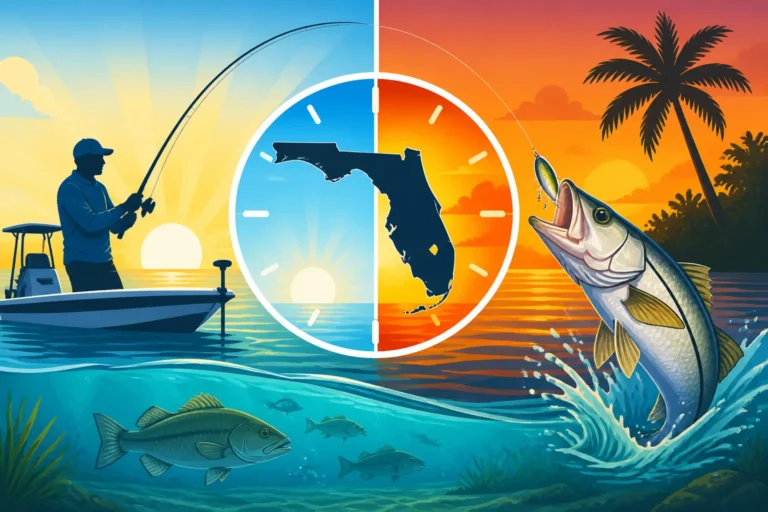
The bright nights of a full moon are a double-edged sword for many anglers. On one hand, the increased visibility can make nocturnal fishing highly productive. Fish like snook might feed aggressively throughout the night, making them harder to find during the day. This shift in feeding patterns means that if you're targeting daytime bites, a full moon might actually lead to slower action, as the fish have already filled their bellies under the cover of darkness. Many experienced anglers suggest that during a full moon, the early morning hours just after sunrise, or the late evening before sunset, can be prime times, as fish transition from their nocturnal feeding patterns or prepare for them. It's a prime example of how you might need to adapt your strategy, and our article on Fishing During a Full Moon in Florida offers more specific tips.
Quarter Moons First and Last
The quarter moon phases, specifically the first quarter and last quarter, occur when the moon is at a 90-degree angle to the sun relative to Earth. During these times, the gravitational pull of the sun and moon work against each other, resulting in weaker tidal movements known as neap tides.
For many saltwater anglers, neap tides often translate to slower fishing. With less water movement, baitfish tend to hold in more stationary patterns, and predatory fish might not feel the same urgency to feed. However, weaker tides aren't always a bad thing. In certain areas, extremely strong tides can make it difficult for fish to hold position or for anglers to present baits effectively. During neap tides, fishing could be more comfortable, and fish might be found in areas where they typically wouldn't be due to excessive current. It often means you need to slow down your presentation, focusing on structure or deeper pockets where fish might be conserving energy. Freshwater environments, of course, aren't directly impacted by ocean tides, but some believe moon phases can still influence the activity of fish like largemouth bass, perhaps impacting their metabolism or spawning behaviors, though these effects are generally less pronounced than tidal impacts.
Waxing and Waning Gibbous/Crescent
Between the major phases of new, full, and quarter moons, we have the transitional periods: waxing and waning crescents and gibbous moons. These phases represent the gradual increase or decrease of illuminated moonlight and the corresponding strengthening or weakening of tidal forces.
During a waxing crescent, the moon's light is increasing, and tides are slowly building towards the strong pull of the first quarter. As it moves into a waxing gibbous, both light and tidal strength continue to build towards the full moon. The reverse happens during the waning phases: light and tidal strength decrease after the full moon, heading towards the last quarter and then the new moon. Anglers often find that these transitional periods can be quite productive as fish adjust to the changing conditions. It’s less about a sudden "on/off" switch and more about a gradual shift. Observing these shifts can help you anticipate fish behavior. For instance, if you're seeing a trend of improving catches as the moon waxes, you might infer that the increasing light or tidal push is benefiting your target species. Many seasoned anglers use tools like the Solunar Theory, which suggests specific peak feeding times based on the moon's position relative to your fishing spot. You can often find these tables in specialized fishing calendars or apps, sometimes even available on platforms like Amazon.
Applying Moon Phase Knowledge to Florida's Waters
Florida offers an incredible diversity of fishing environments, from the vast freshwater lakes to the intricate saltwater estuaries. How the moon impacts your fishing can vary greatly depending on where you cast your line and what you're trying to catch.
Freshwater vs. Saltwater Considerations
When we talk about the moon's effect on fishing, it's crucial to differentiate between freshwater and saltwater. In Florida's expansive saltwater habitats—think the Gulf Coast, the Atlantic shoreline, or the intricate estuaries of the Florida Keys—the moon's gravitational pull is a game-changer. Tides, driven directly by the moon, dictate current, oxygen levels, bait movement, and ultimately, where and when predatory fish like snook, redfish, and tarpon feed. A strong outgoing tide during a full or new moon can flush baitfish out of mangrove creeks, creating feeding opportunities at the mouths of those creeks. Conversely, a weak tide during a quarter moon might mean you need to search for fish in deeper channels or around structures where they can conserve energy.
However, move inland to Florida's countless freshwater lakes and rivers, like Lake Okeechobee or the St. Johns River, and the direct tidal influence from the moon almost disappears. Here, other factors become dominant. While some theories suggest that the moon's gravitational pull might still affect fish metabolism or spawning cues in freshwater, the impact is generally less immediate and observable than the tidal shifts in saltwater. For species like largemouth bass, factors like water temperature, barometric pressure, light penetration, and the spawn cycle are typically far more influential than the moon phase itself. So, while a full moon might mean great night fishing for bass in a lake due to increased visibility, it’s not because of a "moon tide." Our Florida Largemouth Bass Fishing Guide delves deeper into techniques for these environments.
Species-Specific Responses
Not all fish react to moon phases in the same way. Different species have different behaviors, feeding habits, and sensitivities to environmental changes.
Take the snook, for example, a prized Florida game fish. Snook are highly sensitive to tidal movements and often feed aggressively during strong currents, which align with new and full moon periods. They are also known for their strong nocturnal feeding habits, especially under the bright light of a full moon. An angler targeting snook during a full moon might find the best action at night, perhaps around well-lit docks or bridges, while daytime fishing might be slower. The Florida Snook Fishing Guide has more on this.
Redfish, another popular inshore species, also respond to tides but might be less influenced by moonlight compared to snook, often feeding actively during both day and night across various moon phases as long as there's good water movement. Largemouth bass in freshwater, as mentioned, are less directly affected by tides. Their activity might correlate with moon phases more subtly, perhaps influencing their spawning behavior or general activity levels rather than their immediate feeding windows. For instance, some believe a rising or falling moon might stimulate feeding, but these effects are often secondary to factors like water temperature, which heavily influences the Florida Bass Fishing Techniques. It really highlights that while moon phase is a piece of the puzzle, it's not the only piece, and you need to tailor your approach to the fish you're targeting.
Incorporating Tide Charts and Solunar Tables
For saltwater fishing in Florida, neglecting tide charts would be like trying to navigate without a map. These charts are your best friend for understanding the moon's most significant impact: tidal flow. You can find accurate tide charts for almost any coastal location in Florida through various fishing apps, local bait shops, or online resources. Always check the specific tide times for your exact fishing spot, as they can vary even within a few miles.
Beyond basic tide charts, many anglers consult "solunar tables." These tables, popularized by John Alden Knight's Solunar Theory, propose specific major and minor feeding periods for fish based on the moon's position relative to a specific location, combining both moon phase and time of day. The theory suggests that fish and wildlife are most active during these solunar periods, which often align with moonrise, moonset, and overhead/underfoot times. While not universally accepted by scientists, many experienced anglers swear by solunar tables, reporting noticeable increases in fish activity during these predicted windows. It's certainly worth checking out; you can find specialized fishing almanacs and guides containing solunar data on platforms like Amazon, or within many fishing apps. Think of them as another tool in your arsenal to inform your decision-making when planning your fishing day. Learning How to Read a Tide Chart for Fishing is an excellent first step.
Beyond the Moon: Other Factors at Play
While the moon definitely plays a role, especially with tides, it's crucial to remember that it's just one piece of a very large, complex puzzle. Attributing all fishing success or failure solely to the moon would be an oversimplification.
Weather and Barometric Pressure
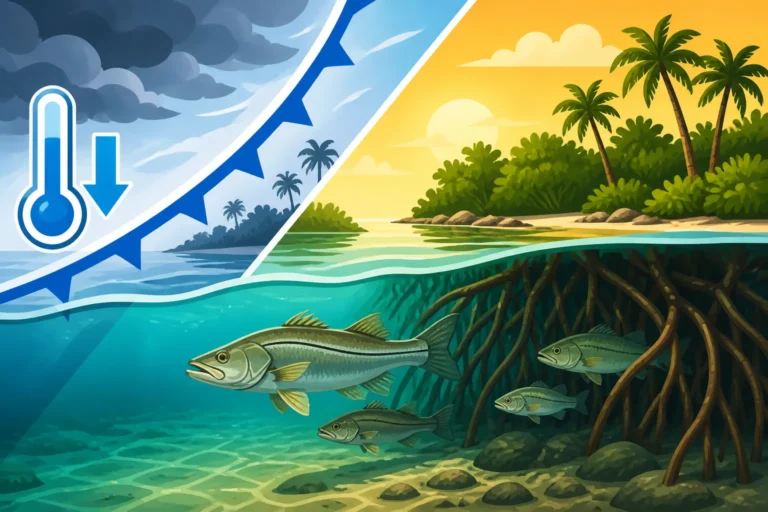
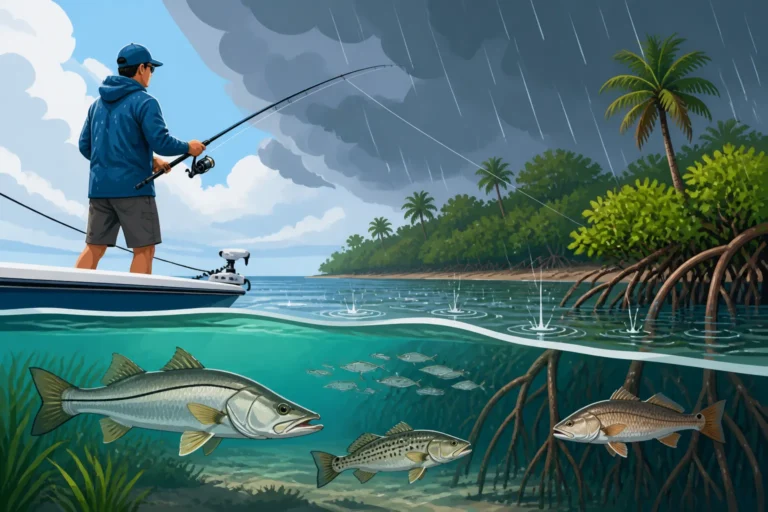
If there's one thing that can override the moon's influence, it's the weather. A sudden cold front dropping temperatures, a prolonged period of high winds making the water choppy, or even heavy rain can profoundly impact fish behavior. Barometric pressure, in particular, is a huge factor. A steady high-pressure system generally means stable weather and often good fishing, while rapidly falling pressure (indicating an approaching storm) can trigger a frantic bite right before the weather turns bad. After a cold front, when the pressure is high and stable but the temperatures have dropped, fish often become sluggish and less willing to feed. These weather changes often have a more immediate and noticeable impact on whether fish are biting than the subtle shifts of a quarter moon. Our guide on Florida Fishing Seasons Explained touches on how weather patterns shift throughout the year.
Time of Day and Tides
Even on the most "favorable" moon phase, you won't catch fish if you're not fishing at the right time of day or during optimal tidal movements. For saltwater, the actual movement of water, whether it's an incoming or outgoing tide, is often more critical than simply the moon's phase. The peak of an incoming or outgoing tide, when the water is moving fastest, frequently correlates with the best bite windows. Similarly, in freshwater, the early morning and late evening (dawn and dusk) are almost universally considered prime feeding times for many species, regardless of the moon. This is because these periods offer lower light conditions, cooler temperatures, and often increased bait activity. So, while a full moon might bring strong tides, if you're fishing during the slack tide in the middle of a scorching midday sun, your results might not be stellar. Focusing on the actual tidal currents and time of day, alongside the general moon phase, provides a much more comprehensive strategy.
Location, Bait, and Technique
Let's be real: you can have the perfect moon phase, ideal weather, and prime tidal flow, but if you're fishing in the wrong spot with the wrong bait or an ineffective technique, you're still not going to catch much. Knowledge of local fishing spots, understanding fish behavior in those areas, and choosing the right bait or lure are paramount.
For instance, knowing that snook might be holding under a specific mangrove overhang during an outgoing tide, and presenting a live pilchard or a natural-looking soft plastic lure with the correct retrieve, will almost always trump simply fishing during a "good" moon phase in a random spot. The choice between live bait vs. artificial lures, the size and color of your presentation, and even your casting accuracy and retrieve speed all play massive roles. Sometimes, the fish just aren't where you expect them, and you might need to adapt your strategy, which is where learning How to Fish a New Spot You've Never Tried becomes invaluable. The moon can set the stage, but it's your performance on that stage that truly determines success.
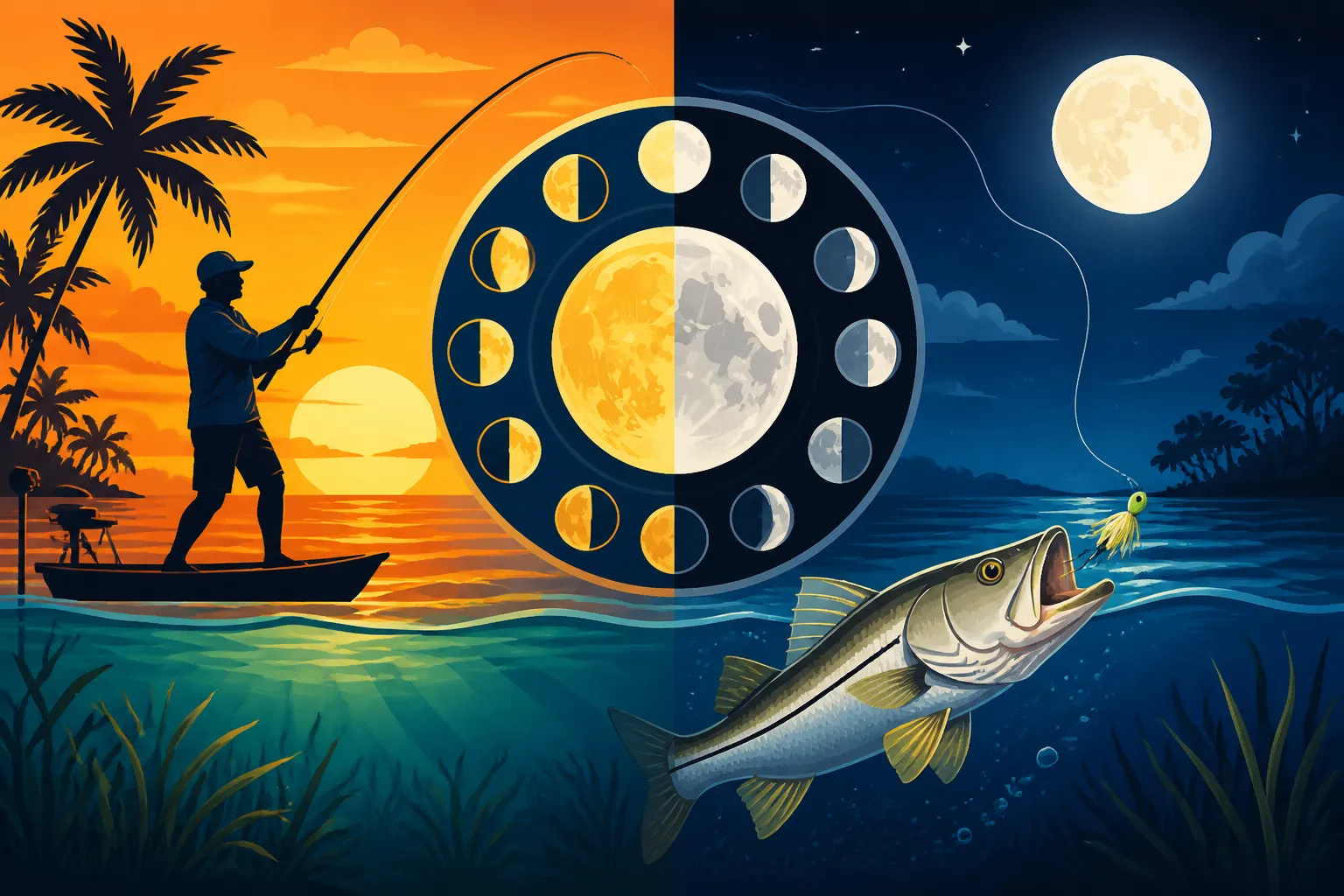
Moon Phase and Florida Fishing Outlook Table
To give you a quick overview, here's a general outlook on how different moon phases might influence your Florida fishing trips. Remember, these are guidelines, not ironclad rules!
| Moon Phase | Moonlight at Night | Tidal Strength (Saltwater) | General Fish Activity (Saltwater) | General Fish Activity (Freshwater) | Angler Strategy Considerations |
|---|---|---|---|---|---|
| New Moon | Very Dark | Strongest (Spring Tides) | Often Very High | Moderate to High | Focus on strong currents. Prepare for dark nights if fishing after sundown. Day bites can be excellent. |
| Waxing Crescent | Increasing | Increasing | Increasing | Moderate | Fish can be transitioning and active. Good time to target feeding fish in improving conditions. |
| First Quarter Moon | Half Lit | Moderate (Neap Tides) | Moderate | Moderate | Tides are weaker; focus on structure or slower presentations. Good daytime visibility. |
| Waxing Gibbous | Increasing (Bright) | Increasing | Increasing | Moderate to High | Activity builds towards full moon. Nights get brighter; consider night fishing opportunities. |
| Full Moon | Very Bright | Strongest (Spring Tides) | Often High (especially at night) | Moderate to High | Early morning/late evening bites often best during day. Excellent for night fishing. |
| Waning Gibbous | Decreasing (Bright) | Decreasing | Decreasing | Moderate to High | Fish activity tapers from full moon peak. Still good, but watch for diminishing returns. |
| Last Quarter Moon | Half Lit | Moderate (Neap Tides) | Moderate | Moderate | Similar to first quarter; weaker tides. Focus on precise presentations. |
| Waning Crescent | Decreasing | Decreasing | Decreasing | Moderate | Activity winds down towards new moon. Can still be productive with right approach. |
This table provides a simplified view, but it highlights how the most pronounced effects are often tied to tidal strength and moonlight, particularly in saltwater.
In conclusion, while the moon's phases undeniably influence environmental factors like tides and ambient light, which in turn affect fish behavior, it's rarely the sole determinant of a successful fishing trip in Florida. Experienced anglers combine knowledge of moon phases with critical factors like local weather, water temperature, specific species habits, and effective techniques. So, use moon phase information as a valuable data point, but always be ready to adapt and observe what the fish are telling you on any given day.
Disclaimer
This article is for general informational purposes only and does not constitute professional advice. Laws, prices and regulations vary by location and change over time. Consult a qualified professional for guidance on your specific situation.